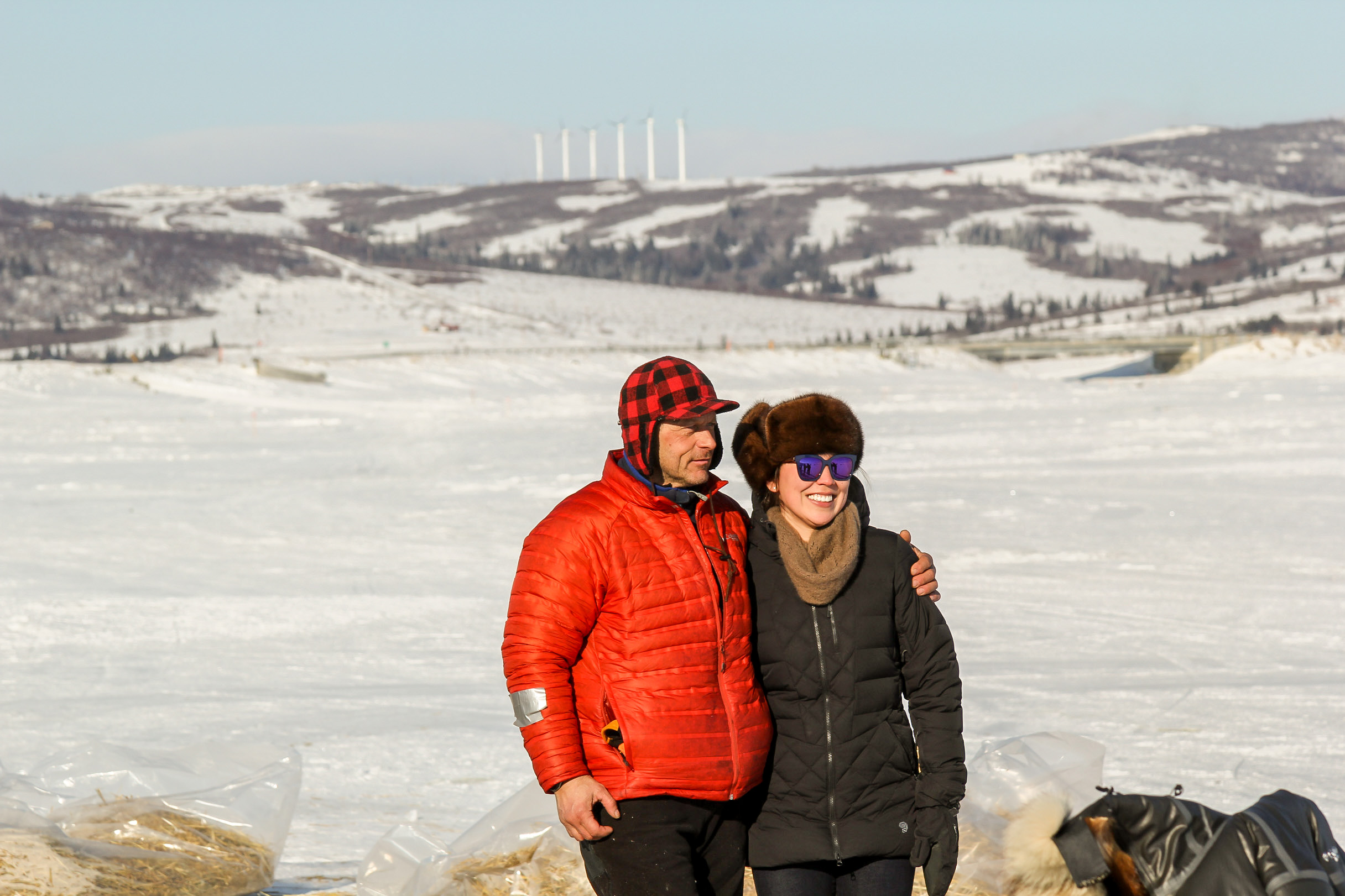
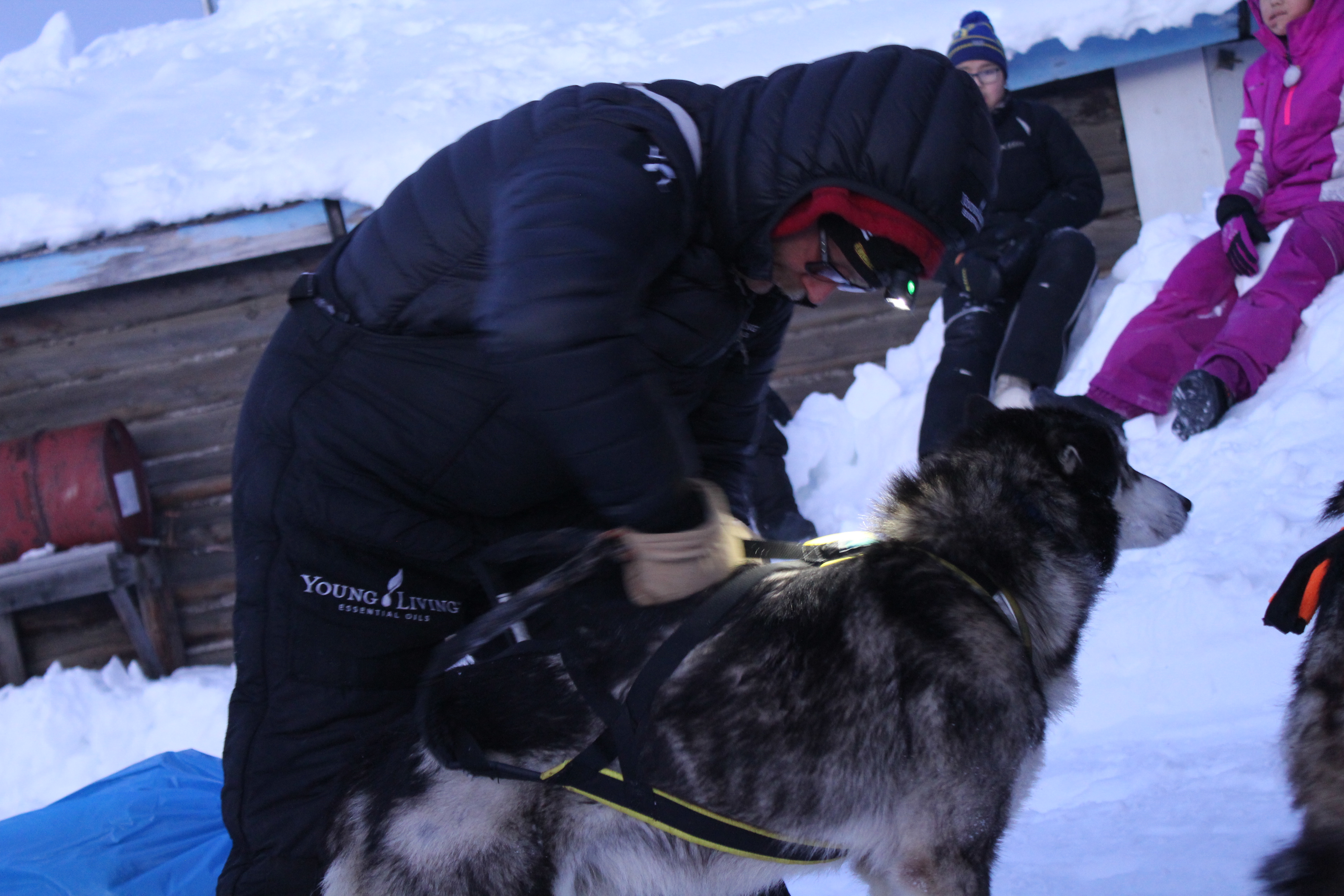
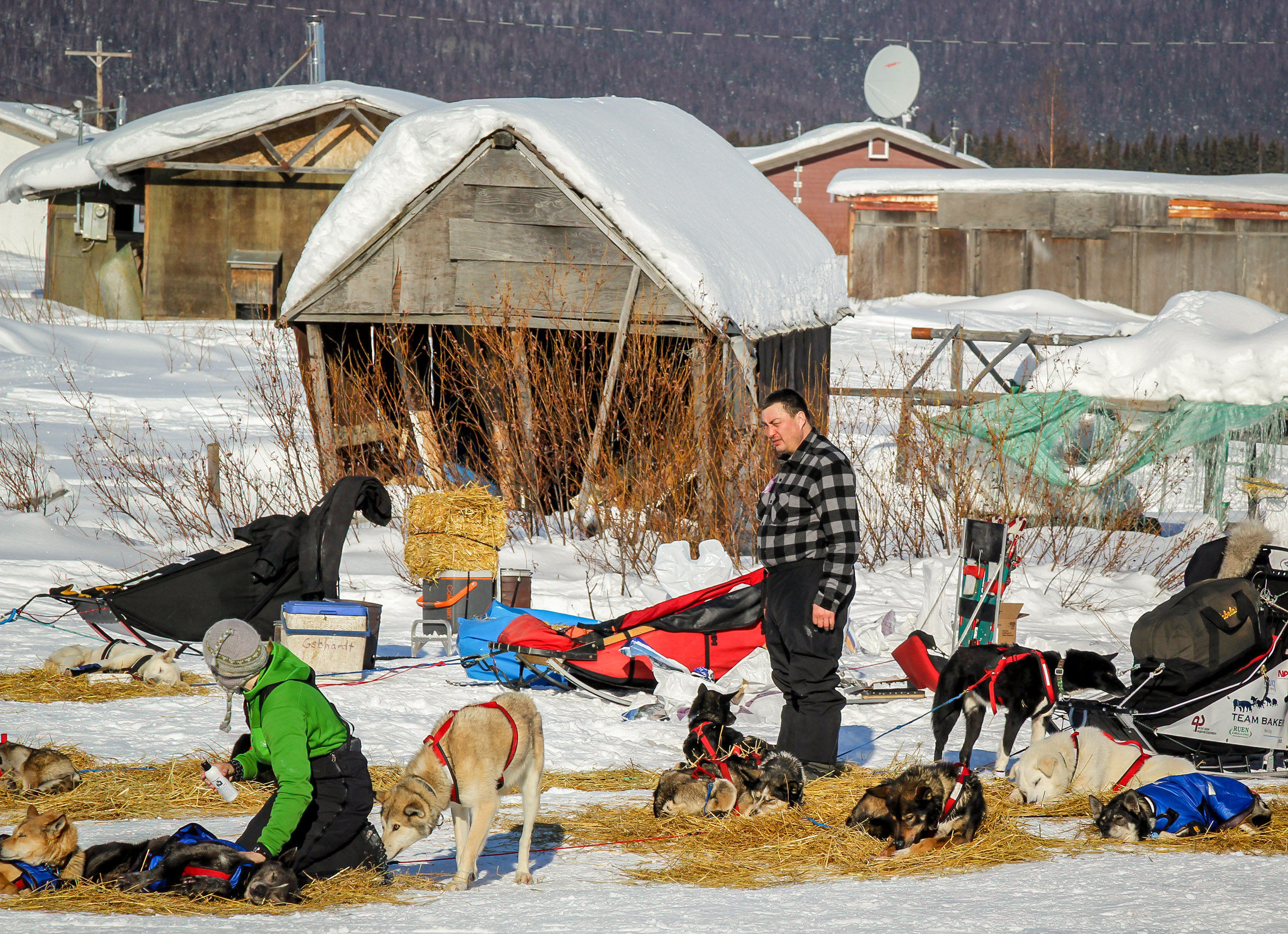
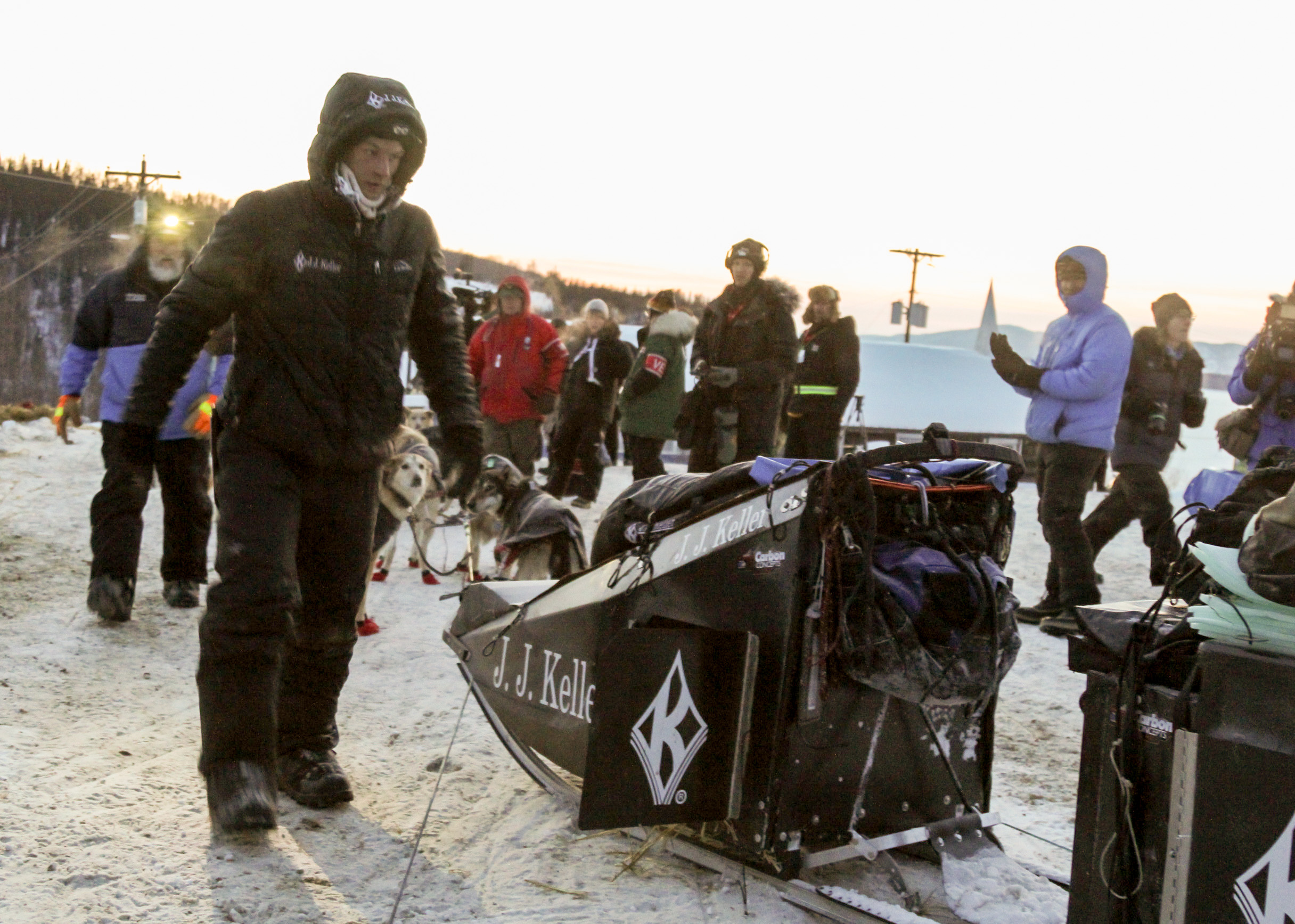
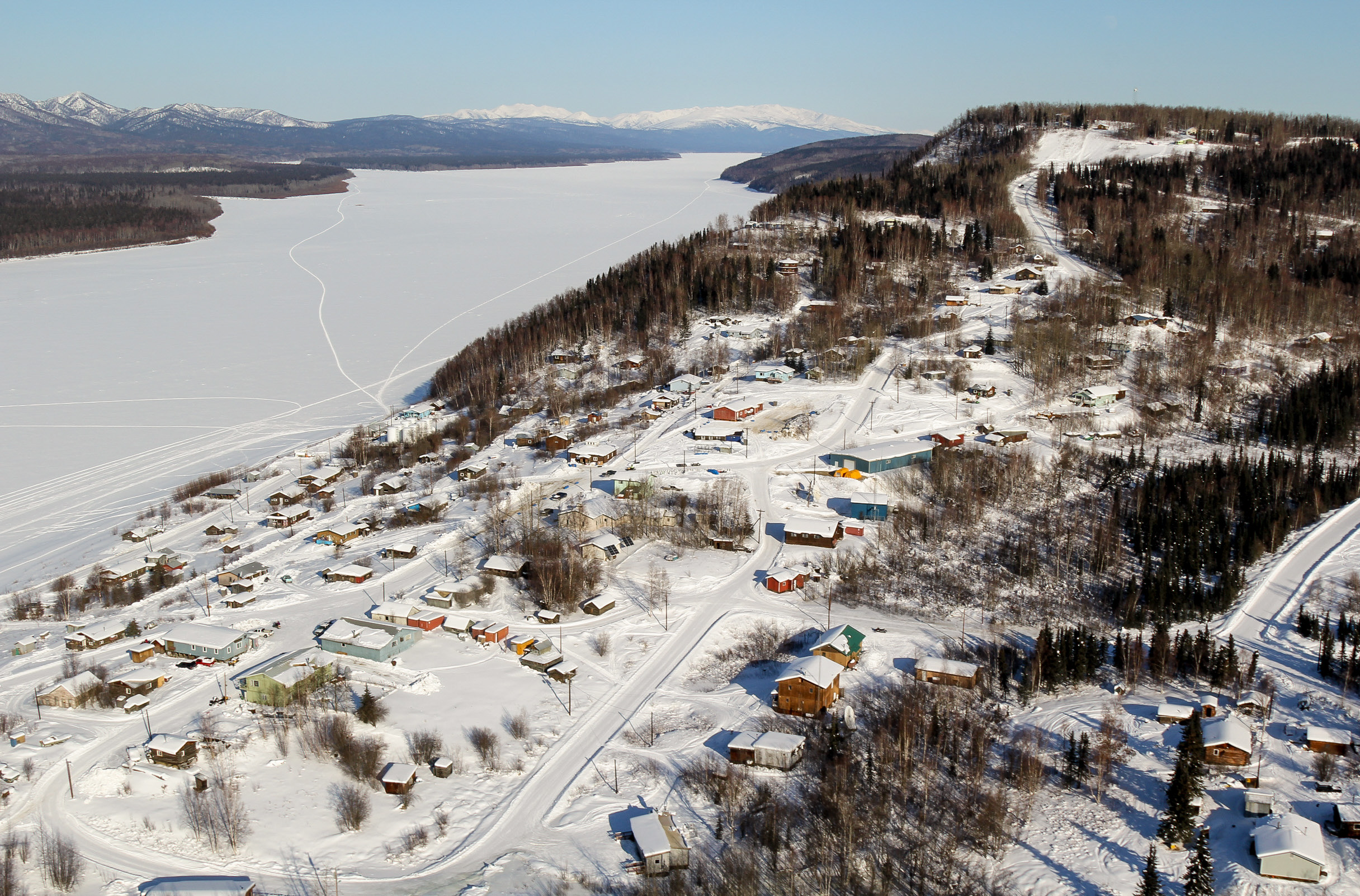
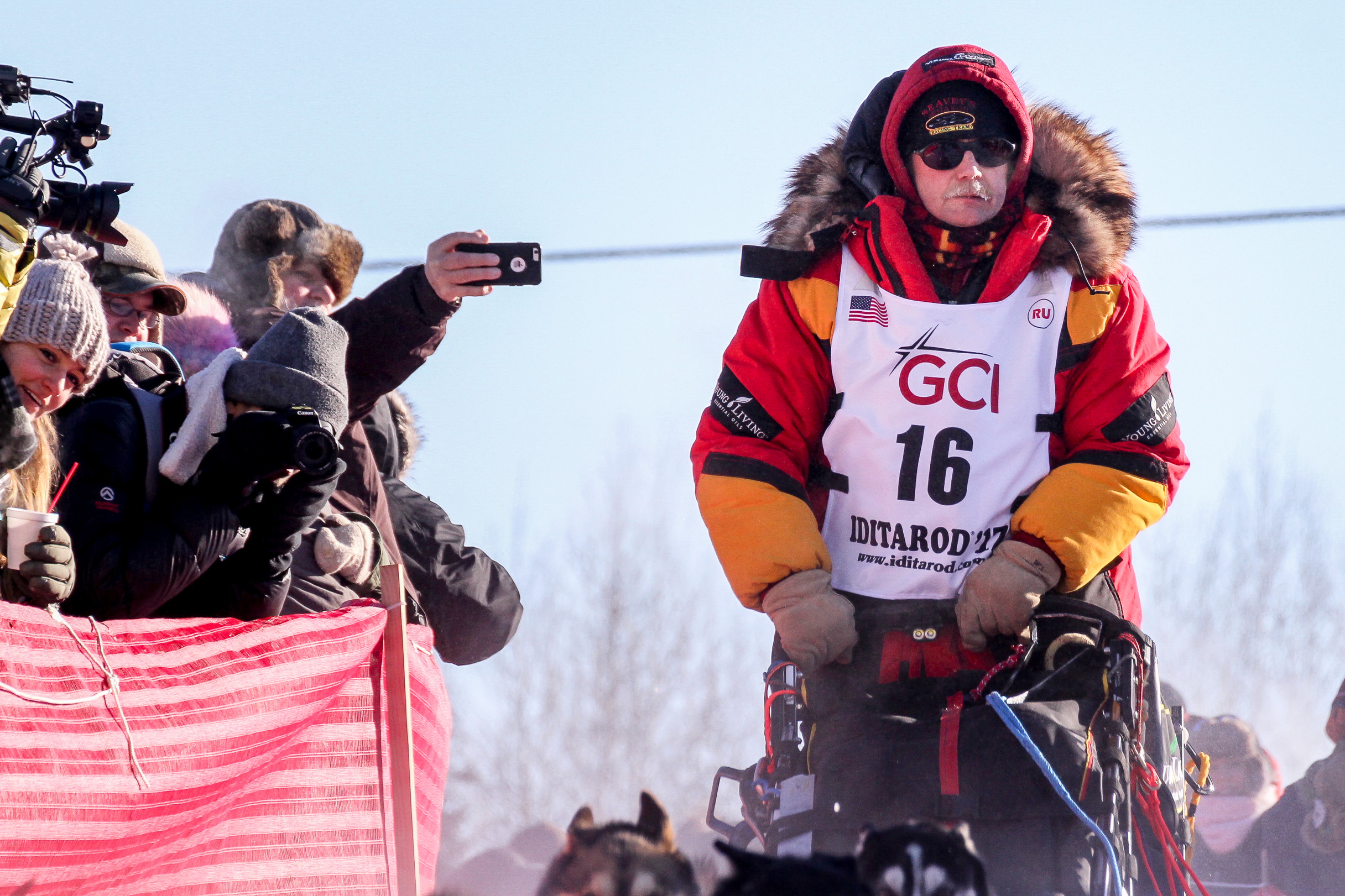
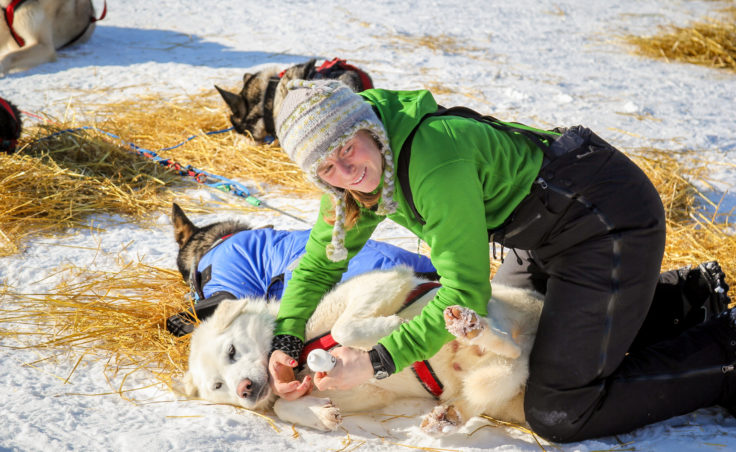
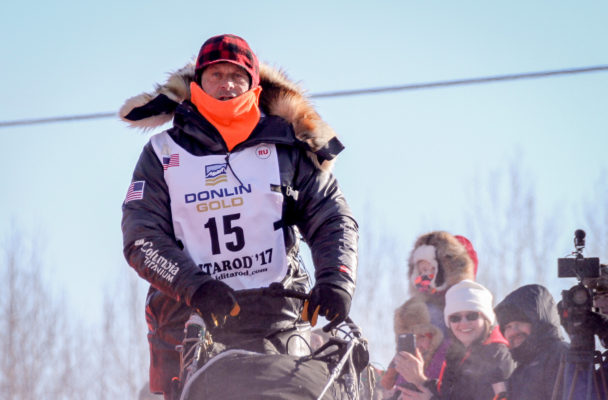
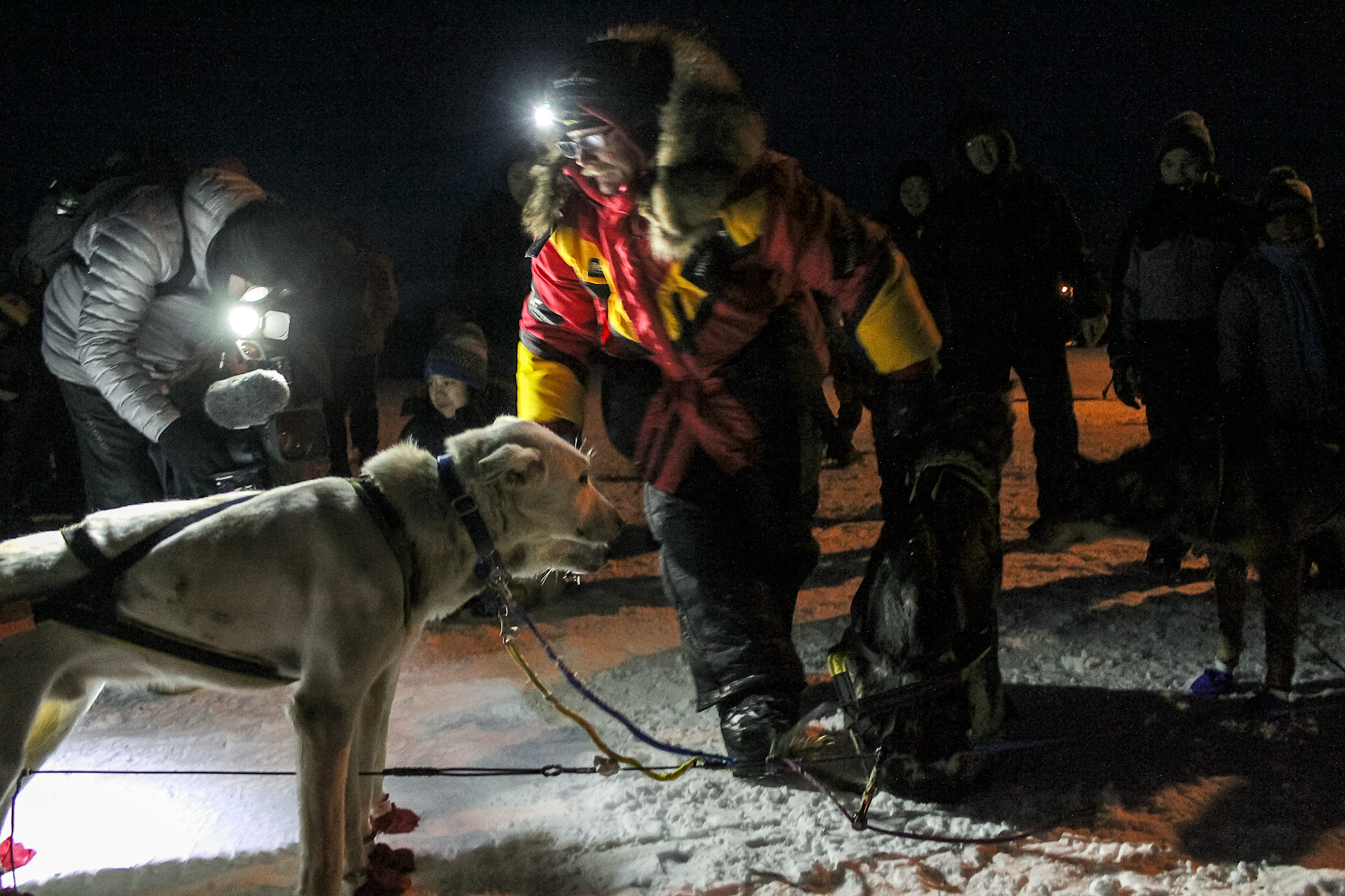
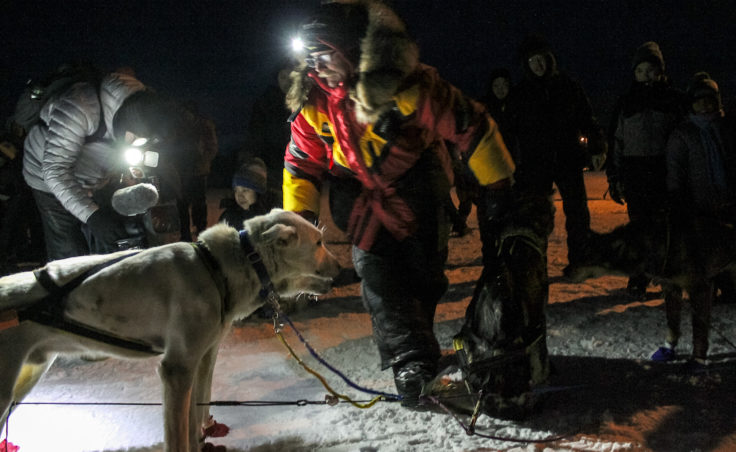
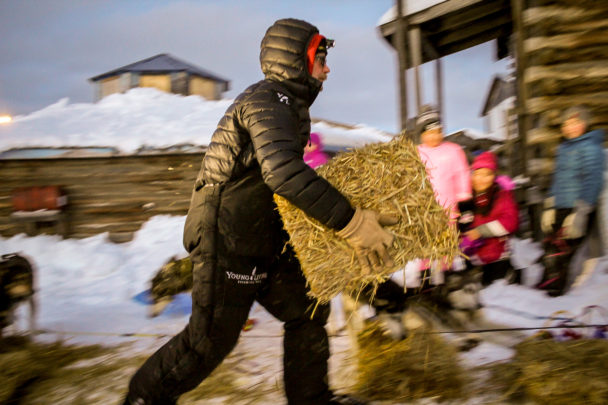
Martin Buser poses with a fan in Unalakleet during the Iditarod. (Photo by Zachariah Hughes/Alaska Public Media)
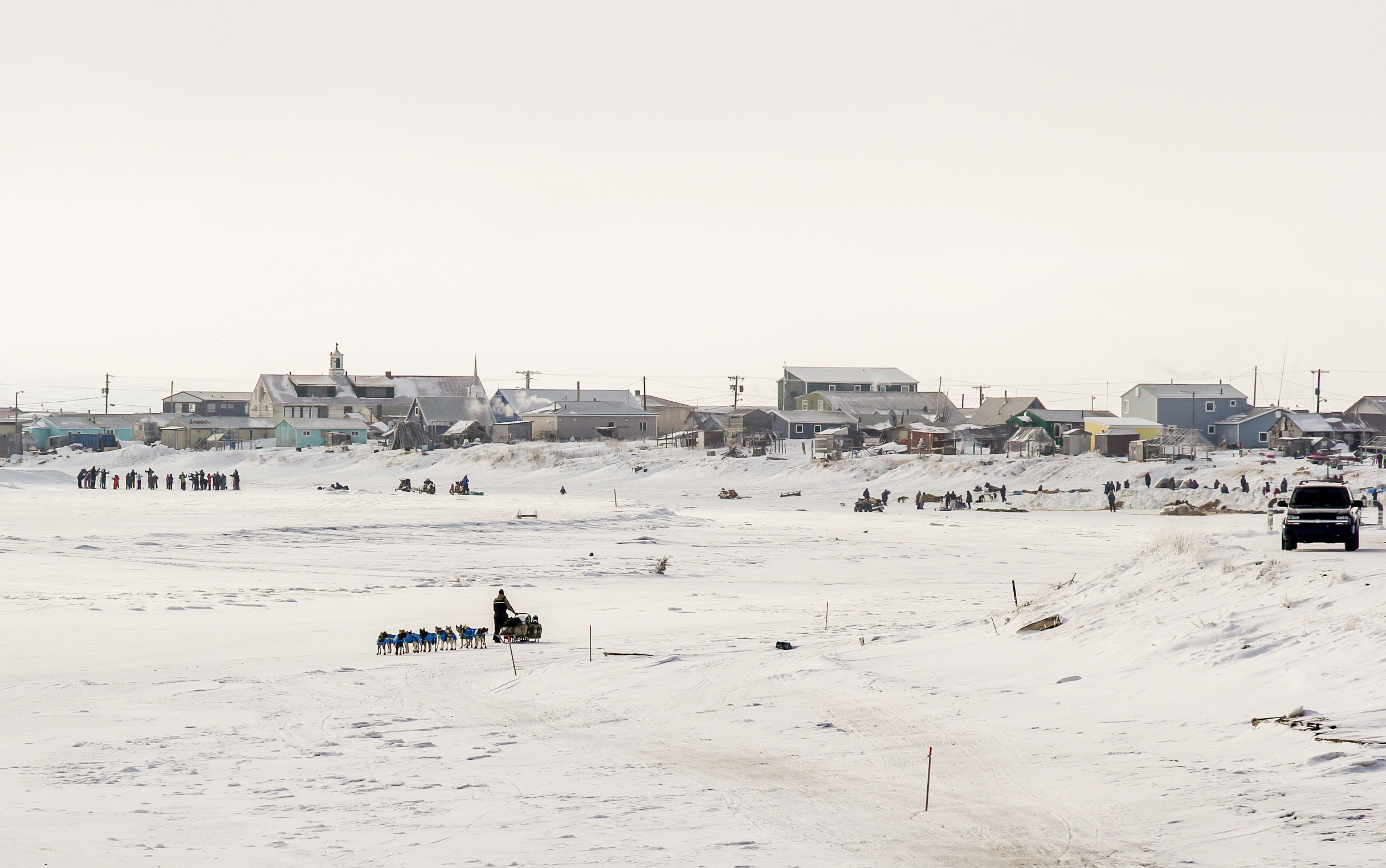
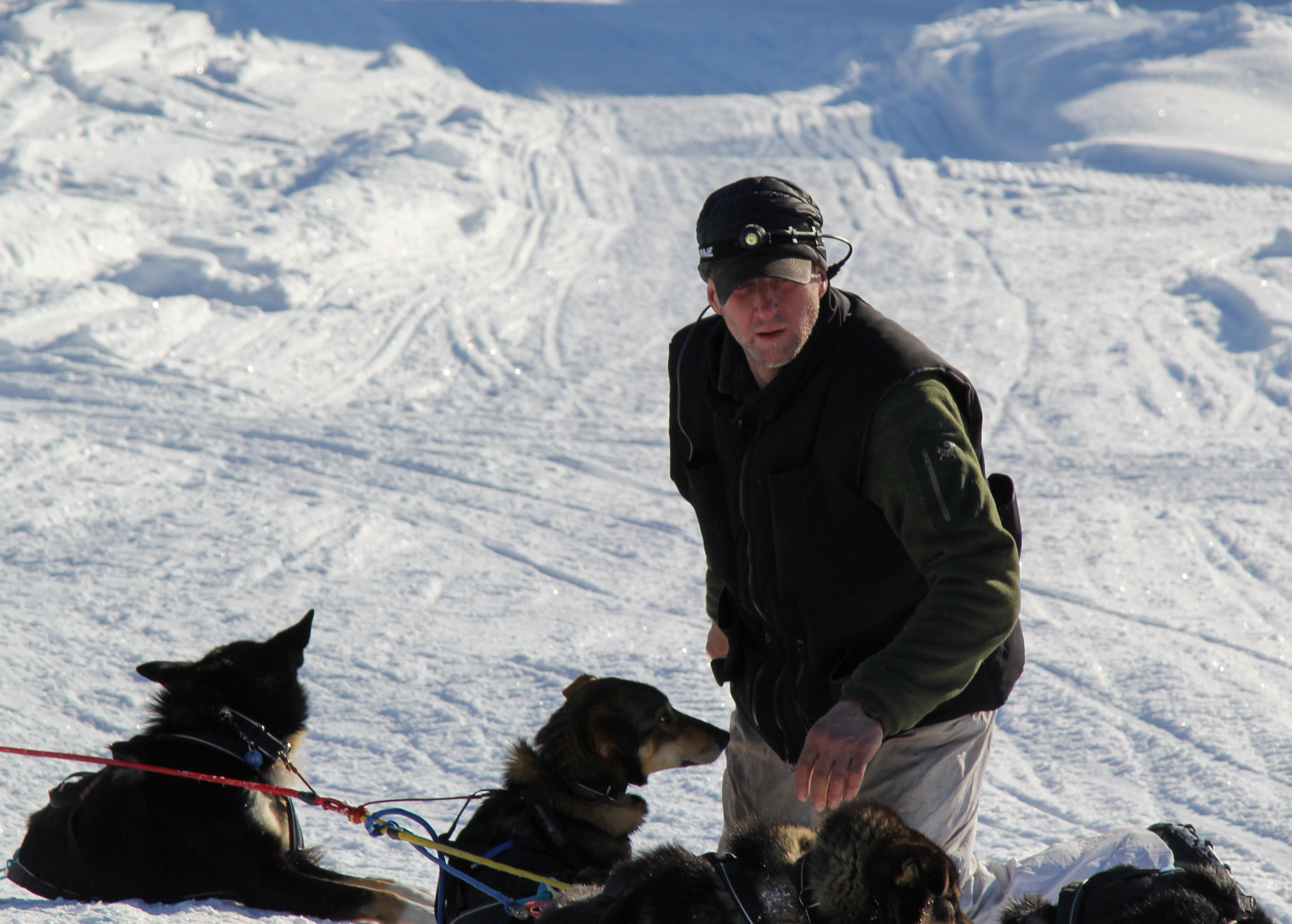
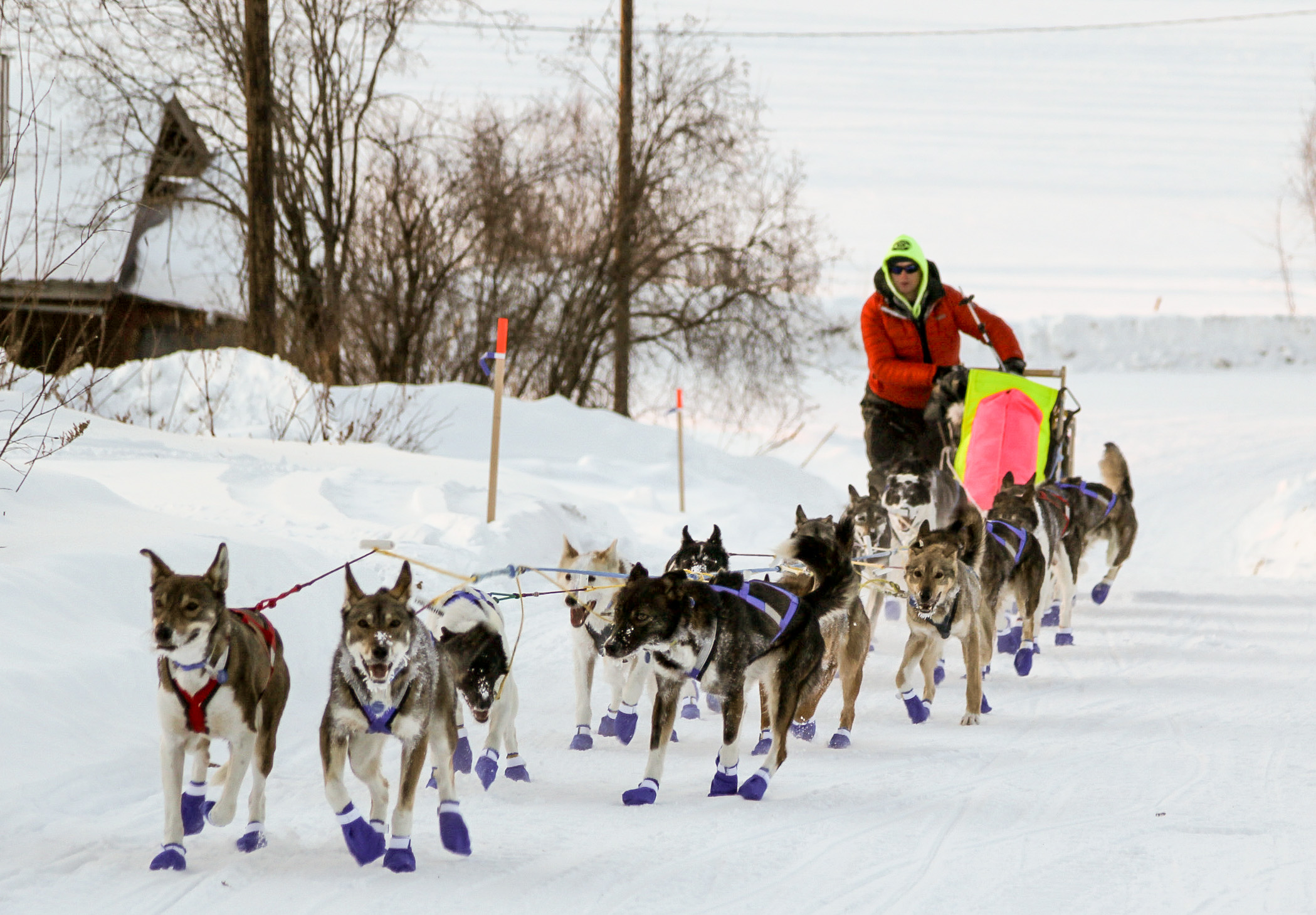
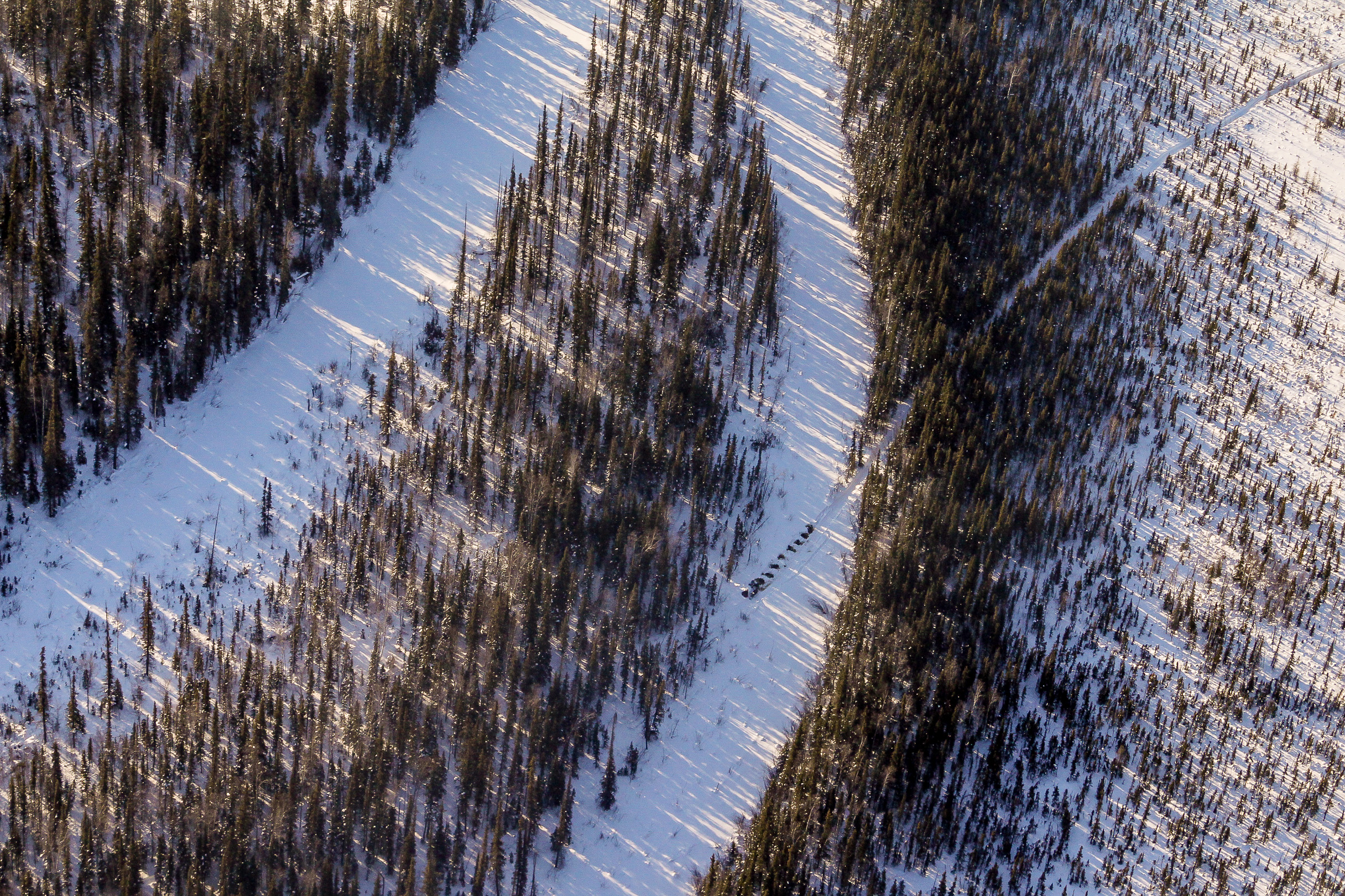
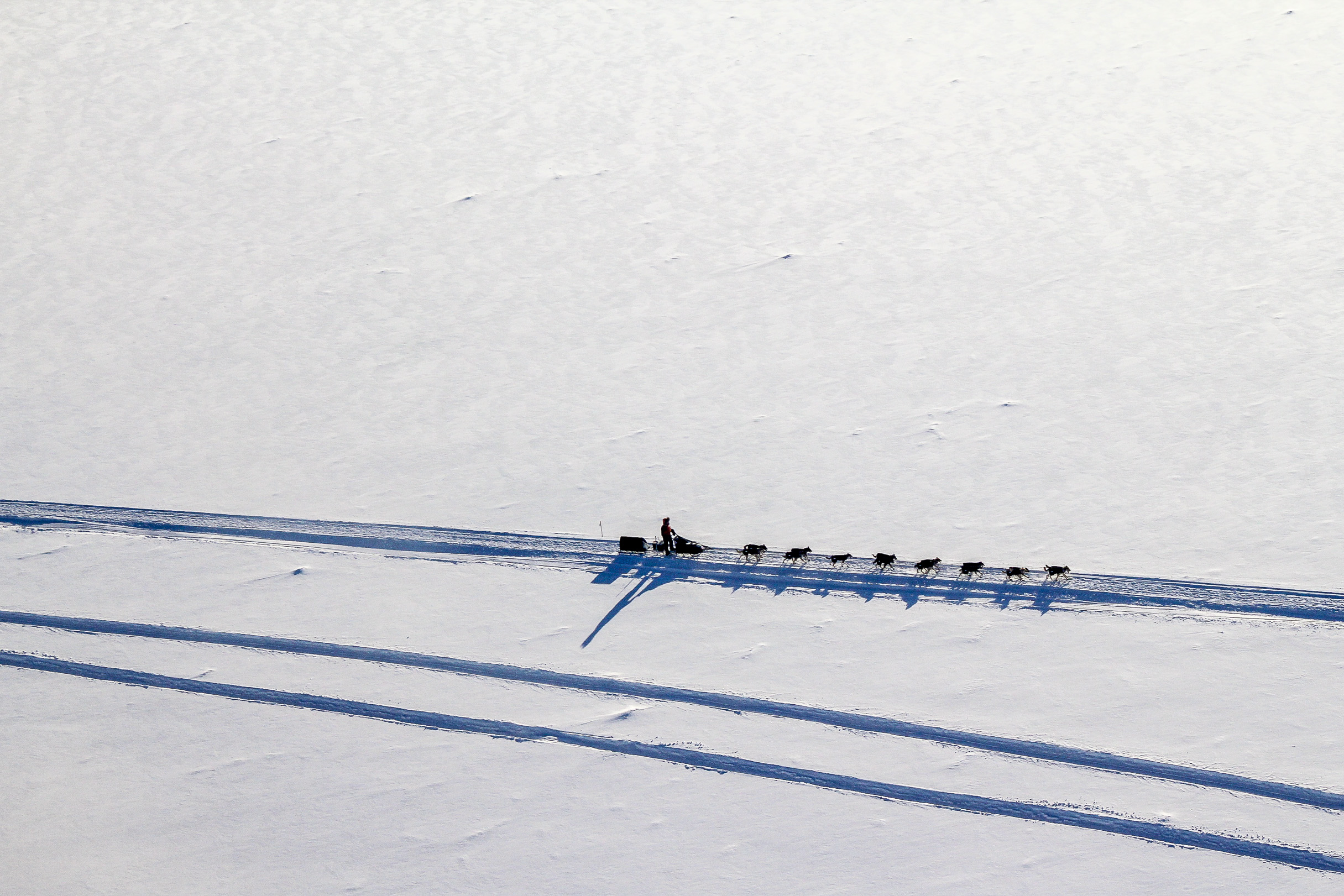
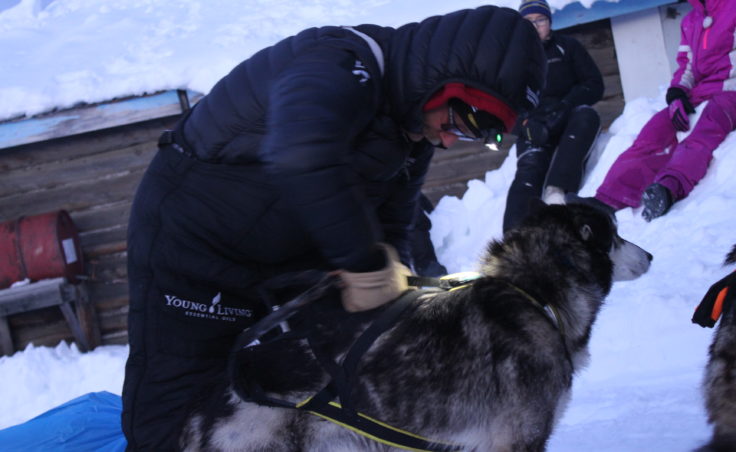
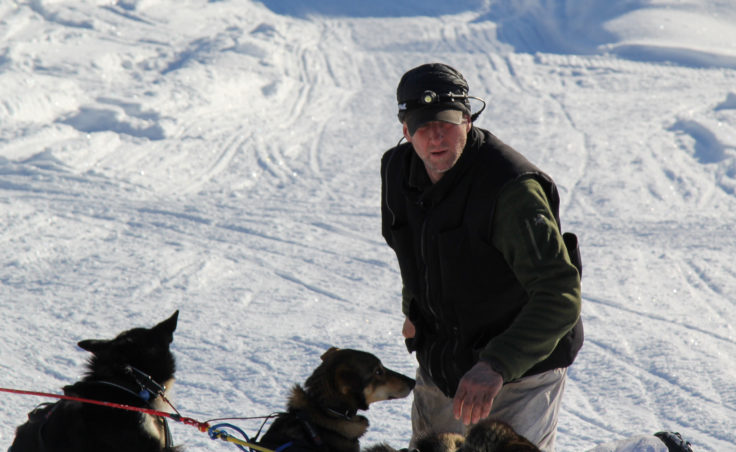
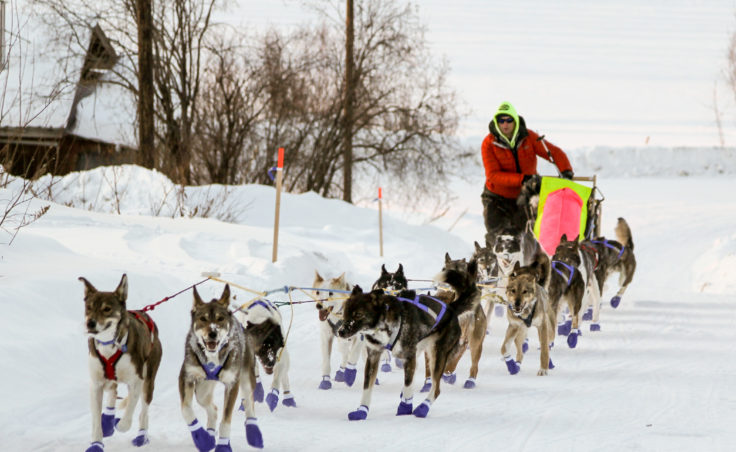
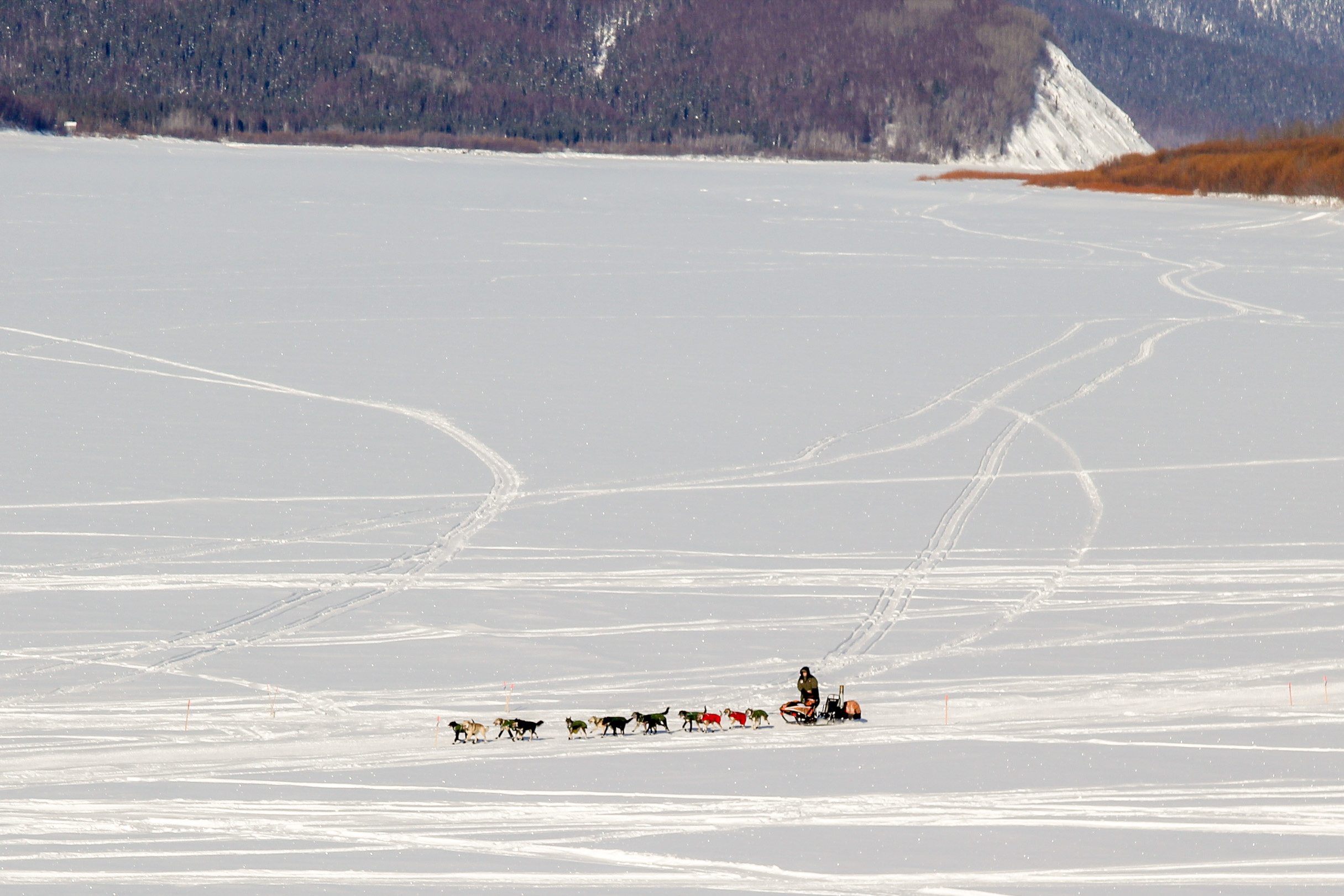
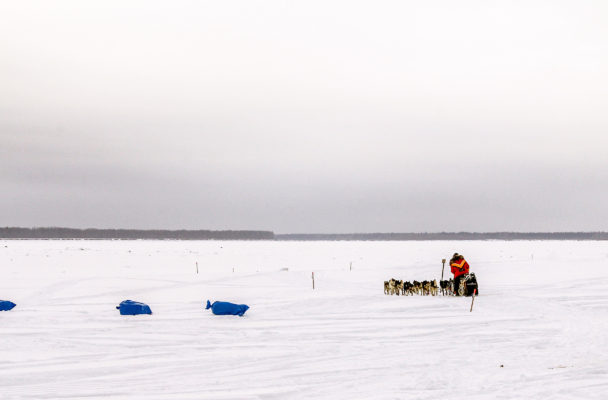
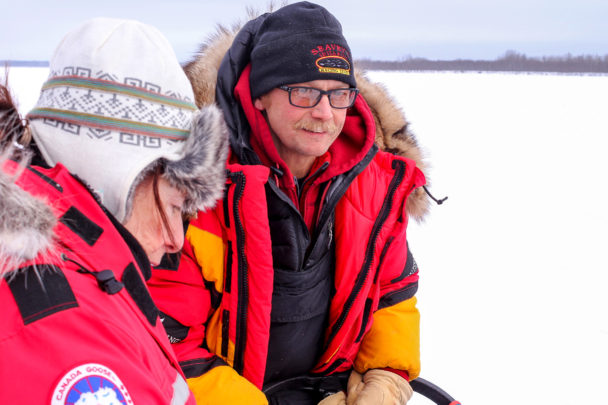
Rick Casillo mushes out of Unalakleet during the Iditarod. (Photo by Zachariah Hughes/Alaska Public Media)
Mushers who have been competing in the Iditarod a long time have relationships and traditions they revisit each time they run the race.
When Martin Buser gets to Unalakleet, that means a bag of muktuk.
“I love eating the local food, and for about 15 years, a little girl would come and meet me, no matter what time of my arrival, her mom would drag her down,” Buser said. “Now, of course, the girl is grown up and out of Unalakleet.”
That tradition is being held up by someone new, who stood patiently by Buser’s dog team before handing him a zip-lock bag of whale skin and blubber.
“This little boy has come and brought me muktuk, local boy Wasook Jones, brings me muktuk every time I show up, inconveniencing himself and his family to make sure I have some of the most delicious muktuk around,” Buser said. “It’s just always heart-warming when he shows up and brings me that. I always gobble it down right away.”
As Buser watered his dogs, he chatted with Clarence Towarak, who has come down to say hello to the musher each year since the 1980s.
As Buser attended to his dogs, Towarak explained that when mushers are at the front of the pack, they don’t have much time or energy for talking with folks.
“At least he’s got a sense of humor at this point in time,” Towarak said. “Those guys in the top five to 10, they’re all business.”
It’s not been a great race for Buser.
His dogs have been persistently sick, which, at one point, made him doubt he’d be able to finish. That’s never occurred.
In nearly four decades of mushing, Buser hasn’t scratched in an Iditarod.
But the worst seems to be over, and he said the dogs finally looked ready to run.
“All we need to do is get it done,” Buser said. “Just get to Nome, get this over with, that’s all I need. Get another one under the books and regroup.”
This will be Buser’s 34th full Iditarod if he finishes.
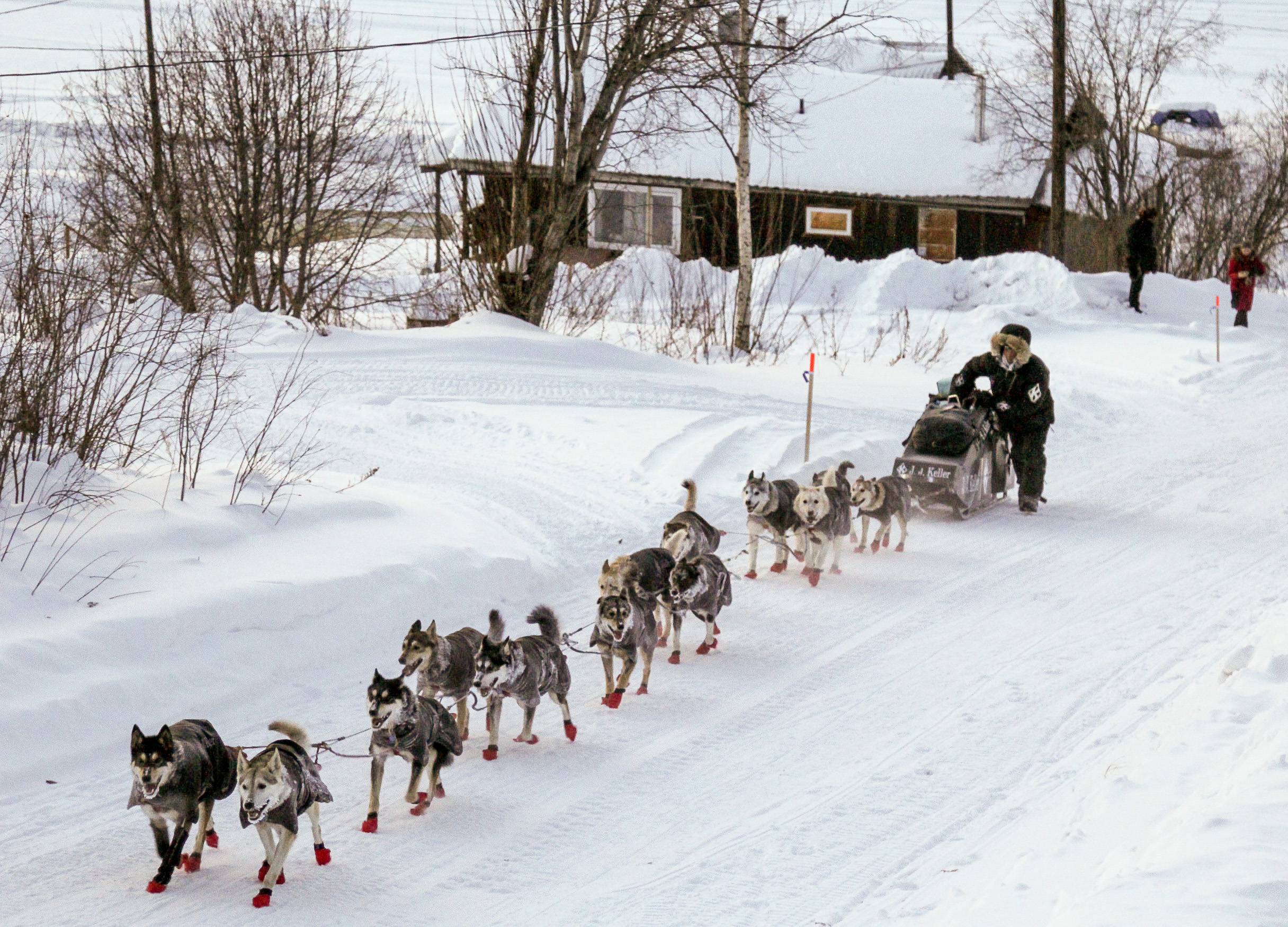
Mitch Seavey beds down his team in Kaltag during the Iditarod. Seavey was expected to finish in Nome sometime Tuesday evening. (Photo by Ben Matheson/KNOM)
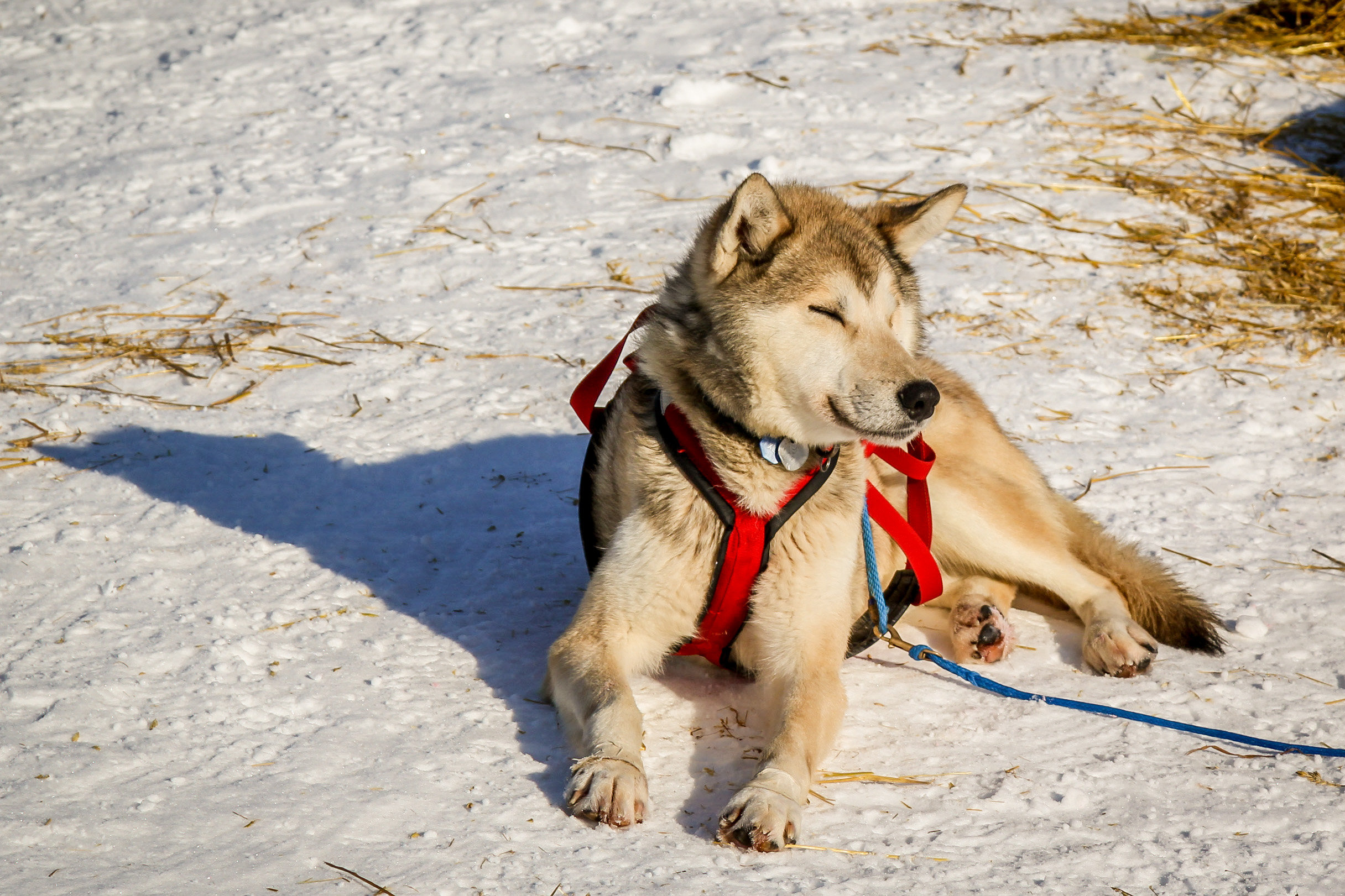
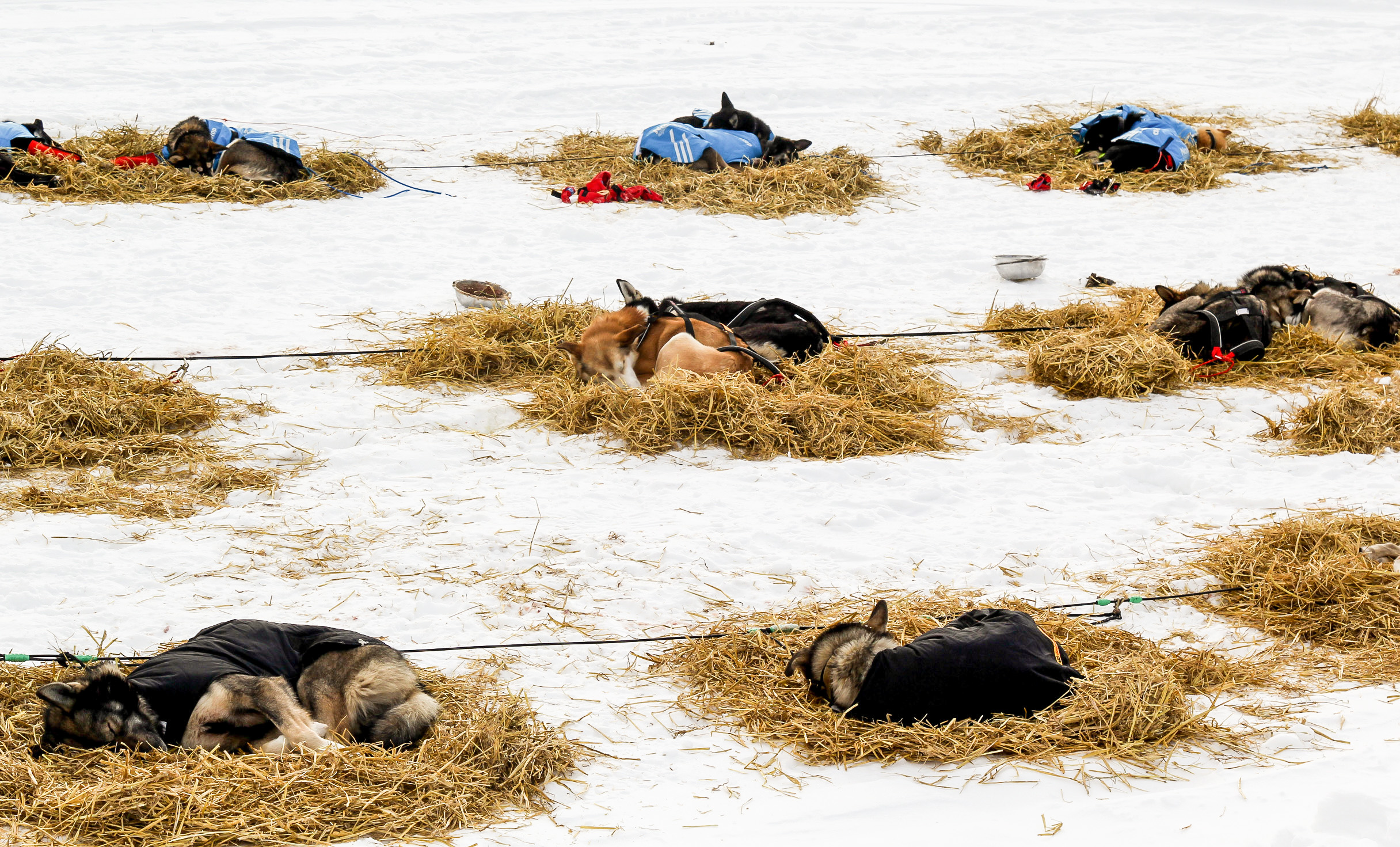
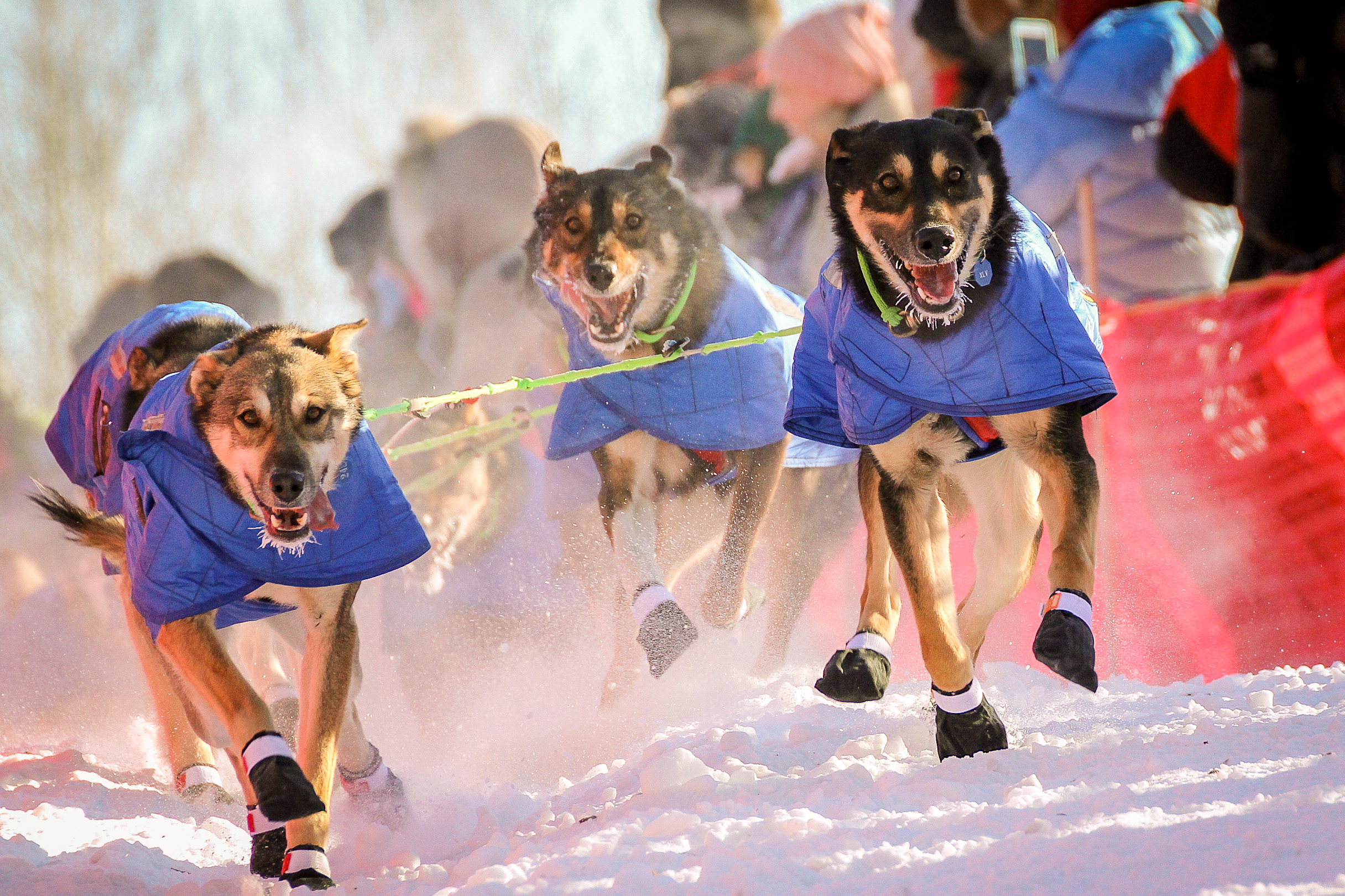
A sleepy sled dog lays down in Kaltag during the Iditarod. (Photo by Zachariah Hughes/Alaska Public Media)
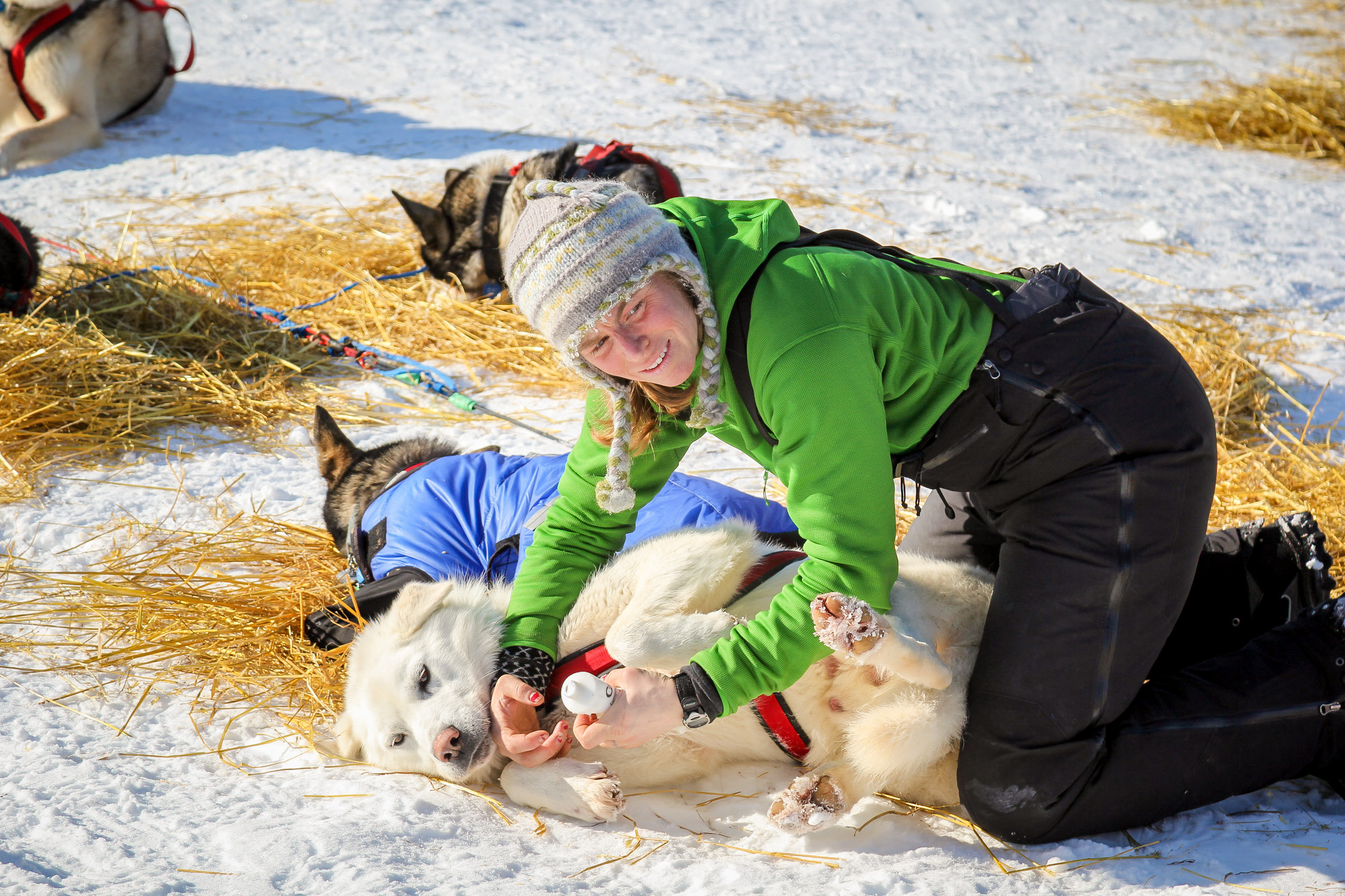
Katherine Keith tending to her dogs in Kaltag before departing for Unalakleet during the Iditarod. (Photo by Zachariah Hughes, Alaska Public Media)
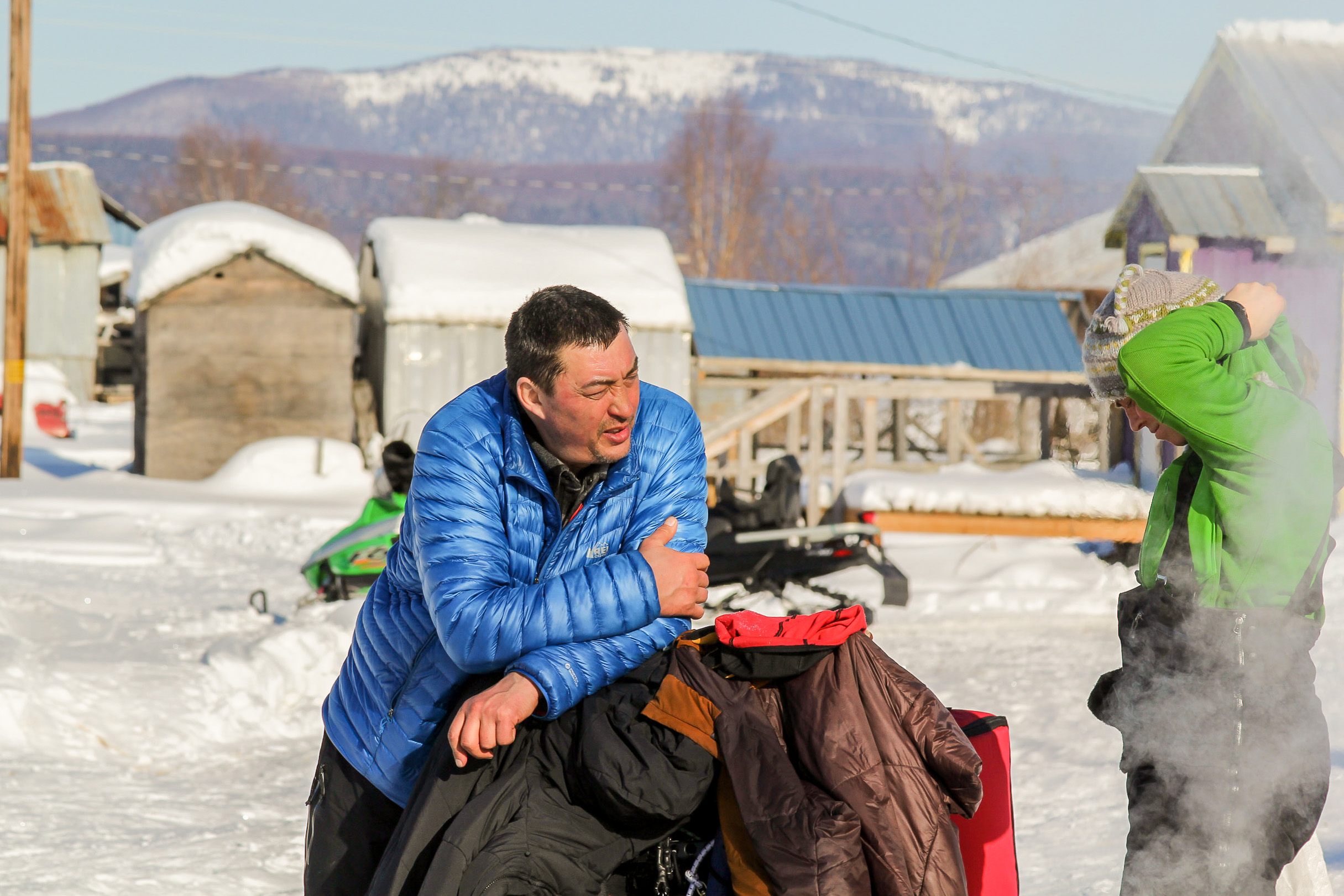
John Baker and Katherine Keith talk at the checkpoint in Kaltag in the Iditarod. (Photo by Zachariah Hughes, Alaska Public Media)
Jon Baker and Katherine Keith in Kaltag during the Iditarod. (Photo by Zachariah Hughes, Alaska Public Media)
Scott Smith at the checkpoint in Galena during the Iditarod. (Photo by Zachariah Hughes, Alaska Public Media)
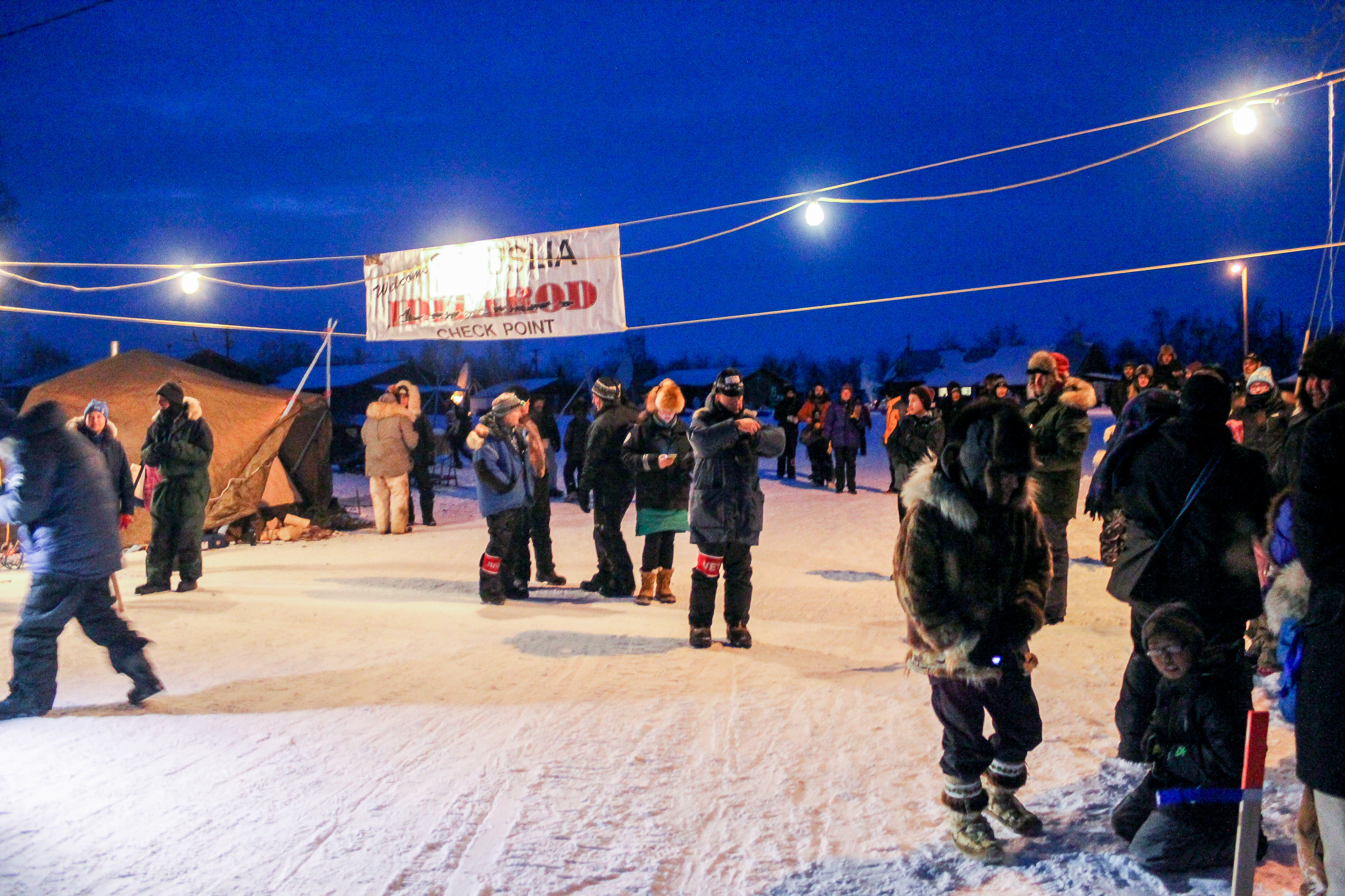
Huslia residents came out in force to welcome the first musher, Mitch Seavey, on Thursday night, March 9, 2017, during the Iditarod. (Photo by Ben Matheson/KNOM)
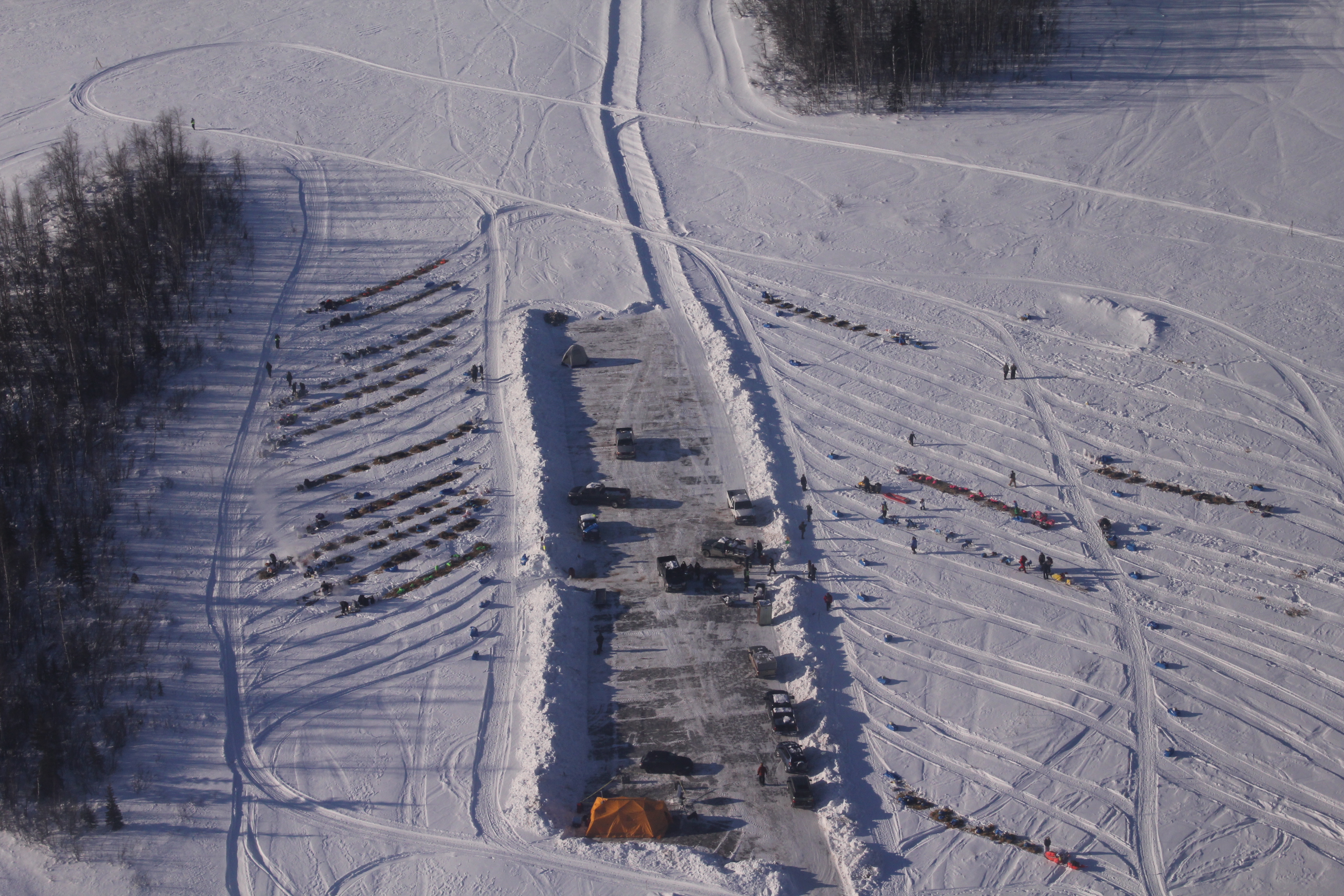
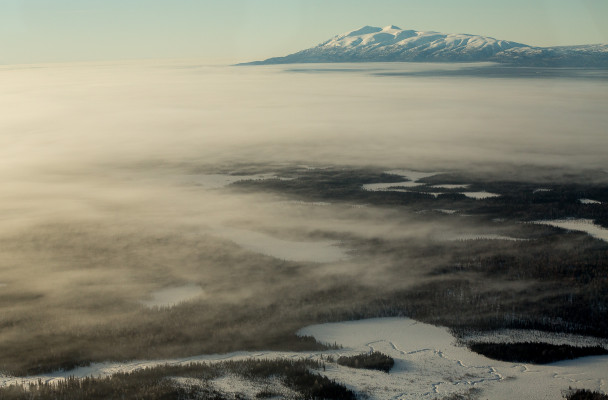
An aerial view near the Alaska Range. (Photo by David Dodman/KNOM)
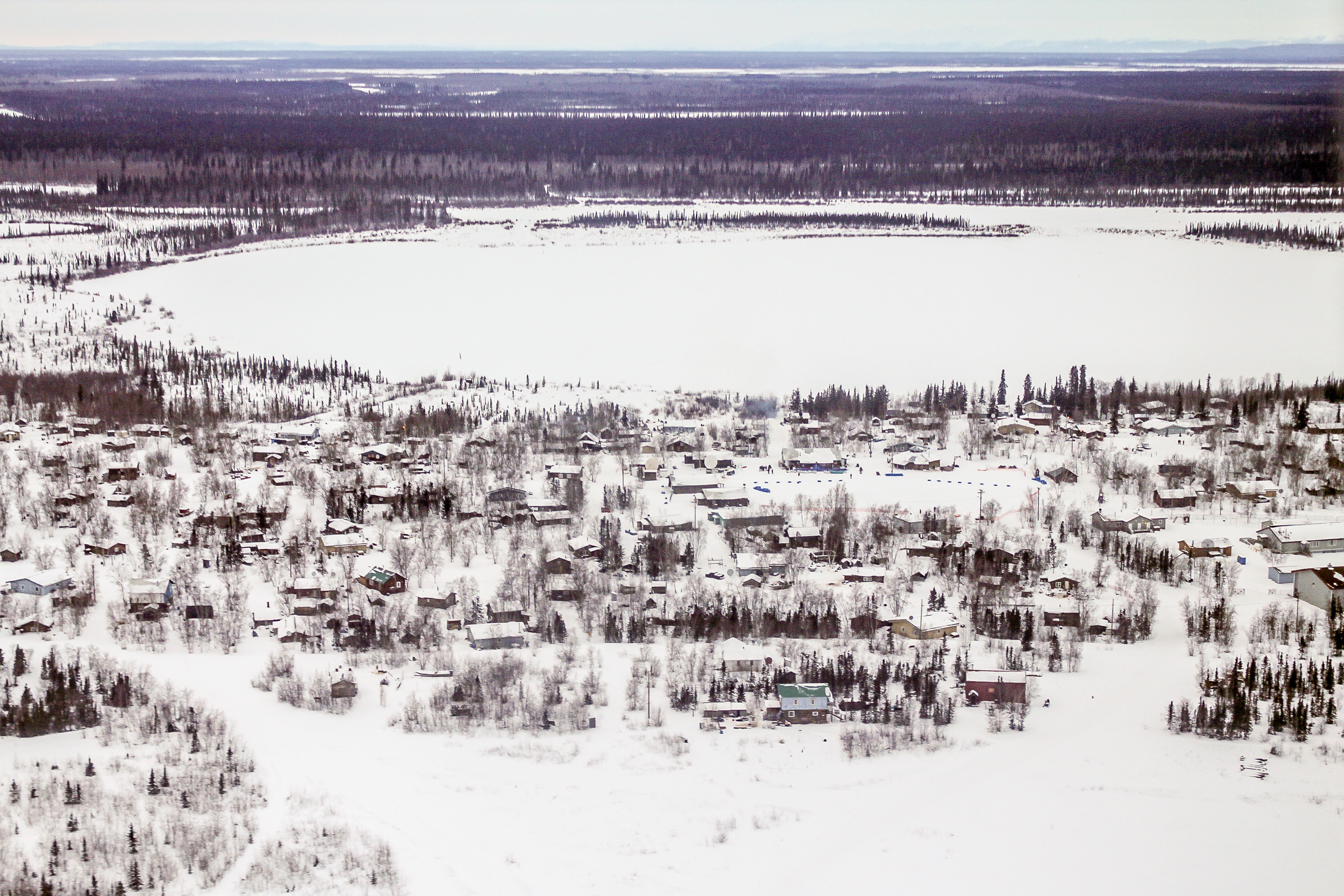
Huslia is hosting the Iditarod race for the second time in history. (Photo by Ben Matheson/KNOM)
Sleepy sled dogs belonging to Pete Kaiser, Ray Redington, Jr., and Jason Mackey rest at Galena during the Iditarod. (Photo by Zachariah Hughes/Alaska Public Media)
Michelle Phillips mushes toward the Galena checkpoint Thursday during the Iditarod. (Photo by Zachariah Hughes/Alaska Public Media)
Wade Marrs was the first musher to reach the Ruby checkpoint of the Iditarod, coming off the Yukon River into town at sunset. (Photo by Zachariah Hughes/Alaska Public Media)
Aliy Zirkle gets water while stopped Thursday, March 9, 2017, at the Nenana checkpoint of the Iditarod. (Photo by Zachariah Hughes/Alaska Public Media)
Upon arriving in Ruby, Dallas Seavey quickly attended to chores during the Iditarod. (Photo by Zachariah Hughes/Alaska Public Media)
Dallas Seavey arrives second to Ruby just after the sun set Wednesday night during the Iditarod. (Photo by Zachariah Hughes/Alaska Public Media)
Ruby, on the south bank of the Yukon River, seen before mushers started arriving Wednesday during the Iditarod. (Photo by Zachariah Hughes/Alaska Public Media)
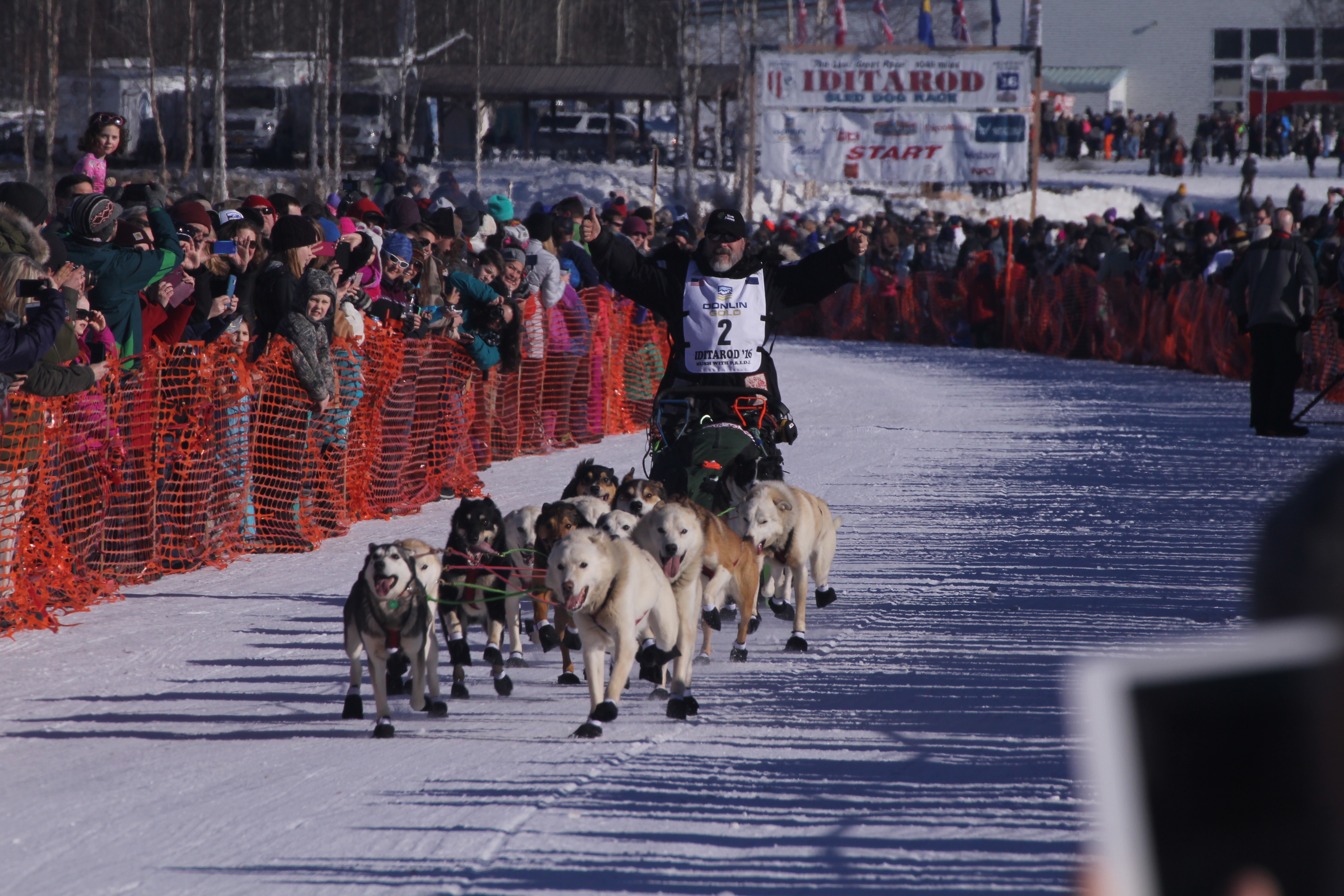
Two-time champion Mitch Seavey begins his Iditarod run at the Fairbanks re-start on Monday. (Photo by Ben Matheson/KNOM)
A team travels on the Iditarod trail to Manley Hot Springs. (Photo by Ben Matheson/KNOM)
A team travels on the Iditarod trail to Tanana. (Photo by Ben Matheson/KNOM)
Nicolas Petit’s Iditarod team begins its 2017 race in Fairbanks. (Photo by Ben Matheson/KNOM)
Martin Buser is chasing his fifth Iditarod title in 2017. (Photo by Ben Matheson/KNOM)
The Manley Checkpoint (Photo by Ben Matheson/ KNOM)
Annie Kelley is the Teacher on the Trail for the 2017 Iditarod (Photo by Wesley Early/Alaska Public Media)
Teams began the journey to Nome from the re-start at Willow Lake in Iditarod 44 . (Photo by Ben Matheson/Alaska Public Media)
Mitch Seavey beds down his team in Kaltag during the Iditarod. Seavey was expected to finish in Nome sometime Tuesday evening. (Photo by Ben Matheson/KNOM)
Updated | 2:11 p.m. Tuesday
Mitch Seavey’s speed continues to exceed expectations. With Seavey out of the Safety checkpoint at 1:10 p.m. Tuesday, an arrival in Nome as early as 3:30–4 p.m. is now possible.
Original story | noon Tuesday
Nome may be less than 24 hours away from its 2017 Iditarod finish.
Assuming no unexpected complications or changes in his pace, Mitch Seavey could arrive under the Burled Arch as this year’s Iditarod champion by about 7 p.m. Tuesday — perhaps slightly earlier.
The elder Seavey, currently Iditarod’s race leader, departed the Elim checkpoint at 6:13 p.m. Monday with 12 dogs, having spent two hours 47 minutes resting there.
A good rule of thumb for approximating an Iditarod champion’s finish is to add 24 hours to his or her departure from Elim.
This would, therefore, place Mitch Seavey in Nome at about 6:15 p.m. Tuesday.
Another, slightly more complicated means of reckoning places Mitch Seavey in Nome around the same time.
In 2015, when the Iditarod ran the same route as this year, Dallas Seavey, the eventual champion, arrived in Elim at 11:51 p.m. on the Monday a week after the race start. This year,
Mitch Seavey arrived in Elim about eight and a half hours earlier than Dallas in 2015. Both men — Dallas in 2015, Mitch in 2017 — rested in Elim for about 3 hours. If Mitch Seavey matches his son’s 2015 pace from Elim to Nome — which may be a reasonable guess, given that both Seaveys have similar mushing mentalities, similar dogs and, of course, come from shared mushing backgrounds — we might expect Mitch to arrive eight and a half hours earlier than Dallas did, which would place him in Nome at 7:45 p.m. Tuesday (8.5 hours earlier than Dallas’ 2015 arrival at 4:15 a.m. Wednesday).
Nome could see an early evening finish 6:15-7:45 p.m.
Of course, these estimates assume the absence of unpredictable factors like strong winds or other disruptions on the trail to Nome.
Certain areas near Safety, such as Topkok and “the Blowhole,” are especially notorious for their unpredictable, sometimes-suddenly-blustery weather.
Such a storm — in a remarkable series of events — derailed the Iditarod run of Jeff King in 2014, pushing Aliy Zirkle to second and giving Dallas Seavey the first of his (so far) three-in-a-row Iditarod victories.
But if Mitch Seavey’s current pace continues, the 2017 race seems to be his to win or lose. And if he does win, Nome might expect him around dinnertime Tuesday.
Rick Casillo mushes out of Unalakleet during the Iditarod. (Photo by Zachariah Hughes/Alaska Public Media)
Martin Buser poses with a fan in Unalakleet during the Iditarod. (Photo by Zachariah Hughes/Alaska Public Media)
A sleepy sled dog lays down in Kaltag during the Iditarod. (Photo by Zachariah Hughes/Alaska Public Media)
Jeff King mushes into Kaltag in the Iditarod. (Photo by Zachariah Hughes/Alaska Public Media)
Katherine Keith tending to her dogs in Kaltag before departing for Unalakleet during the Iditarod. (Photo by Zachariah Hughes, Alaska Public Media)
John Baker and Katherine Keith talk at the checkpoint in Kaltag in the Iditarod. (Photo by Zachariah Hughes, Alaska Public Media)
Jon Baker and Katherine Keith in Kaltag during the Iditarod. (Photo by Zachariah Hughes, Alaska Public Media)
Scott Smith at the checkpoint in Galena during the Iditarod. (Photo by Zachariah Hughes, Alaska Public Media)
An aerial view near the Alaska Range. (Photo by David Dodman/KNOM)
Mitch Seavey was the first musher to reach Huslia on Thursday night, March 10, 2017, during the Iditarod. (Photo by Ben Matheson/KNOM)
Huslia residents came out in force to welcome the first musher, Mitch Seavey, on Thursday night, March 9, 2017, during the Iditarod. (Photo by Ben Matheson/KNOM)
Huslia is hosting the Iditarod race for the second time in history. (Photo by Ben Matheson/KNOM)
Sleepy sled dogs belonging to Pete Kaiser, Ray Redington, Jr., and Jason Mackey rest at Galena during the Iditarod. (Photo by Zachariah Hughes/Alaska Public Media)
Michelle Phillips mushes toward the Galena checkpoint Thursday during the Iditarod. (Photo by Zachariah Hughes/Alaska Public Media)
Wade Marrs was the first musher to reach the Ruby checkpoint of the Iditarod, coming off the Yukon River into town at sunset. (Photo by Zachariah Hughes/Alaska Public Media)
Dallas Seavey arrives second to Ruby just after the sun set Wednesday night during the Iditarod. (Photo by Zachariah Hughes/Alaska Public Media)
Ruby, on the south bank of the Yukon River, seen before mushers started arriving Wednesday during the Iditarod. (Photo by Zachariah Hughes/Alaska Public Media)
Upon arriving in Ruby, Dallas Seavey quickly attended to chores during the Iditarod. (Photo by Zachariah Hughes/Alaska Public Media)
Two-time champion Mitch Seavey begins his Iditarod run at the Fairbanks re-start on Monday. (Photo by Ben Matheson/KNOM)
A team travels on the Iditarod trail to Manley Hot Springs. (Photo by Ben Matheson/KNOM)
A team travels on the Iditarod trail to Tanana. (Photo by Ben Matheson/KNOM)
Martin Buser is chasing his fifth Iditarod title in 2017. (Photo by Ben Matheson/KNOM)
Nicolas Petit’s Iditarod team begins its 2017 race in Fairbanks. (Photo by Ben Matheson/KNOM)
Annie Kelley is the Teacher on the Trail for the 2017 Iditarod (Photo by Wesley Early/Alaska Public Media)
Teams began the journey to Nome from the re-start at Willow Lake in Iditarod 44 . (Photo by Ben Matheson/Alaska Public Media)
The Manley Checkpoint (Photo by Ben Matheson/ KNOM)
Jeff King mushes into Kaltag in the Iditarod. (Photo by Zachariah Hughes/Alaska Public Media)A sleepy sled dog lays down in Kaltag during the Iditarod. (Photo by Zachariah Hughes/Alaska Public Media)
Iditarod teams have left the Yukon river and reached the Bering Sea coast.
Mushers are shedding equipment, dropping slow dogs, and looking to make a move in the final 300 miles of the Iditarod.
Willow musher Wade Marrs was the first to reach Unalakleet, winning a bag of Bering Sea gold nuggets worth $3,500 as part of the Wells Fargo Gold Coast Award.
But it was two-time champion Mitch Seavey who left first, breezing through the checkpoint in the bright Sunday afternoon.
After posting some of the fastest run times among the leaders, Seavey said in Kaltag he’s focused on keeping his team moving at a fast clip for the final third of the race:
“Whatever we do will be to keep the speed in the dogs. I don’t want to slow down; it takes too long and is too boring,” he said. “Maybe right at the end. Keep resting them, keep taking care of them.”
“We need to be clever because the guys behind me haven’t given up,” Seavey said.
After arriving, Seavey has swapped out his large sled for a smaller, more nimble one to head toward the coast. He has systematically rotated out dogs from the gangline to rest in the sled, but now, that technique is over.
A dozen sleds bearing freight tags were lined up in Unalakleet, awaiting mushers looking to pick up speed.
Racing in the front, Seavey will work his way north, seeking to hold off four mushers who are all decades his junior.
“I guess I’m little bit anxious, because I’m in a position where I can win this thing if something doesn’t go wrong,” Seavey said. “My son, Dallas, is extremely tough and extremely competitive. He’s already talking to me like, ‘oh, you’ve got this sewn up.’ I think he’s playing poker. I don’t think he believes that.”
“He won’t quit; he won’t give up. So, it will be a race,” he said. “I think I have better speed and a better position, but that can change.”
After completing the portage trail over from Kaltag, Dallas Seavey arrived Sunday afternoon in Unalakleet and rested just shy of four hours before leaving in pursuit of his father.
He’s resisting the temptation to chase down his dad.
“We’re going to run these guys; we’re going to keep running our race. I’m not saying we’re tapping out. The simple math says chasing him doesn’t help anybody; chasing him makes us vulnerable to mushers behind us, and all of that is really irrelevant. I’m going to get these guys down the trail as fast as possible. If we end up closer to him at the finish line, I guess we gained on him.”
The younger Seavey said he expects the gap to widen between him and his dad, but he’s not throwing in the towel.
“[In] 2014, I thought I finished in third. You never give up, you keep plugging away,” he said. “If my dad gets lost and is in the middle of nowhere for two hours, I don’t want to say ‘what if I had pushed harder, would I have been able to snatch that spot?’”
Beginning with the Fairbanks start on the Chena River, the 2017 Iditarod trail has been dominated by river miles.
That changes now, as the course takes teams over sea ice and exposed, treeless expanses.
Coastal dog mushing is all about the wind, said Middy Johnson, Unalakleet checkpoint boss and Iditarod veteran.
“The biggest thing is the wind: you can face it between here and Shaktoolik, Shaktoolik on, you can face it at Safety, at Topkok,” Johnson said. “It’s brought teams to a halt before.”
2011 champion John Baker lives in Kotzebue and has built a team in those conditions.
“Any type of weather comes at any minute.”
For the mushers chasing Mitch Seavey, any opening is welcome, but it needs to come soon if they’re to reel in the two-time champion on the trail to Nome.
Katherine Keith tending to her dogs in Kaltag before departing for Unalakleet during the Iditarod. (Photo by Zachariah Hughes, Alaska Public Media)
Jon Baker and Katherine Keith in Kaltag during the Iditarod. (Photo by Zachariah Hughes, Alaska Public Media)
John Baker and Katherine Keith talk at the checkpoint in Kaltag in the Iditarod. (Photo by Zachariah Hughes, Alaska Public Media)
Scott Smith at the checkpoint in Galena during the Iditarod. (Photo by Zachariah Hughes, Alaska Public Media)
Mitch Seavey travels on the Yukon River toward Kaltag after leaving Nulato. (Photo by Ben Matheson/KNOM)
Mitch Seavey blasted through Nulato without stopping to rest as the trail heads toward Kaltag. (Photo by Ben Matheson/KNOM)
In Kaltag, Mitch Seavey beds his dogs with straw. (Photo by Ben Matheson/KNOM)
Kaltag is the final checkpoint before the race moves toward Alaska’s west coast. Photo: Ben Matheson, KNOM.
Mitch Seavey was the first musher to reach Huslia on Thursday night, March 10, 2017, during the Iditarod. (Photo by Ben Matheson/KNOM)
Huslia residents came out in force to welcome the first musher, Mitch Seavey, on Thursday night, March 9, 2017, during the Iditarod. (Photo by Ben Matheson/KNOM)
Huslia is hosting the Iditarod race for the second time in history. (Photo by Ben Matheson/KNOM)
Sleepy sled dogs belonging to Pete Kaiser, Ray Redington, Jr., and Jason Mackey rest at Galena during the Iditarod. (Photo by Zachariah Hughes/Alaska Public Media)
Michelle Phillips mushes toward the Galena checkpoint Thursday during the Iditarod. (Photo by Zachariah Hughes/Alaska Public Media)
Aliy Zirkle gets water while stopped Thursday, March 9, 2017, at the Nenana checkpoint of the Iditarod. (Photo by Zachariah Hughes/Alaska Public Media)
Aliy Zirkle coming into the checkpoint in Galena on Thursday. Zirkle has had to upend her race plans and declare a 24-hour rest in Galena because of sick dogs. (Photo by Zachariah Hughes, Alaska Public Media)
Jeff King bringing water to his team in Galena during the Iditarod. (Photo by Zachariah Hughes/Alaska Public Media)
Wade Marrs was the first musher to reach the Ruby checkpoint of the Iditarod, coming off the Yukon River into town at sunset. (Photo by Zachariah Hughes/Alaska Public Media)
Upon arriving in Ruby, Dallas Seavey quickly attended to chores during the Iditarod. (Photo by Zachariah Hughes/Alaska Public Media)
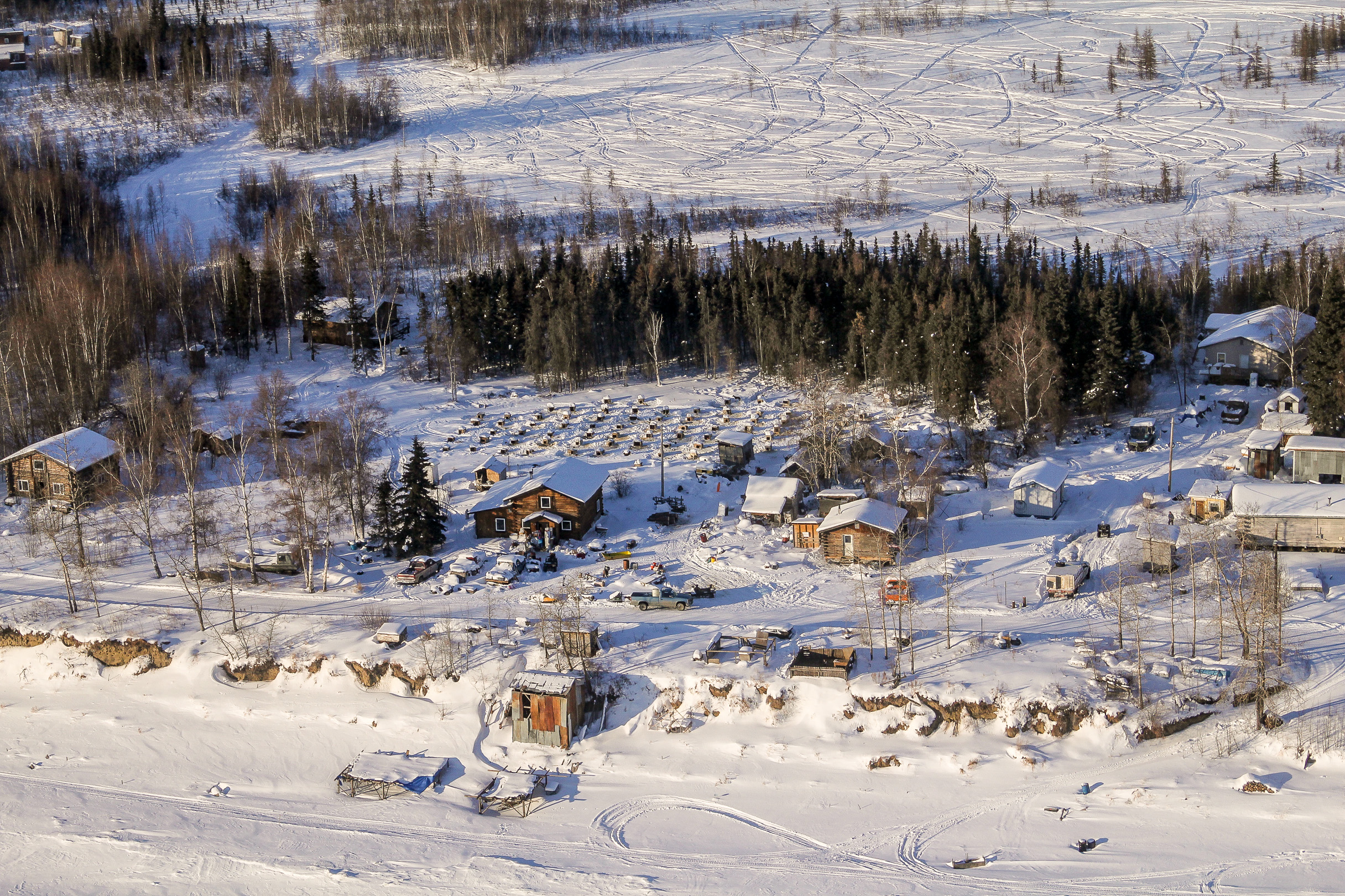
Ruby, on the south bank of the Yukon River, seen before mushers started arriving Wednesday during the Iditarod. (Photo by Zachariah Hughes/Alaska Public Media)
Ruby is located on the south bank of the Yukon River. (Photo by Zachariah Hughes/Alaska Public Media)
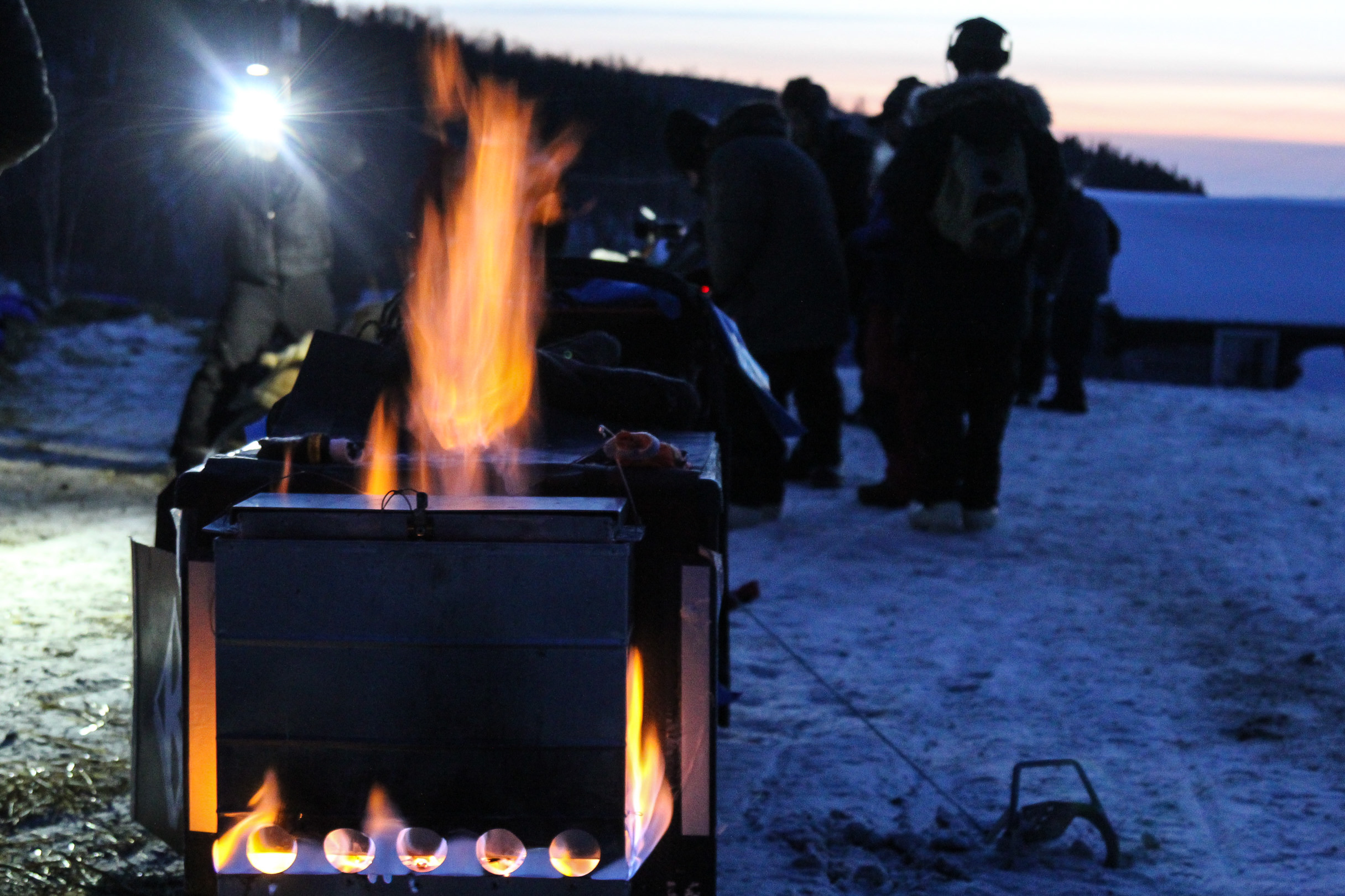
Dallas Seavey’s high-tech new sled includes a mounted, rectangular cook stove, which he says has more surface area to heat water in a shorter amount of time. (Photo by Zachariah Hughes/Alaska Public Media)
Dallas Seavey arrives second to Ruby just after the sun set Wednesday night during the Iditarod. (Photo by Zachariah Hughes/Alaska Public Media)
Nicolas Petit was the first musher to reach the Yukon River. (Photo by Ben Matheson/KNOM)
Two-time champion Mitch Seavey begins his Iditarod run at the Fairbanks re-start on Monday. (Photo by Ben Matheson/KNOM)
A team travels on the Iditarod trail to Manley Hot Springs. (Photo by Ben Matheson/KNOM)
The checkpoint of Tanana is the first stop on the Yukon River. (Photo by Ben Matheson/KNOM)
A team travels on the Iditarod trail to Tanana. (Photo by Ben Matheson/KNOM)
Martin Buser is chasing his fifth Iditarod title in 2017. (Photo by Ben Matheson/KNOM)
Nicolas Petit’s Iditarod team begins its 2017 race in Fairbanks. (Photo by Ben Matheson/KNOM)
Annie Kelley is the Teacher on the Trail for the 2017 Iditarod (Photo by Wesley Early/Alaska Public Media)
Iditarod mushers face a grueling next few days.
Not just those fighting tooth-and-nail at the top of the pack but, also, everyone else with competitive ambitions jockeying for spots in the top 10, 20 and 30.
At this point in the race, the leader board is hardly set in stone. At the Kaltag checkpoint, a lot of mid-pack mushers are getting ready to make moves.
This is the fourth Iditarod for Katherine Keith of Kotzebue, but she’s not where she wants to be.
“I had hoped for a top 15 or 20 finish, and that’s such a competitive space, so I’m not sure that that’s what we’ll be looking for, but I haven’t given up yet.”
Keith is running her best race yet, with very few mistakes. She overslept once, but just by 20 minutes. And her hands were acting up. The deep cold early along the trail revived frostbite from the Yukon Quest a few weeks ago.
“It slows me down. I have to take more time for doing things that require fine-motor skills, so, I just give myself more time,” Keith said. “Instead of 20 minutes to bootie, I have to give myself 30.”
“Everything’s Velcro,” she said. “Velcro’s, like, the worst thing when you have fingertips that aren’t happy.”
Even at the top of her game, Keith was just barely one of the top 20 mushers into Kaltag.
She’s down to just 10 dogs heading toward the coast.
At one point, her partner, John Baker, an Iditarod champion, was parked next to her, and she asked him how with such relentless competition he’d ever been able to win.
“It just boggles me. I have no idea how people accomplish it.”
Keith is hoping she’ll be able to maintain an edge once teams start hitting the coast. With its hills and rolling terrain, she thinks her team will be at an advantage over teams that are more accustomed to flat trail.
Others, like Noah Burmeister, have been saving up energy in order to let their teams speed up in the last few 100 miles of the race.
“I’ve been trying to keep ‘em slowed down and takin’ it easy,” Burmeister said. “Saving some for the coast. You gotta save it for the coast. You don’t want to start pushin’ too early.”
Burmeister got 11th place last year. This time around, that’s looking like a long shot.
He’s had some problems with his team and made a mistake early on sticking to his planned strategy instead of trying to push ahead of the pack to get to better trail conditions.
The early cold made for sugary snow, and the trail was churned up more with each passing sled. Like a lot of competitors, Burmeister got slowed down.
Now, his aim is to overtake tired teams that pushed too hard getting into the positions where they are now.
“I’d like to climb up another five or 10 places. But we’ll just see what happens with the teams in front, and how hard they’re pushing and if they’re pushing too early.”
Burmeister is hardly the only one hoping a second wind will nudge him up in the leaderboard.
Just a few spots away in the dog lot is Scott Smith, who finished 10th last year. His team’s been fighting a bug. But now, he thinks they’re about to hit their stride.
“I’d say we’re kinda, like, in the building-up end of things, which is good,” Smith said. “I’ve had two or three key dogs in here start to get healthy, which is optimal for hitting the coast. I just want to put myself in a position to pick up the pieces.”
At this point, Smith doesn’t even know which position he’s in, let alone who he might feasibly overtake. But he’s planning a big push.
Not long after we talk, Keith finishes packing her sled, getting ready to go over the long portage from the Yukon River over to the Bering Sea Coast.
As she does, she chats with a different former champion, Joe Runyan.
“Oh, you’re taking a new sled, huh?” “Yeah, I am. Compared to this big old thing.” “Oh, you’ll fly.” “Yeah, I’m excited.” “Ok, have fun.” “Yeah, it’s very cathartic, it’s like ‘I need this! I need this!’”
And with that, Keith and her 10 dogs trotted off toward Unalakleet.
BETHEL, Alaska (AP) — Tribal members who live near Bethel are asking the City Council to require Bethel liquor stores to only sell alcohol to customers with Bethel IDs.
KYUK-AM reports that representatives from more than a dozen tribes in the Yukon-Kuskokwim Delta met in Bethel this week to discuss the impact Bethel’s alcohol sales are having on their villages.
Many tribal members say they have seen an uptick in domestic violence, drunken driving and other alcohol-related offenses since Bethel began selling alcohol for the first time in more than 40 years last year.
The tribal group plans to ask Bethel officials to limit alcohol sales to city residents. They also encouraged each Yukon Kuskokwim Delta to create a safety plan to deal with alcohol impacts in their communities.
Wade Marrs was the first musher to reach the Ruby checkpoint of the Iditarod, coming off the Yukon River into town at sunset. (Photo by Zachariah Hughes/Alaska Public Media)
Upon arriving in Ruby, Dallas Seavey quickly attended to chores during the Iditarod. (Photo by Zachariah Hughes/Alaska Public Media)
Ruby, on the south bank of the Yukon River, seen before mushers started arriving Wednesday during the Iditarod. (Photo by Zachariah Hughes/Alaska Public Media)
Ruby is located on the south bank of the Yukon River. (Photo by Zachariah Hughes/Alaska Public Media)
Dallas Seavey’s high-tech new sled includes a mounted, rectangular cook stove, which he says has more surface area to heat water in a shorter amount of time. (Photo by Zachariah Hughes/Alaska Public Media)
Dallas Seavey arrives second to Ruby just after the sun set Wednesday night during the Iditarod. (Photo by Zachariah Hughes/Alaska Public Media)
Wade Marrs led two past champions into the Ruby checkpoint last night in the 2017 Iditarod.
Three-hundred-fifty miles into the trail, the racing is underway as teams plot their next moves along hundreds of winding miles on the Yukon River.
Willow musher Wade Marrs arrived first into the checkpoint a little before 7 o’clock.
“There’s a lot of people out here, am I the first one here?” Marrs asked. “You are,” the response came. “Oh wow, that’s cool,” Marrs said.
Marrs quickly tells checkers that he’s declaring his 24-hour rest.
As the first musher to Ruby, Marrs won the Pen Air Spirit of Alaska award, which comes with a special print, plus a handmade gift from Ruby residents.
Marrs’s pause is brief, and he sets off to take care of his chores.
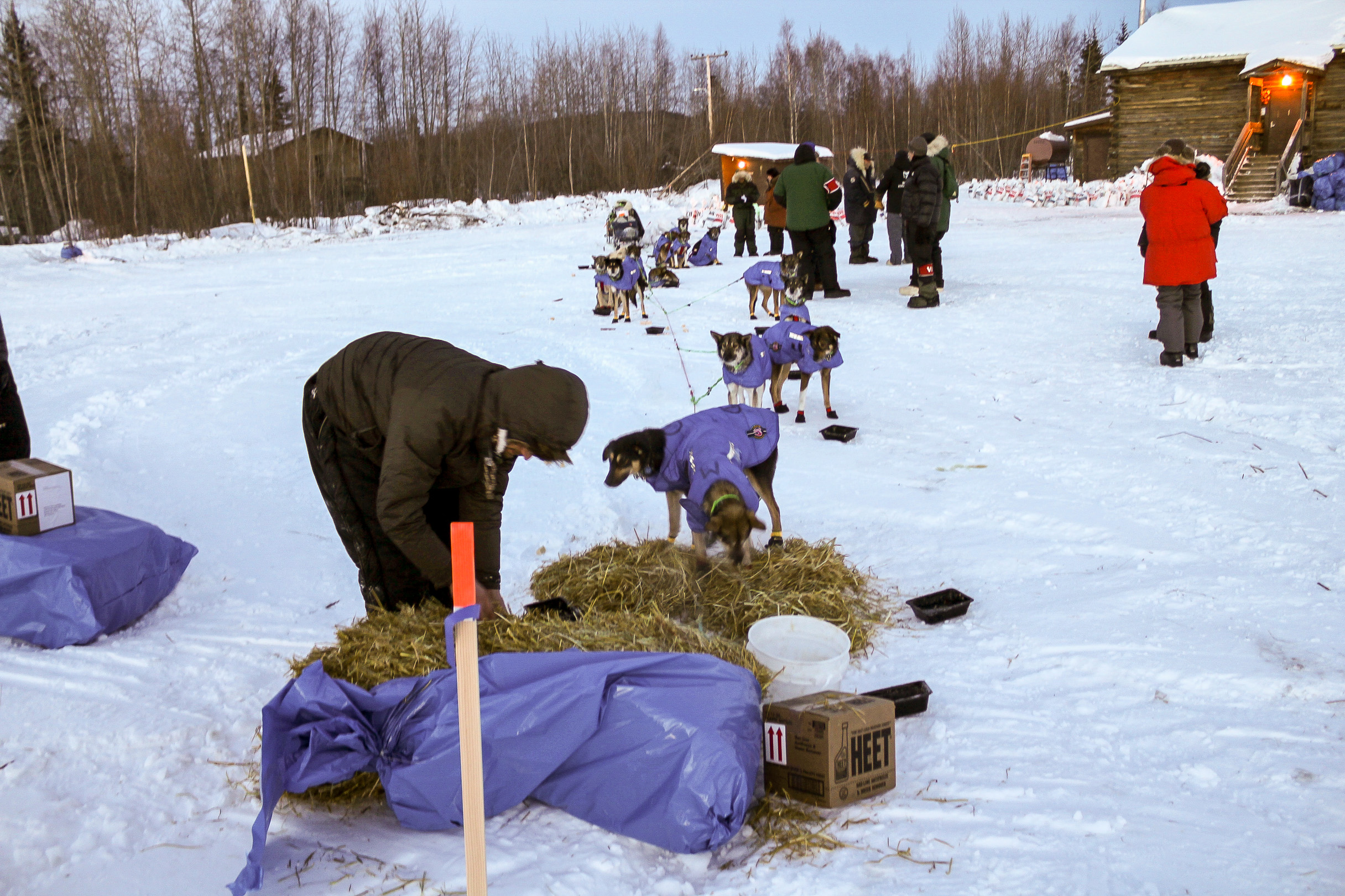
Marrs quickly parks his team to settle in for some rest. He sets down beds of straw and tosses out hunks of frozen salmon, which the team devours.
“These guys are monsters, they’re screaming coming up the hill. Literally barking going down the trail last night,” he said. “I’ve never had a team this animated and amped up.”
“They definitely seem like they’re just down a notch, not on attitude, definitely, but down a notch on something.”
Teams can now take their 24-hour or eight-hour Yukon breaks as they leapfrog one another on opposing schedules. Mushers declare the breaks to checkers, but they don’t commit to it and can leave if they want to.
Marrs was confident in his plan.
“Hopefully, it works out good, as long as Dallas does what I expect him to, it will work out really well.”
That is, he’s expecting Dallas to do the same as 2015, when he took his eight-hour break here, camped outside Galena, and did his 24 down the trail in Huslia.
“I have to try playing his game on him and get a step ahead of him, which we are now, which is perfect. Now, I just need to play my cards right.”
Forty-six minutes later, Dallas Seavey arrives in all black.
“I’m going to declare a 24, and I’m going to declare an 8, and I’m going to declare I’m indecisive.”
Seavey pulls three resting dogs out of his carbon fiber sled and sprints up and down the gang line, doing chores. He throws down thin pieces of foam — camping pads, a novel addition to the straw-piles used to to keep the dogs cozy.
The stretch from Tanana to Ruby is the longest on the trail, nearly 120 miles. Along the way, both Seavey and Marrs rested for about four hours to break up the journey. After leaving Wednesday morning at 1 a.m., the two camped near each other for a morning rest, and hours later found themselves parked a few feet from one another in Ruby.
That was close enough to swap race plans — or at least tentative race plans — as they worked along their dog-lines.
“You taking your 24?” “I think so, yeah. Why not? It’s cold out there.”
Seavey says the critical 24-hour break should be tailored to the specific team and ultimately involves making a bet on the trail to come.
“If I felt the trail was going to be bad, I would have gone farther. It’s a little bit of a bet that the trail is good, and it’s going to benefit me to have a good trail, particularly when it comes to being able to rest dogs in the sled. That’s the short version.”
Dallas’s dad, Mitch Seavey, pulled into Ruby third and says he’ll be sticking around for four to six hours.
“There’s nothing about this team that needs to be 24’ed right now.”
The elder Seavey pulls two dogs out of his sled that he’s rested along the way, on a schedule he described as “secret.”
The next two mushers were cagey, as well.
Nicolas Petit arrived fourth, wearing a polar bear ruff from Kotzebue. He was put off by the steep hills and sharp turns getting back out onto the trail, and didn’t think it was a safe idea to attempt with a super-charged dog-team.
Arriving in fifth, Joar Ulsom was less committal about his plans.
“It’s always good to declare your eight-hour break, because if I was to oversleep, nothing bad would happen.”
Ulsom was relatively upbeat, saying he got a relaxing, hour-long nap in while the sun was up and felt wide-awake.
As the sleepless nights add up, mushers will focus on avoiding mistakes and exploiting any they see by their competitors.