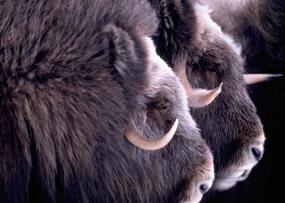
Two muskoxen have been poached near Bethel, and Alaska Wildlife Troopers are searching for whoever is responsible. The Troopers found the two animals near a snowmachine trail between the Bethel dump and Akiachak on Sunday.
The scene described by Troopers was one no hunter could condone:
“One muskox was dead and another appeared to be shot in the eye and other parts of its body. It was limping badly and couldn’t see because of the bullet wound to the eye, so it was kind of staggering around, kind of out of it,” said Brett Gibbens, an Alaska Wildlife Trooper out of McGrath who is handling the case. “So the decision was made to put that second animal down since it was fatally wounded.”
Both muskoxen had been shot multiple times with small caliber firearms.
“Not large caliber rifles like you would normally use if you were going to target muskox if you were going muskox hunting,” said Gibbens.
No meat had been salvaged from either muskox.
Several four-wheelers and one snowmachine were seen leaving the area by the person who discovered the animals. Troopers are seeking information regarding who’s responsible for the poaching. The Alaska Wildlife Safeguard Program is offering a cash reward for information that leads to prosecuting the offenders.
“I know how it is in small communities, and people are sometimes hesitant to step forward with information,” said Gibbens, “but they can do that anonymously through that program.”
Offenders could be charged with taking muskox in a closed area and failure to salvage edible meat.
Poaching animals that are part of a small population affect the whole herd. Gibbens says that illegal killings like these undercut the ability for the muskox herd to grow into a population the area could one day legally hunt.
“Basically, these satellite herds of muskox that move in from the coast come in and establish new territories,” said Gibbens. “And the exciting thing about that is if they’re not poached, they could set up new herds and new territorial ranges and those herds could grow, possibly, to legally huntable populations.”
Troopers salvaged the meat from the two muskoxen and have donated it to charities in Bethel.
Anyone with information about this case can contact the Alaska Wildlife Troopers at 907-574-0491 or Alaska Fish and Wildlife Safeguard at 1-800-478-3377.
An MC at the Make Your Own Bikini contest at Nome’s Polar Bar, announcing the year’s winner and runner up (Photo – Zachariah Hughes, Alaska Public Media)
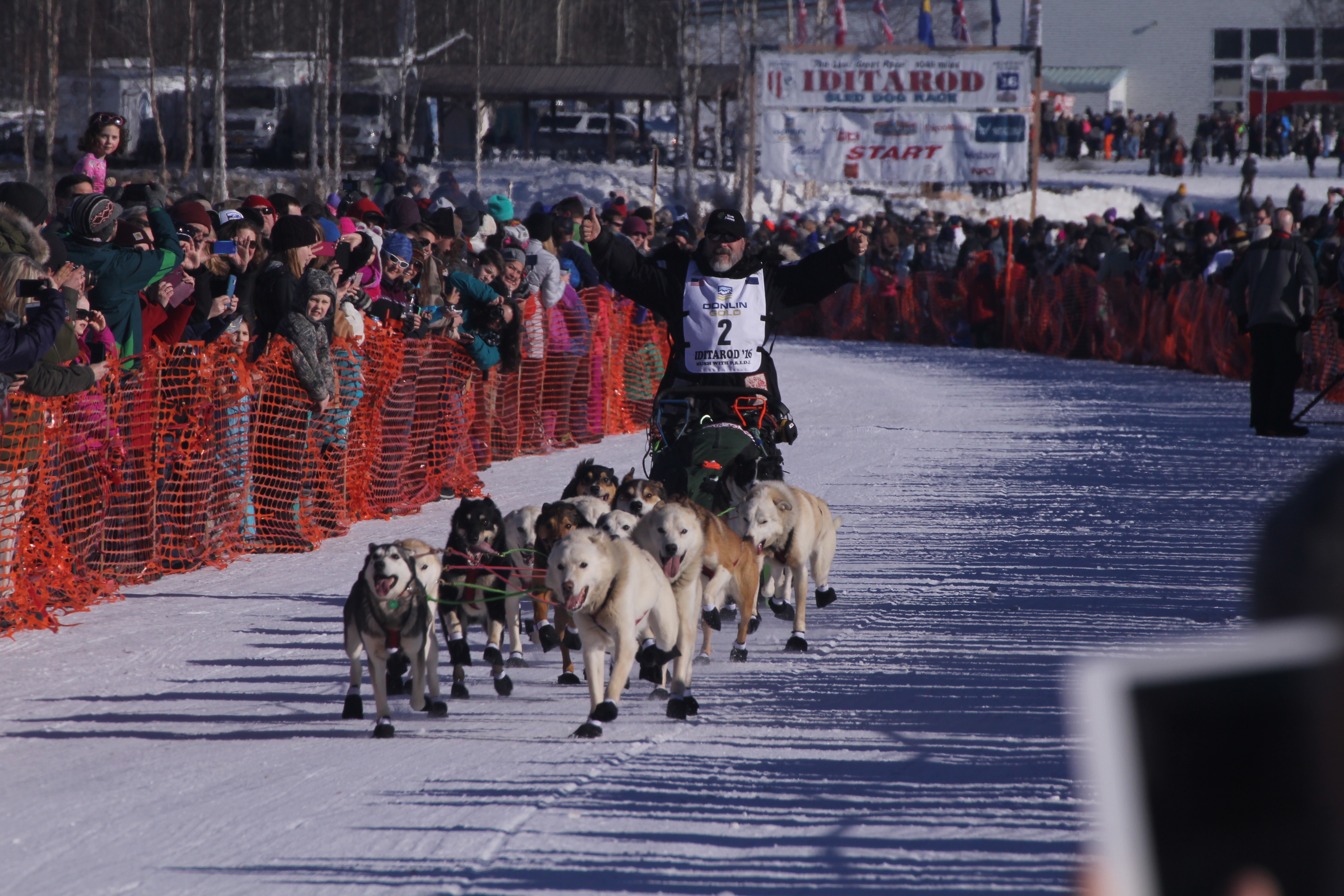
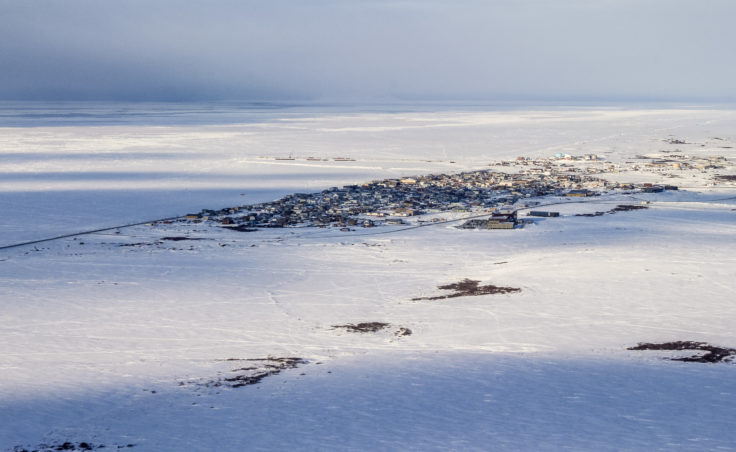
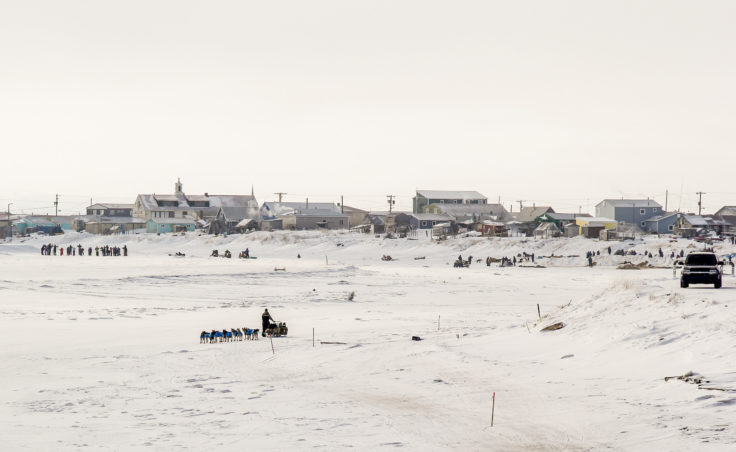
Nome turns into a bit of a carnival when the Iditarod winner mushes into town. For nearly a week, racers continue arriving before the banquet that officially concludes each year’s Iditarod. For some, that means days of free time. And plenty of fun, strange events to fill it.
In the very back of a long, crowded bar, an MC auctioned off all kinds of random swag branded with booze company logos.
“Alright, we have a Budweiser poker set,” he called out, opening bidding at $15 and eventually working it up to $30. There were also coolers, beach-chairs, and a Fireball cornhole set.
The auction lasts nearly an hour, and the point is to raise money for an annual event inside the Polar Bar each Iditarod week: the Make Your Own Bikini Contest.
To wild cheers, a handful of contestants walk out of a back room, off a small stage, and down an improvised runway past the crowd. The outfits range from haphazardly last-minute to impressively inventive.
“Ace in the Hole,” the MC reads off, introducing a young woman in a dress made out of playing cards.
There’s also a bra fashioned out of two red king crabs. The winning contestant, whose stage name is ‘IditaFox,’ sports a two-piece ensemble from a pelt.
The contest is like a lot of Iditarod week in Nome: a mix of sordid and scandalous with crafty and community-minded. Visitors pour into the Bering Sea-side hub of 3,700 people for a kind of sub-Arctic Spring Break, a Cancun of the North. Restaurants, bars and seemingly every spare bedroom are filled. Schools across the region are on vacation, allowing for athletes and families travel in on discounted flights from surrounding communities for a huge basketball tournament.
Some of the annual night-time events are known for racy debauchery — like the “wet buns” contest. Others are grittier, like the arm-wrestling tournament at Breaker’s Bar, where two years ago Aliy Zirkle broke another competitor’s limb.
This year, a similar thing happened — though not with Zirkle. Tara Cicatello, a handler for Kristin Bacon who competed in the light-weight class, was watching the women’s middle-weight contest. After an elbow slipped, the two competitors re-set.
“As soon as they start to wrestle again, you just here this popping noise,” Cicatello recalled two days later. “The whole room goes silent, it was like a gunshot. And then, we look, and the woman’s arm is just hanging.”
Beyond the bars, beneath the season’s expanding daylight, the region’s unique culture and history is on display throughout the festive week. Snowmachines race along the sea-ice to check crab-pots. Rugged literary types listen to the poems of Robert Service, read aloud in a convention center. Musher Hugh Neff got married at an informal outdoors ceremony officiated by Nome’s mayor, Richard Beneville.
This year, the new Carrie M. McClaine museum, which opened last October, gave tours to 105 people by the week’s end.
“One of the favorite pieces in this case is this engraved ivory drill bow at the top,” Museum Director Amy Phillips-Chan said, standing in front of old tools collected from around the region, some etched with scenes of walrus, whale and seal harvests.
“Drill bows are really fascinating objects, because Inupiaq was primarily a spoken language, so the older drill bows that were used and passed down among carvers were actually used as mnemonic devices to record and then pass on oral traditions and stories,” Phillips-Chan explained.
As the museum tour wound down, a crowd filled up a library room next door to listen to a talk by Iditarod champion Martin Buser.
Not far away, behind the snow-dump, unrelenting wind is whipped up a ground-storm around a bunch of trucks and sled-dogs. Even by Nome standards, it was miserable weather — especially for a sled-dog race.
These aren’t Iditarod teams. The animals belong to local mushers, who are clipping three-dog teams to light sleds for the Nome Kennel Club’s Businessman’s Race. For a $150 entry-fee, amateurs hire someone else’s dog team to race a three mile loop. Ducking behind a truck for cover from the wind, race official Kirsten Bay said the 110-year-old Kennel Club aims to keep alive traditions of mushing — which, most years, includes putting on the Businessman’s Race.
“It’s totally fun and sport,” Bey said. “It’s to give people the opportunity to be a dog musher, to run a little team a few miles around a course and see what it’s like.”
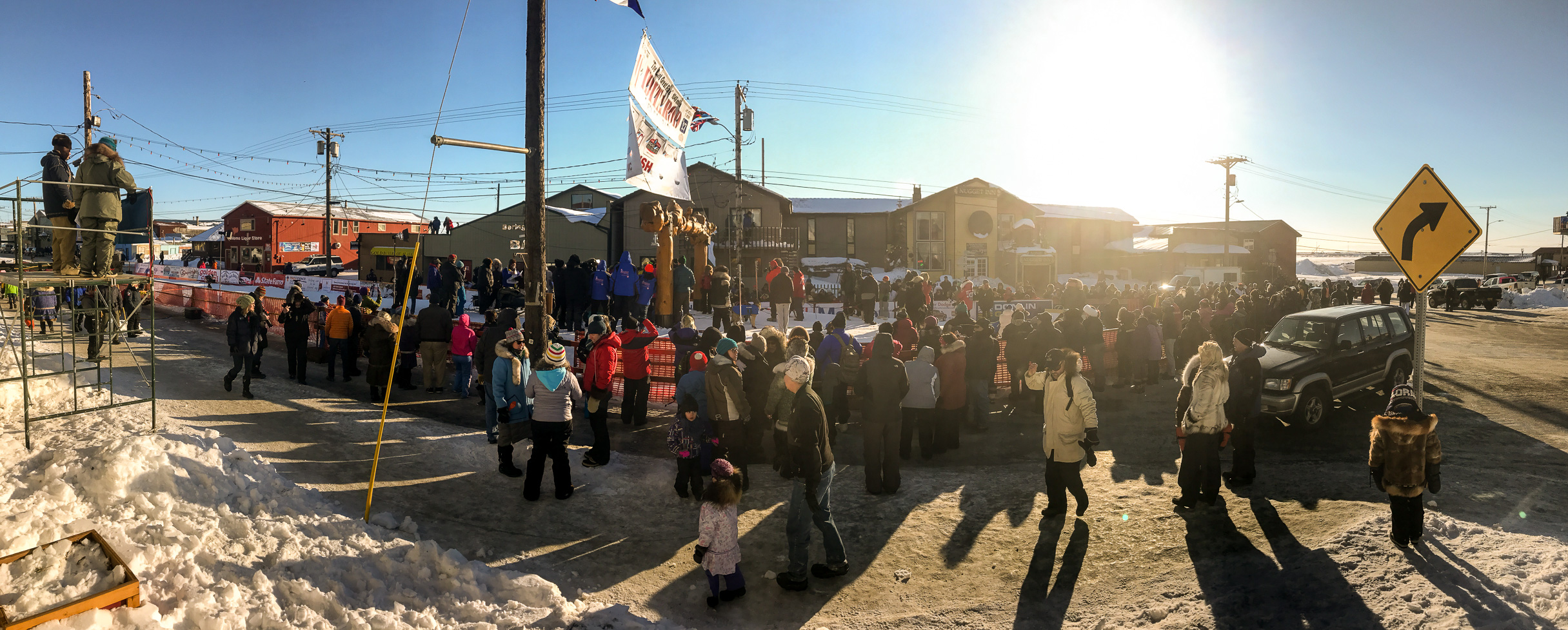
As the tiny teams took off, they were quickly swallowed by the murky swirl of snow. Spectators and supporters huddled by trucks in the parking lot, while just a few blocks away, the back-of-the-pack Iditaroders kept arriving under Front Street’s Burled Arch.
Rep. Neal Foster, D- Nome, co-chair of the House Finance Committee, discusses budget issues at a House Majority press availability on March 21. Foster is concerned about the potential effect of further budget cuts. (Photo by Skip Gray/360 North)
Philosophical differences between members of the House and Senate are raising the risk that the Legislature ends the session without resolving the state’s ongoing budget crisis.
But fiscal experts maintain some optimism that lawmakers will still be able to bridge the divide.
Both legislative chambers have proposed cuts to the budget.
The House passed a budget Monday that cuts $32 million from this year’s budget. The Senate is currently weighing $184 million in cuts, in addition to up to $62 million dollars in cuts to education.
Neither side’s cuts would put much of a dent in the $2.7 billion gap between what the state spends and what it raises in oil royalties, taxes and fees.
To close that gap, most lawmakers and policy experts agree that the state must draw from Permanent Fund earnings to shore up the budget for the first time.
Most proposals also would reduce Permanent Fund dividends.
But differences between the mostly Democratic House majority and the mostly Republican Senate majority are proving to be a stumbling block to a deal, according to Cliff Groh, the chairman of the nonpartisan policy organization Alaska Common Ground.
“In the Alaska State Legislature, as in Congress, and generally around the United States of America, over the past few decades, there has been a decline in dealmakers and a rise in ideologues,” Groh said.
The House majority wants to package this draw with an income tax, while the Senate wants deeper cuts to the budget first.
The Senate passed its Permanent Fund bill, Senate Bill 26, and the House is discussing its own bill, House Bill 115.
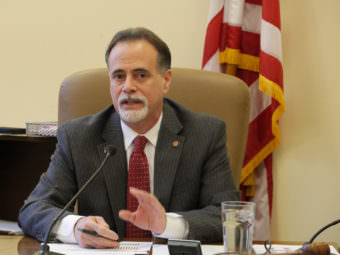
Sen. Peter Micciche, R-Soldotna, at a Senate Majority press availability, Feb. 24. Micciche emphasized this week that Senate Bill 26 could close 95 percent of the budget gap by 2023. (Photo by Skip Gray/360 North)
Soldotna Republican Sen. Peter Micciche pointed to a projection from the nonpartisan Legislative Finance Division that found the Senate bill would close 95 percent of the gap in six years if the state kept spending flat.
Reducing oil tax credits may be more likely to become law than an income tax.
Oil revenue from newly discovered oil also could help close the budget gap, Micciche said.
“If we get an uptick of a few dollars in the price of oil, or one of those fields come online, we’re balanced,” Micciche said. “The Senate is willing to talk about other legislation that will help in that way, as well.”
House members say the focus on spending reductions has begun to threaten the state’s economy.
Nome Democrat Neal Foster said deep cuts over the past three years make it more difficult to find more reductions.
“The question is: How deeply do we want to continue to make cuts? And, you know, at this point I think we’ve cut a lot of the fat out. There’s not a lot of room left. Further cuts will be, you know, I think cuts to the bone,” Foster said.
Senate leaders don’t want an income tax to be part of the Permanent Fund bill, saying combining them could violate legislative rules that require bills to be on a single subject.
Eagle River Republican Senator Anna MacKinnon expressed qualms with the House approach.
“We have a lot of folks in new positions that are from my perspective trying political maneuvers that they believe can accomplish what they want, but over the course of time — at least how I’ve worked is — the less cute stuff that you’re trying to do, the less political maneuvering, the better it is for clarity for everybody,” MacKinnon said.
On the House side, Homer Republican Rep. Paul Seaton rejected the “single-subject” argument, noting that legal experts have already reviewed the House bill.
Seaton said the House will look to areas like oil taxes if the Senate won’t budge.
“It’s a little disappointing listening to the Senate talk about not really wanting to consider a broad-based tax — an income tax — and so we might have to be looking at increasing the tax rates there somewhat over what the Resources Committee did,” Seaton said.
One person who is optimistic about progress this session is Revenue Commissioner Randall Hoffbeck.
As Gov. Bill Walker’s point person with the Legislature on finding a fiscal solution, Hoffbeck is encouraged.
“The most positive thing is that there isn’t any debate anymore about using Permanent Fund earnings as part of the solution,” Hoffbeck said. “I think everybody pretty much agrees that has to occur. And it’s really just a matter of how.”
Hoffbeck said getting 95 percent of the way there only through changes to the Permanent Fund isn’t enough. But while Walker wants a plan that has a balanced effect on Alaskans of different incomes, Hoffbeck said reaching a sustainable plan is most critical.
“I think the key is going to be a fiscal plan that works,” Hoffbeck said. “Certainly balance is important, but I don’t think it’s going to be the absolute that needs to be met. You know, for instance, if somebody decides to substitute a sales tax for an income tax, I think some people would argue that’s not as balanced – and it wouldn’t be. But if it gets us to a full fiscal solution, I think that would be acceptable.”
Cliff Groh said a combination of public pressure, Walker’s involvement and the desire from some legislative leaders to make a deal could help bridge the remaining divide.
But next year’s election makes the political calculations difficult.
“The closer we get to the gubernatorial election, the more you’re going to have more posturing and maneuvering that is based on political calculations for people’s personal advantage,” Groh said.
The Senate Finance Committee is discussing the budget this week, while the House Finance Committee is focused on the oil and gas tax credit bill.
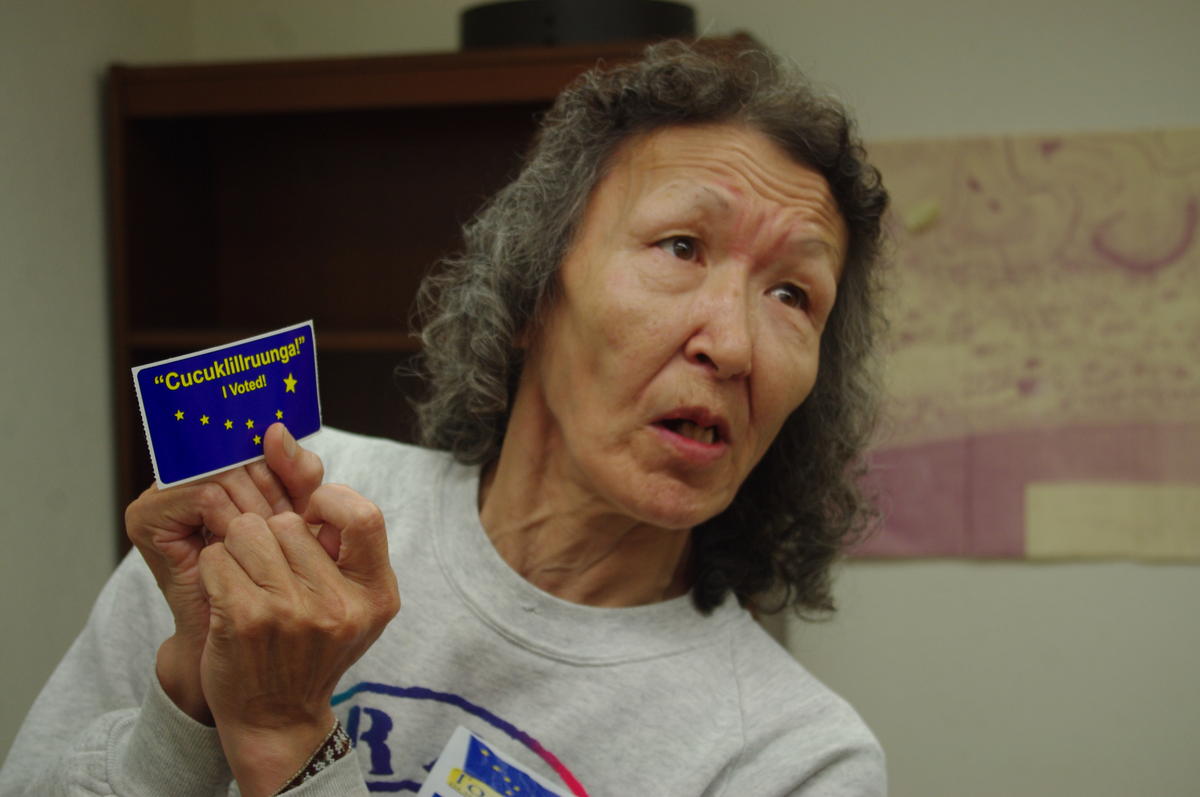
Sally Williams uses a sticker that says cucuklillruunga, or “I voted” in Yup’ik to teach the phrase at the Togiak voting site on Aug. 16, 2016. (Photo by Molly Dischner/KDLG)
In the last Legislature, a Democrat-sponsored bill aimed at increasing voter turnout in Alaska, especially in the Bush. It didn’t get a single hearing in the Republican-led House of Representatives.
Now, Rep. Chris Tuck, an Anchorage Democrat, is in a powerful position leading the new House majority, and has reintroduced the legislation and the bill is making some progress.
Cindy Allred works for Get Out the Native Vote, an organization that has been active registering and encouraging voting among Alaska Natives, many of whom live in rural areas.
“We do have a big concern that there are more challenges to registering to vote in rural Alaska, to voting in rural Alaska as well,” she commented. “There are communities in Alaska that don’t even have a polling station.”
Get Out the Native Vote put their weight behind passing PFD voter registration and has been working with Tuck on House Bill 1.
“There’s a couple of us who just got together and said “How can we help modernize Alaska’s system? How can we try to make it more equitable?” said Allred.
Tuck’s bill is comprehensive. It would give people the option to permanently vote by mail and allow for same day registration, among other things.
Grace Mulipola worked on Get Out the Native Vote in Bristol Bay.
“Some of the people are not there on election day, either because they have doctors appointments or they’re out doing their subsistence. So, I think that’s one of the biggest barriers in the rural areas,” she said.
In addition to getting people registered to vote, Mulipola helped set up early voting stations in Bristol Bay, part of District 37, for the 2014 general election. According to Division of Elections data, general election turnout there has fluctuated. Increases in early voting sites and registration haven’t always coincided with higher voter turnout.
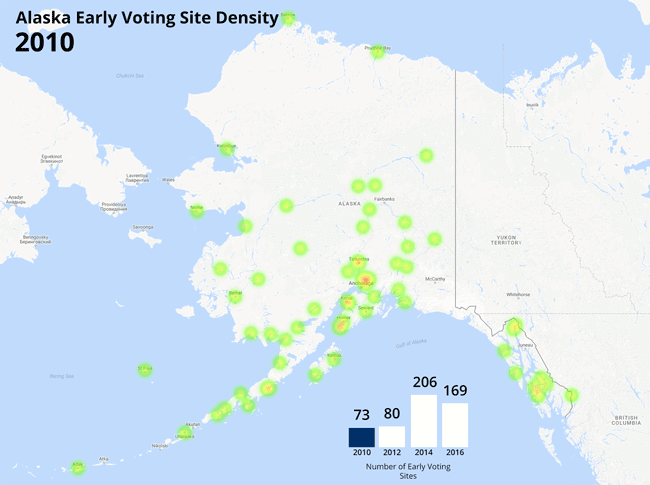
Tuck’s bill ensures that early voting stations stay the same year after year, but it doesn’t directly address the number or placement of such voting sites. According to Division of Elections, since 2010 the number of early voting sites in Alaska has increased from 73 to 169.
This animated heat map shows sites where voters could vote early in recent general elections. It’s based on data from the Alaska Division of Elections. (By Ashwin Kiran)
So why didn’t this bill go anywhere last session? Tuck chalked it up to partisan politics.
“Well, we had a different makeup of the Legislature. We had a different majority, minority situation,” he said. “This year, I went from being minority leader to majority leader. And uh… we’re not going to be treating people the way we were treated because we weren’t allowed to have our bills heard, even though some of them were good ideas.”
Rural Alaska tends to vote blue, which means higher turnout in the Bush may help Democrats in statewide races.
Former Democratic U.S. Sen. Mark Begich invested heavily in rural Alaska in his 2014 campaign against Republican Dan Sullivan. His brother, Tom Begich worked on the campaign before being elected last year to represent District J in the Alaska Senate.
“In my brother’s U.S. Senate race, early voting was a critical issue for us,” said Tom Begich said.
The campaign hired organizers in 40 villages and set up 16 offices from Barrow to Bethel and put a big emphasis on early voting in hopes of increasing rural turnout.
“When we analyzed where there was early voting and where there wasn’t at the time, we noted that where there wasn’t early voting, turnouts tended to be a little bit lower,” he noted.
The rural vote was instrumental in Begich’s 2008 win against longtime Republican incumbent Ted Stevens, but Begich lost to Sullivan in in 2014, despite investing heavily in rural Alaska.
Early voting is only one part of Tuck’s bill, but it has the potential to make voting more accessible for rural communities. For now, House Bill 1 is being workshopped in the House State Affairs Committee.
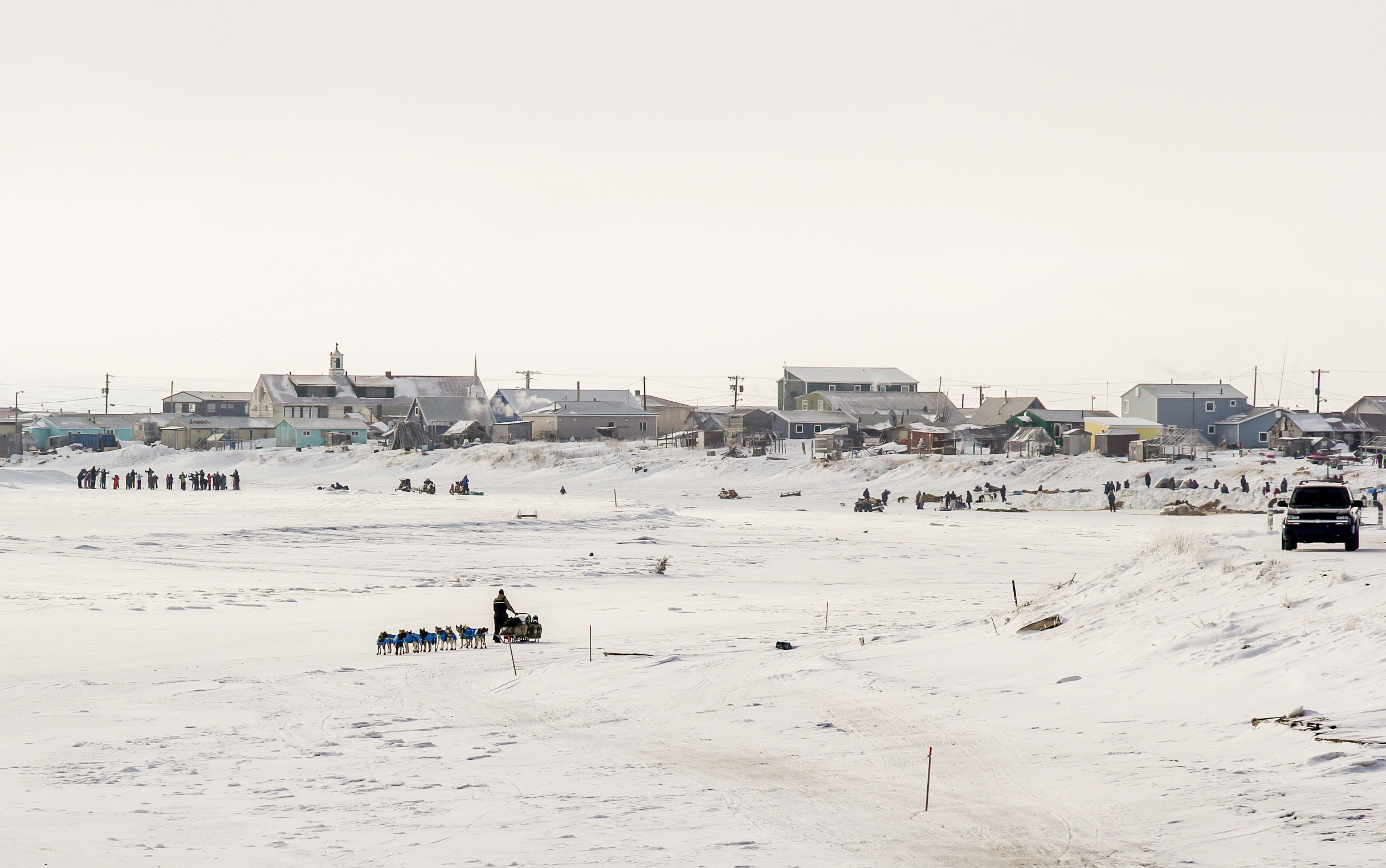
The final stop in the 2017 Iditarod Trail Sled Dog Race is Nome, at the edge of the Bering Sea. (Photo by Ben Matheson/KNOM)
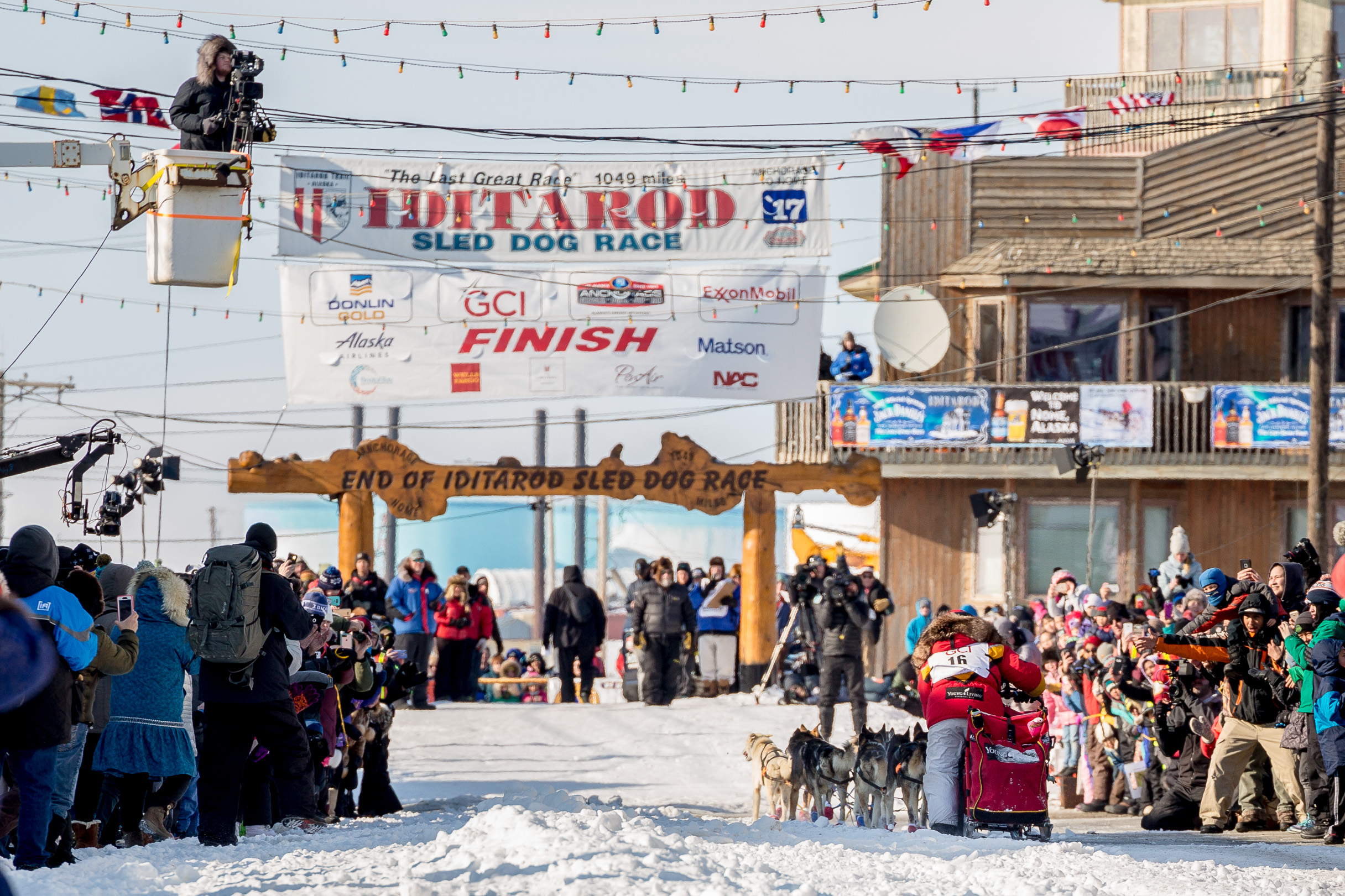
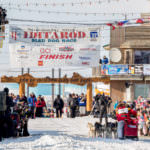
Race fans gathered at Nome’s Burled Arch to see Dallas Seavey and Nicolas Petit arrive Tuesday, March 14, 2017, during the Iditarod. (Photo by Ben Matheson/KNOM)
Nicolas Petit races toward Nome on Tuesday, March 14 in the 2017 Iditarod. (Photo by Ben Matheson/KNOM)
Dallas Seavey runs into Nome on Tuesday, March 14, 2017, during the Iditarod. (Photo by Ben Matheson/KNOM)
Mitch Seavey arrives at the Nome finish line of the 2017 Iditarod, the Burled Arch on Tuesday, March 14, 2017. (Photo by David Dodman/KNOM)
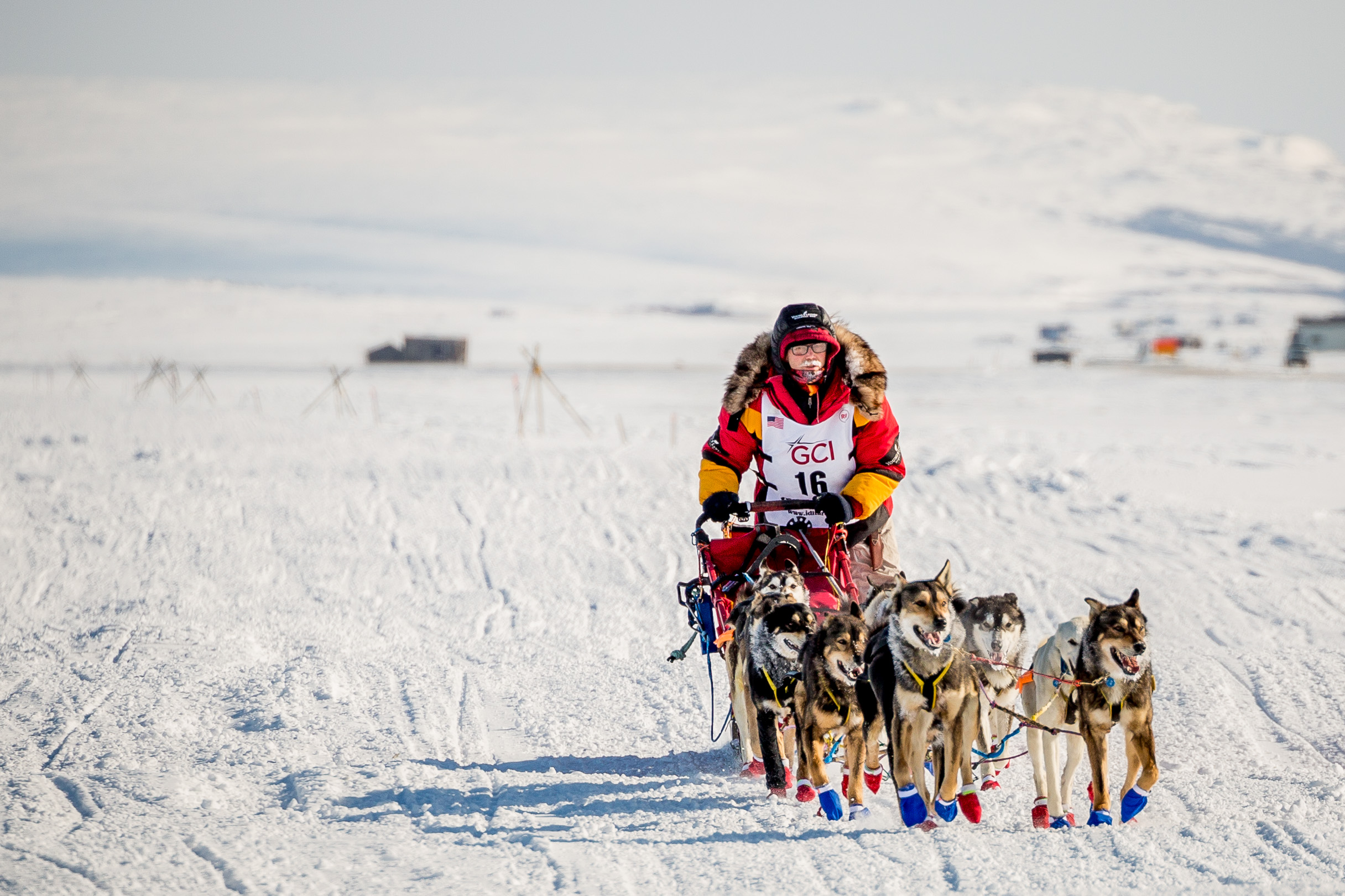
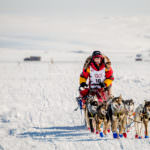
Mitch Seavey mushes on the outskirts of Nome on Tuesday afternoon. The elder Seavey finished the 2017 Iditarod in record time Tuesday, March 14, 2017. (Photo by David Dodman/ KNOM)
Rick Casillo mushes out of Unalakleet during the Iditarod. (Photo by Zachariah Hughes/Alaska Public Media)
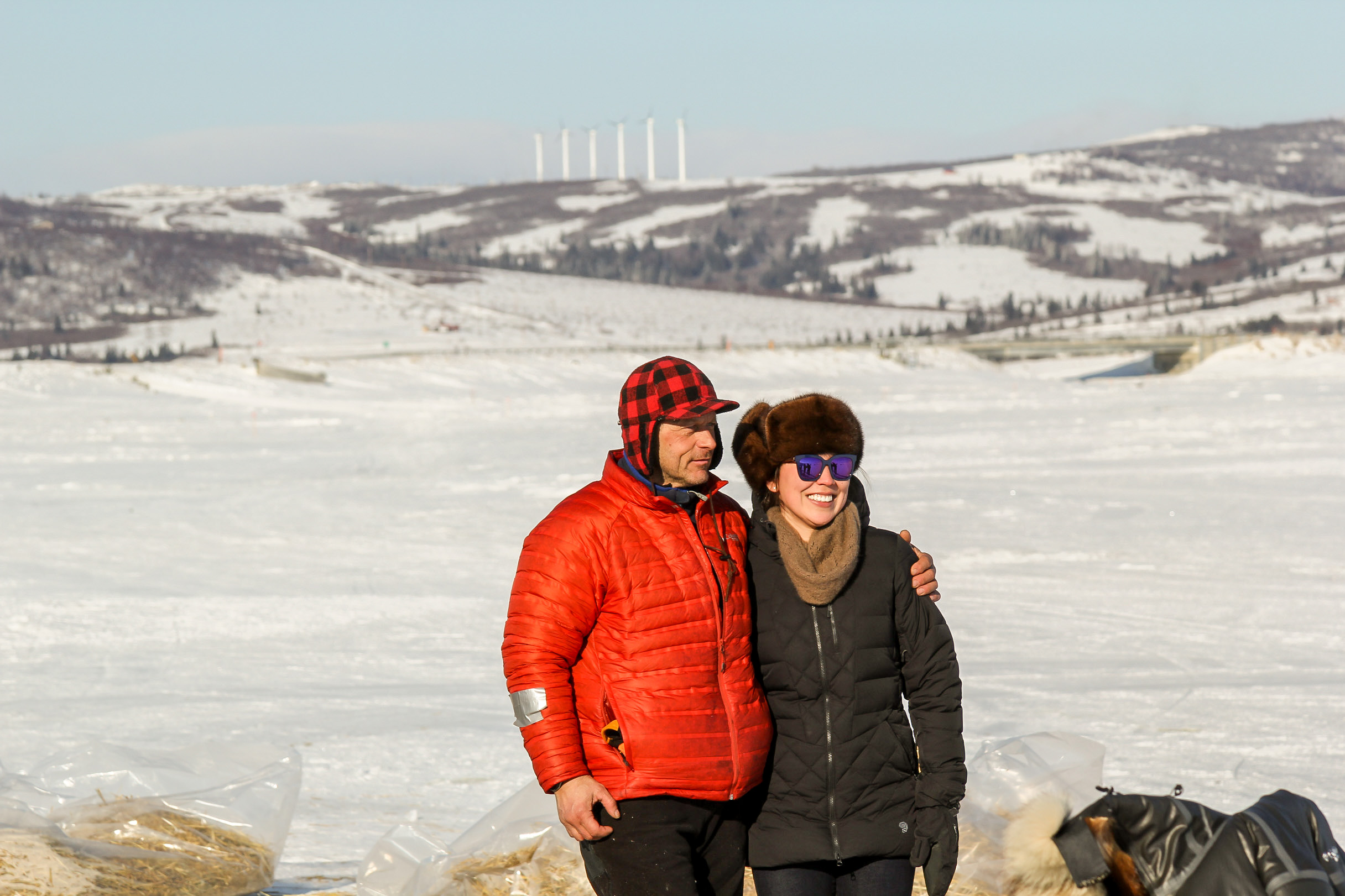
Martin Buser poses with a fan in Unalakleet during the Iditarod. (Photo by Zachariah Hughes/Alaska Public Media)
Mitch Seavey beds down his team in Kaltag during the Iditarod. Seavey was expected to finish in Nome sometime Tuesday evening. (Photo by Ben Matheson/KNOM)
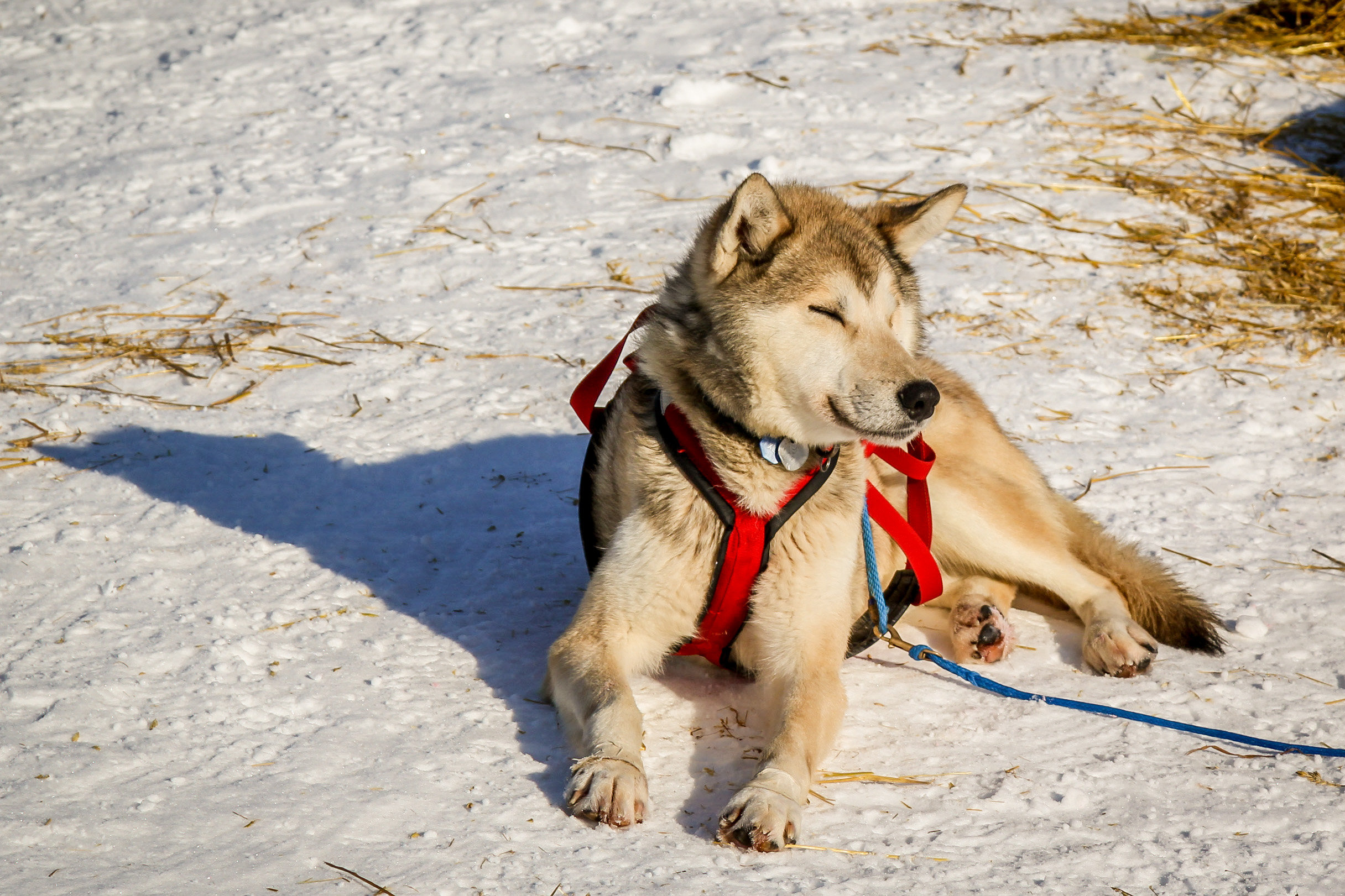
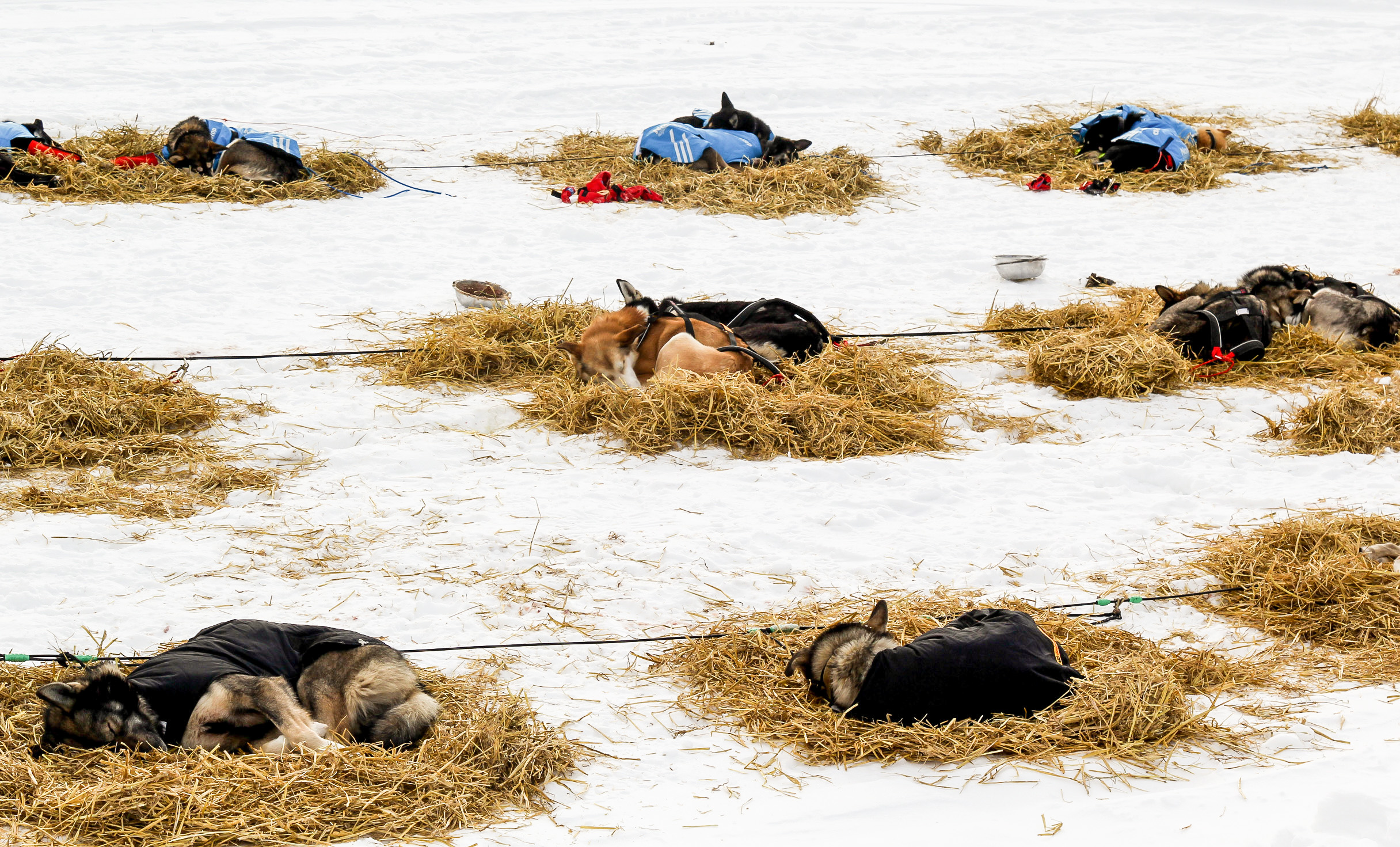
A sleepy sled dog lays down in Kaltag during the Iditarod. (Photo by Zachariah Hughes/Alaska Public Media)
Jeff King mushes into Kaltag in the Iditarod. (Photo by Zachariah Hughes/Alaska Public Media)
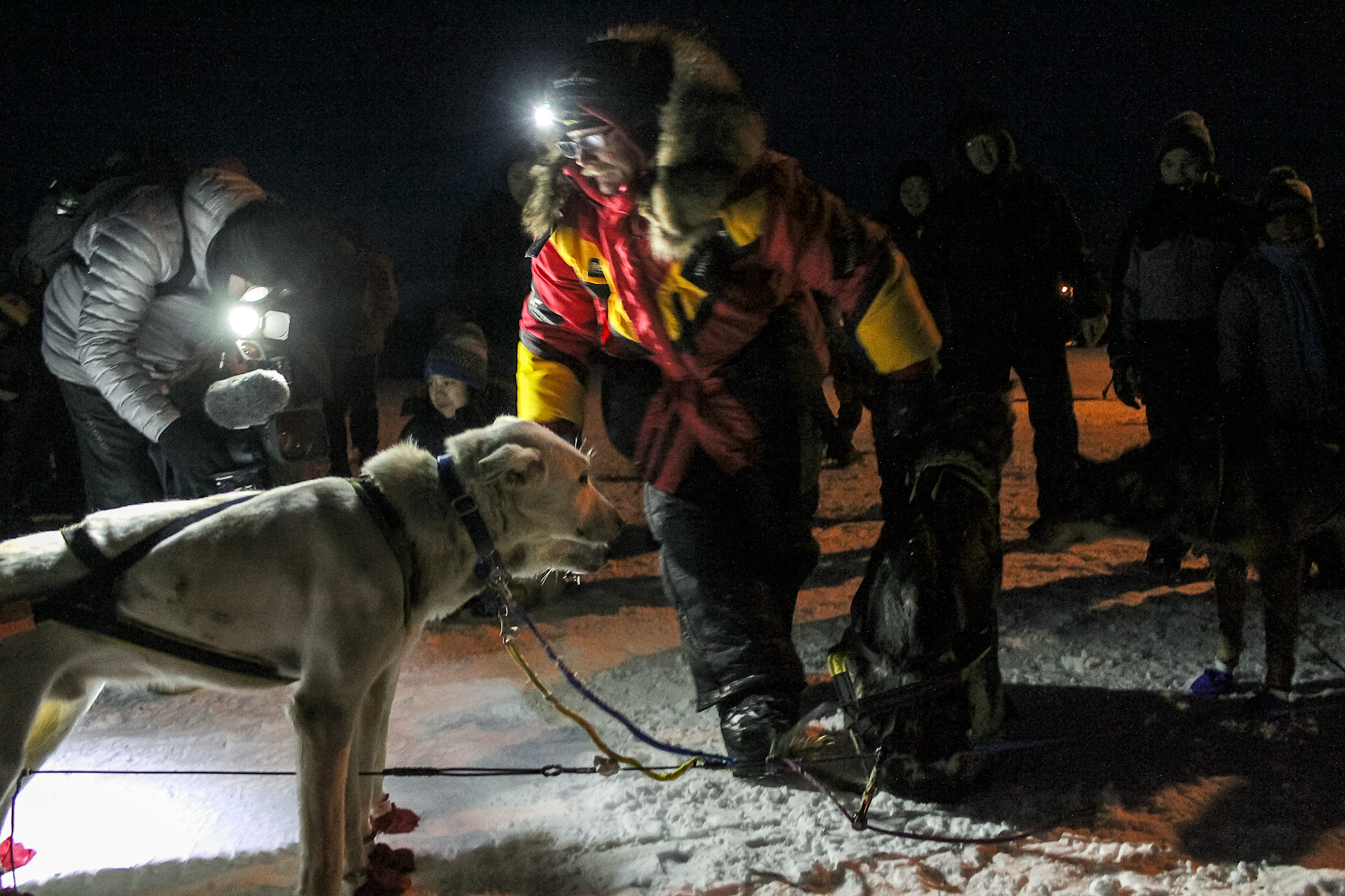
Katherine Keith tending to her dogs in Kaltag before departing for Unalakleet during the Iditarod. (Photo by Zachariah Hughes, Alaska Public Media)
John Baker and Katherine Keith talk at the checkpoint in Kaltag in the Iditarod. (Photo by Zachariah Hughes, Alaska Public Media)
Jon Baker and Katherine Keith in Kaltag during the Iditarod. (Photo by Zachariah Hughes, Alaska Public Media)
Scott Smith at the checkpoint in Galena during the Iditarod. (Photo by Zachariah Hughes, Alaska Public Media)
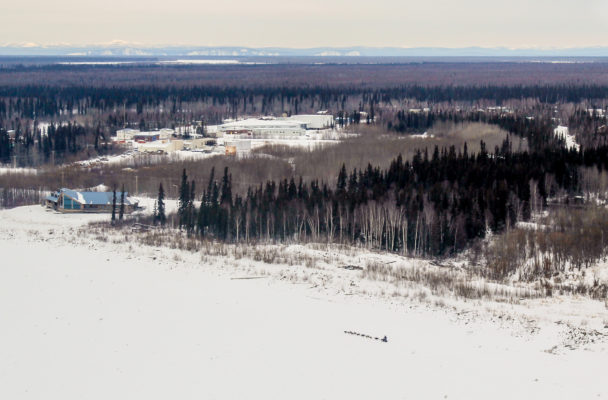
An aerial view near the Alaska Range. (Photo by David Dodman/KNOM)
Mitch Seavey was the first musher to reach Huslia on Thursday night, March 10, 2017, during the Iditarod. (Photo by Ben Matheson/KNOM)
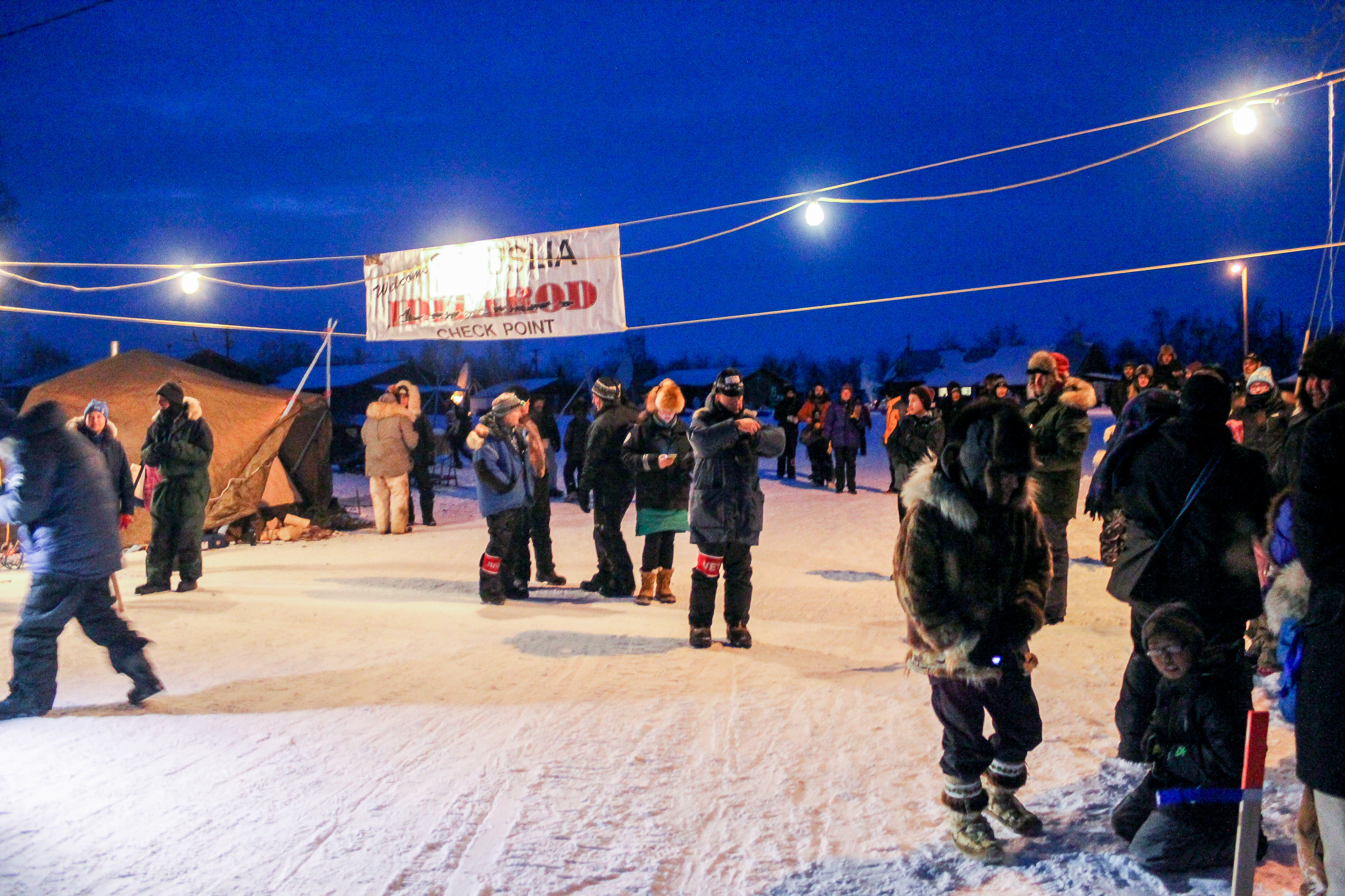
Huslia residents came out in force to welcome the first musher, Mitch Seavey, on Thursday night, March 9, 2017, during the Iditarod. (Photo by Ben Matheson/KNOM)
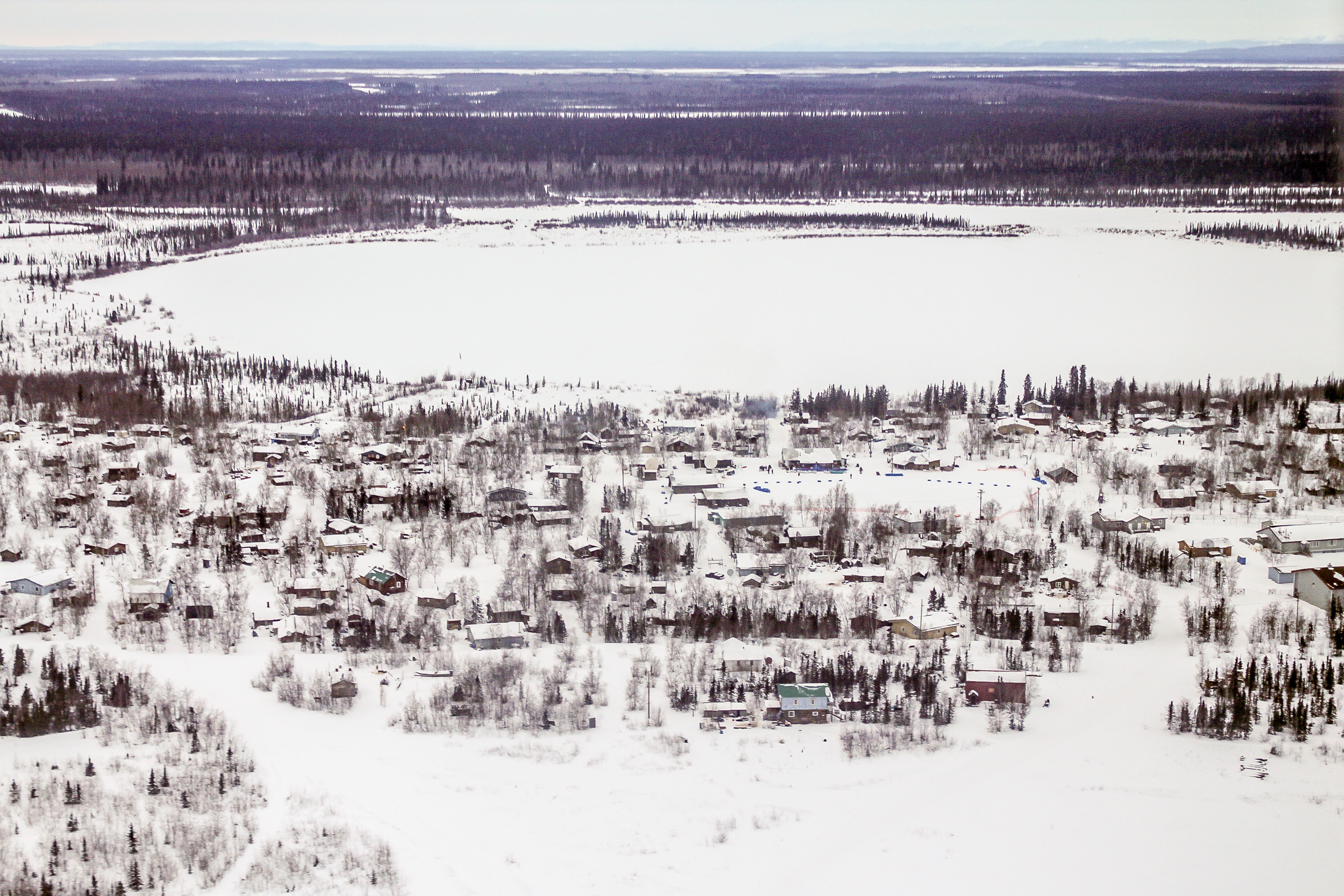
Huslia is hosting the Iditarod race for the second time in history. (Photo by Ben Matheson/KNOM)
Sleepy sled dogs belonging to Pete Kaiser, Ray Redington, Jr., and Jason Mackey rest at Galena during the Iditarod. (Photo by Zachariah Hughes/Alaska Public Media)
Michelle Phillips mushes toward the Galena checkpoint Thursday during the Iditarod. (Photo by Zachariah Hughes/Alaska Public Media)
Aliy Zirkle gets water while stopped Thursday, March 9, 2017, at the Nenana checkpoint of the Iditarod. (Photo by Zachariah Hughes/Alaska Public Media)
Wade Marrs was the first musher to reach the Ruby checkpoint of the Iditarod, coming off the Yukon River into town at sunset. (Photo by Zachariah Hughes/Alaska Public Media)
Upon arriving in Ruby, Dallas Seavey quickly attended to chores during the Iditarod. (Photo by Zachariah Hughes/Alaska Public Media)
Ruby, on the south bank of the Yukon River, seen before mushers started arriving Wednesday during the Iditarod. (Photo by Zachariah Hughes/Alaska Public Media)
Dallas Seavey arrives second to Ruby just after the sun set Wednesday night during the Iditarod. (Photo by Zachariah Hughes/Alaska Public Media)
Two-time champion Mitch Seavey begins his Iditarod run at the Fairbanks re-start on Monday. (Photo by Ben Matheson/KNOM)
A team travels on the Iditarod trail to Manley Hot Springs. (Photo by Ben Matheson/KNOM)
A team travels on the Iditarod trail to Tanana. (Photo by Ben Matheson/KNOM)
Nicolas Petit’s Iditarod team begins its 2017 race in Fairbanks. (Photo by Ben Matheson/KNOM)
Martin Buser is chasing his fifth Iditarod title in 2017. (Photo by Ben Matheson/KNOM)
The Manley Checkpoint (Photo by Ben Matheson/ KNOM)
Annie Kelley is the Teacher on the Trail for the 2017 Iditarod (Photo by Wesley Early/Alaska Public Media)
Teams began the journey to Nome from the re-start at Willow Lake in Iditarod 44 . (Photo by Ben Matheson/Alaska Public Media)
Teams have continued pouring into Nome, filling out the upper ranks of the 2017 Iditarod Sled Dog Race.
Champion Mitch Seavey won his third title Tuesday in a record time of eight days, three hours, and 40 minutes, slashing more than seven hours off the previous record.
Dallas Seavey and Nicolas Petit arrived in a tight race for second and third, respectively.
Norwegian Joar Ulsom earned fourth place late Tuesday with his team of 8 dogs.
The fifth place finisher had twice that number.
Jessie Royer did not drop a single team member over the 1,000-mile race and pulled onto Front Street with each of the 16 dogs she drove from the Fairbanks start.
“I think running the (Yukon) Quest beforehand had a lot to do with that; 11 of these finished the Quest with me,” Royer said. “I think that had a lot to do with ‘em. The other five I added to that, 11 are all, like, five- and six-time Iditarod finishers. I had one that just finished his seventh Iditarod with me.”
“All 16 of these dogs are thousand-mile finishers, before I finished this race,” Royer said. “But even then, the good Lord blessed me with a good bunch of dogs and good luck to get ‘em here.”
Wade Marrs and Ray Redington Jr. followed Royer on Wednesday morning.
There was a race out of White Mountain for eighth place.
Pete Kaiser left the checkpoint just two minutes ahead of Aliy Zirkle.
By the time they were speeding into Nome, Zirkle had overtaken him, as she explained just as Nome’s air raid siren heralded Kaiser’s ninth place arrival.
“I didn’t catch him until Topkok, when we couldn’t see very well,” Zirkle said. “I rode his skirts almost all the way up Topkok, and then, he stopped. He was like ‘OK, you can take your turn goin’.’ It’s hard to drive a dog team into a 40-mile-an-hour wind.”
Kaiser’s finish is the best of any team from off-the-road system.
When asked why this year’s was an exceptionally fast race, Kaiser says that’s just where dog mushing is at right now.
“It’s just an evolving sport every year,” Kaiser said. “There’s those guys up front who are pushing the envelope every year, and getting better and better and better at this, and you’re seeing faster dog teams, and they look better than ever. I mean, ninth place in under nine days? It’s crazy.”
To round out the top 10, veteran musher Paul Gebhardt notched his eighth career top 10 finish.
There were a few upsets in the standings, as some mushers faded along the coast and others rallied.
Four-time champion Jeff King struggled to stay within top 20 range and, at one point, worried this year might mark his worst finish ever.
But he roared out of Unalakleet, passing numerous competitors and ultimately arriving 11th under the Burled Arch in the bulky garment he’s deemed the “Arctic mumu.”
“I just don’t think I have the energy to race the whole race like this. … I had a strong fourth quarter,” he said. “I couldn’t have done this without doing what I did earlier. I wouldn’t have been able to keep up this pace without taking it pretty easy at the beginning.”
Rounding out the top 20, King was followed by Ramey Smyth, Michelle Phillips, Ryan Redington, Hans Gatt, Ralph Johannessen and Ken Anderson.
Eighteenth place was a bit of a tie, as partners John Baker and Katherine Keith from Kotzebue opted to cross the finish line together.
The pair was greeted by singers and drummers from St. Lawrence Island.
In 20th position was Linwood Fiedler.
Alaska Public Media’s Zachariah Hughes also contributed to this story.
Monica Zappa Scratches in Shaktoolik
As mushers are crossing under the Burled Arch in Nome, another musher has scratched further back on the trail.
Zappa chose to scratch due to the best interest of her dogs, according to a release from the the Iditarod Trail Committee. She noted that her team did not wish to continue on the trail.
Nine dogs were in harness at the time of her decision.
Mitch Seavey mushes on the outskirts of Nome on Tuesday afternoon. The elder Seavey finished the 2017
Iditarod in record time Tuesday, March 14, 2017.
(Photo by David Dodman/ KNOM)
Mitch Seavey arrives at the Nome finish line of the 2017 Iditarod, the Burled Arch on Tuesday, March 14, 2017. (Photo by David Dodman/KNOM)
Dallas Seavey runs into Nome on Tuesday, March 14, 2017, during the Iditarod. (Photo by Ben Matheson/KNOM)
Nicolas Petit races toward Nome on Tuesday, March 14 in the 2017 Iditarod. (Photo by Ben Matheson/KNOM)
Race fans gathered at Nome’s Burled Arch to see Dallas Seavey and Nicolas Petit arrive Tuesday, March 14, 2017, during the Iditarod. (Photo by Ben Matheson/KNOM)
The final stop in the 2017 Iditarod Trail Sled Dog Race is Nome, at the edge of the Bering Sea. (Photo by Ben Matheson/KNOM)
Update | 11 a.m. Wednesday
Iditarod musher Mitch Seavey won the 2017 race in record time Tuesday afternoon.
The Seward musher’s team ran a blistering pace from Fairbanks along winding rivers, tundra and sea ice to Nome.
Seavey slashed seven hours off the record set last year by his son, Dallas Seavey, with his run of eight days, three hours, and 40 minutes.
The elder Seavey won more than $70,000, a new truck, and bragging rights as a three-time champion — and now, the fastest champion in 45 years of racing.
The veteran musher is looking forward to achieving new levels of dog team performance in the peak of his career.
The trucks had barely finished dumping snow on Nome’s Front Street for the final stretch of the dog trail when Mitch Seavey roared up off the sea ice with his 11 huskies.
Seavey arrived at 3:40 p.m. and enjoyed hugs from family and friends.
Mushing is the family business for the Seaveys. His father, Dan Seavey, ran the first Iditarod and greeted him in the bright afternoon sun.
Race officials draped his leaders Crisp and Pilot with harnesses of golden roses.
Seavey started the race with a schedule that would bring him in under record time, but his fast team, one that he said loves speed, eclipsed even that schedule.
“So that’s pretty cool, the trail was a little faster and smoother than it might have been,” Seavey said. “I really, strongly believe in preparing the dogs to go do what they’re going to do, and you shouldn’t really be surprised that it happens.”
To build a team with that speed, Seavey maintains a year-round training program that keeps the athletes active in the summer and has them achieving winter-level workouts by autumn.
He doesn’t reveal details about a training regime that seems to involve running dogs at a ceiling of 9-and-a-half to 10 miles per hour and preparing for the specific rigors of racing.
Mitch Seavey had a two-hour edge on Dallas Seavey leaving White Mountain on Tuesday morning. After banking a luxurious amount of rest on the coast, his team ran a blistering pace to Nome to extend that lead by another 45 minutes on the 77 miles in from White Mountain.
One of the key moves of the race that helped him build a defendable gap on his competition was pushing north to Huslia to take his 24-hour break.
Other top racers rested earlier in Ruby or Galena.
“You know, if you’re going to take a late 24, you’re going to have to get there in hurry,” Seavey said. “You can’t lose a lot of time, because you need to be there in position. I felt like we came off that late 24 with a lot more energy than teams that may have taken their long break earlier.”
Speed has been the mantra since Seavey departed Fairbanks with 70 other mushers. At 57 years old, Seavey is the oldest musher to win the race, breaking the record he set in 2013 as a 53-year-winner.
“I do feel like I’m getting younger, not older, so as long as this is a thing that interests me the most, this is probably what I’ll keep doing,” Seavey said. “At some point there might be other things when I grow up, but I’m having so much fun with these dogs. And we’ve turned a corner, like, there’s a whole new world of things we can do. What if we can go even faster? What if we can run the Iditarod on a good trail as fast as the North American? Who knows?”
That is, the Open North American Championships, a sprint mushing race.
This is the sixth year in a row in which Dallas or Mitch Seavey has won the race. As the elder Seavey this time ran away with the title, the real race unfolding over the Topkok hills and Safety Sound was for second place, as Girdwood musher Nicolas Petit and Willow racer Dallas Seavey battled for silver.
Dallas Seavey said it was as they neared Nome that he spotted the team in pursuit.
“I kept checking,” he said. “I saw no sign of him, and then, we stopped for another snack break on the top of Cape Nome, and after I take off, I look back, and he’s right behind me.”
Petit cut an already thin, 13-minute edge to less than five minutes in Nome, bringing the two teams side-by-side under the Burled Arch.
It was here that Petit returned Seavey’s veterinarian log book — a piece of required equipment — to the musher at the finish line after he lost it at the safety checkpoint where he dropped a dog.
In Nome, Seavey and Petit joked about the race’s sportsmanship award:
“I appreciated it, thank you, that was very kind of you,” Dallas Seavey said. “No problem; remember that when we talk about sportsmanship [award]!” Petit said with a laugh.
Both Dallas Seavey and Petit joined the winner with times below the old speed record set a year ago.
Following his best finish ever, Petit said his team is just getting started.
“They’re amazing,” Petit said. “They’re just 2- and 3-year-old dogs, so watch out, Seaveys, we’re going to get you.”
Norwegian Joar Ulsom arrived in fourth place, while Jessie Royer drove her full string of 16 to claim fifth place.
Original story | 4 p.m. Tuesday
Mitch Seavey blasted through Nulato without stopping to rest as the trail heads toward Kaltag. (Photo by Ben Matheson/KNOM)
For the sixth year in a row, a member of the Seavey mushing family has claimed the top spot in the Last Great Race. This year it was Mitch Seavey who finished the Iditarod at 3:40 p.m. Tuesday, March 14.
According to the Associated Press, Seavey is the oldest musher to winner the race at the age of 57. The new record for the Iditarod is eight days, three hours, 40 minutes and 13 seconds.
Following behind Mitch at the time of his win are Dallas Seavey and Nicolas Petit roughly two miles apart, about 40 miles from the finish.
— Wesley Early, Alaska Public Media
This is a developing story.
Correction: A previous version of this story said Mitch Seavey was the oldest to finish the Iditarod. He is the oldest to win the race. This version has been corrected.