Northwest

As mushers race to Nome, a Chicago educator will teach on the trail

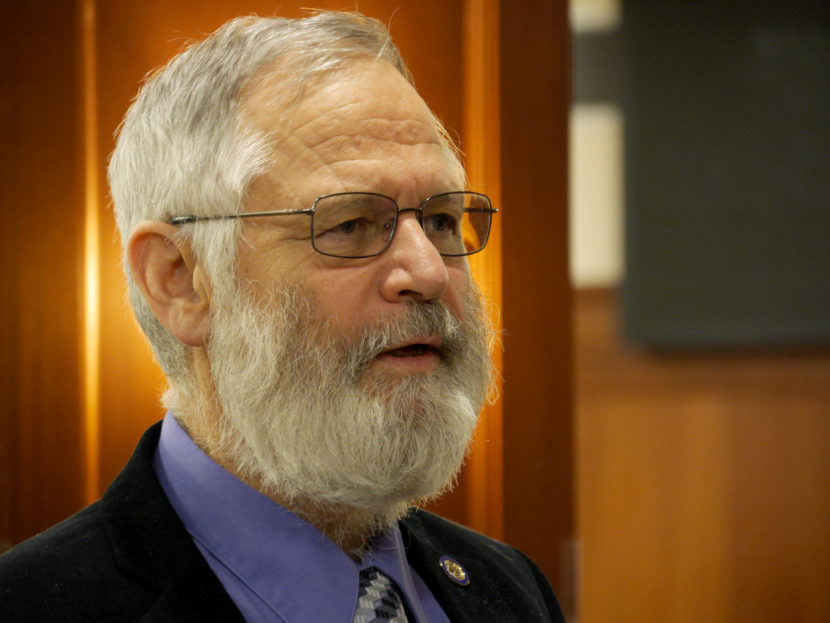
Annie Kelley is the Teacher on the Trail for the 2017 Iditarod (Photo by Wesley Early/Alaska Public Media)

The Iditarod trail won’t be full of just mushers: a teacher will be following along as part of a yearly program.

For two years, Annie Kelley, of St. Andrew’s School in Chicago has been preparing for a new type of lesson plan.

“My job is to fly out on the trail in little planes and report back to classrooms across the country that are using the Iditarod as a teaching tool,” Kelley said.

Kelley found out she was a finalist for the Teacher on the Trail program in January of last year.

Just as mushers have extensive planning on the Iditarod with years of training and work, so too, does Kelley.

Between an application process that required letters of recommendation and long-term lesson planning, she said the experience has been constant.

“Since I was selected as Teacher on the Trail, I’ve been keeping a website, and that has tons of lessons that I’ve been doing with my kids in Chicago and I share it with teachers across the country,” Kelley said. “I’ve been presenting at a couple conferences, and getting my cold gear weather clothes ready. Chicago did not prepare me well this year. It was a very mild, mild winter there.”

For Kelley, getting ready for the weather means more than a hat and gloves. She listed all the clothes she plans on wearing:

“I think four layers on the bottom, topped with some heavy duty LL Bean snowpants. Boots that go down to negative 100, and there’ll be feet warmers in those boots. Probably four layers on top with a parka that was well tested at the Junior Iditarod. A giant hat and like four pairs of gloves, and I’ll probably only be wearing two at each time, but I’ve got lots of gloves. And hand and feet warmers will be used at all times.”

While this is the first and probably only time Kelley will be Teacher on the Trail, she said back in Chicago, she loves incorporating the Iditarod into lesson plans for her fourth graders.

“My lessons, a lot of them revolve around language arts. We write letters to the mushers – so writing friendly letters,” Kelley said. “A lot of times they write back, which is really fun. My favorite is one year, one of the rookie mushers handwrote a letter to my students, front-back side of a sheet of loose-leaf and it was just so cool that he took the time to do that.”

While Kelley will be reporting to her students on all of the mushers, she said she has a couple favorites.

“You know, I have a few favorites,” Kelley said. “Charley Bejna is a musher from Chicago, and he’s come into my classroom and it’s been really awesome. Ally Zirkle – girl power – I’m excited to see her come in at the finish.”

Kelley’s students are just excited as she is for the opportunity.

“They’ve been hearing about for about two years now, this whole process. The biggest thing is ‘Just keep warm, Ms. Kelley’ is all they tell me and be safe,” Kelley said. “I had one student write me a card and it said: ‘If you’re afraid of heights and small, little planes, don’t worry. You’re the Teacher on the Trail. You’re not scared of anything.’”

The last great race formally started Monday and Ms. Kelley will be reporting to teachers across the country every step of the way on the Iditarod website.


You can follow Alaska Public Media’s Iditarod coverage here, or listen to the Iditapod podcast below:
Authorities identify Wasilla pilot killed in plane crash outside of Nome

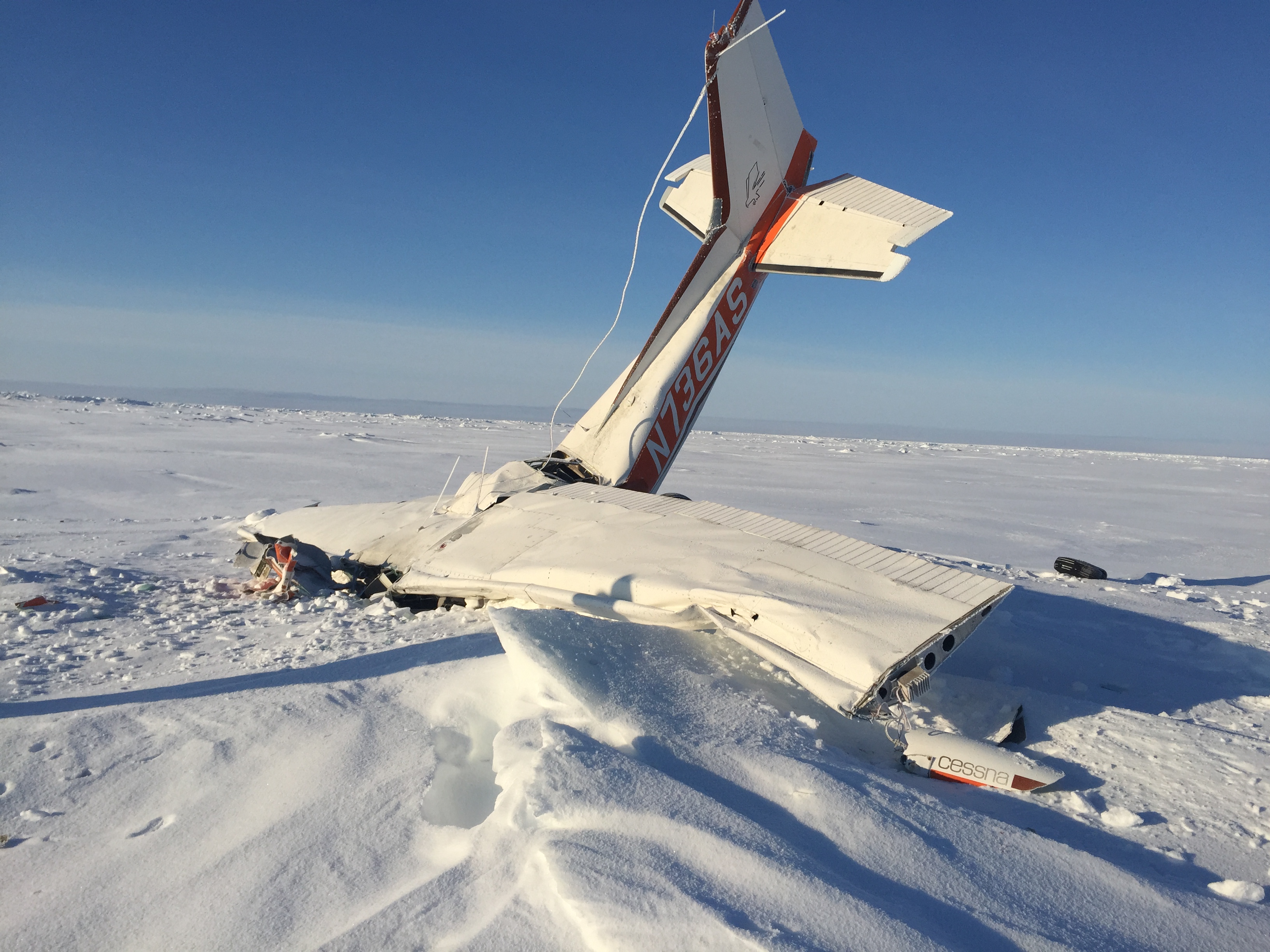
Thomas Grainger’s plane, a single-engine, single-passenger Cessna 172, could not land in Nome because of weather and went down after 10:30 p.m. Sunday, March 5, 2017. (Photo courtesy Alaska State Troopers)
Thomas Grainger’s plane, a single-engine, single-passenger Cessna 172, could not land in Nome because of weather and went down after 10:30 p.m. Sunday. (Photo courtesy Alaska State Troopers)

Authorities have identified a pilot killed after a single-passenger airplane crashed outside of Nome sometime after Sunday evening.

Thomas Grainger, 28, of Wasilla was piloting a single-engine Cessna 172 from Wasilla to Nome, when it went down.

Alaska State Troopers were informed of the overdue aircraft about 5:40 a.m. Monday. The plane was unable to land in Nome because of weather, a troopers dispatch said.

Alaska State Troopers reported that Grainger’s last communication was about 10:30 p.m. Sunday.

Nome search-and-rescue members located the downed plane about 10 a.m. Monday at Hastings Creek, 10 miles east of Nome.

Troopers confirmed the deceased was the pilot.

The National Transportation Safety Board is investigating the crash.

The cause is not yet known.

Bethel council agrees to deliver water to homeless shelter

Bethel’s homeless shelter will get free water deliveries from the city this winter.

KYUK-AM reports Bethel Winter House Director Eva Malvich told councilmembers that the facility ran through its water supply several times and couldn’t afford to refill it.

The council decided to deliver water to the shelter until it closes in March for the season.

Members also discussed options for future support.

Bethel city manager plans crack down on city truck drivers

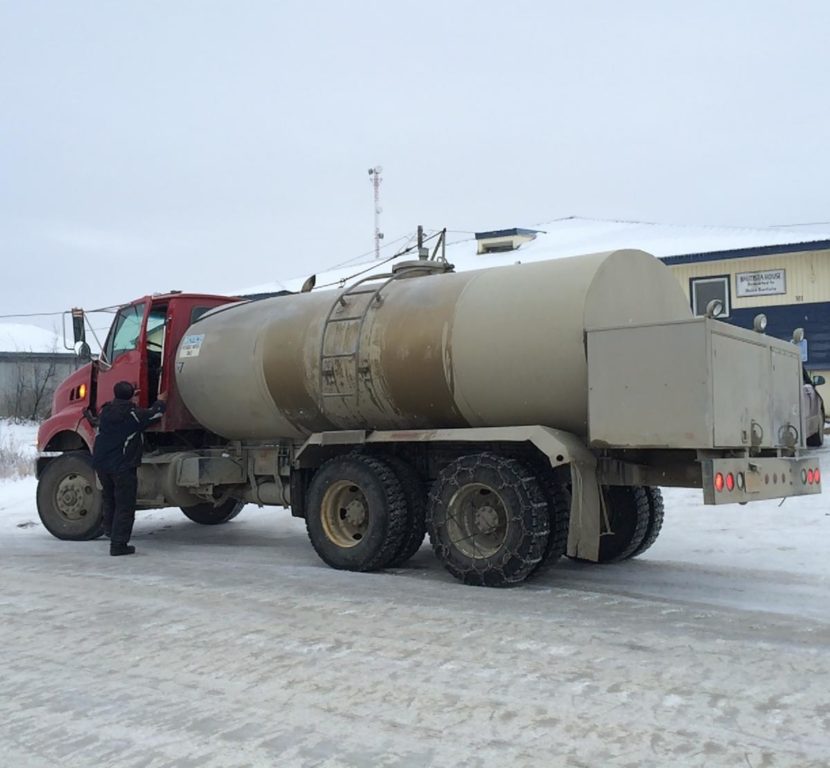
Bethel water truck.
Bethel water truck. (Photo by Anna Rose McArthur/KYUK)

Bethel city water trucks get more than their fair share of abuse, but after an incident that left a brand new water truck tipped on its side, the Bethel City Manager decided to change the accident policy to give city truck drivers who are found to be negligent tickets and drug tests.

It’s pretty common to hear about water and sewer trucks crashing into things in Bethel. They’re huge vehicles driving on tiny, often slick roads.

But Bethel City Manager Pete Williams said at Tuesday’s City Council meeting that it is more than city roads that are the problem in these accidents. He should know; Williams was a truck driver.

“I drove truck for 20 years, and I would never have been a truck driver if I went through all the accidents I see out there,” Williams said.

He says the high number of accidents in Bethel has to change, and he has a plan on how to make that happen.

“We’re gonna kinda take a different approach to how to deal with these when they happen. We’re gonna sit the driver down, take a drug test,” Williams said.

Federal law requires drug tests after major accidents, but the ones the City Manager is focusing on are minor ones that are not covered under federal law. What Williams wants to do is reduce the kind of bumping and scraping that has become common in the Bethel fleet.

Earlier this year, the city received new water trucks costing $250,000 each after the previous City Manager secured funding for them. Williams says that the latest accident was unacceptable.

“Running into houses, these aren’t incidences, these accidents, and you should get a ticket. We might lose some drivers, but we just can’t continue the way we’ve been going on this,” Williams said.

Losing drivers could mean a slowdown in water and sewer service until new drivers are found. Drivers are drug tested before they are allowed to drive for the city, but until now, they haven’t usually retested for drug use unless they are in a major accident.

Bill would bring back income tax, draw Permanent Fund money for state budget

Rep. Paul Seaton, co-chair, House Finance Committee, discusses HB 115 with Alaska Public Media and KTOO reporter Andrew Kitchenman following the House floor session on Feb. 10, 2017. The bill creates a state income tax, draws money from the Permanent Fund for the state budget and introduces a new formula for setting the amount of the Permanent Fund dividend. (Photo by Skip Gray/360 North)
Rep. Paul Seaton, co-chair, House Finance Committee, discusses House Bill 115 with Alaska Public Media and KTOO reporter Andrew Kitchenman following the House floor session Friday. The bill creates a state income tax, draws money from the Permanent Fund for the state budget, and introduces a new formula for setting the amount of the Permanent Fund dividend. (Photo by Skip Gray/360 North)

Alaskans would pay a tax on income for the first time since 1980 under a bill introduced in the Legislature on Friday.

The bill also would draw money from the Permanent Fund to pay for the state government’s budget. And it would set a new formula for Permanent Fund dividends.

The new bill is the biggest visible sign yet of the shift in the majority of the state House of Representatives.

Income tax proposals went no further than committee hearings under the previous, Republican-led House majority.

But the new, mostly Democratic majority may advance the bill quickly.

Homer Rep. Paul Seaton is one of three Republicans who switched caucuses. He also helped write the new legislation, House Bill 115.

“The basic question is: ‘What kind of Alaska do you want to live in?’,” Seaton said. “Our constituents have told us that they want to see an Alaska that has a thriving economy, that has good schools, that has troopers and the court system running well. And without some kind of deficit reduction, broad-based, comprehensive plan, we don’t get that.”

The bill would set the income tax rate at 15 percent of federal liability. For example, a couple with taxable income of $75,000 would pay about $10,000 in federal taxes and $1,500 in state taxes.

The bill would give Alaskans the option of using some or all of their Permanent Fund dividends to pay the tax.

The bill would draw 4.75 percent annually from the Permanent Fund from the fund’s earnings account. That’s a little less than the 5.25 percent draw that Gov. Bill Walker has proposed. One-third of that money would go to PFDs. That would allow dividends to be $1,100 this year, more than the $1,000 Walker proposed.

“The majority caucus in the House formed around the principle of passing a comprehensive, sustainable fiscal plan, and so, that’s what we have,” Seaton said.

Seaton said the bill includes three of the pillars of the new House majority – including new revenue, a draw on the Permanent Fund, and changing Permanent Fund dividends. The fourth element is budget cuts and changes to the oil and gas tax system.

He said the income tax provides balance by requiring higher-income residents to contribute, while the PFD cut affects lower-income residents more.

“So this plan balances those two aspects, so that all families across Alaska are participants and have skin in the game,” Seaton said.

The bill would also tax capital gains at 10 percent. Seaton said his goal was to tax the sale of stocks and bonds at a similar rate as income.

The bill drew swift opposition from minority-caucus Republicans.

Anchorage Rep. Lance Pruitt objected to the bill being sponsored by the House Finance Committee. He said it would be wrong to add an income tax during a recession.

“Now you understand why I don’t want my name associated with this,” Pruitt said. “Now you understand why I don’t want anything to do with a bill that’s going to look — at a time when people are struggling — to say: ‘We need more money from you.’ ”

Wasilla Republican Rep. Cathy Tilton said House Finance Committee Co-chairmen Seaton and Nome Democratic Rep. Neal Foster shouldn’t have used their authority to introduce the bill as committee-sponsored legislation.

“Just because you can, doesn’t mean you should,” Tilton said. “Regardless of what’s been done in the past, (that) does not preclude a new standard of decorum.”

Senate leaders, including Fairbanks Republican Senate President Pete Kelly, have also said they’re opposed to an income tax.

The Senate majority supports $750 million in cuts over three years, and a constitutional limit on spending.

But Seaton said the public is willing to pay a tax to avoid deep cuts to government that he says would harm the economy.

He noted that Alaskans paid 16 percent of federal liability before the income tax was abolished. And he pointed to a Senate majority poll that found support for a broad-based tax.

“People are saying, yes, they want to see the Alaska they want to live in and they’re willing to pay an income tax like they used to for that privilege of living here and growing old here,” Seaton said.

The bill is scheduled for hearings on Monday, Tuesday, and Wednesday, and for public testimony Friday, Feb. 17.

Following winter storms, Walker declares disaster in Savoonga, Gambell

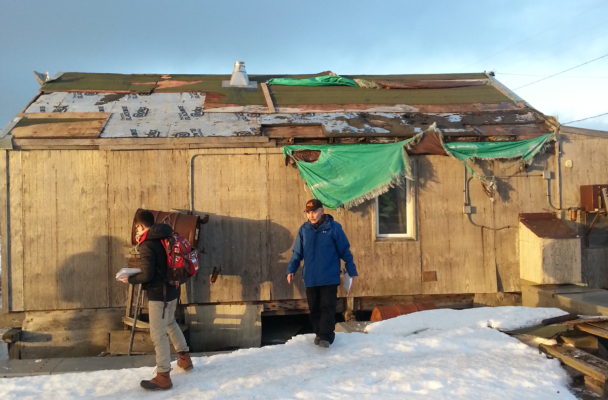
Mayor Myron Kingeekuk and a Red Cross employee survey storm-damaged homes in the community. (Photo by Davis Hovey/KNOM)

Gov. Bill Walker issued a disaster declaration for the winter storms that struck Savoonga and Gambell at the end of 2016.

Almost $3 million in public assistance, state individual assistance and temporary housing assistance will be given to the St. Lawrence Island communities.

Walker signed the disaster declaration on Feb. 1, according to a news release, which the state’s public and individual assistance programs to help communities repair utilities, public buildings and other critical infrastructure that was damaged by the storm.

In order to repair the more than 30 damaged homes in Savoonga, as well as the City of Gambell’s water tanks and other damaged buildings, the estimated cost is a total of $2,850,061.

Even though the State’s Disaster Relief Fund does not have enough to cover the millions in costs, leftover money from previous state disaster funds, such as the 2011 Spring Flood disaster fund, will be appropriated to meet the need.

Michelle Torres with the Alaska Division of Homeland Security and Emergency Management said a team from the division will travel to St. Lawrence Island sometime next week to provide assistance.

Site notifications
Update notification options
Subscribe to notifications