Northwest

Privatization could save some money at API, not at youth centers

brains
(Creative Commons photo by Neil Conway)

Alaska’s state government can save money by privatizing some services at the Alaska Psychiatric Institute, or API. But it doesn’t look like it would save if it privatized all services.

Consultants who studied the privatization for the state found that management of the institute, as well as operating the state’s juvenile justice detention centers, are better done by the state.

Savings depend on how many patients are at the psychiatric institute, said Coy Jones, senior consultant for Public Consulting Group.

“We definitely made some recommendations where there are some limited cases of privatization that we would recommend implementing,” Jones said. “They’re easy to do, and they will generate some cost savings.”

For example, the consultants recommend there could be savings in privatizing the institute’s communication center.

But a different consultant that looked at youth detention centers couldn’t find any opportunities for privatization.

Consultant Carl Becker of CGL – a consulting company that specializes in corrections — said local organizations operate juvenile facilities in other parts of the country. But local organizations weren’t interested in operating the facilities in Kenai, Nome and Palmer.

We found basically no private or governmental in any of these regions that had either the interest or the capability to operate standalone detention facilities for these youth,” Becker said.

The state also couldn’t find savings in privatizing pharmacy services at Pioneer Homes.

The state studied privatizing services as a result of a new law that overhauled Medicaid in Alaska. The Senate Health and Social Services Committee held a hearing on the studies Monday.

Online teaching tool incorporates Bering Strait community members in oil spill response

Communities near the Bering Strait now have access to a new teaching tool and will be able to share information with various organizations and agencies about threats to arctic marine life, such as oil spills.

The Bering Strait Response Teaching Tool is now available online, thanks to a University of Alaska Anchorage student and the Defenders of Wildlife organization.

Allison Dunbar, a junior studying environmental engineering and biology at UAA, is project lead for the online teaching tool. She’s been working part time on the layers of the website for the last year in order to make the tool accessible to everyone, including those who live in the Bering Strait region.

“The local people will know the tides and the currents and will best be able to inform that response, and that is our ultimate goal,” Dunbar said. “By utilizing and working with the local experts, impacts to marine mammals and to the communities will be less, and for us, (that’s) a common sense thing, but we want it to be written into the protocol for response agencies.”

Dunbar explains what information can be accessed through the online teaching tool.

“The content in the BSRTT includes layers that show where spill response equipment is housed, whether it’s in Kotzebue or Nome and some other communities throughout the area, and it is also showcasing some of the different response areas that are used by the Coast Guard and other spill response agencies,” Dunbar said. “That’s to say if oil was to come to shore, what areas would be focused on first.”

With a significant marine mammal population present in the Bering Strait region, and the various threats to them, Rhonda Sparks said the online teaching tool was created to streamline the oil spill response process and cut response time.

“You know, after talking a lot with our partners and spill response agencies, that is what’s most beneficial to them in a response situation, is having the community members who are knowledgeable of the currents, knowledgeable of any debris the agency needs to be aware of. It cuts the response time in half to have those types of individuals participating in a response,” Sparks said.

Sparks is the arctic liaison for the Defenders of Wildlife. She is in charge of implementing the online teaching tool into local communities, which will involve her visiting and training residents throughout the region.

“Recognizing that internet in remote areas is unreliable, we have these screencasts that we can play, and we’ll go through the tool; we’ll go through different features of the tool; we’ll discuss spill response and spill response preparedness and any questions, comments, or concerns that communities have,” Sparks said.“I’ll take that back and share it with all of our partners at the U.S. Coast Guard, the Alaska Department of Environmental Conservation and EPA.”

Even though this educational tool helps inform its users about response plans to oil spills and other potentially harmful situations that occur in the Bering Strait, Sparks emphasizes that it will not be used to clean up or take action in those situations, but, instead, to share information.

“So, it’s not something the Coast Guard or EPA will use in the event of a spill, but it gives the communities a platform to kind of understand the complexity of a spill response,” Sparks said.

Anyone who uses the Defenders of Wildlife’s new BSRTT website can leave feedback and share their knowledge with the Coast Guard or other organizations that also use the tool.

Community trainings on spill response and the teaching tool in the Bering Strait region are expected to begin this month.

Surveys seek input on rural dogs, veterinary care

Health officials are seeking information on dogs and veterinary care in rural Alaska to create a base of data that could be used to pursue funding.

KYUK-AM reports there were 982 recorded dog bites in the Yukon Kuskokwim Delta in the last 10 years.

The Alaska Native Tribal Health Consortium considers this a public health concern.

Children younger than 10 years old represented more than half of the people bitten and many of the incidents involved stray dogs.

Consortium environmental health consultant Brian Berube said stray dogs pose many risks to sanitation.

He said more visits from veterinarians would help in addressing the issue.

Berube said the surveys going to various groups will help gather more data and could open funding options.

People can also take the survey online.

EPA grant funding available again after temporary hold sparks concern

A crew works on a sewer system in a rural Alaska village. Photo courtesy USDA Rural Development.

Alakanuk, and other villages seeking federal sewer and water money received good news Friday afternoon.

The Environmental Protection Agency announced that its funding for grant projects is once again available. This means that tribes receiving money for infrastructure projects can proceed as normal.

Over the last week, many have questioned the need to review the EPA’s operations and speculated that there might be possible cuts to vital programs. However, the EPA explains in their statement that no aspect of the process has changed and that the grant amounts have also remained the same.

This will come as a relief to tribes and rural communities seeking funding for essential projects like water/sewer. The village of Alakanuk recently expressed concerns about the future of the program in the face of a massive overhaul of their sewer system.

The EPA says that it is still evaluating contracts that were put on pause by the Trump Administration, but as of Friday afternoon, that review was nearly complete as well.

New Bethel lawmaker co-sponsors statewide pre-K bill

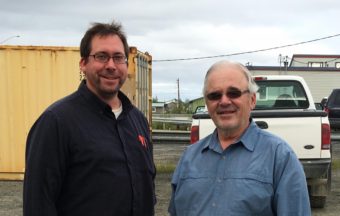
Zach Fansler and Bob Herron
Zach Fansler and Bob Herron meet outside of KYUK for an Aug. 2, 2016, campaign debate in Bethel.
(Photo by Geraldine Brink/KYUK)

Last week, Representatives Scott Kawasaki, Zach Fansler, and Chris Tuck introduced a bill to create a statewide, voluntary Pre-Kindergarten program. The bill was referred to the education committee.

Zach Fansler is the representative from Bethel. This is his first term in the Alaska legislature. Fansler emphasizes the importance of early childhood education and notes that the proposed legislation could have secondary benefits.

“It is definitely focused on education,” Fansler says, “but the childcare portion is another nice part of that because, especially in western Alaska, we have limited access to childcare.”

Fansler didn’t say what money would be used to fund the bill, but he did say that it would save money over time.

“Investing in quality pre-K programs is going to save Alaskans in the long run from paying for anything from remedial and special education, public assistance, things like that.”

The idea of universal pre-K for Alaska isn’t new. Kawasaki has sponsored similar bills in past legislative sessions that have died in committee. The program this session’s bill proposes would operate within a school district and would provide early childhood education to students three through five years old.


Pete Kaiser wins third consecutive Kuskokwim 300

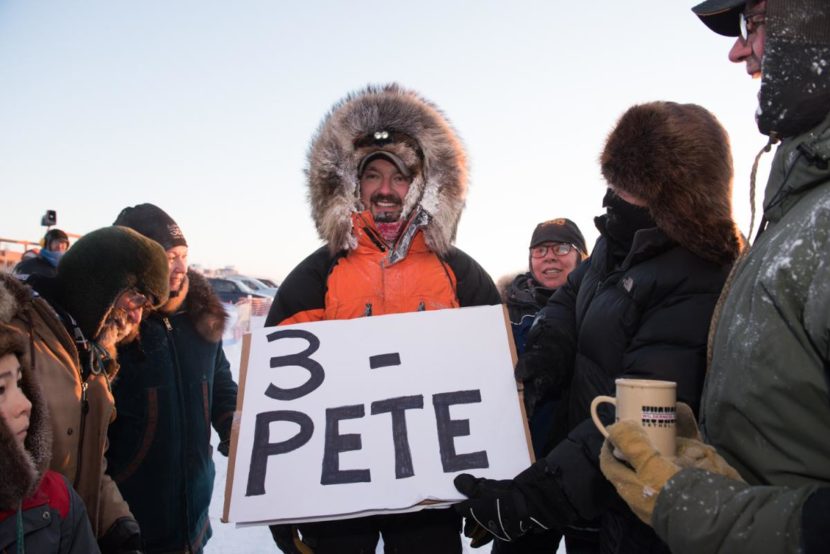
Pete Kaiser won his third consecutive Kuskokwim 300 Sunday morning.
Pete Kaiser won his third consecutive Kuskokwim 300 Sunday morning. (Photo by Katie Basile/KYUK)

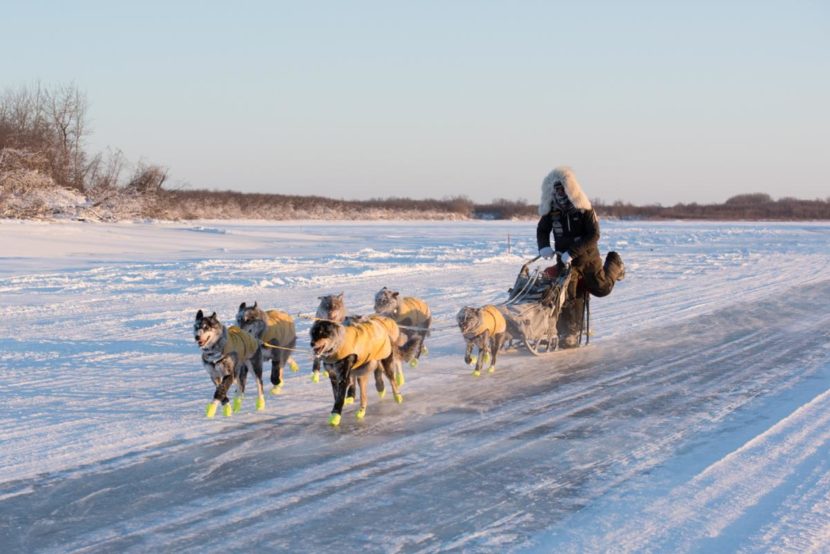
His was the team to beat and no one could. Sunday morning for the third year in a row, Pete Kaiser won the 2017 Kuskokwim 300 Sled Dog Race, crossing the finish line in Bethel at 10:37 a.m. to loud cheers from his hometown crowd…  His leader Palmer brought home the nine-dog team, 28 minutes faster than last year.

Sass, last year’s runner up, followed 46 minutes later at 11:23 a.m.

Kaiser left the final upriver checkpoint of Tuluksak with a 20-minute edge over Sass, pulling the snow hook from the river ice at 5:22 a.m. Sunday morning for the final run to Bethel. At the finish line Sunday morning, Kaiser said the dog team signaled early in the run that they could make it home for the prize.

“When we left Tuluksak, they looked really good. We were on step within a few miles, and I could feel the power in the handlebar,” said Kasier.  “I knew at that point that if we could keep that going, he’d [Sass] have a hard time time catching us. As far as knowing that you’re going to win, not until you get here. But he’s a heck of a competitor; I knew he’d be coming after us.”

A 29-year-old member of the next generation of mushers, Kaiser had eight K300 finishes to his name coming into the race and an experienced core team who has raced the past three years. He also brought several “up and coming” two-year-olds into his race team. Kaiser wins the $25,000 top prize from the $150,000 purse.

In a frigid race with temperatures reaching minus 40, Kaiser had to contend with a set of challenges from the cold.

“You put a couple extra layers on — the dogs gets coats. A little extra care makes every task a little more difficult. It was nice to have a cold race with snow. It actually feels like winter here,” said Kaiser.

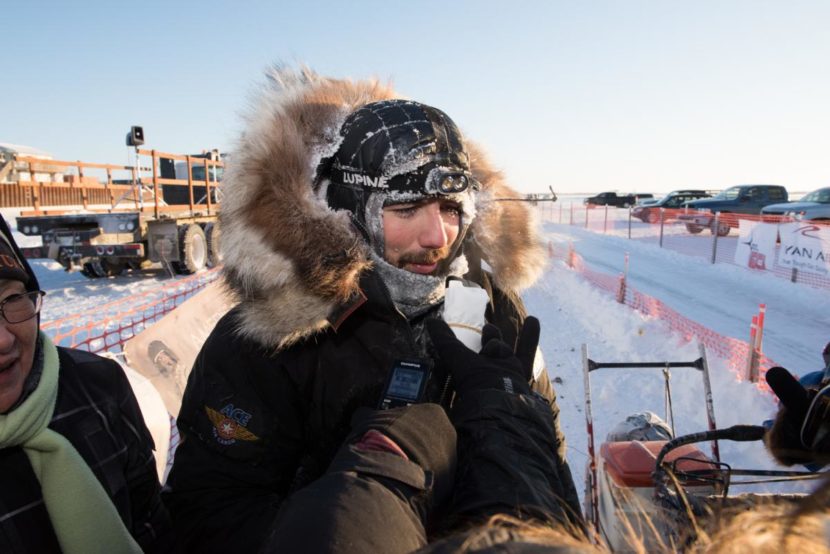
Brent Sass placed second for the second year in a row in the Kuskokwim 300.
Brent Sass placed second for the second year in a row in the Kuskokwim 300. (Photo by Katie Basile/KYUK)

Thirty-six-year-old Sass, a seasoned Yukon Quest musher based in the interior community of Eureka, was never far behind from Kalskag onward.

Kaiser banked the six hours of rest he was allowed on the 300-mile trail earlier than his closest competitor did. He took four hours in Kalskag on the outbound trail and an hour each in Aniak and on the way back through Kalskag.

Sass took his first three hours in outbound Kalskag and completed the Aniak and Whitefish Lake loop in one big march before taking the next three again in Kalskag. While Sass pushed through Aniak during the day Saturday, Kaiser’s team was able to tack on the advantage he needed to secure the victory.

Aniak musher Richie Diehl earned his highest-ever place in the K300, coming into the Bethel finish in third place.
Aniak musher Richie Diehl earned his highest-ever place in the K300, coming into the Bethel finish in third place. (Photo by Katie Basile/KYUK)

His team built a small lead by running 24-minutes faster than Sass into Aniak and 16 minutes faster into Kalskag. But with the fresh inbound Kalskag rest in his team, Sass began to slash into Kaiser’s buffer, gaining 14 minutes on the trail into Tuluksak for the final rest. That set up a classic final sprint on the 50 miles from Tuluksak to Bethel. The mushers’ rest schedules match last year, when Sass chased Kaiser but was unable to overtake him in the final stretch. Richie Diehl placed third in the K300, his best career finish.

In 2015, Kaiser became the first local musher in nearly three decades to win the Kuskokwim 300. Now he matches Mitch Seavey for the second-most titles with three. Only Jeff King with nine victories has more.

Site notifications
Update notification options
Subscribe to notifications