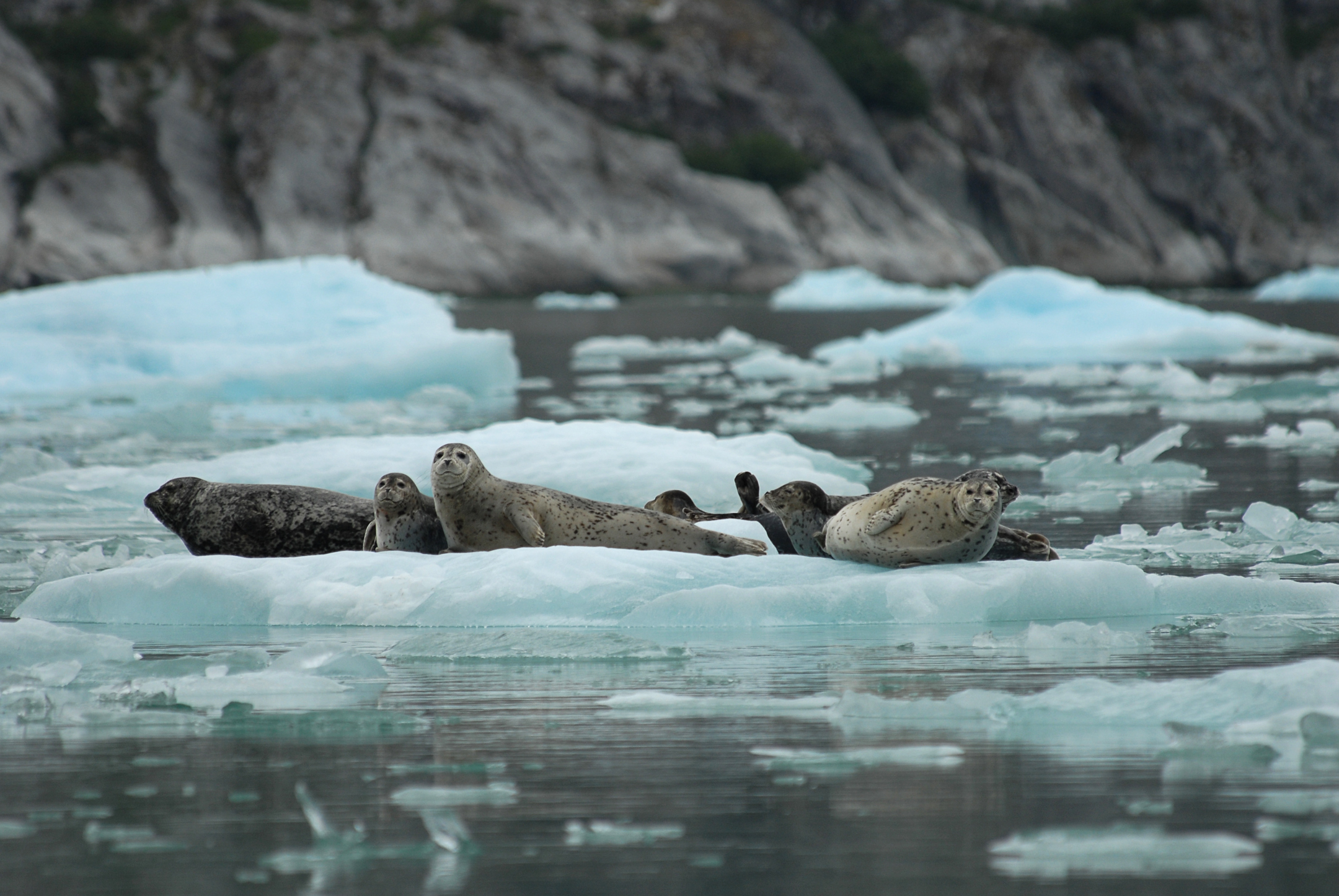
Harbor seals rest on ice near South Sawyer Glacier in 2007. New federal guidelines suggest, but don’t require, vessels to stay about 500 yards away from the marine mammals to lessen disturbances. (Photo courtesy NOAA’s Alaska Fisheries Science Center)
Federal officials are asking cruise ships, tour boats and kayaks to stay far away from harbor seals in Alaska’s glacial fjords.
The marine mammals rest, sleep and birth their pups on floating ice. NOAA Fisheries says new research shows the marine mammals are much more likely to dive into the water when vessels approach the current legal limit.
NOAA spokeswoman Julie Speegle says that stresses the animals and lowers their chance for survival.
“They expend far more energy when they are flushed off the ice floes and that uses up their energy reserves and that’s very important if you’re an animal that lives in that icy environment,” she says.
The federal Marine Mammals Protection Act requires ships to stay about 100 yards away. New guidelines, which are voluntary, call for about 500 yards, if it’s safe to do so.
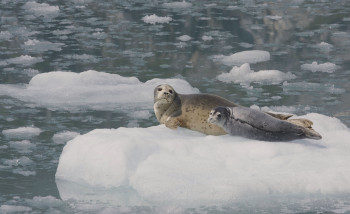
A harbor seal pup and its mother rest on ice at the base of Northwestern Glacier in Kenai Fjords National Park in June of 2011. More than 350 female seals with pups were spotted in the area. (Photo by Gregory “Greg” Smith/Creative Commons)
They also ask ships to be as quiet as possible, avoid causing wakes and make no abrupt course changes. They suggest vessels schedule tours for the early morning or evening, when fewer seals haul out.
“At this point, because they’re voluntary, we will be monitoring the vessel and seal interactions to see if these new voluntary approach guidelines provide sufficient protection for the seals,” she says.
NOAA Fisheries says its research shows about three-quarters of seals on ice dive into the water before an approaching ship reaches the current legal distance. Other studies found different numbers, but they still document significant disturbances.
The most popular fjords, in Southeast and Southcentral Alaska, see multiple visits a day.
Speegle says the new guidelines, if followed, should help protect young seals.
“We certainly want to do all that we can to ensure that pups are not separated from their mothers during the nursing stage,” she says.
Calls to several companies offering fjord tours were not immediately returned.
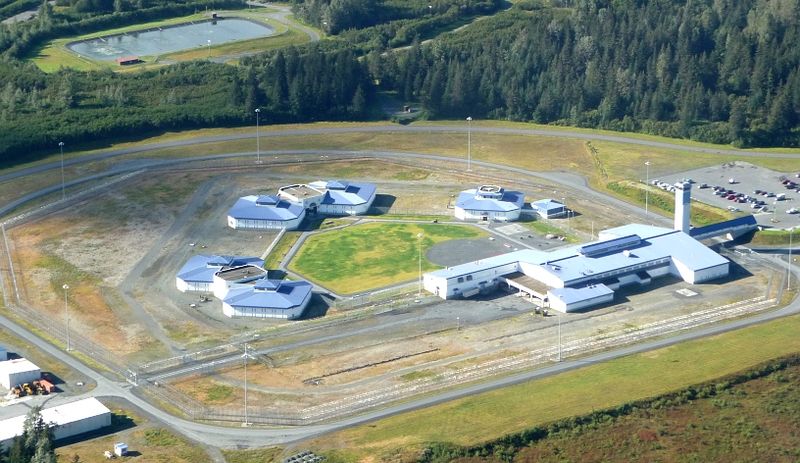
Spring Creek Correctional Center, a maximum security prison in Seward, Alaska. (Creative Commons photo by Mirko Raner)
A woman is dead after shooting herself in front of a Kenai Peninsula correctional facility Monday.
The woman has been identified as 31-year old Amanda Bee of North Pole.
She died Monday just after 9 p.m. at Providence Medical Center in Seward.
Alaska State Troopers from Crown Point on the Kenai Peninsula were dispatched at about 5 p.m. Monday in response to a woman with a gun outside the Spring Creek Correctional Center in Seward.
“The woman pulled up around the first traffic blockade and onto an area right next to the parking lot. She called 911 essentially saying, ‘If you don’t release the convicted killers, I’m going to kill myself,’” says Trooper spokeswoman Megan Peters.
Peters says less than 10 minutes after the call went through, Bee shot herself in the head. Troopers say there were several correctional officers who witnessed the incident. The officers and correctional facility nurses reportedly initiated CPR immediately.
“Unfortunately, they were not able to revive her. Our Troopers were not even able to make it on scene yet before it unfolded,” says Peters.
She was transported to Providence Seward Medical Center. She was still breathing at the time of transport and died later that evening at the hospital.
Next of kin has been notified. The State Medical Examiner was notified and requested an autopsy. An investigation is underway.
A magnitude 6.3 earthquake shook Southcentral Alaska at 6:35 p.m. Tuesday night.
According to the U.S. Geological Survey Earthquake information website, the epicenter was 44 miles south-southwest of Redoubt Volcano on the west side of Cook Inlet, almost due west of Anchor Point, near Pedro Bay.
On the Alaska Earthquake Center Facebook group, people as far north as Fairbanks claimed to have felt it. It was widely felt in Anchorage and the Mat-Su Valley, and all across the Kenai Peninsula.
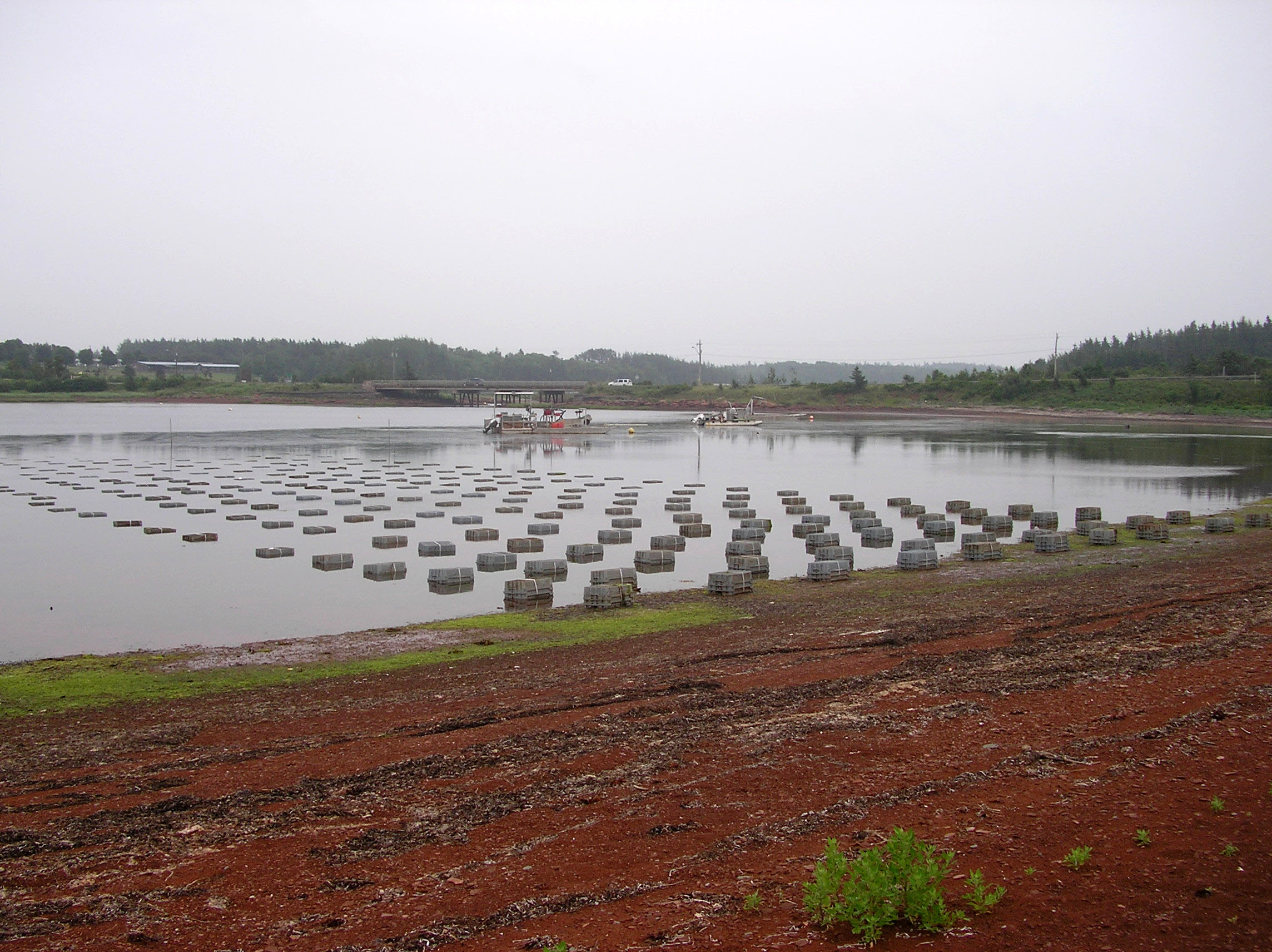
Oysters farmed in baskets on Prince Edward Island Canada. (Creative Commons photo by l santry)
Four Homer residents, including the deputy harbormaster and his wife, are being charged with criminal trespass and theft for stealing oysters from a farm on the south side of Kachemak Bay on the Fourth of July.
Oyster theft is not an uncommon crime around Kachemak Bay, an area with more than a dozen mariculture sites dotting its coastline.
On July 13, Alaska State Troopers received a call from an oyster grower in Jakolof Cove.
“The oyster farm had essentially pulled up a batch of its oysters and realized there weren’t nearly as many as there should have been,” says Megan Peters, a spokeswoman for the Troopers.
“They went back and they reviewed their security footage, because they do have security cameras around their operation. They noticed that on July 4 there was a group of four adults that did not have any type of permission to be there. Essentially, those individuals stole oysters from their oyster farm.”
Through images from the security tape, they were able to identify three of the four people as Homer Deputy Harbor Master Matt Clarke, his wife Rebecca and local resident Christine Kulcheski.
“And we made contact with the three people that they had identified. Those people did cooperate with us. Through our efforts, we were able to identify the fourth person that was involved and charges are also being pursued against that individual.”
The name of the fourth person has not been released yet.
The two Clarkes and Kulcheski are being charged with fourth degree theft and first degree criminal trespass.
The number of oysters and their monetary value has not been disclosed yet.
Deputy Harbor Master Clarke was contacted but did not wish to comment at this time.
Anchorage’s Housing First facility, Karluk Manor. (Photo courtesy of RurAL CAP)
Anchorage is struggling with how to address serious and expensive problems stemming from chronic homelessness. On Tuesday, the new mayor’s administration announced a dramatic plan to more than double the city’s capacity for housing the most severely affected population living on the streets. The sudden move isn’t without controversy.
Melinda Freemon is the director for the Department of Health and Social Services, and she says the addition of 56 housing units fits within Anchorage’s Comprehensive Plan for addressing homelessness.
“DHSS is supportive of this model because it is considered the nationwide best practice: permanent supportive housing actually does end chronic homelessness for high users of safety centers across the nation,” Freemon says.
The plan also funds “intensive case management,” the official term for the comprehensive help clients receive to regain control over their lives.
“They provide assistance with accessing medical care for the tenants, they provide them with shopping opportunities, employment opportunities,” Freemon says. “They would facilitate substance abuse treatment, mental health treatment, and all of the services that go along with helping people retain their housing.”
Providing shelter and help is not cheap, but advocates and city officials are quick to point out the cost of treating symptoms instead of the causes of homelessness is even more expensive. The municipality has spent millions of dollars on studies proving how costly it is just managing the most high-cost users of emergency services.
That’s partly why news from the mayor’s office was such a surprise: the Administration is chipping in just $200,000, but the funding is essential for accessing a much larger pool of grant funds $3.5 million ($3,595,717 to be exact) for a multi-year budget paying for the treatment. Originally that money was dropped into the city’s budget by the Sullivan Administration for a controversial pilot program that would have sent 10 people for a short-term course of aversion therapy in Seattle. Now, the funds are helping renovate the Safe Harbor facility by 4th Avenue and Sitka Street to accommodate long-term tenants.
“All the units needed upgrading–so just new flooring, new paint on the wall, but in order to make it serve a special needs population or a highly disabled population, like many people who are long-term homeless, we’ve had to make some safety improvements.”
Corrine O’Neill is a housing director at RurAL CAP, which is administering the project. The statewide nonprofit bought the Safety Harbor facility last winter, but had struggled to find funds to keep it up and running.
“And Rural CAP felt it was really important to save this housing and that it would exacerbate the homeless problem in Anchorage if we didn’t save these assets. But we also inherited some of the same struggles they had in terms of operational costs.”
Long-term residents are expected to start moving in by September. The funding will also make vouchers available for subsidized housing spread across different parts of the city. The project will end up similar to Karluk Manor, a wet-housing facility that’s just a few blocks away–a factor that’s hardly insignificant for critics of the plan.
Christopher Constant is president of the Fairview Community Council, and says the neighborhood wasn’t consulted ahead of the decision to support more long-term supportive housing–an issue with a contentious history in the area.
“We take on more as a community than any other neighborhood in this town–between Mountain View and Fairview, you know, we are the city’s social service epicenter,” Constant says.
Constant says it’s not only unfair to residents, but it makes for bad treatment policy, keeping those people in the middle of treatment within the same geography and social circles they may be struggling to get away from.
A spokesman for the Berkowitz administration says the president of Mountain View Community Council was contacted about the plan, along with the chair and vice-chair of the Anchorage Assembly.
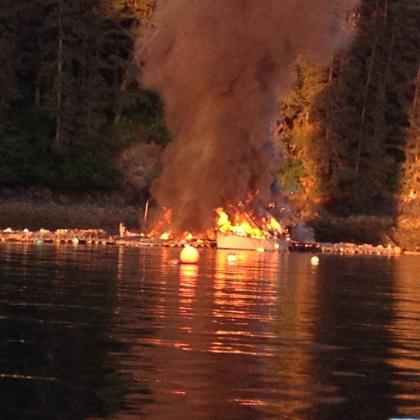
Fire in Little Jakolof Bay. (Photo courtesy of Jan Flora)
A fire destroyed a sailboat, part of a dock, and some equipment owned by the Jakolof Bay Oyster Company last night. There have been no reported injuries.
The fire started Sunday evening in Little Jakolof Bay, about 7 miles southwest of Homer on the south side of Kachemak Bay.
Johann Willrich was out on a porch at about 10 pm in Little Tutka, a neighboring bay. He says he saw black smoke that looked larger than a garbage fire, so he and other residents hopped in their boat to find out what was going on.
“I had the handheld VHF and someone was reporting that there was a boat that was on fire and the dock itself was on fire as well…Drove over toward Little Jakolof Bay and as soon as we turned the corner, we saw that the boat was fully engulfed and we got there just in time to see the mast fall over,” says Willrich.
Residents of the remote south bay often are the first responders to incidents, as it can take quite a while for fire departments or other official responders to travel from the larger Seldovia, or from Homer.
The dock and boat are property of the Jakolof Bay Oyster Company. Its owners declined to be interviewed but confirmed the losses.
Willrich says they tried to reach the boat that was on fire, but it was hard because of the farming operation.
“So there were oyster nets strung out all along the dock, a couple hundred yards in either direction. So it was very hard to even approach this burning boat,” says Willrich.
They were able to cut loose some equipment and another boat and tow them out of danger.
Bryan Barratt is the chief of the Seldovia Volunteer Fire Department. They responded just after 10 pm and tried to salvage as much as they could.
“Myself and one other city firefighter was able to get onto the dock and cut loose a raft with their processing equipment and their oyster-picking skiff and get those away from the fire. One of those rafts was on fire and we put that out and pulled it off to the side,” says Chief Barratt.
Barratt confirms there was significant damage to the dock and several floats, the boat sank, and quite a bit of equipment that was stored on the dock was also destroyed.
“I don’t think we’ll ever know definitively the cause but the fire originated in a shed that had a running generator in it that was on one of the floats that was across the dock from the sailboat. The fire originated in that building, burned that building, burned the adjacent floats, swept across the floats and caught the rigging and the sails on the sailboat on fire and then burned the boat,” says Barratt.
Steven Russell is the interagency coordinator for the Department of Environmental Conservation. They responded early Monday morning. He says there was no sheening on the water in the area and no known petroleum product spillage.
“Jakolof Bay area is a very sensitive area, not only environmentally speaking but commercially speaking to the extent of mariculture operations that are going on in that area. Certainly DEC will do anything we can to assist the responsible party and the Coast Guard in mitigating any environmental threat,” says Russell.
The full cost of the losses to their oyster operations are not known at this time.
Close
Update notification options
Subscribe to notifications
Subscribe
Get notifications about news related to the topics you care about. You can unsubscribe anytime.