National Elections

Hillary Clinton’s Path To Election Day: Plans, Luck And Self-Inflicted Wounds

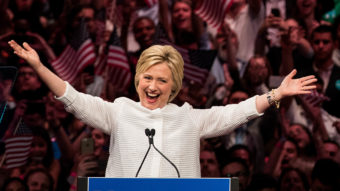
Hillary Clinton claims victory in the Democratic primary in the Brooklyn Navy Yard on June 7, 2016. Drew Angerer/Getty Images
Hillary Clinton claims victory in the Democratic primary in the Brooklyn Navy Yard on June 7, 2016.
Drew Angerer/Getty Images

When it comes to Hillary Clinton’s historic run for the presidency, if she’s ultimately able to shatter that highest, hardest glass ceiling it will be because a combination of good luck and better planning helped her overcome challenges, many of her own making.

Donald Trump’s name is on the ballot, but Clinton’s biggest opponent may well have been herself — as she was dogged by emails, questions over the Clinton Foundation and paid speeches.

Those controversies have kept the presidential contest between Clinton and Republican nominee Trump close at the end. But Hillary Clinton will reach Election Day with the real prospect of becoming the first female president in U.S. history.

She’s been a candidate for 19 months. Clinton’s official campaign launch was preceded by months of will-she-or-won’t-she chatter, but there was lots of work behind the scenes and a “Ready For Hillary” superPAC working out in the open to prepare for Clinton to get in.

But who would she face?

Winning The Opponent Lottery

In April 2015, when Hillary Clinton officially entered the race for president, she was looking over her left shoulder. It was apparent in her very first remarks, at a community college in Iowa.

“I think it’s fair to say that, as you look across the country, the deck is still stacked in favor of those who are already at the top,” said Clinton. “And there’s something wrong with that.”

Clinton’s team had an eye on Vice President Joe Biden, with his everyman appeal and ability to speak the language of white, working-class voters. But ultimately Biden, whose son died of brain cancer in the spring of 2015, opted not to get into the race.

Massachusetts Sen. Elizabeth Warren resisted progressive recruitment efforts and didn’t get into the race either.

In the end, Clinton only faced one primary opponent who truly threatened her chance at the nomination: Bernie Sanders. He did far better than likely even he imagined was possible, going from oddity to rock star, with legions of adoring supporters. Sanders’ movement grew over the summer of 2015 with an active online community boosting his name recognition.

The crowds at his speeches and rallies kept growing to the point that he was filling sports arenas. As one Democratic activist in Iowa put it to team Clinton, “Objects in mirror may be closer than they appear.” And those large crowds gave Sanders’ campaign more media attention and more credibility.

“You know, sometimes our campaign has been referred to as a fringe campaign. Well, if this is fringe, I would like to see mainstream,” Sanders said to a packed auditorium at Drake University in Des Moines, Iowa, in June 2015.

Clinton barely won the Iowa caucuses and Sanders then trounced her in New Hampshire. That juiced his fundraising, allowing him to run television ads and compete throughout the primary season. But Sanders’ weaknesses became apparent in the South Carolina primary. His core message of income inequality and the influence of money in politics didn’t resonate with many African-American voters, who felt the racial inequality they experience wasn’t addressed with a focus simply on economics. That showed as the primaries moved to southern states where black voters sometimes favored Clinton by 80-point margins, according to exit polls.

Sanders also famously let Clinton off the hook on her emails and didn’t go after her on making paid speeches to big Wall Street banks, particularly Goldman Sachs, until late in the primary fight.

Bernie Sanders and Hillary Clinton take part in the first Democratic presidential debate on Oct. 13, 2015 in Las Vegas, Nev. Joe Raedle/Getty Images
Bernie Sanders and Hillary Clinton take part in the first Democratic presidential debate on Oct. 13, 2015 in Las Vegas, Nev.
Joe Raedle/Getty Images

Looking toward the general election and the growing Republican field in early 2015, Donald Trump wasn’t even on the radar. Few believed he would run and even fewer believed he could mount a serious candidacy. He had toyed with a presidential campaign many times before without jumping in. There was little reason to believe this time would be different. On the night of the first Republican presidential debate, Clinton’s team welcomed reporters into its Brooklyn headquarters as its rapid response team crafted tweets and senior aides offered spin during commercial breaks. “I think they’re digging the hole deeper,” Mook said to a small gaggle of reporters on the Clinton beat. But his attention quickly turned back to the TV. “Don’t get between me and Donald,” Mook said.

Their plan was to tie all the other Republicans to Trump’s extreme statements, because they hardly imagined Trump would ultimately become the nominee.

For Clinton, there was a generational concern. In 2008, Barack Obama represented hope and change and his relative youth was part of the appeal. In a 2016 general election, Sens. Ted Cruz or Marco Rubio would be able draw the same contrast, painting the baby boomer Clinton as a relic of the past.

It was clear that was the general election challenge Clinton and her team were anticipating when she gave the big speech at her official campaign kickoff event on Roosevelt Island in New York. “Now there may some new voices in the presidential Republican choir, but they’re all singing the same old song,” Clinton told a crowd estimated at 5,000. “A song called, ‘Yesterday.’ You know the one. All our troubles look as though they’re here to stay. And we need a place to hide away. They believe in yesterday. And you’re lucky I didn’t try singing that, I’ll tell you.”

According to hacked emails released by WikiLeaks, behind the scenes, senior advisers were especially concerned about Rubio, the Florida senator.

“I’m beginning to worry more about Rubio than the others,” Joel Benenson, the campaign’s pollster and chief strategist wrote in February 2015. “He has stronger right wing cred than Jeb and he’s finding a way to the middle enough for now and he will be the most exciting choice to Republicans. Could pose a real threat with Latinos etc.”

But in the end, Trump outlasted the entire Republican field, leaving Clinton to face an opponent with well-known shortcomings and an opposition research file bigger than Trump Tower. Hillary Clinton won the opponent lottery. Not just in the primary, when Warren and Biden stayed out, but in the general election as well. There were certainly risks in facing Trump: his ability to dominate news coverage, the difficulty in pinning him down on policy. Trump’s taxes, business dealings, treatment of women and tendency to say and tweet things that hurt him with voters were a constant throughout the general election campaign. But many Republicans and even some Democrats believe, with a more disciplined opponent, Clinton would easily have been facing defeat on Election Day.

A Team Of (Former) Rivals

For the first time in at least 100 years, a sitting U.S. president has campaigned vigorously for his chosen successor. In the closing weeks of the campaign, President Barack Obama has been a regular fixture on the campaign trail for Hillary Clinton, pitching her to voters more effectively than she could pitch herself.

Hillary and Bill Clinton attend the 37th Harkin Steak Fry on Sept. 14, 2014, in Indianola, Iowa. Steve Pope/Getty Images
Hillary and Bill Clinton attend the 37th Harkin Steak Fry on Sept. 14, 2014, in Indianola, Iowa.
Steve Pope/Getty Images

With an approval rating solidly above 50 percent and his natural ease on the stump, Obama essentially doubled Clinton’s firepower in swing states. But he wasn’t the only one.

First Lady Michelle Obama, Vice President Joe Biden, Massachusetts Sen. Elizabeth Warren and even Bernie Sanders campaigned hard for Clinton and her running mate, Tim Kaine.

Clinton won Sanders over by agreeing to modify her debt-free public college proposal to more closely track with Sanders’ free college plan. He started slowly, but by the end of the race Sanders was traversing the country trying to convince his young supporters to go to the polls and not vote for a third-party candidate or Trump.

The ally Clinton always had making the case on her behalf was her husband, former President Bill Clinton.

By contrast, Trump’s surrogate operation was thin. There were no former presidents or even former Republican presidential nominees, save Bob Dole, who appeared at the Republican National Convention. Mitt Romney actively opposed Trump and relatives said both former presidents Bush would likely vote for Clinton.

Clinton’s ‘Damn Emails’ (And Wall Street Speeches)

From before Hillary Clinton even entered the race for president, her campaign faced headwinds of her own making. There was the private email server she used for official business while secretary of state and there were the lucrative speaking engagements during the time after she left the State Department and before her campaign officially began.

Hillary Clinton speaks to the media after keynoting a Women's Empowerment Event at the United Nations March 10, 2015 in New York City, just days after it was revealed she used a private email server while secretary of state. Yana Paskova/Getty Images
Hillary Clinton speaks to the media after keynoting a Women’s Empowerment Event at the United Nations March 10, 2015 in New York City, just days after it was revealed she used a private email server while secretary of state.
Yana Paskova/Getty Images

When the news of Clinton’s server broke, top officials in the campaign were seemingly blindsided. In hacked emails released by WikiLeaks, campaign chairman-in-waiting John Podesta emailed campaign manager-in-waiting Robby Mook asking if he knew the extent of the email issue in advance.

“Nope. We brought up the existence of emails in research this summer but were told that everything was taken care of,” Mook wrote at the time.

Clinton’s campaign has refused to verify the authenticity of emails released by WikiLeaks and has also avoided commenting on any of the content. Clinton’s campaign says the release of emails hacked from Podesta’s personal Gmail account is part of a Russian effort to interfere with the U.S. election.

In one chain, Podesta and Neera Tanden, a longtime Clinton ally, complain about the email story coming out so late in the game. “Why didn’t they get this stuff out like 18 months ago? So crazy,” she asked. In a later email, Tanden answered her own question: “They wanted to get away with it.”

Bernie Sanders gave Clinton a gift when he took the email server off the table as an issue in the Democratic primary during the first debate.

“Let me say something that may not be great politics, but I think the secretary is right. And that is that the American people are sick and tired of hearing about your damn emails,” said Sanders.

Clinton jumped in, “Thank you, thank you,” she said. “Me, too!”

Right after that came the 11-hour hearing of the House Select Committee on Benghazi. Clinton maintained a calm, somber demeanor throughout and left with House Republicans revealing no new bombshells.

Hillary Clinton testifies before the House Select Committee on Benghazi on Oct. 22, 2015. Chip Somodevilla/Getty Images
Hillary Clinton testifies before the House Select Committee on Benghazi on Oct. 22, 2015.
Chip Somodevilla/Getty Images

That October was one of the best months of her campaign. But Clinton’s email troubles were far from over.

Just as she was launching into the general election, only hours before Clinton was to campaign with President Obama for the first time, FBI Director James Comey held a press conference. On the face of it, his announcement was good news. The FBI had been investigating whether Clinton’s use of a private email server violated the law, whether she and her aides had improperly handled classified material. He said no reasonable prosecutor would pursue the case and he was recommending against charging Clinton or her aides with a crime.

“Although we did not find clear evidence that Secretary Clinton or her colleagues intended to violate laws governing the handling of classified information, there is evidence that they were extremely careless in their handling of very sensitive, highly classified information,” Comey said.

His statement raised more questions than it answered and brought the email saga back into focus for voters.

At the Republican National Convention in Cleveland, delegates began chanting “lock her up!” That chant became a regular feature of Trump rallies.

Ten days before Election Day, Comey brought the email issue back into the spotlight, announcing emails had been found in the course of another investigation focused on former congressman Anthony Weiner, the estranged husband of Clinton’s closest aide, Huma Abedin. This meant the cloud of Clinton’s email server would hang over her campaign from beginning to end, and likely well beyond if she wins.

Another lingering problem for Clinton’s campaign came from the speeches she gave behind closed doors to Goldman Sachs and other Wall Street banks. Clinton made millions of dollars on the speaking circuit and the implication was that she was saying something behind closed doors with corporate executives that she wasn’t telling voters.

By the end of the primary, Sanders regularly called on her to release the transcripts. And there were transcripts, compiled by the speaker’s bureau that booked Clinton’s appearances.

Clinton’s campaign never released the transcripts. But a policy adviser did review them, sending around an email to senior staff highlighting the most potentially politically problematic excerpts.

We know this, because of the hacked emails released by WikiLeaks. In addition to posting the speech excerpts, WikiLeaks also released the full text of all three of Clinton’s Goldman Sachs speeches. It turns out they weren’t speeches at all, but rather extended on-stage question and answer sessions.

Had the transcripts leaked out during the primary, they might have been more damaging. But coming out in October, they barely registered.

Making A Plan — And Sticking To It

Hillary Clinton loves plans. Or at least she loves to talk about them.

“Maybe it is a bit of a woman’s thing, because we make lists,” Clinton began saying at rallies in the final weeks of her campaign. “We do, we make lists, and we try to write down what we’re supposed to do and then cross them off as we go on in the day or the week. So I want you to think about our plans as our list. Our list for our country.”

Clinton is a wonk at heart. Digging into the policy weeds is where she is most comfortable. She is far less comfortable with sweeping themes and inspiring speeches.

So, her campaign made a plan to just let Hillary do Hillary. They kept her events small and held numerous town hall-style events and roundtable conversations. Clinton did a lot of listening and the campaign released plans and policy papers on everything from autism to defeating ISIS.

The strategy was to be boring. And with that as a goal, Clinton’s campaign was a success. Though there were certainly times when this baffled those watching from the outside.

And while Clinton was making relatively small promises to small audiences, her campaign was building an infrastructure to reach voters where they were and bring them to the polls.

The campaign started early with the slow, hard grind of person-to-person contact known in campaign lingo as organizing. The campaign was building communities, groups of people brought together by a common goal of electing Clinton, but motivated and inspired as much by their fellow volunteers as by the candidate. By the end, the campaign had half a million volunteers working to get her elected.

Organizing isn’t flashy. Neither were Clinton’s plans and speeches. But rather than fighting against her weaknesses as a campaigner, the campaign played to her strengths.

Getting Under Trump’s ‘Thin Skin’

Just as the first general election debate was ending, Hillary Clinton said something that set Donald Trump off.

“This is a man who has called women pigs, slobs and dogs,” Clinton said, echoing an ad called “Mirrors” that her campaign had been running in swing states and on national cable leading up to the debate. Trump hit back, making it clear he had seen the ad and didn’t much like it.

“Hundreds of millions of dollars on negative ads on me, many of which are absolutely untrue,” Trump said. “They’re untrue, and they’re misrepresentations. And I will tell you this, Lester, it’s not nice and I don’t, I don’t deserve that. But it’s certainly not a nice thing that she’s done. ”

In that same exchange, Clinton mentioned the former Miss Universe Alicia Machado, who Trump had allegedly called “Miss Piggy” and “Miss Housekeeping,” mocking her for her Latino heritage and for gaining weight.

Hillary Clinton leaves the stage after the first presidential debate at Hofstra University in Hempstead, N.Y., on Sept. 26, 2016. Timothy A. Clary /AFP/Getty Images
Hillary Clinton leaves the stage after the first presidential debate at Hofstra University in Hempstead, N.Y., on Sept. 26, 2016.
Timothy A. Clary /AFP/Getty Images

The case of Alicia Machado is a perfect example of the Clinton campaign’s meticulous planning. Before the first debate, the campaign had already sat down with her, shooting a video where she talked about Trump mocking her weight and her struggles with eating disorders. This was edited together with archival footage of Trump bringing reporters to the gym to watch her work out.

Within an hour of the debate, the campaign had released its video featuring Machado and the next day she was on a conference call with reporters.

The morning after the debate in a phone interview with Fox and Friends, unprompted by the anchors, Trump started talking about Machado. He defended himself by saying she really had gained weight. Clinton had snagged him.

“Not only that — her attitude. And we had a real problem with her,” Trump added.

The whole week following the first debate was consumed by Trump and his surrogates arguing it wasn’t OK for Machado to gain weight while Miss Universe. He couldn’t get much further off message.

This all culminated with Trump going on a pre-dawn tweet storm attacking Machado and encouraging followers to “check out sex tape.”

Clinton made a strategic choice once she knew Trump would be her opponent. She wouldn’t run against him like any other Republican. She would portray him as an outlier, an existential threat and build a case that he was “temperamentally unfit” to be president of the United States. This made it more a race about values, personality and temperament than policy.

“Imagine him plunging us into a war because somebody got under his very thin skin,” Clinton said in a national security speech at Kent State University in Ohio.

With carefully laid traps like the attack involving Machado or from the parents of a Muslim U.S. Army captain killed in Iraq, the Clinton campaign was able to get Trump to help make their point, one tweet or TV interview at a time.

If Hillary Clinton convinces enough Americans Donald Trump is simply unacceptable for the presidency, she will become America’s first female president. But she would also face incredible challenges, including repairing her own reputation, battered by two years of campaigning and the email scandal that may never fully go away.

Hillary Clinton speaks during the National Action Network's 25th Anniversary Convention on April 13, 2016, in New York City. Justin Sullivan/Getty Images
Hillary Clinton speaks during the National Action Network’s 25th Anniversary Convention on April 13, 2016, in New York City.
Justin Sullivan/Getty Images

Copyright 2016 NPR. To see more, visit http://www.npr.org/.

Donald Trump Has Brought On Countless Controversies In An Unlikely Campaign

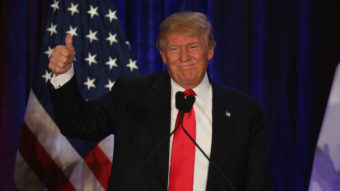
Republican presidential candidate Donald Trump speaks at his Iowa Caucus night gathering February 1, 2016 in Des Moines, Iowa. Scott Olson/Getty Images
Republican presidential candidate Donald Trump speaks at his Iowa Caucus night gathering February 1, 2016 in Des Moines, Iowa.
Scott Olson/Getty Images

When Donald Trump decided to run for president — after flirting with politics for many years, and gaining a following on the right for questioning President Obama’s birthplace — the real estate developer and businessman from Queens was dismissed and laughed at by political observers. Many largely wrote the whole thing off as a publicity stunt.

But Trump’s astonishing rise to the Republican nomination was marked by an aura of invincibility unlike any politician in memory.

In the early days of the 2016 campaign, the case against Trump was bolstered by his penchant for making errors that seemed obviously fatal — until again and again, they were not.

The Anti-Politician

Trump’s willingness to say whatever is on his mind aloud, on a national stage, has been either his Achilles heel or his superpower — depending largely on what phase of the campaign he’s in.

Early on, he drew throngs of enthusiastic supporters to his rallies with his promise to “Make America Great Again.” They were fed up, they said, with politicians on both the left and the right who they believed were greedy and self-absorbed — who had failed regular people for decades while enriching themselves. They expressed excitement about a politician who spoke like them and, many said, verbalized the things they’d been saying privately for years.

To many other Americans, those things felt like a return to an ugly time in American history: insults directed at Mexican immigrants, Muslims, women, and even Sen. John McCain, the 2008 GOP nominee and a Vietnam War veteran who was held as a prisoner of war.

A Simple, Direct Message From The Start

Trump set the tone for his campaign from the moment he announced his candidacy for president, telling supporters gathered at Trump Tower in New York City that the country had become “a dumping ground for everybody else’s problems.”

Calling for a wall along the U.S.-Mexico border, Trump singled out Mexican immigrants for criticism, saying that Mexico is not sending their “best” people across the border.

Donald Trump announces his candidacy for president at Trump Tower on June 16, 2015 in New York City. Christopher Gregory/Getty Images
Donald Trump announces his candidacy for president at Trump Tower on June 16, 2015 in New York City.
Christopher Gregory/Getty Images

“They’re bringing drugs, they’re bringing crime, they’re rapists, and some, I assume, are good people,” Trump said, delivering a line that instantly came to exemplify his message and style — and signaled to many in the political and media establishments that he was going nowhere.

Trump even battled a marquee talent at the heart of conservative media — Fox News anchor Megyn Kelly. During the first GOP primary debate in August 2015, Kelly asked Trump whether referring to women as “fat pigs,” “dogs,” and “slobs,” as he had in the past, demonstrated the kind of temperament suitable for a president. Trump lashed out at Kelly the next day in an interview on CNN.

“You could see there was blood coming out of her eyes, blood coming out of her, wherever,” Trump said, in a comment many interpreted as a reference to menstruation.

If going after the 2008 Republican nominee, who many primary voters said was too moderate, wouldn’t doom Trump, surely the GOP base would be repelled by a candidate going to war with a Fox News star.

Not quite.

An Unstoppable Force?

Each time Trump made a shocking statement, many voters — which included, for months, evangelicals and other Republicans aligned with more traditional factions within their party — hoped his candidacy would be finished.

His campaign was marked by disorganization and repeated internal shake-ups, but none of that registered with his loyal supporters. Trump basked in that support, boasting at a rally in Iowa in January that “I could stand in the middle of 5th Avenue and shoot somebody and I wouldn’t lose voters.”

Donald Trump greets guests following a campaign rally in Madison, Ala., on Feb. 16, 2016. Scott Olson/Getty Images
Donald Trump greets guests following a campaign rally in Madison, Ala., on Feb. 16, 2016.
Scott Olson/Getty Images

Trump’s loss the next month in the first-in-the-nation Iowa caucuses to Texas Sen. Ted Cruz gave hope to some Republicans that perhaps Trump was beginning to wane. But few GOP leaders were backing Cruz, a despised figure in Washington, and the party failed to coalesce around more popular establishment options like Florida Sen. Marco Rubio or New Jersey Gov. Chris Christie.

Trumps’ first big win came in New Hampshire — a state where Christie, a northeastern moderate, should have done well. Christie dropped out and soon became one of the first leading establishment Republicans to endorse Trump in February, saying he’d gotten to know the New Yorker and liked him. Trump later held a fundraiser to pay off Christie’s campaign debt.

#NeverTrump

Many political observers argued Trump’s popularity had a “ceiling” — that as the field thinned, he’d never be able to win over a large enough share of primary voters to claim the nomination. But he continued to win primary after primary.

Once Trump won one big primary, and then a few more, it set in for the GOP leadership: He was likely to become the nominee.

Trump’s language and demeanor (including a feud with the pope) continued to prompt many establishment Republicans to refuse to support him, even as he closed in on the nomination. In early March, 2012 nominee Mitt Romney gave a speech calling on fellow Republicans to stop Trump, whom he described as a “phony” and a “fraud.”

A coalition of #NeverTrump conservatives (who used the hashtag to coalesce on social media) vowed never to support him. By late March, several establishment Republicans, recognizing the realities of the delegate math, reluctantly endorsed Cruz. Conservatives in Wisconsin rallied around Cruz, helping him to win the Wisconsin primary.

Trump would win the majority of primaries — that was clear. Cruz’s victory in Wisconsin gave a brief glimmer of hope to the Never Trump movement, who began preparing for the possibility of a contested convention if Trump fell short of the delegates needed to clinch the nomination.

But even before then, there was a moment that seemed to undercut the dire arguments against Trump in a matter of minutes. The remaining GOP candidates — Trump, Cruz, Rubio and Ohio Gov. John Kasich — gathered on stage in Detroit for a debate on March 3, 2016. After weeks of arguing to voters that Trump would be disastrous — not just as the Republican nominee, but also as president — they were all asked if they would support the eventual nominee, even if it’s Donald Trump. They all said yes.

Exactly two months later, it was only Trump.

Trump defeated his remaining opponents, Cruz and Kasich, on May 3 in the Indiana primary — a contest in a conservative Midwestern state where Cruz was hoping his appeal with evangelical voters would keep his campaign alive. In late May, Trump locked down enough delegate support to became the presumptive GOP nominee.

Carrying The Mantle

But soon, Trump was again drawing criticism from within his own party for questioning the ability of a federal judge of Mexican descent to fairly preside over a fraud lawsuit against his now-defunct real estate investment course known as Trump University. House Speaker Paul Ryan, just days after reluctantly endorsing Trump, called it “sort of like the textbook definition of a racist comment.”

On June 7, as the Republican primary season drew to a close, Trump made the rare move of reading a speech from a teleprompter, and made a promise to his party: “I understand the responsibility of carrying the mantle and I will never, ever let you down.”

Donald Trump enters the stage to introduce his wife Melania on the first day of the Republican National Convention on July 18, 2016, in Cleveland, Ohio. Alex Wong/Getty Images
Donald Trump enters the stage to introduce his wife Melania on the first day of the Republican National Convention on July 18, 2016, in Cleveland, Ohio.
Alex Wong/Getty Images

The Republican National Convention, an event that’s normally meant to bring the party together, was marred by discord. The Never Trump movement made one last stand that devolved into a chaotic floor fight. Cruz was booed during his convention speech after telling Republicans to “vote their conscience” in November. No previous Republican nominees were present, except for former Kansas Sen. Bob Dole, the 1996 nominee.

Republicans moved toward unity in their opposition to Hillary Clinton.

Speaker after speaker outlined a type of indictment against Clinton. Christie identified himself as a former federal prosecutor and said, “I welcome the opportunity to hold Hillary Rodham Clinton accountable for her performance and her character.”

The arena full of delegates, who he dubbed “a jury of her peers,” lit up in a chant of “lock her up.” It would set the tone and establish a new motto for the rest of Trump’s campaign.

Trump delivered an ominous acceptance speech that largely focused on crime and terrorism. He closed with a pledge to supporters: “I am your voice.”

The convention largely drew Republicans together, and Trump took a brief lead in the polls.

Missteps And Shakeups

It wasn’t long after the convention, with many Republicans hoping for a more “presidential” nominee, before Trump once again let them down. The rest of the summer brought a series of missteps, including Trump’s attacks on the family of a Muslim soldier who was killed while serving in Iraq after they appeared at the Democratic National Convention to denounce Trump.

As Trump faltered, his campaign endured another shake-up; campaign manager Paul Manafort — who himself had stepped up to lead the operation after Trump’s top aide Corey Lewandowski was fired — resigned suddenly. In Manafort’s place, Trump elevated pollster Kellyanne Conway, who’d been brought in mid-summer in an effort to appeal to women and moderate voters.

Donald Trump's first campaign manager Corey Lewandowski speaks on the phone at Trump Tower following the conclusion of primaries in northeastern states on April 26, 2016. Spencer Platt/Getty Images
Donald Trump’s first campaign manager Corey Lewandowski speaks on the phone at Trump Tower following the conclusion of primaries in northeastern states on April 26, 2016.
Spencer Platt/Getty Images

Trump may have become the biggest force inside the GOP, but to actually win the presidency, he had no choice but to work with the party leadership. His campaign was lean and disorganized, lacking the structure necessary to be effective in the general election. He continued to lean heavily on the ground game organization set up by the Republican National Committee in the wake of Mitt Romney’s loss in 2012. While many top elected Republicans, like Paul Ryan, kept Trump at arm’s length, those who ran the party operation said they were all in.

By the end of the summer, Trump also brought in Steve Bannon of Breitbart News, known for his no-holds-barred approach to politics and his popularity among the alt-right.

Bannon’s influence could be felt as Trump and his surrogates drew attention to conspiracy theories about Clinton’s health — a line of attack that paid off when she collapsed at a Sept. 11 memorial ceremony due to what turned out to be pneumonia. In the weeks before the debates, Trump seemed to adopt some of Clinton’s attacks on him, turning them back on her. Both questioned each other’s temperament and fitness to serve.

By the time the first debate rolled around, Trump was in fighting mode — repeatedly interrupting Clinton on the stage at Hofstra University in New York. He also hinted at what would turn out to be a major theme of the rest of the campaign — that he was thinking of bringing up former President Bill Clinton’s history of sexual misconduct. Trump said on stage that he “was going to say something extremely rough to Hillary,” but thought better of it because the Clintons’ daughter Chelsea was there.

In early October, a damning story surfaced in the form of a 2005 recording: during taping for the TV show Access Hollywood, Trump was recorded making lewd comments about women. He described a failed attempt to seduce a married woman, used vulgar terms to describe women’s bodies, and bragged about groping and kissing women he’s just met without their consent.

“I just start kissing them. It’s like a magnet. Just kiss. I don’t even wait,” Trump says in the recording. He goes on to say, “And when you’re a star, they let you do it. You can do anything.”

Over the tumultuous weekend that followed, Trump’s campaign put out a statement calling the remarks “locker room talk” and apologizing “if anyone was offended,” followed later by a longer apology in the form of a video statement from Trump. Dozens of leading Republicans called for Trump to step aside, and many more denounced his words.

Trump took that as a cue. “It is so nice that the shackles have been taken off me and I can now fight for America the way I want to,” Trump tweeted ominously. He was a candidate ready to take on a siege.

At the second debate, Trump showed up with several women who accuse Bill Clinton of rape and sexual assault. The campaign was reportedly prevented from having the women confront the former president in the audience.

CNN’s Anderson Cooper asked Trump if he’d ever actually done to women the things he described in the video. Trump reiterated his “locker room talk” statement, and changed the subject to fighting ISIS and Bill Clinton’s sexual improprieties, before eventually telling Cooper that “no one has more respect for women than I do.” Trump was asked if he ever touched women without consent and replied, “No, I have not.”

Within days, Trump was facing a cascade of allegations from women who said he had, in fact, done those things. Trump, always the counter-puncher, denied them all and threatened to sue his accusers.

He kept the focus on Hillary Clinton’s email scandal and questions about her family’s foundation — issues that reinforced his narrative that his rival represented the failed and corrupt Washington establishment.

The Rigged System

In front of large and often angry crowds, Trump continued to lob attacks at the media and the political establishment. He even questioned the integrity of the electoral process and, in the final presidential debate, wouldn’t promise to concede the election if he loses.

While Trump’s claim of a rigged election is false and unusual, if not unprecedented, behavior for a major-party nominee, many of his supporters latched on to the idea, which resonated with their sense that an elite establishment was not looking out for their interests.

That frustration grew as polls showed the presidency falling out of reach for Trump, until FBI Director James Comey decided to tell Congress he was looking into newly discovered emails that may be related to the investigation of Clinton’s private server — an investigation he’d said was complete last summer.

Trump seized on that news, refocusing attention on Clinton — and the core message of corruption and the need for change. Soon his disposition and poll numbers began to bounce back.

In the waning weeks of the campaign, a new slogan — “drain the swamp” — joined chants of “build the wall” and “lock her up” at Trump’s rallies. With his calls to upend the political establishment, Trump tapped into a force that was wrenching inside the Republican Party since the rise of Sarah Palin and the Tea Party years before.

Once it took over, other Republicans faced a choice between Trump and Clinton, a candidate many of them truly despised. Much of the party’s reluctant base eventually came around, after Trump promised to oppose abortion rights and appoint conservative Supreme Court justices — and Clinton’s “scandalabra,” as Kellyanne Conway put it, burned on.

That could be enough to get Trump into the White House. Trump’s candidacy has emboldened many Americans with a belief that the country’s leaders are incompetent and corrupt, people who resent being told their thoughts and words are not politically correct. They see the country changing, threats from abroad lurking and the economy in which they were promised comfort, even prosperity, transformed. That’s what bonded them to the candidate making that promise — to make America great again.

As Trump addressed a rally in New Hampshire in the closing days of the campaign, he recognized a supporter who called out, “Are you ready?”

“I didn’t need this, folks,” Trump said. “But I love this country and we had to do this. Believe me, we had to do this. And I’m ready.

Republican presidential candidate Donald Trump greets the crowd on April 10, 2016 in Rochester, N.Y. Brett Carlsen/Getty Images
Republican presidential candidate Donald Trump greets the crowd on April 10, 2016 in Rochester, N.Y.
Brett Carlsen/Getty Images

Copyright 2016 NPR. To see more, visit http://www.npr.org/.

Northwest Native caucus presents priorities in Philadelphia

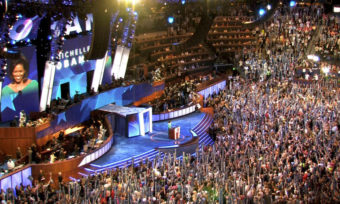
File photo of Michelle Obama speaking at the 2008 Democratic National Convention in Denver, Colorado. Photo by Ava Lowery ERY / FLICKR - TINYURL.COM/HTJJ5RV
Michelle Obama speaks at the 2008 Democratic National Convention in Denver, Colorado. Representatives of nine Pacific Northwest tribes are attending this year’s convention. (Photo by Ava Lowery/Flickr)

A Native American caucus from the Pacific Northwest is in Philadelphia this week to speak for the priorities of Northwest tribes at the Democratic National Convention.
Washington’s Native American Caucus Chair Julie Johnson said it’s possible this year’s 16-member group is the largest Native caucus to ever attend a national party convention.

“I think it’s very important that we network, that we find out what other people are doing and what their priorities are,” Johnson said. “We need to not push but share the Native American priorities.”

The platform they’ve carried with them to Philadelphia includes a number of issues that range from natural resources, to tribal sovereignty, economic development and health care.

“I strongly believe that Native people have to be at the table on voting for what our priorities are,” Johnson said.

The national platform developed at the convention this week will stand as the Democratic Party’s official platform for the next four years.

Johnson, a member of the Lummi tribe in Western Washington, said tribes generally identify more closely with Democratic principles. She and several other sources were not aware of an organized group representing Native Americans at the Republican National Convention in Cleveland.

“I don’t how many times the Republicans have said they want to get rid of the affordable care act,” Johnson said. “Well, you know our Indian Health Service dollars are in that budget and so what they’re really saying is they want to get rid of our Indian Health Service dollars.”

Patricia Whitefoot is a member of the Yakama Nation and the president of the National Indian Education Association. She also hopes to educate members of the DNC about the major issues affecting tribes.

“This is the way that we as a delegation have to educate the world. People simply do not know about Indian tribes and the unique relationship Indian tribes have with the federal government,” Whitefoot said. “So it’s a whole educational process.”

Other Northwest region tribes represented by caucus members include the Puyallup, Tulalip, Umatilla, Colville, Quinalt, Tsimshian and Yurok.

Clinton Picks Tim Kaine As VP Running Mate

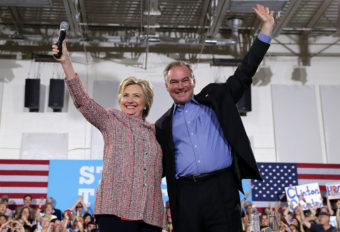
Democratic presidential candidate Hillary Clinton and Sen. Tim Kaine of Virginia greet the crowd during a campaign event on July 14 in Annandale, Va. (Alex Wong/Getty Images)

Virginia Sen. Tim Kaine is Hillary Clinton’s choice for her vice president, giving her a running mate with experience at all levels of government to round out the Democratic ticket.

Clinton told supporters the news in a text message and a tweet on Friday evening just after 8 p.m. ET. According to a Clinton campaign official, the former secretary of state called Kaine this evening to make the formal offer.

In recent days, Kaine had emerged as the favorite — albeit safe — pick for Clinton, over other finalists such as Agriculture Secretary Tom Vilsack, Labor Secretary Tom Perez and New Jersey Sen. Cory Booker.

According to the Clinton campaign official, their vetting process first began back in April with more than two dozen potential running mates. Kaine and Clinton campaigned last week in Northern Virginia as a tryout of sorts, and Clinton walked away impressed and comfortable with him as a partner. The two met with aides and then one-on-one for a total of about 90 minutes that night.

Last Saturday, the Kaine and Clinton met together with their families for lunch at the Clintons’ home in Chappaqua, N.Y. She remained comfortable with Kaine as someone who could do the job, and the alliance was made.

Kaine’s addition to the ticket gives her a loyal ally who can help reach out to the Hispanic community and possibly woo disaffected independents or even some moderate Republicans turned off by Republican nominee Donald Trump.

He is a low-risk pick, comes from a swing state that has become increasingly crucial in presidential elections, has a reputation as a moderate who works across the aisle, and doesn’t overshadow the top of the ticket. In fact, in an interview last month on NBC’s Meet the Press, Kaine even admitted, “I am boring.”

Kaine was a finalist eight years ago in President Obama’s vice presidential search, and he had endorsed the then-Illinois senator early on. This time, he joined the “Ready for Hillary” bandwagon before she even announced.

The 58-year-old is a former housing lawyer who took off time from law school to work with Jesuit missionaries in Honduras, during which he became fluent in Spanish. Kaine got his start in politics on the Richmond City Council and later became the mayor of the Virginia capital. In 2001, he was elected the commonwealth’s lieutenant governor.

In 2005, he won a hard-fought race against then-Republican Attorney General Jerry Kilgore, helped by strong margins in the Northern Virginia suburbs and exurbs. His father-in-law is also a former Virginia governor.

Kaine’s tenure as governor (Virginia is the last state that still limits its governors to a single four-year term) was marked by the deadly shooting at Virginia Tech in April 2007. He was praised for his response to the shootings, gathering a panel to investigate the school’s response and push for more mental health reforms.

He struggled as governor, though, as the recession hit in 2008, and he unsuccessfully tried to push through a tax hike to fund his budget proposals. He was an early supporter of President Obama in the 2008 primary over Clinton.

After Obama won, he tapped Kaine to lead the Democratic National Committee, and Kaine served as both chairman and governor for a year — something that drew some criticism within the state. He was chairman of the DNC during the disastrous 2010 midterm elections for Democrats that saw them lose the House. And his time atop the party committee may have chipped away at some his moderate credentials.

He left the DNC in 2011 but jumped back into politics in 2012 to run for the Senate. He easily defeated former Republican governor and Sen. George Allen. In the Senate, he has been praised for building relationships on both sides of the aisle, and he could help Clinton with her legislative priorities in Congress.

Kaine sits on the Senate Foreign Relations and Armed Services committee and has been less hawkish than Clinton in some instances. He has said the Obama administration needed to get authorization from Congress to use force against ISIS, and he has been critical of Congress for not granting an Authorization for Use of Military Force.

Some of his more centrist positions have upset some past supporters of Clinton’s former rival Bernie Sanders, many of whom wanted her to make a more progressive pick. Kaine is a supporter of free trade deals, and as his vice presidential stock began to rise, many progressive groups voiced their displeasure. But, as other observers have noted, the Minnesota native, who was raised in Kansas City, Mo., could help Clinton appeal to one of her weakest demographic areas — white, working-class men in the Rust Belt, a group where Trump has an advantage.

NPR’s Tamara Keith contributed.

Copyright 2016 NPR. To see more, visit http://www.npr.org/.

The Obama Years

Obama’s Years is a two-part radio documentary that explores how life has changed for Americans over the last eight years. In the first hour, NPR’s Steve Inskeep travels the country to places in which President Obama delivered key speeches, and checks in with Americans living in those places to ask about their perspectives on the issues the president discussed. In the second hour of this special coverage, Steve Inskeep will sit down with President Obama at the White House and ask the president how he thinks the country has changed during his presidency. Inskeep will also talk to the President about the thoughts, ideas and lives of the people he met during the reporting for this documentary.
 
Thursday, June 30th at 7 p.m. on KTOO-NEWS
Thursday, July 6th at 7 p.m. on KTOO-NEWS

With Trump In Scotland, Clinton Steps Up Barrage Against His ‘Brexit’ Response

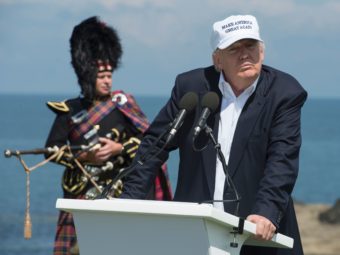
Donald Trump delivers a speech as he officially opens his Trump Turnberry hotel and golf resort in Scotland on Friday. Donald Trump hailed Britain's vote to leave the EU as "fantastic" shortly after arriving in Scotland. Oli Scarff/AFP/Getty Images
Donald Trump delivers a speech as he officially opens his Trump Turnberry hotel and golf resort in Scotland on Friday. Donald Trump hailed Britain’s vote to leave the EU as “fantastic” shortly after arriving in Scotland.
Oli Scarff/AFP/Getty Images

The decision by British voters to leave the European Union sent shudders through European capitals and shock waves through the financial markets. It also sent the U.S. presidential campaigns scrambling to respond.

Both campaigns initially released brief statements. Donald Trump’s arrived in in-boxes early Friday morning:

The people of the United Kingdom have exercised the sacred right of all free peoples. They have declared their independence from the European Union and have voted to reassert control over their own politics, borders and economy. A Trump Administration pledges to strengthen our ties with a free and independent Britain, deepening our bonds in commerce, culture and mutual defense. The whole world is more peaceful and stable when our two countries – and our two peoples – are united together, as they will be under a Trump Administration.

Come November, the American people will have the chance to re-declare their independence. Americans will have a chance to vote for trade, immigration and foreign policies that put our citizens first. They will have the chance to reject today’s rule by the global elite, and to embrace real change that delivers a government of, by and for the people. I hope America is watching, it will soon be time to believe in America again.

A few hours later, Hillary Clinton’s campaign emailed a similarly brief reaction:

We respect the choice the people of the United Kingdom have made. Our first task has to be to make sure that the economic uncertainty created by these events does not hurt working families here in America. We also have to make clear America’s steadfast commitment to the special relationship with Britain and the transatlantic alliance with Europe. This time of uncertainty only underscores the need for calm, steady, experienced leadership in the White House to protect Americans’ pocketbooks and livelihoods, to support our friends and allies, to stand up to our adversaries, and to defend our interests. It also underscores the need for us to pull together to solve our challenges as a country, not tear each other down.

The statement refers to “steady, experienced leadership.” Her campaign has been driving hard the message that she is a sober, experienced former secretary of state while Trump is “rash and reckless.”

Trump’s comments upon arriving at his remodeled Turnberry golf course in Scotland provided Clinton another opportunity to underscore her pitch.

He noted “great similarities” between the British vote and his campaign:

People want to see borders. They don’t necessarily want people pouring into their country that they don’t know who they are and where they come from.

But he also brushed aside the notion he should be seeking the advice of his campaign’s foreign policy experts:

I’ve actually been in touch. And some, by the way, don’t like it, and some do like it. You know, they’re advisers, they’re like everybody else. They probably know less, every one of these advisers.

Asked about Britain’s plummeting currency in a part of the nation which had voted overwhelmingly to stay in the E.U., Trump noted a money-making opportunity:

You know, when the pound goes down, more people are coming to Turnberry, frankly. And the pound has gone down, and let’s see what the impact of that has, but I think places like Scotland and England and different places, in Great Britain, I think you’re going to see a lot of — a lot of activity.

The pound got high, and people weren’t able to do maybe what they wanted to do, but for traveling and for other things, you know, I think it could very well turn out to be a positive.

Clinton’s response? A fusillade: a morning press call with senior policy advisers; a collection of critical Republican responses to Trump’s turn at Turnberry; and less than 24 hours after Trump’s comments, the Clinton campaign had produced and pushed out a video:

The Clinton campaign, with hundreds of staffers and millions in the bank, is well-poised to create just this kind of rapid-response video, primed for social media and cable news chatter. The Trump campaign — “leaner, meaner” in the words of former manager Corey Lewandowski — is only now beginning to build the kind of infrastructure that could allow it to keep pace.

Copyright 2016 NPR. To see more, visit http://www.npr.org/.
Site notifications
Update notification options
Subscribe to notifications