Arts & Culture

Alaskans Mourn Katie John

Photo by Sara Bernard, APRN Anchorage

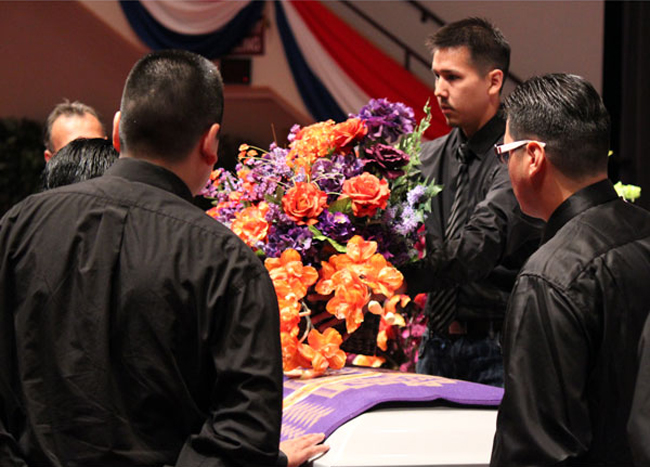
A public memorial service for Ahtna elder Katie John drew a crowd Wednesday in Anchorage. John inspired Alaska Natives, and at least one Alaska governor, with her unyielding stand on Alaska Native subsistence rights.
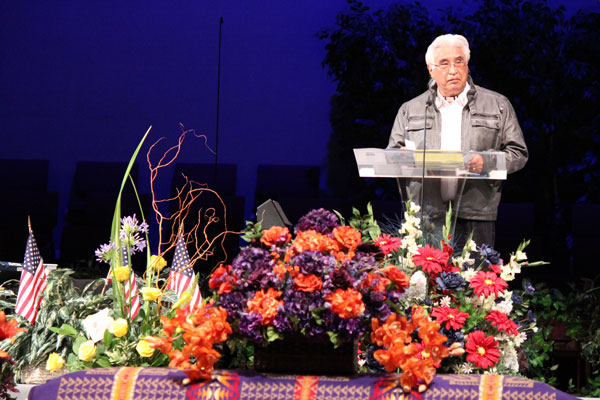
Photo by Sara Bernard, APRN Anchorage

Yvonne Echohawk, a pastor and an adopted daughter of Katie John, officiated. Echohawk likened John to Biblical heroines. She said her mother never bowed to bitterness in her fight for Native rights.

“Miss Katie John walked up before lawyers, and judges and tv cameras and people, and she said ‘give me my land, give me my water, give me my fish, I want justice for my people.’ And she didn’t rest until she had it. A woman of God, called of God, knew what she had to do and did it. She knew she had a destiny. She knew she had a purpose. And she did it and she did it well,” Echohawk said.
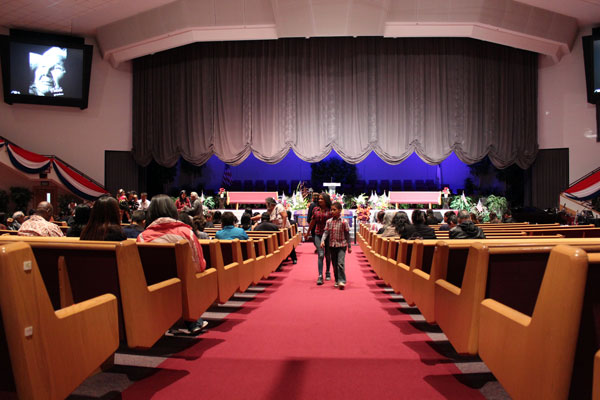
Photo by Sara Bernard, APRN Anchorage

Former state legislator Georgiana Lincoln read the eulogy, remembering John’s sense of humor, and thanked her for the “blessing to all of us” that followed John’s insistence in 1984 that her fish camp be opened for subsistence fishing.

“Our beloved leader, elder, loved one, Katie John, we mourn your passing. But we smile your contagious smile, knowing you are at last with those loved ones who waited for you, to dance longer, laugh louder, and play harder.  Job well done,” she said.

The legal wrangling that followed John’s lawsuit went on for a decade, until Alaska Governor Tony Knowles decided not to fight the case any longer. Knowles could not be present at today’s memorial, but he sent a letter, read by Echohawk, about meeting John at her fish camp face to face.

“I leaned more that day about rights and values than all the boxes of legal briefs and opinions of a 10-year old divisive lawsuit could ever say. I thank Katie John for being a teacher, I thank Katie John for being a protector of her family, I thank Katie John for being a great Alaskan, fighting for the rights of the people of the Great Land,” Knowles’ letter read.

Friends and relatives of Katie John filled the Anchorage Baptist Temple for the service. Many called her Chook-tay, or Grandma.

[box]
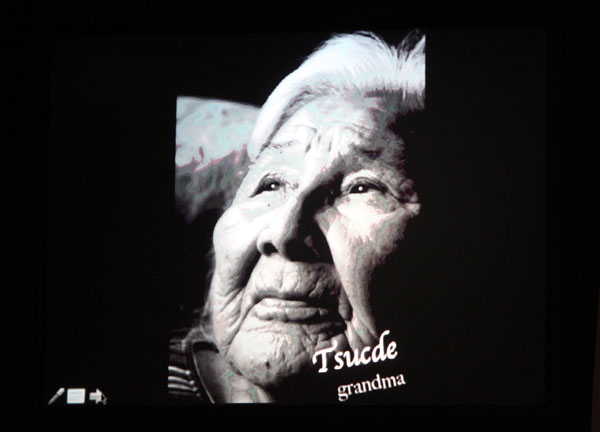
Photo by Sara Bernard, APRN Anchorage

Bob Anderson: “I was Katie’s Lawyer when we started the famous Katie John Case in 1985. She’s an important figure for the upper Ahtna people but she’s really a part of the Alaska Civil Rights Movement, not just Native Right, but Civil Rights – and she’s a sweet kind person too.

Donna Pennington: “I grew up in the village of Mentasta. She adopted me in 1969 in the Village of Mentasta and taught her language in the school during my generation. So we were very fortunate that we got to get the language directly from her.”

Eruera Kawe: “My mother in law was adopted by grandma Katie. So I’m originally from New Zealand. Grandma Katie was an inspiration to us. And not only was she a mother, grandmother, a great grandmother to Athabascan people, but to many other nations around the world.”

David Harrison: “She was my relative. You know when she gave you a hug, you knew things were gonna be okay.”

[/box]

John’s legacy lives on with her over 250 grandchildren, great grandchildren and great-great grandchildren. She will be buried in her home village of Mentasta on Saturday.
Yakutat’s tern festival in sound and pictures

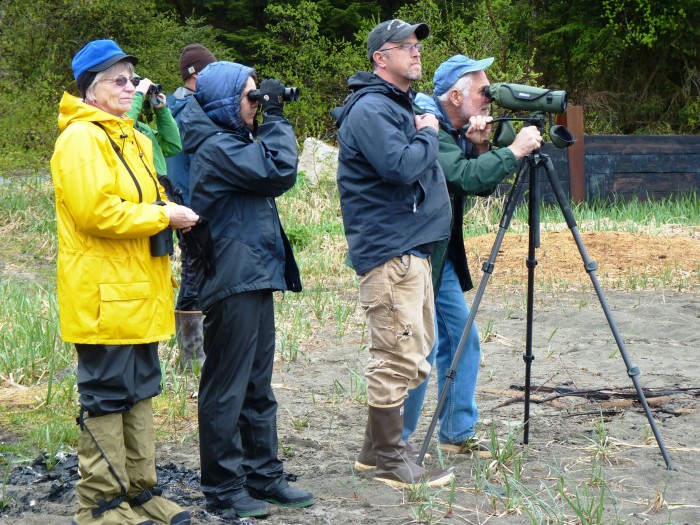
A group of birdwatchers looks for seabirds from Sandy Beach during the Yakutat Tern Festival. Click for a slideshow of festival images. Photo by Ed Schoenfeld, CoastAlaska News.

Birders, biologists, carvers and kids gathered in Yakutat May 30th to June 2nd for the northern Southeast community’s annual tern festival.

The event included lectures, field trips, art classes for kids, a live raptor show, fund-raising meals, Tlingit oratory and a performance from the Mount Saint Elias Dancers.

Here’s an audio post card of the event, which celebrates the return of one variety, the Aleutian tern.

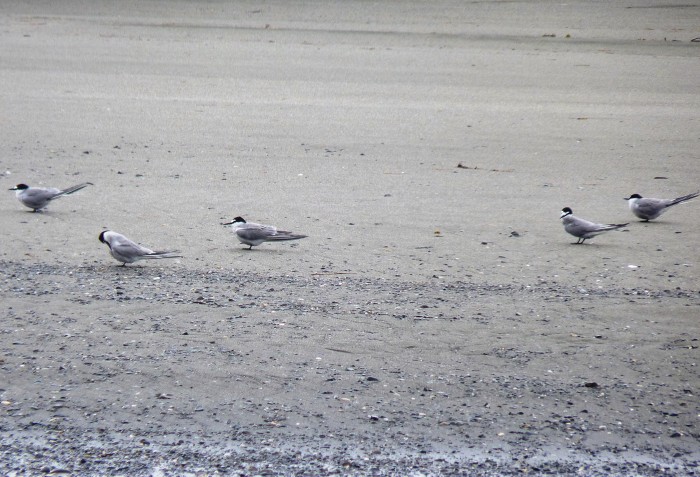
Five Aleutian terns sit on a protected beach on Yakutat’s Black Sand Spit, a nesting area. Photo by Ed Schoenfeld, CoastAlaska News.


New Honorary Consul an opportunity for Alaska

About 3.4 million Filipinos live in the U.S.; 25,ooo  in Alaska.  The Ambassador of the Philippines to the United States says it’s continually growing.

More than 3,000 Filipinos live in Juneau, “roughly 10 percent of the Juneau population,” says  Jennifer Ruth Gomez Strickler.  As KTOO reported, Strickler was sworn into office Monday night as the first Honorary Consul of the Republic of the Philippines to Alaska.

Most people know her as Jenny, but once you’re appointed to a government position, complete names are required as well as “all kinds of background checks. And I swear that now the Philippine government knows more about me and my family than anybody else,” she says.

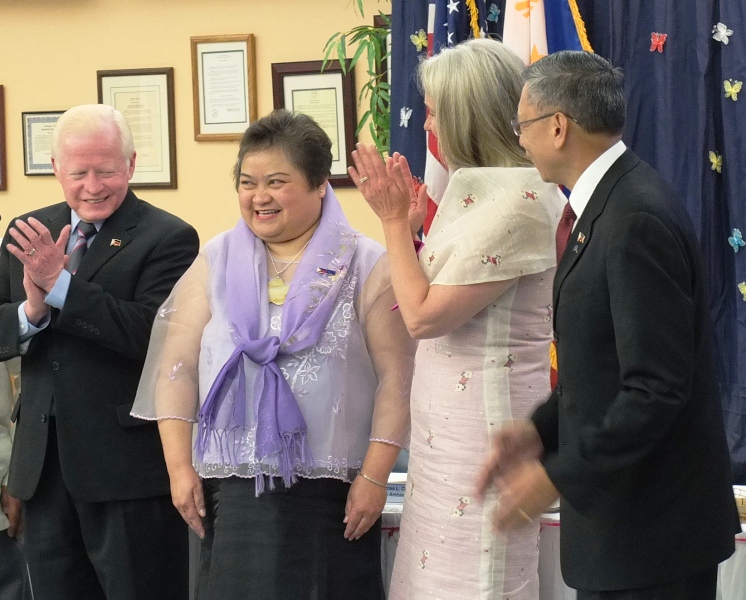
Jenny Strickler was sworn into office on Monday. From L to R: Philippine Ambassador to U.S. Joe Cuisia; Strickler; Rep. Cathy Munoz; Marciano Paynor, Philippine General Consul to San Francisco.

Strickler knows Juneau’s Filipino community well; she served as vice president then president of the incorporated group for a decade.

She will serve a three-year term as Honorary Consul to Alaska.

Raphael Castanos worked on the project for two  years.

“We tried so many years ago but we were not successful,” he says.

Castanos credits Connie McKenzie, a former aide to Congressman Don Young for planting the seed this time around, when she asked why Juneau had no honorary consul.

The Philippine government operates ten consulates across the country.  The San Francisco Consul General has jurisdiction over Alaska  and seven other states as well as Northern California and Northern Nevada.

San Francisco is a long and expensive trip from Alaska for passport or other document services, so years ago the San Francisco Consul began visiting Anchorage.  Now he also visits Fairbanks, Kodiak, and in 2010 started coming to Juneau once a year.

Strickler will handle many of the paperwork issues Juneau Filipinos and visitors may encounter.

“It’s very much like a liaison between the Filipinos here and the San Francisco office,” she says.

Marciano Paynor is San Francisco General Consul.  He says as Juneau’s  honorary consul, “she’ll be able to do visas, do legal documents that need to go to the Philippines, authenticate signatures, and the most important thing that she will be doing is what we call assistance to nationals. So any Filipino or Filipino American can seek help from her.”

But that’s just the paperwork.  Philippine Ambassador to the U.S., Jose Cuisia, is looking forward to economic ties between the state and the Republic.

Strickler joined Juneau Rep. Cathy Munoz and Bethel Rep. Bob Herron last fall on the  first official Alaska legislative mission to the Philippines. The Ambassador calls it a good first step.

“They’re also talking about establishing a sister-city agreement between Kalibo, Aklan.  It’s one of the cities that’s very tourism oriented, similar to Juneau,” he says.

The University of Alaska Southeast and Aklan State University are looking at a faculty exchange in fisheries. Strickler says a  seafood festival between the Philippines and Alaska is at the top of her list.

She is retired from the Alaska Department of Commerce, Community and Economic Development, has written grants for the Juneau Filipino Community, “and one of the things that really excite me is I can facilitate projects between state of Alaska and the Philippines,” she says.

Paynor also is looking to her to help establish a Filipino emergency management team in Alaska, in the event of crisis “so that we can immediately respond or help people throughout the state”. she says.

As Honorary Consul to Alaska, Strickler is truly an honorary employee. That is, she’s a  volunteer, though Paynor says she will be able to keep 50 percent of the fees she collects for document services to operate her office in the Juneau Filipino Community Hall.

He flashes a wry smile as he explains.

“Basically it’s a volunteer job.  So we thank her a lot for volunteering for this job.”

Alaska’s first honorary Filipino Consul sworn into office

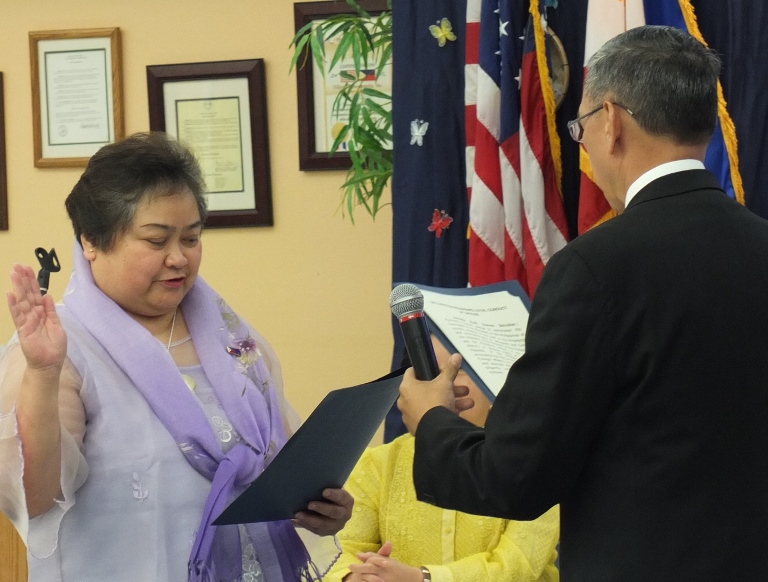
Jenny Strickler is the first Honorary Consul of the Philippines to Alaska. She was sworn in by Marciano Paynor, Consul General of San Francisco.

“I pledge to administer the consulate of the Republican of the Philippines at Juneau, Alaska…”

The first Honorary Consul of the Republic of the Philippines to Alaska has been sworn into office.

Long-time Juneau resident Jennifer Gomez Strickler took the oath of office at a ceremony Monday night at the Filipino Community Hall in Juneau.

Consul General of the Philippines to San Francisco, Marciano Paynor, administered the oath.  Strickler will work under the jurisdiction of the San Francisco General Consulate.

Philippine Ambassador to the United States, Jose Cuisia, told members of the Filipino community and current and former Juneau officials that more than 25,000 Filipinos live in Alaska.  He said Strickler will help strengthen ties between the state and the country in addition to her work assisting Filipino nationals in Juneau and other parts of the state.

Check back for a full story on what that means.

Athabascan Elder Katie John was ‘a role model for Alaska Natives’

Katie John
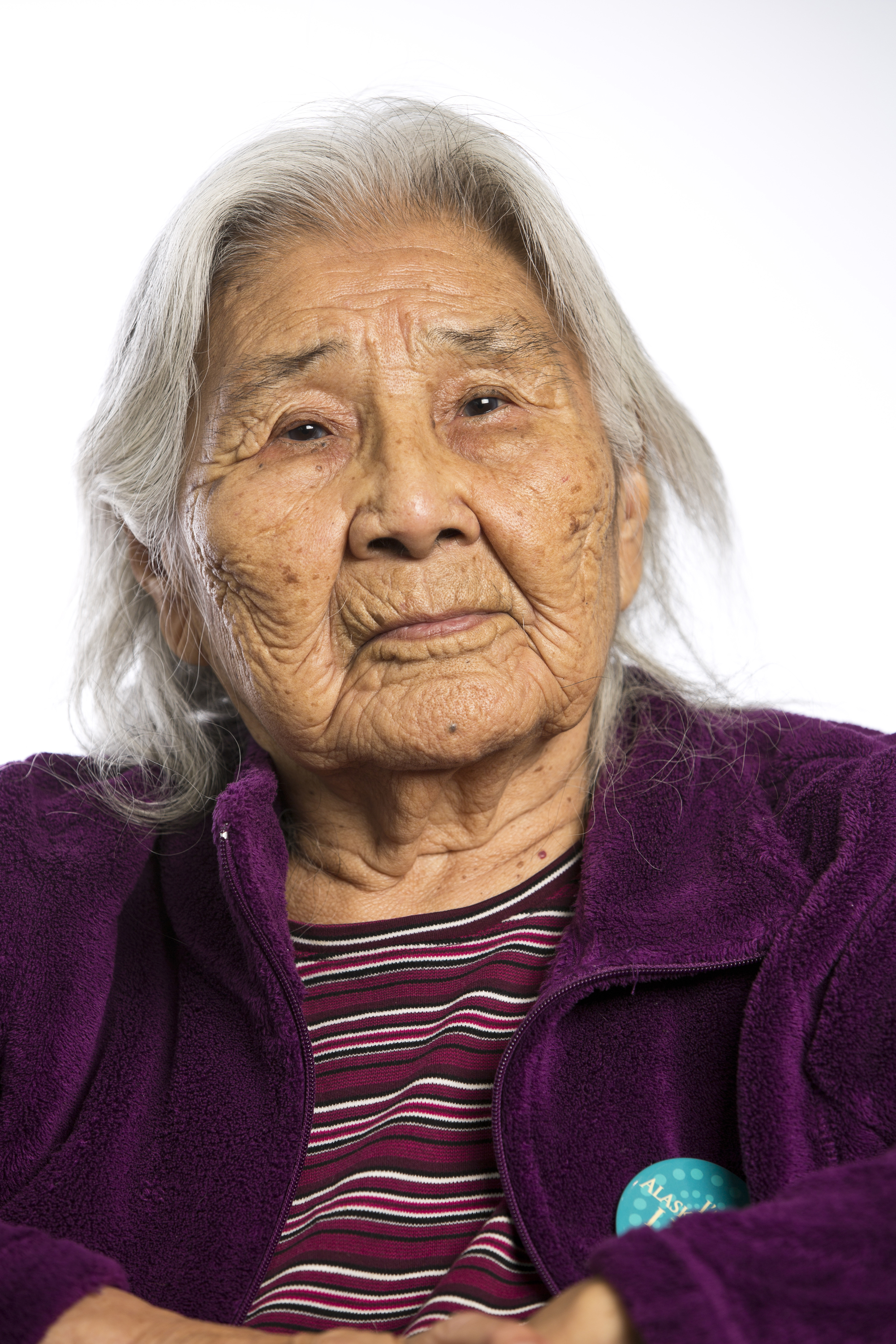
Katie John. (Photo by Chris Arend. Photo is owned by Ahtna, Incorporated.)

The Athabascan elder who was the lead plaintiff in a lawsuit that strengthened Native subsistence fishing rights in Alaska has died.

Katie John passed away early Friday morning at the Alaska Native Medical Center in Anchorage. She was 97-years-old.

The Athabascan elder who was the lead plaintiff in a lawsuit that strengthened Native subsistence fishing rights in Alaska has died.  Katie John passed away early Friday  morning at the Alaska Native Medical Center in Anchorage. She was 97 years old.

 John and the Mentasta Village Council sued the U.S. government in Federal Court in 1985 when the Alaska Board of Fisheries did not allow them to fish at an abandoned fish camp in an area which is now part of Wrangell-Saint Elias National Park.

 The suit claimed the federal government had unlawfully excluded subsistence fishing from the protections of the Alaska National Interest Lands Conservation Act. The judge ruled in John’s favor in 1994. The state of Alaska battled that ruling, but in early 2001, the 9th Circuit Court of Appeals upheld the ruling.

Later that year, then governor of Alaska Tony Knowles announced he would not fight the 9th Circuit decision before the US Supreme Court.  A delighted Katie John said the governor told her of his decision in person

“This morning he called me he said no more. You got everything. So I was so happy, I was pretty sick, too, this morning and the last couple of days I’ve been sick, I got a cold. So when he talked to me about the case, I was jumping around. [laughs] I forgot my sickness.”

 At the time, Knowles told the Alaska Public Radio Network that  he made his decision because the litigation was only widening the gap between urban and rural Alaskans

“I think anyone that would talk to Katie John and to look at what she does would believe that what she does is right. It’s not wrong, to provide for her family in the best way that she knows how is right for her, for her family and for thousands of other families from Metlakatla to Bethel to Noorvik. This is something the state must support. You know, we have to stop that losing legal strategy that we have pursued for ten years, and stop the permanent divide that it has threatened to cause among Alaskans.”

 Native American Rights Fund attorney Heather Kendall Miller, who represented John in court, says John continues to be a role model for Alaska Natives.

“She represents the Alaska Native determination to hold onto their way of life, that is intimately connected to the land and is a very rich and rewarding life that has become known as subsistence way of life. And she wanted to pass on the customs and traditions to her family and her children and her community. And that is what she spent her life doing.”

John received an honorary doctor of laws degree from the University of Alaska Fairbanks in 2011 for her advocacy of indigenous rights and her ongoing efforts as a teacher of culture and language. Dr. Jim Kari with the Alaska Native Language Center in Fairbanks, worked with Katie John on efforts to preserve Alaska Native languages by developing an alphabet of the Athna Athabascan dialect.

 “One memorable statement by Katie John is ‘everything I know, I keep in my head.’ Just this morning I spoke briefly with Chief Fred Ewan, who said this, ‘we lost the best woman we ever had.’ “

 John raised 14 children and six adopted children with her husband Mentasta Traditional Chief Fred John.

Family members have not released plans for a funeral yet.

Update:

A funeral service has been scheduled for late Athabascan elder Katie John.

John’s funeral will be held at 1 p.m. Saturday at her home village of Mentasta.

A visitation service is set for 2 p.m. Wednesday at the Anchorage Baptist Temple.

This story has been updated to include comments from people who knew Katie John.

Planning Commission OKs Soboleff Center permit

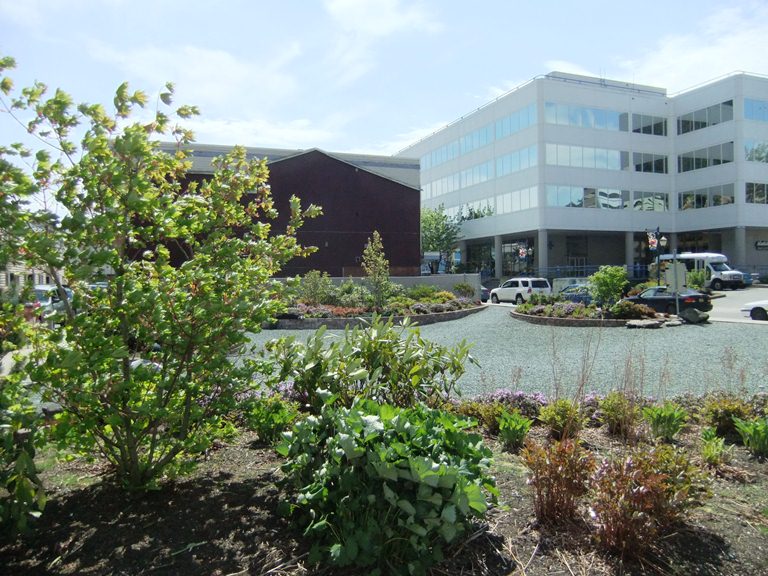
The Walter Soboleff Heritage Center will be built on this lot on the corner of Seward and Front streets, across from Sealaska Corp. Photo by Justin Heard/KTOO.

The Juneau Planning Commission has approved a Conditional Use Permit for the downtown Walter Soboleff Heritage Center.

It smooths the way for the 29-thousand square foot, three-story building, which will house Sealaska Heritage Institute offices and cultural, artistic and ceremonial spaces.  Sealaska still needs to get a city building permit.

The commission granted the Conditional Use Permit on Tuesday, placing conditions on lighting and fuel deliveries.  The proposed building will be heated by a pellet furnace, and commissioners said pellet deliveries must be limited to weekdays before 8 a.m., or Saturdays.

The Sealaska parking lot across Seward Street will be used as construction staging area.  The 46-space lot is reserved for Sealaska employees and other businesses during the day, but is open to the public at night.  CBJ Community Development Planner Beth McKibben says 18 parking spaces will be available during construction.

When the cultural center is complete, Sealaska plans to reconfigure the parking lot for 50 spaces to be used for the Soboleff Center.

Sealaska Heritage officials hope to break ground for the project this year.

Site notifications
Update notification options
Subscribe to notifications