Community

Elections officials see strong turnout for early voting across Alaska

An early voting location at the Division of Elections’s Region II office in midtown Anchorage (Photo: Zachariah Hughes, Alaska Public Media – Anchorage)
An early voting location at the Division of Elections’ Region II office in midtown Anchorage (Photo by Zachariah Hughes/Alaska Public Media)

Across the country, the number of people voting early in the general election is up. It’s not clear from the numbers yet whether Alaskans are keeping pace with that trend. But people on the ground say it’s the busiest election they’ve seen.

Around lunch-time, Martha Upicksoun came to the Division of Elections’ regional office in midtown Anchorage to vote. But then, she turned around and walked back toward the parking lot.

“The line is to the door,” Upicksoun said. Sure enough, the line snaked down a hallway and into the vestibule, with people crowding inside to get away from the cold.

Upicksoun calls herself a “super-voter,” someone who dutifully turns out for every election. But this is the first time in forty years of casting ballots she’s trying to do it before Election Day.

“I’ve been hearing about early voters, I’ve been following the predictions,” she said. “I just thought ‘well, I think I’m going to give it a try.’”

Upicksoun isn’t annoyed by the long line but has other errands to run and thinks the polling site will be less busy later on. If not, she says she’ll try one of the other locations around the municipality.

Another early voter, Michele Pamer, was in an upbeat mood even though she waited 40 minutes to cast her ballot. But she had to vote today, she explained because she’s “out of time.”

“I have too many obligations next Tuesday — taking seniors to vote!” Pamer said.

Pamer votes in every election, which is also the case for Richard Miller, who said his 15-minute wait was completely painless.

“Normally I vote on Election Day, but I knew I was going be out of town,” Miller said. “So I came down to do it.”

He’s voted at this site in the past, he said and added, “This is the biggest crowd I’ve ever seen here.”

That seems to be the consensus around Anchorage, and around the state. As of Thursday, 45,794 Alaskans had voted, according to figures from the Division of Elections. That’s only about half the number of early votes cast in the last presidential election in 2012 — 99,684 total. But there are a few days left, including a weekend, and ballots are still pouring in by mail.

Local and state officials say that from their perspective, the early returns are “strong.”

“It’s an exciting election,” said Julie Hussman, supervisor for the state’s elections operations in Anchorage.

Hussman said her staff is processing more than 2,000 ballots a day at sites across the municipality. She doesn’t have the hard numbers, but it looks busier than past elections in Alaska she’s overseen.

Despite the uptick, she isn’t hearing about any problems from voters.

“People have not complained,” she said by phone. “The people have been great.”

Voters are generally waiting 15 to 20 minutes in Anchorage, according to Hussman.

Early voting hours and locations can be found here.
Everyone is family at Gerry’s Barbershop

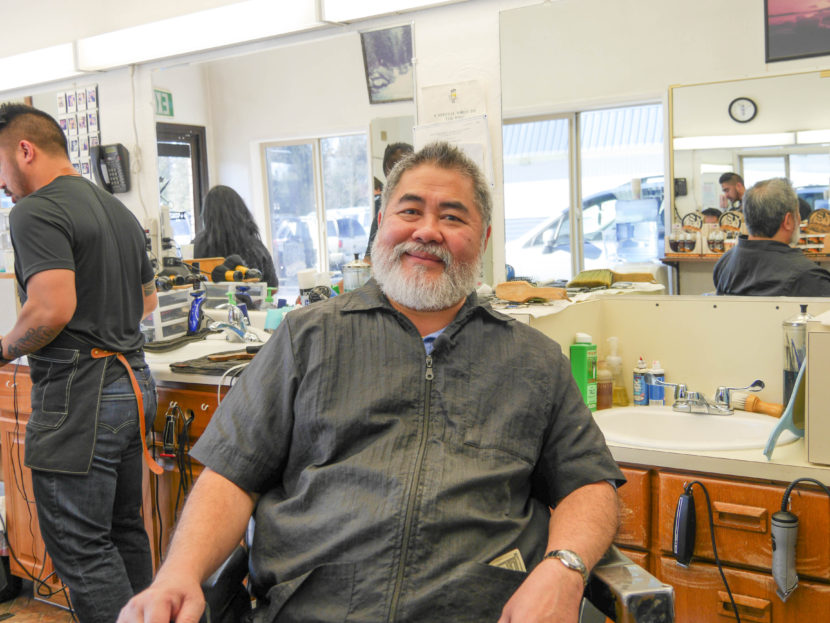
Gerry Carrillo Sr. sits in his barber's chair at at his barbershop, Gerry's Barbering & Styling Shop. He's owned the shop for nearly 30 years. (Lakeidra Chavis/ KTOO)
Gerry Carrillo Sr. sits in his barber’s chair at at his barbershop. He’s owned Gerry’s Barbershop for nearly 30 years. (Photo by Lakeidra Chavis/KTOO)

Gerry’s Barbershop has been around for nearly three decades in Juneau.

Owner Gerry Carrillo Sr., who emigrated from the Philippines in the mid-1970s when he was 16, started the shop after he was laid off from a state job in the 1980s. Now, he runs the shop with his daughter, Eva, and his son, Gerry Jr.

They say that after awhile even the clients become family.

Gerry’s Barbershop occupies a little nook next to a pizzeria in Juneau’s Mendenhall Valley suburb.

On a recent afternoon, the inside of the shop is loud — the music is up, conversations are going and the clippers are buzzing.

Here, it’s walk-ins only. A traditional cut, like a fade, is $18.

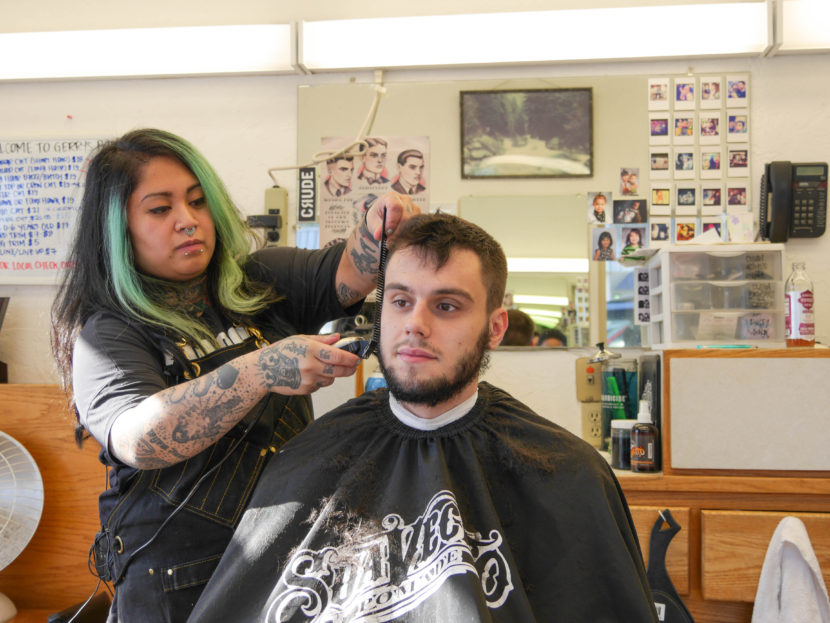
Eva is the oldest child. Covered in tattoos with long, black hair dominated by lime-green streaks, she’s full of laughter.

She has always loved doing hair and has worked alongside her dad for almost 10 years.

The trends with cuts come and go, she says.

“I did a lot of regular haircuts, and then the fauxhawk came back,” she says. “And now I still do a lot of mohawks, I think it’s ’cause I look like this so they always come to me, but a lot of people have been getting, like, old-fashioned haircuts like the traditional comb-backs and the pompadours.”

Lots of kids have bookended their school careers with haircuts at the shop, from their first day of class to graduation.

Kyle White is one of them.

Eva Carrillo cuts Kyle White's hair at Gerry's Barbershop. Kyle has been going to the shop since he was a kid.
Eva Carrillo cuts Kyle White’s hair at Gerry’s Barbershop. Kyle has been going to the shop since he was a kid. (Photo by Lakeidra Chavis/KTOO)
As he sits in Eva’s chair, White recalls visiting the shop as a kid: Gerry Sr. would tuck a Tootsie Roll behind his ear. If the young Kyle sat still for the cut, then he got the candy.

When White got older, he wanted a different hair style.

“I remember one time, I was like, ‘Hey Gerry, I think I’m going to do something different,’ and he was like, ‘No, you’re going to get the Kyle cut,'” he says. “And so I was like, ‘OK.’”

Eva lets out a loud laugh.

“Typical,” she says with a smile.

“‘No, no, no, you don’t want that.’ Like that?,” she asks, imitating her dad’s voice.

“Yeah, exactly,” White says, “‘You’ll get the Kyle cut.’ And then I just now started to get the fauxhawk.”

Combing his hair up to cut the ends, Eva tells White the style looks good on him.

White has checked out other shops in town, but always comes back to Gerry’s.

“Sometimes when they’re closed, I go somewhere, and they always don’t get it right,” he says. “But you come here for so long, they know what I want.”

Gerry Jr.’s chair is in the middle of the shop.

“I like to say that I beautify people,” he says.

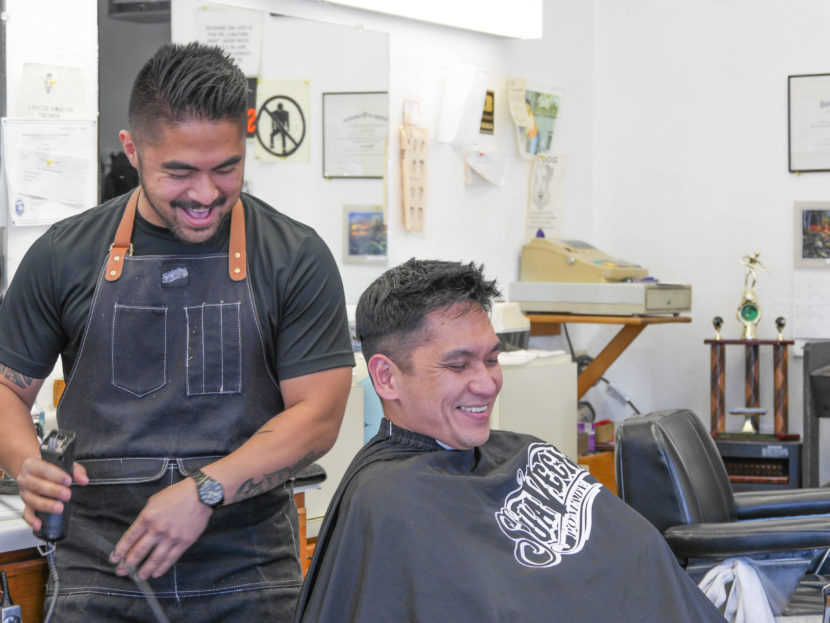
Gerry Carrillo Jr. cuts David Mende's hair. Gerry is the newest family member to work at Gerry's Barbershop.
Gerry Carrillo Jr. cuts David Mende’s hair. Gerry is the newest family member to work at Gerry’s Barbershop. (Photo by Lakeidra Chavis/KTOO)
His friends used to joke that he’d end up working for his dad — he didn’t believe them. Now, Gerry Jr. is in his third year working with his dad.

“I consider this like a family barbershop: grandpa will come and get a haircut, dad, grandson, sometimes great-grandson,” he said. “It’s hard. I guess working in a barbershop I feel like I don’t know how much time has passed by until someone comes in and I can see their hair.”

Gerry Sr. says haircuts will always be in demand.“(At the time) the economy was low, and I figured (that) hair is growing, it’s always got a job for me to do,” he said.

Cutting hair is a tradition in his family, he says.

“We got the blood of the barber,” he says. “My uncle was here first, long, long time ago, 1908 and he started a barbering business and he was very well-known in this town. … And  I decided to go to school as a barber and (as) it happened I had a good touch.”

The Carrillos say they become a part of their customers’ family, even if in a small way.

The trio has given people their first haircuts, and sometimes their last.

A couple of years ago, a customer asked Eva to cut his hair before cancer took it away.

“He came back a year later, looking better than he did when I cut his hair off, he had so much hair, I was like, ‘Is that you?”… He’s doing really well,” she said.

Over the span of two hours, an old high school friend stops by, as well as a long-time customer who owns a pet grooming service in town and a new regular.

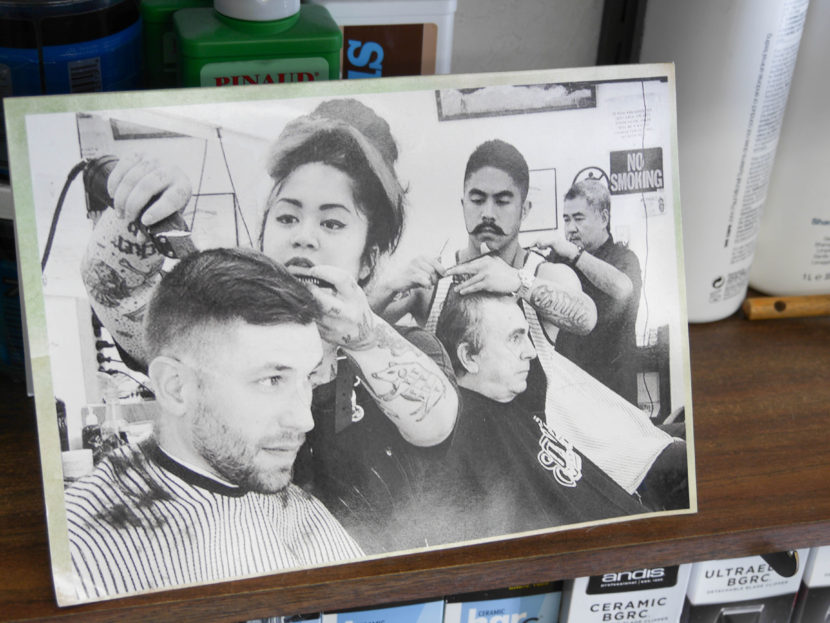
A photo of the Carrillo family sits on a shelf inside Gerry's Barbershop. From left to right: Eva, Gerry Jr., and Gerry Sr.
A photo of the Carrillo family sits on a shelf inside Gerry’s Barbershop. From left to right: Eva, Gerry Jr., and Gerry Sr. (Photo by Lakeidra Chavis/KTOO)
The barbers cut hair to celebrate the good moments and honor the bad.

Near Gerry Sr.’s chair toward the back of the shop, a black-and-white photo sits on a small bookshelf that stores supplies. In it, daughter, son and father are cutting hair. Gerry Jr. is sporting a handlebar mustache and has a large tattoo on his forearm. Written in cursive, it’s the family name, “Carrillos.”

But the trio make it clear that in their shop, family can be anybody — not just the people cutting your hair.

Procession held in Anchorage for fallen Fairbanks police officer

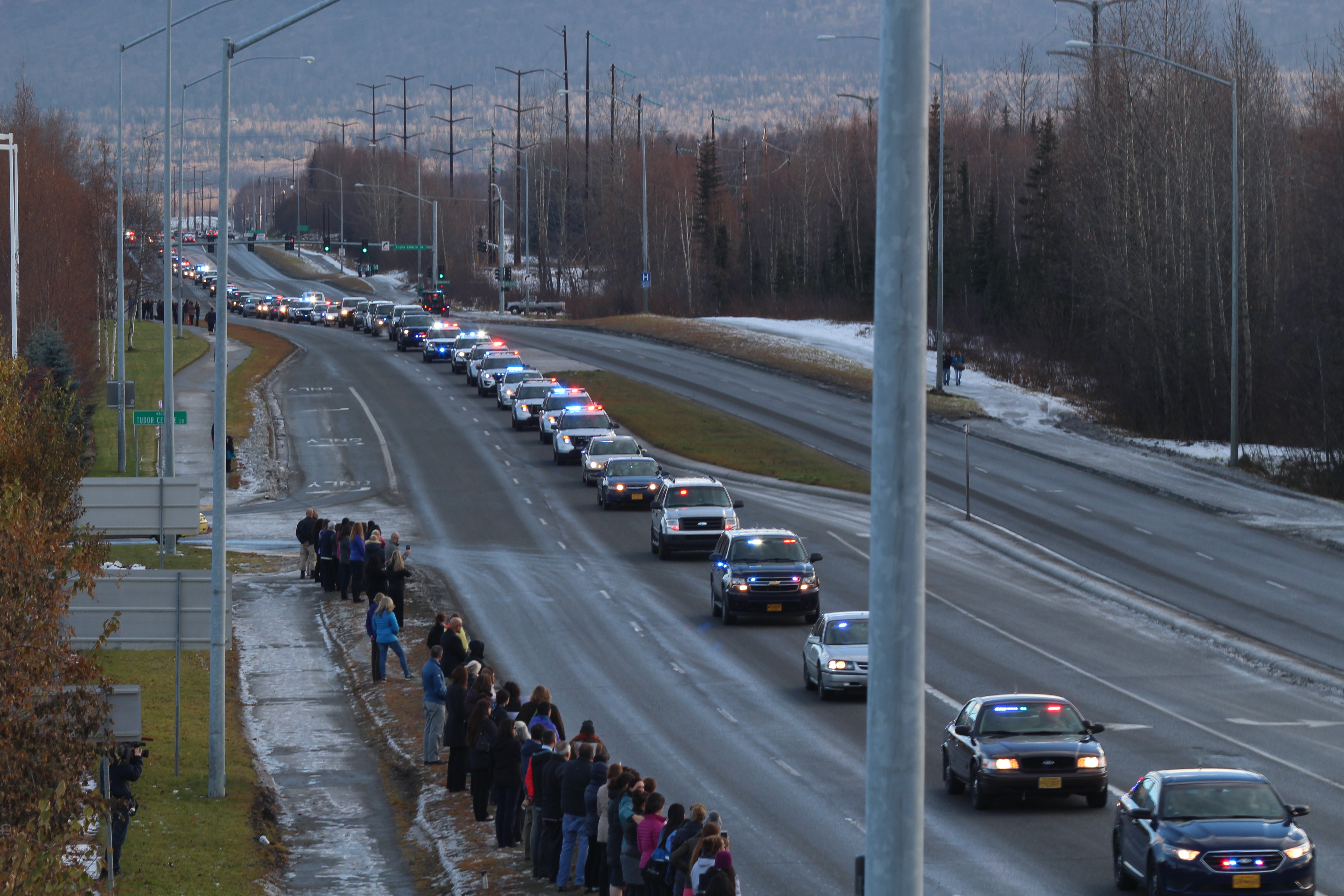
Anchorage citizens watch as a police escort brings FPD Sgt. Allen Brandt’s body to Ted Stevens International Airport for transport to Fairbanks (Photo by Wesley Early, Alaska Public Media – Anchorage)

The body of fallen Fairbanks Police Sergeant Allen Brandt has returned home.

A procession was held Tuesday in Anchorage, where people gathered along the streets to honor him.

Brandt’s remains were taken from the state morgue in Anchorage to the Ted Stevens International Airport airport for transport back home to Fairbanks.

Nolan McCloud was one of the people who attended the procession.

He learned about the gathering from a police department text message.

“Well, I used to be a firefighter up in Fairbanks, and I went to the procession when the two troopers got killed a couple summers ago,” McCloud said. “I like to show my respect for the fallen, and that’s why I came.”

Having attended several processions in the past for fallen law enforcement, McCloud was pleased with the turnout the procession received.

“I really like to see that the community’s coming out to it,” McCloud said. “It’s really unfortunate that it happens to our law enforcement, but I like the support from the community. And I like that the community has come out to show their support.”

Brandt died in Anchorage on Friday because of complications from surgery to remove shrapnel from his eye.

He was shot five times Oct. 16 while responding to reports of gunfire.

The suspected shooter, Anthony George Jenkins-Alexie, 29, is in custody.

Pallbearers, including Fairbanks Deputy Chief Brad Johnson and Sgt. Brandt’s 8-year-old son, placed Brandt’s body on a plane at Ted Stevens International Airport where it was flown back to Fairbanks.

A funeral service for Brandt is scheduled at 1 p.m. Sunday at the Carlson Center in Fairbanks.

Co-op grocery store hopes to raise funds through membership

A co-op grocery store is trying to get off the ground and will hold a kick-off event this weekend to draw members.

Merissa Koller Williams is the board president for the Kodiak Harvest Cooperative, a group trying to put together a community-owned grocery store downtown.

“We have to have 500 members in order to really even start negotiating for a site or talking to banks,” Koller Williams said. “It’s probably going to a $5 million project, so we have to have a certain number of members before we even get started. So, if it takes us a year to get all the members we need, than that pushes our project back. If it takes us a month, then we’re ready to go.”

Koller Williams said the cooperative’s goal is to sign up 100 members between 6 and 10 p.m. at the kick-off Saturday, and if it meets that goal, it will receive a donation from the Food Co-op Initiative, which specializes in helping cooperatives get started.

Koller Williams says a lifetime membership per household is $150.

Members vote for who joins the cooperative’s board of directors and will eventually get member discounts as well as member dividends based on how much the family spends at the grocery store annually. Interested residents can sign up at the event Saturday.

The event will feature a talk from a member of the Fairbanks Co-op Market, a silent auction, and local food.

“We had a couple ladies on our committee who reached out to community members and had produce donated as well as wild game and seafood, so we’ve had everything from kale to potatoes to onions donated, and we’ve got salmon donated from the fishing vessel North Star,” Koller Williams said.

The Kodiak High School culinary students will cater.

The event will be Saturday from 6 to 10 p.m. at the convention center and will be free and open to the public.

It’ll also have a Halloween theme, so Koller Williams encourages arriving in costume.

19-year-old shooting victim remains in critical condition

A 19-year-old woman who was shot in the head earlier this month remains in critical condition as of Wednesday, according to a spokesperson for the Alaska Native Medical Center in Anchorage.

Juneau police say the gunshot that wounded Geneva Anowlic-Okikton in a Mendenhall Valley townhouse was fired through the floor of the second story into the first, where it struck the top of her head.

Police spokeswoman Erann Kalwara says the investigation is still ongoing.

Folk school teaches skills in carpentry, gardening and medicine

The Homer Folk School recently opened its doors, offering a variety of hands-on classes in everything from beekeeping to kayak building.

On Oct. 8, the Folk School hosted a lively open house at the Ageya Wilderness Center to give the community a preview of some of the courses offered.

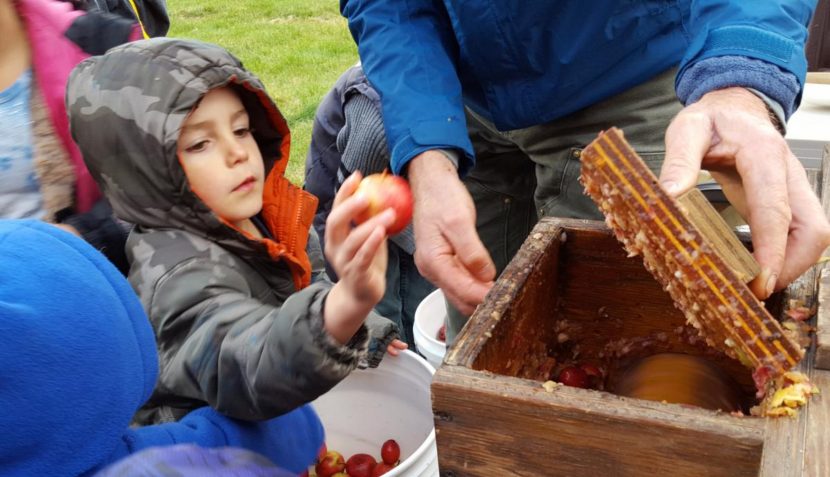
At one of the interactive demonstrations, Neil Wagner stands next to a wooden contraption about three feet tall. It looks a little like a medieval torture device, but it’s actually an apple press. Wagner leads a group of kids as they learn how to make homemade apple juice.

The kids stand on tiptoe and drop apples into a whirring grinder powered by a small motor.

“Just throw ‘em, there you go. Just keep your hands out,” Wagner says, carefully shielding the kids’ fingers from the spinning metal teeth.

Neil Wagner helps local kids grind up apples to make apple juice.
(Photo by Shahla Farzan/KBBI)

The grinder spits the chopped apple pieces into a large wooden bucket. Wagner likes to use a mix of sweet and tart apples to make juice. This year, he has baskets of Cortland, Parkland and American Beauties.

Once the bucket is full of chopped apples, he covers it with a wooden top.

“How are you gonna squeeze the juice out?” a boy asks, eyeing the bucket.

“Well, you’ll see right now,” Wagner answers. He turns a large metal screw by hand, pressing down the wooden top on the chopped apples.

The kids squat near the bottom of the press, watching a plastic tub slowly fill with apple juice. They crowd around the apple press, waiting for a cup of the sweet juice. To Wagner, the sight looks familiar.

“It’s kinda like hornets flyin’ around,” he says, laughing.

Waiting for homemade apple juice.
Waiting for homemade apple juice. (Photo by Shahla Farzan/KBBI)

A few steps away, in a nearby yurt, Maligiaq Padilla explains how to build a kayak by hand.

“When you build a kayak, you want to make sure you have a nice straight grain of the wood,” Padilla explains.

Padilla lives in Anchorage, but he’s originally from Sisimiut, Greenland, an Inuit town 30 miles above the Arctic Circle.

He kneels next to the 17-foot kayak and runs a finger along the curved oak ribs inside. There are 52 wooden ribs, each cut and bent by hand.

“You steam the wood or you soak the wood and steam it for about an hour, then you start bending the ribs,” he says.

Padilla points out the little details that make this kayak special.

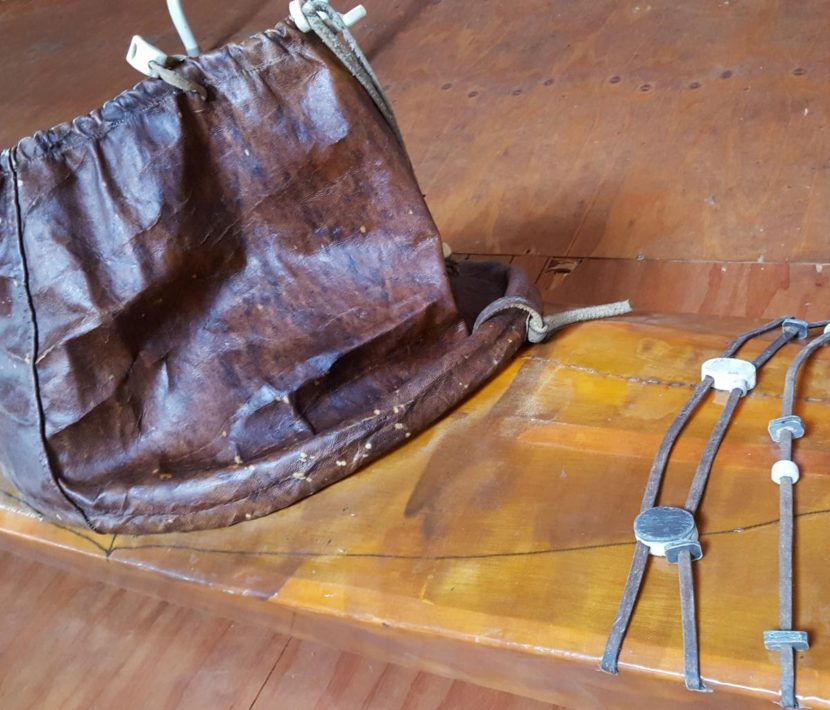
“There’s the whale baleen, there’s walrus teeth here and some antlers on the tips to protect the kayak. And this one is a sealskin rawhide,” says Padilla.

Maligiaq Padilla will teach a class on kayak building. This kayak includes a handmade sealskin skirt, walrus teeth, antler and whale baleen.
Maligiaq Padilla will teach a class on kayak building. This kayak includes a handmade sealskin skirt, walrus teeth, antler and whale baleen. Photo by Shahla Farzan/KBBI)

For Folk School Board Member Robin McAllistar, the opportunity to learn about other cultures firsthand is just one of the reasons why folk schools are so valuable.

“There’s a continuum that all humans need in order to have joy, sustenance, sustainability, community and culture. Those are the things that Folk School brings,” McAllistar says.

Having a folk school in Homer just makes sense, she explains.

“It’s perfect for our town and our community, which is so rich with artisans and craftsmen,” McAllistar says.

You don’t have to be a master craftsman to teach a class at the Folk Homer School. At the open house, McAllistar herself led a seed saving class.

“This is called a wet set. I’m going to take just a piece of paper towel and I’m going to spread these seeds on it,” McAllister explains.

There have been several past attempts to get a Folk School up and running in Homer. But this time, it’s here to stay, McAllistar says.

“Homer Folk School is something that’s going to be here for a long time. So hop on and enjoy the ride,” she says.

The Homer Folk School currently offers a variety of classes, including carpentry, winter gardening and wild plant medicine. In the coming months, they plan to add more classes and expand their reach in the community.

Site notifications
Update notification options
Subscribe to notifications