Community

UPDATE: Fisk’s preliminary autopsy results expected today

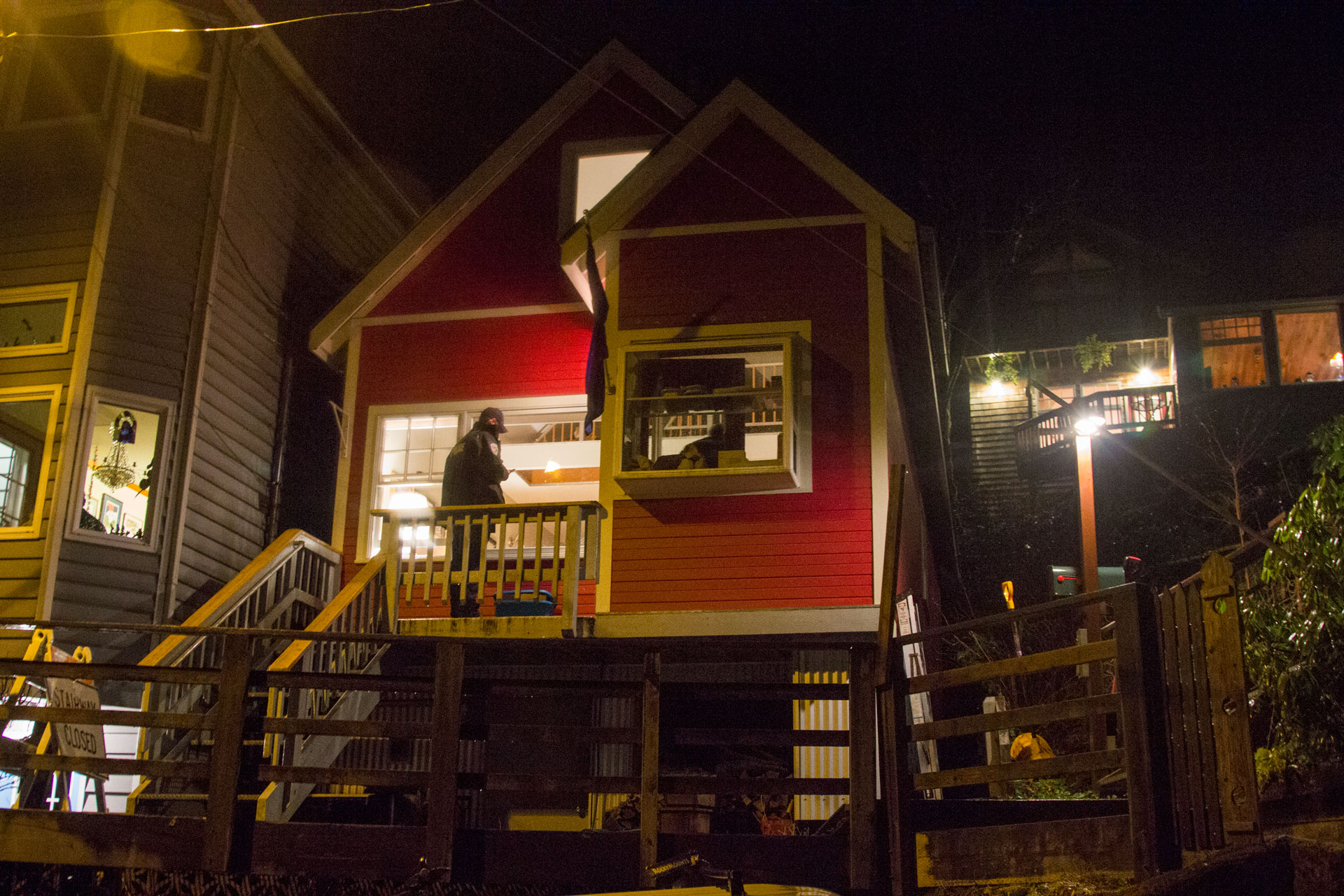
Juneau Police investigate the house of Juneau Mayor Greg Fisk on the evening of Monday November 30th. Photo by: Mikko Wilson / KTOO
Juneau Police investigated the house of Juneau Mayor Greg Fisk on the evening of Monday November 30. The investigation continued through Tuesday. (Photo by Mikko Wilson/KTOO)

Update | 12:26 p.m.

Juneau Police could receive information from today’s autopsy of late Juneau mayor Greg Fisk as early as this afternoon.

“The medical examiner’s office has said they would be communicating with the Juneau Police today with some preliminary results,” said Dawnell Smith, spokesperson for the Alaska Department of Health and Social Services.

The state medical examiner’s office will also release some of its findings to family members. A final autopsy report will not be finalized for another couple of weeks.

A Juneau Police spokesperson says the department will have an update on its investigation into Fisk’s death at 3 p.m. Wednesday.

Original story

An autopsy for the late Juneau mayor is scheduled for Wednesday. Juneau Police have said they can’t determine a cause of death for 70-year-old Greg Fisk without those results.

Fisk was discovered dead inside his Kennedy Street home Monday afternoon.

Juneau police spokesperson Erann Kalwara said the mayor’s son, Ian Fisk, had gone to the house because Fisk had missed several appointments that day. He saw his father’s body through a window.

“Ian approached the residence and noticed from the outside of the residence what had happened. And his father, the mayor, was in the front room,” Kalwara said.

Kalwara said Fisk sustained injuries. Juneau police do not know if the injuries were a result of an accident or other trauma.

Soon after Fisk was found, rumors about how he died started to circulate.

“We’re unable to share a lot of information about where those injuries were or what they involved,” Kalwara said. “However, they were not consistent with a gunshot wound or anything of that nature. It’s not out of question that the injuries could’ve been caused by a natural event or an accident. We don’t know that it’s definitely criminal in nature.”

Kalwara said Fisk’s home is still an active investigation scene. Police plan on again keeping an officer there overnight.

After the autopsy is conducted, Kalwara said police will know more about the cause of death. Preliminary information is expected later this week. Kalwara said Juneau Police Department remains the sole investigator on the death despite offers for assistance.

City meetings scheduled for Monday night were canceled. Deputy Mayor Mary Becker has assumed the mayor’s role and added the missed agenda items to the assembly’s Dec. 21 meeting.

Prior to his death, Fisk was scheduled to be out of the office from Nov. 30 until Dec. 4.
Petition to allow Syrian refugees in Alaska gets more than 1K Juneau supporters

Refugee at Public Market
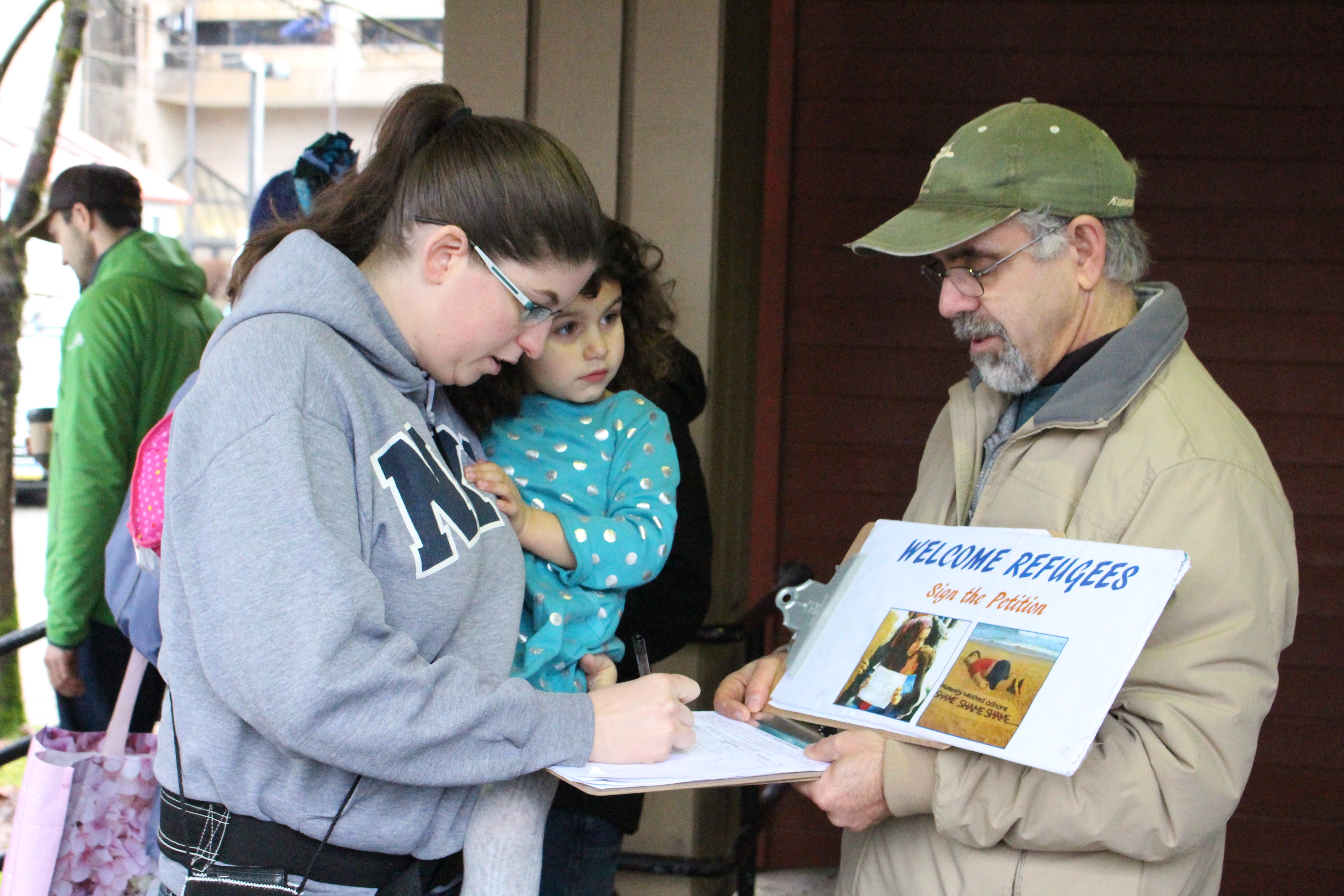
Rich Moniak with Juneau People for Peace and Justice gathers signatures outside Centennial Hall on Sunday. (Photo by Elizabeth Jenkins/KTOO)

More than a thousand people in Juneau signed a petition this weekend to allow Syrian refugees in Alaska.

Volunteers with the groups Veterans for Peace and Juneau People for Peace and Justice stood outside Centennial Hall during the popular Juneau Public Market to gather signatures.

The petition is addressed, “To Alaska’s Elected Officials” and will be sent to the state’s congressional delegation in Washington, D.C. It reads:

“We, the undersigned, will not allow fear-mongering to drown out our compassion for those seeking refuge from war or violent conflict or our humanitarian obligation to ease their circumstances. Therefore, we urge our elected representatives to work toward resettlement of refugees to Alaska in a manner that is inclusive, humane, and expeditious.”

Volunteer Sarah Niecko said gathering signatures means talking to people of all opinions on the issue.

“We’ve had a lot of support which is nice to see and, more importantly, getting the dialogue started for even those people that maybe don’t support it. Just hearing their side, because we have to bring them all to the discussion table if we’re ever going to come up with creative solutions,” Niecko said.

About 120 refugees from around the world settle in Alaska every year. Catholic Social Services, which oversees the state’s refugee resettlement program, says there are no current plans to receive Syrian refugees.

Following the attacks in Paris a few weeks ago, Alaska congressman Don Young and U.S. Senators Lisa Murkowski and Dan Sullivan joined many other political leaders in calling on the president to suspend his plan to admit 10,000 Syrian refugees. Gov. Bill Walker did not take that stance.

Volunteers in Juneau will continue to gather signatures this week. Veterans for Peace and Juneau People for Peace and Justice plan to place an ad in the Juneau Empire that lists as many names of people who signed the petition as can fit.

Forced to flee: Juneau residents recall refugee beginning

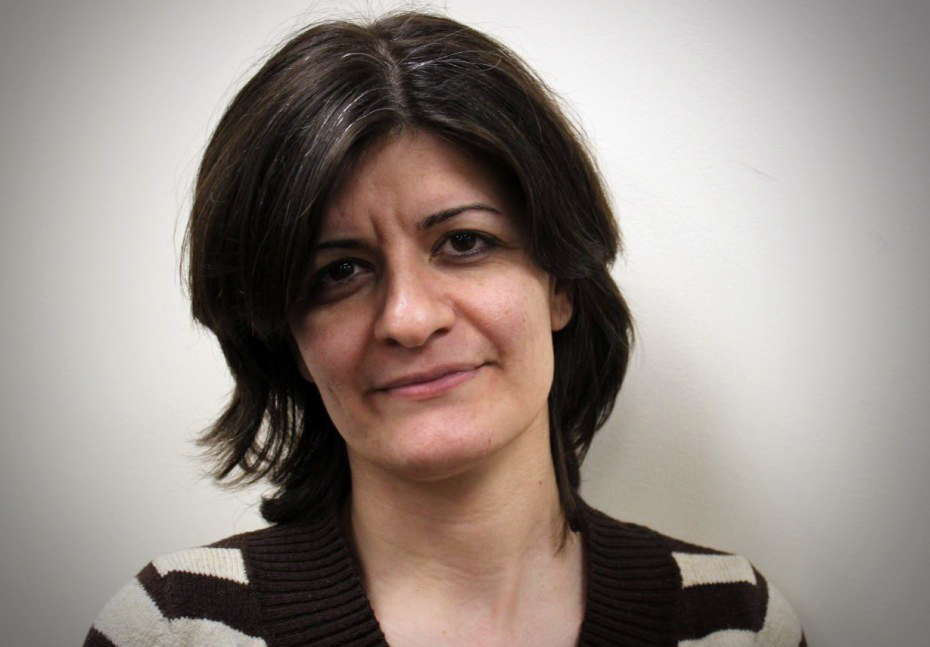
Persecuted her whole life as a Bahá’í in Iran, Parisa Elahian came to Juneau as a refugee in 2005. (Photo by Lisa Phu/KTOO)

Alaska receives about 120 refugees from all over the world each year.

About 10,000 Syrian refugees will come to the United States. While none are expected to end up in Alaska, the state still has a significant refugee population based mostly in Anchorage. However, some have made Juneau their home.

As a child in Iran, Parisa Elahian was told by school officials she wasn’t equal with other children.

“They called us dirty, so they had to separate us from the other kids, so I was in the corner of the class,” Elahian said. “Imagine: I was a 7-year-old and going home crying most of the time because other students would say bad words to us.”

Her classmates were scolded for speaking to her. Neighbors told her to stay away from their homes.

Elahian, now 34, is a Bahá’í. In Iran, Bahá’ís have long been persecuted by the government. They aren’t allowed to practice their faith, are denied government jobs and admission to universities, and experience other forms of discrimination. Many have been arbitrarily arrested.

Elahian left her home country when she was 24.

“I had nothing to do professionally, getting higher education, so that’s why I decided, ‘OK, it’s time for me to go,'” Elahian said.

Many Bahá’ís leave Iran as refugees via Turkey. Elahian was there for 10 months while she waited for a visa. She says she had a choice between Texas and Alaska. She chose Alaska and was sponsored in 2005 by a Bahá’í in Juneau. Today, about 20 Iranian Bahá’ís live in the capital city.

Back home, Elahian said she used to worship in people’s homes in groups no bigger than 15. In Juneau, Bahá’ís still practice their faith in houses, “but of course, there is no fear here,” Elahian said. “Back home, even though when we get together in very small group of people, still you would think as soon as you hear the doorbell — you would say, ‘Uh-oh, they could be here to get us.'”

Vũ Schroeder left his home country of Vietnam in 1983. He was 11 and had never gone to school.

“After the war, things got crazy and lots of political issues going on, lots of violence. People kind of get confused and a lot (were) struggling to survive,” Schroeder said.

He witnessed bombings, public beatings and executions.

Like hundreds of thousands of other Southeast Asians of that era, Schroeder escaped Vietnam in the middle of the night by boat.

“When it’s dark, you gotta go,” Schroeder said. “It’s not easy to leave the country because if you get caught, you either end up in jail or you’re gonna get killed.”

Schroeder spent about two weeks going across the South China Sea on a small wooden boat with about 20 others, half of them children.

“There was some rain – we could get rain water – but I didn’t eat for, like, five or six days. I was skinny. And then when we got to the land, we barely could walk because you’re so weak,” Schroeder said.

Vũ Schroeder holds daughter Katelyn. His wife, Myle, stands next to their two sons, Erik and Robbie. They live in Renton, Wash. (Photo courtesy Vũ Schroeder)

Somehow, everyone on his boat survived the journey.

He spent three years in a refugee camp in Indonesia. Schroeder said people were given food once a week and slept in rows on a long wooden bench where you couldn’t move.

Finally, in 1986, Schroeder and some relatives were sponsored by a group in Juneau. He was scared when he arrived, but his sponsor parents – Elaine and Bob Schroeder – were there.

“I remember they took me to the salmon bake and we had some really nice salmon, like the best meal ever,” Schroeder said.

His relatives moved to California within a year of arriving in Juneau. Schroeder, 13 at the time, didn’t want to start over again. The Schroeders let him stay in their home and eventually adopted him. He got a bachelor’s degree from the University of Alaska Southeast and worked for the Alaska Marine Highway system for years.

In 2007, Schroeder moved to the Seattle area. He’s earned his captain’s license and works for the Washington State Ferries. He’s married with three kids.

Parisa Elahian is still in Juneau. She’s married and works for the state. She says if she could have the same rights in Iran as she does in the U.S., she’d go back.

“But I’m so happy here, don’t get me wrong. I am so blessed. I’ve been here for 10 years. I just get emotional thinking about it. Even at the beginning when I didn’t speak English that well and people probably didn’t understand me that well, I never faced any kind of racism toward me,” Elahian said.

When she arrived in Juneau as a refugee, Elahian never wanted to be a burden, and she was never treated as one.

After disappointing season, Eaglecrest announces early open

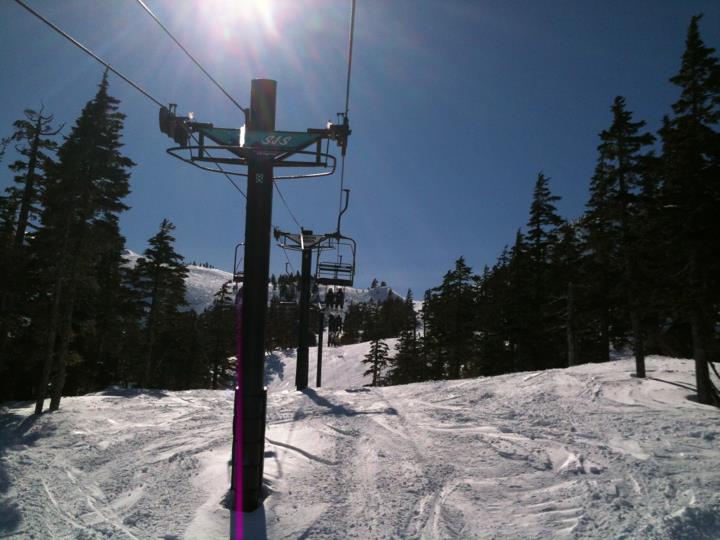
Black Bear Chairlift at Eaglecrest Ski Area in April 2013. (Photo by Matt Miller/KTOO)

Eaglecrest Ski Area is opening this year ahead of schedule. Skiers and snowboarders will be able to the ride chair lift up the mountain this weekend.

Eaglecrest’s general manager, Matt Lillard, said the snow is about 50″ deep at the summit and 20″ at the base.

“It’s certainly still early season conditions. It’s thin in spots and there are some bare areas where water is flowing,” Lillard said. “But overall we’re going to be able to open the hooter and black bear chairlift for skiing … the conditions for skiing are actually really nice and we’re looking forward to a fun opening weekend.”

Lillard said last year’s snow was the worst on record. The upper mountain was only open for five days.

To celebrate the early start, Eaglecrest is having a season pass sale. It starts Nov. 27 and ends Dec. 6. Unlimited season passes are $519 for adults and $469 for seniors.

After this weekend, the ski area opens back up on Dec. 5 with regular business hours.

Search suspended for missing Unalakleet elder

The search for a missing Unalakleet elder has been suspended. Alaska State Troopers had been searching for 74-year-old Vivian Foote since last Wednesday.

Foote was last seen walking near her home in the early afternoon. The community — led by the Unalakleet Search and Rescue team — conducted a preliminary search for the missing woman before notifying Troopers of her disappearance around 6 p.m. Wednesday.

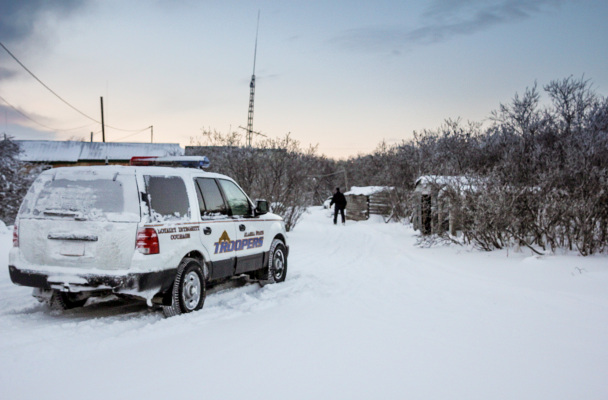
Alaska State Troopers. (KNOM file photo)

Troopers arrived in Unalakleet two days later to investigate and assist with the search. As of Monday afternoon, all search efforts — including sweeps by four rescue dog teams and more than 120 community volunteers — have found no sign of Foote.

Rescue efforts escalated from door to door searches on the day Foote went missing, to shoulder-to-shoulder sweeps across city limits the day after. Rescue dog teams were flown in from Anchorage and Fairbanks after a crowdfunding campaign raised money for their charter. They were also unable to find any sign of Foote.

The dog teams left Unalakleet Sunday night to avoid the incoming winter storm, and Troopers called off their search Monday afternoon.

Middy Johnson is a coordinator with the Unalakleet Search and Rescue team. On Sunday, he said the community would continue its search with closer looks at the outskirts of town and along the water.

“It does get tiring a little bit, but right now we’re hanging in there,” Johnson said. “We’ve had plenty of calls from other communities that are on standby — just waiting for us if we want to expand it more and need more personnel. So we appreciate that, and we’ll just keep going until we’ve exhausted all our efforts or until we find her.”

Troopers say Foote may suffer from medical ailments. Anyone with information on the whereabouts of Vivian Foote should contact the Alaska State Troopers and the Unalakleet Search and Rescue Team.

Travel in time with the handwritten letter

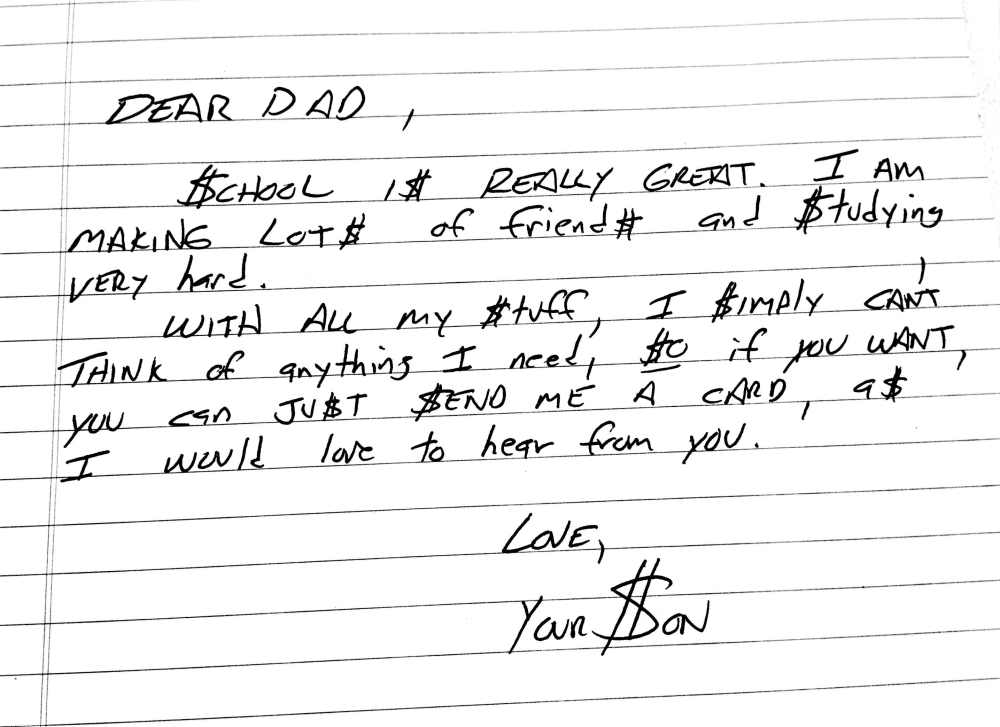
Hand-written letters like this one are read and shown on a screen. (Image courtesy of Letters Aloud)
Handwritten letters like this one are read and shown on a screen. (Image courtesy of Letters Aloud)

Seattle-based Letters Aloud will perform Tuesday night at the Juneau Arts and Culture Center. The group of reality theater actors formed in 2013 with the mission of connecting modern audiences to an endangered form of communication — the handwritten letter.

Tuesday night’s show is themed “fame.” On a Juneau Afternoon, Letters Aloud actor Todd Beadle read an unusual appeal from a young Sidney Poitier.

Dear President Roosevelt,

My name is Sidney Poitier and I am here in the United States in New York City. I am from the Bahamas. I would like to go back to the Bahamas but I don’t have the money. I would like to borrow from you $100. I will send it back to you when I get to the Bahamas. I miss my mother and father and I miss my brothers and sisters and I miss my home in the Caribbean. I cannot seem to get myself organized properly here in America, especially in the cold weather, and I am therefore asking you as an American citizen if you will loan me $100 to get back home. I will send it back to you and I would certainly appreciate it very much.

Your fellow American,
Sidney Poitier

Paul Morgan Stetler founded Letter Aloud.

Letters from Marilyn Monroe, Elvis Presley and Andy Warhol will also be read and accompanied by a slideshow. Curator Paul Morgan Stetler says the project gives listeners unique insight into the lives of heroes and celebrities of the past.

“It’s like a time travel to a certain degree — you feel like you’re really connecting to these people in a way that you wouldn’t normally have access to.” Stetler said.

The live performance begins 7 p.m. Tuesday at the JACC.

Site notifications
Update notification options
Subscribe to notifications