Community

How to Vet Nonprofits Before You Give

2015-12-01 vetting nonprofits magnifying glass gift
(Illustration by Rob Weychert/ProPublica)

Charity solicitations are as much a part of the holiday season as decorations. If you give, it’s a good idea to know what the nonprofit organization does with your money. Here’s one way: use ProPublica’s Nonprofit Explorer, a tool for researching the financial details of nonprofits.

Nonprofit Explorer

Use the ProPublica database to search over 1.8 million tax returns from tax-exempt organizations and see financial details such as their executive compensation and revenue and expenses. Explore the app.

Organizations that receive a tax exemption from the Internal Revenue Service and take in at least $50,000 a year have to file an annual report, called a Form 990, which can serve as a guide to how they operate and what their programs are. Nonprofit Explorer summarizes the financial data in 990 forms and also provides links to the documents. While not a complete picture of an organization’s activities, the form does provide insight on how a nonprofit operates. Here are a few things to look for when deciding whether to make that contribution:

Program Spending

Charities often tell donors that a certain amount of every dollar goes directly to “programs,” which usually mean direct services provided to the recipients of their assistance (the homeless, for example, or children). But read the fine print, says CharityWatch: sometimes these statements say “of every dollar spent” and sometimes they say “of every dollar donated.” Those are two different numbers, as ProPublica’s reporting on the Red Cross demonstrates. The Form 990 not only lists the totals for money coming in and going out, but in Part III (often the second page of the completed form, as with the 2013 form for the New York-based Coalition for the Homeless), the group also describes the program services that it performed, how much they cost and indicates whether there were any significant changes to existing programs. If you’re unsure about exactly what a charity does, Part III can help clear up that uncertainty, but it is also the place where charities promote their accomplishments.

Amount Spent on Professional Fundraisers

Charities rely on volunteers to ask for donations, but many also pay for-profit companies to help them raise money via telephone and mail solicitations. In its investigation of “America’s Worst Charities,” the Tampa Bay Times and the Center for Investigative Reporting identified nonprofits that raise millions via professional fundraisers and “regularly give their solicitors at least two-thirds of the take.” One organization, the Committee for Missing Children in Lawrenceville, Georgia, paid its fundraisers nearly 90 percent of the $27 million it raised during the decade the report examined. The more that charities spend on fundraisers, the less money they have for direct program spending — the reason the organizations exist. On a 990 form, look for this amount on line 16a of the first page, labeled “Professional fundraising fees.”

Executive Compensation

Charity organizations are also required to list officers, directors, trustees, key employees and the five highest-paid employees of the organization — and the amount each person was paid — in Part VII of the 990 form. Because of this public disclosure, executive salaries are sometimes contentious, as recently highlighted during a congressional hearing on Planned Parenthood. (In 2013 the organization’s president, Cecile Richards, was paid $590,928 in salary, retirement contributions, bonuses and other pay.) But a high salary alone isn’t a red flag. The IRS requires only that compensation is “reasonable,” or what a similar position would be paid by a similar organization. A Charity Navigator study of charity CEO compensation noted that unsurprisingly, “as the size and to some degree the complexities of running a nonprofit increases, so does the salary of the institution’s top executive,” recommending that donors compare an organization’s executive salaries to other charities for a better assessment.

The study also points out that organizations that show $0 paid to executives may also warrant a closer look. “There are very few individuals that can afford to work full-time managing complex, multi-million dollar organizations without receiving any compensation.” There may be legitimate reasons for this, or the compensation figure may have been misreported to the IRS.

According to Ray Madoff, director of the Boston College Forum on Philanthropy and the Public Good, this could also be caused by a nonprofit outsourcing staff and management duties, essentially hiding the individual salaries of an organization by reporting it within an aggregate contractor payment. She points to Fidelity Charitable, the second-largest nonprofit in terms of donations: Although officers are listed in Part VII of the form 990, all salaries are listed as “$0*”, with the asterisk noting that “all services are provided to Fidelity Charitable” by FMR LLC, the parent company of the for-profit Fidelity Investments. A Fidelity spokesperson confirmed simply that “Fidelity Charitable does not report individual salaries because it does not itself pay any salaries” and that “it hires FMR LLC […] to provide a wide range of services.” They also point out that the charity “does, of course, report the fees paid to service providers, including FMR LLC.” According to Schedule O of the 990, FMR received over $32 million in “contractor compensation” from Fidelity Charitable.

Beyond the 990

While the 990 can help you root out scammers and gross underperformers, it does not tell you how effectively money spent on programs translates into results on the ground. In the words of the Foundation Center’s Luz Rodriguez, “some not-so-great charities are just really good at finances.” To examine a charity’s reputation in its target community, Rodriguez suggests looking through its social media for positive testimony or service complaints. Greatnonprofits.org aggregates crowd-sourced reviews of nonprofits. GuideStar has experts in the field weigh in on their favorite nonprofits on Philanthropedia.

In the absence of robust data on results, GuideStar CEO Jacob Harold said donors should look for groups that set out their work and measures of success with clarity and specificity. “Clarity is all too rare in the nonprofit sector,” he said. “Look for groups that clearly articulate the solution rather than just talking about the problem.” He recommends GiveWell, one of the more quantitatively rigorous nonprofit watchdogs, which weighs charities by lives improved per dollar spent. Its list is far from exhaustive, but incorporates the concept of scalability — it selects groups that have “room for more funding,” and can do the most with your money

Giving Overseas — One Thing To Remember

Sometimes your charity of choice’s mission could cause more harm than good by having unintended consequences for the recipients of its donations.

This is particularly relevant to “gift-in-kind” donations — those old clothes, shoes, toys and food that well-intentioned Americans send in bulk to the developing world. These influxes of free, secondhand goods can undercut and destroy local industry. Indigenous manufacturers are priced out of the market, and the community is denied the growth benefits of textile and food processing industries that placed countries like Mexico and South Korea on the development ladder. Countries like Kenya and Haiti are having this first rung broken right under their feet by good intentions.

Charity evaluators like GiveWell prioritize health and infrastructure sectors instead, in which nonprofit interventions have an exponential impact on the local economy by attacking the problems of poverty at their core. They also recommend GiveDirectly, a direct cash transfer charity with a 90 percent program-to-overhead cost ratio that consistently ranks among GiveWell’s top performing nonprofits. GiveDirectly sends donor money straight to the poorest families in Uganda and Kenya through mobile banking. The mobile route ensures that the entire sum reaches the target family, and is even safer than in-kind donations, which can be siphoned off to the black market.

As a nonprofit, ProPublica also files Form 990; you can see the most recent one here.

Like this story? Sign up for our daily newsletter to get more of our best work.

Read Original Article – Published Dec. 1, 2015, 12:52 p.m.
How to Vet Nonprofits Before You Give
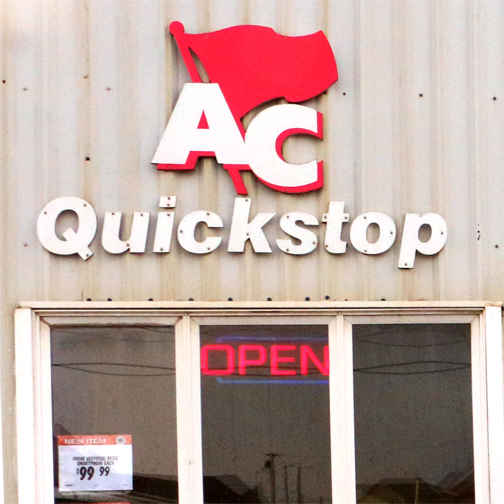
AC Quickstop begins plans for Bethel liquor store

AC Quickstop in Bethel
The Bethel AC Quickstop. (Photo by Dean Swope/KYUK)

Bethel received two liquor licenses last month. But the town’s almost half-century ban on legal sales hasn’t entirely broken yet. The two entities who obtained the licenses — Alaska Commercial Co. and Bethel Native Corp. — still need to set up their stores. AC Quickstop began that process last week.

Walter Pickett is the Alaska Commercial Co. general manager. He says the final vision for AC Quickstop’s liquor store in Bethel is ready.

“When you walk into the convenience store currently, the thought is to take that space where the entryway is and that elongated hallway before you walk into the store, and actually take that space and convert that into the liquor store,” Pickett said.

The store should open in August 2016, and Pickett said the company has several hurdles to jump between now and then, beginning this week with sending a project manager to assess the store’s new construction.

AC has budgeted over a million dollars to completely renovate the Quickstop. Plans include shrinking the convenience section, expanding the laundry facilities, adding alcohol storage and creating a new entryway.

Pickett said the liquor store will occupy the area where the cash register and front hallway currently sits and will use what is now the shop’s front door as its entrance.

“It will be a separate entry,” Picket said.It will have its own point of sale. It will have its own staff, that are obviously all over 21, fully trained. So it’s really going to be a separate business within the building.”

Pickett said the company is considering opening a temporary liquor store in March as a placeholder until the renovation finishes. The store would set up in the Quickstop’s storage area until transitioning to its permanent location.

AC holds seven liquor licenses across the state, and Pickett said the company understands the role of alcohol in rural Alaska.

“We have stores in Nome. We have a liquor store in McGrath, Alaska. We have a store in King Salmon. So we understand the sensitivity in the community,” Pickett said, “And we’re doing everything within our power to make sure we’re socially responsible — working with the people of Bethel, working with the city, working with the police force — and making sure our staff are fully educated in proper alcohol sales.”

Bethel Native Corp. didn’t respond to interview requests about plans for their liquor license.

‘Food For Fines’: In Some Cities, Parking Tickets Drive Holiday Giving

Donated canned food
Donated canned food. (Creative Commons photo by Darius Norvilas)

Parking fines aren’t usually the stuff of holiday cheer. But a few cities around the country are turning them into an opportunity to promote giving, letting drivers cover part or all of their fines with food donations.

Lexington, Ky., first adopted the program, called Food for Fines, during the 2014 holiday season. There, 10 cans will knock $15 off a person’s parking ticket. Last year, the program took in more than 6,000 cans of donated food that went to a local food bank, and it’s on track to beat that haul this season, according Gary Means, the executive director of the Lexington Parking Authority.

Means says his city got the idea from programs at universities that let people pay for parking fees with food donations. Means says he’s also heard of a donation program in Boston that let people donate toys during the holiday season to cover tickets.

“It’s pretty rare,” Means says. “As most people know, there’s a lot of red tape with governmental entities. So to be able to take so-called donations as a payment is kind of a challenge.”

It’s a challenge other municipalities are also taking on.

From late September through the end of this November, Albany, N.Y., offered an amnesty program — waiving parking ticket late fees and strongly encouraging food donations. Albany Treasurer Darius Shahinfar says the city took in a ton-and-a-half of food — enough for 5,000 meals. But to do that, Shahinfar says the city had to navigate some legal issues.

“It could be considered an unconstitutional gift that you’re basically waiving late fees for someone who brings in a parking ticket, but gives a can of food. And there’s an argument for that under New York State constitutional law,” Shahinfar says.

Shahinfar says the city worked around that by waiving late fees for everyone, regardless of whether they donated food. And he says that helped with other questions, like how to ensure someone paying online had actually donated.

In the end, he says the city of Albany took in more money than it otherwise would have by attracting people who likely wouldn’t have paid their tickets without the amnesty for late fees — which can be substantial. In Albany, N.Y., for example, the standard fine for an expired meter is $25. The state tacks on a $15 surcharge. If a person is late paying, they’d get charged another $25, for a total of $65. Albany’s Food for Fines program took that $25 late fee off a person’s ticket. Shahinfar says that was a big enough savings to get some people to pay.

More importantly, Shahinfar says, the initiative turned what could be a negative— getting a parking ticket, into a positive: helping others.

In Tallahassee, Fla., City Commissioner Scott Maddox says that’s what made him want to implement the Food for Fines program that launched on Nov. 30.

“We’re hoping that by giving a little bit through this process, it will spur people to give throughout the holiday season and hopefully throughout the year,” Maddox says.

In Tallahassee, drivers can pay off their parking tickets — up to $50 — by donating food. They’ll get a $1 credit for each food item they donate. The food collected will go to Second Harvest of the Big Bend, an area food bank where Interim Executive Director Jim Croteau says the demand is high.

Croteau says ideally, drivers will donate quality food – by which he means something donors would want to serve to their own guests. And he says protein sources like tuna and peanut butter are needed at most food banks.

Typically, food banks can feed more hungry people through monetary donations. Croteau says 10 pounds of donated food provides eight meals, while $10 of donated cash could help pay for 40 meals. But Croteau says donation drives like the Food for Fines program have another benefit: They get people in the spirit of giving.

“There’s a little bit of symbolism with bringing in 15 food items to pay your fine that I think goes a long way,” Croteau says.

Copyright 2015 NPR. To see more, visit http://www.npr.org/.
Read Original Article – December 5, 2015 7:03 AM ET
‘Food For Fines’: In Some Cities, Parking Tickets Drive Holiday Giving

Update: Mendenhall Valley air emergency lifted

Update | Dec. 6, 1:14 p.m.

The air emergency and wood burning restrictions in the Mendenhall Valley  have been lifted. The valley air quality monitor reported levels of harmful fine particulate matter falling into a safer range this morning.

Original story | Dec. 5, 8:43 p.m.

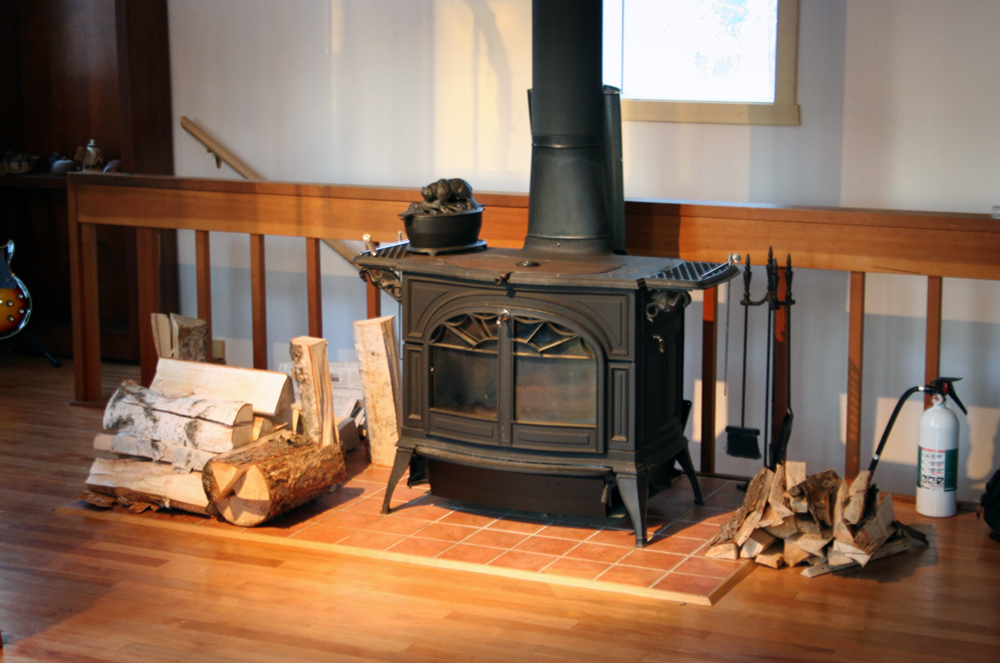
Wood stove (Photo by Christen Bouffard)
(Creative Commons photo by Christen Bouffard)

An air emergency and wood burning ban is in effect for the Mendenhall Valley.

The city issued the emergency Saturday afternoon after measurements of harmful fine particulate matter spiked.

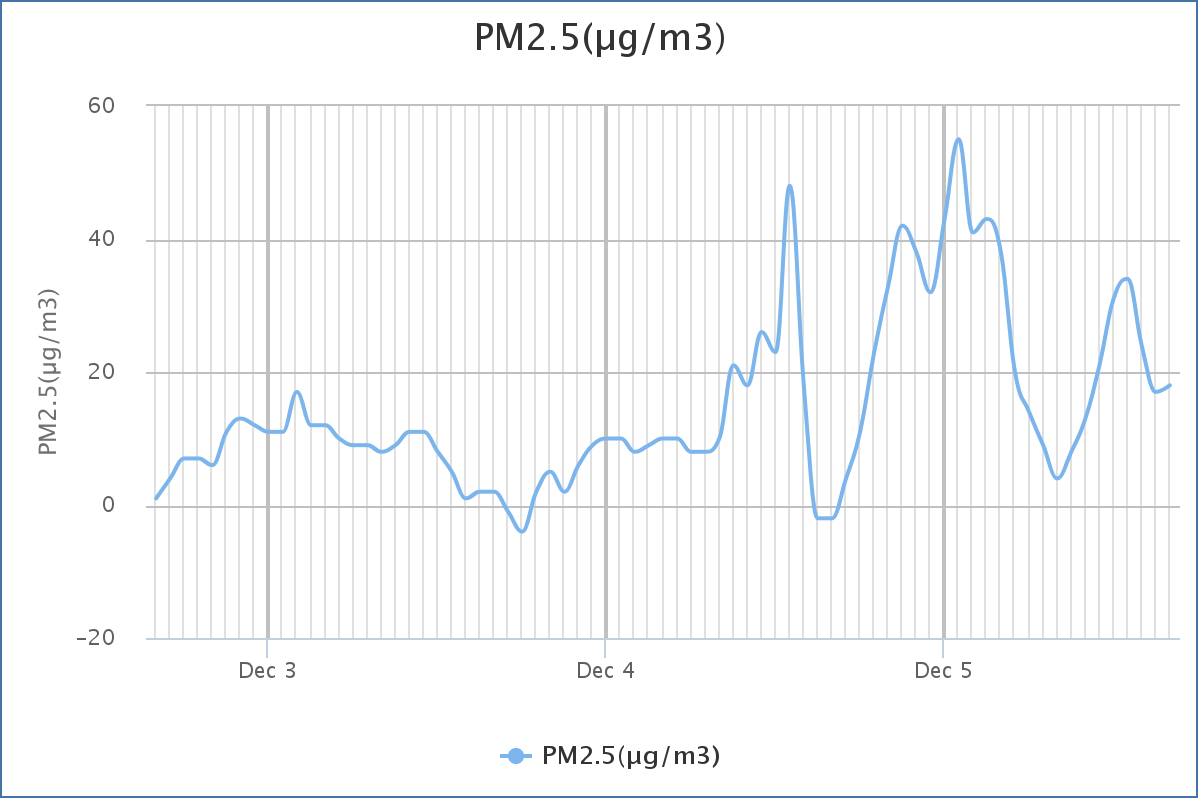
According to preliminary data from the Department of Environmental Conservation’s rooftop monitor at Floyd Dryden Middle School, it peaked at 55 micrograms per cubic meter in the valley around 1 a.m. Saturday. The state’s threshold for unhealthy air is 35 micrograms.

A pm 2.5 chart of preliminary data from DEC's air quality monitor at Floyd Dryden Middle School for Dec. 5, 2015.
Preliminary data of fine particulate matter readings from DEC’s air quality monitor at Floyd Dryden Middle School.

Nicole Ferrin is a meteorologist with the National Weather Service’s Juneau office. She said there have been inversion events in the valley over the last two days. An inversion is a weather phenomena in which cool, still air gets trapped near the surface. Inversions prevent air pollution from dispersing, and helped the fog persist that disrupted flights in and out of Juneau.

Ferrin said two weather fronts are near the area and may break up the inversion Saturday evening or during the day Sunday.

“Those larger synoptic features will be giving us more mixing in the atmosphere and should get rid of this inversion, but they’re also weakening as they move further north,” she said.

More information about the wood burning restrictions are available on the city’s air emergency website.

No foul play suspected in Juneau mayor’s death

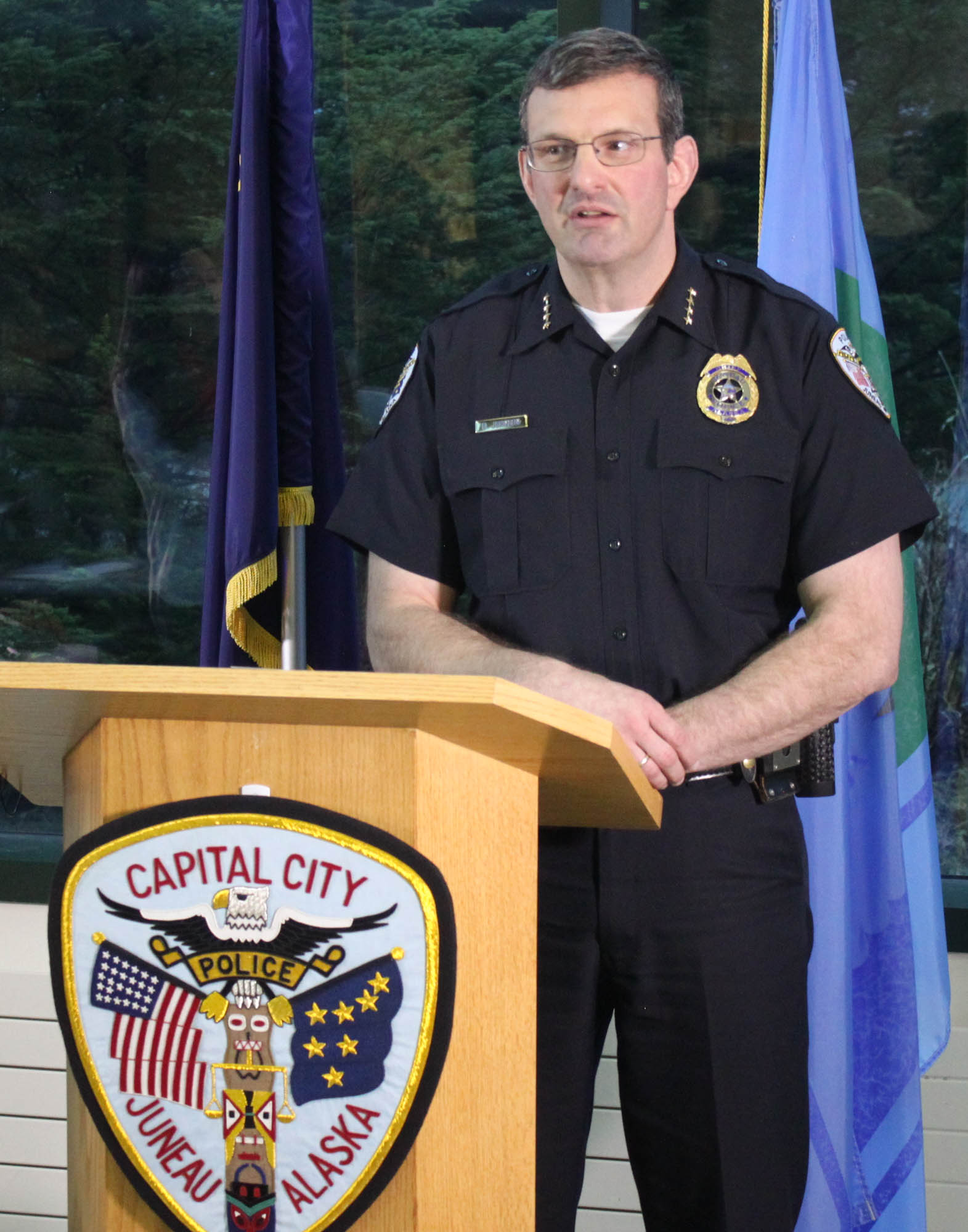
JPD Chief Bryce Johnson at a briefing announcing the preliminary autopsy results for Mayor Greg Fisk (Photo by David Purdy/KTOO)

Update | 4:50 p.m. 

Preliminary autopsy results indicate Juneau’s mayor died Monday morning from natural causes, likely a heart issue. Based on that information, Juneau police do not suspect any foul play.

Greg Fisk was discovered dead inside his Kennedy Street home Monday afternoon.

At a press briefing in Juneau on Wednesday afternoon, Juneau Police Chief Bryce Johnson said the 70-year-old was found with some bruises and injuries on his face that were bleeding.

“People fall and faces get injured. It could look like there was an assault that took place and that’s why the first looks and people thought an assault took place, but it’s consistent with the fall and that’s the information we got back from the medical examiner as well,” Johnson said.

Johnson said the department has evidence that corroborates the medical examiners finding, which indicate facial injuries were not the cause of death. Johnson said it’s likely Fisk fell against a counter after experiencing a heart issue. Fisk had a history of heart problems, Johnson said.

Because the death was unattended and Fisk was found with injuries, Johnson said police had an obligation to investigate in case something potentially criminal did show up in the autopsy.

After Fisk’s body was found Monday afternoon, rumors quickly spread about the cause. His death has attracted national attention.

“There was a time period in which we just didn’t have any answers and, people being people, they run with the unknown for that couple of days. It’s Juneau, Alaska. It’s an exotic location. It’s a newly elected mayor so it was an intriguing story. It’s a tragic story for Juneau because we still lost our mayor, a tragic story for the family,” Johnson said.

Juneau police have notified Fisk’s family of the preliminary autopsy results. A final report is due in 2-8 weeks.


Update | 3:21 p.m. 

The Juneau Police Department said Mayor Greg Fisk’s bruising was consistent with the location of where objects were in the scene. The injuries he sustained were not ultimately the cause of his death. Heart problems likely caused him to fall. Fisk’s body was found in the front room of his home, which is next to the kitchen.

Update | 3:02 p.m.  

The state medical examiner’s office says mayor Greg Fisk died of natural causes. An autopsy was performed today and suggests that external injuries sustained by Fisk were consistent with an “injury due to falling or stumbling onto objects.” The final toxicology report is expected to be complete in 2-8 weeks.

Fisk was found dead at his Juneau home on Monday evening.

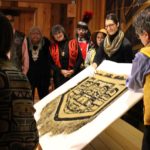
Chilkat robe completes journey back to Southeast

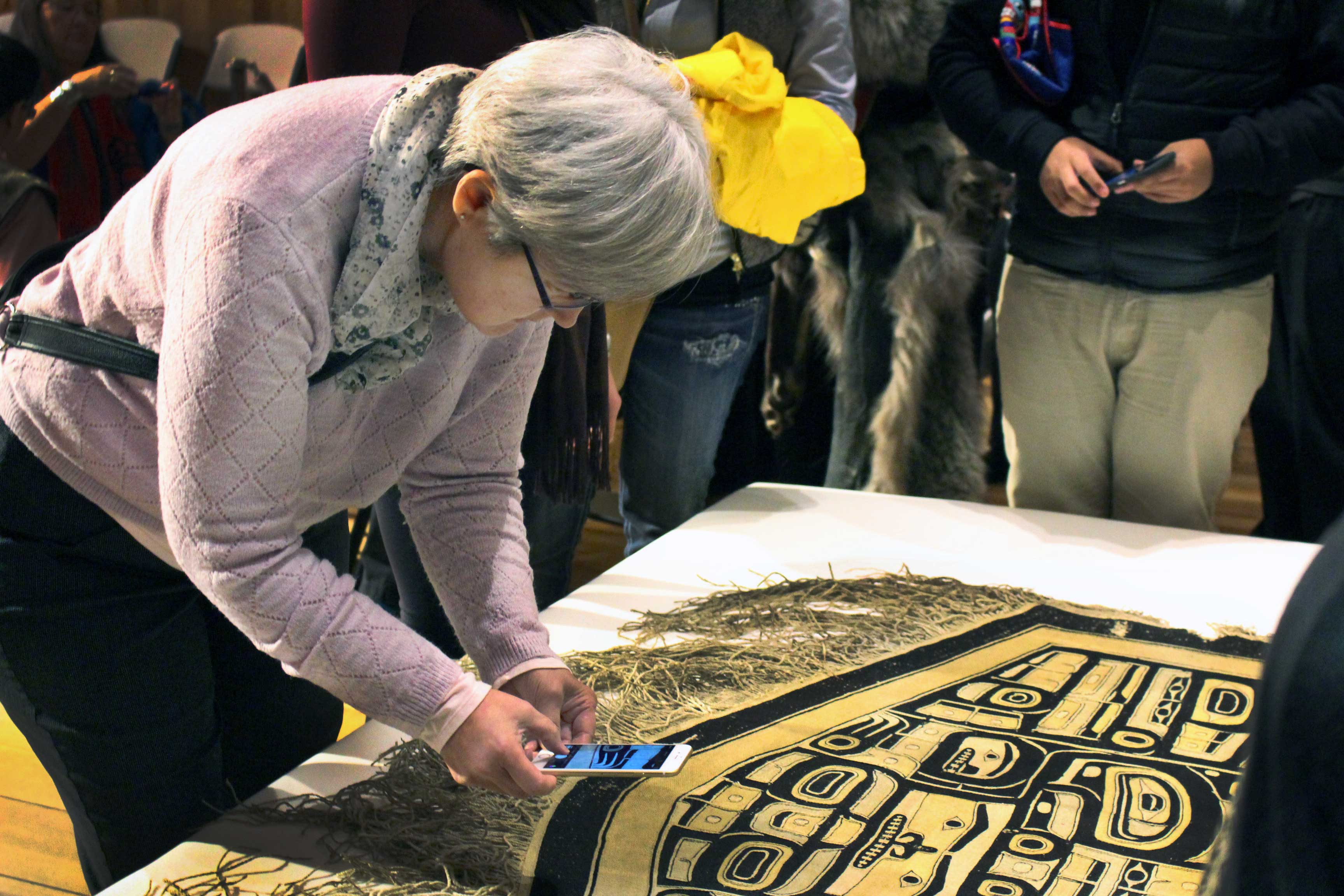
The Sealaska Heritage Institute recently acquired a Chilkat robe believed to be a funerary object. (Photo by Elizabeth Jenkins/KTOO
The Sealaska Heritage Institute recently acquired a Chilkat robe believed to be a funerary object. (Photo by Elizabeth Jenkins/KTOO)

A Chilkat robe that was for sale on eBay has returned to Southeast Alaska. The robe traveled all the way from Texas, where it was almost sold to the highest bidder. Instead, Sealaska Heritage Institute welcomed it home.

A crowd packed the red cedar clan house at Walter Soboleff Building downtown: Tlingit, Haida and Tsimshian gathered together. The ceremony began with two songs of mourning: one eagle, the other raven.

The robe was brought in a cardboard FedEx box and unfurled to reveal a black and yellow design.

“It’s a blanket made out of mountain goat wool and cedar bark and it takes about a year to make,” said Rosita Worl, SHI’s president.

Worl says the clan crest could be a thunderbird or a hawk. But the organization isn’t sure. They were able to purchase the robe from the eBay seller at the base price.

Blankets like these can fetch upward of $30,000. Instead, SHI paid about $14,000.When the seller was informed about the item’s significance, Worl said he worked with SHI to make sure it was returned. She hadn’t seen the Chilkat blanket until this moment.

“I wish I had because when I first saw it I was just so overcome that I could barely make the opening remarks.”

Dorothy Gregory came to the ceremony because she wanted to see the weaving. She said she knows this is one of many blankets that have been taken out of Alaska.

“My grandmother’s blanket was one of them. We look forward to someday seeing it again, you know?” Gregory said.

George Blucker, the seller of the blanket, couldn’t be reached for comment. But in a statement, he said he purchased it at a flea market in Illinois.

SHI believes is could have been a funerary object, due to the fraying at the ends.

The ceremony closed with dancing and a joyous song. Clan leader, David Katzeek, called the robe an amazing technology. But unlike your tablet or iPhone, he said this kind isn’t isolating. It’s known as at.oow.

“That which was paid for with our lives. That’s the reason we have an intimacy,” Katzeek said. “It can be misrepresented when people say our ancestors came home. When we’re saying that, we’re talking about that technology. That generates a very intimate way of thinking about family, about each other.”

In the future, weavers and artists will be invited to study the blanket at SHI.

Site notifications
Update notification options
Subscribe to notifications