Alaska Native Corporations

Friends and colleagues remember Tlingit leader Kookesh as a man of the people

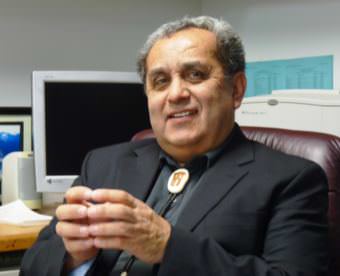
Albert Kookesh (Photo courtesy of Sealaska Heritage Institute)

Albert Kookesh, the Tlingit leader, Indigenous rights advocate, culture bearer, politician and basketball player, died Friday at 72. His death is reverberating across the state and his home region of Southeast Alaska.

Kookesh was fighting prostate cancer, and after being treated at a hospital, his friends said he made the decision to return to his home village of Angoon on the west coast of Admiralty Island.

With his health failing, Kookesh made it known that people were invited to visit, and they came in droves to a town that’s only accessible by float plane or boat. Two commercial seining boats brought visitors from Kake and Juneau.

Rosita Worl in her office on Sept. 5, 2019, in Juneau. (Rashah McChesney/KTOO)

“I was told in one day, there were 13 flights that came in,” said Rosita Worl, a longtime friend and colleague of Kookesh. “Many, many people loved him.”

Kookesh’s friends described him as a man of the people.

He ran a lodge in Angoon, served a combined 16 years as a Democrat in the state House and Senate, advised two governors, chaired the Alaska Federation of Natives and spent decades on the board of Sealaska, Southeast Alaska’s regional Native corporation.

But he was first known 50 years ago as a college basketball player at Alaska Methodist University — now Alaska Pacific University — in Anchorage, where he made up for his relatively small stature with quickness and grit.

“Despite his 5’6” size, he is still scrappy, surprising many an opponent with his dazzling speed, flashing hands and outstanding hustle,” an Anchorage Times reporter wrote in a 1970 team profile.

Former Kotzebue Democratic Rep. Reggie Joule said Kookesh was still serious about basketball in the late 1990s, when they served in the state House together.

“Albert would go into the gym every single day, and he would shoot at least 500 shots,” Joule said in a phone interview Friday. “Albert, once he decided to take something on, he didn’t do it halfway.”

Kookesh was long involved with the Alaska Native Brotherhood, which fought for civil rights and Native land claims. But he had to push his way onto Sealaska’s board a few years after its founding.

He was initially elected as part of a slate of dissident candidates who called themselves “Operation David and Goliath” because they were challenging the existing board.

“He wasn’t just anointed a leader. He worked for our people, and through that work became recognized as a leader,” Worl said.”It wasn’t a job for him. He was doing that before he got on the Sealaska board or on the Alaska Federation of Natives.”

Kookesh kept his Sealaska seat, without a break, for 45 years. Over that time, he helped establish some of the corporation’s formative policies, working with other early Sealaska leaders.

Among them was the creation of an elders trust that pays shareholders $2,000 when they turned 65. He also helped set the policy of issuing new Sealaska shares to Indigenous people born too late to qualify under the original terms of the 1971 Alaska Native Claims Settlement Act.

Kookesh was instrumental in helping Sealaska to get buy-in for those ideas, since shareholders had to approve them, current corporation officials said.

Sealaska Board Chairman Joe Nelson poses at corporate headquarters in Juneau after he was elected to the position in June of 2014. Nelson announced a new shareholder burial assistance program May 7. (Photo by Ed Schoenfeld/CoastAlaska News)
Joe Nelson in June, 2014 (Ed Schoenfeld/CoastAlaska News)

“What he brought was a constant finger on the pulse of the people. Because these were things we had to take to the people to get on the ballot and move,” said Joe Nelson, Sealaska’s current board chair.

Kookesh was also a longtime advocate for Alaska Native subsistence rights, both with AFN and personally.

In 2009, he was ticketed along with other Angoon fishermen for catching more salmon than their state permits allowed.

Kookesh, who had a law degree but never practiced as an attorney, said he wasn’t fishing at the time. But he “asked to be cited with the others so he could be part of the challenge of what they saw as an unfair and arbitrary regulation,” the Anchorage Daily News reported.

Kookesh and the other fishermen appealed the charges all the way to the Supreme Court, which overturned them six years later. Justices ruled that the 15-fish limit was invalid because the Alaska Department of Fish and Game failed to give the fisherman adequate public notice and opportunity for public comment.

Kookesh, who had five children, later said that his goal was challenging the premise that a 15 fish was enough to feed families through winter.

“Let me see any of you try and live the life of a whole salmon season, a whole winter, on 15 fish. Especially if you have a family of 10 or five,” Kookesh told participants at a 2016 conference about salmon. “The progress of an Alaska Native in Alaska can be measured by our success in the courts. Nobody ever gave us anything. We had to sue for it.”

Kookesh was known for being occasionally sharp-elbowed in Alaska’s political arena. In 2010, a legislative ethics panel found probable cause that Kookesh broke Alaska ethics laws by suggesting he would block state spending on a Southeast Alaska village if its city council opposed federal legislation to transfer land to Sealaska.

The panel recommended no sanctions, however, beyond a letter of apology, saying that Kookesh’s statements did not benefit him.

Sealaska CEO Anthony Mallott discusses the regional Native corporation's finances May 2, 2016, (Photo by Ed Schoenfeld/CoastAlaska News)
Sealaska CEO Anthony Mallott on May 2, 2016. (Ed Schoenfeld/CoastAlaska News)

“I look at it as he fought for what he knew was right,” said Anthony Mallott, Sealaska’s current chief executive, said in an interview, noting that his father, former Lt. Gov. Byron Mallott, had the same reputation. “They were statesmen, but passionate ones. And passion can come out as very direct.”

Later in life, Kookesh also became a more active culture-bearer, passing on Tlingit stories and traditions.

Sealaska Heritage Institute, a cultural nonprofit affiliated with the corporation, collected a number of Kookesh’s parables, said Worl, Kookesh’s friend who leads the institute.

“Our staff would love it when he would come to lunch, because he would always tell these stories,” she said. “They had meanings, and they had lessons in them.”

Worl also described how Kookesh held a ceremony just before his death to begin the process of passing on two traditional Tlingit names.

Kookesh passed his own traditional name, Ka’sháan, to Nelson, the Sealaska board chair. He passed another traditional name to Mallott that was previously held by another Tlingit leader, Clarence Jackson.

Kookesh’s clan still must validate those choices, according to Nelson.

But the decision to hold the naming ceremony before his death revealed something about Kookesh himself, Mallott said.

“It was something he wanted to do, and it was, in his mind, the right thing to do,” Mallott said. “And nothing was going to stop Albert from doing the right thing.”

Former senator, longtime Alaska Native leader Albert Kookesh dies

Albert Kookesh discusses regional issues in his legislative office in 2012, when he was a state senator. (Photo by Ed Schoenfeld/Coastalaska)
Albert Kookesh in his legislative office in 2012 when he was a state senator. (Photo by Ed Schoenfeld/Coastalaska)

Longtime Alaska Native leader Albert Kookesh has died, his family announced Friday.

Kookesh was a legendary figure in Southeast Alaska, starting as a star basketball player at Mount Edgecumbe High School.
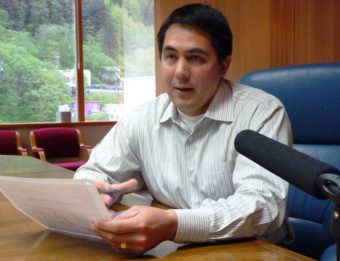
He served in the Alaska state Senate and House, and he chaired the Alaska Federation of Natives and Sealaska Corporation, the Native corporation for his region. He was also an advisor to former governors Bill Walker and Tony Knowles.

Kookesh was 72 and died in his hometown of Angoon, surrounded by loved ones, his family said. He had been suffering from prostate cancer.

Kookesh represented Angoon in the Alaska House of Representatives from 1997-2004 before moving over to the Alaska Senate for another seven years from 2005-2012.

Kookesh’s senate territory was a huge, mostly rural district that covered Metlakatla to the Bering Sea. His district was branded “The Iceworm District” for its resemblance to the long, skinny relative of the common earthworm that lives in glacial ice.

The district was split during redistricting in 2012 when Southeast Alaska lost its third senator to population growth in the Matanuska-Susitna Borough. Kookesh and his colleague, Sitka Sen. Bert Stedman, were forced into a showdown that year that neither really wanted.

“Albert and myself had several conversations well before the election campaigning even started,” Stedman said. “And one of the things we wanted to make sure didn’t happen was that no matter who was selected as a senator in Southeast, that we didn’t have a divisive election and a divided senate district.”

Stedman won the seat and Kookesh ended his legislative career — but his influence didn’t end. Sen. Stedman says former Sen. Kookesh remained a prominent voice in Southeast issues.

“When he was out of the Senate, we’d have conversations about policy issues also because he grew up in Southeast and knew the country very, very well,” Stedman said.

Kookesh was a 1967 graduate of Mt. Edgecumbe High School and a gold medal basketball player. He went on to earn a bachelor’s degree from Alaska Methodist University in 1971 and a doctorate in law from the University of Washington in 1976.

Kookesh never practiced law — a fact he was always quick to point out to reporters. He was a legislator, he would say, not a lawyer.

Kookesh divided his time between his legislative duties and service on the boards of both Sealaska and the village corporation for Angoon, Kootznoowoo, Inc.

The Alaska House Majority Coalition issued a statement recognizing the extraordinary legacy of Kookesh.

“Albert was a lifelong advocate for his people, a force in Alaska politics, and a legendary Alaska Native leader,” wrote former speaker of the House Bryce Edgmon. “He achieved the trifecta of serving in the Senate, as co-chair of the Alaska Federation of Natives, and as president of the Sealaska board. My thoughts are with his wife, Sally, his entire family, and the community of Angoon.”

Some shareholders wary as Sealaska proposes trust to handle future payouts

Sealaska CEO Anthony Mallott discusses the regional Native corporation's finances May 2, 2016, (Photo by Ed Schoenfeld/CoastAlaska News)
Sealaska CEO Anthony Mallott discusses the regional Native corporation’s finances May 2, 2016, (Photo by Ed Schoenfeld/CoastAlaska News)

The leadership of Sealaska, the Native corporation for Southeast Alaska, is asking its shareholders to approve the creation of a type of tax shelter called a trust. Sealaska says it wants to take advantage of the 2017 tax overhaul passed by Congress that allows corporations to offer tax-free payments to shareholders.

“Sealaska’s philosophy around investments has always been one based on our Native values,” Sealaska’s chief executive Anthony Mallott says during a two-minute video produced by the corporation. “You will get the same dividend you otherwise would have gotten from Sealaska from the settlement trust, and that dividend will be non-taxable.”

But some shareholders say they see red flags in Sealaska’s 14-page proposal. That’s because it would give the board — acting as the trustees — unconstrained authority to decide the amount of future payouts, as well as who would receive them.

Settlement trusts are a tool used by big companies, and in this case, Sealaska’s board of directors would also serve as the trustees who would control how any money transferred into the trust would be shared and spent.

More than 20,000 Sealaska shareholders receive regular dividend payments based on the corporation’s financial performance. Those same shareholders have final say over this plan, which is being put to a vote as a resolution in June.

Shareholder Resolution #1 as it appears on the official Sealaska proxy statement.

Sealaska shareholder Joan Dangeli notes that section 3.1 of the proposal says “The trustees may distribute some, all, or none of the net income, accumulated net income or principal of the trust to the beneficiaries.” Dangeli has been outspoken in her skepticism of the settlement trust.

The same section, she notes, explicitly states that no distributions are required, nor would payments for one year have any bearing on future years — the trustees would have maximum flexibility to pay out as much or as little as they choose.

“This is a really big issue,” Dangeli told CoastAlaska. “The language not is matching the kind words about what’s going to continue.”

Shareholder Vicki Soboleff worked for Sealaska as a financial officer for more than a decade. Now she’s running for the board of directors as an independent candidate. She says she’s on the fence about whether she’ll vote in favor of the resolution.

“I feel that there are a lot of positive aspects, potentially with passage of the trust,” she told CoastAlaska. “Also, there are many questions related to the trust.”

She added: “And I don’t feel, after speaking with shareholders, that they are comfortable voting ‘Yes.’”

Sealaska notes that other Alaska Native corporations have established settlement trusts “using similar structures,” including Goldbelt, Inc. a Juneau-based Native corporation.

Goldbelt’s settlement trust — established in 2019 — defines specific programs like scholarships that are paid out by its trust. But Sealaska’s proposal leaves the trustees to decide how that would be worked out in the future. And that lack of detail worries Dangeli, who says future boards would be unconstrained to follow through on the corporation’s assurances.

I couldn’t find consistent language matching what they’re verbally telling us,” Dangeli said.

Nor is Soboleff fully convinced by the corporation’s arguments. She says she’s still doing her homework on what the full implications would be for individual shareholders.

“Again, I feel there are a lot of positive aspects possible with the trust,” she said. “But the information provided has been limited.”

Sealaska has tightly managed its information flow to shareholders for the upcoming election. Its management declined interview requests and has only fielded questions from shareholders that are typed into a chat window during virtual meetings with senior executives and financial advisors.

“Every decision Sealaska makes is with our shareholders in mind,” the Juneau-based Native corporation wrote in a statement to CoastAlaska. “This is good for our shareholders as the Sealaska Settlement Trust will allow shareholders to keep more money from their dividends. Currently, shareholders are required to pay appropriate taxes on dividends. The settlement trust would ease that burden. This decision is in the hands of shareholders, and our board believes it will serve to benefit shareholders both now and into the future.”

Shareholders are already voting, with the final tally to be calculated at their June 26 annual meeting. The corporation says it will only require a simple majority of those voting for the resolution to pass. That’s a lower bar than two shareholder resolutions the board opposes that would reform how elections are run.

Sealaska is a significant economic player in Southeast Alaska. The Native-owned corporation is a major landowner with a portfolio invested in real estate, fisheries and services. It reported nearly $700 million in annual revenue with more than $55 million in net profits last year, according to its most recent annual report.

It’s one of the original 13 regional Native corporations established nearly 50 years ago by the Alaska Native Claims Settlement Act. The landmark legislation distributed corporate shares to Alaska’s indigenous people based on ties to their traditional homelands.

Judge hands down split decision in Native corporation free speech case

The cover design of Goldbelt Inc.'s 2016 annual report was inspired by the late Clarissa Rizal, a Goldbelt shareholder and weaver. (Photo by Jeremy Hsieh/KTOO)
The cover design of Goldbelt Inc.’s 2016 annual report was inspired by the late Clarissa Rizal, a Goldbelt shareholder and weaver. (Photo by Jeremy Hsieh/KTOO)

An administrative law judge recently found Goldbelt shareholder Ray Austin innocent on charges of making misleading or false statements on Facebook that were critical of the elected leadership of Juneau’s Native corporation.

The state’s Division of Banking & Securities cited Austin last year and ordered him to pay $1,000 for dozens of Facebook posts that criticized sitting Goldbelt directors.

“I speak up for what I think is right,” Austin told CoastAlaska.

But the judge did find him guilty for not filling out the required paperwork before making his comments in a public forum. Free speech is not a defense in these types of cases, she ruled.

A screenshot of one of Goldbelt shareholder Ray Austin’s Facebook posts.

“Mr. Austin’s constitutional rights were not violated by the requirement he provide the (regulators) concurrent copies of his Facebook postings, including his own re-submitted candidate posts,” Administrative Law Judge Carmen Clark wrote in her 31-page decision.

The Alaska Native Claims Settlement Act — known as ANCSA — created dozens of regional, urban and village Native corporations with shares allocated to Alaska Natives based on their ties to ancestral homelands.

The law was passed by the U.S. Congress in 1971, but it gives the state — not the federal government — authority to regulate Native corporate governance and board elections.

That’s set up a tension between the rights of shareholders to be critical of their corporation’s leaders, and the need to police false or misleading statements that could dupe shareholders voting in an election.

Austin’s critical Facebook posts came under scrutiny after a Goldbelt director complained to state regulators. Agency officials took notice and said Austin’s writings went to the very heart of why they regulate shareholder speech.

Speaking at Austin’s September hearing, Leif Haugen, chief of enforcement at the state Division of Banking & Securities, called Austin’s writings “egregious” and said the rules exist for a reason.

“And that’s to promote transparency in corporate board elections,” Haugen said. “These are alluding to incumbent directors, and they’re talking about these directors engaging in illegal activity.”

But even though regulators say they disregarded Austin’s complaints because they had accepted the Goldbelt Corporation’s timeline of events, the judge disagreed his post was false or misleading.

The judge did, however, let a $500 fine stand because Austin hadn’t filed financial disclosures required by the state before making public statements about a Native corporation’s board election. She took her cues from this year’s Alaska Supreme Court decision that affirmed state regulators’ power to do so.

The American Civil Liberties Union of Alaska took the state to court over a shareholder being fined because of a letter to the editor in a Nome newspaper. The state’s highest court ruled in favor of the shareholder, but did not weigh in on the broader constitutional concerns of policing free speech.

Anchorage attorney Susan Orlansky argued the case on behalf of the ACLU. She pointed out there are no truth police regulating conventional political races.

“People get to sort out what’s true and not true, and who they want to believe,” Orlansky told CoastAlaska in a recent interview. “But Alaska is tightly regulating this when there are shareholders — almost exclusively Alaska Native people — speaking their opinions about an upcoming board of directors election for the corporation. And I find that troubling.”

ANCSA complaints are lion’s share of Alaska financial regulator’s workload

The Division of Banking & Securities is the state’s primary financial regulator. It’s charged with enforcing the rules for payday lenders, mortgage companies, consumer finance and more. But state officials conceded during Austin’s hearing the majority of its investigations are focused on Native corporations.

“The majority of investigations are related to ANCSA,” Adam Marks, the state financial examiner charged with Native corporation cases, testified during Austin’s hearing in September 2020.

Since at least 2016, the agency has used fees levied on those cases to pay for a dedicated investigator. The division said most of its work is complaint-driven, and it opens about a half-dozen enforcement actions a year.

Austin, who’s from Southeast Alaska, said Alaska Natives aren’t like conventional shareholders who choose to buy or sell shares to protect a financial investment.

“We had no choice to be put in this corporate world,” he said of the landmark ANCSA legislation passed nearly 50 years ago. “But at the same time, we have no choice. We have to work with it or try to make it as best as we can.”

Judge notes there’s “an imbalance of power” at play in ANCSA disputes

The state’s financial regulations were modeled after the federal Securities and Exchange Commission, which regulates all public corporations in the U.S. But the SEC loosened its regulations in the early 90s to allow reasonable criticism of corporate governance.

Alaska has not followed suit.

And in her decision in Austin’s case, Judge Clark remarked on the state’s sanctioning of individual shareholders under the same legal standard they would apply to corporate directors with sophisticated legal experience and resources.

“There is an imbalance of power between (Alaska Native corporations) and its shareholders that should not be ignored,” she wrote. “It is important to prevent statutes and regulations designed to protect shareholders from being weaponized against them.”

Both Goldbelt and the state’s Division of Banking & Securities declined to comment on the outcome of the case.

The headline for this story has been updated to reflect that the decision wasn’t made by a court, but an administrative law judge.

Sealaska shareholders consider election reforms

A Sealaska corporate logo adorns the roof of the Southeast Alaska Native corportation's headquarters in Juneau on May 2, 2018.
A Sealaska corporate logo adorns the roof of the Southeast Alaska Native corportation’s headquarters in Juneau on May 2, 2018. The logo has representations of the Eagle and Raven moieties of the Tlingit, Haida and Tsimshian. (Photo by Jeremy Hsieh/KTOO)

At Sealaska Corporation’s upcoming annual meeting, five seats are in play on its 13-member board, and candidates are seeking support from the more than 22,000 people holding shares. But one of the biggest contests will be how elections will be carried out in the future.

Former Sealaska board member Ed Thomas says about a fifth of shareholders don’t have a particular candidate in mind, “but they still want to be supportive of Sealaska; there’s an opportunity to give their votes to the proxy holders to vote as they wish.”

That creates a bloc of votes that are called “discretionary” because they can be used at the discretion of the board majority. And it’s basically like handing over an unmarked ballot for a corporation’s leadership to ink in the bubbles.

Critics like Thomas say this perpetuates the majority members’ ability to retain control. Now, he’s gathered enough signatures to force the issue this spring.

Former Sealaska board member Ed Thomas made a two-minute pitch for his resolution that would heavily restrict discretionary voting. He says other ANCSA corporations have done away with the practice. (YouTube screenshot)

The former board member says any director that’s out-of-step with the majority risks losing their endorsement and with that — access to the pool of discretionary votes controlled by the majority.

And what that does is sends a message to any new member,” Thomas told CoastAlaska from his retirement home in Washington state. “That you got to go along with their thinking otherwise — you can’t think independently — otherwise, you’re out.”

A former president of Central Council of Tlingit and Haida Indian Tribes of Alaska, who grew up in Craig on Prince of Wales Island, was first elected to Sealaska’s board in 1993 as an independent. In subsequent years, he was re-elected as part of the board slate up until 2019 when he says he apparently fell out of favor and was dropped from the slate of endorsed candidates.

Shareholder resolutions would amend Sealaska’s bylaws

His proposed resolution would restrict the use of discretionary votes in Sealaska’s elections. It would require candidates to be elected on the strength of shareholders checking off their names.

But Sealaska’s board majority opposes the measure. Board and executive leaders declined an interview request but have released statements pointing out that past efforts to stamp out discretionary voting have failed.

Sealaska’s board of directors has urged shareholders to reject a resolution that would limit discretionary voting in elections. (YouTube screenshot)

Thomas says it’s understandable that the board’s leadership wants to keep the status quo.

“Because it does really pretty much ensures that when election time comes, so you can shift around the votes to make sure their candidates get put back on,” he said.

It’s not the only election reform resolution put on the ballot by shareholders. Anchorage shareholder Lisa-Marie Ikonomov is pushing a separate measure that would require more detailed reporting of the final vote count. That means a candidate’s election returns would have the number of directed votes cast by individual shareholders and the discretionary votes controlled by the majority on the board in separate columns.

“This resolution does not say that they can’t use discretionary voting,” she said in a recent interview. “What it says is they just need to be honest and truthful and report those full totals to shareholders. They shouldn’t be able to hide any vote count from any shareholder.”

Simmering tensions from shareholders concerned about executive compensation

Sealaska is a major economic player in Southeast Alaska. Its business portfolio includes seafood, real estate and until recently timber across more than 360,000 acres. The Native-owned corporation reported nearly $700 million in annual revenue with more than $55 million in net profits last year, according to its most recent annual report. And it pays out cash dividends each year to its shareholders and funds educational work through its cultural arm, Sealaska Heritage Institute and others.

Yet there have long been competing factions vying for control of the organization. In recent years, critical shareholders have decried the take-home pay of Sealaska’s leadership which tops more than $2.2 million for its chief operating officer and more than a quarter million dollars for its full-time board chairman.

Anchorage public relations professional Lisa-Marie Ikonomov recorded a two-minute pitch to fellow Sealaska shareholders to support a resolution requiring more transparency in vote tallies. (YouTube screenshot)

Sealaska is one of the 13 original corporations established by the Alaska Native Claims Settlement Act. The legislation was a sea change for Alaska’s indigenous people who received shares in regional, village and urban corporations based on ties to their traditional homelands.

But Ikonomov says ANCSA corporations like Sealaska have in the past half-century become a lot more than just profit-driven corporations.

“They’re our voice in politics, they’re our voice in the community,” she said. “We look at those positions as not just having that business component, but also in a lot of ways, the representation component of us as shareholders as tribal citizens, as Alaska Native people.”

Sealaska leadership quiet over opposition to shareholder resolutions

Sealaska’s board of directors opposes both shareholder resolutions. But its opposition has so far been fairly low-key. At a May 11 informational meeting for shareholders, aside from a pair of video messages, none of the board members or executives directly addressed the shareholder resolutions.

The board has released statements that say roughly one-fifth of people vote discretionary because they are consciously showing their support for the corporation. It notes that six similar proposals have been voted down since 1992.

Sealaska’s board of directors has urged shareholders to reject a resolution that would require vote tallies to be separated between shareholders’ directed votes to individual candidates and the discretionary vote block controlled by the majority. (YouTube screenshot)

The resolutions still face tough odds. Under Sealaska’s bylaws, a shareholder resolution requires support from the majority of all shareholders to pass. That’s challenging because 20% to 30% of shareholders don’t vote, meaning that two-thirds of those that do would need to vote yes.

The Sealaska Corporation also told shareholders that its current bylaws encourage a “team-based” approach, where the endorsed nominees work together and support each other.

In election materials distributed to shareholders, it says the proposed changes could make, “some nominees look weak if they did not seek directed votes, and instead sought discretionary votes in support of the team.”

Ed Thomas, the former Sealaska board member, says he feels the corporation will be stronger if it has fairer elections.

“I personally feel that it is not anti-Sealaska,” Thomas added. “You look at some of the folks that are young, up and comers, we really have positive people. And then they get a fair chance to go forth in their elections without having the cloud of having to bow to a leader in order to get elected.”

Sealaska shareholders have until June 25 to vote by returning their proxies. Resolutions and the board of directors elections will be made at Sealaska’s annual meeting.

Alaska Gov. Dunleavy’s top rural affairs advisor departs, and tribal and fishing leaders wonder why

Lt. Gov. Kevin Myer, left, and rural affairs advisor John Moller field questions at a forum at Elizabeth Peratrovich Hall in Juneau. (Jacob Resneck/CoastAlaska)

Alaska Republican Gov. Mike Dunleavy’s longtime rural affairs advisor, John Moller, has left his job.

Moller was a trusted advisor to Dunleavy, having co-chaired his successful 2018 gubernatorial campaign, and his portfolio included work with the fishing industry and Alaska Native issues.

Moller’s departure was first reported by the Alaska Landmine, a political blog.

A spokesman for Dunleavy, Jeff Turner, confirmed that Moller is no longer working in the governor’s office, but wouldn’t say if he resigned or was fired. Moller didn’t respond to requests for comment.

Moller’s surprise departure was rippling through Alaska political circles Tuesday.

“We’re processing the news like everyone else, but he had become a trusted state partner,” said Nicole Borromeo, general counsel and executive vice president at the Alaska Federation of Natives.

Moller, who lives in Juneau, has a lengthy history in Alaska politics, Native issues and fisheries. He’s Alaska Native and a shareholder in two Alaska Native corporations — the Aleut Corp. and Ounalashka Corp. — and owns commercial fishing permits for Southeast Alaska shrimp, crab and salmon, according to a state database.

Before working for Dunleavy, Moller served as a rural affairs advisor to Sean Parnell, the previous Republican governor, then joined Parnell in a consulting business.

People who worked with Moller described him as accessible and an important conduit to the governor’s office who could help elevate their issues and problems.

“We don’t always agree with the administration, but Johnny was always easy to work with,” said Matt Alward, president of United Fishermen of Alaska. “If he had a position different than ours, he’d make that clear. But it didn’t harm our ability to work together.”

Moller’s position was an important one to the fishing industry, and UFA members hope he’s replaced, Alward added. Turner would not say if the governor intends to fill Moller’s position, though Dunleavy does have another special assistant, Bill Thomas, with experience working on Alaska Native and fisheries issues.

Borromeo, from the Alaska Federation of Natives, said Moller had been instrumental in re-starting negotiations between the state and tribes on an agreement to have tribes assume some of the state’s responsibilities for child welfare.

The agreement had been negotiated between tribes and the administration of the previous governor, independent Bill Walker. But Dunleavy’s administration had paused negotiations on the agreement when he came into office.

“John was really good about getting us in the room with Gov. Dunleavy early on, for face-to-face meetings, to have those conversations,” Borromeo said.

Moller had also been an important link between the state and tribal health organizations during the COVID-19 pandemic, Borromeo added.

“John was always one to pick up the phone and to listen, which is an invaluable relationship to have,” she said. “That’s not to say we agreed with him on every point. But what I will say is he was always available to listen, and to take a meeting.”

Site notifications
Update notification options
Subscribe to notifications