Alaska Native Corporations

Alaska senators revive landless bill

Lisa Murkowski at AFN 2015
Sen. Lisa Murkowski addresses the Alaska Federation of Natives Convention, Oct. 16, 2015. (Photo by Mikko Wilson/KTOO)

A U.S. Senate bill introduced last week would allow Alaska Natives in five Southeast communities to form urban corporations. Haines, Ketchikan, Petersburg, Tenakee, and Wrangell each stand to gain about 23,000 acres of land if the bill passes. But the legislation, which has been introduced before, does not come without controversy.

In 1971, more than 200 Native corporations formed under the Alaska Native Claims Settlement Act, known as ANCSA. But, Haines (Chilkoot Tribe), Ketchikan, Petersburg, Tenakee, and Wrangell were left out of the landmark legislation.

The Alaska Native Claims Settlement Improvement Act was introduced May 26 by Alaska Sens. Lisa Murkowski and Dan Sullivan. It would award those “landless” Native groups 23,040 acres of land each.

Leo Barlow represents both the Southeast and Wrangell Landless Coalitions. He says many in these communities have benefited from Southeast’s regional Native corporation, Sealaska, which pays dividends. But they lack the benefits provided by a local corporation.

“Other village corporations in the region that have received such a settlement have done a lot of things with their land. They’ve been able to do a lot of economic activates to the benefit of their shareholders. Start businesses, eco-tourism, start hotels a lot of relied on resource development on the land as a mean of providing an economic income.”

If passed, the improvement act would allow the five corporations to pick land of historic, cultural and commercial value, but would not allow conservation lands to be awarded.

The Southeast Alaska Conservation Council or SEACC is opposing the bill. Spokeswoman Emily Ferry says the group is concerned about the commercial activity.

“We don’t know how they would be managed. The land would be selected by Native corporations — these new Native corporations and the Secretary of the Interior — and as we know from the past, lands that were transferred to Native corporations previously were heavily logged.”

Ferry says SEACC called upon Murkowski to include the general public by holding hearings on the issue. SEACC would also like more environmental protection, particularly forest preservation, added to the bill.

“We would like to see a dialogue about how that can happen,” Ferry said. “That’s partly why we’re calling on Senator Murkowski to come to SE Alaska to open up a dialog, hold hearings, to talk with communities. Both the people who would benefit from this legislation and the communities who rely on our public land to go hunt and fish and enjoy the fact that we get to live in a spectacular place where we have vibrant runs of wild fish.”

Murkowski’s office did not respond to requests for comment or information.

The local corporations would have surface rights that would allow logging and other surface-based economic activity, but Barlow says he doesn’t expect any excessive clear-cutting.

“Obviously, there are timber resources that could be harvested,” Barlow said. “The whole goal would be to do that on a sustainable basis, not like the old days when there were large extensive clear-cuts all across the Tongass and Southeast Alaska.”

Barlow says the corporations could also focus on eco and cultural tourism to bring in money and says he thinks Natives would not be the only ones to see benefits.

“It actually benefits the whole community. As you can see throughout Southeast Alaska, a lot of the employment created by other corporations throughout the region goes to Natives and non-Natives alike. It would have a tremendous impact on the region and the economy of the whole Southeast panhandle.”

The ANCSA improvement bill is not the first legislative attempt at providing “landless” communities corporate status. The current version combines several Senate and House bills from decades past. Another section of the bill would allow Sealaska to exchange 23,000 acres of land on Admiralty Island for about 14,000 acres of more commercially viable land and could also award Native Vietnam veterans land as well.

SEACC spokeswoman Emily Ferry says the conservation group will wait for Senator Murkowski’s response before stepping up efforts to oppose the bill. Both Murkowski and Sullivan were unavailable for comment for this story.
Village Native corp expands aircraft maintenance, cyber warfare wing

Tyonek Native Corporation (Image courtesy of PRNewsFoto/Tyonek Native Corporation)

Tyonek Native Corporation’s aviation services wing is expanding its aircraft maintenance and cyber warfare business with the acquisition of a new facility in Mississippi.

CEO James Hoffman says work at the Selex Galileo Stennis Facility will focus on military intelligence, surveillance and reconnaissance areas, in addition to unmanned aircraft systems – commonly referred to as drones:

“It’s quite an expanding field and we feel its proximity to Mississippi State University – which is actually the center of excellence for all of the six other FAA unmanned facilities sprinkled around the United States,” Hoffman said.

The University of Alaska Fairbanks is a part of the FAA Center of Excellence for Unmanned Aircraft systems.

Hoffman says the facility will also be involved in aircraft maintenance, avionics, and other advanced modification to aircraft engines and propellers.

The Mississippi-based business will generate 26 new jobs this year, and potentially another 150 jobs within the next three years.

A new training program, beginning with two Tyonek shareholders, will be established at the facility – and Hoffman says that could lead to more jobs in Alaska.

“And a potential springboard from there would be to take this template and move it into the Anchorage area so we could actually do the same thing up here that we’re doing down there, which would enable us to hire many more of our shareholders,” he said.

Tyonek Native Corporation manages a swath of land on the west side of Cook Inlet in Southcentral Alaska, with 800 shareholders spread around the state and the Lower 48.

Tyonek Services Group has applied for 8(a) status for the facility, which Hoffman says typically takes between 8-10 months.

“In the meantime, we’ll support it with other entities working within the 8(a) realm to help support this area,” Hoffman said.

The 8(a) program allows small, disadvantaged businesses – which include those owned by Alaska Native Corporations – to seek government contracts on a limited competition basis.

Tyonek Service Group declined to disclose the purchase price of the facility.

The company will be named Tyonek Services Overhaul Facility – Stennis, LLC.

It’s located at the Stennis International Airport in Kiln, Mississippi.

Term limits, dropped incumbent on Sealaska ballot

A resolution calling for term limits is before Sealaska's 22,000 shareholders.
A resolution calling for term limits is before Sealaska’s 22,000 shareholders.

Sealaska shareholders are deciding whether to impose term limits on the corporation’s board members. The regional Native corporation’s tribal members are also considering nine candidates for four board seats. They include an incumbent who has lost the board’s support.

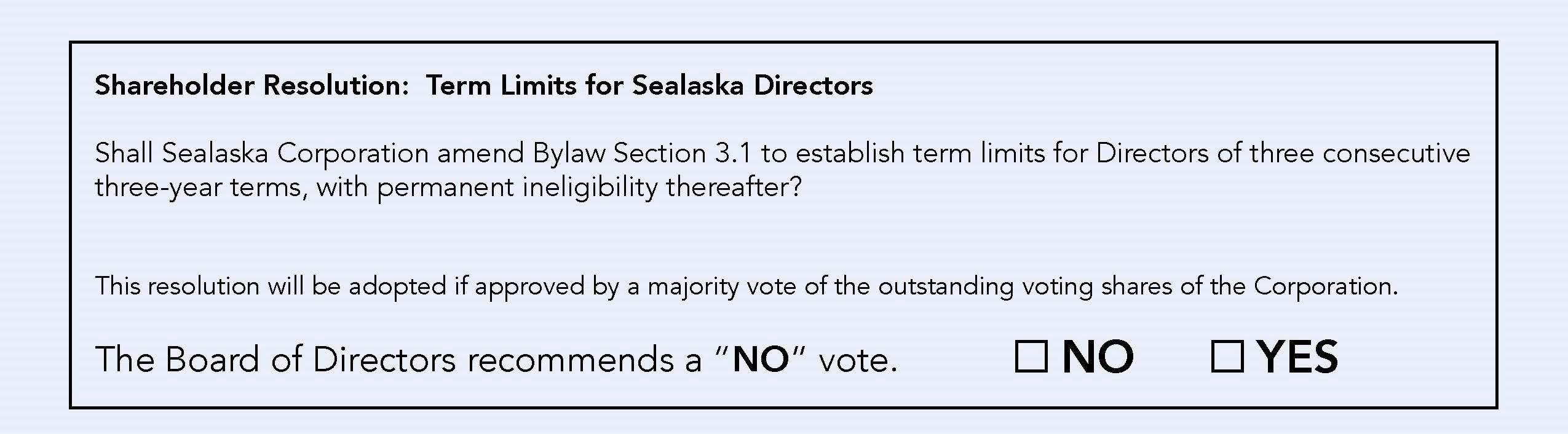
If approved, the term-limits measure would make incumbent board members step down after three, three-year terms. And they could never run again.

It was proposed by shareholder and board candidate Mick Beasley, who’s highly critical of the corporation’s management.

Sealaska General Counsel and Corporate Secretary Jaeleen Araujo said the board opposes the measure.

“I know there have been past resolutions provided by Mr. Beasley that were longer, four terms. And so three terms for sitting board members, they just felt that three terms felt very short,” she said.

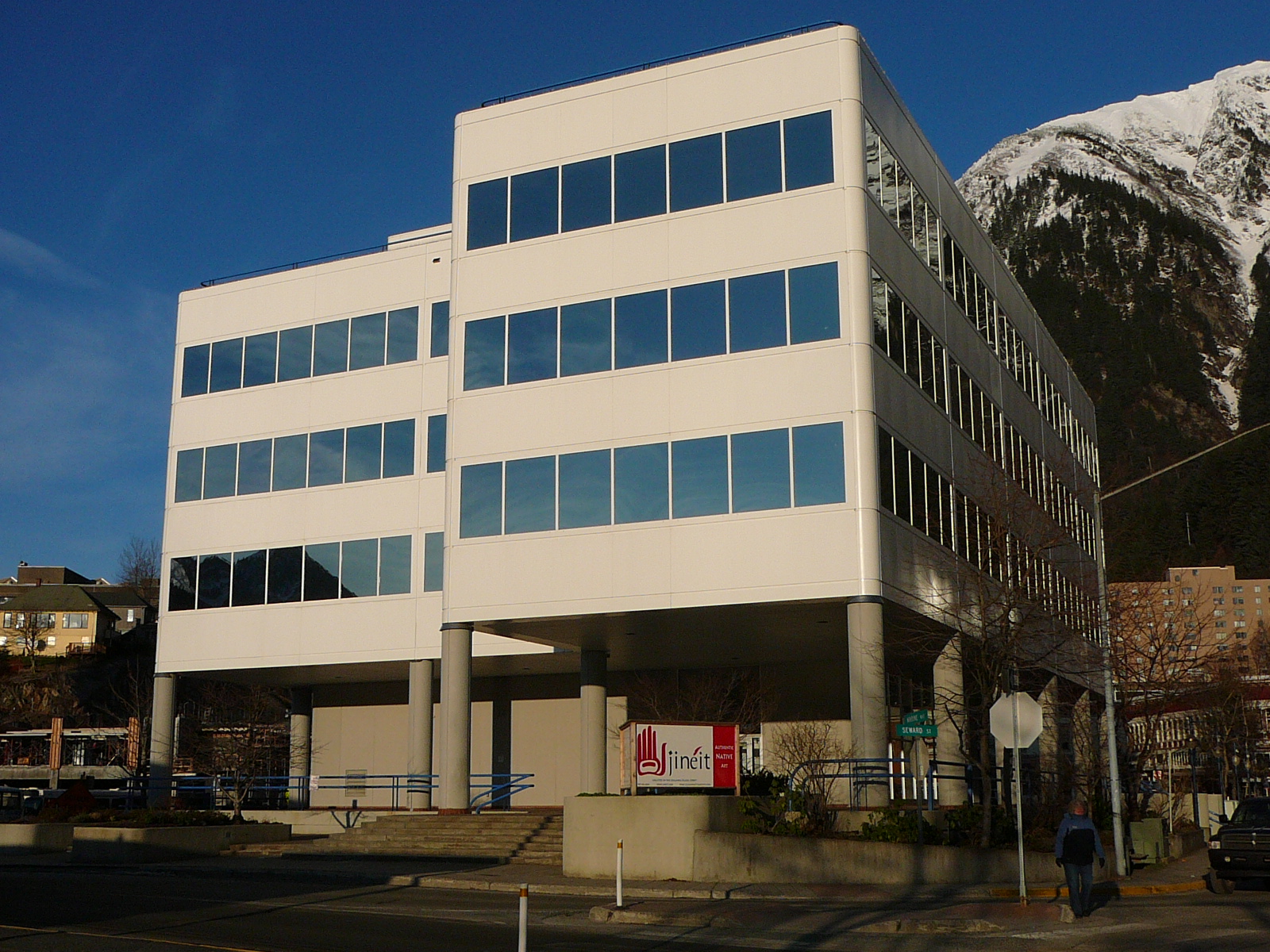
Sealaska Plaza, headquarters of the Southeast regional Native corporation, in Juneau. (Photo by Ed Schoenfeld/CoastAlaska News)
Sealaska Plaza, headquarters of the Southeast regional Native corporation. (Photo by Ed Schoenfeld/CoastAlaska News)

Araujo said the panel also disagrees with keeping former board members off the board indefinitely. She said a better approach would be a cooling-off period before they can run again.

She also said the Juneau-headquartered corporation would lose important knowledge and history under term limits.

“There is recognition that no other regional corporation in the state has term limits, because of that stability and experience being important,” she said.

Sealaska’s board has opposed previous term-limits measures. It’s also been against efforts to eliminate or modify discretionary voting. That’s when shareholders give the board the power to cast their ballots.

Beasley, a Juneau carver, has authored other term-limits and discretionary-voting measures in recent years.

“Right now, 40 years of the Sealaska Corp. has benefitted very few. And that’s all because of our election system,” he said.

Read Sealaska’s Proxy Ballot, including term-limits pros and cons and candidate statements.

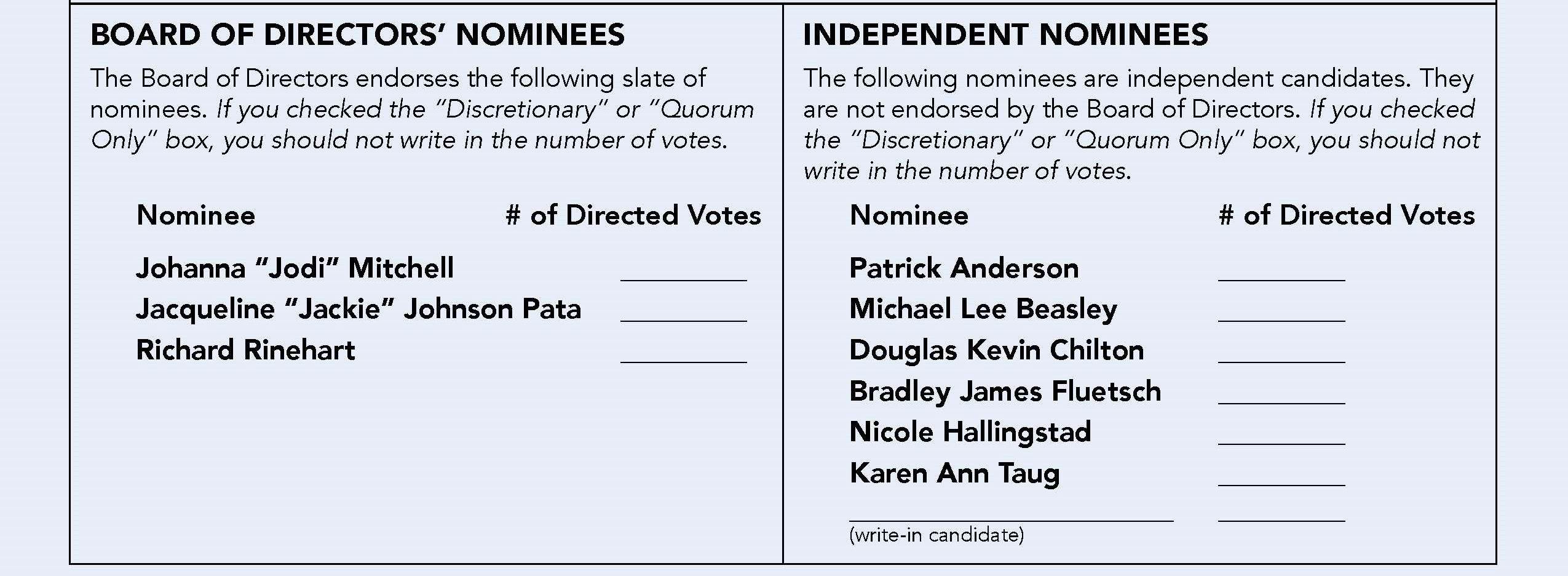
Board-endorsed and independent candidates are listed on Sealaska's 2016 proxy ballot.
Board-endorsed and independent candidates are listed on Sealaska’s 2016 proxy ballot.

Five other shareholders are also running for the board as independents. What’s unusual this year is that one is an incumbent who was kicked off the slate of board-endorsed candidates.

“I have been outspoken about the poor financial performance of Sealaska,” said Patrick Anderson, an Anchorage attorney He points to the regional Native corporation’s many years of operational losses when he criticizes managers.

A board member for more than 20 years, he said he’s been advocating a system called Lean Management, which focuses on increasing value and eliminating waste. Versions have been used by hospitals, the auto industry and Sealaska’s former plastics subsidiary.

“We really need to learn how to operate companies. Lean Management is how many, many, many other outstanding companies in the world have done it,” he said.

Corporate Secretary Araujo said she can’t speak to the decision to exclude Anderson because it was made by the board in an executive session. Board President Joe Nelson could not be reached for immediate comment.

Bumping Anderson off the board slate leaves it with only three endorsed candidates for four seats.

One is Inside Passage Electric Cooperative CEO Jodi Mitchell. Another is National Congress of American Indians Executive Director Jackie Johnson Pata. The third is Tlingit and Haida Business Corporation CEO Richard Rinehart.

Oregon Consultant Vikki Mata, a former Sealaska communications vice president, said the open seat is unusual.

“This year is an opportunity for an independent candidate to be elected, which we have not seen (often) in the past, to have that open seat available,” she said.

That happened two years ago when Byron Mallott stepped down to run for office. But otherwise, most board openings are filled with appointees, who then run as incumbents.

In addition to Beasley and Anderson, four other independents are running for the board.

They include carver Doug Chilton, financial advisor Brad Fluetsch and Bartlett Regional Hospital Controller Karen Taug. The remaining independent is former Sealaska Corporate Secretary Nicole Hallingstad, now operations director for the National Congress of American Indians.

Fluetsch is among candidates critical of Sealaska management. He takes issue with the latest annual report, which describes business growth.

“You’re not seeing the improvement that you read about and the smiley faces would indicate,” he said.

He said the report shows how Sealaska remains in the red without money from other corporations’ resource developments.

Sealaska just announced the purchase of a minority share of a Seattle seafood processing plant. It’s expected to announce an ocean-monitoring business investment next.

Fluetsch said plans for additional businesses won’t help.

“They are banking that the acquisitions that they’re supposed to announce over the next couple weeks (are) going to save them. And it’s never happened before. Never. So as a shareholder who’s been around the block, I don’t think this one’s going to work out any better than the other ones,” he said.

Shareholders are in the process of voting. Results will be announced during Sealaska’s annual meeting, beginning at 1 p.m. June 25 at the Ketchikan High School Gymnasium.

Tlingit leader remembered for land claims role

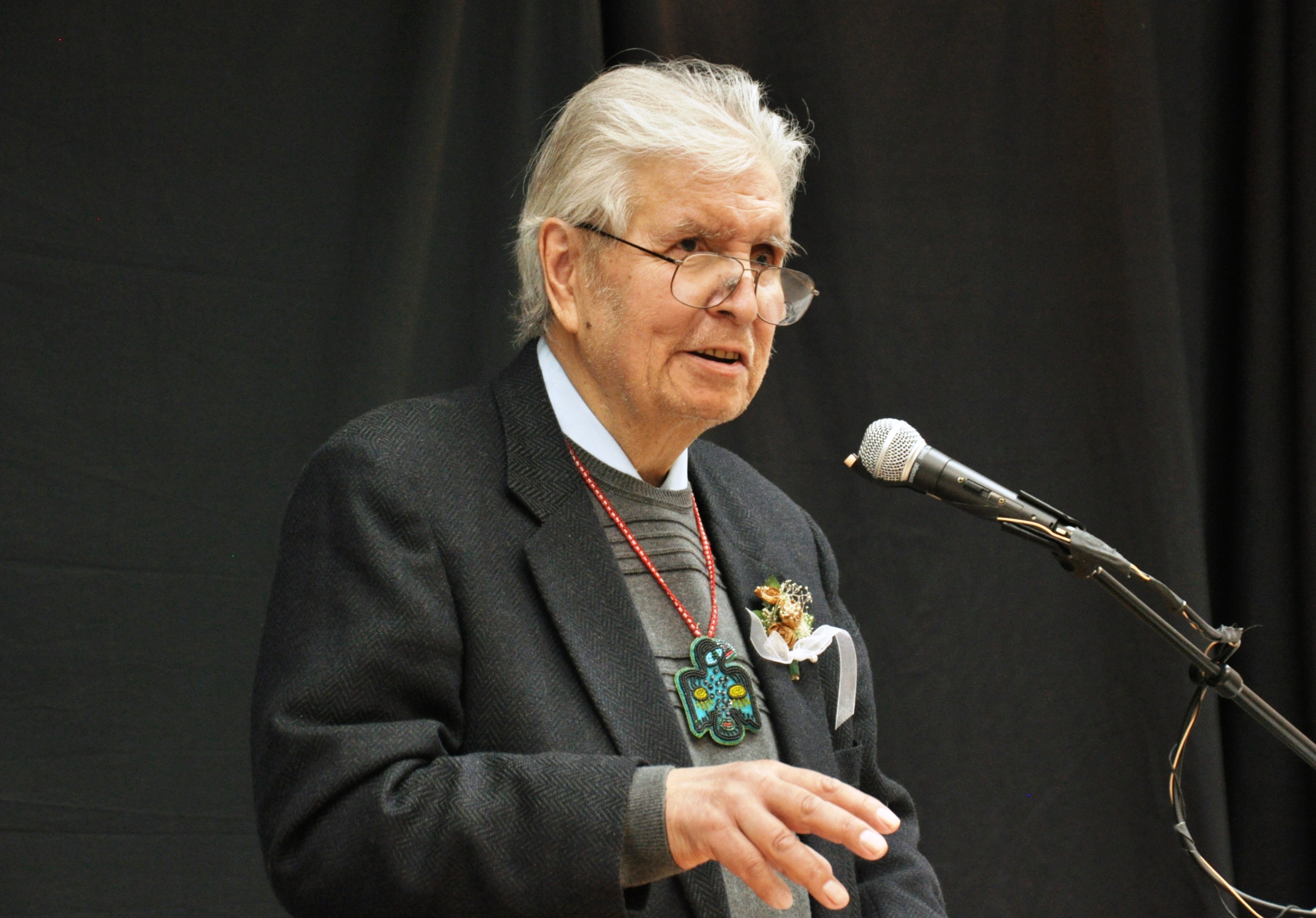
John Borbridge Jr. speaks at a 2011 Native American Heritage Month luncheon. (Photo courtesy Tlingit Haida Central Council)
John Borbridge Jr. speaks at a 2011 Native American Heritage Month luncheon in Juneau. (Photo courtesy Tlingit Haida Central Council)

Tlingit leader John Borbridge Jr. died Tuesday. He was a significant player in the campaign for Alaska Native land rights.

Borbridge was a teacher and coach in Juneau and Sitka before being drafted in 1965 to lobby for aboriginal interests in Washington, D.C.

He went on to head up the Alaska Federation of Natives and the Central Council of Tlingit and Haida Indian Tribes of Alaska.

In a 2011 address, Borbridge stressed that the Alaska Native Claims Settlement Act was about much more than creating corporations.

“It is the story of the people who are members of the tribe beginning to understand the extent and nature of their rights and the rights that they have asserted through their predecessors,” he said.

In the late 1950s, Tlingits and Haidas won partial compensation from the federal government for the land they lost when the Tongass National Forest was created.

Tlingit Haida Central Council President Richard Peterson said Borbridge led the charge to include all tribes in the next Congressional battle.

“During the original talks for the Alaska Native Claims Settlement Act, there was a lot of desire from other regions to leave Southeast out because they felt like we’d already been dealt with. … I know he worked to make sure we were included,” he said.

In his address, at the University of Alaska Fairbanks, Borbridge said he knew tribal members needed more than money.

“We wanted land. That was the dream I had for our people. Land. It is cruel to be living in the midst of beautiful land, land that belonged to the Forest Service, belonged to the state of Alaska or territory of Alaska,” he said.

Once the claims act became law, Borbridge chaired the board of directors of Sealaska, the regional Native corporation for Southeast.

Longtime board member Albert Kookesh said Borbridge was impressive, but calming.

“I talked to people who he coached at Sheldon Jackson and at Juneau-Douglas High School and he never raised his voice.  And that’s what happened at the Sealaska board room, too,” said Kookesh, a former state senator.

“He was very persuasive and such a great speaker. When he presented a proposition to the board, it was thorough, it was thought out and he was very articulate,” he said.

Other Sealaska officials referred to his authentic voice and organizational abilities.

Borbridge was also the first full-time president of the Tlingit Haida Central Council, building programs and hiring staff starting in 1967.

Current President Peterson said he’ll be badly missed.

“As with any of our elders, you lose that piece of history, that resource you can turn to and talk about why we did what we’ve done and why it’s important to what we do today,” he said.

There’s no word yet about services.

Editor’s note: This report was updated with comments from Albert Kookesh and a new photograph.

Sealaska invests in Seattle fish processing plant

Southeast Alaska’s regional Native corporation is back in the seafood business. Juneau-based Sealaska has announced the purchase of a minority share of a Seattle processing plant.

The Sealaska building in Juneau.
Sealaska, headquartered in Juneau, just invested in a Seattle fish-processor. (Photo by Heather Bryant/KTOO)

Independent Packers Corp. is a specialty plant that processes about 50 million pounds of seafood annually.

It’s the first of several investments the corporation plans to announce this year.

Terry Downes, Sealaska’s chief operating officer, said it’s a successful enterprise that’s insulated from some of the industry’s ups and downs.

“The reason we like the business is because it’s in the middle of the supply chain. They touch a lot of different seafood companies. They never actually own the resource itself, so they’re not exposed to commodity price fluctuations. So the earnings are more stable,” he said.

Sealaska bought less than 50 percent of the processing company, but Downes said it will be a partnership. He said a confidentiality agreement prohibits him from releasing the amount invested or exact percent purchased.

He said the purchase is part of a corporate strategy adopted in 2012.

“In the past, Sealaska had owned businesses at arm’s length, like plastics, injection molding and things like that. They didn’t fit geographically and they didn’t fit with respect to the sector and they didn’t feel like a business that really felt like part of Sealaska, in its ownership,” he said.

Sealaska has bought and sold companies for years, looking for new sources of revenue, but not everyone supports that strategy.

Brad Fluetsch, a Juneau financial manager and Sealaska board candidate, said the purchases should stop. He’s not ready to address the latest investment, but he said the stock market is a better bet.

Kavilko, the ANCSA corporation for the community of Kasaan, they have the right model — just be a passive portfolio company. They don’t own any operating business,” he said.

Independent Packers Corp. employs about 180 people.

Downes said its Seattle location puts it near thousands of shareholders in the Pacific Northwest . He hopes some find jobs there, but the investment agreement does not call for shareholder hire.

The next purchase to be announced, Downes said, will be part of Sealaska’s environmental services arm.

“It specializes in monitoring the ocean and it’s based in Alaska. It has global capability, but it does a lot of work in Alaska,” he said.

Sealaska has invested in fisheries before. There was Ocean Beauty Seafoods in the 1980s, but it was sold. More recently, the corporation put money into reopening Kake’s fish-processing plant. It’s also invested in oyster farming.

Sealaska finances improve, but losses continue

Sealaska, Southeast’s regional Native corporation, continues its financial recovery. But its operational side is still losing money and even its investments are in the red.

Sealaska just released its 2015 annual report, which illustrates its financial ups and downs.

Those affect more than 22,000 shareholders, who receive dividends twice a year. It also impacts businesses and communities where shareholders spend their money. That’s mostly in Southeast and Southcentral Alaska, but also the Pacific Northwest.

Sealaska CEO Anthony Mallott discusses the regional Native corporation's finances May 2, 2016, (Photo by Ed Schoenfeld/CoastAlaska News)
Sealaska CEO Anthony Mallott discusses the regional Native corporation’s finances May 2, 2016, (Photo by Ed Schoenfeld/CoastAlaska News)

“We’re not where we want to be, but we are excited and happy that we are showing steady progress,” said Anthony Mallott, president and CEO of Sealaska, which is headquartered in Juneau.

He points to figures showing net income of about $12 million out of total revenues of nearly 10 times that amount. It’s a little less than the previous year, but far, far better than the disastrous year before that.

“Our operations are making money. They’re just not covering the full cost structure of Sealaska,” Mallott said.

Including those costs leaves an overall loss of around $12 million. That amount is also less than the previous year and a far cry from devastating losses the year before that. In 2013, Sealaska’s construction company badly underestimated two federal projects, losing more than $25 million. Problems with other businesses more than doubled that loss.

Like many regional Native corporations, Sealaska’s finances are like a three-legged stool.

One leg is a mix of business earnings and operational costs. Another is investments, which usually boost the overall total, but not last year.

“The investment market was flat-to-down in 2015. And it fell from over $7 million to about a $600,000 loss,” he said.

Then there’s what’s been the corporation’s largest revenue source for years. It’s a shared pool of all regional Native corporations’ resource earnings called 7(i).

That added about $25 million in 2015. Half covered losses and the rest went toward profits – and shareholder dividends.

Sealaska has a variety of businesses but reports their earnings in groups, not as individual enterprises.

Its service group, including contracts with government agencies, brought in close to $4 million — about a 10 percent increase from the previous year.

“There was improvement across the board. Sealaska Environmental Services improved their income. Managed Business Solutions and their data-analytics team improved their income,” Mallott said.

The natural resources group earned about $700,000 in 2015. That’s not much, but it was better than the previous year, when losses were twice that amount.

He says Sealaska’s logging subsidiary, once its largest source of income, should see revenues rise.

It almost shut down a few years ago as the timber supply ran out. But a Congressional lands-claim deal provided more than 70,000 additional acres of the Tongass National Forest.

Mallott says the corporation will still mostly clear-cut trees for overseas sales, but it’s a different operation.

“It’s much smaller. And we’re at the point where we have to save infrastructure, which means to be financially feasible, landowners have to work together and find those efficiencies,” he said.

Other landholders include the Forest Service and the state.

Sealaska’s longterm goal is to expand into seafood, natural foods and other industries closer to home. Corporate projections show that bringing full profitability by the end of the decade.

“We still want our businesses to cover that entire cost structure. Because the reality of having 7(i) and investment income, just income and cash flow on top of what the businesses create, can be very powerful for us,” he said.

The vetting process for acquiring new businesses has been long. But Mallott says announcements will be made soon.

Those will face intensive scrutiny from critics, who say Sealaska has been mismanaged for years.

Site notifications
Update notification options
Subscribe to notifications