Alaska Native Corporations

Central Council seeks revenue to expand programs

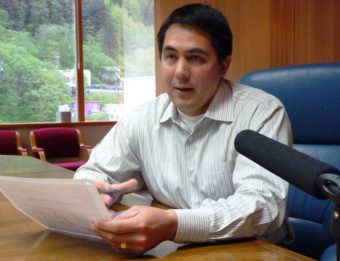
Richard Peterson, Tlingit-Haida Central Council president, addresses the closing banquet during April's 81st tribal assembly in Juneau. (Photo courtesy Tlingit-Haida Central Council)
Richard Peterson, Tlingit-Haida Central Council president, addresses the closing banquet during April’s 81st tribal assembly in Juneau. (Photo courtesy Tlingit-Haida Central Council)

Southeast Alaska’s largest tribal organization wants to expand its service programs. Part of the effort could be funded by profits from a business it’s about to purchase.

The Central Council of Tlingit and Haida Indian Tribes of Alaska lists more than 33,000 members.

President Richard Peterson said some don’t get enough attention.

“We divide ourselves and say, ‘They live in Seattle. Why should we serve them?’ Or ‘They’re living in the village. Why do we care?’ We are Tlingit and Haida people. That’s why we care,” he said.

Programs include financial assistance, child care, occupational training, vocational rehabilitation and case management.

But Peterson said most programs reach only part of Southeast Alaska. He and other Central Council officials want that to change.

“We need to create our own income, our own revenue streams that allow us to do what we want with our funds and serve who we want with our funds, wherever they live.”

That income would come from a business purchased by the council.

Richard Rinehart of the Tlingit Haida Tribal Business Corp. said one was identified, but it didn’t meet the corporation’s goals.

“The board wanted something that was more strategic, something that had more possibilities for growth in the future. And we were able to find one that is national in scale, they have a national presence, and that we believe we can grow, double (or) triple the size in a relatively short period of time,” Rinehart said.

He said that growth would come because a Native-owned, small business gets a preference when bidding for federal contracts. Many Alaska Native corporations use what’s called the 8(a) program to raise revenue.

Rinehart wouldn’t identify the business because of a non-disclosure agreement with the seller. He said an announcement could come this month.

Central Council President Peterson said goals include improved services to veterans and turning its vocational training program into a tribal college.

He also said it’s time to expand Tlingit language programs to include Haida and Sm’álgyax, the Tsimshian language.

“We have to hold each other up. We can’t say this language versus that language. We have to have equality there,” he said.

The Tlingit-Haida Central Council gained authority in March over foster care and some other state services for Native children in the region.

Peterson told tribal assembly delegates that’s an important step toward sovereignty.

“Our families are hurting. They’re broken. The power isn’t in the state to restore our families. It’s within us. And we need them to get out of our way to do so,” he said

The new authority will help the council place Native children in Native foster homes. A separate court decision told the state to recognize child support orders issued by tribal courts.

Former Central Council leader receives honorary doctorate

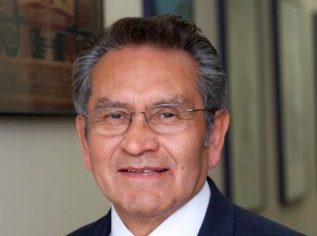
Ed Thomas received an honorary doctorate of laws Sunday. (Photo courtesy of Sealaska)

Tribal leader Ed Thomas received an Honorary Doctorate of Laws from the University of Alaska Southeast on Sunday. Thomas is a director at Sealaska and former president of Central Council of Tlingit and Haida Indian Tribes of Alaska.
He accepted the honorary degree at UAS’s graduation and gave the commencement address.

Regional Native corporation campaigns to reduce quorum requirement before descendants enroll

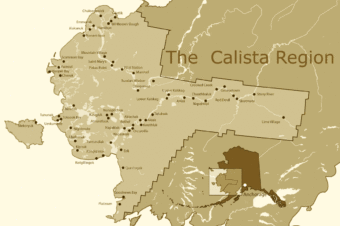
Calista Corporation is campaigning to reduce quorum requirements at its annual shareholder meetings to prevent invalidating future meeting votes and wasting corporation money when a quorum isn’t met.
Current quorum stands at an over 50 percent majority. Calista wants to reduce that to a one-third or about 33 percent requirement, and the corporation wants it to happen before descendants enroll as shareholders next year.

The corporation has one shot to make the change before the pending influx— the annual shareholders’ meeting in July. To rally support, a Calista committee is visiting communities across the Yukon-Kuskokwim Delta to outline their campaign before the gathering.

Thom Leonard, Calista Communications Manager, says quorum for annual shareholder meetings average 50.07 percent, barely over the needed 50 percent majority. Leonard says the corporation fears that average could plummet with descendants enrolling next year, a change passed at the 2015 meeting and a move expected to triple shareholder numbers from about 13,000 to around 40,000.

The corporation expects this surge of younger voters will reduce the likelihood of reaching quorum in the future based on voting trends among young Alaskan voters. According to the Division of Elections, in 2014 less than 41 percent of 18 to 34-year-old registered voters cast ballots in the Alaska general election.

Leonard says lower voter turnout would mean wasted time and money for Calista and its shareholders. An unmet quorum invalidates votes and forces Calista to spend about $100,000 to reschedule its annual event. The corporation hopes reducing its quorum requirement will buffer these potential losses.

So far over 30 percent or 14 of the corporation’s 41 annual meetings have failed to meet quorum. Only one of those meeting, in 1998, did Calista reschedule.

Leonard says the one-third quorum requirement aligns with quorum standards in the majority of its tribes across the Yukon-Kuskokwim Delta where 33 of the 56 tribes have an average quorum requirement of 31 percent.

A Calista shareholder relations committee will meet with shareholders in Bethel on April 25 at 6 p.m. at the Cultural Center to discuss their quorum campaign and provide corporation updates.

Update: Sealaska sends $16 million to shareholders

(Graphic courtesy Sealaska.com)

Alaska’s largest regional Native corporation will distribute around $16 million to its shareholders later this month.

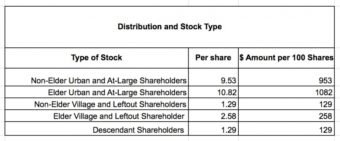
Sealaska Corp.’s approximately 22,000 tribal members will each get between $129 and $1,082, depending on their status. Shareholders are mostly Tlingits, Haidas and Tsimshians from or with relatives from Southeast Alaska.

CEO Anthony Mallott said the distribution has remained somewhat steady for a few years. But it’s depressed because of one year of large construction business losses.

“I know we’ve made statements to the shareholders that because of 2013 and the negative results that occurred then, because of the five-year averaging within our operations distributions, that that particular dividend source would stay low,” he said.

The Juneau-headquartered corporation will detail 2015’s profits and losses in an annual report to be released later this spring.

The majority of Sealaska shareholders, who are also members of urban Native corporations, will get dividends of $953. Members of village Native corporations and descendants of original shareholders will receive just $129. Elders receive an additional $129.

The difference is the distribution of a pool of resource earnings from other regional Native corporations.

About half is from oil earnings by the Arctic Slope Regional Corp. The other half is from zinc-mining profits by the NANA regional corporation.

CEO Mallott said both will drop in the future.

“We are actively preparing and have been letting our shareholders know with the decline in oil, we expect less from ASRC and there has been a decline in zinc prices as well,” he said.

All figures are rounded off and based on ownership of 100 shares.

The shareholders’ distribution was announced Friday during a meeting of Sealaska’s board of directors.

This report has been updated with quotes from Sealaska CEO Anthony Mallott.

Mariculture initiative could boost shellfish farms

Brenda Bryan, left, and Jackie Whitmore clean shellfish at the Moss Island Oyster Farm in Peterson Bay across from Homer. (Photo by Ron Bader/Moss Island Oyster Farm)
Brenda Bryan, left, and Jackie Whitmore clean shellfish at the Moss Island Oyster Farm in Peterson Bay, across from Homer. (Photo by Ron Bader/Moss Island Oyster Farm)

Alaska shellfish farmers hope a new state mariculture initiative will help boost their businesses. But they warn it’s not an easy industry to expand.

The state began allowing Alaskans to farm shellfish almost 30 years ago.

The resulting farms raise scallops, mussels and several species of clams. In recent years, oysters have gotten more attention.

The state lists about 50 shellfish farmers though not all are active. Most are in southern Southeast Alaska or Kachemak Bay, near Homer.

“I think the market in Alaska has not been fully saturated. So I think there’s plenty of room here,” said Margo Reveil, president of the Jakolof Bay Oyster Co. as well as the Alaska Shellfish Growers Association.

She said a lot of sales are within the state. But growers are looking farther away.

“I think that some farmers are similar to salmon fishermen, finding that direct sales and online sales can bring a premium that makes your farm viable,” she said.

The Walker-Mallott administration sees growth potential too.

Randy Porter checks young oysters, called "spat," at the oyster nursery in Naukati in 2007. (Photo by Ed Schoenfeld/CoastAlaska News)
Randy Porter checks young oysters, called “spat,” at the oyster nursery in Naukati in 2007. (Photo by Ed Schoenfeld/CoastAlaska News)

The governor signed an administrative order in February setting up the Alaska Mariculture Task Force. It’s charged with making recommendations for a long-term plan to advance the state’s mariculture – or ocean farming – industry. It, by the way, does not include fish.

Barbara Blake, special assistant to the lieutenant governor, said the task force will play an important role in industry growth. She notes other shellfish-farming states have that in common.

“No state has been successful without first coming to the governor’s office and having the governor lead an initiative that would bring all those resources together, pull all of those who are interested or who are already developing in that world to one table to help develop a framework that would be statewide, individual or even region-wide,” she said.

The idea came from Julie Decker, executive director of the Alaska Fisheries Development Foundation.

She said the panel will learn from experienced farmers and outside industry experts.

“And we think that we can apply mariculture in Alaska in a way that Alaskans want it to be applied and do something that’s really positive that’s good for our communities, the environment and the economy as well,” she said.

Not that there aren’t significant barriers to the business.

Oyster farmer Reveil starts with Alaska’s water temperature.

“It takes three to seven years depending on your location and what size oyster to grow to size, so there’s a long lag time between changes and what farmers see out in the water and actually in their businesses,” she said.

Another barrier is the availability of brood stock. Competition and environmental conditions have led to shortages of shellfish larvae.

Oyster seed can be purchased from out of state. Decker said that’s not the case for other farmed species.

“If you want to grow geoducks, if you want to grow king crab, if you want to grow rock scallops (or) sea cucumbers, production of that seed must occur inside the state,” she said.

In-state supplies have improved, but more may be needed to support industry growth.

Then there’s the problem of finding people in the right situation and with resources to do the job.

A family samples offerings at 2012's OysterFest. The shellfish came from a Haa Aani-supported oyster farm. (Photo by Ed Schoenfeld/CoastAlaska News)
A family samples offerings at 2012’s OysterFest. The shellfish came from a Haa Aani-supported oyster farm. (Photo by Ed Schoenfeld/CoastAlaska News)

The Sealaska regional Native corporation’s Haa Aaní division has a mariculture program that helped start oyster farms in several Southeast locations.

But the division’s Shawn Blumenshine said it’s difficult to find people who can keep them going.

“The farmers we’ve been working with over the past number of years have, for different reasons, decided to quit farming more or less,” she said.

Haa Aaní provided loans and expertise. But Blumenshine said the farmers had a hard time making ends meet while they waited for their crop.

“There’s a lot of cash investment up front and it takes a while before it starts paying off. And it makes it tougher for the farmers who have families and responsibilities to … survive in that interim while they’re cultivating the oyster and getting it ready for market,” she said.

Decker said there’s a new crop that could help build the industry. It’s seaweed and kelp, which are in demand for food and beauty products.

“It’s a very short turnover, six to nine months. So you have more of a cash flow involved for farmers, instead of waiting three, four to 10 years or so for a crop, depending on the species,” she said.

Farmer Reveil said it’s worth trying.

“We, actually, on our farm are experimenting with it right now. I think there’s some potential there. There’s a lot to be worked out on the processing side and the shipping side,” she said.

The new Mariculture Task Force will involve shellfish farmers, industry associations, the university and state officials. The cost of its work will come out of existing agency budgets, so it will require no new appropriations.

Officials are in the process of choosing its 11 members. Their recommendations are due within about two years.

Shareholder seeks term limits for Sealaska directors

A longtime critic of Sealaska management is campaigning to limit the terms of the regional Native corporation’s board of directors. Previous efforts have failed.

Sealaska shareholder Michael Lee Beasley is author of the term- limits resolution. (Photo courtesy Michael lee Beasley)
Sealaska shareholder Michael Lee Beasley is author of the term- limits resolution. (Photo courtesy Michael Lee Beasley)

Sealaska allows its 13 board members to serve as long as they can win re-election. While some directors are relatively new, others have been on the corporation’s governing body for anywhere between 25 and 40 years.

Shareholder Michael Lee Beasley, also known as Mick, wants to change that. He’s filed a resolution limiting directors to just three complete three-year terms.

“If we want to restructure ourselves, we have to start with our election system,” Beasley said.

Beasley has done this before and lost. His last attempt, in 2012, tried to limit directors to four terms. And in 2009, he tried for just two terms.

The Juneau artist said incumbents have too much advantage, creating a largely self-perpetuating board.

“We need a fair and balanced election system, and that will usher in different directors, different ideas, different opportunities and it will be more inclusive,” Beasley said.

The term-limits resolution will be on Sealaska’s proxy ballot, which will be issued to shareholders this spring. Results will be released at the annual shareholders meeting June 25 in Ketchikan.

Jaeleen Araujo, who serves as corporate secretary, vice president and general counsel for the corporation, said the measure meets Sealaska’s basic requirements.

Sealaska Plaza, headquarters of the Southeast regional Native corporation, in Juneau. (Photo by Ed Schoenfeld/CoastAlaska News)

“Simply stated, he submitted a resolution that meets the qualifications because it’s not unlawful, it’s appropriate to come before the shareholders and he secured the signature of 1 percent of our voting shares in the corporation,” she said.

She said the board will not take a position on the resolution until its next regular meeting in early April. The board opposed the previous two attempts.

During the 2012 election, then-Corporate Secretary Nicole Hallingstad said such a measure would force many directors to leave.

“This is a really significant loss of institutional experience and knowledge. That actually damages the credibility and stability of the corporation,” she said.

The board makeup and leadership have changed somewhat since then.

Four board seats will also be on the 2016 ballot. Most years, a board slate of incumbents wins or takes the majority of open seats.

Beasley said he’ll file to run for the board, as he has done before. He said his candidacy will include promoting his term-limits measure.

“The idea here is you’re like a little mouse fighting against an elephant. But you’ve got to keep your squeak going, or there’s never going to be any change,” he said.

Sealaska officials maintain that the elections are fair and that the reason earlier term-limits measures have failed is that shareholders don’t want the change.

They’ve said the same about separate Beasley resolutions to change or eliminate discretionary voting, where shareholders turn their ballots over to the board.

The regional Native corporation for Southeast has close to 22,000 shareholders. About half live in Alaska, while about a third live in Washington, Oregon or California, according to the corporate newsletter.


Site notifications
Update notification options
Subscribe to notifications