Housing

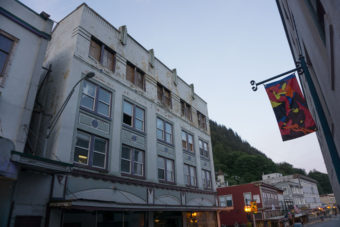
Historic Bergmann Hotel gets new manager, goals

JUNEAU — The new manager of the historic Bergmann Hotel in Juneau is working to clean up the tenement building.

The Juneau Empire reports that when Charles Cotten Jr. took over managing the 46-room building four months ago, he says it was almost at capacity, with many of the people living there as squatters. He says now the building has 20 residents who are all paying rent.

The Bergmann Hotel, owned by James Barrett, opened in 1913. The building is listed on the National Register of Historic Places.

The hotel has a reputation for housing addicts.

Cotten said he is OK with having rough tenants in the building, he just hopes he can help them. He runs an addiction program in hopes of helping some of the hotel’s residents overcome their demons.

Deadly Oakland fire may spur crackdown on off-the-grid artists’ spaces

Smoke hung in the air for days in Oakland’s largely Latino Fruitvale district after a deadly fire broke out late Friday night in an artists’ warehouse, leaving 36 people dead.

Like so much of the city, it’s a neighborhood facing ripples of gentrification created by the tech boom in the Bay Area, which now has some of the highest rents in the country.

Carmen Brito lived in the now destroyed warehouse known as the Ghost Ship. She barely got out with her life.

“You can go three blocks, and you can see rows of tents of people who are homeless, and nobody wants to talk about that. Nobody wants to talk about the people who’ve been forced further and further out,” Brito says. “San Francisco can’t house artists anymore, because it’s so expensive. And they’re asking us, why did you live this way? What other choice did we have?”

But the story of artists’ warehouses in Oakland is more complicated, according to Adam Hatch. He’s run off-the-grid spaces like the Ghost Ship for years.

“The housing crisis did not kill these people,” he says. “A lack of responsibility and oversight killed these people.”

And Hatch says artists, queer and trans people, those on the margins, gravitate toward these outsider housing situations by choice.

“We were in those spaces in the late ’90s and the 2000s,” he says.

Even though the spaces may not be legal, Hatch says they don’t have to be dangerous. He says it’s a beautiful, creative world — part of what makes Oakland special.

But already, city officials like Councilman Noel Gallo — in whose district the Ghost Ship was located — are talking about cracking down.

“We recognize that we should have been more assertive in the past. We’ve talked about it,” he says. “But now we’ll expedite that action.”

The city says it wants to be friendly to artists, but also to prevent dangerous living conditions. That sentiment has left residents of these live/work spaces in Oakland united not just in grief, but also in anxiety and fear about being displaced.

That includes people like Darren, who lives in a cavernous warehouse not far from the Ghost Ship. He asked that we not use his last name because he’s living there illegally, and fears being evicted.

“And they’re going to twist what you say into something that’s gonna make it more difficult for us to stay in these spaces. … It could lead to a crackdown on these spaces,” he says.

The victims of the Ghost Ship fire have been made into scapegoats, Darren says, as if in living in a warehouse made them complicit in their own deaths. Darren has lived here for 20 years. And in that time, there have been two fires. No one was hurt, and they didn’t spread.

“Somebody had candles, and there was a candelabra, and they fell asleep and they probably had tapestries and things like that on the wall — which you’ll notice there’s none of that kind of stuff here,” he says.

There’s also a new sprinkler system, industrial-size pipes — better than those in an average apartment building — in every corner, even in the tiny bathroom off Darren’s bedroom.

“So every single space, they managed to get a sprinkler into the space. Which is quite impressive,” Darren says.

And these safety measures caused rent to rise — but only slightly. Darren says that shows these spaces can be made safe from fire. But for residents here, after the Ghost Ship, they don’t feel safe from being kicked out.

Copyright 2016 KQED Public Media. To see more, visit KQED Public Media.

Alaska prepares public housing smoking ban

A new federal rule will ban smoking in public housing nationwide. The notice was released Wednesday by the Department of Housing and Urban Development and will take effect in 18 months. But Alaska is looking to do that a lot sooner.

Cathy Stone is the Director of the Alaska Housing Finance Corporation, which runs public housing throughout the state.

“(In) April or May, when it’s a little warmer and people can adjust to the requirement that they have to go outside to smoke,” Stone said.

The federal ban applies to lit tobacco products like cigarettes, pipes and cigars. It doesn’t apply to electronic cigarettes, but the state is leaning towards eliminating those as well. Smoking marijuana in public housing is a federal offense regardless of state law.

Stone said that the reason Alaska’s ban would come early is because the state’s public housing has already been developing its own non-smoking policy.

“So it was just very ironic,” Stone said, “That this announcement came out on the same day we were having a board meeting and advising our board that in January we would come out with our own policy.”

Here’s how the state’s draft policy works: residents receive mailed notice of the change and are allowed to submit comments. Next, residents sign a lease agreement regarding the new rule, and if residents are caught smoking they receive several warnings before an eviction process begins. Stone said the intent is not to kick people out, but to encourage compliance. And residents are on board.

“It’s actually been requested by multiple residents,” Stone said. “We’ve done two surveys of residents, and the majority did not want to have smoking in units. The majority of the smokers even said they thought we shouldn’t allow smoking in the units.”

Bethel has 117 single-family public housing units. Over 500 people live in the units and over half are children. Stone says that the ban would prevent staff and non-smokers from being exposed to secondhand smoke within the housing and would save the department money.

“It’s very expensive to turn a unit once someone’s been smoking in it. Sometimes you have to replace the carpet. You have to paint the wall multiple times,” Stone said.

All that work can cost an extra 30 percent to 50 percent and tack an extra two to three days onto the time required to flip a non-smoker’s unit.

Once the transition begins, Alaska’s public housing wants to offer resources like hotlines and classes to help people quit smoking for when the ban takes effect. Those resources would vary by area and interest.

Juneau Assembly derails affordable housing plan

West Juneau's Island Hills under construction in January 2013. (Photo courtesy Wayne Coogan)
West Juneau’s Island Hills under construction in January 2013. (Photo courtesy Wayne Coogan)

Hyperbole, false assertions and attacks on city staff peppered debate Monday over a plan intended to “unstick” Juneau’s housing market.

In a 5-4 vote, the Juneau Assembly appears to have thrown Step One of that affordable housing plan out the window.

Back in 2014, the Juneau Assembly set aside $75,000 to hire consultants to write up a plan to provide a stable supply of affordable housing. Meetings were held, the market was studied, consultants consulted, and eventually they produced a 68-page housing action plan.

The very first recommendation in that document is to “Formally adopt this plan into Juneau’s comprehensive plan.”

The comprehensive plan is a long-term city planning guide. Say the owner of a property zoned for housing wants an exception to build a bar or a daycare or a pig farm. The city officials who make formal recommendations or decide whether to grant the exception are supposed to refer to the comprehensive plan to see how the request fits into the big picture. It’s one of many considerations they’re supposed to weigh.

Elections shook up the assembly. City staff drafted an ordinance to fold the housing action plan into the comprehensive plan. More meetings were held, public notices were posted, a public hearing was set, and the final step to adopt the affordable housing plan was teed up for assembly approval at its last meeting.

Assembly member Mary Becker made the motion that derailed the plan.

Mary Becker sits in the office of the mayor at Juneau's City Hall on Dec. 3, 2015. (Photo by Lisa Phu/KTOO)
Mary Becker

“I move that we accept the housing action plan by resolution,” Becker said.

That resolution wasn’t on the agenda and had yet to be drafted. Becker clarified, she explicitly wanted to exclude the housing action plan from the city’s comprehensive plan.

Assembly member Debbie White was with Becker. She cited an Oct. 26 memo from a city planner and Juneau’s chief housing officer.

Debbie White
Debbie White

“That basically says if the housing plan is simply adopted by resolution, then it’s a plan that’s aspirational, provides guidance for decision-making. It just becomes a set of guidelines to keep in mind for future actions. If it is adopted and added to the comprehensive plan, it becomes the rule,” White said.

White was echoing the memo closely, but put her own interpretation on that last bit. The memo actually says if the housing action plan is adopted into the comprehensive plan, the main difference is “the review of land use actions for consistency with the comprehensive plan.”

Assembly member Jesse Kiehl tried to straighten things out.

Jesse Kiehl, aide to Sen. Dennis Egan, interacts with a visitor to the senator's office, Feb, 10, 2014. (Photo by Skip Gray/Gavel Alaska)
Jesse Kiehl

“It’s important that we remember the comprehensive plan itself is aspirational, says so,” Kiehl said.

Mary Becker interjected: “It is not and it does not.”

“Well, then I’m happy to pull it up,” Kiehl said.

Kiehl didn’t pull it up for Becker while the mics were hot. But the city codes confirm Kiehl:

“No rights created. The goals and policies set forth in the comprehensive plan are aspirational in nature, and are not intended to commit the City and Borough to a particular action, schedule, or methodology. Neither the comprehensive plan nor the technical appendix adopted under this section nor the amendment of either creates any right in any person to a zone change nor to any permit or other authority to make a particular use of land; neither do they constitute a regulation of land nor a reservation or dedication of privately owned land for public purpose.”

Then, White, a Realtor who owns Southeast Alaska Real Estate, said she opposed the entire housing action plan and said it would make development harder.

“Frankly, a lot of times, our city departments don’t even really appear to be open for business, because they’re looking for ways to deny,” White said.

After that claim, she bristled in an allusion to one of the non-binding housing plan recommendations.

“I don’t know where we get these harebrained ideas to make things as difficult as we possibly can on property developers. But, let the free market do its thing. Don’t force people to build a certain percentage of their project as being subsidized housing. Don’t – I mean, there’s just so many other things we could be doing,” she said.

White’s subsidized housing comment is a misrepresentation of what’s known as inclusionary zoning.

The concept is to give developers an incentive – the right to build more homes on a given property than the zoning otherwise allows – on the condition that the developer sells a percentage of the new homes at an affordable price. It’s been implemented elsewhere as a mandatory or voluntary program.

Assembly member Maria Gladziszewski, a former planning commissioner, rebutted White.

Maria Gladzisewski, July 30, 2015. (Photo by Jeremy Hsieh/KTOO)
Maria Gladziszewski

“The point is to give the planning commission and the planners tools, and more incentive to, in fact, approve these projects, because the comprehensive plan acknowledges that we want to do everything we can, to, as the consultants said, unstick our housing market,” Gladziszewski said. “So it is in fact, designed to do the opposite of making things harder.”

The assembly had a similar debate at the committee level on Halloween. This week’s lasted about 35 minutes before ending in the 5-4 vote.

Assembly members Jesse Kiehl, Maria Gladziszewski, Loren Jones and Norton Gregory voted against the resolution, with the understanding that if it failed, then the next vote would be for more formal comprehensive plan ordinance originally scheduled.

Mayor Ken Koelsch and assembly members Jerry Nankervis, Mary Becker, Debbie White and Beth Weldon voted for the squishier resolution.

The city attorney said she’d draft the resolution for the assembly’s next meeting.

Correction: An earlier version of this story misspelled Maria Gladziszewski’s last name.

Juneau’s Housing First project takes shape

The Housing First facility under construction. (Photo by David Purdy/KTOO)

Juneau is getting a new kind of apartment building. The Housing First Project in Lemon Creek is built to provide safe, affordable housing to the city’s most vulnerable homeless individuals.

The outside of the building looks mostly finished, but inside the apartments are still bare plywood and studs. Each of the 32 efficiency apartments is small – about as big as a row of three parking spaces. Each one will have its own private bathroom and a small kitchen area.

Workers broke ground for the facility in May, but the concept has been in progress for over four years.  Almost a dozen organizations and agencies have been involved. The Glory Hole, Juneau’s downtown homeless shelter, is managing the project. Mariya Lovishchuk is the executive director of the Glory Hole.

“I am just so excited to be standing in this building right now and, like, actually have a floor and walls and windows and not just, like, an idea in my head,” said Lovishchuk. “That’s really, really awesome. And also I can’t wait — like, I can’t wait to see people in here.”

Lovishchuk said the future residents will be the most at-risk chronically homeless individuals in Juneau, as measured by a vulnerability survey. Lovishchuk said this building will be a place for people to live who have had trouble with other housing programs.

“They end up getting evicted because there are rules about drinking,” she said, “And people are not able to follow those rules and so they get evicted because of that, or people have to participate in treatment and people fail out of that housing because treatment has not worked for them even though they’ve tried, like many of our clients have been to treatment programs, you know 20 times in their lives with no success.”

The Housing First approach does not require treatment or sobriety as a condition of housing. Services and treatment for residents will be available in the building, and will include medical exam rooms and a space for mental health counseling.

Supporters of housing first say that having a stable place to live makes it easier to address the underlying causes of homelessness.

The transition to housing can be rocky for people who have been homeless for a long time. The Housing First facility in Anchorage, Karluk Manor, has found it challenging to track down people on the waiting list and help them adjust to the housing facility. They have placed restrictions on visitors and certain types of alcohol.

The Juneau Housing First Project still needs about a million dollars, which it plans to raise with capital grants and local support through the Juneau Community Foundation.

Lovishchuk expects that facility will be completed in May and the first residents will be able to move in by early summer.

With Little Housing Growth, Native American Families Live In Close Quarters

Thanks to improved health care, the Native American populations around the country are growing. But the number of homes hasn’t kept up. That’s especially true of the Northern Arapaho on Wyoming’s Wind River Indian Reservation.

Northern Arapaho elder Kenneth Shakespeare raised seven children in a house with views of mountains and hayfields surrounding it. But now he has dementia and it’s his kids turn to take care of him in the same four-bedroom, two-bath house they grew up in.

Shakespeare’s daughter, Lynell, walks through the house, pointing out her father’s room. The elder’s tidy room has a large window and a cot set up to one side.

“My sister, they will stay every now and then and that’s where they sleep with their grandkids,” she says, pointing at the cot.

Three of Lynell’s adult children also live in the house with their families. To be clear, at any given time, between 10 and 13 people live with Kenneth Shakespeare.

“I sleep in with my mom and dad where, um, they’re in that room with the bunk bed and stuff,” Taya Dixey, Lynell’s 8-year-old granddaughter says.

Lynell says it would be nice if Taya’s family could move into a trailer now sitting on the property, but says that means paying $6,000 to install electricity, which is money they don’t have. One of Lynell’s daughters is on the waiting list for low-cost tribal housing, but has been waiting for two years. Lynell says, anyways, the family prefers to live together and take care of their elder.

“We don’t want to go to housing,” she says. “We can stack up here.”

Patrick Goggles, who serves as Northern Arapaho Tribal Housing director, says Lynell and her family’s preference to stay together is not uncommon.

“We find that a cultural value that enhances our family life,” Goggles says.

He says a high birthrate has led to a population explosion and that traditional lifestyle is now strained. The tribe has grown to 11,000 people, but if they want to stay with family on the reservation, they have to cram into one of only 230 homes.

“In the business I’m in you never have all the funds or resources you need,” Goggles says.

Goggles says 600 more homes need to be built, but he has to use the funds he has to keep the limited housing livable.

Heidi Frechette works for the Department of Housing and Urban Development’s Native American Program. She says Congress hasn’t made sure funding has kept up with inflation over the years, or with the growing tribes.

“We’re finding that folks are using more and more of their funds to rehab or repair existing homes and have less buying power and ability to construct new homes,” Frechette says.

More than 55 percent of the Northern Arapaho tribe can now be categorized as homeless because they’re couch surfing. Tribal administrator Vonda Wells says that kind of overcrowding hurts families.

“People get stressed and…things happen…violence happens,” Wells says.

And she says with more domestic violence comes chronic illness such as diabetes, heart disease, and depression. These living environments are especially hard on the kids. Wells says there is one boy she knows who sleeps on a bench every night.

“Your body is sore,” Wells says. “And then sending this child to school. And then, him trying to learn, trying to think about what his teacher’s telling him and he’s exhausted.”

With these problems in mind, tribal leaders have been brainstorming ways to eliminate overcrowding without giving up on multigenerational living and possibly building homes to accommodate extended families with lots of bedrooms and bathrooms, and big living rooms for hosting ceremonies. For the Shakespeare family, a roomy kitchen would be great.

“Oh, is this the elk meat, Jojo?” Lynell asks.

The family has gathered to cut and dry an elk brought in from a recent hunting trip. They say, until more homes are built, they’ll keep living in a traditional lifestyle, even if it is crowded.

Copyright 2016 Wyoming Public Radio Network. To see more, visit Wyoming Public Radio Network.
Site notifications
Update notification options
Subscribe to notifications