Timber

State gives timber industry group $1.3M in federal money to work with US Forest Service

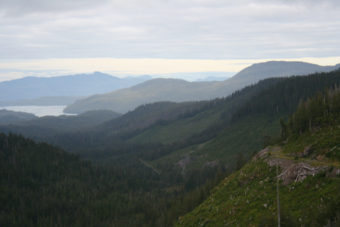
Clearcuts and old-growth forests are part of the view of Indian Valley on Prince of Wales Island.
Clearcuts and old-growth forests are part of the view of Indian Valley on Prince of Wales Island. (Creative Commons photo by Nick Bonzey)

An environmental group doesn’t think it’s fair that federal money was given to a timber industry group to assess trees that could be suitable for helicopter logging in the Tongass National Forest.

Documents obtained by Earthjustice show a contract between the state Division of Forestry and the Alaska Forest Association worth up to $1.3 million, or $260,000 a year, for a span of five years.

Olivia Glasscock, an associate attorney with Earthjustice, said it’s like paying an industry group to pick the trees it wants to harvest.

“I think it really just highlights the imbalance in how the public is getting to participate in these planning and management processes and how the industry is getting to participate in it,” she said.

But Chris Maisch, the director of the Alaska Division of Forestry, said that’s not the case. He helped oversee the contract. The Forest Service first granted the money to the state. He said both the Forest Service and the state are trying to gain more experience in selecting marketable trees.

Recently, Southeast Alaska’s only helicopter logging contractor stopped doing business. Maisch would like to see another company come online. And he said there needs to be a new generation of foresters who know how to facilitate that work; it makes sense the Alaska Forest Association, or AFA, would be helping with that.

The group has been around a long time.

“I wouldn’t agree that it’s AFA picking the trees,” Maisch said. “It’s actually a training process to identify the criteria to make the tree economic, and then it can be safely flown out.”

In an emailed statement, the Forest Service said, “The partnership implements the training and information exchange through training cadres made up of agency, industry, and other partners having the appropriate expertise.”

The location of some of this training has been hotly debated because it’s happening on land slated for a controversial timber sale.

Prince of Wales Island could be the location of the largest federal timber sale in Alaska in more than a decade. But the plans are being litigated in federal District Court.

The plaintiffs, including Earthjustice, say the Forest Service hasn’t provided a detailed map of the areas that could be logged, which makes it impossible for the public to weigh in on the environmental impact.

Earthjustice says it would like the Forest Service to end this grant “immediately.”

This story has been updated.


Dunleavy introduces 4 bills linked to ‘open for business’ theme

Gov. Mike Dunleavy speaks to reporters at a news conference on Jan. 10. On Wednesday, Dunleavy’s administration introduced four business-focused bills. (Photo by Nat Herz/Alaska Public Media)

Gov. Mike Dunleavy introduced four business-related bills on Wednesday. His administration linked the bills to the governor’s slogan that “Alaska is open for business.”

Senate Bill 156 would lower the unemployment insurance rate paid by employers. The state said the bill would preserve the health of the Alaska Unemployment Trust Fund, ensuring works are able to receive benefits.

Senate Bill 157 would make a series of changes to professional licensing.

Sara Chambers, director of the state division that oversees licensing, emphasized a change that would make temporary licensing more uniform across 43 regulated professions in the state.

“This is a unified, streamlined approach to allow temporary licensing for any profession,” Chamber said, referring to fields regulated by the Division of Corporations, Business and Professional Licensing.

Senate Bill 160 would consolidate state laws regulating timber sales and forest land use. The administration says the changes would “jump start” the industry’s recovery.

And Senate Bill 161 would change regulations on developing geothermal resources. Among other changes, the bill would double the number of acres companies could lease.

The governor said in a statement that the bills “are a step in the right direction” to lessen burdens on employers and encourage opportunities for skilled workers.

The bills were introduced in the Senate. The administration expects House versions later this week.

Activists take to social media as comment period for Roadless Rule draws to a close

The final deadline for public comments on a proposal to exempt the Tongass National Forest from the Roadless Rule is Tuesday, Dec. 17.

As the deadline loomed, environmental groups increasingly tried to get the word out to encourage people to weigh-in.

Those conversations have taken place in physical spaces and also — increasingly — online.

Mary Catharine Martin works for Salmon State, an environmental advocacy group that works to protect waterways for salmon.

She pulls up Salmon State’s Instagram feed to show some of their recent efforts. She says the videos the group created with its partners about the Tongass has had a big reach.


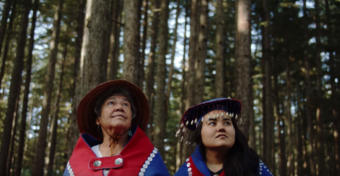
In a video called Breathe, a Tlingit woman and a Yup’ik woman dressed in regalia talk about the cultural and environmental significance of the nation’s largest national forest. Salmon and eagles make an appearance.

Then the pacing of the video speeds up as chainsaws and falling trees blink on the screen.

Martin estimates the video has been viewed on Instagram by more than 32,000 people, and her group is still adding up the numbers.

She says the goal isn’t just to get people to watch and share the content.

“The main purpose of all of this, besides informing people about what’s going on and the different ways the Tongass is valuable as an intact Forest, is get people to comment,” Martin said.

In February, the U.S. Forest Service documented over 140,000 comments on a draft version of changes to the Roadless Rule in the Tongass.

Most of the comments suggested keeping the rule in place. But in November, Dept. of Agriculture Secretary Sonny Perdue announced that — despite all those comments — the agency would recommend the Tongass be completely exempted from the Roadless Rule.

During this final comment period that started in October, 220,000 people had weighed in, according to the U.S. Forest Service.

Over the weekend, Audubon Alaska helped host a webinar to guide people through the process of crafting their comments. The instructors for the video appear to be in their homes. They include activists and a tribal government leader.

One hundred and fifty people watched on Facebook live. Another 150 people have streamed it again since then.

Natalie Dawson, Audubon Alaska’s Executive Director, says environmental groups have been making a special effort this go-round to bolster the numbers.

“I mean there’s definitely been a bigger social media push for this … then there has for other issues on the Tongass,” Dawson said. “100 percent hands down.”

Dawson says people have asked her if official public comments really matter. After all, the last comment period didn’t sway a top federal official from seeking a full rollback of the Roadless Rule in the Tongass.

But Dawson thinks it does carry weight.

“If the agency chooses to ignore the public and the public has made substantive comments then that’s grounds to pursue litigation and lawsuits,” Dawson said.

At a church in Juneau, the Southeast Alaska Conservation Council took a different approach.

In addition to the group’s social media outreach, Executive Director Meredith Trainor says they wanted to invite people to draft comments, on the eve of the deadline, over bowls of salmon chowder.

“It’s also important to feel together to feel a part of something bigger and see each other and make eye contact,” Trainor said.

The U.S. Forest is taking public comments on the Roadless Rule decision until midnight Dec. 17, 2019 Alaska time.

The agency is expected to make its final decision on how the Roadless Rule applies to the Tongass in 2020.

Dunleavy defends the use of a federal grant used for Roadless Rule decision

The Ketchikan headquarters of Alcan Forest Products and Alaska Forest Association. (Photo by Elizabeth Jenkins/Alaska's Energy Desk)
The Ketchikan headquarters of the Alaska Forest Association. (Photo by Elizabeth Jenkins/Alaska’s Energy Desk)

The Dunleavy administration is defending how it spent federal grant funds as it was working with the U.S. Department of Agriculture to consider a rollback of the Roadless Rule in the Tongass.

On Nov. 18, two Democratic members of Congress requested an investigation into why some of the grant funds were used to pay an Alaska timber industry group for additional input while an important federal rule — one that could open up areas to logging — was being examined.

But the state maintains it spent the money appropriately.

The money was given to the state of Alaska by the USDA in 2018, after the state got a “yes” on a longstanding ask to reexamine — and possibly exempt — the Tongass National Forest from the Roadless Rule.

It received the money as a cooperating agency on the decision.

The state used more than $200,000 of that federal grant money, typically designated for fire prevention, to pay an industry group for more perspective on economic timber sales.
On Monday, Sen. Debbie Stabenow, D-Mich., and Rep. Raúl Grijalva, D-Ariz., requested an investigation, seeking more details about “potential misuse” of those federal funds.

In their request, they said the Tongass is “essential to addressing the climate crisis. It is critical that we ensure this taxpayer funded grant was properly awarded and used.”

“We see no misuse of funds,” said Gov. Mike Dunleavy on a phone call from Florida, where he’s attending the annual Republican Governors Association meeting.

Like the state, the Organized Village of Kake was also a cooperating agency providing important feedback on the Roadless Rule decision. Tribal government President Joel Jackson opposes large-scale logging in the Tongass.

From the grant money the state received, the Organized Village of Kake got some travel funds to be able to participate. Jackson estimates it was a few thousand dollars.

Still, he said, they struggled with limited staffing to be able to make meaningful comments.

He said whether the money was administered and divided up legally or not isn’t the entire point.

“We don’t view the process as being fair,” Jackson said.

Ben Stevens, the governor’s chief of staff, reiterated there’s no evidence to support the claim that funds were misused.

“There’s none,” Stevens said. “And so whether it’s fair or not doesn’t — we don’t understand what that means. If there’s anybody, any another entity, that could have done that economic analysis, we’d be happy to hear who it is and have them come forward.”

The entity is the Alaska Forest Association, a timber industry group.

Alaska’s Energy Desk obtained documents through state and federal records requests that show how some of the $2 million given to the state was spent.

Funds were used to help facilitate a conversation about the Roadless Rule.

Former Gov. Bill Walker appointed a diverse group of stakeholders. The committee came up with a menu of six options for the Tongass to be considered by Agriculture secretary, Sonny Perdue.

Later, the Alaska Forest Association was offered contracts to add additional industry perspective: analyzing the six alternatives and providing an economic analysis of the timber.

The group has received over $200,000, so far, from the grant.

A press release from the state Department of Natural Resources says it hasn’t billed the U.S. Forest Service for the work yet. It could still use the state match for that.

Stevens said it makes sense the Alaska Forest Association would do this work.

“They’re the ones that know the value of the timber industry there,” Stevens said.

The request for an investigation into how the federal funds were spent is set against the backdrop of the Forest Service now seeking a full exemption of the Roadless Rule in the Tongass.

The decision has been met with some skepticism in the public Forest Service meetings throughout Southeast Alaska. People have questioned the agency about the state’s influence in the process, largely drawing on a Washington Post report that suggested — at Dunleavy’s urging — President Donald Trump directed the secretary of Agriculture to select the full exemption.

Dunleavy said he has talked with the president about the Tongass.

“So any conversations I’ve had with the president and asking questions, if he’s asked questions about the Tongass forest, ‘How can we help Alaska?’ etc., my response was to get it back to being operated as a national forest,” Dunleavy said. “The Roadless Rule doesn’t necessarily help that forest act like a national forest. It makes it act more like a preserve or a national park.”

The USDA Office of the Inspector General has 60 days, upon notice of the request, to issue a response about whether it will be pursuing the investigation that the two members of Congress have asked for.

As for the Organized Village of Kake, they sent an email to the Forest Service recently saying they no longer want to be a cooperating agency.

The Forest Service declined to comment for this story.

Why was fire prevention funding used on the Roadless Rule process in Alaska? Congress members want to know.

Lena Loop trail near Juneau in the Tongass National Forest.
Lena Loop trail near Juneau in the Tongass National Forest. (Creative Commons photo by Gillfoto)

A United States senator from Michigan and a representative from Arizona want an investigation into why federal dollars — typically used to prevent wildfires — were given to the state of Alaska to work on the Roadless Rule.

On Monday, Sen. Debbie Stabenow and Rep. Raúl Grijalva sent a request to the U.S. Department of Agriculture inspector general, asking for more transparency into how the federal grant was awarded and how the state is spending the money.

In September, records requests obtained by Alaska’s Energy Desk showed the USDA gave the Alaska Division of Forestry $2 million.

That money was used for the state to act as a cooperating agency in the rulemaking process regarding how the Roadless Rule should apply to the Tongass National Forest. But the state also paid a timber industry group more than $200,000 from those funds to provide additional input.

Other cooperating agencies, such as tribal governments, didn’t receive any money.

Currently, the Trump Administration is seeking a rollback of the Roadless Rule in the Tongass, which could increase access to logging.

Stabenow, a ranking member of the U.S. Senate Committee on Agriculture, Nutrition and Forestry, is concerned about climate change and said in the letter that the Tongass is “essential to addressing the climate crisis.”

How would lifting the Roadless Rule change Tongass logging? Not much, both sides say.

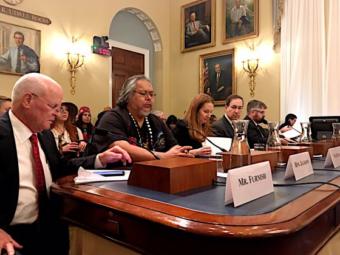
Kake Tribal Council President Joel Jackson, second from left, prepares to testify to the U.S. House Subcommittee on Public Lands. (Photo by Liz Ruskin/Alaska Public Media)

The Trump Administration has proposed to exempt the Tongass National Forest from the Roadless Rule. That rule is despised by supporters of the Tongass logging industry. But at a U.S. House hearing Wednesday, people for and against the rule agreed that removing the roadless restrictions won’t make much difference for an industry that’s already a shadow of its former self.

Joel Jackson of Kake was a logger, back when the industry thrived a few decades ago. He built logging roads. And when they’d logged the last of the stands around his village, Jackson says they realized the damaged they’d done.

“We’ve lived with the effects of logging. Full-scale industrial logging. We’ve experienced many different changes to our forests,” Jackson told the Natural Resources Subcommittee on Public Lands.

Local salmon streams turned silty, he says. Fish and deer became scarce. Jackson, now Kake’s tribal president, doesn’t want the Roadless Rule lifted.

“We cannot afford to have any more devastation in our homelands,” he said.

Alaska Congressman Don Young never liked the Clinton administration’s Roadless Rule and he’s happy the Trump administration is trying to exempt the Tongass. But he says he knows it won’t bring back the heyday of logging.

“It’s not about logging,” he said. “I doubt if there’ll be any more trees cut in the Tongass because no long-term leases are being held.”

Young says lifting the rule will allow other kinds of development, like mining, hydro-electric dams, even improved broadband infrastructure.

James Furnish was the deputy chief of the forest service in the Clinton Administration. He wants to keep the Roadless Rule, but he agrees with Young: The effect on the timber industry will be minimal.

“That’s one of the biggest red herrings I’ve ever heard,” Furnish said. “And I would argue that with or without the roadless protections, the fate of the timber industry in Southeast Alaska would be little different than it is today.”

Furnish says factors like distance to markets, export policies and defects in the timber are much more influential.

Other opponents of lifting the rule says they’re concerned about the impact roads themselves can have have on fish streams, whether for logging or not.

Jackson, the Kake tribal president, says the forest needs time to heal.

Site notifications
Update notification options
Subscribe to notifications