Transportation

Federal departments announce about $280M in funding for Alaska projects

The Alaska Highway is seen near the border with Canada on April 27, 2022. (Photo by Andrew Kitchenman/Alaska Beacon)

Three departments of the U.S. government have announced they have awarded about $280 million in new funding for transportation and energy projects in Alaska, money made available through the Infrastructure Investment and Jobs Act of 2021 and the Inflation Reduction Act of 2022.

In its announcement, the U.S. Department of Transportation said on Wednesday that it is sending about $54 million, with the funds made possible by the bipartisan 2021 infrastructure bill, to three Alaska projects.

One project, to get $25 million, is for restoring about 45 miles of the Alaska Highway that has been degraded by permafrost thaw and other climate change impacts, the department said. Another $25 million will go to the City and Borough of Wrangell for a project revitalizing the harbor, the department said. The project involves the design and construction of floating and anchoring systems, water, electrical and fire-suppression systems and relocation of parking, the department said. The third project, which is getting just under $4 million, is for port planning, permitting and design work in the Yukon River village of Nulato, the department said.

The Alaska transportation grants are among the $1.8 billion in awards across the nation announced on Wednesday. The grants are from the department’s Rebuilding American Infrastructure with Sustainability and Equity program.

Separately, the U.S. Department of the Interior announced that Alaska will receive $25 million to plug and clean oil and gas wells drilled in the past and then abandoned.

Alaska is among five states receiving a total of $127 million for that purpose, Interior said in its announcement. That money is also available through the Infrastructure Investment and Jobs Act.

These inactive and gas wells are known as “orphaned wells,” since they have been abandoned by the companies that drilled them. There are millions of orphaned wells across the country. Many remain unplugged and are releasing pollutants into the air and the groundwater.

The money for Alaska is to address wells located on state or private land. As of April, there were 46 identified orphaned wells on state or private land, according to the Alaska Oil and Gas Conservation Commission, the agency managing the issue.

The oldest orphaned wells on the AOGCC list date back to the early 1900s, when Alaska’s first oil wells were drilled at Katalla, a Gulf of Alaska coastal site about 50 miles southeast of Cordova.

Work on several wells is already underway. An Arctic Slope Regional Corp. subsidiary, ASRC Consulting and Environmental Services, has been contracted to do plugging and remediation work and submitted a progress report in January.

Another $200 million in money from the Inflation Reduction Act, a bill that passed Congress without any Republicans voting in support, will go to battery energy storage systems in Interior Alaska and on the Kenai Peninsula, the U.S. Department of Agriculture announced separately on Wednesday.

The Alaska projects getting the $100 million in funding apiece are a 46-megawatt battery energy storage system to be built by Fairbanks-based Golden Valley Electric Association and a 45-megawatt four-hour battery energy storage system to be installed in Soldotna by the Alaska Electric and Energy Cooperative Inc., a subsidiary of Homer Electric Association.

Correction: The total amount of grants across the nation was $1.8 billion, not million, as initially published. 

Service gaps persist in proposed winter ferry schedule

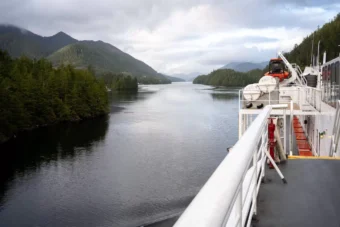
The M/V Kennicott travels south in the Wrangell Narrows near Petersburg on April 15, 2024. (Photo by Angela Denning/CoastAlaska)

The state has released its draft winter ferry schedule, which covers Oct. 1 through April 30. Residents might find the schedule familiar.

“It’s pretty similar to last year’s winter schedule,” said Sam Dapcevich, spokesperson for the state Department of Transportation. “We’re dealing with the same fleet and the same crewing situation.”

As in recent years, there will be one ferry serving the main route through Southeast Alaska from Skagway to Bellingham, Washington. That means most communities will see one ferry stop going north and south each week. Sitka, however, will see only one ferry going in one direction each week. Dapcevich said it might be north or south throughout the winter.

“There’s a little bit of variability there,” he said, “but it always stops in Sitka in one direction or the other.”

The Kennicott will be sailing through Southeast in October and then the Columbia will run November through April.

There will be no service for Prince William Sound, including Cordova and Valdez, from October through December when the Aurora is docked for maintenance. The Homer and Kodiak region will have no ferry service from January through March. That’s when the 60-year-old Tustumena will be getting annual maintenance.

“When that ship is in its annual overhaul, it’s inspected by the Coast Guard or by the American Bureau of Shipping,” Dapcevich said. “They go over that vessel with a fine toothcomb. These vessels are very closely looked at.”

The state plans to replace the Tustumena in 2027 with a hybrid diesel-electric ship that’s larger and faster. It’s expected to cost at least $300 million.

The Tustumena is just one of the state’s old ferries. Four others are nearly 50 years or older and their age means more maintenance. The Matanuska has remained in overhaul status for expensive repairs since January of last year. Dapcevich said deciding whether to fix that vessel or any of the aging fleet isn’t easy.

“They’re tough decisions,” he said. “Like, how many more years do you get? The Matanuska is 60 years old – if you plug $40 million into it, will it be a stopgap vessel? Will it keep you going? Or are you going to continue to fight with other issues?”

For the long-term outlook, Dapcevich said next year should see a similar schedule. But they’ll start adding crew quarters to the Tazlina, which would bring another vessel to potentially fill service gaps to the Southwest region in 2027.

As for ferries connecting to Prince Rupert, BC like they used to, that service has stopped.

The public can send in written comments by the end of the day on Tuesday. DOT will be holding two Zoom meetings on Wednesday when the public can also comment. The meeting for the Southeast region is at 10 a.m. and it’s at 1 p.m. for the Prince William Sound and Southwest regions.

This story has been corrected to show that the Aurora is scheduled for maintenance Oct-Dec and the Tustumena is scheduled for maintenance Jan-March.


Comments can be emailed to dot.amhs.comments@alaska.gov, or faxed to 907-228-6873.

Zoom virtual meeting for Southeast Alaska:
When: June 26, 2024 10:00 AM AKDT
Please click the link below to join the webinar:
https://us06web.zoom.us/j/89091551528
By phone: (253) 215-8782
Webinar ID: 890 9155 1528
International numbers available: https://us06web.zoom.us/u/kdIogA0i7f

Zoom virtual meeting for Southwest and Southcentral Alaska (PWS):
When: June 26, 2024 01:00 PM AKDT
Please click the link below to join the webinar:
https://us06web.zoom.us/j/84466431382
By phone: (253) 215-8782
Webinar ID: 844 6643 1382
International numbers available: https://us06web.zoom.us/u/kdIogA0i7f

Alaska ‘data bike’ proposal aims to reform how DOT assesses its sidewalks and trails

In Idaho, Boise’s metropolitan transportation planning organization uses this “data bike” to help assess the condition of its active transportation network. The Alaska Department of Transportation is seeking grant funding to start a similar program. (Courtesy of Community Planning Association of Southwest Idaho)

Right now, condition reports about Alaska’s state-owned sidewalks, bike paths and boardwalks are entirely anecdotal.

And that makes Julius Adolfsson’s job difficult. He’s an active transportation planner with the Alaska Department of Transportation and Public Facilities.

“Right now, it’s up to our, you know, M and O crew, maybe, to point out, ‘Hey, that sidewalk there, or that side path over there, it’s not looking great — we have root damage, or we have heaving caused by, you know, frost issues and so on,’” he said.

Adolfsson wants the department to move to a more comprehensive, data-driven approach. More accurate and timely status reports about existing pedestrian and bike infrastructure, he said, will improve maintenance scheduling and planning for future projects.

He’s working on a federal grant application to start a “data bike” program that he hopes will eventually go statewide.

The idea is to get some e-bikes kitted out with cameras and special smartphone software that captures how rough a path is, among other data. Imagine a Google StreetView car, but slimmed down as an e-bike, and you kind of get the picture.

The tech isn’t exotic. In Idaho, Boise’s metropolitan transportation planning organization has had a data bike program since 2021. Tori Cale is that organization’s bike and pedestrian technician who’s been riding the data bike. She said an initial grant of about $6,000 paid for the organization’s bike.

On Thursday, the policy committee of Anchorage’s metropolitan transportation planning organization voted to support DOT’s grant application.

Adolfsson said it’s a scalable, efficient and sustainable solution, particularly given Alaska’s many rural communities.

“You don’t have to ship an entire car,” he said. “You can, you know, check your bike and check your equipment and maybe get on a flight, even. So you don’t have to barge any car up to some of our rural communities.”

There’s no operation plan yet, but he said some other governments with data bike programs get volunteers to be riders through local cycling clubs.

Adolfsson expects to hear in about six months whether Alaska will get the federal grant for the pilot. He said the department will likely ask for $100,000 to $200,000, though that isn’t final yet.

If the grant comes through, he thinks an Alaska data bike pilot could launch in about a year, with a statewide rollout six months after that.

Some passengers’ cars may be stuck in Haines for weeks after Beerfest ferry breakdown

""
The Alaska ferry LeConte traveling toward Juneau on Aug. 3, 2022. (Photo by Claire Stremple/KTOO)

Update — May 28, 5:00 p.m.

Sam Dapcevich of the Department of Transportation told KTOO on Tuesday afternoon that the LeConte is back in operation and headed to Haines to pick up around 30 stranded vehicles. Dapcevich said the DOT was contacting passengers in the order that they booked, and people would have a few hours to arrange for their cars to be loaded onto the ferry.

Original story

Dozens of cars may be stuck in Haines for a month or more due to the cancellation of two sailings of the state ferry LeConte.

On Saturday, during Beerfest — a Haines festival that attracts 1500 people each Memorial Day weekend — revelers visiting from Juneau and other Southeast towns started to get calls saying that their ride home was canceled

The LeConte’s Sunday and Tuesday sailings were canceled. Some travelers were able to get home on a Monday sailing of the Kennicott, but that left 58 vehicles stuck in Haines, according to Sam Dapcevich of the Department of Transportation.

Car reservations on ferries between Haines and Juneau are booked until July.

Juneau resident Laura Talpey took the ferry to Haines for the festival. She said that at first, she thought the cancellation was a joke.

“Like, this is like a funny festival-wide rumor that people are just saying to mess with everyone,” Talpey said.

Then she checked her email. She said the Alaska Marine Highway had sent a cancellation notice, but without any alternatives offered.

Rebecca Hilton, the Haines Borough’s tourism manager, said it was “basically worst-case scenario here, one of our biggest events of the year.”

Many travelers ended up booking transportation on planes or private ferries. Alaska Fjordlines added two extra runs to Juneau. 

But Hilton said many of those options were more expensive than the $60 Alaska Marine Highway ticket. 

“I really do feel for the people that were getting home in a different way,” she said. “Itʼs a little bit more cost-prohibitive than the state ferry.”

Talpey said she and many of her friends booked Alaska Seaplanes flights to get back to Juneau in time for work this week, which cost about $200. She said getting a refund for her ferry ticket will help ease the financial blow. 

Dapcevich said the LeConte, which was pulled out of service for engine repairs, is expected to resume service on Wednesday. The Hubbard, which also serves Haines, has been out of service for its annual certification since mid-May. 

“The boat is scheduled to be back online in July,” Dapcevich said. “Which should ease some of the traffic concerns that we’re having right now with the ships being full, especially in Lynn Canal.” 

Dapcevich said rebookings and refunds have been offered to everyone affected by the canceled sailings. 

This story and headline have been updated to reflect a special trip by the ferry LeConte to pick up cars that were left in Haines.

Stranded Beerfest travelers scramble to rebook after LeConte ferry breakdown

The LeConte in 2023. (Lex Treinen/Chilkat Valley News)

The ferry LeConte broke down over the weekend, leaving some of the thousands who came to Haines for Beerfest stranded.

People will have an easier time getting back to other Southeast Alaska communities if they’re not traveling with a vehicle. The earliest available booking to get a car southbound on a state ferry is July 2, according to the Alaska Marine Highway System’s online booking platform.

That leaves people like Piper Haney, a social worker from Juneau who is moving back to the capital city from Anchorage, with few options. Right now, her plan is to take a seaplane back to Juneau on Monday.

“I think tomorrow I will be in Juneau and all of my stuff will be in Haines,” she said.

Engine trouble

The LeConte will be out of commission until at least Wednesday due to a cooling system problem in its starboard main engine, according to Department of Transportation spokesperson Sam Dapcevich.

“The crew will be inspecting the system over the next few days to see if there’s a blockage,” he wrote in an email.

Dapcevich said the state tried reaching out to Allen Marine and Goldbelt — two other ferry operators that have service contracts and could take passengers southbound from Haines.

“They currently don’t have vessels or crew available to pick up passenger traffic,” he said.

In Haines, local travel operators have been working to accommodate the surge of passengers and bookings after the LeConte was canceled. The visitor center will be shuttling people to the ferry terminal, Tourism Director Rebecca Hylton said anyone who needs a ride there on Sunday should be at the visitor center by 5 p.m.

But they cannot help with cars.

“Most people, of course, are stuck here,” said Alaska Fjordlines owner Alison Jacobson.

Fjordlines operates a 65’ catamaran that travels between Skagway, Haines and Juneau. The company added a 2 p.m. sailing on Sunday when Jacobson learned of the canceled ferry.

“It was full by 8 or 9 o’clock [Saturday] night,” she said.

Jacobson said she cannot take everyone who may need to leave town. The LeConte is designed to carry 225 passengers.

“We can take 50,” Jacobson said. “That’s a lot of people who won’t be able to get out.”

Juneau resident Daniel Trenchard nabbed one of the seats on the Fjordlines sailing. Word of the cancellation started to spread just as Beerfest was letting out at 5 p.m. – many revelers had been sampling beer and partying for hours at that point.

Trenchard, who is working in Ketchikan this summer, was one of hundreds of people on the street. He was sitting in line at Peterson’s Pretzels waiting for food when he found out the ferry had been canceled.

“So I have a flight on Monday at 2 p.m. to Ketchikan to get back to work. I had to get back to Juneau so I could get back,” he said.

He and his friends quickly conferred and then booked tickets back to Juneau on the Fjordlines sailing. He said he hoped news spread to other revelers quickly, too, as there are so few seats available.

“I hope the people who need to know find out early enough,” he said. “Good luck to them.”

Haines ferry terminal staff put up a sign on Saturday, May 25, 2024, announcing the cancellation of the only state ferry scheduled to leave town on Sunday after a busy Beerfest weekend in Haines, Alaska. (Rashah McChesney/Chilkat Valley News)

Chaotic attempts to rebook

Word of the cancellation spread just as Beerfest was letting out at 5 p.m. – many revelers had been sampling beer and partying for hours at that point.

Alaska Marine Highway System staff at the Haines terminal did not answer phone calls on Saturday but posted a sign on the terminal window saying the LeConte would be out of service from May 26-28.

Chaz Lakip said he’s already been rebooked by the state once – from a canceled Goldbelt ship to the LeConte, due to staffing issues. He didn’t hear until mid-morning Sunday that the LeConte, too, had been canceled.

“Seems like we have the technology to send a mass email to everyone on the manifest as soon as they knew instead of individually calling everyone?” he said.

Haney, the social worker on her way to Juneau, said she’d heard a rumor during the day’s festivities – but hoped the person was joking.

“It wasn’t even on my radar that it was an issue until 11 p.m. last night,” she said on Sunday morning.

Attempts to book a state ferry out of town online automatically route users to a July 2 sailing of the Hubbard. But by phone, staff at the ferry terminal said they still have walk-on spots available for earlier sailings.

Those spots must be booked by calling the terminal at 907-766-2111 directly, they said.

But while Haines ferry terminal staff are calling and emailing people, Haney said she has not heard from anyone as of Sunday afternoon. She drove out to the ferry terminal, but she wasn’t able to rebook there, either. She said staff told her they would call her.

“They said they had a big list in front of them, and they were just calling people in the order they booked to tell them it was canceled and reschedule them,” Haney said.

Haney, whose car is packed with all of her belongings, said she hopes she can get it on a ferry earlier than July. For now, she is trying to sort out where to leave it.

“I don’t know anyone super well here where I could call and say ‘hey, could I park my car here for two months?’” she said. “I’m hoping the ferry system is going to call me eventually.”

She is also considering leaving it at the ferry terminal.

“I don’t know where else I would leave it,” she said. “But that seems kind of heinous.”

Haney said she’ll spend Sunday evening picking through her car to figure out what to bring to Juneau on the plane and what to leave behind.

DOT spokesperson Sam Dapcevich floated the idea of the LeConte doing an added run just to pick up stranded vehicles when it comes back online. And several people, including Haney said they hope that actually happens.

“It doesn’t have to be tomorrow, but within a week would be good for me,” she said.

This story originally appeared in the Chilkat Valley News and is republished here with permission.

DOJ says Boeing broke deal that avoided prosecution after 2 fatal 737 Max crashes

The U.S. Justice Department says Boeing broke a deferred prosecution deal with the government following a pair of fatal 737 Max crashes more than five years ago. (Samuel Corum/Getty Images)

WASHINGTON — Boeing has violated the terms of a deal to avoid prosecution after the fatal crashes of two 737 Max planes more than five years ago, the U.S. Justice Department told a federal judge on Tuesday.

That means the troubled plane maker could be subject to criminal prosecution for defrauding federal regulators, though Justice Department lawyers stopped short of saying whether they will pursue that remedy.

“The Government has determined that Boeing breached its obligations” under the agreement it reached with the Justice Department in early 2021, “by failing to design, implement, and enforce a compliance and ethics program to prevent and detect violations of the U.S. fraud laws,” prosecutors wrote in a letter to Federal District Judge Reed O’Connor in Texas.

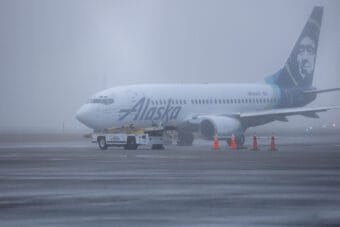
The two-page letter does not mention Alaska Airlines Flight 1282, when a door-plug panel blew off a 737 Max jet in midair in January. But that incident has sparked renewed scrutiny of Boeing’s operations by federal regulators, as well as the Justice Department, which has opened a separate investigation.

Boeing says it disagrees with the DOJ’s conclusion that it has violated the deal.

“We believe that we have honored the terms of that agreement, and look forward to the opportunity to respond to the Department on this issue,” spokeswoman Jessica Kowal said in a statement.

Boeing 737 Max jets are pictured outside a Boeing factory on March 25, 2024 in Renton, Wash. (Stephen Brashear/Getty Images)

Boeing agreed to the deferred prosecution deal with the DOJ in January 2021 and paid $2.5 billion in fines. The plane maker had been accused of misleading regulators who approved the 737 Max.

The Max crashes — one in Indonesia in 2018 and another in Ethiopia in 2019 — killed a total of 346 people. The accidents were blamed, in part, on a new automated flight control system. That system, called MCAS, powerfully pushed the noses of those jets down repeatedly not long after takeoff, killing all on board.

The DOJ agreement essentially placed Boeing under probation for three years — a term that ended just days after the midair blowout on Jan. 5, 2024.

Family members of the crash victims have long criticized the prosecution agreement with Boeing as a sweetheart deal for the company, and have been waging a years-long legal battle to overturn it.

Their lawyers welcomed the DOJ’s announcement, and urged prosecutors to go further.

“This is an important first step toward holding Boeing accountable for the deaths of the 346 passengers and crew on the two flights,” said Paul Cassell, a former federal judge and law professor at the University of Utah who is representing the families.

“But the Justice Department needs to now follow through with effective, transparent, and vigorous prosecution of the conspiracy charge it has filed,” Cassell said.

“We hope that DOJ will continue to pursue justice for Boeing’s victims, and move forward with a prosecution against Boeing for its egregious criminal acts that resulted in the deaths of 346 innocent people,” said Erin Applebaum, a lawyer at the firm Kreindler & Kreindler who represents victims’ families.

The Justice Department could also seek to essentially extend Boeing’s probation under the prosecution agreement.

Prosecutors told the judge they are still determining how to proceed. Under the terms of the agreement, Boeing has a chance to reply to the Justice Department. The DOJ has also scheduled another meeting to seek input from family members of the victims on May 31 in Washington.

Copyright 2024 NPR. To see more, visit https://www.npr.org.
Site notifications
Update notification options
Subscribe to notifications