University of Alaska

‘She needs a lot of work’: Museum of the North staff begin work on ‘Into the Wild’ Bus

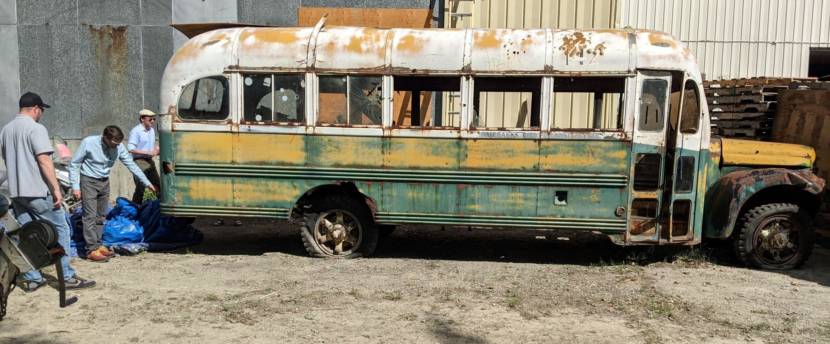
UA Museum of the North Director Pat Druckenmiller checks out Bus 142 last week with Colin Howard, left, and Aaron Warkinton, right, who work for Pennsylvania-based B.R. Howard Conservation. (Photo by Tim Ellis/KUAC)

Preliminary work began last week on a project to create a museum exhibit featuring the old bus where the central character in the book and movie “Into the Wild” spent his last days. The rusty relic was airlifted out of a remote spot off the Stampede Trail last year and brought back to Fairbanks, where it had been used decades ago as a city transit bus. And now, University of Alaska Museum of the North staff are planning a new outdoor exhibit that will tell the story of how Bus 142 became an American cultural icon.

Colin Howard and another artifact-conservation expert are conferring with Museum of the North staff about the fragile condition of Bus 142 project before the conservators head back to Pennsylvania, where their art- and artifact-conservation company is based.

“It provides a whole bunch of challenges,” Howard said. “I mean, she’s really dirty, and she needs a lot of work.”
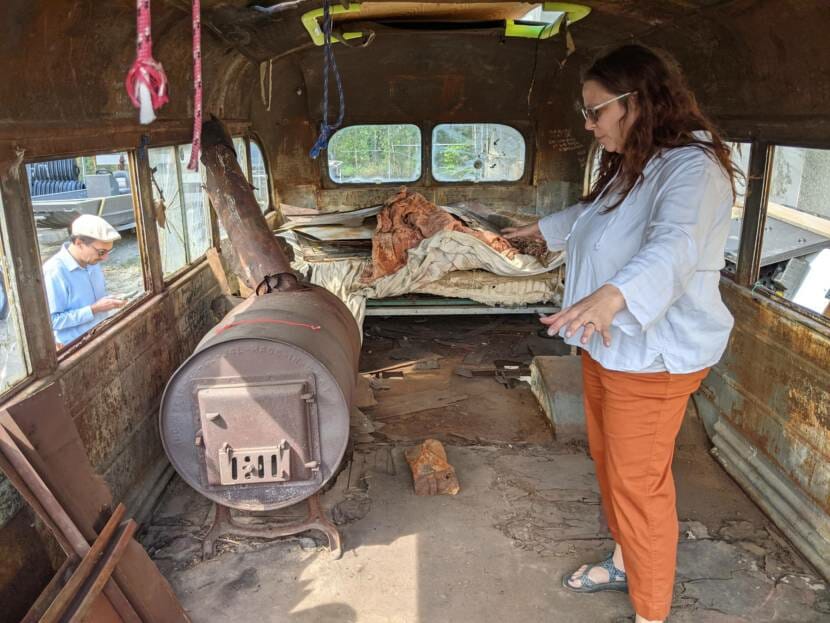
Museum of the North Senior Collections Manager Angela Linn explains conservation work needed to stabilize the floor of the bus and other parts of its interior. (Photo by Tim Ellis/KUAC)

He and his colleague, Aaron Warkinton, met with museum staff last Friday after spending a couple of days examining the old rig as part of their assessment on what’s needed to keep it from further deteriorating, and make it presentable to the public.

“So, we don’t want to make it brand-new,” Howard said. “I don’t want to make it look like it was just repainted. It carries a significant story for multiple decades, and we want to keep that story going.”

Those stories are told in part through the rust and chipping paint typically found on a 75-year-old vehicle, especially one that’s been sitting exposed to the elements at a remote site near Denali National Park since it was hauled back into there in 1961. The bus served as a shelter for hunters and hikers, including Christopher McCandless, the hapless wanderer profiled in Jon Krakauer’s account titled “Into the Wild.”

“So we just want to stabilize it, make sure that the corrosion is no longer active,” Howard said. “We want to stabilize flaking paint that’s coming off. There’s stories inside that are falling off the walls, literally.”

Those are the stories told through graffiti that’s been scrawled all over the bus and its few remaining windows. Many were left as an homage to the memory of McCandless, whose body was found in the bus on Sept. 6, 1992 by some moose hunters.
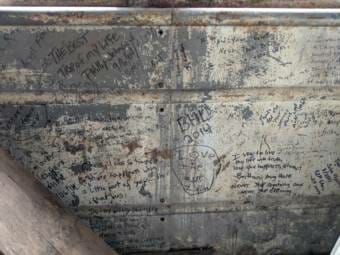
Many of those who reached the bus left messages addressed to McCandless and their fellow "pilgrims." (Photo courtesy Tim Ellis/KUAC)
Many of those who reached the bus left messages addressed to McCandless and their fellow “pilgrims.” (Photo courtesy Tim Ellis/KUAC)

One of the scrawls reads, quote, “Godspeed Chris, and say hi to my mom from me!”

Another reads: “Thanx 4 the inspiration!”

Yet another simply says “He was here!”

“There’s Japanese kanji in there. Russian – people from all over the world have journeyed out there to interact with that relic,” Warkinton said. He says the graffiti attest to the universal appeal of the story of McCandless, a tragic figure who after graduating from college decided to escape society and its materialism and instead find the meaning of life. A search that led him deep in to the wilds of Alaska.

“I think he touched on something that a lot of people struggle with,” he said. “Like I’d mentioned earlier, about dealing with the modern world – it can be so overwhelming!”

Angela Linn, a senior collections manager at the Museum of the North, agrees.

“[You] know this is a story that really resonates with millions of people around the world,” she said. “And whether it’s because of the mystique of Alaska, whether they really identify with Chris McCandless and the transition he maybe was going through himself. That, [you] know, people see that in themselves.”

Linn, who’s managing the project, said that’s one of the main reasons why Museum of the North officials believe it’s important to preserve the bus and share its stories with the public.

“We think it’s really important to spend the money and the time and the great amount of effort to bring all those stories together,” she said. “And that’s part of what our job is in museums, is to get people to connect those dots within themselves.”

Linn said it has cost about $7,000 so far for Howard’s firm to assess the work needed on the bus and estimate how much it’ll cost to do it. The money was raised through online crowdfunding. And she’s hoping to raise additional money with crowdfunding help from Friends of Bus 142, an online group founded by McCandless’s sister, Carine.

Linn says much of the consulting and planning for the exhibit is being done by a 25-member interpretive team, which includes university faculty and members of the community.

She said if all goes well, the exhibit could be opened in 2023.

UAF researcher on science team for unmanned Venus mission

A composite image of Venus made with data from NASA’s Magellan spacecraft and Pioneer Venus Orbiter. (NASA/JPL-Caltech)

A University of Alaska Fairbanks scientist is on the team for one of two unmanned missions to Venus announced by NASA this week.

UAF Geophysical Institute research professor and Venus expert Robert Herrick is on the science team of the Veritas mission, one of two Venus proposals chosen by NASA. Herrick says Veritas and the other mission, called DaVinci Plus, were selected following a competitive proposal process and will be the first to Venus since the Magellan mission ended in 1994.

“It’s been a multi-decade walk in the wilderness for people who are fans of the planet Venus,” Herrick said. “So it’s very exciting.”

Herrick says the schedule has not been finalized, but the tentative plan is for the $600 million Veritas mission to launch in 2028.

“The whole spacecraft has to be built and made ready to launch in the next handful of years, basically. And then there’s a lot more detailed planning on the science side of things that takes place as well,” he said.

Once in orbit around Venus, the Veritas spacecraft will gather high-resolution infrared and radar images and topography of the planet’s surface, which will be transmitted to Earth for analysis. Herrick’s area of focus is craters, which he says provide clues about a planet’s geologic history.

“Craters after they’ve been formed get modified by later volcanism or faulting, and that helps you figure out the time sequence of events on the planet,” he said.

Herrick says Venus is interesting from a geoscience perspective because it has mountains and other surface deformations, but its not known how they were created.

“So one possibility is that it’s a planet that has transitioned from being like the Earth to being like Mars, and another possibility is — something completely different,” he said.

Herrick says imagery gathered by the Veritas orbiter will aid the DaVinci Plus Venus mission by helping identify a target area for its surface probe. That mission is tentatively scheduled to launch in 2030.

Herrick says together the two missions will provide a better understanding of Venus, which could help identify potentially life-supporting planets in other star systems.

“Venus is about 90% the size of Earth, it’s 70% the distance from the sun that Earth is, so it’s essentially identical.” Herrick said. “Yet Venus is completely inhospitable to life currently, and Earth is a cradle of life. So as we look out at all the other planetary systems that we’re discovering, figuring out whether Earth-sized means Earth-like in part depends on figuring out how Venus and Earth ended up so different from a very similar starting point.”

Herrick says data from the Venus missions will be voluminous, providing years of work and opportunity for new discoveries by researchers and grad students, including at UAF.

‘Not one size fits all’: University of Alaska looks for ways to retain more Alaska Native students

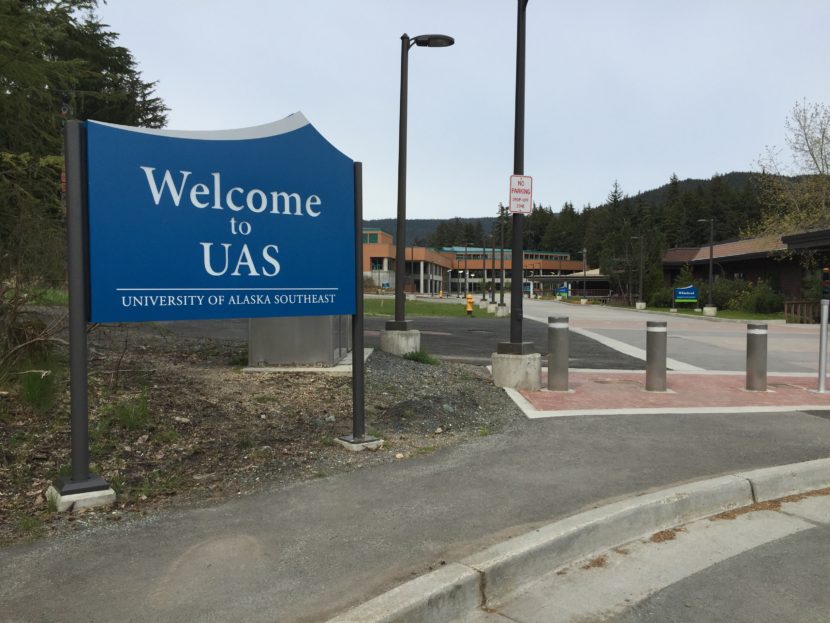
UAS campus
The UAS campus in Juneau. (Photo by Lisa Phu/KTOO)

The University of Alaska is launching a system-wide program geared toward retaining more Alaska Native students at the school and increasing the number of Alaska Native staff members.

The school recently found that Alaska Native students are enrolling, but they don’t always stay.

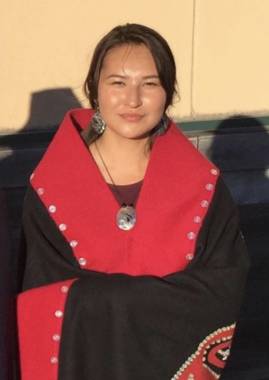
Sarah Peele, whose Haida name is Tukshaak’éi, is a student at University of Alaska Southeast. She transferred from the Fairbanks campus, where she said the professors didn’t make her feel welcome.

Sarah Peele, whose Haida name is Tukshaak’éi, is a student at University of Alaska Southeast.
Sarah Peele, whose Haida name is Tukshaak’éi, is a student at University of Alaska Southeast. (Photo courtesy of Sarah Peele)

“They were all white,” Peele said. “They were not originally from Alaska. They were from Lower 48 or a different country and they had little to no knowledge of whose land they were on and they did not care when I brought that up in our classrooms.”

While being interviewed over Zoom, Peele was bouncing a seven-month-old boy on her lap. She said that’s another thing about her culture that her professors don’t always understand. 

“A lot of Alaska Native students are not traditional students, meaning they’re not right out of high school, they’re not single, a lot of them have kids,” Peele said.

Her experience at the Juneau campus has been an improvement, but she said there could be a reason for that.

“I’ve primarily switched  to Alaska Native Studies and Languages, so all of my professors are Alaska Native and I’ve kind of retreated into this little safe space,” she said.

In the past, Peele was often the only Alaska Native student in her classes, and more often, the only Alaska Native woman in her classes. She said that was intimidating, and experiences like that could be contributing to the lack of retention among students like her. That’s part of the reason why she decided to help get the Alaska Native Success Initiative off the ground at UAS.

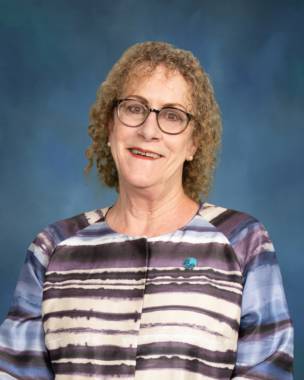
UAS Chancellor Karen Carey. (Photo courtesy of the University of Alaska Southeast)

“I’m thankful that the chancellor and a couple other non-Alaska Native people who were on that committee were open to change and open to recognizing how they’re comfortable in their whiteness,” Peele said.

Alaska Natives represent about 20% of the UAS student population, but only about 7% of its faculty and staff. UAS Chancellor Karen Carey says she wants those numbers to be closer together. That would mean hiring more Alaska Native staff.

“You know, just in terms of looking at things like hiring practices,” Carey said. “Are we really making sure that we are getting the most diverse pool of candidates that we can?”

This week the Board of Regents will be hearing the three campuses present their plans for accomplishing those goals. 

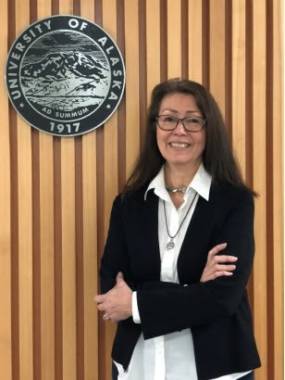
Ronalda Cadiente Brown is the Associate Vice Chancellor for Alaska Native Programs at UAS.
Ronalda Cadiente Brown is the Associate Vice Chancellor for Alaska Native Programs at UAS. (Photo courtesy of Ronalda Cadiente Brown)

“We’ll also be doing some training for all of our faculty and staff because if you’re coming here from say Chicago or Kansas or Texas and you’re moving here to work, you may not know anything about the Alaska Native populations,” Carey said.

Ronalda Cadiente Brown is the Associate Vice Chancellor for Alaska Native Programs at UAS. She played a big part in coming up with the plan they’ll present to the board. 

“There’s not one size that fits all for any Alaska Native student,” Cadiente Brown said. “The course of study, what they bring to the university setting, the demands on them from the goals and desires that they have and the levels of support. There are so many variables that we hope by this work that we do our best to improve the system so that we have basically an answer of support for anyone and everyone that needs it.”

Once the campus plans are approved, changes could come as soon as the fall semester. 

Alaska Senate passes bill to pay for Alaska’s essential and laid-off workers to attend college

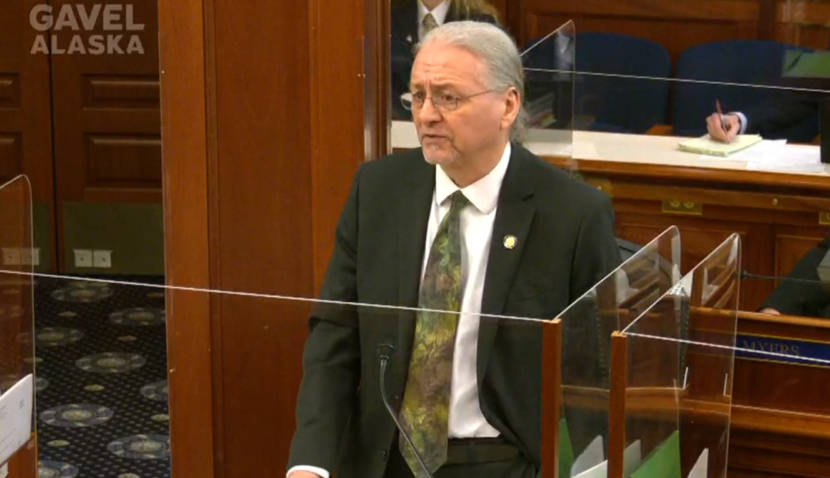
Sen. Tom Begich, D-Anchorage, speaks in favor of Senate Bill 10 on May 17, 2021, in the Senate chamber of the Alaska State Capitol. The bill would pay tuition for Alaskans who were employed as essential workers or laid off at the beginning of the COVID-19 pandemic. (KTOO 360TV screen capture)
Sen. Tom Begich, D-Anchorage, speaks in favor of Senate Bill 10 on Monday, May 17, 2021, in the Capitol. The bill would pay tuition for Alaskans who were employed as essential workers or laid off at the beginning of the COVID-19 pandemic. (KTOO 360TV screen capture)

A bill that passed the Alaska Senate on Monday would pay university tuition for Alaskans who were employed as an essential worker or were laid off when the federal COVID-19 emergency began. 

Senate Bill 10 would provide up to $10 million through the end of 2024 for students to attend Alaska colleges or other state-certified postsecondary programs. Students must apply for grants this year. 

Anchorage Democratic Sen. Tom Begich sponsored the bill. He said it’s in thanks for those who put themselves at risk.

“Folks lost opportunity during this pandemic,” he said. “They lost work. They lost their health. I’m urging a yes vote in support of those frontline workers — and those who’ve suffered, whether from the pandemic directly or from loss of employment.”

The funding would come from the state’s share of the federal American Rescue Plan Act money. Begich noted that people with college degrees are paid more on average than those without. 

“It’s about giving those who’ve given up so much during the pandemic something that could be life-changing,” he said. “The path to a successful democracy is an educated public.”

Anchorage Republican Sen. Natasha von Imhof voted for the measure. She said it’s a form of investment in the state. And she emphasized that being able to use the federal pandemic aid was appropriate, and would avoid spending other state money.

Palmer Republican Sen. Shelley Hughes voted against the bill. She said the money could be spent for a different purpose. 

“Even though it’s going to be paid by all federal aid … that seems good, but those are all public tax dollars,” she said.

The Senate passed the bill 12 to 7. All seven Democrats voted for it, as did Republican Sens. Click Bishop of Fairbanks; Josh Revak of Anchorage, Bert Stedman of Sitka, Gary Stevens of Kodiak and von Imhof. The other Republicans voted against it, except for Sen. Mia Costello of Anchorage, who was absent.

The bill now goes to the House of Representatives. If the House passes it, Gov. Mike Dunleavy would decide whether to sign it or veto it. 

Former Alaska Gov. Sean Parnell selected to lead University of Alaska Anchorage

Former Alaska Gov. Sean Parnell waits to cast his Electoral College vote for Donald Trump during a ceremony on Monday, December 19, 2016 in Juneau, Alaska.
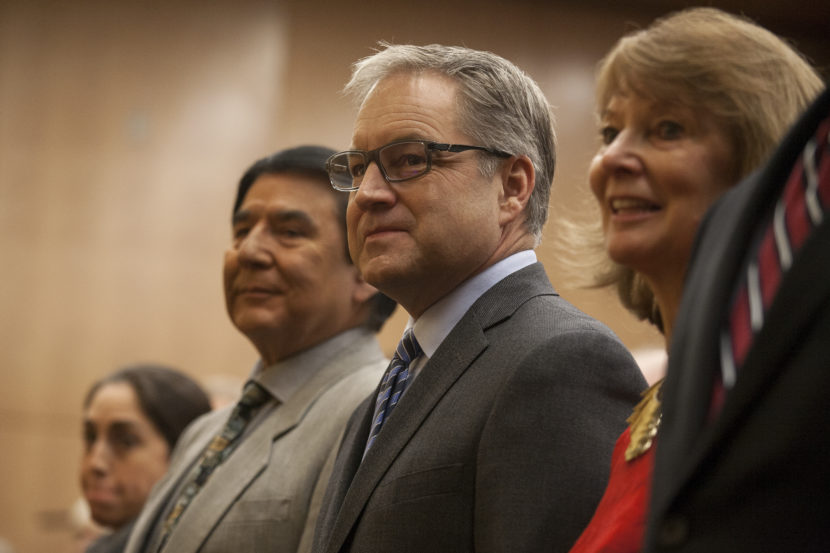
Former Alaska Gov. Sean Parnell waits to cast his Electoral College vote for Donald Trump during a ceremony on Monday, December 19, 2016 in Juneau, Alaska. (Photo by Rashah McChesney/Alaska’s Energy Desk)

Former Republican Gov. Sean Parnell will be the new leader of the University of Alaska Anchorage, the state’s largest university.

Interim University of Alaska President Pat Pitney announced Wednesday that she had picked Parnell as the next UAA chancellor.

Parnell beat out Pearl Brower, the former president of Iḷisaġvik College, along with Anchorage School District Superintendent Deena Bishop and five other finalists for the job.

In a letter to the UAA community, Pitney said she selected Parnell because of “his passion for our mission, his deep commitment to Alaska, and his desire for all Alaskans to have access to higher education.”

Pitney also said Parnell had support from the search committee, as well as the UAA community, including students.

“I believe Sean to be uniquely positioned to lead UAA in providing the programs that support Anchorage and Alaska’s workforce needs and economic growth, including innovative research to drive the state forward,” she said.

Parnell will take the lead of a university that has recently grappled with deep state budget cutsaccreditation issues and the pandemic. The entire UA system is approaching its final year of a three-year, $70 million state budget cut that began in 2019 — imposed under Republican Gov. Mike Dunleavy. The slashed funding has led to hundreds of layoffs across the university system, and the elimination of some academic programs.

Parnell will start his new job as UAA chancellor June 12.

He served as Alaska’s governor for five years beginning in 2009, when he moved from lieutenant governor to the state’s top elected position after the resignation of Sarah Palin. He was elected in 2010, then lost his re-election bid in 2014 to independent Bill Walker.

As governor, one of Parnell’s signature pieces of legislation led to the creation of the Alaska Performance Scholarship, a fund for high-achieving Alaska students, which Pitney also cited in the letter.

Parnell is currently an attorney in Anchorage.

He’s taking over the chancellor position from Cathy Sandeen, who left UAA in early January to become president of California State University, East Bay.

UAA has campuses in Anchorage, Soldotna, Kodiak, Palmer, Valdez and Homer.

Yup’ik college student, founder of Alaska biotech company, wins international young entrepreneur award

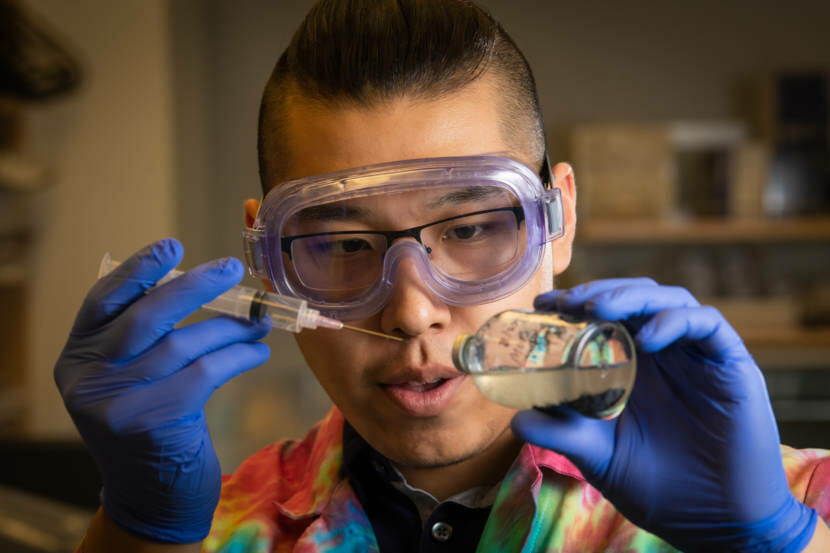
Biological siences student Michael Martinez studies ways to isolate rare earth metals from samples of Alaska coal in Professor Brandon Briggs’ lab in UAA’s ConocoPhillips Integrated Science Building. (James Evans/University of Alaska Anchorage)

A Yup’ik college student won an international award for finding a way to extract rare earth metals without hurting the environment.

Michael Martinez is a University of Alaska Anchorage science student, whose mother’s family hails from Kotlik.

Martinez discovered a way to use microbes to extract rare earth metals while not creating toxic byproducts and created the company Arctic Biotech Oath to develop and market the technology. The High North Dialogue Conference in Norway gave Martinez the High North Young Entrepreneur Award.

“This is a Yup’ik and Indigenous people’s win up here in Alaska,” said Martinez. “This not only shows we’re capable of doing the basic research, but this shows that we can impact a great sector. Not only of upcoming technology, but something people are looking forward to in the future.”

The system of using microbes for extracting rare earth metals discovered by Martinez is cleaner than other methods. Rare earth metals are increasingly needed in the construction of computers and other electronic equipment, including cellphones.

Martinez attended the Alaska Native Science and Engineering Program in Anchorage on UAA’s campus.

Site notifications
Update notification options
Subscribe to notifications