University of Alaska

A Homer scientist is bringing changes in Arctic permafrost into high resolution

Anna Liljedahl on a research trip on Jarvis Glacier in the eastern Alaska range. Liljedahl is working to install a weather station on the glacier to model glacial melt. (Todd Paris/University of Alaska Fairbanks)

With permafrost thaw in the Arctic rapidly outpacing previous projections, researchers are racing to understand the impacts of an increasingly unstable future.

After growing up in Sweden, Anna Liljedahl moved to Alaska to study hydrology at the University of Alaska Fairbanks. She now lives in Homer, where she conducts research as an associate scientist at the Woodwell Climate Research Center, focusing on how climate change is impacting water in Arctic ecosystems.

Liljedahl is now leading a team to create more accurate, interactive maps of Alaska’s permafrost. Their project, called the Permafrost Discovery Gateway, is a novel effort to make Arctic research quicker to share and easier to access. That’s critical as the climate crisis accelerates thaw, impacting Alaskan communities and global carbon and methane emissions.

“Changes are happening so fast that we need to come up with automated ways of tracking this permafrost thaw through remote sensing imagery,” Liljedahl said, “and make automated tools that help us identify where change is happening.”

Permafrost is ground that remains frozen for at least two consecutive years, though some of it has been frozen for thousands of years. Scientists estimate that more than 80% of Alaska has permafrost. In some places, like the North Slope, it stretches continuously across the entire region, where it can be 2,000 feet thick. South of the Brooks Range, though, the permafrost layer is often much thinner, and broken up by patches of unfrozen ground.

A gold miner inside of their privately owned permafrost tunnel outside Fairbanks, who often allows researchers to take soil and ice to study. (Sean McDermott/KBBI)

The actual ice content of permafrost also varies. Liljedahl said regions with high ice content, called ice-rich permafrost, are exciting from a scientific perspective, but also create the biggest challenges for houses, buildings and roads.

“So imagine, if you melt that ice, it’s going to become water,” she said. “Then suddenly the soil doesn’t have any support anymore.”

Though damage to infrastructure may not be as immediate as other natural disasters, rapid thaw is already having a huge impact on Alaskans. Some people, for instance, have had to level their home foundations multiple times a year.

“There’s insurance for flooding and hurricanes that people can buy and utilize, but when it comes to permafrost thaw, there’s nothing,” Liljedahl said. “People are just left on their own.”

Getting a better sense of how much ice is in Alaska’s permafrost is also important for modeling potential greenhouse gas emissions as it disappears.

“You need to know how much carbon is in the permafrost to begin with, and that estimate depends on how much ice you have,” she said. Permafrost with less ice in it has more organic material, like frozen roots, which release more greenhouse gasses like methane when it thaws.

With temperatures rising across the far north, the climate crisis is rapidly changing the ground. Liljedahl said it can take a decade for research in the Arctic to get peer-reviewed and published, and with changes now outpacing many projections, that’s just not fast enough.

“Ten years is a long time frame in Arctic permafrost thaw,” she said.

An ice wedge in the wall of a privately owned permafrost tunnel outside of Fairbanks. (Sean McDermott/KBBI)

The Permafrost Discovery Gateway provides a new level of detail and scale to mapping the Arctic, and could help fill these gaps with more automated tools, helping scientists better track how these ecosystems are shifting.

“We had to create our own software, our own visualization tool, where you can view this really, really big map at the pan-Arctic scale, and at the same time, zoom in and look at what’s happening in your backyard,” Liljedahl said.

One of the features this high-resolution imagery can help researchers identify are called ice-wedge polygons. Over years of freeze and thaw cycles, water flows into cracks in the ground and gradually builds into walls of ice below the surface. These ice wedges push soil into distinctive shapes — visible to satellites — and stand out as they thaw, causing the ground above to slump or new ponds to form.

Being able to see these kinds of changes is shedding new light on Arctic trends. Elizabeth Webb is a postdoctoral researcher at the University of Florida who has shared research on the Permafrost Discovery Gateway database. She has been studying the connection between vanishing surface water and permafrost thaw.

Previous models projected thawing would initially increase water in lakes, and then decrease later this century with more sustained warming. But that’s not how things seem to be playing out.

“What my research was showing is that it’s just the very beginning of the 21st century,” Webb said, “and we have already reached the latter part of that continuum.”

Instead, in some regions, surface water is disappearing more quickly than anticipated, according to research Webb and Liljedahl published earlier this year. Warmer temperatures lead to increased autumn rainfall in the Arctic, so having less surface water is a little counterintuitive, Webb said.

“You would think more rain would mean more water. But actually, more rain means more permafrost thaw — which means more drainage.”

This can be a big issue for Arctic communities. Not only can permafrost thaw damage homes and infrastructure like pipes, it can also impact the availability of reliable drinking water as lakes shrink or drain completely.

“People rely on lakes for household use and for drinking water. It’s not like all the lakes are going to drain and then suddenly, there’s not going to be any water left for them,” Webb said. “But it does mean that these communities are now more vulnerable.”

Researchers across the state are working hard to better understand these intricacies — and the unique Alaskan landscapes permafrost has created. On a recent virtual tour of the U.S. Army Corps of Engineers’ permafrost tunnel in Fairbanks’ Goldstream Valley, senior scientist Tom Douglas welcomed more than 500 viewers across the country on a journey back through time.

With geologic formations stretching millennia, Douglas said that there is no other tunnel quite like this one.

“You can wander through, and on the walls you can map different features. You can measure them, you can do statistics on them, [and] we can collect samples representing about 40,000 years of permafrost formation,” he said.

Getting field data from different areas around the state is still a huge challenge, making samples from the permafrost tunnel incredibly valuable. The tunnel offers a glimpse of geologic shifts in permafrost, and an up-close look at changes that satellites can’t see from above.

Douglas said permafrost researchers need to get better at talking to the public about their work, sharing data and making information more accessible. That includes everything from looking at historical mining pictures, to getting people across Alaska to share their lived experiences and observations.

“We really need any type of information possible and ways to basically accumulate, synthesize and display that information,” Douglas said.

Permafrost may be a northern phenomenon, but the consequences of carbon emissions released around the world have a huge impact on how quickly these changes are happening in Alaska. Permafrost holds twice the amount of carbon than is currently in the atmosphere, Douglas said. Accelerating thawing also has the potential to magnify the impacts of climate change globally — releasing more carbon and methane and speeding temperature rises.

Liljedahl said using tools like satellite imagery, mapping, and up-to-date visuals can help create a better picture of this rapidly changing area of the world.

“We’re not just talking about 50 years from now. We’re talking about what happened yesterday, and what’s happening right now.”

You can take a digital stroll back through thousands of years of geology on a virtual tour of the permafrost tunnel outside of Fairbanks, and explore the growing database of permafrost research on the “Permafrost Discovery Gateway.”

UAA to house Ted Stevens papers

Ted Stevens attends the commissioning of the USS Alaska in 1986. (U.S. Navy)

By the time U.S. Sen. Ted Stevens left office in 2009, he had amassed a huge collection of documents, enough to fill 4,800 boxes. Now that collection has found its final resting place, at the University of Alaska Anchorage.

Stevens’ widow, Catherine Stevens, the Ted Stevens Foundation and the university made the announcement this month.

“It was always Sen. Stevens’s desire to have the collection go to the university. He really wanted his papers to be open to the public,” said Karina Waller, executive director of the Ted Stevens Foundation, which has been archiving and organizing the collection for years. “Obviously, as a student of history, he knew that understanding our history was important in informing decisions that we make today and in the future.”

Before Stevens died in a 2010 plane crash, he agreed to deposit his papers at the University of Alaska Fairbanks. Waller says he always wanted them to be in Anchorage, but when he was preparing to leave the Senate, UAA didn’t have room.

Now, UAA Chancellor Sean Parnell says the plan is to create an Alaska Leaders Archive at the university’s Consortium Library.

Beyond the documents, photos and videos, Waller said the Foundation also has a warehouse full of Stevens’ memorabilia, like awards the senator received and books he kept at home and at the office. The university doesn’t have space for them, Waller said, but she’s hoping the archive will take some of the more historical objects, like a pen President Richard Nixon used to sign the Alaska Native Claims Settlement Act in 1971.

The university still needs time to prepare a space for the papers. Waller figures the conveyance of the papers is about a year away.

As coastal erosion pulls rural Alaska communities into the sea, new research seeks solutions

Coastal erosion reveals the extent of ice-rich permafrost underlying active layer on the Arctic Coastal Plain in the Teshekpuk Lake Special Area of the National Petroleum Reserve – Alaska. (Brandt Meixell/USGS)

For years, coastal Alaska communities, a majority of them Alaska Native villages, have contended with erosion, eating away at the land and pulling more and more of the coast into the sea. It’s led to a growing field of research into what can be done to address the problem.

new article from nonprofit environmental news outlet Grist takes a look at what’s at stake in these communities and what residents are doing to combat the loss of land. Author Saima Sidik discussed her story with Alaska Public Media.

Listen:

This interview has been edited for length and clarity.

Wesley Early: So can you set the scene for us in these communities? What are community members in Dillingham and other coastal communities having to contend with due to erosion?

Saima Sidik: Yeah, it’s really striking. If you walk down the beach in a lot of these places, you can just see the earth crumbling away. Huge bluffs are just not where you left them the day before. Rocks and trees fall over the edge. Landmarks are disappearing in some cases. These points that people used to use to navigate are just not there anymore to guide them. So definitely a big problem threatening a lot of infrastructure, a lot of people’s livelihoods and just overall causing a lot of havoc and hardship.

Wesley Early: Your story lays out a lot of local proposals to mitigate the impact of erosion. One of them has to do with reinforcing melting permafrost with something called thermosiphons. Can you explain what those are and how they address erosion?

Saima Sidik: Yeah, this is really interesting. So, this is something that Tom Ravens at the University of Alaska Anchorage is looking into. So thermosiphons are these large tubes that stick partly into the ground and partly out of the ground. And in them, there is a substance that alternates between being a gas and being a liquid. So when the substance gets cold, it condenses and it falls to the bottom of the tube, which is in the ground. And if the ground is warm, then that substance then heats up and turns back into a gas and goes up to the top of the tube where it’s colder. And in doing that, it delivers heat out of the ground and into the air. And so it sort of keeps the ground frozen. These have been used in some inland sites and there are some people who are suggesting that maybe they could be more widely used and maybe they could be part of a solution for erosion along coastlines.

Wesley Early: I know that scientists made another observation that has to do with this correlation between where subsistence hunters process marine mammals and the rate of erosion. Can you talk about that a little bit?

Saima Sidik: Yeah, for sure. So subsistence hunters have noticed that places on beaches where they process marine mammals after they catch them, those places tend to be resistant to erosion. And some scientists are wondering if there are oils that leak out of the mammals that might be responsible for that. And they’re wondering if similar compounds could be found in other oils, like maybe even waste cooking oil. So this could be a way to possibly, you know, repurpose your French fry oil. After you eat your fast food, you could isolate these compounds from the leftover oil. And maybe that could be a way to stabilize the beaches.

Wesley Early: In response to erosion, several Alaska villages in recent years have already begun the process of relocating their communities. Can you talk a little bit about discussions researchers are having around portable housing?

Saima Sidik: Well, my understanding — and I must say I’m not in Alaska, I’m not a Native person myself — but my understanding is that back in the history of a lot of these groups, they used to move from one place to another, depending on the season to keep themselves synced up with where natural resources were available. And some researchers are wondering, is it worth considering a move back to that sort of mobile lifestyle. And so there’s another researcher I talked to who is currently applying for funding to have conversations with Indigenous communities and ask them if they think living in structures that are meant to be moved when conditions necessitate that, if that could be a viable strategy.

Wesley Early: In addition to coastal villages losing physical land, you mentioned there is a historical component to what’s being lost in primarily Alaska Native communities. What did locals tell you about what’s at stake if the erosion continues to eat away at the coast?

Saima Sidik: Well, you know, it just really changes their, the way of life that they’ve had for a long time. These are people who have a really long and deep relationship with the coastline and for whom the resources that they get from the ocean are deeply important. And so having to change their whole lifestyle and their whole communities, having to rearrange their whole communities in response to this problem, it’s not as simple as it might be in some parts of the world. You know, if you buy all your food at the grocery store, then it might not be such a problem to just start going to another grocery store, but it’s not that simple when you’re used to relying on the land a bit more.

UAF scientist finds evidence of recent volcanic activity on Venus

This computer-generated 3D model of Venus’ surface shows the summit of Maat Mons, the volcano that is exhibiting signs of activity. A new study found one of Maat Mons’ vents became enlarged and changed shape over an eight-month period in 1991, indicating an eruptive event occurred. (NASA/JPL-Caltech)

A University of Alaska Fairbanks scientist has found evidence of relatively recent volcanic activity on Venus. UAF Geophysical Institute professor Robert Herrick reviewed radar imagery of the surface of Venus collected over eight months in 1991 by NASA’s Magellan spacecraft and found evidence of lava flow at a vent on Venus’s largest volcano: Maat Mons. 

“Not only is it 9 kilometers high, it covers an area that is over a thousand kilometers across, so we’re looking at a very small part of a gigantic volcano,” Herrick said.  

A paper outlining the discovery was presented at the Lunar and Planetary Science Conference happening this week in Texas. Speaking during a press conference Wednesday, Herrick explained the time lag between collection of Venus imagery by Magellan and the identification of active lava flow on Maat Mons. He said the ability to screen the vast amount of imagery gathered by Magellan was initially limited by technology.

“The type of analysis that resulted in this discovery, really required the ability to pan around few hundred gigabyte data sets and zoom in and out,” he said.

Herrick’s co-author, NASA’a Scott Hensley, emphasized that there’s no algorithm to search out the geographic changes caused by lava flow.

“This is still a manual task,” he said. “So you do need that new technology for displaying things because we can’t write mathematical code that can search through all the data to find that.” 

Herrick and Hensley’s research, which was published Wednesday in the journal Science, adds Venus to a short list of bodies in our solar system known to be volcanically active. Herrick says future Venus observation missions will likely document volcanic flows that have happened since those seen in the images captured by Magellan over 30 years ago.  

Aparna Palmer named new University of Alaska Southeast chancellor

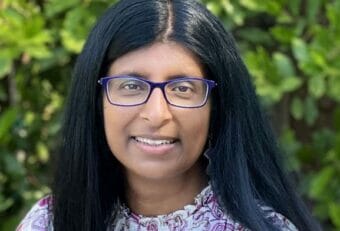
Aparna Palmer has been named chancellor of the University of Alaska Southeast. (Photo courtesy of Aparna Palmer)

University of Alaska President Pat Pitney has appointed a new chancellor for the University of Alaska Southeast.

Aparna Palmer is vice president of Front Range Community College in Colorado. She was previously the assistant vice president for academic affairs at Colorado Mesa University, where she taught biology.

At a public forum earlier this year, Palmer said her work as a marine biologist made her especially happy to be in Juneau.

“I’m really excited to be here between the mountains and the ocean, because this is the biology that excites me the most,” she said.

Palmer holds a doctorate in zoology from Washington State University and bachelor’s degrees in biology and English from Colorado State University. 

She said her priorities include student recruitment and fiscal stability, and she wants to work with local industries to connect graduates with jobs.

“We don’t grow if the region doesn’t grow,” she said at the forum.

Palmer was born in India and moved to the United States as a child. She said promoting equity and inclusion is personally important to her.

“I think about how important it is to me that I have a language that I inherited from my family, and how sad it would be for me if I didn’t have that language, because it’s so particular to the way you understand the world,” she said.

Palmer’s first day as chancellor will be July 1. She replaces Karen Carey, who is retiring after three years on the job.

Outgoing Juneau superintendent will help University of Alaska recruit teachers

Juneau School District superintendent Bridget Weiss speaks at a rally for education funding on Jan. 23, 2023. (Katie Anastas/KTOO)

The University of Alaska is tapping outgoing Juneau School District Superintendent Bridget Weiss to help build the state’s teacher workforce.

Weiss has been named the first-ever liaison for the Alaska College of Education Consortium. According to the university, Weiss will help the education program partner with school districts, state government and other stakeholders.

Weiss said she’s looking forward to strengthening the connection between Alaska’s K-12 and university systems. She chairs the Alaska Superintendents Association, and she said her relationships with local school leaders will be key to this position.

“I feel like my experience really lined up so nicely with this opportunity,” she said. “I’ve been in K-12 for a very long time, and this seemed to be the right way to use all the experiences that I’ve built over those 39 years in a constructive way, from a different angle.”

One of her goals is to increase the number of students dual enrolled in high school and college courses, especially for those pursuing teaching degrees.

“When high school students earn college credit in our system, that’s a big head start for them,” she said. “It’s more likely that they’ll become full-time students in our state university system. And when we produce teachers in our state system, they’re very likely to stay in the state.”

At a presentation to the state Senate Education Committee this week, university leaders showed a map displaying percentages of school district staff who graduated from the state’s university. The lowest percentages were in Northern and Western Alaska, where districts have increasingly relied on teachers from the Philippines

“We have capacity in our education programs,” UA President Pat Pitney said. “We need more students.”

The university already has several strategies to recruit teachers within the state, including a mentor program to support early career teachers and a teacher placement program to help school districts fill vacancies. It also supports Educators Rising, a nationwide program meant to help high schoolers pursue teaching careers.

“But we’ve got some things that are bigger than what the university alone can do,” Pitney said, referring to public school teacher salaries and retirement systems.

Weiss said she’s looking forward to advocating for changes to state policy as part of her new position.

“If we don’t have the foundational core of a defined benefit retirement and adequate funding, it’s going to be much harder to entice kids into this field,” she said.

Weiss announced her departure from the superintendent position in October. She’ll stay in Juneau for her new job, which starts July 1.

Site notifications
Update notification options
Subscribe to notifications