Alcohol & Substance Abuse

Alaska tribes, health organizations join opioid suit

Alaska Native tribes and tribal health organizations have joined a federal lawsuit against the prescription drug industry over the opioid crisis.

Alaska Natives and Native Americans as a whole are fatally overdosing at a higher rate than the rest of the U.S. population. That’s according to the Centers for Disease Control and Prevention.

Rob Sanderson Jr. is a leader on the executive committee of Central Council of Tlingit and Haida Indian Tribes of Alaska. He said addiction often starts on prescription drugs. When the supply of prescription pills runs out they turn to the street.

“You see people that you would never have thought would get addicted to heroin,” Sanderson said. “It’s everywhere. You see it with the rich, the poor – the in-between – you see everybody.”

(Creative Commons photo (cropped from original) by K-State Research and Extension)

Nearly 450 tribes have filed briefs in support of the plaintiffs in a lawsuit against the opioid industry.

“This is an epidemic and a crisis that is devastating Indian Country proportionally, to a much a greater degree than the crisis is having an impact in other parts of the country,” said Geoffrey Strommer, a Portland, Oregon-based attorney helping direct the tribes’ efforts.

Legal experts say the federal multi-district litigation filed in Ohio involves more than a dozen states and thousands of municipalities – and now hundreds of tribes.

“And that’s different from some of the other large-scale litigations that people have compared this case to, most notably tobacco litigation,” said Adam Zimmerman, a law professor at Loyola Law School in Los Angeles. He said that 1998 settlement ordered the tobacco industry to pay states more than $200 billion over 25 years.

But much of that settlement went to state coffers.

Alaska’s Attorney General’s office filed its own lawsuit after Gov. Bill Walker declared a public health emergency over opioids last year.

Zimmerman says it’s clear tribal councils don’t want to leave it up to the states if and when it comes time to share any global settlement.

“They note how tribal sovereignty is very, very, very different,” Zimmerman said, “than the kind of relationships between a city and a state government or the state and the federal government and how important it is that they have a seat at the table.”

Tribal health organizations in Alaska have also filed suit.

The Southeast Alaska Regional Health Consortium – known as SEARHC – operates clinics in at least 20 communities down Alaska’s panhandle. It was among several tribal health organizations in Alaska that joined last month as a plaintiff.

Strommer said tribal health organizations are on the front lines.

“SEARHC, just like other health providers in the state, has seen an increase in resource allocation focused on addressing the impacts of the opioid crisis,” Strommer said.

The increasingly complex opioid lawsuit is in the hands of a federal judge in Cleveland.

With the list of plaintiffs growing by the week, it could even surpass the 1998 tobacco settlement to become the largest lawsuit in U.S. history.

Editor’s Note: This article has been clarified to reflect the state of Alaska’s lawsuit against opioids manufacturers is separate from the multi-district litigation in federal court.

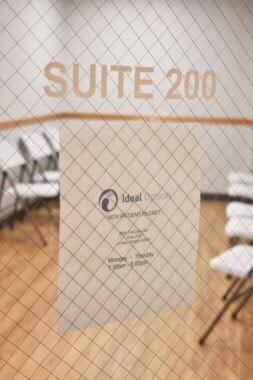
Addiction treatment community reacts to new clinic in Juneau

Medical assistant Sarah Martin sits at the reception desk of Ideal Option, a medication assisted addiction treatment clinic in Juneau. (Photo by Kavitha George/KTOO)

A new medication-assisted treatment clinic called Ideal Option opened near Nugget Mall earlier this month. Existing addiction treatment facilities in Juneau are encouraged that there is a new player in town to help tackle the substance abuse problem, but Ideal Option is different in a few ways.

For one, it’s a for-profit company, and was advertised on Instagram and Facebook prior to opening. Also, Ideal Option doesn’t currently offer in-house counseling — and that has some in providers in the community worried.

“To be frank with you, the addiction problem we have is significant,” said Bradley Grigg, chief behavioral health officer at Bartlett Regional Hospital. “Having multiple providers in our community like we already do is essential to ensuring that people get served and people have options.”

Ideal Option in Juneau is part of a chain of medication assisted treatment clinics. There are more than 50 locations in the lower 48, as well as branches in Anchorage, Fairbanks, Kenai, and Wasilla. The Juneau facility offers a wide range of treatment services, but currently does not offer in-house counseling.

Counseling is not a mandated part of treatment. Addiction specialists say it’s best to start a new patient on medication, even if they don’t want counseling, and hopefully add it in later. But Grigg and other health experts say it is an essential part of helping facilitate recovery.

Jeff Allgaier is the CEO of Ideal Option. He recognizes that there’s suspicion around medication-assisted treatment, including the perception that it just replaces one drug with another, as in the case of Suboxone treatment for opioid addiction. But he says Ideal Option clinics follow the most up-to-date professional practices put out by the American Society of Addiction Medicine and the federal Substance Abuse and Mental Health Services Administration.

“Our goal has always been to try to follow the most up to date evidence-based guidelines, and not sway from it,” Allgaier said over the phone.

The entrance to Ideal Option’s Juneau clinic, located near Nugget Mall. (Photo by Kavitha George/KTOO)

At their clinic near the Nugget Mall, Ideal Option staff seem eager to start helping Juneauites struggling with addiction. Sarah Martin, who works as a medical assistant, moved down from Kenai to help open the Juneau clinic.

“The company in general, what they’re doing is just amazing,” Martin said. “I love it, I’m like ‘Yeah I’m gonna go open this clinic, yeah I want to go work in this clinic,’ just because new patients are my favorite. I love getting people in… the excitement of ‘I want to get better,’ and we can offer that for them.”

Each visit to Ideal Option starts with a urine test, processed by an Ideal Option lab, to ensure patients are taking their medication and no other drugs. Martin says providers then work with their patient to determine appropriate medication dosages.

“It’s all exactly what you need, there’s no set standard of ‘Oh you only get this,'” she said. “It’s whatever the provider and the patient decide what’s best for each person.”

In addition to individualized medicated treatment, CEO Allgaier says every Ideal Option location offers case management services to help patients with things like finding legal services, housing and employment.

James Belardi is a new patient at the Juneau clinic. He said staff told him, “if I’m having problems in certain areas of my life, then we’ll address those problems with them, and they’ll help me work through anything that I need to.”

Belardi says he’s been in and out of emergency rooms and treatment facilities for years, where he faced judgment for his addiction, but Ideal Option feels different. For him, the Juneau clinic’s staff are a welcome change from the stigmatized attitudes he’s faced elsewhere.

“They all wanted to get to know me,” he said. “Which is cool, because I’m not used to that, you know. Usually we’re looked down upon by society. I don’t know, this has just been great. I’m usually real shy, and I come in here and I’m really comfortable.”

As far as counseling goes, Ideal Option clinics in other states have integrated departments they call Ideal Balance to provide behavioral health services, and they’re working with the state to bring that to Alaska. “If I could add it tomorrow, I would,” CEO Allgaier said. “But there are hoops that you have to go through.”

Unlike medical practices which employ individually licensed providers, a counseling agency has to be licensed as a unit, under the company’s name. That process could take two to six months, according to Ideal Balance’s executive director Penny Bell. In the meantime, the clinic is referring patients out to the community for counseling — but this approach has other providers in Juneau concerned.

Registered nurse Claire Suzanne Geldhof says that it’s a big ask to send someone struggling with addiction to a second appointment for counseling.

“It seems like very fragmented care,” she said. “I think it’s in the client’s best interest to receive a robust model under one roof, if possible, like many other options are in Juneau.”

Geldhof organizes regular meetings for the multiple addiction treatment facilities in town, including Rainforest Recovery, JAMHI, SEARHC, and Front St. Clinic. Despite her reservations, she says she’s still looking forward to building a relationship with Ideal Option.

“I’m not trying to shun them by any means,” she said. “I think that something new like this just requires further conversations, and I’m eager to talk more and figure out different ways that we can work together.”

Other providers in town have also expressed plans to reach out to Ideal Option to collaborate in addressing Juneau’s opioid crisis.

Needle exchange hopes to install sharp disposal boxes in Homer bathrooms

(Creative Commons photo by Nathan Forget)

Homer’s local needle exchange wants to install sharp disposal boxes in bathrooms around town so residents can safely dispose of syringes. The volunteer-run organization provides free sterile syringes, lifesaving Narcan kits and on-site HIV and hepatitis C testing, among other services.

Dr. Sarah Spencer oversees the exchange, and she said volunteer staff have been discussing this project for a while.

“People will come to us with news or complaints about finding improperly disposed syringes, like finding syringes on trails or on the beach or in public places and that kind of thing,” she said. “We’ve been thinking that it might help to reduce those reports of inappropriately disposed syringes if people had more access to sharp disposal containers.”

She said it isn’t just people using illicit drugs who are in need of sharp disposal boxes. People who inject insulin and other medications also need safe locations to dispose syringes. Spencer said the Exchange will likely start with a pilot program consisting of roughly 10 boxes around Homer. She said the program will survey its clients to decide where to place the boxes.

“Where they think the hotspots are, especially folks who may be in transit or semi-homeless or here in the summer or don’t necessarily have access that they do of the Exchange,” she said. “Where would be places where they would be most likely to inject or to need to dispose of injection supplies.”

The Exchange would provide the boxes and would take responsibility for emptying them.

Spencer adds that the a recent Homer News story about 100 syringes found on the Homer Spit seemed to concern residents. However, she says that number is small compared to how many syringes are coming into the Exchange. Earlier this month, the program received roughly 4,000 syringes.

“Most people who are using drugs, they want to do the right thing,” she said. “They want to dispose of them correctly and they want to be safe. But you have to give them the opportunity to be able to do that. If they don’t have the opportunity or the choice, they’re just going to do whatever they have to do.”

Spencer said the Exchange will be able to lock the boxes so people won’t be able to reach into them.  She adds that the cost to purchase and maintain them is relatively low.

However, the money isn’t secured yet.

The demand for Exchange’s services has far outpaced its grant funding. Right now, volunteers are using their own money to purchase supplies. The organization hopes to secure more funds through grants and a Gofundme campaign.

If the Exchange raises additional money beyond what’s needed for supplies, Spencer said they hope to install the disposal boxes in January.

$5M in federal money coming to combat Alaska drug trafficking

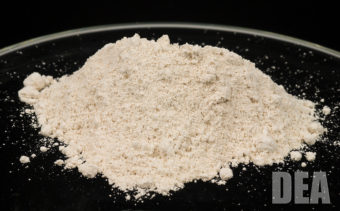
Heroin powder
Heroin powder. (Photo courtesy Drug Enforcement Administration)

Alaska is getting $5 million in federal funds to curb drug trafficking.

The money will come in two installments this and next fiscal year as part of the state’s recent designation as a High Intensity Drug Trafficking Area. The move brings with it resources to interrupt the flow of illegal drugs.

A spokesperson for the State’s Department of Public Safety, Jonathon Taylor, wrote in a release that the first spending priorities are adding funds to “task forces in Fairbanks, Southeast Alaska, and at the Anchorage International Airport” designed to spot drugs coming in. Other money will go towards “law enforcement time, equipment, and training.”

The HIDTA executive board in Alaska is made up of local, state and federal law enforcement officials.

Juneau’s only syringe exchange program may close

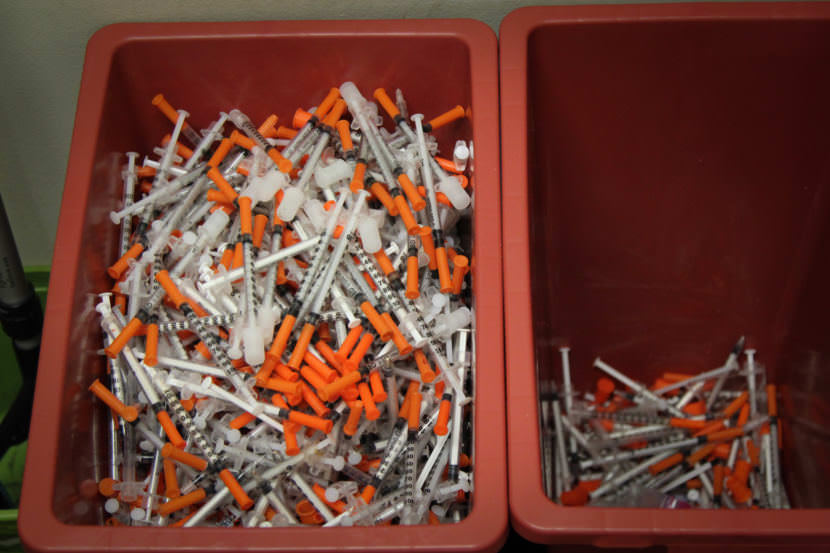
Discarded needles at the Four A’s syringe exchange in Anchorage. (Photo by Zachariah Hughes/Alaska Public Media)
Discarded syringes at the Four A’s exchange in Anchorage. Federal funding will continue for the Anchorage Four A’s office, but not for Juneau’s. (Photo by Zachariah Hughes/Alaska Public Media)

The Juneau branch of the Alaskan AIDS Assistance Association, or Four A’s, is at risk of closing by the end of June. In addition to free HIV testing, counseling services, and education, the Four A’s provides Juneau’s only syringe exchange program. In August alone, the Four A’s exchanged more than 3,000, free of cost.

Bradley Grigg, the chief behavioral health officer at Bartlett Regional Hospital, worries that the loss of a syringe exchange program could worsen the effects of the opioid crisis in Juneau.

“The one word I would use to describe the Four A’s clinic here in Juneau is ‘essential,’” Grigg said.

The group prevents the use of dirty needles, which spread HIV, Hepatitis C, and other infectious diseases.

“Which would in turn, in many ways, affect our public health center and our hospitals and our clinics. I think that would be the biggest impact that we can absolutely predict if this service goes away,” Grigg said.

Four A’s says prevention funding that used to come from the federal government was cut several years ago, because Alaska is classified as a low-risk state for HIV. As a result, the money they do receive is only allotted for the state’s largest city, in this case Anchorage. The group is looking for other funding options to try to keep the Juneau office operating.

Bartlett is working with the Four A’s to find alternative sources of funding. If the group is forced to close down, Executive Director Heather Davis said they hope to at least pass off the syringe exchange program to another prevention organization in town.

“We definitely feel the need to keep it going, and Four A’s board of directors feels the need to try to keep it going if we can,” she said. “So that’s what we’re trying to do, looking at different resources available, trying to find small grants to support it, doing a crowdfunding campaign right now. And just getting the word out, making sure people know about the program and understand the importance of the program and all that it offers.”

The crowdfunding campaign has a goal of $15,000, which the group says will keep the office open through the end of June.

New Trooper report shows Alaska drug problem worsening

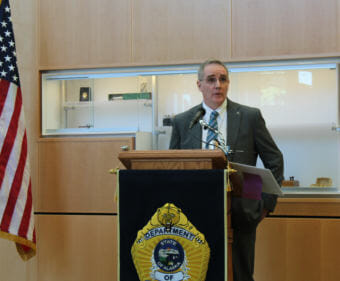
Capt. Michael Duxbury of the Alaska State Trooper’s addresses reporters during a press conference summarizing findings from the latest annual drug report (Photoby Zachariah Hughes – Alaska Public Media, Anchorage)

On Wednesday, the State Troopers put out their most recent data on illegal drugs trafficking through Alaska. The annual drug report suggests the state is dealing with a one-two punch of growing demand amid declining resources for police and substance abuse treatment. AST is pointing to its partnerships with other law enforcement agencies as a strategy for filling in gaps.

At a press conference in Anchorage, Capt. Michael Duxbury summarized the 2017 Drug Report’s key points.

“The problem is getting worse,” Duxbury said of illegal drugs. “There are correlations with the increase in crime, and the lethality of the problem is increasing.”

To either side of the lectern were charts of drug confiscation trends, as well as pictures of heroin and the powerful synthetic opioid Fentanyl. In his nearly three decades with the Troopers, Duxbury says law enforcement is seizing and unprecedented the volume of hard drugs law nowadays. From 2016 to 2017, the amount of heroin intercepted by police doubled. And those seizures represent only a small sample of drugs in the state.

Officials are increasingly using the term “poly-drug use” to describe people regularly consuming multiple mood-altering substances. Though the Walker Administration issued a disaster declaration over the opioid crisis, Duxbury points out there was also a five-fold increase in the amount of methamphetamine seized this last year.

“The opioid in the state of Alaska is the conduit for talking about the poly-drug use problem that we have,” Duxbury said.

The Department of Public Safety is having problems of its own. As of August, 50 of the 389 approved Trooper positions are vacant, more than an eighth. Financial cuts have limited travel to investigate cases, particularly in rural areas. And there are fewer state prosecutors to try cases.

In response, the Troopers have ramped up their collaborations with other federal, state and local partners. That means other law enforcement agencies, but also civilian and private sector entities in places where most drugs enter communities.

“It is happening in the airports, it is happening in the ports that are bringing it to Alaska, and it happens also in the mail,” Duxbury said of how drugs reach the state and move through it.

In spite of expanding problems with hard drugs, AST’s 2017 report notes that alcohol remains the most prevalent substance of abuse contributing to death of Alaskans. State public health officials note that double the number of people died last year from alcohol-related causes as opioids or meth combined.

Site notifications
Update notification options
Subscribe to notifications