
Alcohol & Substance Abuse

Is testing Juneau’s student athletes for drugs and alcohol effective?

Camden Erickson and Nick Tipton spar during a Thunder Mountain High School wrestling practice on December 12, 2018 (Photo by Annie Bartholemew/KTOO)

The Juneau School District has been randomly drug testing student athletes since 2009. But among administrators, students, parents, and coaches, there doesn’t seem to be a consensus about its purpose or its effectiveness.

Nine years later, apart from anecdotal reports, there is little hard evidence to show that it’s succeeded in keeping kids off of drugs and alcohol.

The policy originated from a grassroots effort to address growing drug use among high school students. Since then, the district has spent anywhere from $11,000 to $46,000 a year on drug tests. Even in the face of budget cuts in 2013, the district opted to keep the policy in place.

The feedback from the administrators at the high schools at the time was that, even if they had to figure out a way to administer this process without additional staff, they would figure it out because they felt like it was so important,” said Kristin Bartlett, the district’s chief of staff.

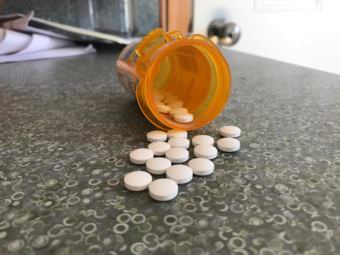
Here’s how it works: A kid will get pulled out of class to take a urine test, and then a technician analyzes it immediately. They test for a range of substances, including cocaine, marijuana, opiates, oxycontin, tobacco and alcohol. Depending on budget constraints, as much as 15 percent of each sports roster is randomly tested, once a week and only while in season.

If the test is positive, parents are notified and the student is asked to produce another sample, which is sent out to a lab for confirmation. Every week the testing service sends the school a report of positive results. The consequences for a confirmed positive test include suspension from sports as well as an online course about the effects of substance abuse. Suspensions from sports range from 10 days to a full year depending on how many times the kid has been caught with a positive test.

[googleapps domain=”drive” dir=”file/d/1Xmnx9CoJQdJMMWN4LCqDLq47Sk1txwDQ/preview” query=”” width=”640″ height=”480″ /]

(PDF courtesy of Juneau-Douglas High School Site Council)

Jake Jacoby, Thunder Mountain High School’s activities director, described the number of positive tests he’s seen in fours years on the job as steady and low.

“Not very many,” he said during an interview, adding, “I would say at least half of the maybe 8 to 10 positive tests we’ve had in the last four years have been tobacco-related.”

But beyond handling these cases one by one as they come up, the district doesn’t seem to be tracking the program’s effectiveness — that is, has mandatory testing actually reduced the number of kids using drugs and alcohol over the years?

“It would be hard for us to measure that with some kind of statistical validity of any sort,” said Juneau-Douglas High School principal Paula Casperson.

To try to compile that kind of data for Thunder Mountain athletes, Jacoby said he’d have to go back through years of hard-copy weekly reports. “It’s not going to happen anytime soon,” he added.

Higher-ups have the same answer. Interim Superintendent Bridget Weiss said in an email that “anecdotally we have few positive [test results],” but that the district does not keep yearly records of the number of positive tests. The consensus there is that the district doesn’t have the time or capacity to keep track of year-over-year testing results.

So how do they know it’s working? Weiss says that the program is meant to give kids a reason to say “no,” rather than catch them in the act. That’s something Casperson as well as Rhonda Hickok, assistant principal at Thunder Mountain, echoed.

“It kind of gave kids an out, if they didn’t have the courage before,” Hickok said in an interview. “We know peer pressure is pretty high, and it could be a challenge for some kids to not be able to say no. Well now they had an out that they could say, ‘No, I participate in this program and I could be drug tested, so I can’t do this.'”

On top of that, Hickok said that the district has taken strides to train teachers to identify risk behaviors, including a two-day drug impairment training program for administrators alongside the Juneau Police Department. The school also holds educational sessions with athletes and their parents about the consequences of drug and alcohol abuse.

Another common refrain from administrators is that the drug policy opened the door to a larger community discussion about youth substance abuse.

“It really elevated the conversation, and people opened up about what the problems were, and people shared more information about how to get help and how to prevent it in the first place,” said Bartlett. “That, I think, contributed a lot to the reduction in the incidences that we were seeing.”

Even without hard numbers, Activities Director Jacoby said he’s confident reports of athlete drug use are just less prevalent. “That sort of conversation I don’t hear anymore,” he said. “I think that it’s a pretty serious deterrent to know that, that you’re in a pool of people that could be tested on a weekly basis.”

But talking to kids and parents, you might hear a different story.

At a Thunder Mountain wrestling practice last month, some players doubted the effectiveness of testing, and others weren’t even sure it’s happening. Wrestling sophomore Nate Houston and senior Derek Mason debated the latter point in the hallway outside the auxiliary gym.

Nate Houston, a sophomore wrestler at Thunder Mountain High School on December 12, 2018 (Photo by Annie Bartholomew/KTOO)

“I haven’t heard of anybody on the team getting tested,” Mason said.

“We got drug-tested for football. I just didn’t get drug-tested,” said Houston. “Only just like a few kids got drug-tested.”

“Jacoby at the front office said that no one got drug-tested for football,” Mason countered.

The boys said their wrestling season was about halfway over, but neither of them had been tested yet. Over the phone, Jacoby confirmed that the school’s wrestlers are being tested, but because of the small size of the team, it’s at most one or two kids per week.

Derek Mason, a senior wrestler at Thunder Mountain High School on December 12, 2018 (Photo by Annie Bartholomew/KTOO)

Most kids said they wouldn’t change the current system, but they also agree that testing doesn’t prevent kids who want to use drugs from using them. “It just depends on the kid, you know?” said Camden Erickson, a senior at Thunder Mountain. “I think if a kid really wants to do drugs, it’s not going to matter if he’s in season or not.”

The small sample size might actually be part of why some athletes feel comfortable risking it. “I knew some kids that got drug-tested five or six times in a season,” said Trevor Jones, a former Thunder Mountain swimmer who graduated in 2015. “And then like, my last two years in high school, I didn’t get drug-tested at all.”

Camden Erickson, a senior wrestler at Thunder Mountain High School on December 12, 2018 (Photo by Annie Bartholomew/KTOO)

Beyond the testing, some student athletes say that even the educational part of the district’s drug policy isn’t particularly effective.

“A lot of students, it just goes over their heads,” Sunny Tveten, a senior on the Juneau-Douglas swim team said over the phone, adding, “They don’t pay much mind to it because many of the students who have done it, they know how to work their way out of getting caught.”

How do they work their way around it? Parents, students — and even Jacoby — report that some kids cheat. “They’ll have other people like, pee for them or whatever,” said Erickson. “I mean, it’s hard to cheat, but it happens.”

It’s not clear just how often kids try to subvert the system, but their attitude does throw into question the value of the testing budget. To be clear, even at its highest in 2010, $46,457.50 for the year, the testing budget is a drop in the bucket in a district budget that has grown from around $65 million to over $80 million in the last nine years. That’s one explanation for the program continuing without thorough understanding about what it’s doing.

Merry Ellefson, a Juneau-Douglas cross country coach and parent of a Juneau-Douglas student, said over the phone that she’s unclear on the effectiveness of the policy, but “the money that we’re putting into it is so small right now that perhaps it’s doing what it needs to do.” She noted, however, “We also know that there’s a lot of the young people that have figured out the system, and we know there’s kids in our schools walking around with clean pee … in case they get called out.”

She laughed, adding, “I mean, they’ve figured it out.”

For Ellefson, the bigger issue is making sure kids have a positive, supportive environment in which to get help.

“I’m feeling like, if I have kids on my team caught smoking, I’d rather have them smoking and running than not coming to practice,” she said. “I’d rather have them with this group of young people that are active and making good choices and traveling with me, than spending more time on their own and perhaps unsupervised.”

At the same time, parents like Ellefson say it’s unreasonable to expect the district to be solely responsible for solving the issue of substance abuse. “And at the same point, it’s where we are at,” she added. “We’re all participating … and $11,000 might be an important little wedge in trying to keep our community healthy.”

National studies of high school drug testing programs haven’t shown a strong correlation — if any — between testing and lowered substance abuse, arguing that improvements in school environment may be a more effective use of resources to reduce substance abuse. A 2015 statement from the American Academy of Pediatrics denounced “widespread implementation” of testing programs due to a “lack of solid evidence for their effectiveness.”

Drug testing is just one part of Juneau School District’s strategy to address the issue, along with education and outreach resources. But seemingly satisfied with anecdotal evidence, it appears unlikely that administrators will be changing the program anytime soon.

When a step back into prison is really a jump forward on the road to recovery

Community members gathered for a conversation at Anvil Mountain Correctional Center.
Community members gathered for a conversation at Anvil Mountain Correctional Center. (Photo courtesy of Danielle Slingsby)

Alexandria Niksik has been in and out of prison for seven years. Her most recent return home only lasted 16 days. But what might look like failure from the outside is actually a key step toward success and recovery from alcohol misuse.
When Niksik was a kid in St. Michael, a village in western Alaska, she learned some lessons pretty quickly.

“With just violence being a part of growing up in my childhood, it was always my first instinct to react violently,” she said during an interview at Anvil Mountain Correctional Center in Nome in the late summer. “Because I never knew any other way to express my emotions properly.”

Niksik saw some of the adults in her life using alcohol as a way to cope with their trauma from childhood, she said, so she started doing the same thing.

“Either numbing or enhancing my emotions, whether they were negative or positive, I’d always turned to alcohol to express my emotions,” she explained.

By 18, Niksik was involved with the criminal justice system. For a few years, she moved between Anvil Mountain Correctional Center and her village where she stayed with her family and her children. Eventually, she was sent to Hiland Mountain Correctional Center, the women’s prison in Eagle River — a huge change for her. There she received intensive outpatient treatment for alcohol misuse.

“I learned things that my parents didn’t have a chance to learn, and it played a role with how I should be a better person,” Niksik reflected.

She learned things like coping skills and ways to deal with her emotions. And then she was released. Niksik went back to St. Michael, back to her old friends and her old life. She said she was OK when she was with her children because they motivated her to stay sober. But when they left to stay with other family members, “When they weren’t with me, I felt lost completely.”

“I didn’t know what to do with myself when I didn’t have my children around,” Niksik said.

Niksik said she starting hanging out with the same people as before, and she gave in to peer pressure to start drinking again.

“It’s hard to change when you’re the only one who knows the steps to change and want to change,” she said. “Because those guys in St. Michael, they don’t have the opportunity that I did. And I was very overwhelmed with the step-up of showing them how to be there for them in the proper way that people were for me.”

After 16 days, state troopers took her back to Anvil Mountain.

David Patterson Silver Wolf, a professor of social work at Washington University in St. Louis, said Niksik’s situation is common. He has worked as a treatment provider and a researcher.

“Behavior changes is hard, right?” Patterson Silver Wolf said. “And it’s really hard to do when you have people who are convincing you that you don’t need a change.”

Patterson Silver Wolf is also a person in long-term recovery. He said having a support system of people who understand the changes you are trying to make is essential.

“I had these routines of using alcohol and drugs and doing those things,” Patterson Silver Wolf said. “I had to reinvent my whole self, which required that I had to make new friends and go to another community and oftentimes avoid the community where I gave in, where it was easy to give in.”

He said he also needed hope and motivation for change, just as Niksik needed the motivation of supporting her children.

Finding new people to hang out with is easier said than done in a village of 400, but Niksik said that her brief trip back to her village this summer actually gave her hope that she could do that.

“With the time that I was home, I learned who to avoid and who I was most vulnerable against when it came to questioning on whether I wanted to party with them or not,” Niksik said.

The experience was a reality check about what she needs to do in the future.

“I not only hurt myself or my parents, but I hurt my son. That hurts me the most because the look in his eyes when the troopers came to pick me up again. It’s still tearing at my heart,” Niksik said, her voice catching. “He still questions on why I had to come back to jail.”

Now, Niksik is heading to a long-term residential treatment program where she can live with her son. She said she’s ready to focus on her sobriety and prepare herself to return home.

She has plans for her future in St. Michael. She’s going to care for her parents and open a restaurant. And she’s going to be a supportive mother for her children.

Medicaid decision allows more beds for substance abuse treatment

Medicaid has an old rule that says it won’t pay for substance abuse treatment if a facility has more than 16 beds. Now, as it faces an opioid epidemic, Alaska can ignore that restriction.

Gov. Bill Walker said the good news came Wednesday in a call from the White House: The federal agency in charge of Medicaid has granted the State of Alaska’s request for a waiver.

The state said the waiver makes an additional 66 treatment beds available for Medicaid patients struggling with drug addiction. The 16-bed limit came in the original Medicaid law in 1965. It was designed to ensure that states remained responsible for funding psychiatric hospitals.

Alaska’s new waiver also expands options for community-based treatment and for medication-assisted treatment.

State asks for new housing units to help Alaskans in recovery

The state of Alaska wants more housing for residents recovering from opioid abuse.

The Department of Health and Social Services is asking for bids to set up as many as 10 residential facilities across different areas of the state. The federal funds will bring up to $2.042 million over two years for what are called “recovery residences.” The term applies to peer-supported homes for people in outpatient treatment or long-term recovery from addiction. As it’s laid out, the grant would serve up to 100 people over two years.

“What these funds are aiming to do is to really further develop the recovery support services that are needed across the state,” said Katie Chapman, who works on opioid treatment for the state’s Division of Behavioral Health.

The money can’t be used for new construction or significant renovations. Instead, the state is hoping to expand existing treatment resources or establish new recovery residences by paying operating costs. Part of the selection criteria is a sustainability plan. According to Chapman, there are already a small number of similar facilities up and running, but the state hopes to expand its capacity offering treatment in ways that differ from older models like halfway houses.

“These types of programs are generally peer-run,” Chapman said. “There’s an emphasis on recovery support activities, and so they’re doing things that involve them in the community and building connection.”

The areas targeted for new residences are Anchorage, the Fairbanks North Star Borrow, Matanuska-Susitna Borough, Kenai Peninsula Borough, Southeast and Southwest regions.

Alaska has seen a dramatic rise in opioid abuse over the last several years, with over 100 fatal overdoses attributed to opioids last year.

Report: Suicide is Alaska’s fifth-leading cause of death

Every year, the Alaska Department of Health and Social Services releases a Vital Statistics Report: a breakdown of data gathered the previous year. That report provides all kinds of statistics, including marriages, divorces, births and deaths.

Yet again, Alaska has a higher-than-average rate of suicide. The report shows that for 2017, suicide was the fifth-leading cause of death in the state. Nationally, it’s the 10th-leading cause.

Danny Gladden is chief clinical officer for Akeela, a statewide agency that runs Ketchikan’s Gateway Center for Human Services. He said there are a number of reasons why people die from suicide.

“A leading contributor to suicide death would be accessibility of alcohol, the accessibility of guns, and the underutilization or lack of access or, frankly, the complicated process for early intervention, prevention and treatment of mental illness,” he said.

In terms of actual numbers, 197 Alaskans died from suicide in 2017. Of those, 118 used a gun, according to the state report. The report doesn’t indicate how many may have consumed alcohol beforehand.

Alaska has some additional unique variables. People in remote areas might have few if any treatment and intervention options, for example. And then there are Alaska’s extra-dark, extra-cold winters – especially farther north.

Gladden said anyone can call the National Suicide Prevention Lifeline, 1-800-273-8255 (1-800-273-TALK). He said callers can be anonymous, and will be able to talk to a trained, compassionate person who will give advice and direct callers to a local provider.

Gladden said there are options in Ketchikan and throughout Southeast Alaska for those seeking help with any kind of mental health or substance abuse treatment. Akeela-Gateway offers both.

“But there are a number of wonderful providers. In Southeast Alaska, we have SEARHC, based out of Juneau but serving a number of surrounding areas. SEARHC is a Native provider. We have KIC, which is providing both mental health and substance abuse services in Ketchikan, and then in Juneau, there’s also JAMHI, which is the community mental health center for Juneau,” Gladden said.

He said there also are private providers.

“And I can tell you, any one of these providers, if you arrived and maybe they weren’t the best fit for you, would direct you to the right location,” he said. “All of us are committed to getting folks connected to care. There’s no wrong point of entry.”

Gladden said different approaches to treatment allow individuals to choose what works best for them. Opioid addiction, for example, can be treated with a combination of behavioral modification and medication to curb withdrawal symptoms.

According to the state report, unintentional injuries and poisonings, which includes drug overdoses, was the third-leading cause of death in Alaska in 2017. The report shows 143 Alaskans died last year from overdoses. Of those, the majority were from opioids.

Gladden said the Ketchikan Public Health Center offers Narcan, which can save the life of someone overdosing from opioid abuse. He said any entity that has a first-aid kit also should have a Narcan kit.

“Go up to Public Health, let them train you, and have a Narcan kit at your organization,” he advised. “You never know when you’re going to encounter someone who’s needs that life-saving opioid reversal.”

The kits are free, Gladden said, including the training.

According to the Department of Health and Social Services report, 4,415 Alaskans died in 2017. The top 10 causes, in order, were cancer; heart disease; unintentional injuries and poisonings including overdoses; chronic lower respiratory disease; suicide; stroke; diabetes; chronic liver disease and cirrhosis; Alzheimer’s disease; and homicide.


Self-harm and suicide are complex. Most people who consider suicide do not ultimately kill themselves.

If you or someone you know is thinking about suicide or just needs someone to talk to, you can call the Alaska Careline at 1-877-266-4357 (HELP) or text 4help to 839863 Tuesday-Saturday 3-11 p.m. Outside of Alaska call the National Suicide Prevention Lifeline at 1-800-273-8255.


To cut crime, candidates weigh adding troopers, increasing drug treatment

Republican Mike Dunleavy, left, and Democrat Mark Begich participate in a debate Thursday, Oct. 25, 2018, hosted by Alaska Public Media and KTUU Channel 2.
Republican Mike Dunleavy, left, and Democrat Mark Begich participate in a debate Thursday, Oct. 25, 2018, hosted by Alaska Public Media and KTUU Channel 2. (Video stills via Debate for the State)

How to address the problem of rising crime in Alaska has become a central point of contention in the closing days of the race to be governor.

Recent debates have focused on the criminal justice overhaul passed two years ago, known as Senate Bill 91.

SB 91 drew from research that suggests that reduced criminal sentences can actually lead to reduced crime. The law allowed some low-risk offenders to avoid jail time. It also changed sentencing, bail, and probation, and it funded drug treatment.

But it’s prompted a fierce backlash from residents and police alike, who are upset over rising crime. The Legislature has passed two major laws to scale back the overhaul.

Republican candidate Mike Dunleavy said during a debate hosted by Alaska Public Media and KTUU Channel 2 that despite the changes to the bill, he still opposes it.

“I would repeal it, because the people of Alaska have lost trust in this bill and I believe we can do better,” he said. “I believe that we can fill in the holes that are in 91 and … restore that trust with the people of Alaska.”

Democratic candidate Mark Begich said during another debate – on KTVA — that he’d “clear the deck” of what’s left of SB 91. But he’d replace it with what he described as a comprehensive plan.

“If you just get wrapped around 91, you’re missing the big picture – which is fighting crime in this state,” he said.

His plan includes more treatment, as well as more state aid to municipalities to hire police officers. To fill vacant trooper, corrections and prosecutor positions, Begich said he’d expand recruitment and training, while offering defined-benefit pensions to compete with the Lower 48.

Dunleavy said public safety would be the highest priority for the state budget.

“That’s the primary purpose of a state – of any government – is provide safety for its citizens,” he said. “The last four years, we’ve all changed our behaviors. I don’t think there’s any of us that know of anyone that’s not been impacted by crime – either directly or indirectly.”

Dunleavy said he would fund his public safety initiatives by reducing the number of state government jobs that are budgeted for but aren’t filled.

There might not be much money available. The state budget accounts for the assumption that the state won’t have to spend money for a certain number of positions that become vacant throughout the year.

Begich emphasized that of the positions the state does fund but hasn’t filled, many are in public safety – where the state has struggled to successfully recruit and retain troopers.

He said that if unspent money was available, conservative lawmakers would have found it during the fiscal crisis.

“Because I guarantee you, the Senate – especially with (Republican Senate President) Pete Kelly at the lead – would have found that money and used it in some way without having to worry about dealing with taking the Permanent Fund,” Begich said.

Dunleavy wants to hire more officers and prosecutors, with a goal of arresting and jailing more people who commit crimes.

“We have to get the right number of troopers in place,” Dunleavy said. “We have to get the right number of prosecuting attorneys to move our cases through. We have to open up the courts Friday afternoon instead of closing Friday afternoon. And we have to look at corrections, to make sure we have the right number of folks there, because there will be a bit of an increase in folks going to prison.”

Begich also supports increasing the number of troopers and prosecutors. But in response to rising drug-related crime, Begich also emphasized drug treatment and using wellness courts, which divert offenders into treatment programs.

“Eighty percent of our folks in corrections need the treatment necessary – those that want to have it. Wellness courts are another great investment,” he said. “I’ve seen the turnaround: Ninety percent of the people who go through wellness courts do not re-offend. It’s the right kind of investment to have a long-term impact.”

Begich also said tribal courts could be expanded in Alaska Native communities, with a similar goal of reducing recidivism.

Begich added that he wants to fix a gap in the drug treatment system. People who leave prison have 28 days of medication to treat their addiction, but Medicaid coverage only begins after 30 days.

Dunleavy also said treatment is a priority.

Voters will decide on Tuesday.


Site notifications
Update notification options
Subscribe to notifications