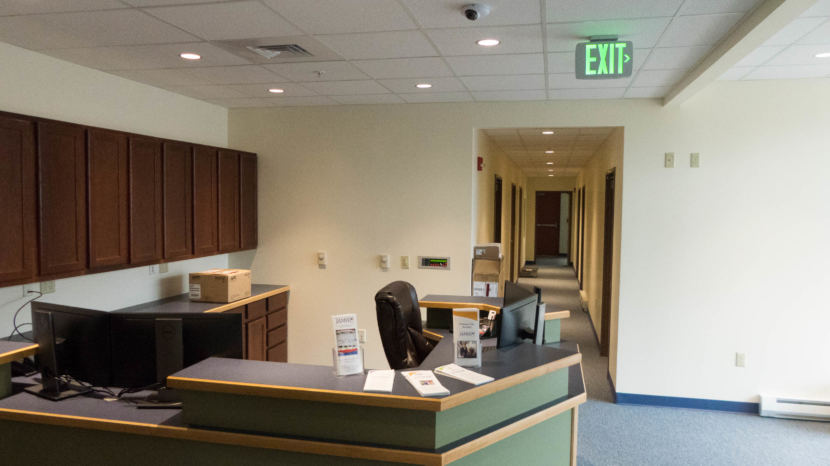
The reception desk of the community clinic on the ground floor of the Juneau Housing First building, taken Sept. 19, 2017, shortly before the facility opened to the first tenants. (Photo by David Purdy/KTOO)
Juneau’s Housing First project is fully staffed and functioning nearly three months after its first tenants began moving in.
Housing First provides subsidized housing to 32 of the community’s most vulnerable residents – most of whom had been living on the street.
Unlike conventional shelters, there are no restrictions on alcohol use.
Enrollment in counseling or treatment programs is voluntary.
Monday was a major milestone when the downstairs medical clinic run by Juneau Alliance for Mental Health Inc., or JAMHI, admitted its first patient.
“As of right now the clinic is just going to be offering basic health support services,” Program Director Dacia Davis said Monday. “We have our first tenant over there today getting a basic physical and having some basic questions answered about their health.”
Overall, project has been running well with tenants making themselves at home in the Lemon Creek area complex, she said.
“Obviously there’s going to be bumps in the road, people are adjusting in a new environment and new space,” Davis said. “With that said, there have been very few issues that have come up. We’ve had a lot of communities support. For example, drumming; we’ve had local musicians come by and do a music concert for the tenants. We have a woman who volunteers her time doing art. It’s just trying to find those activities for the tenants to keep people occupied if that’s what they feel like doing.”
Years in the making, the $8.3 million initiative received about a third of its start-up funding from the City and Borough of Juneau as part of a community effort to combat homelessness.
Tenants began arriving in September in phases. The last of the 32 tenants moved in at the end of October.
Corrections Commissioner Dean Williams speaks to reporters after Gov. Bill Walker announced his appointment Jan. 28, 2016. (Photo by Skip Gray/360 North)
It’s easy to access illegal drugs in prison in Alaska, Department of Corrections says.
Commissioner Dean Williams says his department is trying to stop it.
This month, five women at Hiland Correctional Center in Eagle River overdosed in a 24-hour period, and three men were recently charged with conspiring to smuggle drugs into Goose Creek Correctional Center.
Williams said people often think you can stop drugs from entering prisons by searching people, but it doesn’t work that way.
“Most of these are being packed inside people’s bodies and you cannot search people’s bodies internally who are coming into prison,” Williams said. “You can’t. There are civil rights issues and just operationally how the heck would you do it? It’s impossible.”
On the enforcement side, Williams said his internal investigations unit is working with state and national enforcement agencies to track down and charge people who are smuggling drugs into the institutions.
But he said that won’t solve the whole problem – they also need preventative measures.
The most effective tool is keeping people busy with jobs and other activities, Williams said.
“Really just creating purpose,” Williams said. “What I call purpose and jobs – having something to do. All of those things are huge preventative pieces. When you have people occupied, there’s less trouble.”
Williams said he’s trying to create more opportunities for inmates by inviting community members into prisons to offer classes and programs.
He also wants to reintroduce prison industries, like building furniture, to give inmates more productive things to do and raise money for the department to offer more options.
Williams said stopping drug use and trafficking in prisons requires a multifaceted approach because different people require different solutions.
“Lots of activities. Many paths forward. Both treatment, jobs, vocational training,” Williams said. “I want it all is because what I see elsewhere is that’s how you bring down the re-offense rate. That also, by the way, helps reduce subcultures and gangs and drug trafficking.”
Williams is partially modeling his new strategies on prisons in Norway, which have minimal problems with drugs and lower recidivism rates.
He traveled to the Scandinavian country earlier this fall to visit their facilities.
Williams and other statewide law enforcement officials are also considering offering amnesty to people who try to smuggle drugs into prisons. That means if a person sneaks drugs into a facility then thinks better of it, if the person reports the drugs within a short window of time, then they won’t be charged with a crime.
Authorities are investigating the death of an intoxicated man who died after being admitted to Rainforest Recovery Center to sober up.
Juneau police said in a release that Steven Jay West, 57 was visibly intoxicated in the downtown area around 1:30 p.m. Sunday. He was walking and talking, police said, but deemed inebriated and driven to the facility by Rainforest Recovery Center staff.
Police said he was medically cleared and admitted as the facility’s sole in-patient.
But during a routine check at 4:05 p.m. staff found him to be unresponsive. Medics from Capital City Fire/Rescue were called but were not able to revive him.
Police said there were no signs of trauma and his death was not considered suspicious. West’s body was sent to the Medical Examiner’s Office in Anchorage for an autopsy.
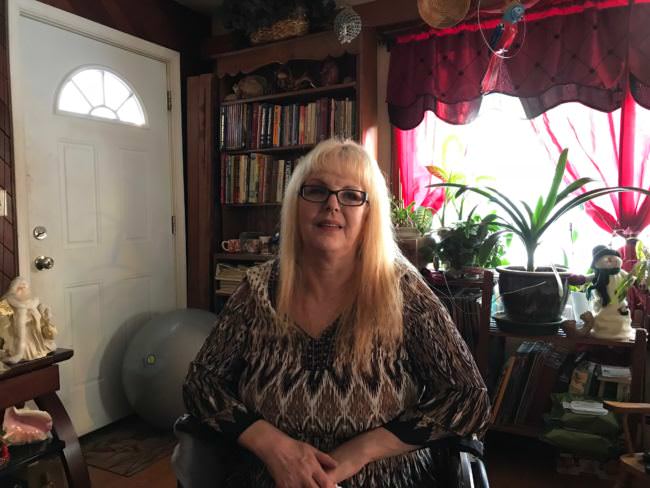
Lifelong Juneau resident Mary Alissia Parr is unable to walk because of spine damage.
She has been in physical therapy, she said sitting in a wheelchair in her Mendenhall Valley living room, but also takes prescribed OxyContin and Percocet for chronic pain management.
She’s worried about new regulations restricting opioid prescriptions.
“It’s a very tough situation. Yes, the drug abuse on the streets needs to stop, it’s awful,” she said. “But what happens to the other people. I don’t have any answers for that yet. And I’m looking.”
The Prescription Drug Monitoring Program, or PDMP, has been in Alaska since 2008.
While the monitoring program was originally voluntary, it became mandatory in July.
It’s an online database, set up by the state.
Physicians, pharmacists or even veterinarians log the controlled substances, including opioids, they prescribe.
The program allows prescribers to check whether a patient is already receiving a prescription from another doctor, and discourages over-prescribing.
“The primary goal of the PDMP is to be a meaningful force to curb opioid misuse and addiction in the state.”
The monitoring program informs doctors when patients ask for duplicate opioid prescriptions, said Sara Chambers, the deputy director of the Division of Corporations, Business and Professional Licensing.
“And that can be done through, at the front end, through providing medical personal with information to make decisions before prescribing,” Chambers said. “The PDMP data can be used after the fact as information to help feed our health care experts in the state and make sure that they’re aware of prescribing trends and practices. From the front end of prevention to the back end of analysis and treatment, the PDMP provides an excellent glimpse into how Alaska is utilizing opioid prescriptions.”
The main purpose of the program is to be an educational resource, but Chambers said over-prescribers could face disciplinary action.
Juneau surgeon Dr. David Miller registered for the monitoring program once it became mandatory. He said trying to reduce over prescribing is worth the extra effort, but he worries it won’t have the desired effect.
“I would like to see some numbers that this has an effect. If all you’re doing is increasing work load for physicians, and you don’t get the desired effect, that’s always a possibility,” he said. “I have a feeling that physicians that over prescribe narcotics are still going to continue to do that. But it’s at least a step in the right direction to try to rein some of this practice in.”
But the new regulations may be hurting patients who use prescribed opioids as a form of pain management, including Parr.
Mary Alissia Parr takes prescribed opioids for chronic pain management. She believes new legislation has made it harder to find a doctor to prescribe her medication. (Photo by Julia Caulfield/KTOO)
“They’ve helped me a great deal,” she said. “They’ve made it so I can get up during the day and be mobile, whereas before I couldn’t hardly move.”
She understands the restrictions, but she’s nervous about the effects.
“Yes, it has been abused greatly, by a lot of people,” Parr said. “Unfortunately the people with chronic pain are getting caught in the middle of this.”
Parr said she used to go to a pain management clinic in Juneau, but since it closed earlier this year, she’s had trouble finding a doctor who will prescribe what she needs.
She believes it has to do with the changes in legislation.
“They’re frightened to do this, and I understand, but what about the few of us that aren’t abusing the medications and are following the programs, what happens to us?”
Chambers, who oversees the program, said there are provisions that allow for doctors to prescribe larger amounts, as long as it’s appropriate treatment, and documented properly.
She said the program hasn’t collected enough data to see if the changes are helping, but she hopes more data — due out this winter — will show the program is working.
For more information about opioid addiction and treatment visit the Alaska Department of Health and Social Services website.
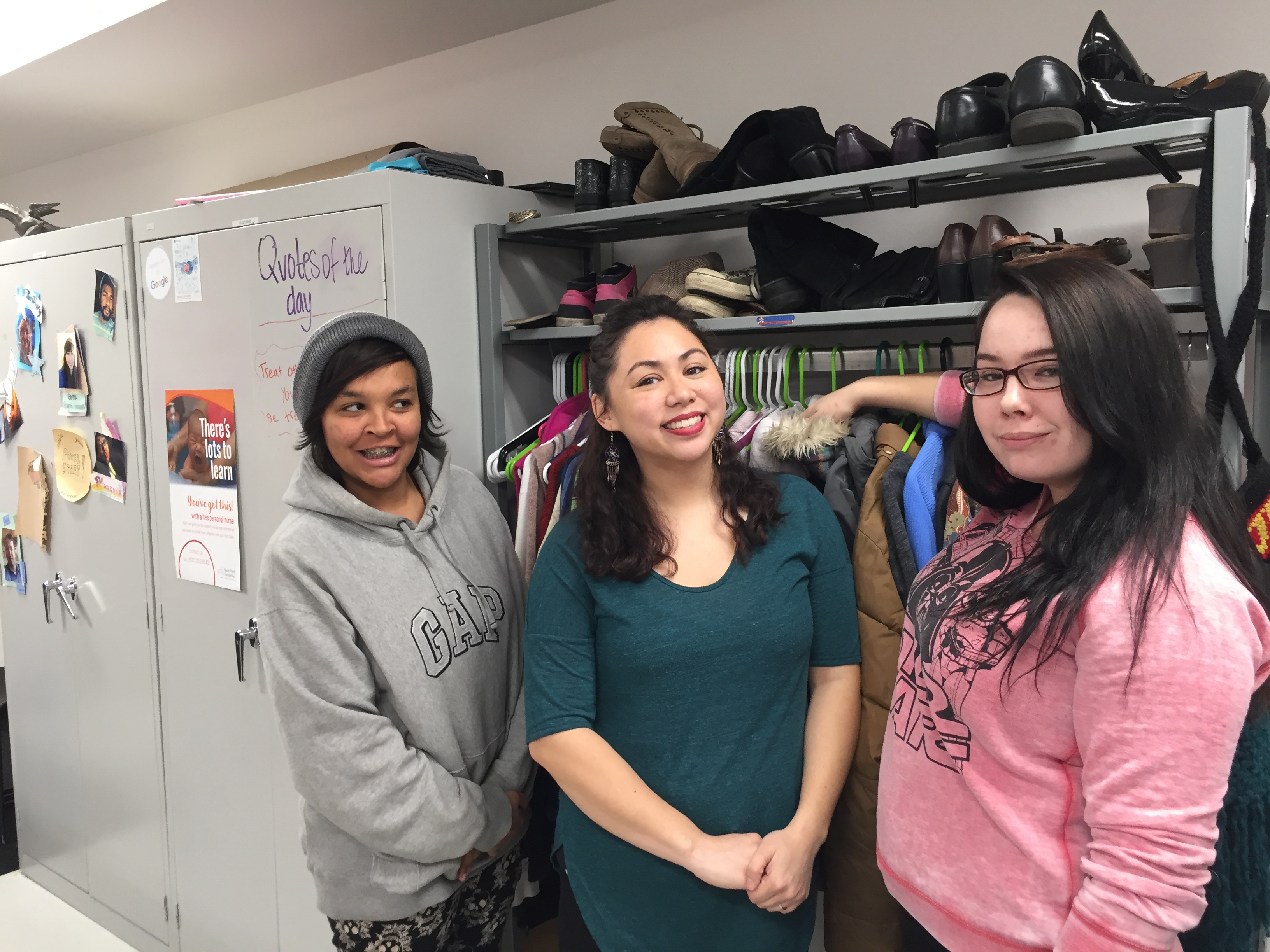
Nichelle, left, Serena and Ivory are staff with the Alaska Youth Advocates POWER Teen Center. (Photo by Anne Hillman/Alaska Public Media)
Sometimes when young people are in rough situations, they don’t want to ask for help. Especially not from adults.
That’s where peer outreach workers step in.
Alaska Youth Advocates have been connecting with youth on the streets of Anchorage and helping them find resources for 25 years.
Nichelle, 20, used to hang out at the Alaska Youth Advocates drop-in center over a year ago. But she says she was different then — she had been using heroin and other opioids for years.
“When I was using, it was like, I wasn’t thinking about how I was treating other people,” she said. “I wasn’t taking them into consideration.”
Since then she’s sobered up a couple times and moved around a bit. Over the summer, she was homeless and camping in the woods.
One day, two peer outreach workers saw her hanging out in a park and let her know she was still welcome at the drop-in center, whenever she was ready.
Nichelle said at first she was too embarrassed to go back because the people at the center had seen her at her worst.
“It was a nerve-wracking experience at first,” she said. “But then when I came in here I saw that they were here to support me and not judge me.”
That’s one of the key ideas behind the center – accepting the young people as they are.
It’s part of a strategy used around the world, called Positive Youth Development, that focuses on leveraging young people’s strengths as a way to help them learn how to be healthy adults. In order for it to work, youth have to feel safe, supported, and accepted.
Program coordinator Serena Nesteby said sometimes it’s easier for that to happen when young people are leading the effort.
“It’s easier for youth to talk to other youth,” she said. “It’s easier for them to connect to someone who is their same age who maybe went through same or similar experiences as them to reduce barriers and to build stronger relationships.”
And it’s not as if the workers are sent out unprepared – they each have to go through three months of intensive training on everything from addiction to housing to balancing school and work.
They bring up those skills in casual conversations and when teaching formal presentations.
Peer outreach worker Ivory, Eighteen-year-old , even demonstrates her favorite coping skill on a regular basis in the drop-in center kitchen – baking.
“Yeah, it just gives me something to do,” she said as she finished beating a bowl of lemon cake batter to share with whoever drops by. “I don’t know. It’s good for me.”
She said it helps her deal with stress.
Ivory is balancing motherhood with work and will soon start college, too.
When she dropped out of high school because of bullying and got pregnant at 15, she didn’t have a support network.
“My family wasn’t supportive of me,” she said. Her friends dropped her, too. “They actually told me I wasn’t going to succeed. That I was going to sit at home and not do anything with my life.”
She didn’t know about Alaska Youth Advocates or other resources, but now, as an outreach worker, she can fill the knowledge gap for other young parents.
She lets them know that, “they are not the only people out there. Like they’re important, too, and they can still finish high school, they can still have a job. They can still do what everyone else does when they are older, with children.”
But here’s the catch – Ivory said having a person like that in her life when she was pregnant or having a safe place to go, like the drop-in center, wouldn’t have helped her. She needed to struggle to prove to herself and her family that she could do it, she said.
Alaska Youth Advocates would not have been a good solution for her, but she said she sees how it helps others, like Nichelle.
After Nichelle finally came back to the youth center, she eventually developed enough courage to apply for a job to be a peer outreach worker.
Now she’s in training – and said learning everything in the packed three-inch binder is hard.
She laughed nervously, glancing at her work.
“There’s a lot of information you have to remember.”
Nichelle said working at the youth center forces her to be more outgoing and to face some of her past experiences. More than once she’s come into work and burst into tears. She used to apologize for her weaknesses, but not anymore.
“You know how I see it, at the end of the day is, youth here they see that I can be vulnerable and it’s ok for me to cry, like, then it can send a message to them that it’s okay for them to cry in here, and it makes it more of a safe space,” she said.
The peer outreach workers interacted with 300 different young people last year. More than half were homeless.
Some just received hygiene products, snacks, and information.
Others came to the center to cook a pot of spaghetti or get help finding housing.
The outreach workers met them where they were at. Literally.
Methamphetamine-related fatalities have increased fourfold in Alaska over the last decade, according to a state epidemiological report released Tuesday.
The increase in meth-related mortality — which health officials described as a “surge” — comes as Alaska continues to grapple with an opioid epidemic that led Gov. Bill Walker to declare a public health disaster.
According to the Tuesday report by the state Section of Epidemiology, a comparison of three-year averages shows an increase from 1.4 methamphetamine-related deaths per 100,000 people to 5.8 such deaths per 100,000.
The report states there were also increases in nonfatal meth-related hospitalizations in recent years, among other adverse health impacts.
The report shows methamphetamine deaths in every region of the state and among a wide demographic range, though meth use among teenagers appears to have dropped slightly.
The epidemiologists noted the highest rate of methamphetamine-related fatalities was among 45- to 54-year-olds.
Unlike opioid overdoses, which are characterized by drastically slowed breathing, methamphetamine can cause an increase in heart rate and breathing that sometimes leads to heart attack or stroke.
But the recent report confirms what health officials have known for a while: Methamphetamine was often not the only drug used by the people who had overdosed.
About half those whose deaths were directly attributed to methamphetamine had also used opioids, which include heroin or prescription pain medication.
It is not uncommon for someone getting their opioid fix — which comes with a sedative effect — to also use meth as a pick-me-up, Alaska’s chief medical officer Dr. Jay Butler said.
“Balancing the effects of the two is one of the reasons, sometimes, methamphetamine and opioids are used together,” Butler said. “Sometimes this is called a ‘trainwreck,’ sometimes called a ‘speedball.’ I think what’s different, more recently, is just that the overall rates have seemed to have increased.”
At least in part, Butler said that seems to be a result of higher supply meeting higher demand.
On the supply side, he said there is evidence of more methamphetamine on the black market at cheaper prices.
As for why demand seems to be on the rise, though, Butler said that is more complicated problem, and therefore requires a multi-pronged solution.
“We have to have comprehensive approaches to addressing drug use,” Butler said. “Just taking molecule-specific approaches, and thinking if we focus solely on opioids we have nothing else to worry about is really short-sighted, and we need to get into some of the underlying reasons of supply and demand that drive addiction in our state and in our country.”
Close
Update notification options
Subscribe to notifications
Subscribe
Get notifications about news related to the topics you care about. You can unsubscribe anytime.