Alcohol & Substance Abuse

How Portugal eased its opioid epidemic, while US drug deaths skyrocketed

Dr. João Goulão, director-general of the General Directorate for Intervention on Addictive Behaviours and Dependencies General Directorate, is widely credited with shifting Portugal’s addiction response toward a focus on health care and treatment. Overdose deaths have plummeted. (Lea Suzuki/San Francisco Chronicle/ via Getty Images)

Talk to people addicted to street drugs in Lisbon, Portugal’s capital, and you hear confusion and dismay over the carnage of overdose deaths taking place an ocean away in the U.S.

Ana Batista, a soft-spoken woman in her 50s who’s been addicted to heroin for years, said she hasn’t lost a single friend or family member to a fatal overdose.

“No, no, no,” she said, speaking at a safe drug consumption clinic, where she had come to inject under the supervision of nurses and counselors.

Liliana Santos, 41, a woman with a sad weathered face who had come to the clinic to smoke heroin, voiced similar bafflement.

Had she lost friends or family? “No.” Had she overdosed herself? She shook her head: “No, no.”

The contrast is striking. In the U.S., drug deaths are shatteringly common, killing roughly 112,000 people a year. In Portugal, weeks sometimes go by in the entire country without a single fatal overdose.

Ana Batista, who asked that her face not be photographed, comes to a drug consumption clinic in Lisbon almost every day where she can use heroin under medical supervision. “It’s different, very different,” Batista said, adding that she feels safer and less alone. (Tilda WIlson/NPR)

Portugal has roughly the same population as the state of New Jersey. But while New Jersey alone sees nearly 3,000 fatal drug overdoses a year, Portugal averages around 80.

“The statistics really speak for themselves,” said Miguel Moniz, an anthropologist at the Institute of Social Sciences, University of Lisbon, who studies addiction policy in the U.S. and Portugal.

An opioid crisis and a pivot toward healing

What’s different in Portugal? In the late 1990s, the country faced an explosion of heroin use. The drug was causing roughly 350 overdose deaths a year and sparked a wave of HIV/AIDS and other diseases linked to dirty needles.

Portugal offers people in addiction an integrated network of services, including vans where residents can use street drugs under medical supervision. (Tilda Wilson/NPR)

Portugal’s leaders responded by pivoting away from the U.S. drug war model, which prioritized narcotics seizures, arrests and lengthy prison sentences for drug offenders.

Instead, Portugal focused scarce public dollars on health care, drug treatment, job training and housing. The system, integrated into the country’s taxpayer-funded national health care system, is free and relatively easy to navigate.

“Someone who has problematic drug use isn’t someone who is a criminal or someone who has a moral failing,” Moniz said, describing Portugal’s official view of addiction.

“They’re someone who has a health problem, a physical or a mental health problem,” he said. “That’s a tremendous societal shift.”

Many U.S. drug policy experts who’ve studied the Portugal model say it’s clear parts of it worked far better than the tough-on-crime philosophy embraced by U.S.

“I think they showed that when you make [addiction treatment] services extremely available to people who are struggling with problems of drugs, you get a lot of good outcomes,” said Dr. Keith Humphreys, an addiction expert at Stanford University.

“The police is always our friend”

There’s one other big difference. Beginning in 2001, Portugal’s national addiction strategy decriminalized personal drug use and reinvented the role of police.

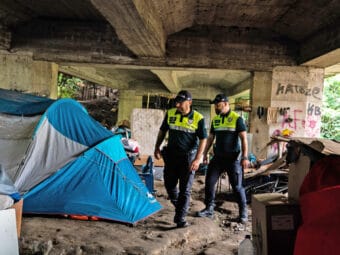
Municipal Police in Porto, Portugal regularly patrol areas used by drug consumers. Police in Portugal don’t arrest people who use drugs. Instead they have a strong track record referring people in addiction to counseling and treatment. (Demetrius Freeman/The Washington Post via Getty Images)

Cops still work aggressively to break up major drug gangs and arrest people committing drug-related crimes like theft. They also disrupt open-air drug markets like the ones that have emerged in some U.S. cities.

But when street cops in Portugal encounter people using small, personal-use amounts of drugs, there’s no arrest. Instead, police schedule meetings for drug users with teams of counselors.

While these sessions aren’t compulsory, police are trained in strategies designed to encourage people to attend.

“In the beginning, most policemen were very, very skeptical about this policy,” said Artur Vaz, who leads Portugal’s national police unit focused on drug trafficking.

In the U.S., this role for law enforcement, serving as a bridge to social service programs, has faced a backlash and is often seen as ineffectual.

In Oregon, for example, where small amounts of drugs were decriminalized in 2020, police regularly hand out information cards referring people to a drug counseling hotline. Court data shows drug users rarely call.

In Portugal, by contrast, government data shows roughly 90% of people referred to drug counseling sessions by police do turn up, at least for an initial session.

“Most [Portuguese] police have come to believe this is a balanced approach,” Vaz said. “People who consume drugs should be treated by the health system, not the criminal system.”

As a consequence, people living with addiction face far less stigma, rarely serve jail or prison time, and don’t live with criminal records.

Ronnie Duchandre, who is addicted to alcohol and hashish, and also smokes crack, says police in Portugal are “our friends” and serve as part of the social safety network that helps drug users recover. (Brian Mann/NPR)

Ronnie Duchandre, who is addicted to alcohol and hashish and sometimes smokes crack cocaine on the streets of Lisbon, told NPR he views police as helpful.

“The police is always our friend, as long as you speak with them properly,” Duchandre said. With support from Portugal’s system, he predicted that he would recover from his drug use.

“It’s not in one day that we reach the bottom,” he said. “We can also go up and it’s the same process, slowly up and up.”

Dr. João Goulão, Portugal’s national drug czar, said street cops have emerged as a vital link between the most vulnerable drug users, like Duchandre, and opportunities for treatment.

“Through the intervention of police, this is a unique opportunity to meet face-to-face with people we otherwise would not see,” he said.

Liliana Santos, who lives in Lisbon, Portugal, is addicted to crack cocaine and heroin. It’s a hard life but unlike drug users in the U.S., she has free access to healthcare, which means she has a much lower risk of overdose or death compared with people living with addiction in the U.S. (Brian Mann/NPR)

Portugal’s formula: less stigma, fewer penalties, access to care

Police referrals are only one of many pathways to drug treatment in Portugal.

“Decriminalizing drug use is a good step,” Goulão said. “The more you have other kinds of responses available, the better.”

Experts here say people who use drugs are constantly nudged toward health care and addiction treatment, including methadone programs and housing.

A person addicted to heroin prepares to inject at a consumption clinic in Lisbon, under the supervision of nurses. People in Portugal are 45 times less likely to die from an overdose compared with people in the U.S. (Brian Mann/NPR)

The results are striking. Over the last 20 years, Portugal cut drug deaths by 80% and reduced the number of HIV/AIDS and hepatitis cases in half.

During that same period, U.S. drug deaths exploded by more than 500%, according to the Centers for Disease Control and Prevention.

Researchers predict unless America somehow changes course, the overdose crisis will kill a total of 2.2 million people in the U.S. by the end of this decade.

Could elements of Portugal’s system save lives in the U.S.?

A debate is underway in the U.S. over whether elements of Portugal’s system could save lives here.

“If we stopped arrests and did nothing else, that’s a positive intervention because of the well-documented harms of incarceration [on people with addiction],” said Morgan Godvin, a former heroin user who now studies drug policy in Portland, Ore.

A growing number of cities and states around the U.S. have begun to de-emphasize drug war-era policies, shifting away from drug arrests and funding more treatment.

California voters approved Proposition 14 a decade ago, reducing drug possession from a felony to a misdemeanor. In 2020, Oregon voters decriminalized personal-use amounts of drugs and provided more funding for health care and counseling.

Advocates of those changes hoped they would quickly reduce drug deaths and serve as a model for the rest of the U.S., but implementation has been rocky, and in many places fatal overdoses have risen.

Critics say drugs were fully or partially decriminalized before other social programs, like the ones in Portugal, were in place and widely available to pick up the slack.

“We still suck at access to voluntary treatment,” Godvin acknowledged, speaking of drug policy reforms in Oregon. “We need a vast voluntary system, so that people can engage with treatment when they want it.”

A tidal wave of U.S. drug deaths and a backlash against programs designed to help them

Drug policy experts say these relatively new experiments have been crippled by a lack of funding, by strict U.S. drug laws that make some harm reduction measures illegal, and by this country’s complicated, costly and often poorly regulated addiction treatment system.

The spread of deadly fentanyl and a national surge in homelessness have also led to a spike in highly visible drug use, sparking a backlash among many voters and politicians who want streets, neighborhoods and parks cleaned up quickly.

There are now efforts underway to recriminalize drugs, and toughen law enforcement’s response, in California and Oregon.

Humphreys, at Stanford University, says he still supports dramatically expanding access to addiction care, similar to Portugal’s model.

But he doesn’t support decriminalization and believes police and criminal courts in the U.S. will need to play a more aggressive role forcing people with severe addiction off the streets and into treatment.

“They don’t have relationships, they’re isolated, so if there’s no law [enforcement] pressure, there’s no pressure at all,” he said.

Miguel Moniz, the anthropologist at the Institute of Social Sciences, University of Lisbon, disagrees. He says the data shows Portugal’s approach, combining decriminalization and health care, is more humane and more successful.

People in Portugal are now 45 times less likely to die from drug overdoses, compared with people in the U.S. — and street crime in cities like Lisbon has dropped.

Drug-related street crime in Portugal has dropped along with overdoses. “There’s an impression in the U.S. that if you decriminalize drugs, it’s a wild west,” said Miguel Moniz at the Institute of Social Sciences, University of Lisbon. “That hasn’t been the case in Portugal.” (Brian Mann/NPR)

“There’s an impression in the U.S. that if you decriminalize drugs, it’s a Wild West where everyone uses drugs,” Moniz said. “That hasn’t been the case in Portugal.”

But as the death toll from the U.S. overdose crisis mounts, Moniz voiced skepticism that American policymakers will have the political will or patience to pivot to a focus on health care and social services.

“There’s a different political environment in the U.S,” Moniz said. “The way health care is funded is completely different. The role of police in American society is different. So to talk about the Portuguese experience [being adopted in the U.S.] is complicated.”

— Tilda Wilson, an NPR Kroc Fellow, contributed field reporting. Inês Pereira Rodrigues provided translations.

Copyright 2024 NPR. To see more, visit https://www.npr.org.

Alaska targeted by drug traffickers seeking higher profits, authorities say

Capt. Cornelius Sims commands the Alaska State Troopers Drug Enforcement Unit. (Wesley Early/Alaska Public Media)

If recent drug seizures are any indication, a pipeline of hard drugs stretches from as far away as Mexico, to California and Oregon and on to Alaska and its most rural communities.

In two related cases indicted in federal court last month, more than a dozen people are accused of trafficking a total of about a 100 pounds of fentanyl and 25 pounds of meth within Alaska. Some members of the group are also indicted in the execution-style murders of two women last summer.
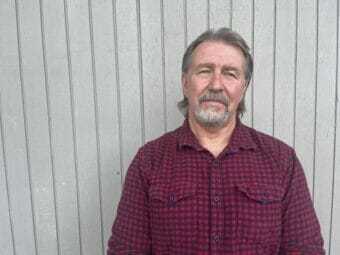
Working with their federal counterparts, Alaska State Troopers are seeing more meth and fentanyl than ever. Capt. Cornelius Sims is commander of the troopers’ drug enforcement unit, and he says drug traffickers appear to be targeting Alaska.

Listen:

This interview has been lightly edited for clarity.

Cornelius Sims: The reason, I would say and we believe, is because of the profit margin they can make bringing drugs into Alaska and selling them. Trafficking drugs into Alaska and selling them inside of Alaska has a higher profit margin than pretty much any other state.

Wesley Early: Can you talk a little bit about what you mean by that profit margin?

Cornelius Sims: Well, when drug traffickers buy large quantities from, I would say, countries below our southern border, they’re buying for a wholesale rate of whatever they may buy them for, a reduced rate than what we see. Then it’s brought up to Alaska and then sold in Alaska. It’s a substantial increase. I’ve heard of wholesale prices for, say, fentanyl down in source states for 27, 25 cents a pill. You can bring it up to Alaska and sell that same pill for anywhere from $15 to $80.

Wesley Early: Does that just depend on where in Alaska it is?

Cornelius Sims: It does, yes.

Wesley Early: So are you seeing traffickers trying to get more drugs specifically to rural Alaska? And if so, why?

Cornelius Sims: It seems like there’s been an increase into rural Alaska. I can’t say traffickers are necessarily targeting, going straight for rural Alaska, versus just getting it here to Anchorage, Fairbanks, our major hubs, and then … pushing it to rural Alaska. You’re still gonna have to have some kind of connection to get it to rural Alaska, versus just somebody coming up from Nowhere, Alaska and popping up there. They’re going to have to have a connection once they get it to Anchorage, then traffic it out to rural Alaska.

Wesley Early: So it seems like even one drug shipment getting through to a small, rural community would have disastrous consequences. And the Department of Public Safety’s annual drug report last year notes a pretty staggering increase in the amount of drugs seized, including methamphetamine, cocaine, fentanyl. What does that look like on the ground in communities? What are troopers seeing?

Cornelius Sims: Oh, they’re definitely seeing an increase of all those drugs inside our rural communities. It doesn’t take much. I mean, a handful of fentanyl pills in a location in rural Alaska is going to have a devastating effect, compared to a handful here in Anchorage or any other major city in the United States. It’s just a smaller population. Doesn’t take much to have a devastating effect in those communities.

Wesley Early: Can you talk broadly, or if there are specific initiatives, about how the state is combating what seems to be this really rapid rise in illegal drugs across rural Alaska?

Cornelius Sims: I would say that the effort is to combat what’s coming into the hubs. I equate it to, if I have a sinking ship, if I have a big hole — a big hole being a hub city where it’s coming into, Anchorage, Fairbanks area —  I’m going to focus on that big hole and then focus on those smaller communities and try to stop it from getting out to those smaller communities. So you name a way to get something into Alaska, a majority of that is coming in Anchorage and then being dispersed from there. And so our focus is we’re making a big focus on what’s coming in Anchorage. And then our secondary focus is what leaves Anchorage, going out to our hub communities, be it through parcel, personal carry. We do have an initiative to even focus on our highways. Now we have a highway interdiction team that’s focused on what’s getting trafficked on the highways between Anchorage and our communities that are on the road system.

Wesley Early: What would you say to Alaskans right now who are reading about this really rapid rise in drug cases and drug seizures and overdoses? How big of a deal is this?

Cornelius Sims: My personal view, (it’s) significant. It is significant. I just came from a state conference talking about drugs, and everywhere, we’re realizing it’s a big deal in all states, but especially in Alaska. Couple of things I would say is, give us the tip. So when you hear about drugs, you hear about drug traffickers, you hear about drugs moving through the state, send us a tip. AK Tips, they can send us a tip. Know that, at times, it will seem like, “I sent this tip. Nothing’s being done.” Many times, the work we’re doing is on the backside. We’re working these tips the way we have to work them, the way the drug investigations work. It may seem like nothing’s being done, but we are using those tips and we are putting effort into working those. So continue to send tips. I will say to Alaskans, don’t take anything that wasn’t prescribed to you by a doctor. Be aware.

A grieving father helped develop a new Anchorage curriculum on the dangers of opioids

John Green stands outside a building in Wasilla. Green lost his daughter Kellsie Green in 2016 due to complications of withdrawal from opioids in jail. He is committed to honoring her memory in part by creating a curriculum that teaches kids accurate information about addiction and withdrawal–something Kellsie didn’t have. A curriculum dedicated to Kellsie will be taught this year in as many as 20 middle and high schools in the Anchorage School District. (Rachel Cassandra/ Alaska Public Media)

John Green knew his daughter was in trouble. Kellsie Green had survived two sexual assaults as an adolescent and he said she started self-medicating with OxyContin pills in 2011. That ultimately turned into a heroin addiction.

“There’s no parent that plans for when their child becomes an addict,” said Green. “We didn’t understand about detox…didn’t know what questions to ask. So we sent her to a rehab outside and within a couple of days, once she started getting dope sick, she walked out.”

Kellsie continued to struggle with her addiction, but she dreamed of a life beyond it. She told Green she wanted to write a book and visit schools to tell her story after her recovery. She wanted to explain what addiction and withdrawal really felt like. She hoped she could stop even one person from going down a path of addiction. But a couple months after that conversation, in 2016, when she was 24 years old, Kellsie was arrested. She died in jail of complications from withdrawal, in a cell by herself.

“When they came and checked on her in the morning, she was naked underneath the call button, stuck in a position with her hand up where she couldn’t reach the call button,” said Green.

Kellsie Green during her graduation from the Alaska Military Youth Academy. She died about 8 years later, when she was 24 years old, from complications of withdrawing from an opioid addiction in jail. Her father has organized to develop a drug education curriculum for local schools that teaches about addiction, withdrawal, and the risks of fentanyl. (Photo courtesy of John Green)

Kellsie died from dehydration, a common but treatable complication from withdrawing from opioids. Green said she lost 20 pounds of fluids during the short time she was in jail. Green sued and won a wrongful death settlement against the state.

Kellsie isn’t around to convince kids to stay away from opioids. But in 2018 Green met someone who wanted to help him tell Kellsie’s story. Michael Carson is a former teacher and chair of the Mat-Su Borough opioid task force.

“I have been blessed,” said Carson. “I was fortunate that my children and grandchildren have escaped any kind of issues around addiction. But I felt so moved by his story that I wanted to do something.”

Carson and Green saw big holes in opioid education in Alaska. They wanted young people to have a clear understanding of the risks of drugs — beyond being told to just say ‘No.’ And because the opioid epidemic is changing so quickly, they wanted lessons that could be updated multiple times a year.

So, with Kellsie as inspiration, Carson developed a curriculum. He’s already taught it in four schools in the Mat-Su Borough and to a group of school nurses. It could be taught in as many as twenty more Anchorage middle and high schools this year. This comes at a crucial time for the district; last spring, the district responded to 10 non-fatal drug overdoses at five different schools, several of them resulting from kids taking fentanyl. Eventually, Carson hopes to teach the lesson statewide.

The curriculum teaches kids how addiction works and what it feels like to withdraw from opioids. It’s called “Kellsie’s Lesson.”
Carson said the lesson educates about the science of addiction in a straightforward way using Alaska imagery. And it gives an accurate description about what withdrawal feels like.

“I’ve heard stories from people that have gone through detox, where they said that, you know, they felt like they were possessed by aliens,” said Carson. “They felt like they were going to die.”

Carson collaborated with the Centers for Disease Control and Prevention to follow national guidelines. And last spring, the Anchorage School Board unanimously passed a policy to include the lesson in health education for grades eight through twelve.

Kathy Bell is director of health care services for the school district. She’s very scared about opioids in the schools and she said drug education like this is a crucial part of preventing student deaths.

“Students are using it for experimenting,” said Bell. “And they think they’re taking maybe pain medication like Percocet. But the Percocet now is laced with fentanyl. And they’re not aware of that at all. And…it’s a very tiny amount of fentanyl that can cause death, because it causes respiratory depression.”

Kellsie’s lesson is one piece in a larger puzzle of how the school district is responding to the epidemic. They’re also distributing overdose kits and training educators on how to use them. Last spring they responded to the spate of overdoses with opioid education. Bell said it seemed to help –they didn’t have any more fentanyl incidents before school got out for the summer. And she said, the more drug education, the better.

“Even if you say it in Sept., saying it again in Jan., it’s not gonna hurt again, because they forget or they don’t think about it,” said Bell. “And they may make a bad choice. And we don’t want anybody making that bad choice. We want everybody to be here with us on this earth.”

Green struggled for years to make sense of his daughter Kellsie’s death. He kept asking why this had to happen to Kellsie just as she had a chance to detox. Because Kellsie died in state custody and was denied life-saving care, Green said he has an obligation to share her story.

“I realized that Kellsie could have died of an overdose at a friend’s house or on the street or whatever, nothing would have come of it, nothing would have changed,” said Green. “I could have maybe had to identify her body in a dumpster.  Because of the way she died– I had to give her a voice.”

Green and Carson are organizing around state House Bill 6, which requires the department of education to create an opioid curriculum. They’re hoping to add an amendment to make that drug education mandatory. That would mean opioid education would be required in every school in Alaska.

Opioid reversal drugs save lives in Alaska. But people often skip a crucial step

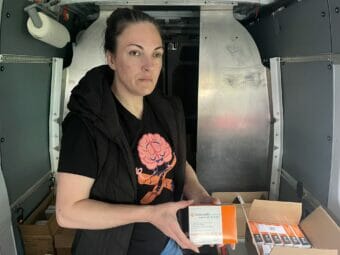
Harm reduction specialist Venus Woods holds Kloxxado, an opioid overdose treatment. Last year, her organization 4As gave out 2,500 kits in Anchorage, Juneau, and Mat-su Borough. (Rachel Cassandra/Alaska Public Media)

On a recent weekday, Venus Woods stacked cardboard boxes holding syringes in a giant, white van in a parking lot behind an office building in Anchorage. She was prepping the van to head out as a mobile needle exchange to give out these supplies as part of the work she does for Alaskan AIDS Assistance Association, or 4As.

Every week, she drives the van, parks it in the Mountain View neighborhood of Anchorage and waits. It has a sliding window on the side and people come up to it to exchange their used syringes for new ones. Needle exchanges like this reduce HIV and hepatitis transmission by 50% because people don’t share needles as much.

The organization also gives out safer drug use supplies like alcohol wipes, tourniquets, and clean cotton balls. Those supplies help prevent health complications like abscesses and chronic wounds, which are common for people injecting drugs.

And they also give out Kloxxado. That’s a stronger version of Naloxone that can be used to reverse an opioid overdose. Woods said people tell her they’re using the overdose kits.

“I mostly hear things like, ‘It’s amazing. It saves people’s lives. I had to use that several times last week,’” said Woods.

According to the state health department, organizations gave out about 30,000 kits in Alaska last year. Anyone who gets a kit takes a short training. They learn how to use the nasal spray and that they must call 911 afterwards for medical attention.

But Woods said, in practice, people aren’t calling.

“I think the majority of our syringe access clients do not utilize emergency rooms,” said Woods.

Woods is in recovery, so she also speaks from personal experience. She said people who use drugs are sometimes treated differently by doctors and in hospitals, so they may not want to get medical care. And the research backs this up. People who use drugs sometimes avoid healthcare because of past mistreatment or dehumanization.

She said that stigma can combine with someone’s personal shame about their own drug use. But she said there are practitioners in Alaska who are doing it right, and the state is getting better.

Coleman Cutchins is a clinical pharmacist for the Alaska Department of Health. He said he doesn’t want people to avoid care because they fear stigma. He said people go into health care to save lives. And he’s deeply worried that people aren’t getting medical care after an overdose.

“I just want to stress how unsafe it is to not call 911,” said Cutchins. “Anytime somebody gives Naloxone, they’re trying to save a life, which is great. But the full part of saving that life is: giving naloxone, start CPR, call 911.”

Cutchins said in an opioid overdose, the person forgets to breathe. A reversal drug like Narcan helps by kicking opioids off of the receptors in the brain. But Narcan doesn’t last as long as opioids do. He said people should give multiple doses of naloxone while they’re waiting for an ambulance. But it’s still possible to overdose after getting naloxone.

“There’s instances where someone seems totally fine and then, you know, an hour or so later, they go back- or even a few hours later, they go back into that respiratory depressed state,” said Cutchins.

He said even if people survive an overdose, they could have other medical problems – like brain damage from low oxygen.

“The quicker that someone can get treatment, the better off, the less likely they are to have a long term injury from it,” said Cutchins.

Safer drug use supplies including (from left) alcohol pads, tourniquets, and cookers. These are being distributed in 4A’s mobile needle exchange in Anchorage and Mat-su Borough. Needle exchanges like this one reduce transmission of HIV and Hepatitis by 50%. (Rachel Cassandra/Alaska Public Media)

Robin Lutz is executive director of 4As. She said even if it’s best practice to call 911 after an overdose, it’s not realistic. One reason is that the physical experience of having an overdose reversed is extremely unpleasant.

“What we hear from people is that it’s a kind of immediate, what we call ‘dope sick,’” said Lutz. “So you just feel like you’re an immediate withdrawal. And that’s a terrible feeling. It’s like the flu times 50.”

People may not want to be in an emergency room environment after that. And they may also be worried about arrest. Good Samaritan laws in Alaska protect someone overdosing or helping another person with an overdose, regardless of whether they possess a personal amount of illegal drugs.

“People know that, I think, on kind of an intellectual level,” said Lutz. “But, I think it’s really hard to believe that if you’ve had negative experiences, an interaction with law enforcement, which a lot of people who use drugs have because drug use is illegal.”

But good samaritan laws only protect people in an overdose situation if they stay with someone until they get medical help or the police arrive.

Lutz said that however people are using it, Naloxone is essential and is saving countless lives.

“People really depend on it.” said Lutz. “I can’t imagine if our state didn’t have access to Naloxone right now what our overdose deaths would look like.”

She said their organization gave out 2,500 overdose kits last year–in Anchorage, Mat-su Borough, and Juneau. She said at times, people were requesting the kits and they didn’t have any left to give.

Smuggling cases point to need for better drug treatment in Alaska prisons, advocates say

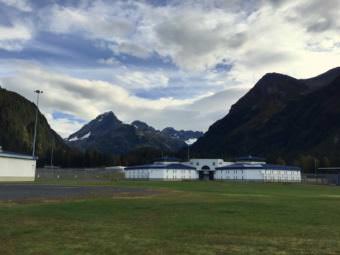
Spring Creek Correctional Center in Seward. (Photo by Anne Hillman/Alaska Public Media)

After a motorcycle accident in his teenage years, Adam Mahoney started using pills. When those pills became harder to find, he started doing heroin.

Last year, Mahoney was arrested and sent to Wildwood Pretrial Facility in Kenai.

“I knew that when I went to jail that I was going to be sick,” Mahoney said.

At the time, Mahoney was in a drug treatment program. Anticipating he wouldn’t be able to continue treatment, he tried to smuggle in Suboxone — a drug used to treat withdrawal symptoms — but the package burst in his stomach. Mahoney said he almost died.

It’s not just Mahoney who has tried to smuggle substance use treatment drugs into state facilities, where rates of substance abuse are disproportionately high.

In recent months, at least two Alaska Department of Corrections staff members have faced charges for bringing medication into correctional facilities on the Kenai Peninsula. In April, a correctional officer was charged for bringing buprenorphine into Spring Creek Correctional Facility in Seward. Earlier this month, a former staff member was charged for distributing Suboxone at Wildwood Pretrial Facility in Kenai.

Ninilchik-based addiction medicine specialist Sarah Spencer said with gaps in available treatment options, incarcerated people will go to great lengths to avoid withdrawal.

“It’s just incredibly painful in every way you can imagine,” Spencer said. “And so of course there’s going to be an enormous black market.”

‘The extremes that we’ll go to’

Spencer said today, the drug buprenorphine is the gold standard for opioid use treatment.

“There are very few medications that we have in modern medicine that are as effective as this medication is to treat this disorder,” Spencer said. “It is just incredibly effective.’

Buprenorphine is a prescription opioid that treats withdrawal symptoms and reduces cravings. (Suboxone is a brand-name version of buprenorphine and naloxone, a medicine that reverses opioid overdose.) Spencer’s Ninilchik clinic offers injections of the drug for patients in recovery.

But Spencer said people in Alaska correctional facilities often cannot access buprenorphine or other drugs through in-house treatment programs.

Drug treatment policies vary from facility to facility in Alaska. As it stands, the Department of Corrections said it will bridge patients’ medications for up to 30 days. That means inmates with methadone and Suboxone prescriptions, for example, should be able to keep on their treatment plans for up to a month after entering the system.

But that policy doesn’t account for the remainder of a person’s sentence. And Spencer said bridging doesn’t always happen, either, even though the Americans with Disabilities Act requires jails to continue incoming inmates on their medication when they enter the system, according to new guidelines from 2022.

Some state facilities do offer injections of Vivitrol — an opioid antagonist that keeps cravings away. But unlike its counterparts, Vivitrol is not an opioid and does not block withdrawal symptoms. Spencer said symptoms of withdrawal can be brutal, including severe nausea and restlessness, and that going cold turkey can be really painful. She said it’s the worst flu you’ve ever had, times 10.

Mahoney said that’s why he tried to bring Suboxone into Wildwood last year, and could be why some staff members have been caught doing the same.

“It just kind of goes to show the extremes that we’ll go to just to maintain adherence,” he said.

Megan Edge with the ACLU Alaska Prison Project said DOC often blames families and visitors when drugs are brought into facilities. After the June 2022 case at Wildwood, she said the facility was placed on lockdown — a year before the staff member was charged in the case.

‘We know what works’

Since Mahoney was released from prison, he’s gotten back on a treatment plan with Spencer’s clinic, in Ninilchik. He said he feels fortunate to have the clinic’s support.

But Spencer said the inconsistent treatments system-wide could be a lawsuit waiting to happen. She’s working with the Department of Corrections to work on getting a more consistent system in place.

DOC Spokesperson Betsy Holley said the department is in the process of expanding the treatment services it offers. She said the department could expand treatment beyond 30 days for inmates with existing prescriptions, for example, and the department could start patients on treatment while they’re incarcerated — which they don’t already do.

When asked for a timeline, she said the changes were still in their “initial stages,” and that DOC had no more information to share.

Around the U.S., stigma and bureaucracy have kept states from implementing treatment programs in jails and prison. But some states have. Rhode Island has been offering medication for addiction treatment programs in prisons and jails since 2016. Those programs start while people are incarcerated and can continue after release, when people are at a high risk of relapse and overdose.

Spencer said the data shows it’s working.

“We know what works. We know exactly what works,” Spencer said. “We just need to do it.”

She said in a crisis, there’s no time to waste.

Alaska deaths from drinking nearly doubled over 2 years

An ambulance drives through downtown on August 28, 2020 in Juneau, Alaska. (Photo by Rashah McChesney/KTOO)

Deaths due to drinking alcohol nearly doubled over a two-year period in Alaska, based on data from the Alaska Department of Health. Those years, 2019 to 2021, included the start of COVID-19 pandemic.

The deaths counted include people who died from alcohol poisoning and those who died from alcohol-related causes like liver disease.

According to the Centers for Disease Control and Prevention, Alaska has one of the highest rates of binge drinking in the country.

Sara Platt works for Recover Alaska, an organization trying to reduce excessive drinking and its harms. She isn’t surprised by the increase in drinking deaths.

“Thinking about the pandemic,” said Platt, “I think that a big piece is that people didn’t have as many opportunities to connect, were more isolated.”

Platt, who has a background in marriage and family therapy, says that the opposite of addiction is connection. She says an environment with lots of activity choices and ways to connect with people without alcohol can play a role in lower rates of substance use. In Iceland, programs to reduce drinking focused on community interventions like creating work and sports programs, and encouraging parental involvement.

“Binge drinking is not a person problem,” said Platt. “It’s a community problem.”

She says if people in a community are concerned about how much others are drinking, she says there’s lots they can do.

“What low-barrier wellness activities could I offer to community members?” said Platt. “What can I talk to my local representative around policy? What can I do at my workplace to make it so it’s not so stigmatizing… to reach out and get care from your boss?”

Rosa Avila, a public health scientist for Alaska’s health department, says the pandemic influenced social changes that relate to excessive alcohol use.

“People are experiencing a lot of stress from loss of jobs, and having your kids at home all the time. There might be changes in alcohol use, things like that,” said Avila. “But, it’s hard to tease out with numbers how much of that is due to the pandemic or other factors.”

Avila says that in the fall, health data will be available from 2022. That will help the state health department understand more about how many Alaskans are dying due to alcohol.

“We’ll see next with 2022 data …whether those rates, those trends are being sustained or if they’re going to taper down. So I think a lot of it remains to be seen,” said Avila.

But, it will take longer to see data from 2023, when many COVID restrictions were fully lifted. That will be when public health scientists get a more complete picture of drinking deaths over the years most affected by the COVID pandemic.

Platt, with Recover Alaska, says that people drinking in excess are often using alcohol as a coping mechanism. And they can feel defensive if others are asking them to give that up.

So, she suggests that concerned friends and family talk instead about how alcohol use is interfering with connection.

“I want to be able to connect with you more,” said Platt. “In essence, this is getting in the way of us connecting. And I’m wondering if maybe you want to call somebody together or reach out and see if there’s any other options.”

She says family and friends can play an important role in encouraging people to think about how much they’re drinking.

Site notifications
Update notification options
Subscribe to notifications