Alcohol & Substance Abuse

A new documentary will focus on Alaskans’ relationships with alcohol

""
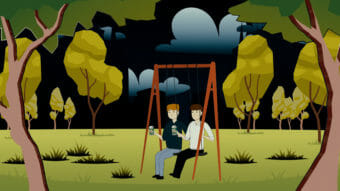
A still from an animated scene in “Earnest Drinker,” a documentary film about Alaskans’ relationship with alcohol. (Scott Burton/Earnest Drinker)

The New Year is a time of making resolutions to better ourselves, and for many that means quitting drinking — at least for what’s called Dry January. And for some, that means getting on the path to longer-term sobriety.

That includes Alaska filmmaker Scott Burton, who’s working on a documentary about Alaskans’ relationships with alcohol and, as it happens, celebrating three years of sobriety this Jan. 4.

Burton’s film project is called “Earnest Drinker,” and he says it’ll be a hybrid documentary, meaning it’ll have interviews with experts, advocates and people in recovery. But Burton says it’ll also include a lot of his own stories about his relationship with alcohol.
Listen:

The following transcript has been lightly edited for clarity.

Scott Burton: I was a prolific drinker for 30 years. I started when I was 14. And so, yeah, it’s a film about relationships with alcohol. I hope to challenge the normalization of alcohol in our country, in our state. I want to look at some of the costs alcohol has on our state. I want to look at stigmas related to words like “alcoholic,” “sobriety,” “recovery,” and a lot more things. That might have been long for my elevator pitch, Casey.

Casey Grove: That was great. I wanted to ask you, first, instead of having a documentary that’s about the things that people might associate with with alcohol that are negative, you know, just calling it like, “Alcohol: It’s bad,” why are you looking at it more like people’s relationships with alcohol, and that’s the theme?

Scott Burton: Yeah, that’s a great question. You know, I have to acknowledge that for 30 years, I drank. And while I drank, I had a lot of fun. But during that time, I also made a lot of questionable choices. And another part of that is that people have asked me about my audience for this film. And sometimes I think of the audience as me, like 10 years ago, when I was 35. And if I saw a documentary that just came out and vilified alcohol use, it wouldn’t have had a chance, right? Just, “Whatever. I have no interest in that.” But if I saw a film that sort of tried to take an equitable look at the spectrum of alcohol use, the spectrum of sobriety and recovery, yeah, it might have had an effect on me.

Casey Grove: Gotcha. So I noticed in the promo video that I saw for this, that you you have talked to some experts already. What are some of the things that they told you about? And I wonder if it’s different than, you know, just like we were just talking about, like, it’s just that alcohol is bad, it’s about thinking about people’s relationships? What did they tell you about that?

Scott Burton: Yeah, so when I was about 42, I finally got, like, an official doctor. And, you know, signing up to see a new doctor, one of the questions is, how much alcohol do you drink? And I lied on the form. And I lied to her. You know, I was like, “Oh, you know, one, one to three drinks.” And that was such a lie. I was drinking at least three times that. And we interview and we talked about some of those first interactions, and she just said to me, she said, “Scott, drinking is dreadfully bad for you.” Just having a doctor go down the list of things. It can cause cancer, can cause high blood pressure, cause you to gain weight, can cause anxiety. The list just goes on and on of the things that alcohol can cause. And so hearing her say that. And then in the interview, it’s pretty funny, she’s like, “Oh, yeah, in the medical profession, we multiply everything that someone says by three, right?” So I was like, “Oh, Dana, you know, maybe I was having one to three drinks on a Thursday or Friday.” And if you multiply that by three, you know, it’s more like nine. And it could even be more. So that was pretty funny.

Casey Grove: Yeah, it seems like there’s an aspect to this, of when you talk about people’s relationship with alcohol, that it’s just such a part of our culture, that people might not even acknowledge that about themselves, that that might be such a big part of their life until they maybe stop and think about it, right?

Scott Burton: Right, and that’s the normalization of alcohol part that I’m trying to address. When I started drinking, when I was 14, you know, everyone in my family drank. All my friends in high school drank. Everybody drank. James Bond drank, you know, in the movies. And so it would have been abnormal, in a sense, for me not to drink. And so this is a question in this documentary. And I think for me, I process a documentary as a research project. So I have all these questions, right? And over this next year, I’m hoping to answer them. And one of these questions is, why, in America and Alaska, is alcohol consumption more normal than non-consumption?

Casey Grove: Yeah. Is there a component to this, as you’re still putting this together, where you’re reaching out to folks and hoping to interview more people about their relationships with alcohol?

Scott Burton: Yeah, so I’m still looking for input on this documentary. And I’m definitely looking for people who may find meaning just in this conversation that you and I are having, or if this resonates with them, and they have a story or an experience that they think might add to this documentary or to my research, as I’m moving along, I would love to hear from them.

Casey Grove: For folks going into January and talking about Sober January, it’s a month that a lot of people start thinking about sobriety. Do you have any advice for people that are kind of on the cusp of maybe quitting drinking, or at least even, you know, taking January off? Any tips that you have for anybody?

Scott Burton: Yeah, that’s a great question. January is when I stopped. Jan. 4, 2020. And I decided to stop for a week. And after that week, I decided, “Oh, why don’t I give myself another mini-goal of another week?” And so one week became two, and I’m like, “Wow, this is working for me.” And then I just, three weeks, one month, and I just kept doing these sort of mini-goals. And then, here I am, three years. And then like, from a practical point of view, I love soda water. Like, stock up on Spindrift or whatever your soda water of choice is. Get every kind of tea you could ever imagined liking. I’ve come to realize a lot of drinking for me was this habitual thing. I love the feeling. I love taste. I love experiencing liquids and beverages. So just make sure you have as many alternatives as possible. Some people really like using (non-alcoholic) beers. Beers like Coors Edge. If you’re a person that used to drink Rainier, try Coors Edge. It’s just that super simple, pilsner. Lagunitas makes an IPNA. So that’s an India pale non-alcoholic ale. And so that has all the hops if you’re kind of, you know, into those higher-end beers. There’s a company out of Brooklyn called Athletic Brewing. That’s making tons of really delicious non-alcoholic beers. So those are some ideas for different strategies.

Bartenders in Juneau say unpleasant — even violent — interactions with patrons are on the rise

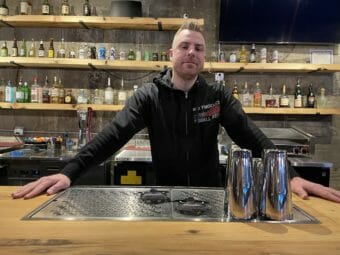
David Elrod at the Crystal Saloon. Dec. 5, 2022. (Photo by Tasha Elizarde/KTOO)

David Elrod is a software engineer, but several nights a week you’ll find him at the Crystal Saloon in Juneau, where he enjoys fixing the vintage pinball machines in the upstairs game room.

He’s been tending bar for 16 years, but he says an incident earlier this month was the first time anyone threw a glass at his head.

A group of four men he hadn’t seen before came up one night to rent a pool table. They gave their IDs in return for a set of pool balls, but left them on the counter and started using a table that was in use already. The person who was playing at that table — a regular, Elrod said — was outside smoking.

When asked to use one that wasn’t already occupied, the men got angry. Elrod told them to leave and turned around to grab their IDs.

“And right then, I just felt the glass just whizz past my head,” he said.

What happened to Elrod may be part of a broader trend in harassment toward service workers that may have started early in the pandemic. 
“I can tell you that there’s been an uptick in bad behavior, almost anywhere I go,” Elrod said.

Elrod grew up in Juneau but has lived out of town since high school. He moved back to Juneau from San Francisco last year. He worked in bars there too. 

“I didn’t sign up to get glasses thrown at my head,” Elrod said. “But I know I signed up to deal with people who aren’t always in their best state of mind. I don’t know how much consolation that’s supposed to give me.” 

While harassment may be increasing for bartenders, Elrod said the women who work behind Juneau’s bars see it more often. 

Morgan Gaither has been bartending for more than a decade – a lot of that time in Juneau. She works at Squirez in Auke Bay and manages the Alaskan Hotel and Bar. 

She has a no-nonsense demeanor and says she feels like that protects her a bit, but she hears about harassment from the women she works with. 

“So one thing I don’t enjoy is when my female bartenders, who are smaller, sweeter or quieter than I am, have feedback for me, like ‘Oh, this guy said this to me,’ or ‘someone did this to me.’ Like, pick on someone your own size,” she said. 

These days, Gaither said, people don’t seem to be as afraid of consequences as they were a few years ago. 

“Sometimes lately, it seems like people are very out of line,” she said. “And then they’re not sorry for it later, or sober.”

When people are violent, she kicks them out and, depending on how bad the behavior is, it could be just for the night, or forever. 

She said she doesn’t like being the one to enforce bans or kick people out.

“It is a balance in a small town. You don’t want people to feel excluded or shamed,” Gaither said. “If they’re just having a hard time or you know, have a mental illness or something. But at the same time, everybody else has to be safe.”

Gaither said she has often worried about retaliation. Juneau police advised her to report any verbal abuse she receives in the bar or on the streets.

Juneau police responded to the attack at Crystal Saloon, and the person who threw the glass has been charged with assault and property damage, according to the court files. A court order says he’s not allowed to go to the Crystal Saloon, be near Elrod or even drink alcohol or go anywhere that sells alcohol. 

Lt. Krag Campbell with the Juneau Police Department said they don’t have long-term data ready to analyze from the past couple of years to say if there’s any trend in violence like this, but service workers in Juneau don’t need a report to feel like things have changed.

Elrod said heʼs been more nervous about going to work since he was attacked.

Gaither said her staff recently organized a private Facebook group for the bartenders in Juneau to post about problematic patrons. She hopes this will help everyone who works in the industry stay safe.  

Rise in fentanyl in Alaska prompts switch to stronger overdose reversal drug

Hands holding a naloxone inhaler
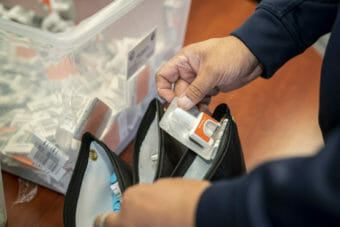
A new shipment of the overdose-reversing drug Kloxxado arrived in Anchorage earlier this year. Kloxxado has twice the dose of naloxone as the brand Narcan. (Department of Health and Social Services)

Naloxone is the overdose-reversing drug that is becoming more and more prevalent as the nation battles an opioid epidemic.

Alaska State Troopers carry naloxone in case they need to revive someone who has overdosed on opioids. For a while, they were using Narcan, a brand name as synonymous to naloxone as Kleenex is to tissues.

But Lt. Daron Cooper, troopers’ deputy commander in the Matanuska-Susitna Borough, said one dose wasn’t always enough to save someone.

“There have been calls where we have had to use more than one of the Narcan,” Cooper said. “And that may be because of the potency of the drug on board.”

Among the most potent opioids is fentanyl, a synthetic drug that was involved in nearly three-quarters of opioid deaths in Alaska last year —either on its own, or cut with other drugs. The rise in fentanyl has prompted the state to start giving out a more powerful overdose-reversing medicine: Kloxxado, said state pharmacist Coleman Cutchins.

“It’s much more potent than medical grade fentanyl,” Cutchins said of the newer, illicit forms of fentanyl. “Much more inconsistent. So really, the higher dose of naloxone has really become the standard now.”

Cutchins said the state switched from Narcan to Kloxxado in May. It distributes the medicine through a state program called Project Hope, which supplies naloxone to first responders, including troopers like Cooper. Cooper said the stronger does is a big help.

“Allowing us to push one, that being the thing that works, obviously benefits us because we’re not having to scramble to make it to get two,” Cooper said. “Or wondering if our second is expired, or things of that nature.”

The higher dose of naloxone is also welcome news for the Wasilla Police Department. Police spokesperson Amanda Graham said the city saw a major spike in opioid overdoses between May of last year and March of this year. There were 10 reported overdoses in that period, a high number for a city with a fraction of Anchorage’s population. She said police used one dose of Narcan to revive a person in just three of those 10 cases. In the rest, they needed more.

“In one case we used four doses of Narcan,” she said. “But on average, we used two doses.”

Wasilla police haven’t received Kloxxado yet, because they got their latest shipment of Narcan just before the state switched over. Graham said she’s looking forward to her department getting Kloxxado, which contains 8 milligrams of naloxone as opposed to Narcan’s 4 milligrams. It’ll save time and hopefully help people faster.

“It’s pretty clear that 4-milligram doses is not what’s used on average,” Graham said. “So saving time while you’re on the side of the road helping somebody, or you’re in somebody’s home, by not having to open multiple packs of naloxone, could definitely be beneficial.”

Graham said there’s been a community push not just for first responders to carry naloxone, but also ordinary people who may be around opioids.

“If you’re in active addiction, and you’re with a friend or someone that you use with is O-Ding, you need to give them naloxone as soon as possible,” Graham said. “Call 911. There’s state laws that protect you when you call 911. You won’t get arrested for saving a life, even if you’re high at the time.”

Cutchins said the state doesn’t have a clear picture yet of Kloxxado’s impact on the state’s response to overdoses. During the COVID-19 pandemic, the state had a robust system for tracking new coronavirus cases, hospitalizations and deaths. Cutchins said it’s hard to do that with opioids for a number of reasons, including medical privacy and a lack of data sets to pull from. He said the state is working to revamp its opioid data collection to be more up-to-date and modern.

“We don’t have a great system for this,” Cutchins said. “We are improving it. It’s probably going to take a little bit more time to figure out what’s the clinical relevance of this change.”

As the state works to track the rate of opioid overdoses, several law enforcement agencies are joining the state troopers and Wasilla police in having their officers carry naloxone, including Village Public Safety Officers, who were trained to use it earlier this year, and the Anchorage Police Department, which says it’s rolling out a naloxone policy to start early next year.

UAA to permanently expand master’s in social work program with $1.5M grant

Nine people stand on a stage, seven of them holding giant checks.
Representatives of various institutions that pitched in for a $1.5 million grant to the University of Alaska Anchorage’s School of Social Work pose for photos with oversized checks during a press conference at the university’s Fine Arts Building on Tuesday. The institutions represented include the Alaska Department of Health, Recover Alaska, Providence Alaska, Premera Blue Cross Blue Shield of Alaska, Alaska Mental Health Trust Authority, Southcentral Foundation and the Rasmuson Foundation. UAA Chancellor Sean Parnell and College of Health Dean Debbie Craig represented the university. (Photo by Jeremy Hsieh/Alaska Public Media)

After years of budget cuts to Alaska’s public university system, there aren’t many higher education programs that are growing. But on Tuesday, the coalition Recover Alaska announced it had put together $1.5 million to dramatically expand enrollment for master’s degree students at the University of Alaska Anchorage’s School of Social Work.

Recover Alaska works to reduce excessive alcohol use and harm. Executive Director Tiffany Hall said the nonprofit identified a chronic shortage of qualified social workers as a key issue perpetuating the state’s worst-in-the-nation status for alcohol-attributed deaths.

“For a person in active addiction, it is incredibly challenging to admit the problem and ask for help,” said Hall. “When they do, we need to be ready. But a lack of qualified providers throughout our state prevents people from accessing help when they need it.”

Right now, UAA’s School of Social Work has capacity for 35 students seeking master’s degrees with a clinical license, and graduates about 25 a year. The plan is to step up enrollment gradually, up to 85 students five years from now. The university plans to continue delivering the program online only.

Southcentral Foundation is one of the organizations funding the grant, and one of the biggest employers of behavioral health and substance use treatment providers in the state. The lack of qualified social workers stresses the existing system and hampers expansion, said Michelle Baker, executive vice president of behavioral health services for the Alaska Native-owned nonprofit health care organization.

“Southcentral Foundation alone has 20 master’s level therapist vacancies, primarily due to four program expansions that we’ve launched in the last year,” Baker said.

Rasmuson Foundation CEO Diane Kaplan said her institution and others that contributed funding are all potential employers. Someone with a master’s degree in social work can work in a variety of settings, from philanthropy to preventative therapy to crisis care.

“Employer-led initiatives like this are appealing to potential students because they know there’s a job at the end of the education,” Kaplan said. “And a choice of jobs, and good jobs and well-paying jobs in a competitive environment in the state for employees.”

The grant money is a one-time gift, but university officials said the expanded master’s program will be financially self-sustaining through student tuition.

Other donors include Premera Blue Cross Blue Shield of Alaska, Providence Alaska, the Anchorage Assembly, the Alaska Department of Health and the Alaska Mental Health Trust Authority.

Is ‘rainbow fentanyl’ a threat to your kids this Halloween? Experts say no

A pile of pills in various colors
In August 2022, the Drug Enforcement Administration and law enforcement partners seized brightly colored rainbow fentanyl pills in 18 states. (Drug Enforcement Administration)

The U.S. Drug Enforcement Administration has been raising a terrifying alarm in recent weeks. According to the DEA, bright-colored fentanyl pills designed to hook children have been spotted in nearly two dozen states.

The DEA says they identified a deliberate new marketing scheme by Mexican cartels and street dealers who want the pills to “look like candy to children and young people.”

“It looks like candy,” DEA Administrator Anne Milgram told NBC News. “In fact, some of the drug traffickers have nicknamed it Sweet Tarts, Skittles.”

The DEA alert didn’t mention Halloween, but fears about “rainbow” fentanyl and the holiday went viral.

In an interview on Fox News, Milgram was asked whether parents should worry about candy gathered by kids trick-or-treating.

“We have not seen any connection to Halloween,” Milgram said.

DEA warning meets skepticism from drug experts

Drug policy experts contacted by NPR agree there’s no new fentanyl threat this Halloween. Many are also skeptical of the DEA’s original warning. They don’t believe Mexican drug cartels and street dealers have launched any new campaign targeting children.

“I don’t see any evidence that the DEA has produced that supports that conjecture,” said Nabarun Dasgupta, a researcher studying illegal drugs at the University of North Carolina.

Dasgupta’s lab tests illegally manufactured opioid pills collected from across the United States. He says colored pills like the ones highlighted in the DEA warning are on the streets but that it’s nothing new.

“We get them almost on a daily basis,” he said. “We see pinks and purples, yellow, green, red, aqua, fuchsia. It’s a pretty wide palette. Blue is the predominant color, but it’s not surprising to see any of those.”

A bag will large, multi-colored blocks of something in it
The Drug Enforcement Administration says rainbow fentanyl is being seized in multiple forms, including pills, powder and blocks that resemble the chalk kids use to color on sidewalks. (Multnomah County Sheriff/Drug Enforcement Administration)

Indeed, street drug experts contacted by NPR say traffickers have long used bright colors in their products for reasons that have nothing to do with children.

Dr. Sheila Vakharia, head of research for an addiction think-tank called the Drug Policy Alliance, said dealers use colors, stamps and other markers “to distinguish their product from other products on the street.”

Warnings about sidewalk chalk and toy boxes

In its warning about dealers marketing fentanyl to young people, the DEA also suggested cartels are coloring blocks of the drug so that it “resembles sidewalk chalk.”

The DEA also issued an alert about bright-colored fentanyl smuggled in a box of LEGO toys that included a statement from New York City Police Commissioner Keechant Sewell.

“Disguising fentanyl as candy — and concealing it in children’s toys — will never hide the fact that fentanyl is a deadly poison that harms our communities, our families, and our city,” Sewell said.

But the DEA alert acknowledges the pills appear to have been concealed in the toy box not to attract young people, but as a smuggling tactic meant “to deter law enforcement attention.”

Why would dealers market fentanyl to young children?

Drug experts contacted by NPR also questioned whether traffickers, who are driven by profit, would focus on kids.

They said selling fentanyl pills deliberately to children would be incredibly risky. The drug is potent and deadly, and the legal penalties for dealing drugs to kids are severe.

They also noted that selling to really young kids — who might be drawn to pills that look like candy or sidewalk chalk — would be bad for business.

Young children typically lack access to the kind of cash that makes for good repeat customers.

Vakharia believes the real public health concern is dealers shaping and coloring pills to look like fentanyl-free opioids from a pharmacy. “Oftentimes colors are also used to mimic legitimate prescription medications,” she said.

NPR sent a list of questions to the DEA, asking for an interview or for more detailed evidence to support the claim drug dealers are actively using candy-like fentanyl to hook children.

On background, DEA officials said their investigations show traffickers are targeting young people in part by using social media, but they declined to offer specifics.

“College, high school, and even middle school-aged kids might encounter illegal drug sales online,” according to the statement.

“New drug trends, like fake pills and brightly colored fentanyl, are marketing tactics used to appeal to various customers.”

A real crisis and concern about false alarms

Everyone contacted for this story agrees fentanyl is a danger. Overdoses hit record levels in the United States last year, with a significant rise in deaths among people age 15 to 34.

NPR could find no evidence linking those deaths to “rainbow” fentanyl.

Brandon del Pozo, an addiction medicine researcher at Brown University, says fears about the very real fentanyl crisis have sometimes given rise to inaccurate information and false alarms.

“Fentanyl’s a very potent drug that’s causing a lot of overdose death but it’s taken on a mythical life of its own,” he said.

Del Pozo, who worked as a police officer in New York and Vermont, says in some instances drug scares that aren’t based on good science are shared by law enforcement.

He points to the belief among some first responders that they can suffer overdoses or other serious health effects by touching fentanyl powder or accidentally inhaling small amounts of the substance.

“There’s just no evidence,” del Pozo said. “There’s never been a toxicologically confirmed case of that happening with police.”

According to del Pozo, false alarms and drug scares matter because they distract attention from the need for better health care and addiction treatment at a moment when more than 100,000 Americans are dying from overdoses each year.

“We’re forgoing good solid basic public health and safety information that could be used to reverse overdoses, link people to treatment and save lives,” he said.

Again, there’s no evidence of any heightened risk from fentanyl linked to Halloween. The Food and Drug Administration does offer a list of safety tips every October.

The FDA recommends kids only accept candy that is commercially wrapped, advising parents to examine sweets for any signs of tampering.

Copyright 2022 NPR. To see more, visit https://www.npr.org.

Transcript :

STEVE INSKEEP, HOST:

In this country, people are preparing for what is supposed to be a happy time. Halloween is coming, which you can tell by asking my kids or seeing the 9-foot skeleton on the street not far from my house. The Drug Enforcement Administration, though, is issuing a warning at this time, a warning that drug dealers are marketing fentanyl pills that look like candy. This warning has gone viral on social media, but some drug policy experts doubt it. Here’s NPR addiction correspondent Brian Mann.

BRIAN MANN, BYLINE: The Drug Enforcement Administration has been issuing terrifying alerts for weeks that bright-colored fentanyl pills have been spotted in a growing number of states. The DEA says they’ve identified a deliberate new marketing scheme by Mexican cartels and street dealers who want the pills to, quote, “look like candy to children and young people.” Here’s the DEA’s top official, Anne Milgram, speaking to NBC News.

(SOUNDBITE OF TV SHOW, “NIGHTLY NEWS WITH LESTER HOLT”)

ANNE MILGRAM: It looks like candy. And, in fact, some of the drug traffickers have nicknamed it Sweet Tarts, Skittles.

MANN: The DEA also warned of fentanyl smuggled in a box of Lego toys and fentanyl dyed to look like the chalk children use to color sidewalks. These alerts didn’t mention Halloween, but in an interview on Fox, Milgram was asked whether parents should worry about candy gathered by kids trick or treating.

(SOUNDBITE OF TV SHOW, “AMERICA’S NEWSROOM”)

MILGRAM: We have not seen any connection to Halloween. And I want to be…

MANN: Drug policy experts contacted by NPR agree there’s no new fentanyl threat this Halloween. But many are also skeptical of the DEA’s original warning. They don’t believe Mexican drug cartels and street dealers have launched any new campaign targeting children.

NABARUN DASGUPTA: So I don’t see any evidence that the DEA has produced that supports that conjecture.

MANN: Nabarun Dasgupta is a researcher at the University of North Carolina. His lab tests illegally manufactured opioid pills collected from across the U.S. Dasgupta says colored pills, like the ones highlighted in the DEA warnings, are on the streets, but it’s nothing new.

DASGUPTA: We get them almost on a daily basis. We see pinks and purples, yellow, green, red, aqua, fuchsia.

MANN: Street drug experts contacted by NPR say traffickers have long used bright colors in their products for reasons that have nothing to do with children. Dr. Sheila Vakharia is with an addiction think tank called the Drug Policy Alliance.

SHEILA VAKHARIA: We do know that people who sell drugs often color the pills or the powders that they sell, often as a way to distinguish their product from other products that are on the street.

MANN: Drug experts point out fentanyl is incredibly powerful, often deadly. Marketing the pills deliberately to children would be incredibly risky. The legal penalties for dealing drugs to kids are severe. They also say really young kids who might be drawn to pills that look like candy typically lack access to the kind of cash that makes for good repeat customers. Vakharia describes this alarm as a distraction. She thinks the bigger public safety threat is dealers coloring and shaping pills to look like they come from a pharmacy.

VAKHARIA: Oftentimes, colors are also used to sometimes mimic legitimate prescription medications.

MANN: NPR sent questions about this to the DEA and asked repeatedly for an interview or for evidence to support the claim drug dealers are intentionally using candy-like fentanyl to hook children. The DEA sent a statement saying their investigations show traffickers are targeting young people, in part by using social media. But they declined to offer specifics. Everyone contacted for this story agrees fentanyl is a danger. Overdoses hit record levels in the U.S. last year with a sharp rise among people age 15 to 34.

Brandon del Pozo, an addiction researcher at Brown University, says fears about this very real crisis have sometimes given rise to inaccurate information and false alarms.

BRANDON DEL POZO: Fentanyl is a very potent drug that’s causing a lot of overdose death, but it’s taken on a mythical life of its own.

MANN: Del Pozo says drug scares that aren’t based on good data matter because they distract attention from the need for better health care and addiction treatment.

DEL POZO: We’re forgoing, like, good, solid, basic public health and safety information that could be used to reverse overdoses, link people to treatment and save lives.

MANN: Again, there’s no evidence of any heightened risk from fentanyl linked to this Halloween. The Food and Drug Administration does offer a list of safety tips every October, recommending kids only accept candy that’s commercially wrapped and advising parents to examine sweets for any signs of tampering.

Brian Mann, NPR News. Transcript provided by NPR, Copyright NPR.

White House grants $13 million to help combat Alaska’s opioid crisis

In May 2022, the state packed 3,000 opioid overdose emergency kits and sent them across Alaska. In September, President Biden announced $13 million for Alaska to address opioid epidemic. (Image courtesy of Project HOPE.)

As part of National Recovery Month in September, the Biden Administration announced $1.5 billion in funding for states and Tribes to address the opioid epidemic.

Fifteen Tribal organizations across the state were granted a total of $9 million. The Alaska Department of Health and Social Services will be getting $4 million.

The state’s plan for using the money includes increased syringe exchange programs and distribution of the overdose reversing drug naloxone. There are also plans for educating youth about substance abuse, including trauma-informed programs specifically for Alaska Native youth. The project is expected to serve a total of 300 clients and 2,240 providers over the course of two years.

Site notifications
Update notification options
Subscribe to notifications