
Alcohol & Substance Abuse

An even deadlier opioid, carfentanil, is hitting the streets

First responders have found that standard doses of naloxone aren't always enough to counteract the powerful sedating effects of carfentanil. (Photo by Ted Horowitz/Getty Images)
First responders have found that standard doses of naloxone aren’t always enough to counteract the powerful sedating effects of carfentanil. (Photo by Ted Horowitz/Getty Images)

A powerful drug that’s normally used to tranquilize elephants is being blamed for a record spike in drug overdoses in the Midwest. Officials in Ohio have declared a public health emergency, and the U.S. Drug Enforcement Administration says communities everywhere should be on alert for carfentanil.

The synthetic opioid is 100 times more potent than fentanyl, the prescription painkiller that led to the death earlier this year of the pop star Prince. Fentanyl itself can be up to 50 times more deadly than heroin.

In the past few years, traffickers in illegal drugs increasingly have substituted fentanyl for heroin and other opioids. Now carfentanil is being sold on American streets, either mixed with heroin or pressed into pills that look like prescription drugs. Many users don’t realize that they’re buying carfentanil. And that has deadly consequences.

“Instead of having four or five overdoses in a day, you’re having these 20, 30, 40, maybe even 50 overdoses in a day,” says Tom Synan, who directs the Hamilton County Heroin Coalition Task Force in Southwest Ohio. He’s also the police chief in Newtown, Ohio.

Synan says carfentanil turned up in Cincinnati in July. At times, the number of overdoses has overwhelmed first responders.

“Their efforts are truly heroic, to be going from call to call to call,” he says. “One district alone had seen 14 in one shift, so they were nonstop.”

First responders and emergency room workers are being told to wear protective gloves and masks. That’s because carfentanil is so potent, it can be dangerous to someone who simply touches or inhales it.

This was devastatingly clear back in 2002, after a hostage rescue operation in Moscow that went wrong. To overpower Chechen terrorists who’d seized control of a theater, Russian Special Forces sprayed a chemical aerosol into the building. More than 100 hostages were overcome and died. Laboratory tests by British investigators later revealed that the aerosol included carfentanil.

In Ohio, Hamilton County Health Commissioner Tim Ingram says it can take hours for the body to metabolize carfentanil, far longer than for other opiods. That means a longer-lasting high.

But it also means that when someone overdoses, it’s more difficult to revive them — and save their life — with naloxone, the emergency medication used to block the effects of opioids.

“We’ve been getting lots of reports that they’re using two or three doses to get people to come back,” says Ingram. He’s trying to distribute a more concentrated version of naloxone.

There is no approved human use for carfentanil. It’s even highly restricted for veterinarians, who can use it lawfully to sedate large animals. The Drug Enforcement Administration says much of the carfentanil being sold on the streets is illicitly imported from China.

DEA spokesman Russ Baer says some of the illicit carfentanil is brought in by Mexican drug traffickers, then sold at huge profit since it only takes a granule or so to induce a high. He says carfentanil can also be bought online.

“You can go on the Internet and anybody can establish an anonymous account, and you can order carfentanil directly from China,” he says.

Ingram foresees a turning point in illicit opioids. He wonders why anyone would go to the trouble of growing poppies in order to make heroin, when something much more powerful can be made in a lab.

“We may be seeing more and more synthetic opioids from this point forward,” he says, “and we’re going to have to prepare for it.”

Synan thinks one shift should include tougher penalties. Generally, he says, selling drugs on the street is considered a nonviolent crime. But that may not make sense if the drug includes carfentanil.

“To me, that’s just like pulling a gun out and shooting someone, because you know that a tiny bit can kill a person,” Synan says. “To me, it’s intentional. It’s murder.”

Copyright 2016 NPR. To see more, visit http://www.npr.org/.

JPD: Man wielding knife in downtown Juneau was fighting off imaginary animals

Police say a man wielding a knife in downtown Juneau on Saturday afternoon believed he was fighting off attacks from imaginary animals.

In a news release, the Juneau Police Department says they responded to reports of the 52-year-old Juneau man at 4:24 p.m. at the intersection of Main Street and Egan Drive.

Police say the man, who they did not identify by name, appeared to be under the influence of an unknown substance and to be having a mental health emergency.

Because of the knife, the responding officers had their guns drawn. The man complied with the officers’ orders and was taken to Bartlett Regional Hospital for treatment and substance abuse issues.

No one was injured in the incident.

Man ‘having mental health emergency’ detained after wielding a knife in Juneau

Juneau Police Department received a report at 4:24 p.m. Saturday, Sept. 3, about a 52-year-old man with a knife in the middle of the intersection at Main Street and Juneau Drive, according to a Juneau Police Department news release.
Officers responded to the report and contacted the Juneau man, who appeared to be under the influence of unknown substance.

He was having a mental health emergency, the report said.

The man said  he was using the knife to defend himself from imaginary animals that were attacking him, the release said.

Officers had drawn their handguns because of the potential threat of the man with a knife.

Officers ordered the man to drop the knife, which he did.

He was then handcuffed and taken to Bartlett Regional Hospital for medical evaluation.

He was later admitted to the hospital for further treatment of mental health issues and substance abuse.

Heroin laced with fentanyl in Bristol Bay, law enforcement says

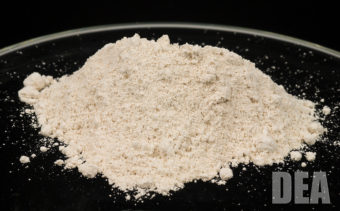
Heroin powder
Heroin powder. (Photo courtesy Drug Enforcement Administration)

Last month in Quinahagak four people overdosed — one of them, a young woman, fatally — after using heroin that contained a large amount of fentanyl.

The heroin supply in other parts of Western Alaska is likely laced with the powerful, often deadly, added drug, and they’re putting the word out that things could soon get worse in the region, authorities said.

“Oh absolutely. I have no doubts at this point,” Alaska State Troopers Sgt. Luis Nieves said Monday.

“We’re waiting on lab results to confirm what we believe is that the heroin that’s coming into this area is the same heroin that’s being distributed around the state, especially throughout Western Alaska,” Nieves said “It’s all coming from the same source, which is in Anchorage.”

Quinhagak Native Village vice president Mary Hill spoke with KDLG on Aug. 19, just days after a series of overdoses rocked the village.

The state crime lab put out the warning after the overdoses in Quinahagak that there was more fentanyl in the sampled drugs than heroin.

According to the Drug Enforcement Administration,the prescription pain killer “is the most potent opioid available for use in medical treatment – 50 to 100 times more potent than morphine and 30 to 50 times more potent than heroin. Fentanyl is potentially lethal, even at very low levels.”

That means a user’s regular dose, perhaps unbeknownst to them, can be deadly.

“This is probably one of the most dangerous drugs ever to hit this state,” Nieves said. “There are many dangerous drugs that are dangerous, alcohol, meth, but heroin right now with this fentanyl, it’s a hazard to everyone.”

He explained how the residue can be absorbed through the skin, leaving non-users, police, and others vulnerable to exposure.

Suppliers are cutting the heroin with fentanyl, Nieves said, to extend the supply, and extend the high.

“Remember, heroin addicts are doing what they call ‘chasing the dragon,’which is they’re trying to replicate that very first experience with heroin. That’s why they have to increase their dosages over time,” Nieves said. “So as they’re chasing this dragon, they’re always looking for the next stronger supplement. The fentanyl is meeting that demand, but it’s also killing people.”

Speaking broadly, Nieves alluded to information that enforcement has received suggesting significant amounts of heroin are inbound to the region soon.

He suspects suppliers are targeting recent fishing income and the Bristol Bay Native Corporation shareholder dividend checks scheduled to be paid out Friday.

“These wolves that prey on innocent people know that there’s going to be plenty of money in the Bristol Bay region,” Nieves said. “Everyone here has been working their tails off fishing, and now they’re getting ready to get their checks and their dividends, and they are easy prey. People have put Dillingham on the map but they put it on the map for a negative reason: it’s a great place to sell this type of product because people here have the money to pay for it.”

A recent EMS call in Dillingham Nieves responded to as backup was likely a fentanyl-related overdose, he said. The person was hallucinating and displaying other strange behavior not normally associated with heroin alone. Nieves believes that person would have died had emergency room care not been so close, a luxury not afforded most living outside of the city.

“I think our ER is going to start filling up with these people. Especially now that these checks are going to be here, and these predators from Anchorage are going to be here,” Nieves said. “I would not be surprised if there are locals who are going to Anchorage right now to pick this product up and bring it here. If they can hear me, well, shame on them, and know that we’re going to be looking for you, and we’re going to doing everything we can to stop you from bringing this stuff into our community.”

Solutions to stopping the drugs trafficked to the region may be few, but local authorities work closely with the Anchorage-based Western Alaska Alcohol and Narcotics Team. Police and troopers say that is working to complicate shipments from the main hub, but Nieves believes the state should prioritize putting a WAANT investigator back in the region.

Beyond police work to intercept the supply, he has good advice for parents and said he’s available to speak with schools, parents, and other groups anytime. The veteran law enforcement officer believes beating heroin will be a battle fought and won “one household at a time.”

Three in Sitka indicted for heroin possession

A Sitka grand jury has indicted three Sitkans for possessing and intending to distribute heroin.

On Aug. 26,  A grand jury indicted Lawrence Johnson Jr., 42, Evelyn Calhoun, 29, and Shammar Ferguson, 32, with two felony counts each.

One is for conspiracy to commit misconduct involving a controlled substance in the second degree, which is a class C felony. The other is for misconduct involving a controlled substance in the second degree, a class B felony.

According to courts records, on Aug. 16th, 2016, Calhoun called the Sitka Police Department to report that Ferguson was trespassing on her property.

Johnson, who also was at the scene, then notified police that Calhoun had transported heroin and methamphetamine to Sitka.

Johnson showed an officer a plastic bag containing 88.66 grams of a black, tar-like substance that tested positive for heroin.

The street value of that heroin is $42,000.

Officers then observed other items allegedly associated with drug distribution.

According to a police department news release from Aug. 17, the arrest was made in collaboration with several agencies, including the Alaska State Troopers, Southeast Alaska Cities Against Drugs Task Force, and the Ketchikan police.

Johnson Calhoun and Ferguson were arraigned in Superior Court on Aug. 29, and remain in custody at the Sitka Jail.

Suspected heroin in Quinhagak was mostly synthetic opioid fentanyl

Heroin powder
Heroin powder. (Photo courtesy Drug Enforcement Administration)

Alaska State Troopers are reporting the presence of high levels of fentanyl in what was suspected heroin seized in Quinhagak.

The drugs had been tested by the State Crime Lab. Troopers report more fentanyl in the drugs than heroin and say it’s an unwelcome trend sweeping the country.

Fentanyl is a synthetic opioid that is 50 to 100 times more powerful than morphine.

It’s likely responsible for higher overdose rates and deaths, Troopers said.

The drugs are related to four apparent heroin overdoses – one fatal – that troopers reported in earlier this month in Quinhagak, a Kuskokwim Bay village of about 700 people.

Site notifications
Update notification options
Subscribe to notifications