Alaska coronavirus news

Live updates and information on COVID-19 in Juneau and Alaska

Another booster? A vaccine for omicron? Here’s what could be next for COVID vaccines

""
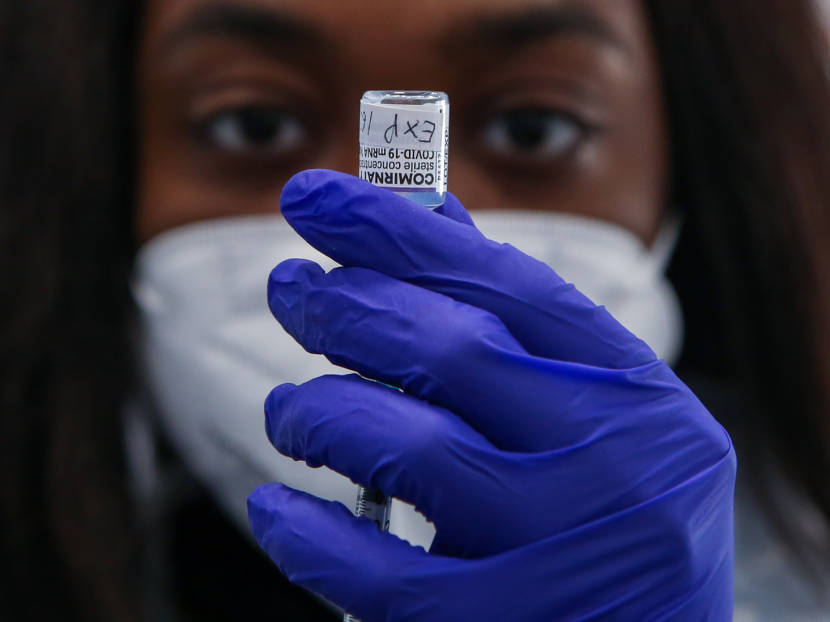
The Food and Drug Administration will meet with outside advisers to talk about the next steps in formulating a COVID-19 vaccination plan. (Photo by Dinendra Haria/SOPA Images/LightRocket via Getty Images)

Most vaccinated people will probably require yet another COVID-19 vaccine booster shot in the fall, a top Food and Drug Administration official said Monday.

“That’s when we’ll probably have a fair amount of waning immunity in combination with likely further evolution of the virus, along with people going back inside,” where the coronavirus spreads more easily, Dr. Peter Marks, director of the FDA’s Center for Biologics Evaluation and Research, told NPR in an interview.

Marks says the U.S. must start planning now for whether everyone needs another shot and, if so, what kind of shot exactly.

“We could basically wait until another wave comes along and then try to make another vaccine and try to deal with it, but I think we know that doesn’t work, because we can’t manufacture and deploy vaccine fast enough,” Marks says.

The FDA is convening a special meeting of the agency’s independent outside advisers on Wednesday for a daylong meeting to begin to plan the next round of boosters.

The meeting comes about a week after the agency authorized a fourth shot — a second booster — for anyone age 50 or older to shore up immunity ahead of a possible new surge sooner than the fall. A more contagious omicron subvariant known as BA.2, which has fueled surges in other countries, is now dominant in the U.S., raising fears of another surge.

The tricky part of determining what do in the fall is determining what version of the coronavirus will be dominant by then, Marks says. It could be the omicron variant, but it could also be an entirely new variant. That raises doubts about just giving people a fifth shot of the current vaccine, he says.

“There is a certain diminishing return by giving the same vaccine over and over,” Marks says. “We have had enough evolution of this virus that it would make sense to want to try to cover some of the genetic diversity that has been introduced into the mix.”

One strategy would be to give people a new vaccine that specifically targets omicron or one of the other variants, such as beta, Marks says. Another option would be a new vaccine that combines at least two strains into one vaccine, which could provide even broader protection against any new variants that might emerge.

“By this fall, we may be on to a new variant. It could be sigma. It may be tau. There may be something new that may be circulating that we’ll have to deal with,” Marks says. “We’re going to have to make a good guess at what may be most effective.”

That’s how the flu vaccine is formulated each year, though the influenza virus is more predictable than SARS-CoV-2, the coronavirus that causes the disease COVID-19.

So far, an omicron version of the COVID-19 vaccine hasn’t produced very promising results in early testing. But scientists are waiting for more data about that shot and about other new versions of the vaccines that combine strains, such as omicron and the original strain, omicron and beta, or delta and omicron.

Another question is how often people will have to keep getting vaccinated moving forward.

“Will it be something like the yearly flu vaccine, or not?” Dr. Anthony Fauci, the White House science adviser, told NPR in an interview. “I have to emphasize: We don’t know the answer to that right now.”

Some experts worry that the FDA is just assuming another shot will be necessary, instead of focusing on the more important problem of vaccinating the unvaccinated and boosting the unboosted.

“The FDA agenda implies that, without open, transparent scientific discussion, … that repeated boosting is the way of the future. There has yet to be a discussion of the goals of boosting and the trade-offs,” Dr. Celine Gounder, an infectious disease specialist and senior fellow at Kaiser Health News, wrote in an email.

“People like to say we can walk and chew gum at the same time, but in a world of limited resources, there are choices and trade-offs to be weighed. What are we not doing at the expense of repeated boosting?” she says.

In a briefing document posted Monday, the FDA outlined the many questions that the advisory committee will discuss on Wednesday. One issue is whether the U.S. or the World Health Organization will take the lead in formulating the next version of the vaccine, as the latter does with the annual flu shot.

Unlike with the flu shot, regulators will need specific new data demonstrating that any new formulation of the vaccine is safe and effective, the FDA says.

Copyright 2022 NPR. To see more, visit https://www.npr.org.

Masks are now optional in Juneau schools, but some students and staff choose to keep them on

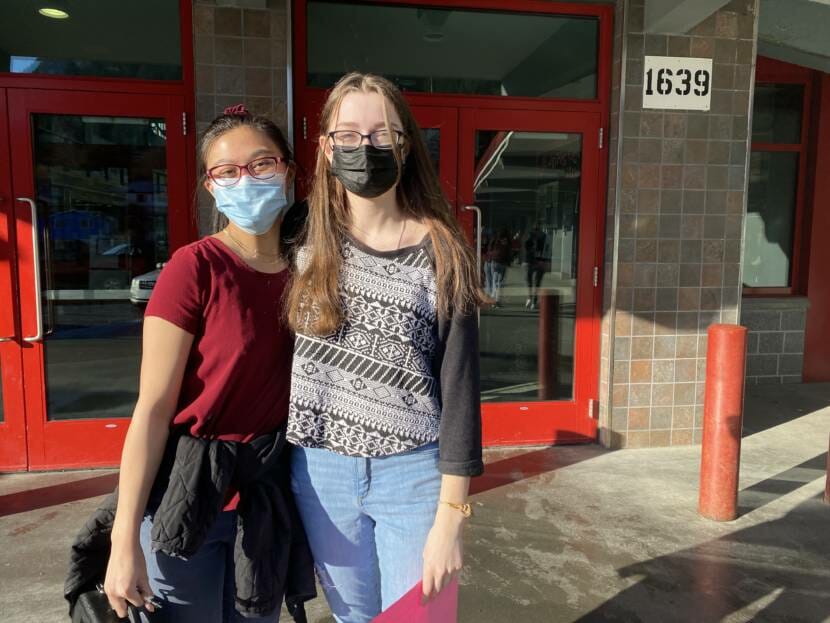
Students Jowielle Corpuz and Sydney Carter pose together in front of uneau Douglas High School Yadaa.at Kalé on April 4, 2022.
Students Jowielle Corpuz and Sydney Carter pose together in front of Juneau Douglas High School Yadaa.at Kalé on April 4, 2022. (Photo by Bridget Dowd/KTOO)

Wearing face masks inside Juneau’s public schools is optional as of Monday. The district’s board of education made the decision last month after the city’s COVID-19 risk level was lowered. 

But, on Monday morning, many of the students who filed into Juneau Douglas High School Yadaa.at Kalé still wore face coverings. Jowielle Corpuz was one of those students. 

“I have a lot of things coming up with the Alaska Association of Student Governments and a few interviews for a summer job,” Corpuz said. “So I have a lot going on right now. I just don’t really want to risk it.”

Corpuz said so far, it looked like about 70% of people in the school were still wearing masks, but she expected people to take them off throughout the day. She said she thought some students might not have known yet that masks were optional.

Both Corpuz and her friend, Sydney Carter, said they were worried that as more people take their masks off, the number of cases of COVID-19 might spike again.

Esteban Demmert, another student headed to class Monday morning, had his mask pulled down to his chin. He said he was looking forward to having a little more normalcy.

“I only brought a mask in case I go anywhere besides here,” Demmert said. “It’s just gonna be good to see people’s faces again.”

A few miles down the road, at Riverbend Elementary School, Principal Elizabeth Pisel-Davis said kindergartners stared at her in amazement that morning as they unloaded from school buses.

“Because I didn’t have my mask on, they were looking at me with these big eyes,” Pisel-Davis said. “I could just hear their thoughts of ‘Woah, that’s what you look like?’” 

By mid-morning, students were running around in gym class, mostly mask-free. Fourth-grader Alani Zeller said she was excited to take her mask off.

Fourth grade students Amelia Ryder, Kayden Manacio, Alania Celler and Klarence Domingo sit in the cafeteria at Riverbend Elementary School on April, 4 2022.
Fourth-grade students Amelia Ryder, Kayden Manacio, Alani Zeller and Klarence Domingo sit in the cafeteria at Riverbend Elementary School on Monday.(Photo by Bridget Dowd/KTOO)

“When we were in gym, we would just sweat and then sweat goes into your mask and you have to change it all the time and it breaks so easily,” Zeller said. “I’m kind of fed up about it.”

Other students said they looked forward to eating lunch without plastic dividers between them and their friends. Most of the staff appeared to be maskless too. 

Natalie Ward teaches fourth and fifth grade at the school. She said most of her students weren’t wearing them, but still respected those who were.

“Some of them I feel like I’ve never seen their full face before,” Ward said. “So when some of them were walking in I was like ‘Who is that?!’”

Ward said she was happy to see their faces again too because reading aloud and communicating non-verbal queues had been a struggle with masks on.

Christi Martz, who teaches third grade at Riverbend, is keeping hers on for now.

“You just never know what’s going to happen,” Martz said. “COVID is very good at throwing curveballs.”

Martz said by continuing to cover her mouth and nose, she hopes to protect her child, who is too young to be vaccinated. 

By early afternoon, it was a mixed bag at Dzantik’i Heeni Middle School. 

Sixth-grader Ariel Washington said most of the kids in her classes weren’t wearing masks and she wasn’t wearing one either.

“I think the virus is getting better as the days go on, so I’m not wearing it as much,” she said. “Sometimes I used to forget my mask and if I forget it now, it doesn’t really matter.”

Other middle schoolers were still wearing face coverings because they were afraid it wasn’t quite safe yet or because they didn’t want to stand out among their peers.

Masks are expected to remain optional in schools as long as Juneau is at a medium or low risk level.

The BA.2 strain now makes up nearly half of Alaska COVID cases

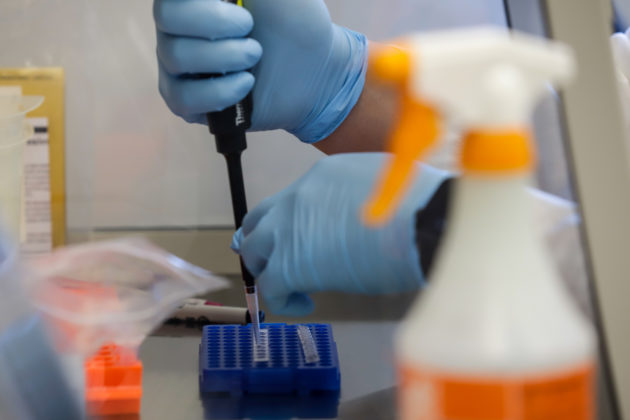
A researcher at a University of Alaska Anchorage lab prepares samples for sequencing — the process that scientists use to detect specific strains of the virus that causes COVID-19. (Photo by Jeff Chen/Alaska Public Media)

Second COVID-19 booster shots are now available for some Alaskans.

People over age 50 and immunocompromised people can receive a second booster four months after their first booster. Pfizer and Moderna boosters are available for those who received a Johnson & Johnson first dose or booster.

Meanwhile, case numbers continue to level off in Alaska and around the country. At a public health presentation Wednesday, state health officials said getting vaccinated and boosted is still important.

“During this recent surge, those who were boosted were 21 times less likely to die from COVID compared to those who were unvaccinated, and seven times less likely to be hospitalized,” said state epidemiologist Dr. Lisa Rabinowitz.

Statewide, 59.6% of Alaskans are fully vaccinated. Local rates range from 79.6% in the Juneau region to 42% in the Matanuska-Susitna region. In an interview Thursday, Rabinowitz said the state has an adequate supply of vaccines and boosters for both adults and children.

The new booster authorization comes as BA.2, a subvariant of omicron, spreads throughout the country. BA.2 makes up 54.9% of cases nationally and 44.57% in Alaska.

“We’re quickly approaching that 50% mark,” said state epidemiologist Dr. Joe McLaughlin.

BA.2 seems to be more transmissible but not more virulent than BA.1, meaning it spreads more easily but doesn’t cause more severe illness, McLaughlin said. Vaccines are also as effective against BA.2 as they are against BA.1, officials said.

But BA.2 is affecting treatment options. Sotrovimab, a type of monoclonal antibody treatment, is not effective against BA.2. On Friday, the FDA announced that it no longer authorized its use in certain regions including Alaska.

Other monoclonal antibody and antiviral treatments are still available, but it’s important to ask a health care provider about them quickly, officials said. That’s because patients need to start taking them within five to seven days after testing positive or experiencing symptoms in order for them to be effective.

“These drugs, all of them have to be given early — we’re hearing a lot of reports from providers and patients that they waited too long,” state pharmacist Dr. Coleman Cutchins said. “As soon as you have any symptom that possibly could be COVID, go out and get tested. And as soon as you test positive or start symptoms, reach out to your medical provider.”

Rabinowitz said Alaska’s supply levels for monoclonal antibody and antiviral treatments are also stable.

State health officials also highlighted a new addition to the state’s COVID dashboard that provides case rate levels by community. The CDC’s community measurement tool divides the state into just four areas, but the state health department’s tool will include individual boroughs and census areas.

Dr. Eric Mooring, a CDC epidemiologist, said he hoped it would be useful for communities making decisions about masking requirements and other mitigation measures.

“This, in part, captures the wide variety of levels of transmission that we’ve seen in different communities and across the course of the pandemic,” he said. “I think it might be especially useful for more rural boroughs and census areas.”

The state health department will update all COVID-19 dashboards weekly on Wednesdays, rather than daily, starting April 6. Biweekly public health presentations will continue through May 25, and then pause until September, when they’ll be held monthly.

Second COVID-19 booster shots are now available for eligible Juneau residents

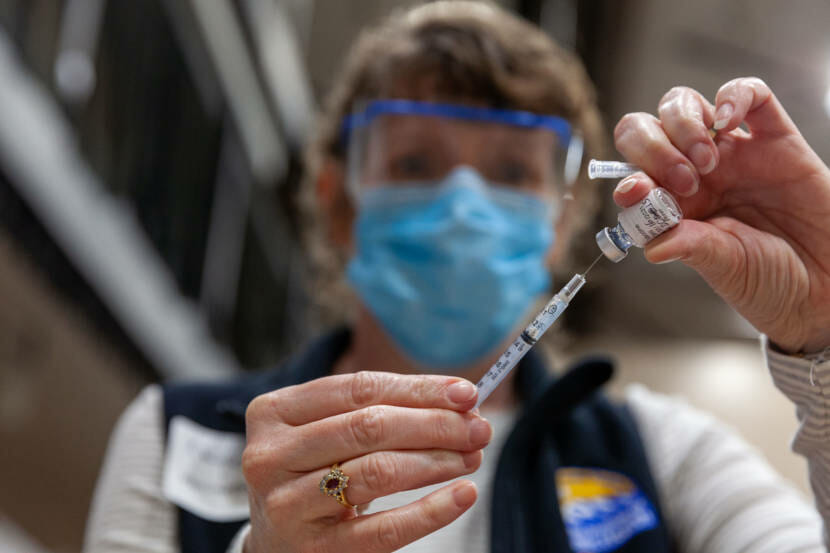
Elaine Hickey, a public health nurse, draws some of Pfizer’s vaccine into a syringe during a COVID-19 vaccine on Jan. 15, 2021, in Juneau, Alaska. (Photo by Rashah McChesney/KTOO)

Second COVID-19 booster shots are now available for certain people in Juneau. 

The Centers for Disease Control and Prevention is recommending another shot for those who are immunocompromised or over the age of 50.

People who received their first booster dose at least four months ago are eligible.

To get a second Pfizer or Moderna booster, residents can visit the Juneau Public Health Center every Friday in April. Those shots have also been approved for anyone who received an initial dose and booster from Johnson & Johnson.

To make an appointment, visit the city’s website or call  907-586-6000. Walk-ins can also register on site from 8:30 to 4 p.m. on those days.

First doses and boosters of COVID-19 vaccines are available for anyone age 5 and up at the Juneau airport, Costco Pharmacy, Genoa Healthcare, Juneau Urgent & Family Care, Safeway, and SEARHC.

Ivermectin does not prevent COVID-19 hospitalization, a new study says

""
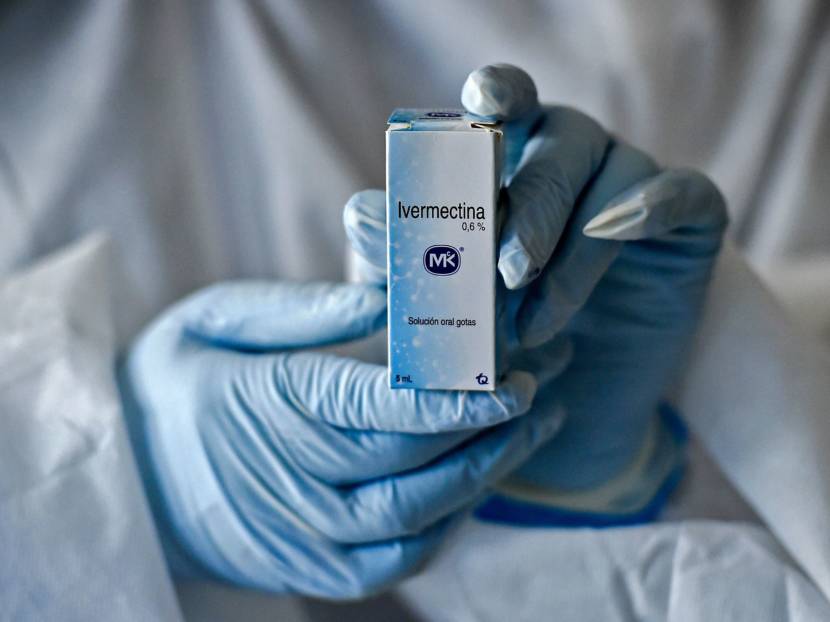
A health worker shows a box containing a bottle of Ivermectin in Cali, Colombia, on July 21, 2020. (Photo by Luis Robayo/AFP via Getty Images)

The anti-parasitic ivermectin doesn’t reduce the risk of hospitalization from COVID-19, according to a study published in the New England Journal of Medicine.

The study serves as more evidence for what health professionals have been saying for much of the pandemic: the cow and horse de-wormer shouldn’t be used to treat COVID.

In the large study, researchers in Brazil studied more than 1,300 patients, half of which received ivermectin and the other half a placebo.

In their conclusion, the authors said, “Treatment with ivermectin did not result in a lower incidence of medical admission to a hospital due to progression of Covid-19 or of prolonged emergency department observation among outpatients with an early diagnosis of Covid-19.”

There have already been some clinical trials done earlier in the pandemic that showed ivermectin is not effective against COVID-19.

The Food and Drug Administration has strongly urged against using the animal version of ivermectin to fight COVID-19, warning it can cause nausea, vomiting, abdominal pain, neurologic disorders and potentially severe hepatitis requiring hospitalization.

This warning hasn’t stopped the drug’s popularity with some people seeking to treat COVID.

Popular podcaster Joe Rogan said he used the drug to treat his COVID-19 infection. He said at the time that his treatments also included monoclonal antibodies, Z-pack antibiotics and a vitamin drip for “three days in a row.”

This drug was even administered to inmates in Arkansas.

Copyright 2022 NPR. To see more, visit https://www.npr.org.

Budget work at Alaska House delayed as COVID cases surge, caucuses differ on masks

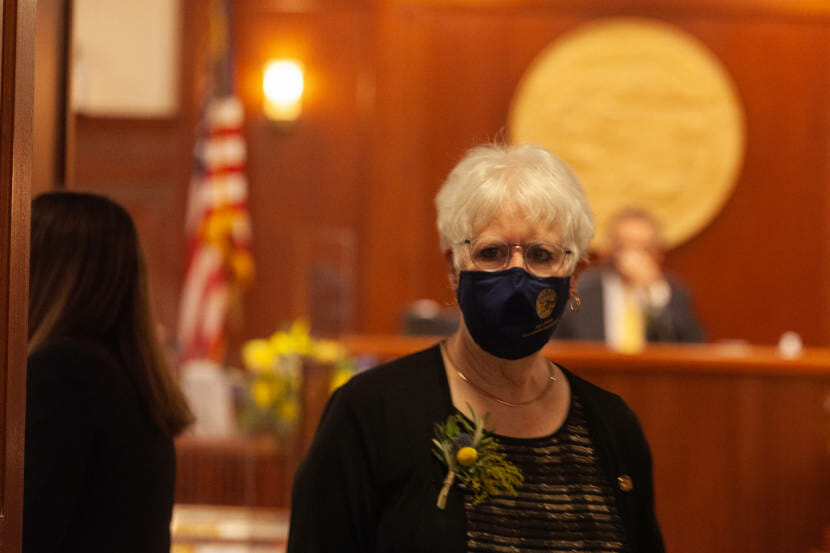
State Rep. Louise Stutes, R-Kodiak, leaves the House floor after being sworn in on Jan. 19, 2021, in Juneau. On Wednesday, Stutes said she reinstituted a mask mandate on the House floor in order to minimize the spread of COVID-19. Twenty-six people who work in the Capitol are active cases. (Photo by Rashah McChesney/KTOO)

Twenty-six people who work in the Capitol have been reported as active cases of COVID-19, including four or five legislators, according to House Speaker Louise Stutes. 

Stutes, a Kodiak Republican, has imposed a requirement that House members wear masks during floor sessions. But three members — Republican Reps. Ben Carpenter of Niksiki, David Eastman of Wasilla and Christopher Kurka of Wasilla —  have refused to do that, and as a result, Stutes hasn’t allowed the House to hold a full session all week. 

The Legislative Council has not re-introduced a mask requirement for the entire Capitol. On Feb. 23, the council dropped mask and testing requirements for those who work in the building. 

Stutes said she is doing what she can to minimize the spread of the virus.

“Masking may not be the end-all to everything,” she said. “But it certainly is helpful. It’s one of the many things you can do.”

Stutes said she had been clear when she dropped a mask requirement earlier this year that she would bring it back if there was a cluster of cases. 

“We’re stymied because a few people have determined that we’re violating their civil and personal rights by asking them to wear a mask,” she said. 

In a statement Tuesday, the Republican House minority caucus described canceling floor sessions as “a result of fear and virtue-signaling.” The caucus said it was present and ready to work. 

“We do not want the people’s business to be thwarted due to obvious delay tactics,” the statement said.

Stutes said she plans to resume work on the state budget on Monday, in the hope that the peak in cases would have crested by then. She said the House will meet each day as it finishes work on the budget. 

Site notifications
Update notification options
Subscribe to notifications