The Norwegian Gateway cruise ship is moored at PortMiami on Jan. 7 in Miami. The Centers for Disease Control and Prevention dropped its advisory warning Wednesday for cruise travel after more than two years of warning Americans. (Photo by Joe Raedle/Getty Images)
The Center for Disease Control and Prevention has lifted its risk advisory for cruise ship travel Wednesday following two years of issuing warnings to travelers about the possibility of contracting COVID-19 onboard a cruise.
In an update posted online, the agency removed its “Cruise Ship Travel Health Notice,” a notice that recommended individuals against traveling onboard cruise ships. Three months ago, the CDC increased its travel warnings for cruises to Level 4 — the highest level — following investigations of ships that had COVID outbreaks.
While the CDC has lifted its travel health notice, officials say it’s up to the passengers to determine their own health risks before going onboard a cruise ship.
“While cruising will always pose some risk of COVID-19 transmission, travelers will make their own risk assessment when choosing to travel on a cruise ship, much like they do in all other travel settings,” the agency said in a statement to NPR.
The agency says it will continue to provide guidance to the cruise ship industry in order for cruise lines to operate in a way that will provide “safer and healthier” environments for crews, passengers and communities.
News of the CDC’s decision to remove its travel health notice was praised by the Cruise Lines International Association, the industry’s largest trade organization.
“Today’s decision by the U.S. Centers for Disease Control and Prevention (CDC) to altogether remove the Travel Health Notice for cruising recognizes the effective public health measures in place on cruise ships and begins to level the playing field, between cruise and similarly situated venues on land, for the first time since March 2020.
From the onset of the pandemic, CLIA’s cruise line members have prioritized the health and safety of their guests, crew, and the communities they visit and are sailing today with health measures in place that are unmatched by virtually any other commercial setting.”
The CDC emphasizes that travelers should make sure they’re up to date with their COVID-19 vaccines before taking a cruise, in addition to following their ship’s requirements and recommendations against the virus.
Travelers are urged to check their cruise ship’s COVID case levels and vaccination requirements online before traveling, the agency says.
Copyright 2022 NPR. To see more, visit https://www.npr.org.
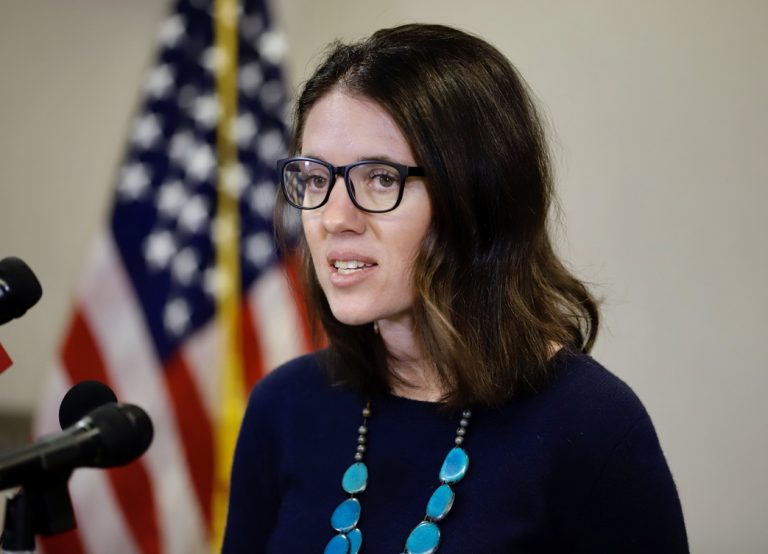
Alaska Chief Medical Officer Anne Zink talks to reporters at a press conference about the coronavirus on Monday, March 9, 2020. (Joey Mendolia/Alaska Public Media)
Municipalities across the state have dropped pandemic restrictions, but a lot of people are still getting COVID-19. KTOO’s Claire Stremple checked in with Alaska Chief Medical Officer Dr. Anne Zink to talk about this moment of living with COVID while many are ready to move on.
Listen here:
The transcript below has been lightly edited for clarity.
Claire Stremple: So, I myself got COVID last week — maybe you can hear some lingering congestion in my voice. It was a strange moment, after spending two years working to avoid getting sick, to get COVID while I’m hearing about a “post-pandemic” world. And I wasn’t alone. A lot of people I know here in Juneau are also getting sick lately.
How is public health thinking about this moment? And how about your colleagues who work in clinical settings?
Dr. Zink: Yeah, I think it’s continued to change throughout the pandemic. You know, we really have very different tools in 2022 than we did in 2020. It’s never fun to be sick, and so I’m sorry that you got sick. And it can be, I think, particularly — it’s sometimes, for many, frightening after, as you mentioned, avoiding it for many years. Because we don’t know the long term implications of the disease.
We’re learning a lot. And we know a lot more now than we did beforehand. There’s also no shame in getting COVID. And so we know it’s a highly, highly contagious virus that just moves quickly from person to person, so I think we need to make sure that we just recognize that as well. It’s just a virus, and it’s just contagious, and people are going to get it overall.
[I’m] not surprised that many vaccinated people are getting COVID-19 right now, as it is so transmissible. But what’s great is to see some of our lowest hospitalization rates during the whole pandemic, is what we’re seeing right now. And we’re just not seeing the same rate of people getting really sick, needing to go to the emergency department, being hospitalized and dying from this disease.
It’s still happening — still admit people all the time in the emergency department. But nothing like we saw, particularly during the delta wave. We got hit so hard in this state by the delta wave, and then what we saw, particularly in other states and other countries early on.
Claire Stremple: Speaking of the metrics that we’re looking at, we relied on case counts for a long time to understand what was happening with the pandemic in our communities. Some people checked them every day, like the weather. Hospital numbers are a really important indicator. Now, as you mentioned, what’s the state plan for tracking cases and tracking the virus going forward?
Dr. Zink: We’ve always known from the beginning that we have not identified every case. We identified a lot of cases, particularly at the beginning, but we have never identified all the cases. There was asymptomatic spread, there were people who did not want to get tested.
And now we probably have an even higher likelihood that we’re not seeing all the case numbers because people are doing home testing [and] home testing isn’t reported. They may be testing in different avenues, and we see a real change in that landscape. So we just recognize we’re not able to see all of the cases.
The same is true with influenza and with other diseases where they have really gone to a surveillance reporting, so, looking at the overall state and getting a sampling to have a good sense of what’s happening with that disease progression. And then we use those numbers in combination with other things, like you mentioned hospitalization data, what we call syndromic surveillance data, [which is] how many people are showing up to the emergency department and being diagnosed with COVID, being diagnosed with influenza, or showing up with symptoms that looks similar to that. So we want to make sure that we’re taking all of those things into consideration.
Claire Stremple: In Juneau, some people are calling this moment a “wave” of cases. A noticeable number of people are getting sick. And I’m wondering if you’re seeing that in other parts of the state or if the Juneau wave is showing up in data at all.
Dr. Zink: I think that, you know, a wave is definitely showing up in the media, and it is showing up a little bit in the data. But we’ve had other waves like this in other parts of the state. But you know, this is a time when a lot of people’s eyes are on Juneau, given the legislative session. So I think there’s a little bit of extra attention and focus in that region right now.
But we’ve seen this since the beginning of the pandemic, where, particularly with delta and then omicron, it just moves so fast that it will kind of sweep through a town or a region very, very quickly, just because it’s so transmissible. And then it moves to another region and moves to there.
I’ve often described it kind of like popcorn in our state. And so one region explodes with cases and then another one explodes with cases. But what we’re looking at in the state is kind of that sound overall. And then when it settles down, you can hear the individual pops a little bit easier. And so we kind of settle down, and so you’re hearing that Juneau pop I think a little bit more than you’re hearing the pops across other places.
Claire Stremple: Is there anything else you’d like to add? Maybe anything I didn’t ask you that you’d like to share or think is important.
Dr. Zink: Thanks for asking that. I think a lot of people ask like, “What should I do at this point in the pandemic?” And I think that the basics still apply. The biggest thing you can do is take care of your physical and mental health. It will make you more prepared to take on this virus or other things. So get outside, enjoy the sun, play, eat well. You know, the best source of vitamin D that we get is actually salmon in the state. That’s where the majority of us get it. So eating a balanced diet is incredibly important.
Two, making sure that you have a degree of protection. And the best way you can do that is getting vaccinated and staying up to date. And then you know, knowing that we’ve got treatments available, knowing that we have different resources.
Your masks work. Treatments make a huge difference. Make sure that if you are going to be going someplace high risk and you’re at risk, [that you’re] wearing a mask, using testing, and if you test positive, consider treatment. So just, the same tools apply, we just need to continue to use them and continue to build our overall health and wellbeing.
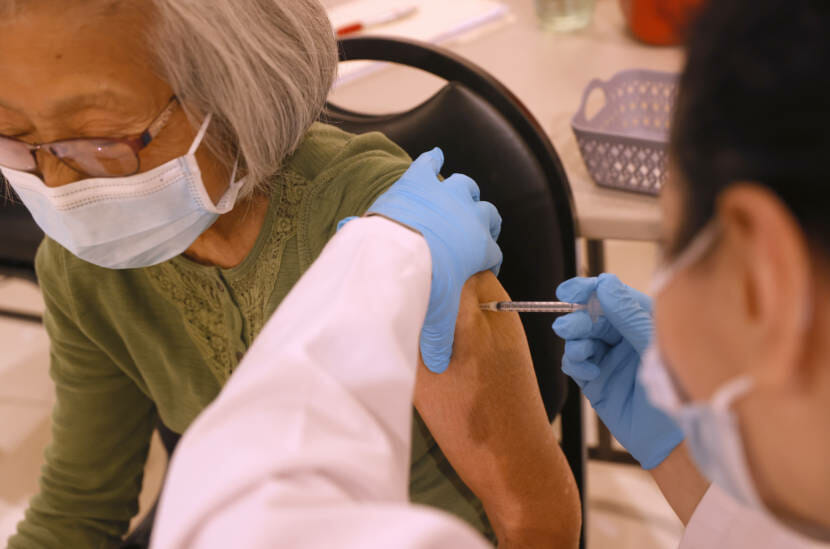
The FDA has authorized second booster shots for people over 50 and for some people who are immunocompromised. (Photo by Justin Sullivan/Getty Images)
The Biden administration has given the go-ahead for another COVID vaccine booster for people aged 50 and older and certain people who are immunocompromised. They can now get another Moderna or Pfizer-BioNTech booster at least four months after their last dose.
But just because you can get an additional booster, does that mean you need to?
Health officials argue that the protection provided by the COVID vaccine booster shots wanes over time. And they are concerned about people considered to be at highest risk of getting severe COVID.
But the Centers for Disease Control and Prevention didn’t make it clear how urgently people should be lining up for second boosters. The agency says these groups are “eligible” for the shots but it stopped short of saying they should get them. And some infectious disease experts say not everyone in this age group needs another shot now.
So, if you’re wondering whether to get a second booster, here are a few key factors to consider.
Risk of serious illness increases with age
Risk tracks with age, and older people have the highest risk.
A recent study among people 60 and older in Israel found that rates of COVID-19 infection and serious illness were lower in people who had a fourth dose of the Pfizer vaccine compared to three shots.
“We’re talking about extra protection from the most serious outcome of COVID,” says Dr. Eric Topol, founder and director of the Scripps Research Translational Institute.
Dr. Bob Wachter, chair of the Department of Medicine at the University of California San Francisco, says he personally plans to sign up for a second booster.
“I’m 64 and pretty healthy,” he says. “But the evidence is clear that six months out from my first booster shot, the effectiveness of that booster has waned considerably.”
He says another dose will boost his immunity and decrease the probability of infection. “The benefits are very real,” Wachter says.
But for people under 60 it’s less clear a second booster is necessary.
“I don’t think we have the data for younger people, 50 to even 60,” says Dr. Monica Gandhi, an infectious disease specialist at the University of California, San Francisco. The study out of Israel didn’t include this younger age group.
She points out that other countries are targeting additional boosters for older people. Germany has authorized a fourth shot for people over 70. The U.K. is targeting people over the age of 75 and Sweden is giving fourth shots to people over 80. Gandhi says the U.S. “is jumping the gun” by forging ahead with shots for everyone over 50 without the relevant data.
Still the trendline is clear, says Dr. Peter Chin-Hong, an infectious disease specialist at UCSF.
“The older you are, the bigger the benefit,” he says. Although the majority of deaths from COVID have been people older than 65, “there’s a clear association with age and mortality with COVID,” Chin-Hong says. “It’s really, really striking and it starts at age 50.”
His advice? “Walk to get the second booster if you’re eligible.” Then he says “walk a little faster the older you get.” His mom is in her 80s and he wants to protect her as much as possible. “I’m telling her to walk quickly,” he says.
Dr. Carlos del Rio, an infectious disease researcher at Emory University thinks it’s reasonable for people under 60 to wait. “The vaccines are holding up pretty well against severe disease and death,” he says.
It’s also worth noting that even for people over 60, the added protection of an additional booster shot, is small in absolute terms. People who got the first booster already have a very low risk of dying from COVID. Chin-Hong points out that in the Israeli study less than .1% of people with a third shot died, a risk so low he calls it “remarkable.”
Among people who got the fourth shot in this study just .03% died.
“Three shots is the magic number, we think, so far,” he says.
Underlying conditions put you at higher risk
Certain medical conditions also increase the risk of serious illness and death from COVID-19 and that’s the reason the FDA decided to authorize the additional boosters starting at age 50.
“We know that people in the age range from about 50 to 65 – about a third of them have significant comorbidities,” said Dr. Peter Marks, director of the FDA’s Center for Biologics Evaluation and Research, at a press conference Tuesday. People with heart disease, lung disease, obesity and diabetes are at higher risk for serious illness and death and people over 50 – particularly people of color – are more likely to have an additional risk factor.
“So by choosing age 50 and up, to consider those at high risk or higher risk,” Marks said. “We felt like we would capture the population that might most benefit from this fourth dose.”
When it comes to age, “there’s no bright cut off of risk,” agrees Wachter.
There are likely incremental increases in risk, year after year, as a person ages. A 50-year-old typically has lower risk than a 65-year-old, but health status matters, too.
“An unhealthy 55-year-old is probably at the same risk as a healthier 65-year-old,” Wachter says.
Bottom line, risk goes up with age and underlying conditions, and Wachter says many people over 50 may benefit from another dose.
“Anyone who has a serious medical condition, I would certainly suggest thinking about getting a booster,” says Dr. Preeti Malani, an infectious disease professor at University of Michigan Health. “For my own family, for my parents and my in-laws, this is something that I will recommend,” she says. “Because that extra layer of protection does help ensure that if they get COVID, it’s going to be milder.”
Immunocompromised people may need an extra boost
Health officials are particularly concerned about people who are immunocompromised because their immune responses to the vaccine tends to wane faster and they are at higher risk of getting severely ill or dying from COVID-19.
That’s why anyone 12 or older with certain immunocompromised conditions can now get an additional shot of the Pfizer-BioNTech COVID-19 vaccine, four months after their last dose. A second booster of the Moderna vaccine can be given to people 18 years of age and older.
This includes people who have undergone solid organ transplants, or who are living with conditions that have a similar level of immunocompromise.
Timing from last dose or infection is important
There is mounting evidence of waning vaccine protection against serious illness from COVID-19 in older and immunocompromised people, who are at least four to six months past their first booster.
Evidence of waning immunity comes from a recent CDC analysis of COVID-19 emergency room visits and hospitalizations visits during the omicron-predominant period. Two months after a third dose, people were 91% protected against hospitalization. But by four months, that protection dropped down to about 78%.
“It means that people who were boosted three, four, five, six months ago probably have limited protection against current infection,” Malani says.
This means a second booster can help shore up that protection, “but it’s not going to be long lasting.” So the timing of the additional shot can be tricky.
Right now the rate of viral infections has come down significantly since the peaks in January, but there are signs that infections are rising in some areas. The even more contagious omicron variant BA.2 is now the dominant variant in the U.S., and hospitalizations are also creeping up in some places.
Peter Chin-Hong says some people might want to wait to get a booster until a time when cases start to rise in their community and they need the added protection more urgently.
He also notes there may be more effective vaccines on the horizon. As vaccine makers test omicron-specific vaccines and continue research on vaccines that could fend off multiple variants, it may make more sense for people at lower risk to wait.
Still, if you’re high-risk, you may not want to wait too long. Polls show many vaccinated people held off on a first booster dose when they became available last year. But waiting until you see another outbreak in your community could be risky.
“It reminds me a little bit of trying to time the stock market. It turns out nobody’s actually good at it,” Wachter says. If there’s another outbreak on the horizon, it’s best to maximize your protection in advance of it.
There’s one more factor to consider when deciding on the timing of a fourth dose: Have you had a recent COVID-19 infection? If you’ve had three shots and you’ve had an omicron infection sometime between December and now, “I think it’s reasonable to wait.” Wachter says. He says a recent infection likely puts a person in a similar immunologic state as a second booster.
Rob Stein and Michaeleen Doucleff contributed to this report.
Copyright 2022 NPR. To see more, visit https://www.npr.org.
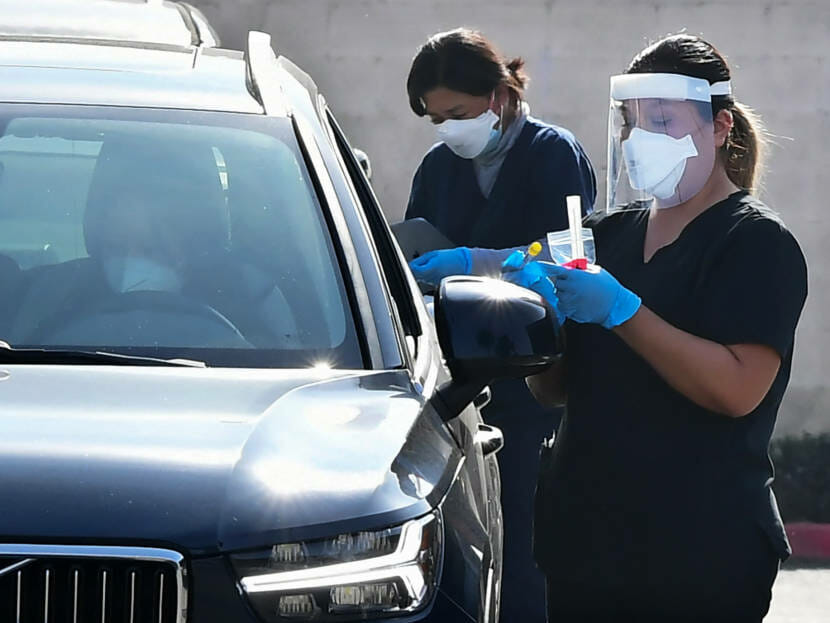
Through the pandemic, if you needed a coronavirus test, you could get one for free, even without insurance. Now, that is no longer the case in some places, as the federal funding covering the costs has run out. (Photo by Frederic J. Brown/AFP via Getty Images)
The first real-world consequences of dwindling federal COVID-19 funds have started to be felt in recent days.
Coronavirus tests for uninsured patients are no longer free in some places. That’s because the program that reimbursed clinics and hospitals for the testing, as well as for treating uninsured patients with COVID-19, stopped accepting claims last week “due to lack of sufficient funds.” Some clinics have already started to turn away people without insurance who come to get tested and can’t afford to pay for it.
Free vaccines for uninsured people are next — that funding will run out next week. After that, the vaccines themselves will still be covered by the government — for now — but the costs of administering them will no longer be billed to the federal program.
In another blow to the COVID-19 response, federal shipments of monoclonal antibody treatments to states — drugs designed to keep people infected with the coronavirus out of the hospital — were also slashed last week by 35%, according to Health and Human Services Secretary Xavier Becerra.
Biden administration officials such as Becerra warn that this is just the beginning. They’ve cited a long list of consequences — short and long term — as they plead with lawmakers to allocate $22.5 billion more for pandemic relief.
At the moment, that request for funding appears stalled in Congress. That has hospitals and public health experts worried that the U.S. will be poorly equipped to identify — let alone manage — whatever happens next with the pandemic.
As hospitals lose money, staff fear future surges
Losing this federal COVID-19 funding is “one additional threat” to safety net hospitals already strained by two difficult pandemic years, says Dr. David Zaas, who leads clinical care for the Medical University of South Carolina‘s network of 14 safety net hospitals in South Carolina.
He says that even without a pandemic, hospitals that primarily serve low-income patients run on tight margins. Add to that “the decreases in surgeries, as well as the increase in costs from the supply chain and labor, and the unpredictability of the different COVID waves,” and it’s clear why the pandemic has been so rough.
The Provider Relief Fund has been essential over the past two years, he says. His hospital network has gotten “$9.8 million of hospital reimbursement for predominantly inpatient care of uninsured COVID patients — that is now going away,” he explains.
He says the hospital network will continue to test and treat uninsured patients with COVID-19 and won’t bill patients for it, so the funding for that care will have to come “from the limited margin that hospitals generate to reinvest in our people and our programs and our facilities.”
The reduced monoclonal antibody shipments to states this week may also affect health systems and patients. Zaas’ health system has been providing those drugs to patients and even turned an old restaurant in a shopping mall into a COVID-19 infusion center. It’s unclear yet what the supply or cost of these drugs will be going forward, he says, though there’s also uncertainty about whether they’ll be effective against future variants.
The trade group representing Zaas’ health system — America’s Essential Hospitals — says these worries are being felt at hospitals that serve low-income and uninsured patients across the country.
“We are imploring Congress — and reaching out to the administration as well — to try to get at least some targeted financial relief to safety net institutions in the coming months,” says Beth Feldpush, senior vice president for policy and advocacy for America’s Essential Hospitals.
She’s worried, not just about whether hospitals will be reimbursed for caring for uninsured patients, but about whether there will be enough workers to provide that care. Health care workers are burned out by the pandemic, and many are leaving the field. Federal funding to help hospitals find, train and retain staff is drying up as well, she says, which is “really going to squeeze essential hospitals a lot over the coming months.”
Lost access to free care could fuel future outbreaks
As federal funds begin to dwindle, the strain on hospitals’ budgets and the reduced access to COVID-19 prevention and care for uninsured patients could have ripple effects.
There are 28 million uninsured people in the United States. If someone who’s uninsured is afraid to get tested for the coronavirus because of the risk of getting billed for it, the person might just not get tested when sick.
The person might also keep going to work in public-facing jobs, like serving food or driving an Uber. Zinzi Bailey, an epidemiologist at the University of Miami Miller School of Medicine, says all those hidden cases can drive more spread, with “bigger surges, different variants.”
“And we do not have this thing under control,” she says.
“We’re going back to common spaces. We’re going to be interacting. There’s no way to really divorce ourselves from people who may be uninsured,” Bailey says. Masks are also coming off, which makes it easier for the coronavirus to spread.
At the same time, the country might not notice if and when new surges begin — surveillance to detect and track new variants is also on the list of pandemic-fighting tools that are in danger of being cut.
“If we aren’t doing surveillance — either because we’re hoping for an end to the pandemic or because the money runs out and health departments and other institutions can’t afford to do it — then we are going to be caught unawares next time,” says Crystal Watson, a senior scholar at the Johns Hopkins Center for Health Security.
Already, at-home tests have made case counts unreliable measures of the true amount of virus in a community, and wastewater surveillance doesn’t cover the country evenly.
Boom-and-bust health funding continues
Watson is discouraged but profoundly unsurprised that lawmakers seem unwilling or unable to put more funding toward the pandemic.
“This looks like every other public health emergency that we’ve faced in the last 20 years,” she says. “Congress seems to get very fatigued of funding the emergency response, and so after people perceive that the acute emergency is over, they’re very quick not only to reduce funding but then to also really devalue the programs that are intended to prepare for the next emergency.”
But the cycle continues. Additional pandemic funding seems stalled in Congress.
One reason for the standoff is that Republican lawmakers have argued that they need a more detailed accounting of where previous COVID-19 funding has gone. At the White House’s first COVID-19 news conference in weeks, last Wednesday, health officials retorted that they’ve provided plenty of detail, and they even brought 385 pages of documents provided to members of Congress to prove it.
Gregg Gonsalves, an epidemiologist at Yale University who studies public responses to infectious disease, notes that the federal government’s messaging about how the pandemic is easing may be in part to blame for the impasse.
“I don’t understand how they can’t see the cognitive dissonance of the downplaying of the pandemic and then the need to get more money from Congress,” he says. “Either it’s a crisis and you need more money, or it’s not a crisis and you don’t need more money.”
He says even if cases are low, the country shouldn’t let up on surveillance, free tests and other efforts to keep the virus at bay. “You hope for the best and you plan for the worst,” he says. “You don’t just hope for the best, which is the national policy right now.”
In his South Carolina hospital network right now, Zaas says, there are only 43 COVID-19 patients across all their hospitals, but he’s still feeling nervous about what’s next.
“Even though COVID numbers are dropping around the country, none of us know what’s going to happen over the next six months,” he says. “I think all of us are worrying about an additional wave.”
Copyright 2022 NPR. To see more, visit https://www.npr.org.
The Biden administration wants people 50 and over to have the option of getting an additional booster shot. (Photo by Frederic J. Brown/AFP via Getty Images)
Anyone 50 years and older could soon be eligible for a second booster dose of the Moderna or Pfizer-BioNtech COVID-19 vaccine. The Food and Drug Administration is expected to authorize the additional booster shots without holding a meeting of its independent vaccine advisors.
The plan comes as evidence increases that protection from three shots is fading and a fourth shot would help boost immunity back up. And as BA.2, an even more contagious version of the omicron variant, continues to spread in the U.S., concern is mounting it could fuel another surge.
“We have a large number of people who are at least four to six months past their third shot,” says Dr. Eric Topol, founder and director of the Scripps Research Translational Institute, who supports the move.
“Without protection against the omicron variant, particularly now we’re confronting BA.2, there’s a very high risk of hospitalization and death,” he says.
But others question the plan. The vaccines are still doing a good job of protecting people from getting seriously ill. Critics say there just isn’t enough evidence yet that another shot is needed and that it would provide stronger protection that would last.
“From a scientific perspective, we still don’t have definitive evidence that giving a second booster dose is the right way to go in older people,” says Dr. Celine Gounder, an infectious disease specialist and a senior fellow and editor at Kaiser Health News.
She says data out of Israel shows an additional booster dose does reduce the risk of severe disease, hospitalization and death for people over the age of 60. But she points out it’s unclear how long that extra protection actually lasts.
“I don’t think it hurts,” Dr. Carlos del Rio, an infectious disease researcher at Emory University told NPR. “But the reality is the benefit against infection will be short lived and thus likely of little benefit for most people over 50.” He also cites the Israeli data showing benefits for those 60 and older.
Administration officials say it’s important to give people the option of a second booster as quickly as possible. The plan to offer it to people younger than 60 was made to ensure that more vulnerable people, particularly people of color who are more likely to suffer other health problems that put them at risk, also have the option of an additional booster.
But other infectious disease specialists say the administration should be focusing on getting people their primary doses and first boosters.
“What concerns me is that we are not investing in increasing the coverage of booster doses and even the primary doses,” says Dr. Saad Omer, the director of the Yale Institute for Global Health. “These are the things that are not receiving enough attention.”
Unlike previous authorizations, the FDA is not expected to make the 2nd booster a recommendation for everyone, but rather an option for those who want it.
Copyright 2022 NPR. To see more, visit https://www.npr.org.
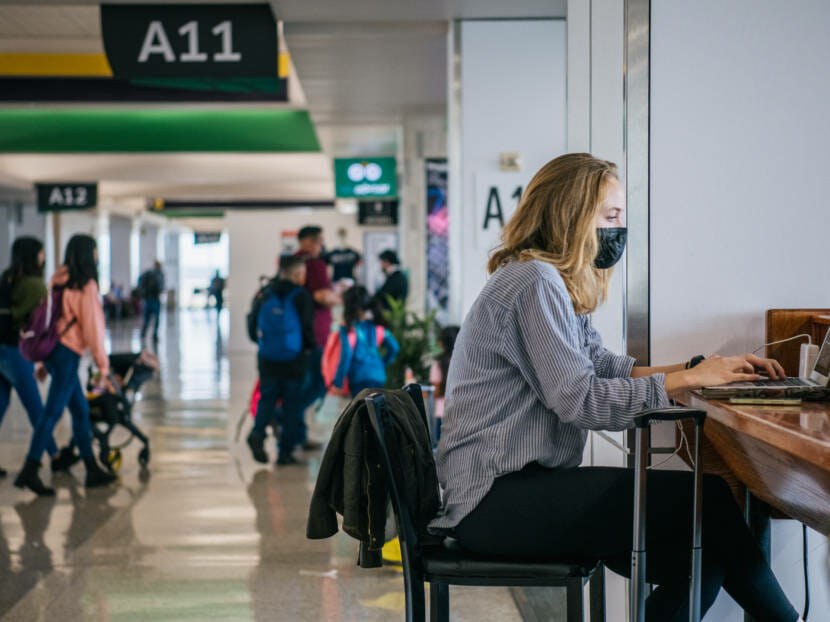
The CEOs of the major U.S. airlines have called on President Biden to end the federal mask mandate for public transportation. Here, a traveler works on a laptop computer at George Bush Intercontinental Airport in Houston on Dec. 3. (Photo by Brandon Bell/Getty Images)
A group of CEOs from all major airlines in the U.S. is calling on President Biden to drop the federal transportation mask mandate along with the international pre-departure COVID-19 testing requirement.
In an open letter released by the travel-industry lobbying group Airlines for America, the group is calling on the Biden administration to “sunset federal transportation travel restrictions.” The group argues that the restrictions no longer reflect the “realities of the current epidemiological environment.”
The letter was signed by the leaders of 10 U.S. companies, including six of the largest airlines in the country: Alaska Airlines, American, Delta, JetBlue, Southwest and United.
“It makes no sense that people are still required to wear masks on airplanes, yet are allowed to congregate in crowded restaurants, schools and at sporting events without masks, despite none of these venues having the protective air filtration system that aircraft do,” the letter said.
The group argues that the increase in vaccinations nationwide and the lifting of restrictions in other countries are reasons the Biden administration should reconsider its COVID policies for travelers.
“We are encouraged by the current data and the lifting of COVID-19 restrictions from coast to coast, which indicate it is past time to eliminate COVID-era transportation policies,” the group said.
The CEOs emphasized that, while they’ve supported and cooperated with the federal government’s COVID policies, including masking and pre-departure testing, enforcing those rules has fallen to airline employees for the past two years.
“This is not a function they are trained to perform and subjects them to daily challenges by frustrated customers. This, in turn, takes a toll on their own well-being,” according to Airlines for America.
So far, the White House has not yet commented on the group’s request.
The mandate for mask use on public transportation and in transportation hubs had been set to expire on March 18, but earlier this month the Transportation Security Administration extended the policy through April 18.
Copyright 2022 NPR. To see more, visit https://www.npr.org.
Close
Update notification options
Subscribe to notifications
Subscribe
Get notifications about news related to the topics you care about. You can unsubscribe anytime.


9(MDEwMjQ0ODM1MDEzNDk4MTEzNjU3NTRhYg004))
9(MDEwMjQ0ODM1MDEzNDk4MTEzNjU3NTRhYg004))
9(MDEwMjQ0ODM1MDEzNDk4MTEzNjU3NTRhYg004))
9(MDEwMjQ0ODM1MDEzNDk4MTEzNjU3NTRhYg004))
9(MDEwMjQ0ODM1MDEzNDk4MTEzNjU3NTRhYg004))