Alaska coronavirus news

Live updates and information on COVID-19 in Juneau and Alaska

Evidence grows that vaccines lower the risk of getting long COVID

""
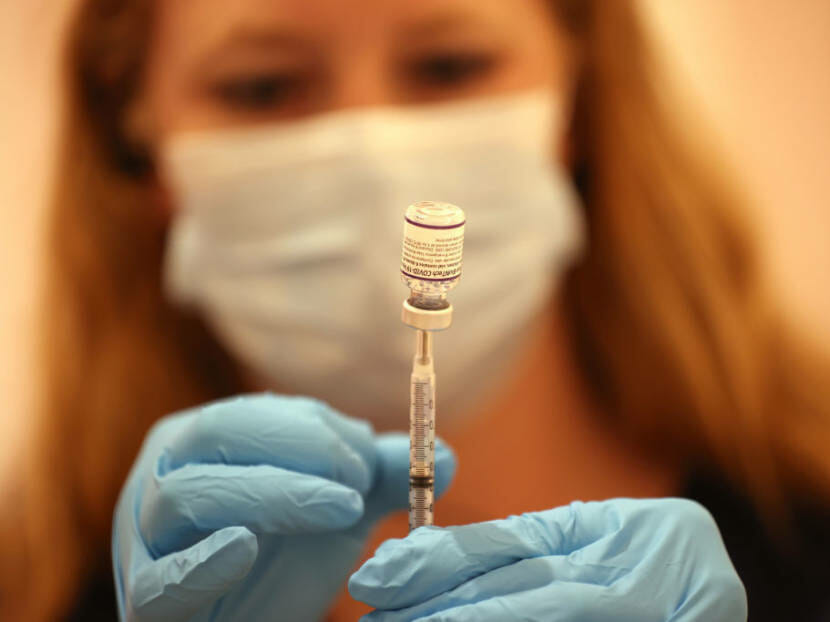
Reseach is showing that people who are vaccinated, even with just one dose, tend to have lower rates of long COVID after catching the virus than those who are unvaccinated. (Photo by Justin Sullivan/Getty Images)

The chance of even a mild case of COVID-19 turning into a long-term, debilitating medical condition is one of the greatest fears of Americans trying to navigate the pandemic, which is again taking a turn as new data show the BA.2 subvariant is taking hold in the U.S.

Unfortunately, the only sure way to avoid long COVID is not to catch the virus in the first place.

But there is now a growing body of research that’s offering at least some reassurance for those who do end up getting infected — being fully vaccinated seems to substantially cut the risk of later developing the persistent symptoms that characterize long COVID.

While many of the findings are still preliminary, the handful of studies that have emerged in the past half year are telling a relatively consistent story.

“It may not eradicate the symptoms of long COVID, but the protective effect seems to be very strong,” says epidemiology professor Michael Edelstein, of Bar-Ilan University in Israel, who’s studying long COVID.

Edelstein’s study was one of those included in a recent analysis of the evidence on long COVID and vaccination done by the UK Health Security Agency. That review found vaccinated people tend to have lower rates of long COVID after an infection than those who are unvaccinated.

There’s a running list of theories about why people get long COVID. Permanent tissue damage from the infection, injury to blood vessels and the development of microclots, a lingering viral reservoir in parts of the body, or an autoimmune condition are some of the ideas being explored in the research.

But even without a clear sense of what’s exactly driving long COVID, there’s good reason to believe that vaccines would help guard against the condition, says Dr. Steven Deeks, a professor of medicine at the University of California, San Francisco.

There’s overwhelming evidence that someone who’s vaccinated has less virus in their body during an infection, he says, “so it would make great sense that the amount of virus-related complications over time would also be lower.”

Looks good… but how good?

One of the ongoing challenges with long COVID research is simply defining the condition — with each study taking slightly different approaches as to what symptoms count and how long they need to last after the initial infection.

This inconsistency makes it hard to pull together a single estimate for how much vaccines limit long COVID.

Generally, though, Deeks says vaccinated people seem to have a 50% lower average risk of developing long COVID than unvaccinated people. This is in the range of what multiple studies in the U.K., Israel and the U.S. have found.

Ideally, long COVID should not be measured only a few months after the initial infection, he says. “A lot of people are still slowly getting better, so you have to wait at least four months to sort of figure out whether or not these symptoms will persist.”

The Israeli study, conducted by Edelstein and his colleagues, followed several thousand people who were unvaccinated, partially vaccinated and fully vaccinated. Those who tested positive were asked to self-report their symptoms between four and eight months after their initial infection.

Participants who had two or three doses of the vaccines were about 50% to 80% less likely to report seven of the 10 most common symptoms, which include shortness of breath, headache, weakness and muscle pain.

Edelstein says these results are not necessarily surprising, because they’re compatible with other recent studies. “It gives us a little bit of reassurance that if you’re vaccinated, you reduce your chances of long COVID quite substantially.”

Indeed, some researchers have found similar results by combing through electronic records from health care providers in the U.S. That massive study concluded that patients who had at least one vaccine dose were seven to 10 times less likely to report two or more long COVID symptoms compared to unvaccinated people between 12 and 20 weeks after their infection.

However, the evidence isn’t entirely conclusive. Some studies have not found as big a reduction. For example, the preliminary findings of a major study of electronic health records of U.S. veterans analyzed the medical problems affecting different organ systems at six months following coronavirus infection.

Being fully vaccinated did not appear to make a very meaningful difference for many of the post-infection complications, except in two particular areas, says the study’s author Dr. Ziyad Al-Aly, director of clinical epidemiology at the Veterans Affairs St. Louis Health Care System.

People are having less lingering manifestations in the lungs and also less blood clotting,” he says.

The study also found that those who were hospitalized for COVID-19 had a higher risk of long COVID symptoms compared with those who had a mild illness, but that vaccines continued to make a big difference in reducing the risk of long COVID.

“The vaccines are supposed to protect you from being hospitalized,” says Al-Aly. “But even if they fail and you get breakthrough COVID and now you’re hospitalized, you still do better than someone who got COVID and was never vaccinated.”

Conflicting results in the studies may, in part, be due to how they’re conducted, such as differences in the methods of measuring long COVID, how symptoms are reported and the patient population being studied.

A good shield — but not perfect

Despite the promising evidence, long COVID researchers caution that vaccines can only do so much, and that invariably some people will still suffer symptoms even if they are vaccinated.

In fact, a recent study from the U.K. found that vaccines led to a significantly lower risk of long COVID compared with those who are unvaccinated, but that still close to 10% of the fully vaccinated participants showed symptoms of long COVID three months later.

David Putrino cares for long COVID patients who fit this very profile at the Mount Sinai Health System in New York City.

“I don’t think in good faith I would be able to distinguish between someone who has a breakthrough case of long COVID versus a pre-vaccine case of long COVID,” says Putrino, director of rehabilitation innovation at Mount Sinai. “The symptoms are very consistent.”

And there’s now another unresolved question facing researchers: How well do vaccines hold up against long COVID after an omicron infection?

Because omicron only emerged at the end of last year, there aren’t yet data on how many people have long COVID from the new variant, but Deeks says there are already some people who seem to be heading in that direction. “Without question, there are clearly people — I’m hoping not a lot — who got COVID a few months ago and are feeling ill today,” he says.

Based on what’s known about the variant, no one really knows for sure whether people who get omicron could be more, or less, prone to getting long COVID.

On the one hand, omicron is adept at evading the immune defenses put up by the vaccines, so it’s possible that “we might end up with more long COVID,” Deeks says.

Alternatively, the variant leads to a more localized infection and doesn’t spread throughout the body as much, which means there could actually be fewer instances of long COVID.

Deeks is leaning towards the more optimistic scenario. “That’s my prediction, but it’s just a prediction.”

Copyright 2022 NPR. To see more, visit https://www.npr.org.

Juneau’s main system for managing COVID-19 is shutting down

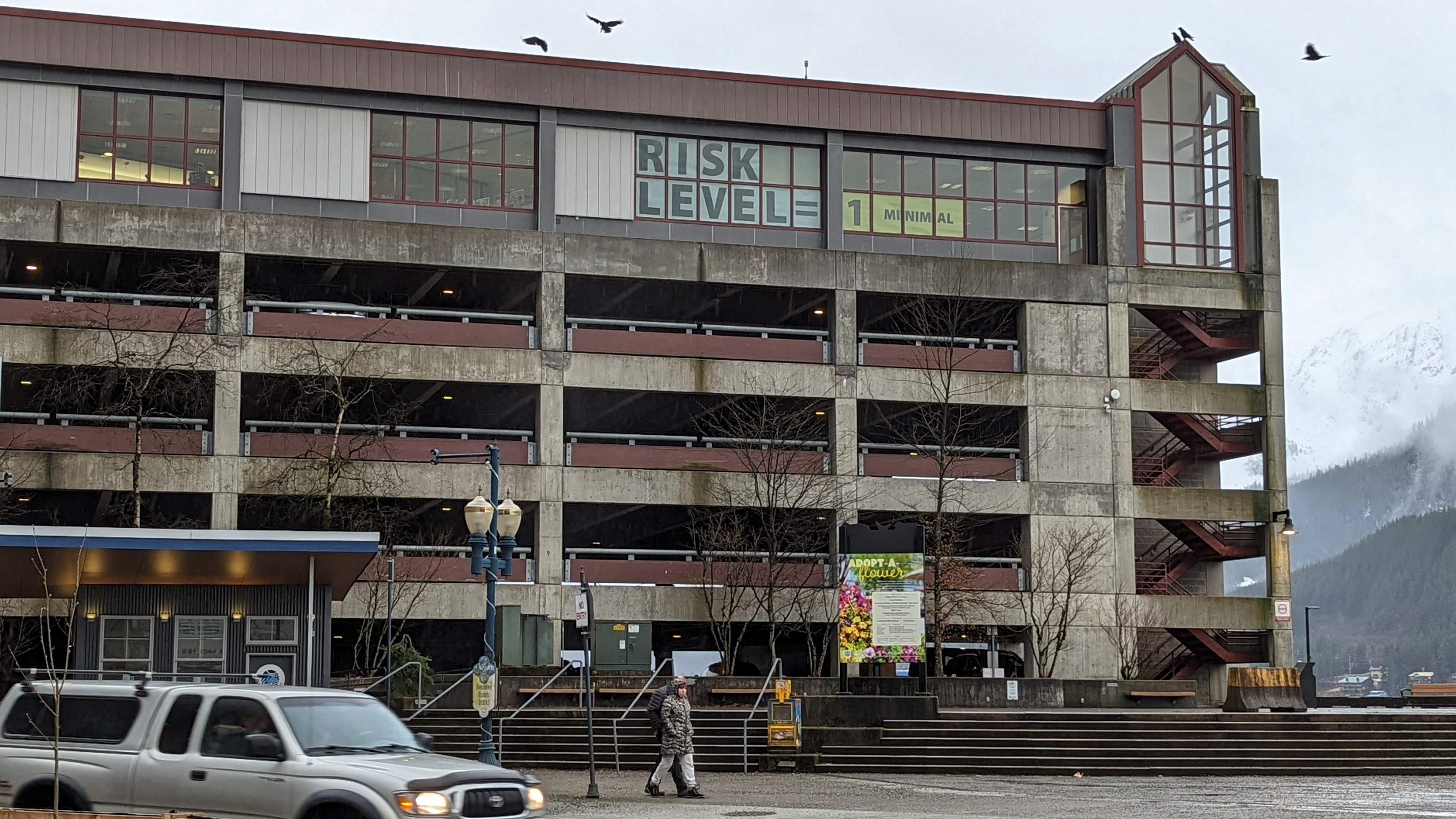
Signs at the downtown branch of the Juneau Public Library announce the community’s risk level on March 23, 2022. The risk levels and associated health mandates that scale up and down are a function of the city’s Emergency Operations Center, which is shutting down at the end of April. (Photo by Jeremy Hsieh/KTOO)

The main system Juneau officials have used to manage the COVID-19 pandemic is set to end at the end of April.

The Emergency Operations Center was created in March of 2020, shortly after the pandemic was declared.

Now, emergency officials have decided not to ask the Juneau Assembly for another extension of their pandemic policies. The city’s Emergency Operations Center is shutting down on April 29.

“That doesn’t necessarily mean that all of our COVID-related responses and all of our COVID-related activities will immediately go away, but some of them will,” said Deputy City Manager Robert Barr. “So our testing operations, the fire training center is a good example of one that we are demobilizing.”

The Assembly could overrule that decision, though Assembly member Michelle Hale told Bartlett Regional Hospital officials on Tuesday there is no plan to.

What that means for residents is there will be no more mandates about masking and crowd sizes. But individuals, businesses and organizations could still impose their own rules.

Local data reporting through the city’s COVID dashboard will also end.

Barr said the city does intend to continue giving out free home test kits and masks, as long as the federal government pays for them.

Coincidentally, federal funding for fighting COVID is drying up. Congress did not include COVID programs in its latest spending bill. This especially affects people who don’t have health insurance and the health care providers that rely on federal money to treat them.

As far as future COVID variants and case surges, Barr said city officials will keep monitoring for them and act accordingly.

“I think it is fair to say that COVID is here to stay, right? It’s not going anywhere, we are going to be living with it in one way or another, presumably for the rest of our lives,” he said.

He said that may mean seasonal test kit giveaways and COVID vaccine clinics, kind of like how the flu is managed.

In COVID-19 numbers, state data show 27 new cases were reported among residents and visitors to Juneau from Monday and Tuesday. That does not include results from home tests.

Bartlett Regional Hospital has 3 patients who are positive for COVID-19, with four of its health care workers are sick or quarantining.

Juneau schools are closed this week for spring break.

Juneau’s COVID-19 risk level remains at level 1, minimal.

Statewide from Monday and Tuesday, 573 new cases were reported among residents and visitors. State data also includes one death, preliminarily, over the last week.

Thirty-seven people who are positive for COVID-19 are hospitalized, including one person on a ventilator.

Moderna wants the FDA to authorize its COVID-19 vaccine for kids under 6

""
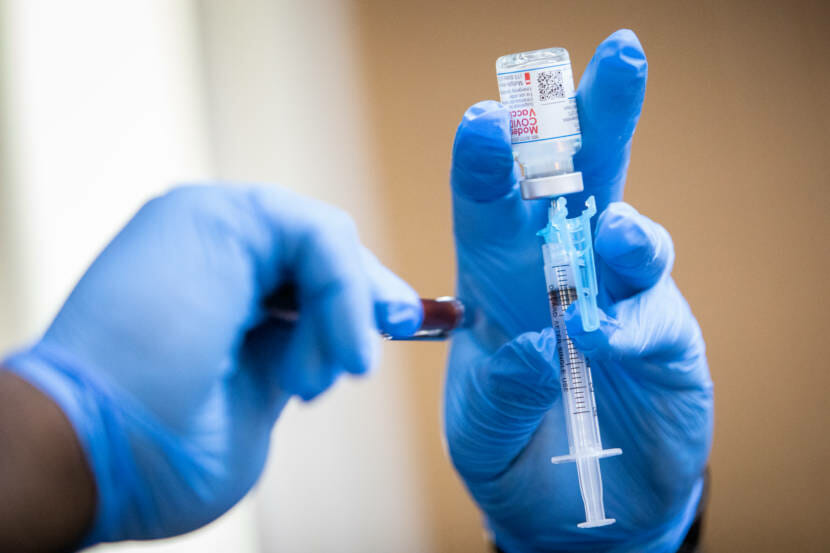
A Moderna COVID-19 vaccine is prepared during a pop-up vaccine clinic at Cristo Rey Church in East Austin on July 24, 2021. (Photo by Michael Minasi/KUT)

Moderna is hoping to get the green light to administer a pediatric, low-dose COVID-19 vaccine for children ages 6 months to under 6 years of age, it said in a statement.

The pharmaceutical company will submit a request to the Food and Drug Administration “in the coming weeks” for authorization for a two-dose, 25 microgram-each shot. That’s 25% of the first two doses adults received, the company said.

“Given the need for a vaccine against COVID-19 in infants and young children, we are working with the U.S. FDA and regulators globally to submit these data as soon as possible,” Moderna CEO Stéphane Bancel said in the statement.

In tests, the doses were given 28 days apart to 2,500 children ages 6 months to under 2 and to 4,200 children ages 2 to under 6.

The pediatric doses “showed a robust neutralizing antibody response” similar to adults’ doses, with “a favorable safety profile,” the company said.

Though, the efficacy was 43.7% in children 6 months to 2 years old, and 37.5% in children from 2 to under 6. No severe cases of COVID-19 were reported.

Dr. Jesse Goodman, a professor of medicine and infectious diseases at Georgetown University, said the study, while promising, leaves many questions unanswered, such as how long the children were observed after being vaccinated and whether efficacy rates could decline over time.

“No severe disease was seen in the study,” he said, “so it is unclear whether protection against severe disease, which is most important, may be greater than the protection against milder infections, as has been generally seen in adults.”

Five is the youngest age at which the COVID-19 vaccine is currently available. Children from ages 5 to 11 are eligible for Pfizer’s pediatric vaccine, though research shows efficacy rates in children dropped significantly after about seven weeks.

Moderna said, “The majority of adverse events were mild or moderate and were more frequently reported after dose two.”

17% of children from 6 months to under 2 years old had fevers of 100.4 degrees, while 14.6% of children from 2 to under 6 had the same side effect. These results are “consistent with other commonly used and recommended pediatric vaccines,” the release said.

No deaths were reported, and there were no signs of myocarditis, or heart inflammation, as a side effect. (Myocarditis has been seen rarely after vaccination with both Pfizer and Moderna’s COVID vaccines.)

Dr. Saad Omer, the director of the Yale Institute for Global Health, said, “Given the evidence from the other age groups, the protection against severe disease and hospitalization should be higher,” while advising a booster shot be considered. Moderna said it is planning to submit its vaccine for children ages 6 to 11 for emergency authorization use, while also currently testing a booster dose for children from 6 months to 11 years of age.

NPR’s Rob Stein said the FDA usually convenes outside advisers to review data and make a recommendation about whether to authorize a vaccine, but it’s not an ironclad requirement. Then the Centers for Disease Control and Prevention would weigh in, which can happen very quickly.

Copyright 2022 NPR. To see more, visit https://www.npr.org.

Canada will end its COVID testing requirement for vaccinated travelers on April 1

The Fraser Border Crossing in Fraser, B.C. (Photo by Mike Swasey/KHNS)

Canadian officials have announced that COVID-19 testing will no longer be required for fully vaccinated travelers entering Canada by land, water or air.

Right now, travelers entering or returning to Canada must have a negative PCR or rapid antigen COVID-19 test that’s clinically administered. That changes on April 1.

Haines Tourism Director Steven Auch says it’s a major change that will ease travel across the border.

“People here that want to go into Canada or Canadians who want to come down and return, it makes it easier for them to be able to do so,” Auch said.

Travelers are still required to be fully vaccinated.

Canada will also still require U.S. travelers to complete the ArriveCAN process and show proof of vaccination to enter the country.

Auch says Haines is ready to welcome Canadian travelers — and anyone traveling between the Alaska Marine Highway into Canada and up to Alaska.

“Hopefully, we’ll see more people come down,” Auch said. “And the big part for the summer, too, is that it makes it a lot easier for anybody, not just Canadians, but anybody wanting to do any road travel, to be able to drive through Canada to get here.”

Although fully vaccinated travelers will be allowed to enter Canada, questions remain about how tour companies will handle the ArriveCan requirement for tour groups.

State fines Juneau’s Bartlett Hospital for COVID safety violations after whistleblower report

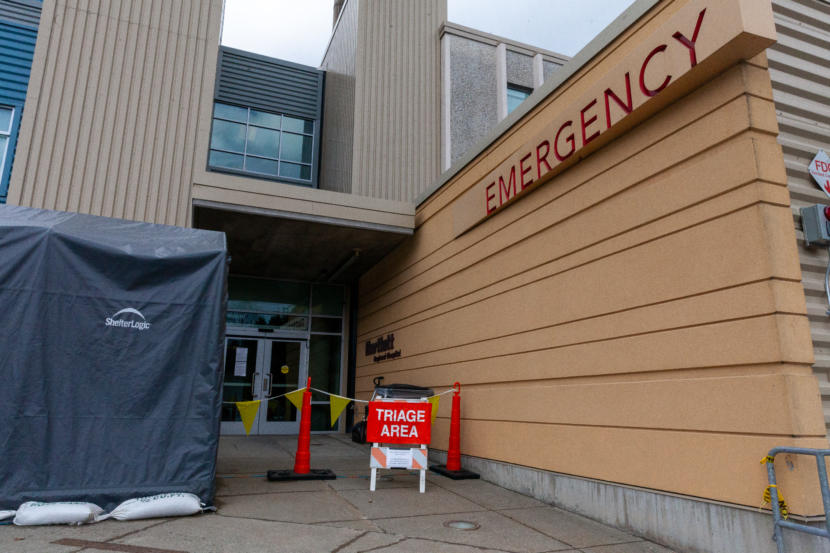
A triage tent is set up to screen patients for symptoms of COVID-19 outside on Monday, April 7, 2020 at Bartlett Hospital in Juneau, Alaska. (Photo by Rashah McChesney/KTOO)

Juneau’s Bartlett Regional Hospital is the first, and so far the only, hospital in the state to be cited by state workplace safety regulators for COVID-19 violations.

Hospital staff tipped off the state, leading investigators to find the city-owned hospital’s health and safety program inadequate. They issued more than a dozen citations.

Staff speaks out

The whistleblower was Laurie Bell. After years of pushing for a safer work environment at the hospital, she finally reached her breaking point over masks.

Bell used to work at the registration desk in Bartlett Regional Hospital’s Emergency Department. She and her coworkers were often the department’s first line of defense.

“We basically did all the grunt work before the patient would be seen by a nurse or doctor,” she said.

She said when the COVID-19 pandemic first spread into Alaska, they had a lot of exposure to the virus.

“There wasn’t enough [personal protective equipment] for everybody,” Bell said. “We were told that we were low risk and did not deserve personal protection.”

She said the hospital gave them one blue paper surgical mask per shift. She said that each time, she cited federal guidelines and asked for more protection.

“I was told that, in not-so-polite terms, that I didn’t know what I was talking about,” she said. “[That] I didn’t understand the science, even though everybody could go on the [Centers for Disease Control and Prevention] website and see what was recommended. And that I should just stick to what I know.”

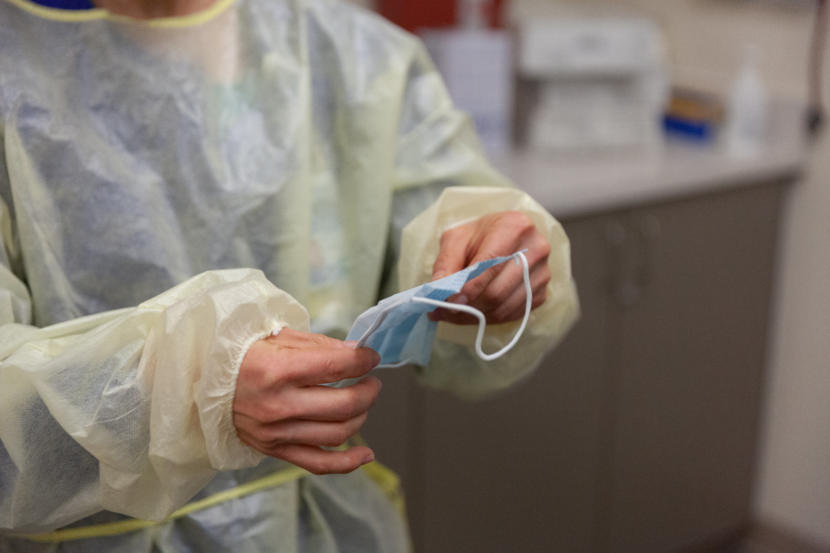
Katie Church, an RN at Bartlett Regional Hospital, demonstrates putting on personal protective equipment to handle a patient infected with COVID-19 on Monday, April 7, 2020 in Juneau, Alaska. (Photo by Rashah McChesney/KTOO)
A nurse at Bartlett Regional Hospital demonstrates putting on personal protective equipment to handle a patient infected with COVID-19 on Monday, April 7, 2020 in Juneau. Bartlett is the first, and so far the only, hospital in the state to be cited by workplace safety regulators for COVID-19 violations. (Photo by Rashah McChesney/KTOO)

But one day a COVID patient came in whose partner wasn’t consistently wearing a mask. Bell said he was unruly near her desk.

“He was aggressive and yelling,” she said. “He camped out in the hallway just outside of the ER. But he would come in and pace in front of my desk, yelling at me that he needed to be back there with her.”

Bell says a manager gave the man a rapid test and allowed him to stay. She says she found out later that he tested positive for COVID-19 — and that was only after another nurse called her to warn her that she had been exposed.

Bell complained to her supervisors. Then she filed a complaint internally. She told a union representative. But she says nothing changed.

“If you speak to anybody in the hospital, they will tell you the reporting system is a joke and most people don’t even bother using it,” she said. “But I did, because I felt like, at least I can say I went through the appropriate channels as I was instructed to do. And it did nothing for me.”

So Bell reported Bartlett to state health and labor department regulators in late 2020. She left the hospital that December.

Regulators cite the hospital

After Bell blew the whistle, inspectors from the state’s health department and the department of labor showed up to figure out what was going on at the hospital.

Then the violations and citations started rolling in.

First, they came from the health department. Those inspectors make sure the hospital is safe for patients.

They cited the hospital for six violations centered on infection control. They said patients and hospital staff weren’t being adequately screened for COVID-19.

They documented at least one incident where a staff member reported having COVID-19 symptoms but was told to keep working after they tested. That person reported having contact with a lot of patients before their test came back positive six days later.

Those COVID-19 violations had to be addressed pretty quickly because Bartlett’s Medicare and Medicaid funding was at risk.

The second team of inspectors who went through the hospital were from the state’s department of labor. They make sure the hospital is a safe place to work.

Employees were supposed to be self-screening for COVID-19 symptoms and logging them when they got to work, but inspectors said the hospital’s own records showed that less than 57% of them were actually doing it in December of 2020.

When they released their final report in June of 2021, along with more than a dozen violations and fines, it wasn’t just the hospital’s COVID-19 protocols that were called into question. They also fined the hospital for how it handled workplace violence. Inspectors said the hospital wasn’t recording injuries and illnesses among staff properly and also raised concerns that the hospital was under-recording its injuries.

They also wrote that employees were never properly trained on responding to hazardous spills. They documented more than 130 employees who never learned how to deal with blood-borne pathogens, despite being regularly exposed to them on the job. Others had not gotten medical clearance or been properly fitted for N95 masks and respirators.

Charlee Gribbon, infectious disease preventionist from Bartlett Regional Hospital, left, answers questions about the coronavirus for a KTOO News special program on March 5, 2020. Gribbon says the learning curve for COVID safety was really high in the early days of the pandemic. (Photo by Rashah McChesney/KTOO)

Fit tests make sure hospital employees are wearing tight-fitting respirators that will seal properly and keep them from being exposed to airborne virus and bacteria.

“They got behind on their due dates,” said Bartlett Infection Preventionist Charlee Gribbon.

Employees are supposed to be checked yearly. State inspectors say more than two dozen people were overdue. The hospital instituted a new scheduling system to keep employee fit tests up to date.

Who is accountable for worker safety after top-level leadership shakeup?

Juneau didn’t get hit with COVID as hard as a lot of other communities.

The hospital took a lot of steps to improve and even hired a quality director to keep an eye on things. That safety team says the inspections helped the hospital.

“The importance of it and the safety aspect of it was reinforced for everybody,” Gribbon said. “So, you know, I was, like, grateful for the inspection because it makes us all better. You know, and if anybody is feeling unsafe, you know, we really need to dive into that.”

Gribbon says there’s more oversight now — that the learning curve was really high in the early days of the pandemic.

KTOO reached out to a number of current and former employees of Bartlett for this story. Gribbon was one of the few to take responsibility for failures in workplace safety.

The other person to take personal responsibility was former CEO Rose Lawhorne.

Lawhorne took over leadership of the hospital after the complaints had been filed, in April of 2021. She inherited this problem.

She told KTOO in 2021, “the buck stops with me.”

Bartlett Regional Hospital Chief Nursing Officer Rose Lawhorne walks through a newly converted spillover facility designed to house COVID-19 patients on Monday, April 7, 2020 in Juneau, Alaska. The city decided to remove patients from the Rainforest Recovery Center alcohol and drug treatment building and convert it into a facility for non-critical coronavirus patients. (Photo by Rashah McChesney/KTOO)
Former Bartlett Regional Hospital Chief Nursing Officer Rose Lawhorne walks through a newly converted spillover facility designed to house COVID-19 patients on Monday, April 7, 2020 in Juneau, Alaska. Whistleblower Laurie Bell says Lawhorne was one of the few leaders who checked in to make sure she felt safe. (Photo by Rashah McChesney/KTOO)

Lawhorne had worked at the hospital for decades, and she said she wasn’t surprised by the citations. Instead, she said she was ready to make changes.

“I have this gift of authority that I can empower them and say, ‘Yes, I approve. Yes, go ahead and provide additional training to the people who you feel need it,’” she said at the time.

Bell, the whistleblower, speaks highly of Lawhorne too. She says Lawhorne was one of the few leaders who checked in to make sure she felt safe.

But Lawhorne didn’t have a lot of time to address the issues at the hospital. After just six months on the job, she was fired by the hospital’s board of directors.

That first sign of instability turned into a landslide of resignations at the highest levels of the hospital. Since the beginning of the pandemic, all but one member of the senior leadership team left.

And it’s unclear why some of them left. One’s expense reports are part of an active criminal investigation. And the board hasn’t found permanent replacements for most of them — including the hospital’s interim CEO. He refused an interview for this story.

The hospital is managed like a business, so it answers to a board of directors. But there was no public board meeting to discuss the state’s final inspection report when it came out.

In the end, Bartlett was fined almost $150,000 by workplace safety inspectors, but the state reduced that by nearly 70%.

The hospital won’t pay that reduced fine either. It will take advantage of a state law that lets them use that money to improve workplace safety and submit those receipts to the state.

One of the things the hospital bought with the funds is respiratory protection — that is, the kind of PPE Laurie Bell wanted back in 2020.


Contact KTOO reporter Claire Stremple


Correction: The state’s department of labor reduced fines for Bartlett Regional Hospital, not the Commissioner specifically.

US Sen. Sullivan tests positive for COVID

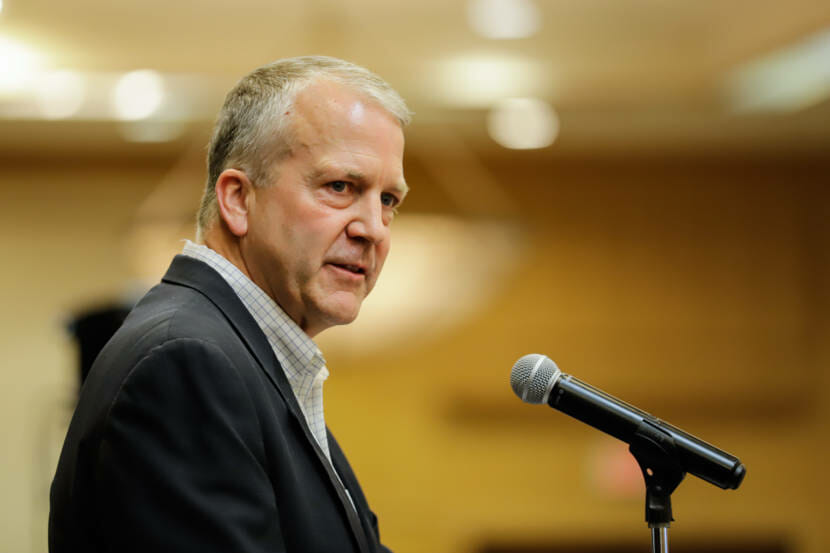
Sen. Dan Sullivan in Anchorage in July 2021. (Photo by Jeff Chen/Alaska Public Media)

U.S. Sen. Dan Sullivan has tested positive for COVID-19, according to a statement from his press office Friday.

“This morning, Senator Sullivan tested positive with a breakthrough case of COVID-19 while in Florida with family,” it said. “He is experiencing very mild symptoms and will be isolating and following CDC recommendations.”

The Alaska Republican has said he’s vaccinated against the coronavirus, but has spoken out against vaccine mandates.

U.S. Sen. Lisa Murkowski tested positive for COVID-19 in September, but then tested negative twice soon after and suspected the initial test was a false positive. She is also vaccinated. Congressman Don Young was hospitalized with COVID-19 in 2020. He has since been vaccinated.

Site notifications
Update notification options
Subscribe to notifications