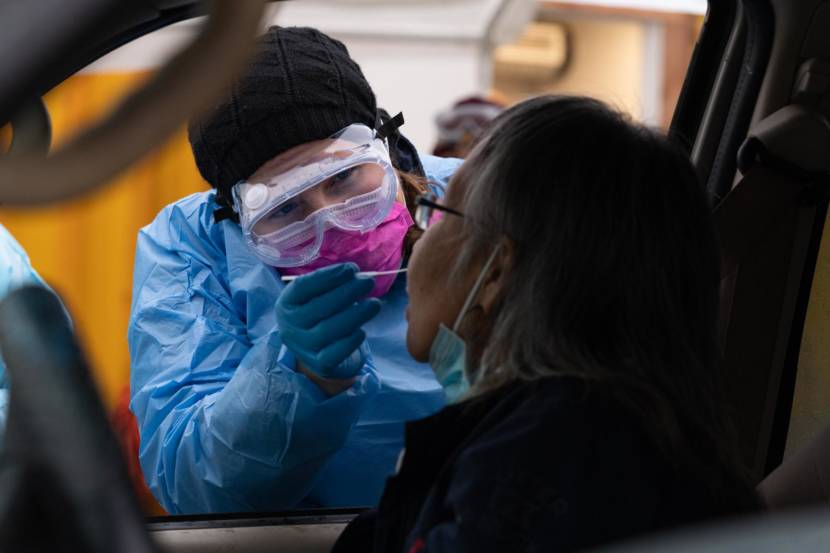
Dr. Ellen Hodges tests a Bethel resident at a COVID-19 testing event hosted by the Yukon-Kuskokwim Health Corporation in Bethel, Alaska on Nov. 7, 2020. (Katie Basile/KYUK)
The Alaska Department of Health and Social Services on Monday reported 5,759 new COVID-19 cases over the prior three days.
The new case count on Friday totaled more than 3,000, with new infections over the weekend dropping to fewer than 1,500 each day. The numbers do not include at-home test results.
It’s not yet clear whether this weekend’s decline in new cases will continue — and whether it’s due to reduced spread, fewer people seeking tests over the weekend, limited test availability or an increased reliance on at-home tests.
The state health department on Monday also reported another 21 Alaskan deaths due to COVID-19. Two of them are from last week, and the rest happened earlier in the pandemic, according to state data.
Across the state, 139 patients were hospitalized with the coronavirus on Monday. There were 30 adult ICU beds available, six of them in Anchorage.
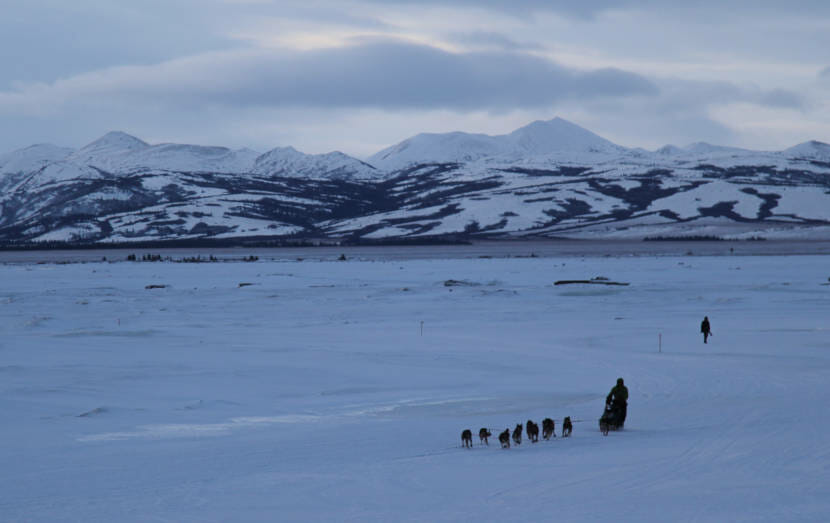
The Takotna checkpoint is a popular spot for mushers to take their mandatory 24 hour layover during the Iditarod Trail Sled Dog Race. Takotna will not host mushers this year. (Photo by Zachariah Hughes/Alaska Public Media)
The Iditarod has finalized its coronavirus mitigation plan, which requires all mushers and anyone else associated with the race to be fully vaccinated.
In its 50th year, the thousand-mile sled dog race across Alaska returns to a more normal route from Willow to Nome in 2022, after a pandemic-altered, out-and-back course last year, but there will still be some big changes due to COVID-19.
Pete Kaiser resting at the Old Woman Cabin between Kaltag and Unalakleet on Sunday, March 15, 2020, during the Iditarod Trail Sled Dog Race. (Photo by Zachariah Hughes/Alaska Public Media)
Aside from the vaccination policy, musher’s won’t be able to stop at Takotna, one of the most popular checkpoints on the trail. The race’s board of directors says it made those decisions with feedback from communities in rural Alaska.
While some mushers may have been hoping for a medical or religious exemption from the vaccine mandate heading into the race, veteran musher Pete Kaiser, who will start his 13th Iditarod this year, said he was vaccinated even before last year’s race.
“As far as I’m aware, everybody who signed up in June was aware of the requirement to be vaccinated,” Kaiser said from his home in Bethel, where he trains his team.
The 2019 Idiatrod champion is Alaska Native, he was born and raised in rural Alaska and he said he thinks the Iditarod made “a good call.”
“Any precautionary steps you can take I think are good,” Kaiser said. “It seems to be proven and shown that the vaccine helps not only from getting the virus but from having symptoms be less deadly.”
But Wade Marrs disagrees with the new requirement. Marrs has finished in the top 10 four times since 2015 and raced every year since 2012. In November, he announced his withdrawal from the 2022 Iditarod because of the vaccine mandate. He said he is not anti-vaccine and he believes COVID-19 is real, but said his decision not to vaccinate is between himself, his family and his doctors.
Marrs said he understands the Iditarod wants to protect residents in the small rural communities that serve as checkpoints.
Wade Marrs, of Willow, waves to fans. Forty-six mushers began the 2021 Iditarod Trail Sled Dog race from Deshka Landing in Willow on March 7, 2021. (Photo by Marc Lester/ADN)
“I don’t blame the race for doing what’s right by them,” he said. “But at this point in time, we all know that you get and spread the virus either way, so the fact that we need the vaccine to not spread the virus is kind of silly.”
Iditarod CEO Rob Urbach said requiring vaccination is necessary to protect everyone along the trail.
“It’s pretty simple. We couldn’t go to Nome without it,” Urbach said. “We all know you can still get COVID if you’re vaccinated and boostered, but it’s pretty well-known that you’re less likely to be shedding virus for a longer period of time. And so therefore the risk is diminished by being vaccinated.”
In 2021, to avoid a major influx of outsiders into villages, the Iditarod followed a new route — coined the Gold Trail Loop — from Willow to the former mining town of Iditarod and back.
This year, the race follows its traditional northern route, which means it will pass through 14 predominantly Indigenous villages.
“Many of these rural communities certainly don’t have an ICU much less ventilators, so why not reduce the risk?” Urbach said. “It’s much more than just vaccinations. It’s distancing, hygiene, masking, etc. We’ve reengineered how we eat, sleep and fly. There’s daily testing, masking. We’re not hugging and shaking hands.”
Urbach said the race is also trying to navigate the local policies put in place by tribal and city councils in the communities that serve as checkpoints.
In Unalakleet, for example, a stop on the trail along the Bering Sea, the city council passed a mask mandate this week for all public spaces after a surge of coronavirus cases in that community.
Nicolas Petit mushing into Unalakleet in the lead of the 2019 Iditarod Trail Sled Dog Race. (Photo by Zachariah Hughes/Alaska Public Media photo)
According to a city council member in White Mountain, where mushers are required to stop for eight hours, the city council currently requires all visitors to show proof of a vaccine or a negative COVID-19 test 72 hours prior to arriving there.
Takotna is well-know for its homemade pie. This year, the checkpoint will not be open to race personnel or dog teams. (Photo by Emily Schwing)
Also this week, the Tribal Chief in Takotna confirmed that village — a popular spot for mushers to take a mandatory 24-hour break and nosh on homemade pie — will not serve as a race checkpoint at all for the 2022 race.
“If somebody makes a decision in the community, it’s their right to not want to have the Iditarod ecosystem travel through their community. It’s their right to say you don’t have access,” Urbach said of Takotna, without providing any further explanation. The Takotna tribal office also declined to talk about what led to the change.
Iditarod fans have also weighed in on social media about the race’s vaccination policy. One accused the race of targeting specific mushers for elimination from the competition.
State data show 208 new COVID-19 cases were reported among residents and visitors to Juneau on Wednesday and Thursday. Eight people are at Bartlett Regional Hospital with COVID-19.
Hospital staffing remains strained, though the number of health care workers who are sick or quarantining is down to 16 today; it peaked at 26 on Monday.
The state reported the deaths of two Juneau residents from COVID-19 in recent months: a man in his 60s died in November and woman in her 80s died in December.
Statewide over that same time period, 6,532 new cases were reported among state residents and visitors. There are 127 people positive for COVID-19 who are hospitalized, including five people on ventilators.
For most people, vaccines continue to be a safe and effective way to prevent severe cases of COVID-19. Public health officials estimate there are about 5,000 people in Juneau who are eligible but unvaccinated. Another 1,700 young children remain ineligible.
For kids age 12 and up and adults, there is a free vaccine clinic from 10 a.m. to 2 p.m. Saturday at Dzántik’i Heeni Middle School. Booster shots will also be available. People can register for appointments online or by calling 907-586-6000. Walk-ins are also welcome.
Juneau’s risk level remains at level 3, modified high. Masks are required in indoor public spaces and outdoors when it’s crowded.
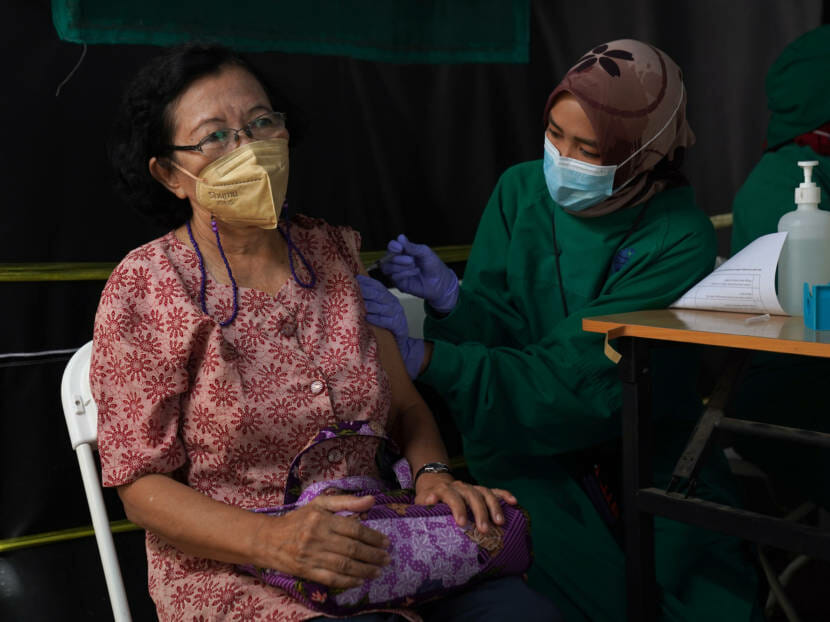
An elderly resident receives a dose of the Pfizer-BioNTech COVID-19 vaccine at a health center in Jakarta, Indonesia, on Thursday, Jan. 13, 2022. Indonesia is prioritizing elderly and at-risk people to receive booster shots in a program started on Wednesday. (Photo by Dimas Ardian/Bloomberg via Getty Images)
We’ve known for about a month now that a third shot of the vaccine is critical for protecting against infection with the omicron variant — and for keeping people out of the hospital.
Now researchers in the U.K. have the first estimates for how long a third shot of the Pfizer vaccine will last. And the findings are mixed.
Protection against infection is likely short-term, lasting less than six months, but protection against severe disease appears more robust, researchers with the U.K. Health Security Agency reported Friday.
Specifically, the researchers found that right after the third shot of the Pfizer vaccine, protection against a symptomatic infection is pretty good. Two weeks after the shot, the booster cuts the risk by about 70%.
But that protection falls quickly. By three months, the booster reduces the risk of a symptomatic infection only by about 50%.
In a second analysis, the U.K. researchers estimate the protection will decline even further, dropping to about 40% about four months after the third shot.
“The vaccine’s efficacy against infection relies on our level of antibodies because they are really our first line of defense against SARS-CoV-2,” says immunologist Jennifer Gommerman at the University of Toronto.
With any vaccine, the level of antibodies rises quickly right after the shot and then diminishes again with time. “That is perfectly normal and expected,” she says, “so in terms of protection against infection, we will see some protection early on with a booster, but that protection is going to wane.”
“Keep in mind, too, that omicron is very different than the original version of SARS-CoV-2, which is what we’ve been immunized against,” Gommerman adds. “And so our protection takes a bit of a hit in terms of how well those antibodies can recognize omicron.”
On the other hand, she says, protection against severe disease doesn’t depend so heavily on antibodies. The vaccine triggers other parts of the immune system that help keep an infection from getting out of control.
“So with declining antibody levels, you might be vulnerable to an infection but not necessarily vulnerable to disease — that’s a different kettle of fish.”
Indeed, the study from the U.K. found that the booster offers more robust protection against severe disease than against infection. Specifically, the researchers found that after a third shot of Pfizer, protection against hospitalizations starts out above 95% (two weeks after the shot) and remains around 80% even after four months.
By comparison, with only two shots of any vaccine, protection against severe disease declines to 40% after six months.
The researchers only have short-term data for the Moderna vaccine, but the results are likely to echo the Pfizer numbers given the similarities of these mRNA vaccines and their comparable behavior with the delta variant.
“I don’t think it’s a sustainable strategy to ask people to get boosters of the same vaccine every two months or three months. People just aren’t going to do it,” he says. “I myself felt awful after I got the second shot.”
Perhaps, instead, the goal may need to shift from stopping infections to making sure everyone is protected against severe disease over the long-term.
“Could we get to the point where public health officials recommend a shot once a year,” Bhattacharya says. “I think that’s fairly likely. Now, whether everyone will absolutely need that shot to prevent severe disease each year, that’s a different question, and we’ll have to wait for the data. I think it’s possible that yearly shots won’t be absolutely essential for everyone.”
And he hopes that the periodic COVID surges will be a bit more predictable, as flu season is now, so that people can receive a booster right before an expected surge, gaining short-term protection against infection when it’s needed most.
Copyright 2022 NPR. To see more, visit https://www.npr.org.
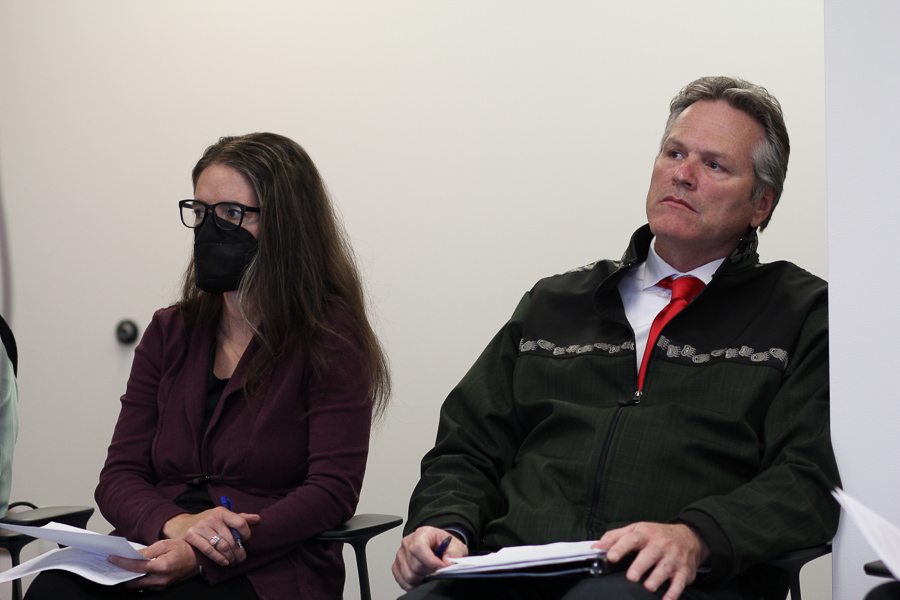
Dunleavy sits with his chief medical officer, Dr. Anne Zink, at a news conference in the fall of 2021. (Nat Herz/Alaska Public Media)
Alaska Republican Gov. Mike Dunleavy says the state’s chief medical officer, Dr. Anne Zink, still has his confidence even as she’s become the focus of escalating attacks by the anti-vaccine movement and other critics of the governor’s pandemic response.
Wasilla GOP Rep. Christopher Kurka, who’s running for governor as a conservative alternative to Dunleavy, this week launched a “Fire Anne Zink” petition, saying he’s committed to removing her “on Day 1 of my administration.”
At a Dunleavy constituent event Saturday in the deeply conservative Mat-Su, audience members applauded calls for Zink’s removal.
The governor, at the event, appeared to suggest that Zink’s position in his administration was uncertain, telling a participant who asked about Zink that he will “make a decision” about several members of his administration — not just one.
In a phone interview Wednesday, after some of Dunleavy’s critics attacked the governor for not defending Zink more aggressively, Dunleavy said she has “served Alaskans well” and that he “should have been clear.”
“There is no reason for me to fire Dr. Zink. Dr. Zink has my confidence,” Dunleavy said.
“Is Dr. Zink guilty of dispensing advice? Yeah, that’s her job,” he added. “I don’t think she should be held accountable for folks not liking information. I think the whole thing’s been politicized.”
For her part, Zink, in a phone interview, said “it’s been a hard week.”
“This hasn’t been new, but it’s escalated,” she said.
The attacks on her include physical threats, Zink said, which have also increased recently. But she also added that she continues to have a good working relationship with Dunleavy, even if they don’t always agree.
“I can’t ever speak to someone’s intentions as to why they do or don’t respond in a situation — particularly a live situation, in the moment. All I can speak to is my interactions and my relationship,” she said. “We continue to have regular conversations — we’ve never seen eye to eye on lots of things, and that’s what I think has made us both stronger. And I appreciate the way we continue to work through those challenges together and collaboratively.”
The attacks on Zink come amid a hostile climate nationwide for public health officials.
Hundreds of top medical officers like Zink have left the field in the past two years, as the pandemic has increasingly polarized their work and made them targets for conservative-leaning elected officials and activists. Just 17 of the 50 state medical officers in place at the start of the pandemic are still in their jobs, according to the Association of State and Territorial Health Officials.
Zink, a Mat-Su emergency room doctor, was hired just before the start of the coronavirus pandemic. Since then, she’s drawn a loyal following of Alaskans with her plain-spoken advice and lively social media presence.
Public opinion surveys suggest that more than half of Alaskans — 57% of respondents early last year — think she’s handled the pandemic well, while only about 10% think she hasn’t. Just 6% of people called Zink’s performance “pretty bad” in an August survey, which showed that even the majority of conservatives approve of her work.
Zink’s critics are “a very small group of people,” said Jennifer Meyer, assistant professor of public health at University of Alaska Anchorage.
“And the vast majority of us are very grateful for her service throughout this pandemic,” she said. “There are more of us that are with her than against her.”
Dunleavy himself nominated Zink for a national award in November, saying she’s “worked tirelessly” during the pandemic and that her work has “saved thousands of Alaskans.”
Even as a minority, though, Zink’s critics are vocal and represent a slice of Dunleavy’s base in the Mat-Su, where he lives. In an election year, they’ve been putting increasing pressure on the governor to remove her.
At the weekend constituent event, organized by conservative activist Mike Coons, the audience broke into applause at least twice when participants said Zink should be fired, with no direct response from Dunleavy.
He also did not respond directly when an audience member appeared to specifically ask him about Zink, instead suggesting that he was considering the removal of multiple members of his public health team.
“I’ll make that decision. I’m not going to have a discussion — I’m being honest with you — I’m not going to have a discussion here in front of folks. But I’ll make a decision on future, not just one staff member, but a number of staff members,” he said.
In the phone interview Wednesday, Dunleavy dismissed the idea that he was trying to placate his audience and said he was trying to avoid discussing personnel issues at a public forum.
“Personnel files, personnel everything should be protected and not just willy-nilly discussed,” he said. “But here we are. And I get it — I understand that this is the issue of the day.”
Kurka’s petition, meanwhile, says Zink endorses a “one size fits all” approach to “universal application of experimental COVID-19 shots for nearly all Alaskans,” and “refuses to listen to or act on any medical position contradicting her recommendations.”
The Centers for Disease Control and Prevention say that vaccines are the best protection against COVID-19, that they’re safe and that their benefits outweigh their risks. The coronavirus vaccines approved for use in the U.S. also are not experimental; while they’re approved on an emergency basis, they went through standard safety reviews and did not skip stages.
Kurka’s petition also says Zink “does not support or respect the rights of Alaskans to maintain medical privacy, secure informed consent before receiving experimental treatment or to try alternative prevention and therapeutic interventions.”
“This statement is self-evident in Dr. Zink’s actions, omissions, statements and attitudes towards legislators, medical professionals and anyone else who challenges the deep-state, CDC, National Institutes of Health and big-pharma agenda to which she ascribes loyalty,” Jason Floyd, a spokesman for Kurka, said in an email.
Zink, in the interview, said Alaska law gives her “almost zero power or authority over anything,” whether that’s hospital practices or doctors’ prescribing authorities.
“We are incredibly and have been incredibly supportive, from Day 1, of patients and their providers having that relationship together,” she said. “No government should get in the way of that and stand in the space of that. We are just here to provide information and resources.”
She added: “I am a public servant who took this job because I care passionately about the patients that I saw, and saw systems failing them — and felt like we could do better for my friends, for my neighbors and for fellow Alaskans.”
Zink said she’s especially frustrated when people attack her based on their assumptions about what she and Alaska health officials do, rather than what they actually do. And she invited residents to contact and question her, through the health department’s public science forums each Wednesday.
Asked about her enthusiasm for continuing in her job, Zink acknowledged that “the threats of physical violence are hard.” But she also suggested that the pressure on her has made her “more committed.”
“My name is out there,” she said. “I don’t want the amazing health care workers and public health team that is working day and night in the background to be impacted by the frustration and the hate that’s out there. In some ways, it’s my job to protect them from that.”
Meyer, the public health professor, said the attacks on Zink align with one of the key strategies of the anti-vaccine movement, which is to undermine science, scientific evidence and scientific institutions.
“And so you’ll see them attack anyone who’s using science to inform public health recommendations or public health policy,” Meyer said. Zink, she added, is “simply stating the recommendations that the CDC is putting forward, so she has recommended masking, she’s recommended vaccines, she’s consistently recommending things that scientific consensus supports.”
Meyer also noted that while some people may be frustrated that Dunleavy has not imposed statewide mandates to address the recent omicron-driven coronavirus surge, he’s also resisted significant pressure from conservatives to undercut public health strategies.
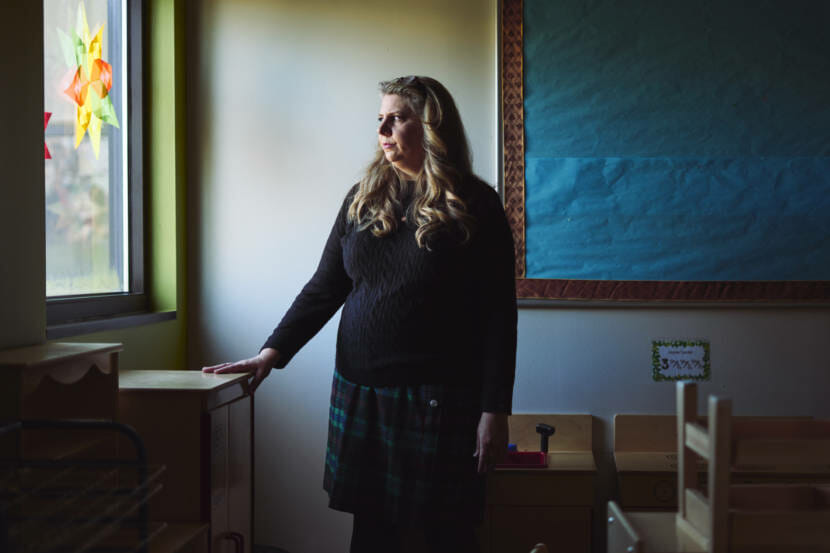
Cori Berg is executive director of the Hope Day School early childhood program in Dallas. (photo by Cooper Neill for NPR)
“I had a parent tell me to f— off last week,” Cori Berg said. She directs the Hope Day School, a church-affiliated early childhood program in Dallas.
The unhappy mother took her two children out of Berg’s center after each of their classrooms were closed for quarantines, saying she’d hire a nanny. Wanting to return, she emailed, called and finally showed up in the middle of the day. Just as Berg had warned her, her spots were taken.
The mother, according to Berg, threw a fit before coming back and apologizing. “She was like a toddler; she was jumping up and down.”
The people who take care of and educate children under 5 years old — both parents and providers — are in a special kind of hell right now. These children are too young to be vaccinated, and it’s difficult for them to wear masks consistently. Many child care directors, like Berg, are still following 10- or 14-day quarantines, closing entire classrooms after a single positive test, which has caused nonstop disruptions given the current record numbers of COVID-19 cases. Recently, Berg’s infant room had “double decker” quarantines: closed for two weeks, back for one day, closed for another two weeks.
Meanwhile, caregivers told NPR they can’t get a hold of enough rapid tests, and they’re struggling to apply the Centers for Disease Control and Prevention’s safety guidance. Center directors say they have few substitutes to cover for those out sick, and early childhood educators typically don’t have union protection. Providers say they are spending out of pocket on equipment like masks and gloves.
Parents, meanwhile, are losing their tempers, losing sleep and losing jobs when the child care they pay for is canceled, over and over. About 1 in 6 parents told pollsters they had experienced either a school or a day care shutdown in the past few weeks, in a national poll from Axios and Ipsos released Jan. 11.
Child care centers are struggling with repeated quarantines
Berg spoke to NPR while quarantining at home after being exposed to COVID-19 at work. (She has since returned to the classroom.) Before this quarantine, Berg had taken only about two sick days in her nine years at the school. (photo by Cooper Neill for NPR)
The child care crisis in the United States predates the pandemic. The average annual public spending on early childhood care across rich countries is $14,436 per child. In the U.S., it’s $500. Child care is scarce, expensive for most families, and of varying quality, and providers earn an average of around $25,000 a year, even with specialized training and degrees.
Still, as hard as things have been, advocates, parents and early childhood educators like Berg told NPR that January 2022 has been the worst month of the pandemic.
The latest job numbers show child care workers leaving the workforce, even as other sectors are hiring. The federal incentives for employers to offer paid leave ran out in September. And while the American Rescue Plan provided $24 billion in stabilization grants to child care programs in 2021, the Build Back Better plan, with its $400 billion in federal child care and preschool funding, is stalled in Congress.
“This is the worst it has ever been,” Berg said. “It is so fractious between parents and centers. Last week in particular, every single director I know got really beat up.”
Berg spoke to NPR while she was quarantining at home after being exposed to COVID-19 at work. (She has since returned to the classroom.)
“I’ve got [a] sore throat, fever, chills.”
Recently, Berg’s infant room had “double decker” quarantines: closed for two weeks, back for one day, closed for another two weeks. (photo by Cooper Neill for NPR)
But she wasn’t sure she actually had COVID — she couldn’t find a rapid test, and the earliest PCR test appointment she could find was four days later.
“I’m almost more worried that I don’t have it and people are going to be mad at me that I’ve been out these days,” she said.
Before this quarantine, Berg had taken only about two sick days in her nine years at the school.
Berg has already downsized from eight classes to four since the start of the pandemic because of a lack of available staff. As of Tuesday, she had 12 cases reported among children, and two of her four classrooms shut down for quarantine.
Like Berg, Kasia Kaim-Gonçalves, who runs an early childhood program in Brooklyn, N.Y., also said the omicron wave marked the hardest time of the pandemic.
“Not only did I get sick — my whole family was sick — but also with such high positivity rates half the children are out at a given time.”
In January, she has resorted to requiring rapid tests every day for the roughly half of her children who have yet to contract COVID.
“It’s very stressful for families, it’s very stressful for us,” she said.
Both of her employees quit recently.
“One said that she didn’t feel safe coming in, and that was really difficult for her and for me.”
Working parents can’t always afford to keep a sick child home
Bernadette Ngoh runs an at-home day care in West Haven, Conn. She said some of her parents are front-line workers who have been reluctant to test their children for COVID-19. (Photo by Mohamed Sadek for NPR)
Gladys Jones is an in-home day care provider in Staten Island, N.Y. She serves families on public subsidies, who are living paycheck to paycheck. Some are in shelters. They can’t afford to miss work, so sometimes sick children show up at Jones’ house. One recent morning a toddler girl started vomiting — it turned out her sister had been exposed to COVID on the school bus.
“Her mother didn’t come get her until the evening. We cleaned her up, made her comfortable, but in the meantime we’re all exposed,” Jones said.
Bernadette Ngoh also cares for children in her home, in West Haven, Conn. She said some of her parents are front-line workers who have been reluctant to get their children tested for COVID when they show symptoms.
Bernadette Ngoh cares for children at her home in West Haven. She said they spend a lot of time outdoors, no matter the weather. (Photo by Mohamed Sadek for NPR)
“Some parents explain to me, ‘If I take my child to test and then it comes back positive, then I cannot go to work, because this child cannot go to day care. What will I do with my rent, with my bills?'”
She has told families that she will not charge them if they keep a sick child out for a week, even though she can’t really afford to do that.
“It was so, so expensive [for me] — but if more than one child might get sick, then the whole program will be closed.”
Parents and children are dealing with unpredictable disruptions
“We got the email at 9:30 p.m … there’s been an exposure. And now we’re done with having child care for our 4-year-old for the rest of the week,” said Elliot Haspel. He’s a father of two in Richmond, Va., and this is his second daycare shutdown in as many months. He also happens to be an early childhood care advocate, and author of the book Crawling Behind: America’s Child Care Crisis and How to Fix It.
“My experience is privileged — I can work from home; my wife works part time, she can work from home,” he said. “It’s just the constant — it’s like a quakestorm of disruption, and it’s so unpredictable, which is not great for young kids, either, by the way, who thrive on predictability and reliability. That’s certainly not great for the mental health of parents.”
Early childhood educators don’t know what health guidance to follow
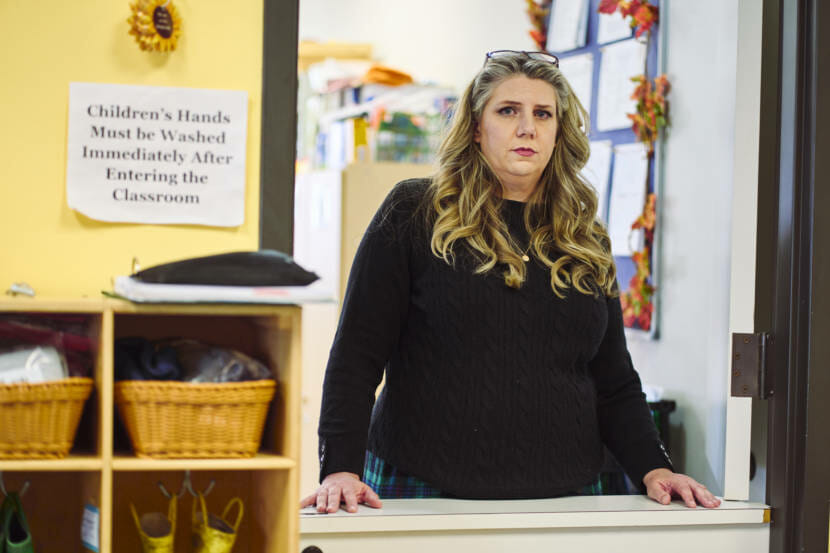
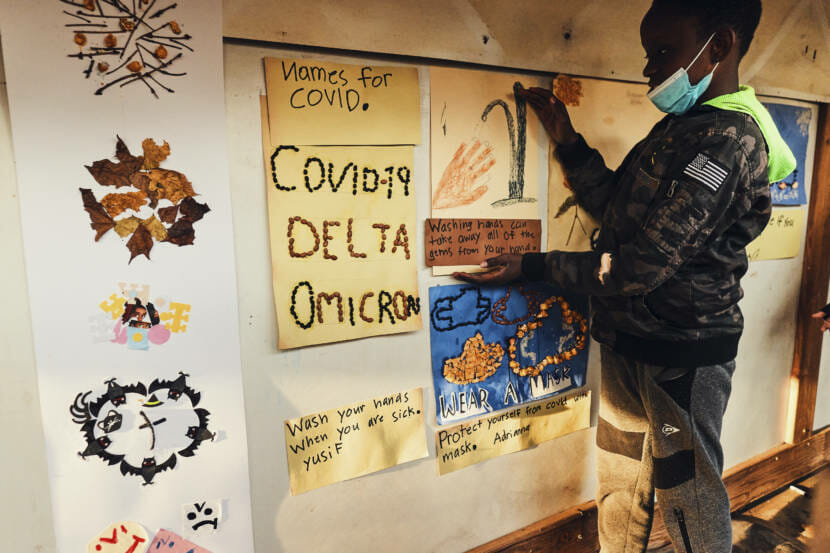
The walls of Ngoh’s day care display children’s artwork and reminders about wearing masks and washing hands. (Photo by Mohamed Sadek for NPR)
In December, the CDC endorsed “test to stay” policies to keep K-12 students in school despite COVID exposures, using rapid tests. The agency also cut its recommended isolation periods for people infected with the coronavirus from 10 days to five, without requiring a test to return to activities. With worker shortages across the economy, employers are summoning people, including working parents, back to work faster than before. And those parents need child care.
But child care centers, full of unvaccinated children, aren’t sure exactly how to apply the new rules. That leads to tension between parents and providers.
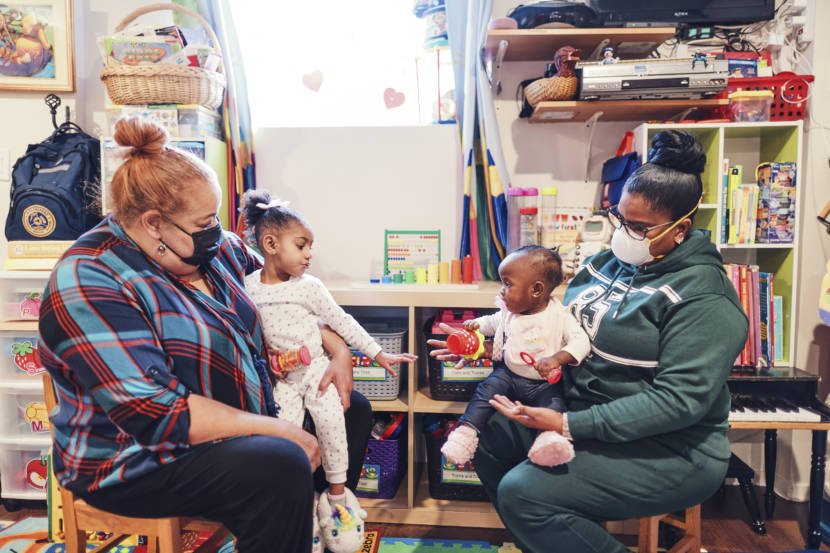
Gladys Jones, left, runs a day care in Staten Island, N.Y. (photo by Mohamed Sadek for NPR)
“It’s crazy because we don’t know which guidelines to follow,” said Kasia Kaim-Gonçalves in Brooklyn.
On Monday, New York state issued new guidance, recommending a shortened five-day isolation period for children in child care, in some cases. Before that, Kaim-Gonçalves had been requiring 10 days, and families had been lobbying her to change the rules.
“People send me articles like, ‘Look, I’ve read this. Look, CDC changed the rules to decrease the quarantine. Can’t we do that?’ ”
In Texas, Cori Berg said some parents who don’t like her day care’s policies have gone one step further, calling the state’s health department and its child care licensing agency to demand changes.
To child care advocates like Haspel, in Richmond, the omicron wave is an acute disaster on top of the long-term problem of child care supply.
“Child care staffing is still 10% below its pre-pandemic levels,” he said, “and pre-pandemic was not robust … There is so little public money in the child care sector that programs cannot offer competitive wages at a time when many other industries have been able to raise their benefits and their wages.”
“You can get paid more to go work at Walmart than you can to take care of a child for eight hours a day. We can’t compete,” said Berg, who starts her assistant teachers at $12.50 an hour.
“We can’t take in any more children. Parents are upset with us, but they can’t leave to go find another center that meets their needs because they can’t get in somewhere.”
In September, a study of American child care put it this way: “The existing child care system in the United States, which relies on private financing … fails to adequately serve many families. This is not just happenstance — sound economic principles explain why relying on private money to provide child care is bound to come up short.”
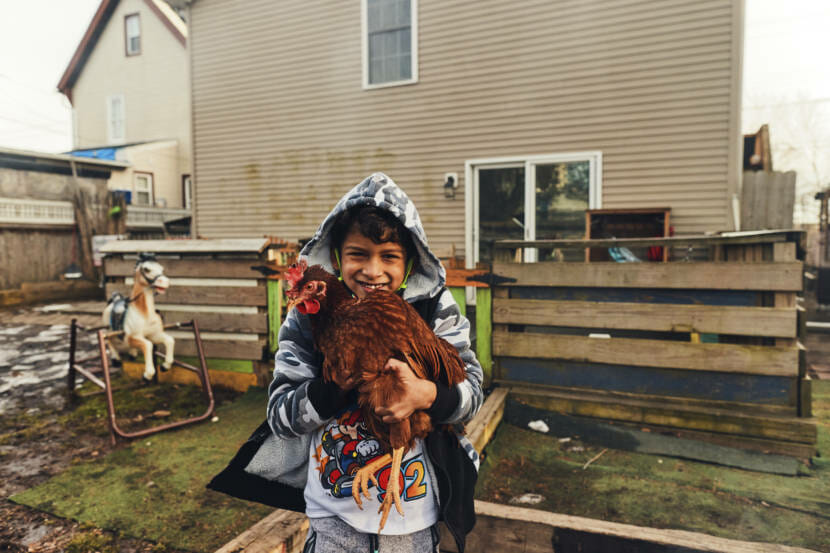
A young boy holds a chicken at Ngoh’s at-home day care. (Photo by Mohamed Sadek for NPR)
Those words didn’t come from a progressive child advocacy group, but from the U.S. Department of the Treasury. The report explains that high-quality care and education for small children requires low child-staff ratios, specialized training and experience, and clean, healthy facilities. Being human-capital intensive, it is inherently expensive.
President Biden’s Build Back Better bill includes funding for states to expand infant and toddler care, a universal preschool program for 3- and 4-year-olds, payments directly to parents to lower the out-of-pocket cost of care, plus a child tax credit for all parents. While the full package seems to have faltered, in a press conference on Wednesday, Biden said, “I’m confident we can get pieces — big chunks of the Build Back Better law signed into law.” But, he said he was “not sure” about the child tax credit.
By some reports, Sen. Joe Manchin, D-W.Va., one of the two Democrats whose vote on the full package has been most elusive, backs at least the pre-K part of the proposal.
“What we’re seeing now is sort of a taste of what is to come on a more permanent basis if we don’t put public money into the child care sector,” warned Haspel. “The U.S. Treasury Department is very clear. It’s a market failure — and it’s not a pandemic artifact. It’s not going away.”
He said unless the Senate can agree to pass a new plan, this is the new “terrible” normal.
Ngoh has told families that she will not charge them if they keep a sick child out of school for a week, even though she can’t really afford to do that. (Photo by Mohamed Sadek for NPR)
Copyright 2022 NPR. To see more, visit https://www.npr.org.
Close
Update notification options
Subscribe to notifications
Subscribe
Get notifications about news related to the topics you care about. You can unsubscribe anytime.



9(MDEwMjQ0ODM1MDEzNDk4MTEzNjU3NTRhYg004))




9(MDEwMjQ0ODM1MDEzNDk4MTEzNjU3NTRhYg004))