Food

In Alaska’s most remote villages, 1 missed plane can mean bare grocery shelves

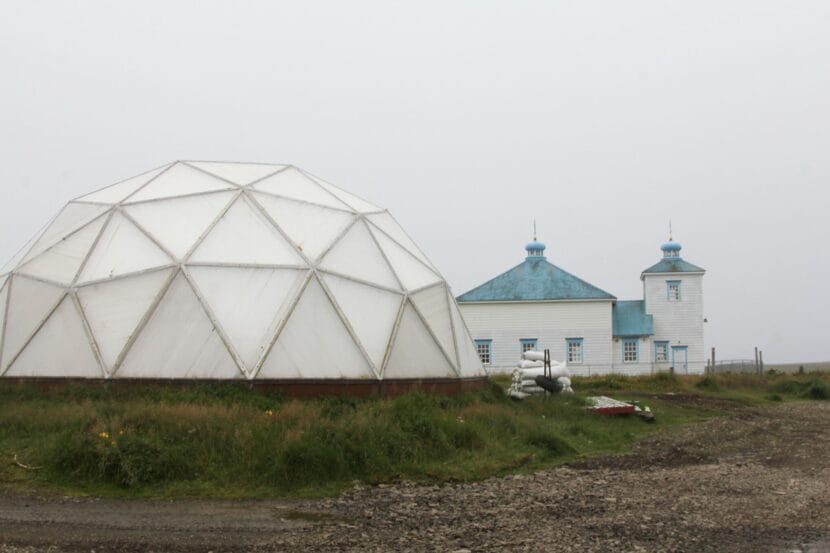
One of Nikolski's five greenhouse domes in front of St. Nicholas Church in August 2025.
One of Nikolski’s five greenhouse domes in front of St. Nicholas Church in August 2025. (Theo Greenly/KUCB)

The Aleut Community Store is the only shop for the Bering Sea village of St. Paul’s 300 or so residents, so most people just call it “the store.”

You can get everything you need there, from produce and cereal to kitchen appliances and fishing supplies — even a Yamaha four-wheeler.

But in June, the barge that was supposed to bring groceries canceled its trip because of rough weather. Meanwhile the cloud ceiling remained too low for planes to land. When planes can’t land and deliveries don’t make it in, shelves go bare.

“Eggs were shorted, and then milk, too. Stuff like that,” said Ben Bourdukofsky, the store’s manager.

In all, 20,000 pounds of groceries got stuck in Anchorage for over a month. When the planes finally did arrive, a lot of that food had spoiled. The tribal government, which runs the store, estimates it had to throw away about a quarter of it.

The food shortage this summer was uncommon, but it wasn’t unheard of. The Pribilofs are some of the most remote communities in the nation, and freight can be logistically difficult, expensive and unreliable.
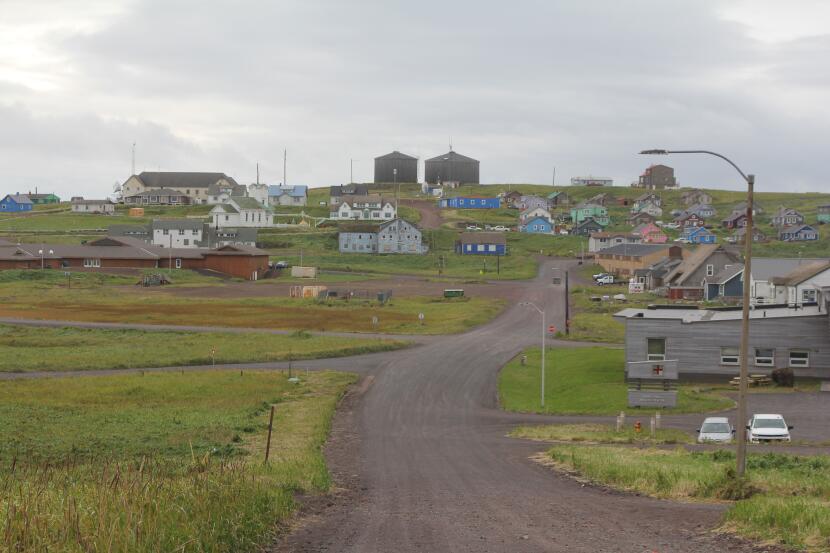
St. Paul’s 300 residents went without many major staples in June when travel disruptions led to a food shortage on the island, photographed here in September 2025. (Theo Greenly/KUCB)

In 2020, the Aleutian and Pribilof Islands Association partnered with the U.S. Department of Agriculture to survey community members across the region and assess their local food systems. They found that most residents rely on local stores, but that fresh, healthy options are often limited and expensive.

The survey also found that subsistence is the second most common source of food for families in the region.

The COVID-19 pandemic made things worse, exposing strains in Alaska’s food supply. A 2021 report from the National Oceanic and Atmospheric Administration found that Alaska Native communities felt the brunt of that.

In 2022, Gov. Mike Dunleavy created a food security task force to advise lawmakers on how to strengthen local production and distribution — most of what you find on grocery shelves throughout Alaska still comes in from the Lower 48.

The task force’s main recommendation was to establish a state Department of Agriculture, which it said would bolster private agriculture in the state and reduce Alaska’s reliance on imports. Farmers and agricultural groups backed the proposal, but lawmakers rejected it during this year’s legislative session, largely on procedural grounds.

A response to the pandemic

Nikolski is another island village, about 300 miles south of St. Paul. Roughly 20 to 30 people live in the village, which also has a single store. The community otherwise relies largely on subsistence.

Tribal Administrator Tanya Lestenkof says they have experienced situations similar to this summer’s food shortage in St. Paul, notably in 2007.

“Our weather was so bad that we didn’t see a plane for like, four months,” she said.

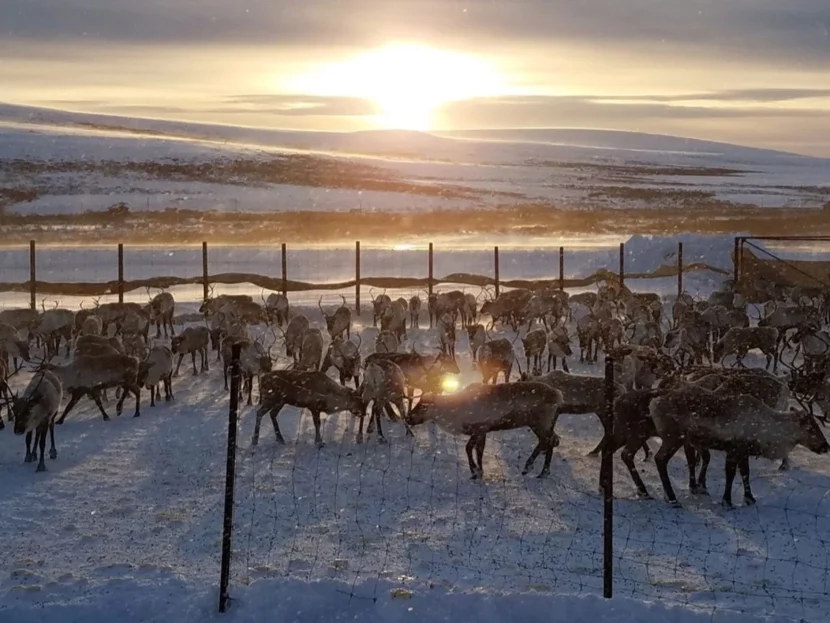
Nikolski’s subsistence practice revolves around salmon fishing and hunting the roughly 5,000 reindeer that live on the island.

“The only food that I had in the house was the reindeer that I had put up and the salmon, but I had dogs, so the dogs got all the salmon, and I ate all the reindeer. And now I can’t eat reindeer anymore,” Lestenkof said.

The community responded by building a geodesic dome for a community garden.

Lily Stamm is a project coordinator for the tribal government. She says the community ramped up their investment in greenhouses after the pandemic’s supply chain disruptions further exposed the community’s vulnerable food supply.
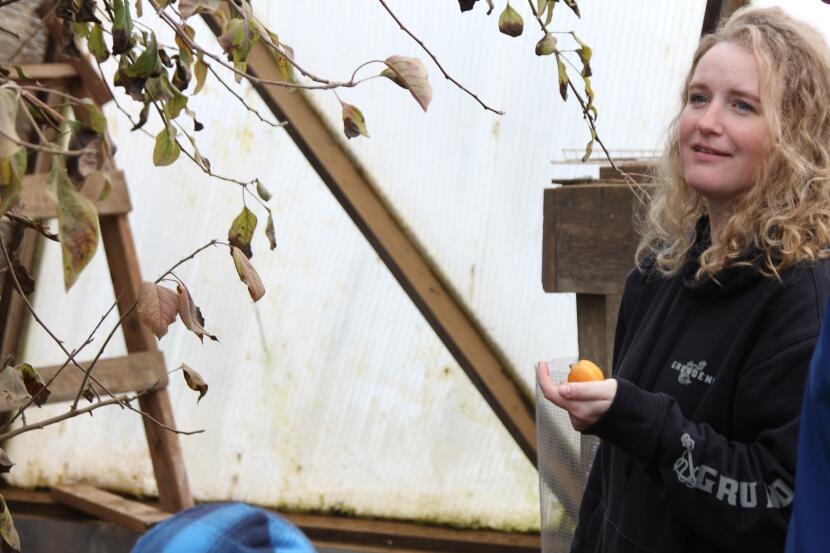
Lily Stamm is a project coordinator for the Native Village of Nikolski, the community’s tribal government. (Theo Greenly/KUCB)

“We realized we were going to have a much greater need for food security out here,” she said.

Today, they have five greenhouses, housing everything from community gardens to a sauna and a small pool.

Stamm says Nikolski has made food security and food sovereignty a community project.

“In this village, they’ve really prioritized it and started some really neat projects,” she said.

Subsistence is still critical to food security

But not all community investments in food security work out. In the Aleutians and Pribilofs, high winds and poor soil make growing things very difficult.

St. Paul has tried greenhouse projects, too — including a hydroponic grow center the community built on the ground floor underneath the Aleut Community Store. It ran for several years but eventually shut down.
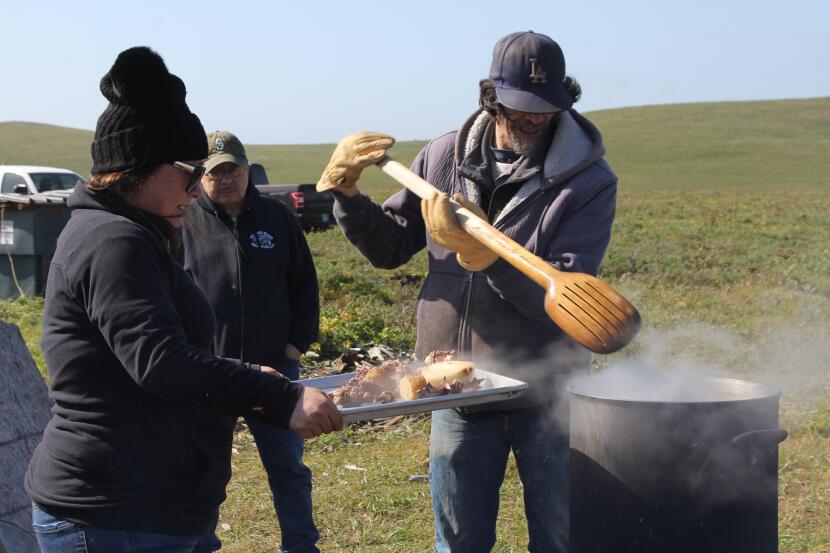
Robert Melovidov, right, serves fur seal at a community cookout on Labor Day 2025. (Theo Greenly/KUCB)

Today, there aren’t any large-scale growing efforts on the island.

The shelves are full in St. Paul’s store now. But Bourdukofsky says this summer’s food shortage wasn’t the first time something like this happened, and it might not be the last. The challenges of isolation and weather aren’t going away

People in St. Paul also rely on fur seals for food. Richard Zacharof has helped organize that subsistence harvest for 40 years. He says they’d be lost without it.

“It puts food in the freezers for the winter months for people to enjoy their subsistence foods that we live on,” he said. “You know, it’s all part of our DNA.”

Plaintiffs ask court to rule that SNAP delays violate Alaskans’ rights

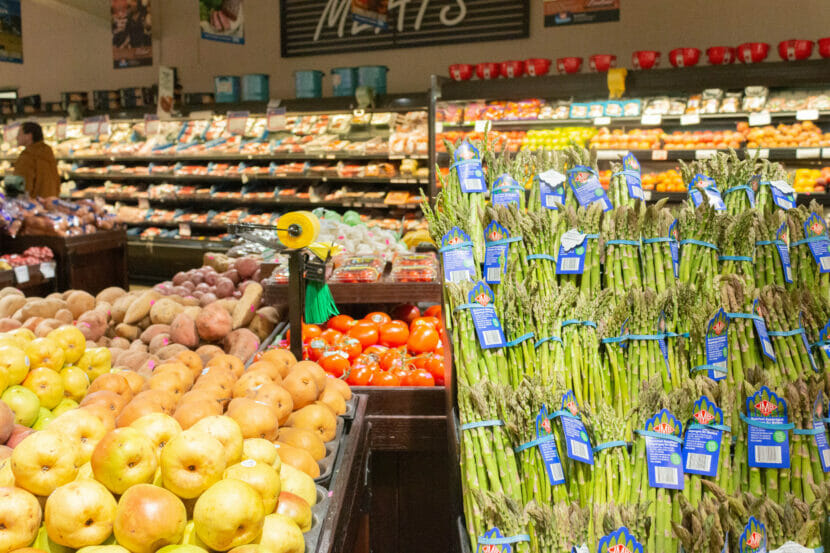
The produce section at Foodland IGA in Juneau. (Photo by Tasha Elizarde/KTOO)

Lawyers are trading arguments in a case challenging the state’s failure to process applications for the Supplemental Nutrition Assistance Program on time.

The case dates back to 2023. The number of Alaskans caught in the SNAP backlog has dropped by roughly 75% since plaintiffs filed the class action lawsuit, but the backlog still hovers around 4,000 as the state’s struggle to process applications on time has continued.

Saima Akhtar with the National Center for Law and Economic Justice, an attorney for the plaintiffs, said her team is asking the court to rule that Alaska’s SNAP system violates low-income Alaskans’ rights.

“The first step is essentially the court assessing whether or not the facts as they are laid out in the record constitute a legal violation,” she said. “And then after that, the question would be, what’s the fix?”

Lawsuits like this have helped in other states, Akhtar said.

“There are a number of states where there has been litigation and there has been a resolution that led to processing improvements,” she said in a phone interview.

Akhtar and her team obtained a preliminary injunction in the case last year requiring the state to report on its progress as it works to catch up on the backlog. It’s possible that could be converted to a permanent injunction.

State attorneys have filed a variety of arguments asking the court to decide the case in their favor. In one filing, state attorneys say that a recent U.S. Supreme Court case means that private individuals shouldn’t have a right to sue over the state’s failure to meet deadlines in federal law. In others, state attorneys say many of the issues highlighted in the suit have been resolved.

A Department of Law spokesperson said attorneys are reviewing the recent filings.

A decision isn’t expected for months. In the meantime, Akhtar says people struggling to access SNAP or other benefits can contact Alaska Legal Services for help.

Should Alaskans be able to sue over SNAP delays? State, citing Supreme Court, says no.

Kodiak groceries
Cereal boxes sit on a store shelf in Kodiak in 2023. (Kirsten Dobroth/KMXT)

Alaska’s Department of Law is asking a judge to throw out much of a class action lawsuit over the state’s failure to process food assistance applications on time. Thousands of Alaskans are caught in backlogs that have plagued the Supplemental Nutrition Assistance Program, or SNAP, and other aid programs for years.

But the state argues a recent Supreme Court case, Medina v. Planned Parenthood of South Carolina, means they shouldn’t be allowed to sue. Rather, the state argues that the federal Food and Nutrition Service, part of the Agriculture Department overseeing SNAP, should be the only entity able to enforce federal requirements.

“The Supreme Court’s recent decision in Medina makes clear that the plaintiffs have no private causes of action. This litigation must now end,” state attorneys wrote in a motion for summary judgment submitted Tuesday.

Attorney Saima Akhtar of the National Center for Law and Economic Justice, part of the legal team suing the state on behalf of Alaskans caught in the backlog, said in an interview that lawsuits like the SNAP case are an important way for citizens to hold their government accountable.

“Unfortunately, for better or for worse, a lot of times, agencies function better when there is oversight and when they are being held to standards and to account for what they are doing,” she said.

In June, the Supreme Court ruled that a South Carolina Planned Parenthood chapter could not sue the state over violations of the federal law that governs the Medicaid program. The justices ruled 6-3 that only the federal government could enforce that law.

Alaska Department of Law attorneys argue in a filing Tuesday that the decision means hungry Alaskans shouldn’t be allowed to enforce deadlines set out in the law that created SNAP.

Late last year, U.S. District Court Judge Sharon Gleason granted a preliminary injunction, requiring the Division of Public Assistance to report monthly on its progress towards ending the backlog.

The state argues the ongoing court battle takes time and resources away from the Department of Health’s efforts to end the backlog — especially because the department continues to struggle with understaffing.

“This is not a situation where a state has moved to dismiss while refusing to take any meaningful remedial action,” state attorneys wrote. “However, the litigation continues to divert DOH’s limited resources.”

That’s no excuse, Akhtar said. She said the state’s continued failure to clear the backlog means oversight is necessary.

“I don’t think anyone is asserting that the time spent on the reports would magically allow them to clear the multi-thousand-case backlog they have,” she said. “That is not the problem.”

Department officials report they are making progress on the SNAP backlog, which stood at roughly 3,000 in August, down from roughly 4,500 in June.

USDA pulls $6M from Alaska farmers and food producers

Food policy advocates at a 2024 meeting in Homer, hosted by the Alaska Food Policy Council, to discuss ways of supporting local farmers.
Food policy advocates at a 2024 meeting in Homer, hosted by the Alaska Food Policy Council, to discuss ways of supporting local farmers. (Alaska Food Policy Council)

The U.S. Department of Agriculture axed a program this week that was supporting farmers and food producers, including those in Alaska.

The department created the Regional Food Business Centers program in 2023 to strengthen local food economies. But on Tuesday, it abruptly ended that program, which was originally funded with pandemic relief money through the American Rescue Plan Act. USDA officials said in a press release there was no long-term way to finance it.

Robbi Mixon is the executive director of the Alaska Food Policy Council, which was in charge of the program locally. Mixon says this decision pulls back over $6 million in investment for Alaska, where the majority of food is imported and many villages are not on the road system.

“This was a chance for real economic investment into our food and farm businesses and fishers,” Mixon said. “It was a way to attract more investment as well, in terms of grants and loans and things like that. So it’s just really sad to see it all go down like this.”

A dozen business centers across the country were part of the program. Each one worked to allocate grants to food producers and farmers and help them with grant writing, marketing and business planning.

The Alaska Food Policy Council was working within one of those centers. Mixon says it was a strategic effort to build coordination and long-term infrastructure across Alaska’s food sectors.

“The program was tailored to address specific challenges in Alaska,” Mixon said. “So, our huge geography, our huge transportation and logistic costs, and our community size.”

The council planned to award grants to over 50 food and farm businesses across Alaska. But as they approached the time to award grants last winter, the Trump administration froze the funding, and they had to pause their grant program.

The Department of Agriculture stated in its release that it will honor existing commitments to farmers and food businesses. But in Alaska, Mixon says, almost none of the businesses had an official contract yet – they were only preparing for that collaboration to begin.

“We were working with an organization that was looking to set up more fresh produce markets in rural Alaska. We were working with an organization that wanted to provide technical assistance for home-based food businesses,” Mixon said. “And we did have tribal partners as well.”

Still, Mixon says the food council will use its volunteer board and statewide working groups to advocate for investments and build stronger food systems for all Alaskans.

Haines compost project faces pushback over potential use of cemetery land

The Takshanuk Watershed Council is requesting a land easement to use this piece of borough land for its new composting facility.
The Takshanuk Watershed Council is requesting a land easement to use this piece of borough land for its new composting facility. (Avery Ellfeldt/KHNS)

A Haines nonprofit has been working for years to build a large facility capable of churning out compost for farmers and gardeners. The facility itself is complete. But the plan has stalled for months amid a heated debate over a neighboring driveway that’s owned by the borough – and part of the local cemetery.

The non-profit, known as the Takshanuk Watershed Council, wants to use the driveway to access its new composting facility. Opponents say that’s inappropriate.

“We have stated over and over that the Cemetery does not have any land to give away,” Roc and Diann Ahrens, who have served as volunteer caretakers of the cemetery property for more than three decades, wrote in a public comment letter.

The issue came to a head late last week when the Haines planning commission considered the watershed council’s easement request. The conservation organization wants to use about .09 acres of cemetery land to transport material and turn around heavy equipment. The group would also build a bear-proof fence.

The bulk of the cemetery property, known as the Jones Point Cemetery, is across the street. And the request notes that the driveway site has been used as a driveway by neighboring landowners in the past. More recently it was strewn with abandoned boats, cars and tires.

“What we’re asking for here tonight is permission to build about 150 feet of fence to enclose about 40 feet of existing driveway,” Derek Poinsette, the watershed council’s executive director, said during the meeting.

Without the easement, he said, the organization might need to scale back its composting plans. Building a new driveway is possible, he added, but wouldn’t be easy.

“To just expand that into new terrain, with new fill and cutting trees down and all that, is expensive,” Poinsette said in an interview. “We don’t have that money, and I don’t know that we’ll be able to get money to do something like that.”

The application cleared the planning commission after hours of public comment dominated by opponents who were adamant that the watershed council should not be allowed to use cemetery land.

“I’m not opposed to composting at all. I’m opposed to you taking part of the Jones Point property. That’s inappropriate, you have another place you can put your access,” said Haines resident Randa Szymanski.

Critics also said the watershed council should have designed the facility to fit on its own property. Others thought the facility would just be bad for the cemetery — that it would generate noise and traffic and could attract bears.

During a phone interview, Ahrens said his main concern is that, due to Haines’ aging population, the cemetery should keep control over all of its land.

“The aged population that still lives here, [that’s] the reason that we’re starting to be concerned about running out of space,” he said.

He added that they’ve proposed building a columbarium on the driveway site, though in a June 11 memo, Haines interim Borough Manager Alekka Fullerton noted that the cost of a columbarium is not currently in the budget.

The watershed council, for its part, has pushed back against the suggestion that they should have built the facility elsewhere – and that they can just build a new driveway.

The organization owns about 50 acres in the area. Much of that is used for public trails and conservation work. The compost facility itself borders a wetland and a creek on two sides, which would complicate building a new access point.

Building the facility cost around $250,000 in grant funding. In an email, Poinsette said creating a new access point could cost that much or more.

During the meeting, Poinsette said the group explored buying or leasing the land in 2022. It was later determined that wasn’t possible due to the nature of the federal deed associated with the property, which says the land should not be sold or used for other purposes.

The borough later recommended pursuing a temporary easement. In 2024, an official with the Bureau of Land Management said in an email to the borough that the agency would not take issue with an easement allowing the use of the area as a driveway.

Poinsette said not having access to the driveway could lead to worse impacts for the cemetery.

“We might end up having to park equipment out on Takshanuk’s stretch of the road there, which is across from the cemetery,” he said. “That could be a greater impact, I would think, on the cemetery than if we were allowed to get off the road and back behind the screen of trees.”

Five planning commissioners voted in favor of the motion, with only Jerry Lapp voting against. Poinsette is a commissioner but did not vote due to his role with the watershed council. The full assembly is set to consider whether to approve or reject the request on July 8.

Federal cuts hurt food security programs in several Alaska Native villages

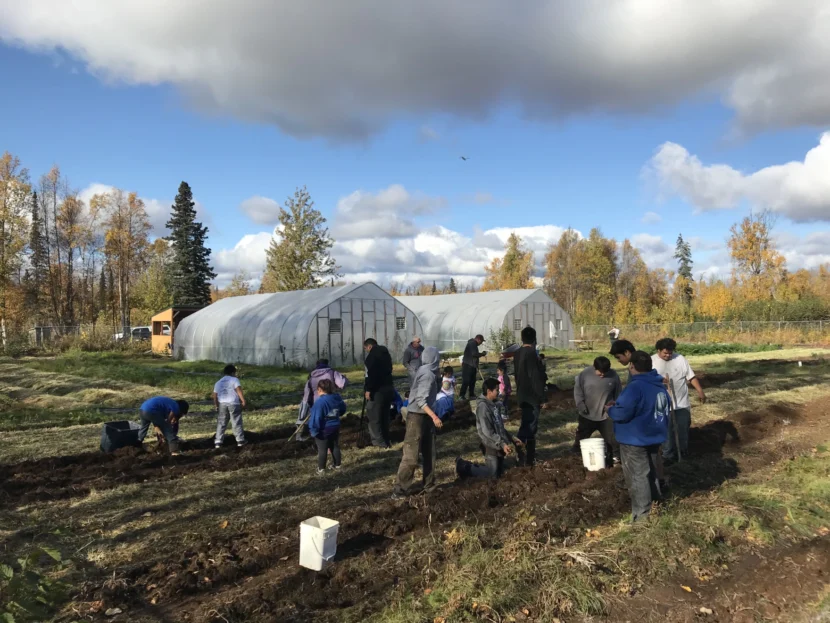
Tebughna School students harvest potatoes at the Tyonek Garden in 2018. (Photo courtesy of Tyonek Tribal Conservation District)

Spring is a busy time at Tyonek Grown, a community farm on the west side of Cook Inlet. Local students come to plant seeds, water them and then harvest organic fruits and vegetables.

This summer, the farm managers had even bigger plans. They wanted to set up a community food forest that would include Indigenous plants and fruit trees.

But the forest – and many more of Tyonek Grown’s plans – are now up in the air. That’s due to federal staff and funding cuts, said Laurie Stuart, the executive director for Tyonek Tribal Conservation District, which manages the farm.

“The loss of those funds in the coming years is going to have a big impact on the growth that we were building,” Stuart said. “The future of the garden is having to be rethought.”

In Alaska, nearly all produce is imported, which makes the food supply vulnerable, especially in rural areas. Some support for local producers comes from the U.S. Department of Agriculture, which is one of many agencies that are cutting employees and programs in response to Trump’s executive orders.

In recent weeks, the agency reinstated some of its terminated employees but then put them on administrative leave.

That’s the case for Amanda Compton, who lives in Palmer and works in the USDA’s Natural Resources Conservation Service. The program helps landowners – in Alaska, mainly tribes – to sustainably manage their natural resources. It’s helped villages set up fish passages, reindeer ranches and programs like Tyonek Grown.

That changed with the layoffs and disruptions, Compton said.

“We lost our entire team of people that are working to get Native communities greenhouses, our team that’s getting the Native entities fish passages,” Compton said. “We lost our entire team that communicates between the engineers and tribal entities.”

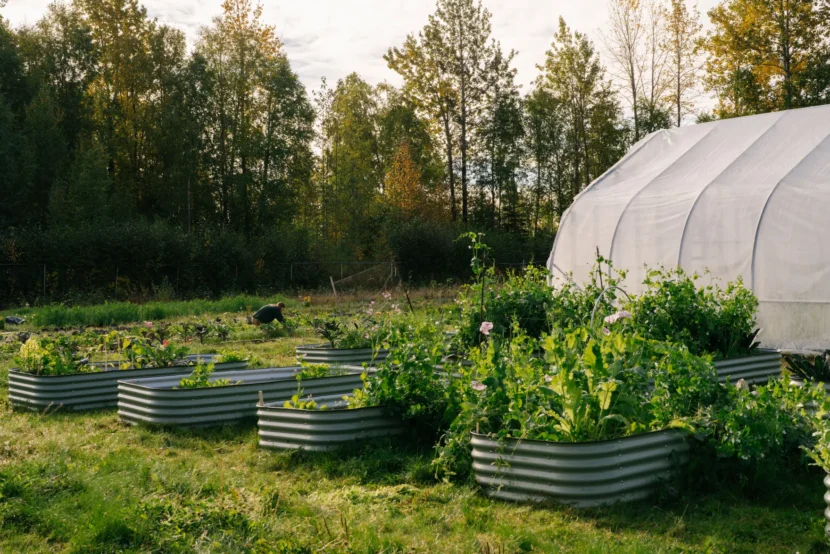
Tyonek Garden in 2024. (Photo courtesy of Tyonek Tribal Conservation District)

Tyonek, an off-the-road community of about 300 people, is about 40 miles southwest of Anchorage as the crow flies. Produce needs to be flown in, so fruits and vegetables grown at the Tyonek farm give locals a rare chance to enjoy affordable fresh food.

The USDA’s Forest Service, through the Arbor Day Foundation, awarded $900,000 to Tyonek Tribal Conservation District in December. The grant was meant to grow their team and set up a quarter-acre community food forest next to the farm that would promote food sovereignty and traditional ecological knowledge, Stuart said.

“It’s kind of a community, cultural harvesting space,” she said.

The Forest Service terminated the award, in an effort to comply with Trump’s objectives.

Another terminated USDA grant is the Local Food Purchase Assistance Program. It’s meant to provide money to schools and food banks to buy produce from local farmers and fishermen, said Cayley Eller, Tyonek Grown’s programs manager.

“In Tyonek that meant that we were able to support our local farm operation and compensate the farm for the food that we’re growing and feed community members at low costs, as well as supporting local fishermen and supporting other tribal producers,” Eller said.

Overall, Tyonek Grown has funds to operate now, but the near future is uncertain.

“It’s a food security farm production space, and that means we’re not making a profit on our produce,” Eller said. “Our goal is to feed the community, and that means we’re heavily reliant on grant funds.”

Reindeer herders in limbo

Meanwhile, about 500 miles northwest, around Nome, reindeer herders are wondering about their future, too. Tribal liaisons used to help herders apply for grants and establish rotational grazing plans, said Nathan Baring, director of the Reindeer Herding Association, which provides technical assistance to herders in Bering Strait communities.

Reindeer graze at the Midnite Sun Reindeer Ranch near Nome. (Photo courtesy of Midnite Sun Reindeer Ranch)

The Trump administration also halted a USDA grant meant to support Indigenous peoples’ animal harvests and help communities expand their meat processing, he said.

“Having all of that kind of just thrown either into the air or outright eliminated just simply means that we start over in terms of shopping those projects around again, which then further delays what I would describe as Alaska’s untapped potential in a pre-existing livestock industry,” Baring said.

Bonnie Suaŋa Scheele is an Iñupiaq reindeer herder at the Midnite Sun Reindeer Ranch near Nome. She said that for herders like her, interruptions in federal programs mean that it’s harder to find funds to build temporary housing for workers and corrals for holding animals.

Scheele said she should be at her ranch now, but she can’t be. She was counting on another frozen grant — this one from the Bureau of Indian Affairs — to help pay for upgrading her power source.

Despite the challenges, Scheele said herders will figure out a way to continue the practice, even if it means providing food for just their villages instead of expanding their operations.

“We’ll overcome it. We’ll figure it out,” she said. “It’s going to come back around, and we’re still, we’re still here, we’re still herding reindeer. We’re still providing for communities.”

Site notifications
Update notification options
Subscribe to notifications