Food

Food prices are no longer rising as much — but here’s why it might not feel that way

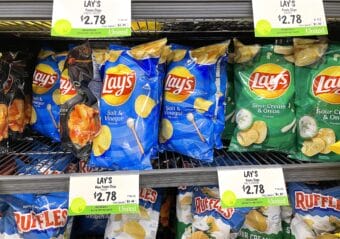
PepsiCo said sales of its Frito-Lay snacks slumped in the most recent quarter as shoppers became more sensitive to rising prices.
PepsiCo said sales of its Frito-Lay snacks slumped in the most recent quarter as shoppers became more sensitive to rising prices. (Justin Sullivan | Getty Images North America)

Grocery prices are no longer climbing as much as they did in the last two years — but many Americans are still frustrated by what it costs to put food on the table.

Some people have apparently hit their limit. One of the biggest snack makers said this week that its sales fell this spring as grocery shoppers became more sensitive to rising prices.

Here are three things to know about food prices these days — and why it still feels more expensive at the checkout lane of your favorite grocery store.

What is going on with food prices?

It may not feel like it, but grocery prices have actually leveled off for the most part.

The latest consumer inflation report, out this week, showed grocery prices rose just a little over 1% in the last 12 months. That’s a big improvement from the previous year, when prices jumped nearly 5%, and the year before that, when they soared by double digits.

However, leveling off is not the same as prices coming down, and the U.S. is still feeling the cumulative effect of those earlier increases.

And that leads to frustration for shoppers like Cindy Seinar, a retired autoworker in Lynchburg, Virginia.

“You go in for one thing, and you come out and it’s $45,” she says, describing her experiences at the grocery store.

And for Seinar, just like for many other Americans, the frustration is compounded by “shrinkflation.” That’s when companies reduce package sizes, meaning you get less than you used to for the same or sometimes even higher prices.

“Sugar is only 4 pounds,” Seinar says. “You’re not even getting a 5-pound bag anymore.”

Grocery prices are particularly noticeable because they are such a significant chunk of the typical family’s budget, accounting for about 8% on average, according to government data. For lower-income families, it’s often more than that.

How are people adjusting to higher prices?

For a while, many people just gritted their teeth and paid up — but Americans are starting to push back.

PepsiCo, which reported earnings this week, said sales of its Frito-Lay snacks actually fell during the most recent quarter. Some of that is because shoppers are balking at the higher prices by cutting back on chips altogether or by switching to cheaper store brands.

Amanda Whitworth stocks grocery shelves at a Target store in Florida. She often finds herself steering customers to the in-house bargains at the discount retailer.

“You may not ever have considered the Market Pantry bread, but it’s $1.39 for a big loaf of it,” Whitworth says, referring to Target’s private label. “While that may not be someone’s first choice, it’s a quarter of the price of some loaves.”

Grocery prices rose just a little over 1% in the last 12 months, according to the latest consumer inflation report, out this week.
Grocery prices rose just a little over 1% in the last 12 months, according to the latest consumer inflation report, out this week. (Frederic J. Brown | AFP via Getty Images)

Whitworth also does the food shopping for her family and says she has made similar substitutions of her own.

“Before, we would have bought a big bag of frozen chicken nuggets for our son. And the particular bag went up three extra dollars,” Whitworth says. “So we started making homemade chicken nuggets, which we’ll probably never switch back because they’re so good.”

That sends a message to the big food producers. When PepsiCo and others start losing market share, they grow more cautious about pushing up prices. In some cases, they start to offer discounts — and that’s one reason grocery prices aren’t climbing as fast as they had been.

So are grocery prices finally going to come down?

To some degree.

The prices of some individual grocery items have come down. Fruit and vegetable prices have dropped over the last year, for example. So have milk and cheese prices.

However, the overall cost of groceries is unlikely to fall substantially.

But there is a silver lining. As grocery inflation slows, wages are catching up.

Over the last year, average wages have risen 3.9%, or about three and a half times as fast as grocery prices.

The typical worker now has to work about the same number of hours to buy a week’s worth of groceries as in 2019, before the COVID-19 pandemic.

That’s good news — even if for many Americans it doesn’t feel that way.

Transcript:

SCOTT SIMON, HOST:

How much would you pay for a bag of potato chips? Well, some people are apparently hitting their limit. One of the biggest snackmakers say that its sales fell this spring because of rising prices. Grocery prices are not climbing nearly as fast as they had been, but many Americans are still frustrated by what it costs to put food on the table. NPR’s Scott Horsley joins us. Scott, thanks for being with us.

SCOTT HORSLEY, BYLINE: Good morning. Good to be with you.

SIMON: Of course, a lot of people will be in supermarkets this weekend. What kind of prices might they see?

HORSLEY: Well, the good news is supermarket prices have largely leveled off. We got an inflation report this past week showing grocery prices rose just a little over 1% in the last 12 months. That is a big improvement from the previous year, when prices jumped almost 5%, and the year before that, when they soared by double digits. But leveling off is not the same as coming down, and we are still dealing with the cumulative effect of all those earlier price increases. When we asked NPR listeners, where do you feel the sting of inflation most? – a lot of people said the supermarket.

CINDY SIENAR: I think that groceries stand out the most just because we’re always at the grocery store, and you have to eat.

HORSLEY: Cindy Sienar is a retired autoworker who lives in Virginia. Like a lot of people, she’s bothered by what economists call shrinkflation and the feeling she’s paying more and getting less.

SIENAR: You go in for one thing, and you come out, and it’s $45. And sugar is only four pounds. You’re not even getting a five-pound bag anymore.

HORSLEY: And people notice because, you know, they buy groceries week after week. It’s a significant chunk of the typical family’s budget, about 8% on average. For lower-income families, it’s often more than that.

SIMON: And how are people reacting to these higher prices?

HORSLEY: You know, for a while, they just grit their teeth and paid up, but we are starting to see more pushback now. Pepsi, which reported its earnings this past week, said, sales of FritoLay snacks were actually down during the most recent quarter, which suggests we have reached the crunch point on tortilla chips. You know, maybe shoppers are cutting back altogether or they’re switching to cheaper store brands.

Amanda Whitworth stocks grocery shelves at a Target store in Florida. She often steers customers to the discount retailer’s in-house bargains.

AMANDA WHITWORTH: I like being able to point people in certain directions and be like, well, you may not have ever considered the market pantry bread, but it’s $1.39 for a big loaf of it. And you know, while that might not be someone’s first choice, you know, it’s a quarter of the price of some loafs.

HORSLEY: Whitworth also does the food shopping for her family and says she’s made some substitutions of her own.

WHITWORTH: Before, we would have bought a big bag of frozen chicken nuggets for our son, and the particular bag went up three extra dollars, and at that point, I was like, oh, goodness. So we started making homemade chicken nuggets, which – we’ll probably never switch back ’cause they’re so good.

HORSLEY: That sends a message to the big food producers. You know, when Pepsi and others start losing market share, they get more cautious about raising prices, and, in some cases, they start to offer discounts.

SIMON: Scott, are food prices, grocery prices, likely to come down any time soon?

HORSLEY: You know, the price of some individual items will certainly come down. We’ve seen that over the last year with fruits and vegetables and milk and cheese. But in terms of what you pay at checkout for the whole grocery cart, that’s not likely to drop very much.

The good news is as grocery prices level off, wages are catching up. Over the last year, average wages have risen about 3 1/2 times as fast as grocery prices. So one way to think about this is, how long do I have to work to buy a week’s worth of groceries? For the typical worker, it now takes about the same number of hours as it did back in 2019, even if it doesn’t yet feel that way.

SIMON: NPR’s Scott Horsley. Thanks so much.

HORSLEY: You’re welcome.

Alaska’s Little Norway keeps old culinary traditions alive

Sharon Wikan and her daughter, Katrina Miller, make waffler for Petersburg’s Little Norway Festival on May 13, 2024.
(Shelby Herbert/KFSK)

Alaska’s Little Norway celebrated Norwegian Constitution Day in mid-May with a week-long festival. For some families in the community, that meant many hours spent cooking heaps of treats from the Old Country, often using recipes that have been passed down for generations.
The air inside Petersburg’s Sons of Norway Hall was thick with the smell of cardamom, vanilla, and melted butter. Volunteers labored over portable stoves and bowls of batter. Sally Dwyer is the director of Petersburg’s Sons of Norway chapter, and she’s the mastermind behind the cooking operation.

After directing the volunteers to their stations, Dwyer fired up her griddle and, a few moments later, handed this reporter a delicate, cone-shaped waffle cookie — something called a krumkake. It melts in your mouth just as fast as it disintegrates in your hands.

As the crumbs fell away, Dwyer demonstrated her krumkake system.

“I am pouring approximately a tablespoon of krumkake batter into the krumkake iron, which has beautiful imprints of flowers and scroll-ey thingies,” she said. “I want it to spread out and be crispy, then I’ll put them on my roller and roll them into the cone shape, and then set them here to rest while making the next one.”

She would repeat that process hundreds of times that day. All the volunteers were making heaps of traditional treats to raise money for Petersburg’s Sons of Norway chapter at an annual buffet-style bake sale, called “Kaffehus.”

Vava Wikan fries up rosettes in Petersburg’s Sons of Norway Hall on May 13, 2024. (Shelby Herbert/KFSK)

In another corner of the room, Margaret Newlun was making rosettes. That’s a little more involved — and dangerous. Newlun wielded a long, thin metal rod with a flower-shaped cookie cutter at the end. She dipped the cookie cutter into a bowl of batter, and then turned around to face a ripping hot pan of oil.

“It just takes a while to make ‘em,” Newlun said. “You gotta fry ‘em in oil and you can’t set [the rod] down in the oil, because it’ll ruin the cookie!”

At another table, Katrina Miller was making waffler with her mom — that’s basically a tiny waffle sandwich. Miller’s grandmother taught her how to make it. Miller said waffler is an all-occasion thing that the next generation of her family has bonded over.

“It’s just kind of always been our thing and it brings us all together,” Miller said. “And it’s fun! We do it for Christmas, we do weddings, funerals… And then, sometimes, just because we want waffler.”

Miller’s mom, Sharon Wikan, offered a piece of waffler smeared with a type of caramelized goat cheese, called gjetost. She thinks that’s the best way to eat waffler, but not everybody in her family agrees.

“These are my grandkids’ favorite,” Wikan said. “But they don’t like the goat cheese. My kids don’t like the goat cheese. Just grandma — nobody else does.”

A line of customers outside Petersburg’s Sons of Norway Hall on May 18, 2024.
(Shelby Herbert/KFSK)

After hours of work, the volunteers’ tables were piled high with dozens upon dozens of pastries, which they started squirreling away for Kaffehus.

Days later, the dainty desserts reappeared in the Sons of Norway Hall, arranged on long buffet tables. A line of hungry festival-goers stretched around the outside the building, in the rain. But Bob Martin, who had been standing there for around 45 minutes, said it was all worth it.

“Lefse! It’s hard to find these days,” Martin said. “The ladies wearing bunads — they know the secrets!”

Lefse was one of the big draws — it’s a soft flatbread often filled with butter, sugar, and spices. It’s classic Scandinavian fare, but there’s been some drift over the years. Here, it’s taken on some American flavor.

A line of customers outside Petersburg’s Sons of Norway Hall on May 18, 2024.
(Shelby Herbert/KFSK)

Dwyer said her family’s lefse is a great example of how the town’s Norwegian forebears came up with new ideas after they started their lives in Petersburg.

“According to [our] family legend, Grandma Tora put sugar in her lefse after she buttered it, she used powdered sugar for the first time in Petersburg,” Dwyer said. “The granulated sugar — most of us think it’s like sand! So, most of us here use powdered sugar. Women were innovators back then!”

But the day’s visitors weren’t there to quibble over authenticity. They were there for the sugar rush. Plates of lefse — filled with both granulated and powdered sugar — got wolfed down, along with all the other fruits of the volunteers’ labor — another successful Kaffehus in the books.

This story has been updated to correct Vav Wikan’s identity in a photo caption.

Alaskans suing state over food assistance delays ask judge to order faster application processing

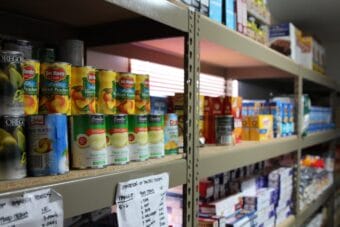
Packaged food sits on shelves at Sitka’s Salvation Army food pantry in 2018. (Photo by Emily Kwong/KCAW)

Alaskans who sued the state last year over long wait times for food assistance are asking a federal judge to order the state to speed up processing.

The state’s Division of Public Assistance has struggled in recent years to keep up with pending applications for the Supplemental Nutrition Assistance Program, better known as SNAP or food stamps. At times, more than 14,000 Alaskans were left waiting for benefits. And the state must act, said Saima Akhtar, a senior attorney with the National Center for Law and Economic Justice.

“This is a very, very significant crisis,” she said. “I have done a number of cases related to timeliness litigation, and I have not sort of seen a crisis of the proportion that we have seen in Alaska.”

Akhtar and a coalition of attorneys sued the state on behalf of hungry Alaskans last year. U.S. District Judge Sharon Gleason revived the class-action suit in February after the parties initially agreed to put it on hold while the state worked to address the backlog.

Now, attorneys in the case are asking the judge for a preliminary injunction that would order the state to process applications in line with federal requirements. That’s 30 days in most cases and seven days for expedited applications.

A court order could help the state obtain waivers from federal requirements that may slow processing down, Akhtar said. The state could also implement something known as broad-based categorical eligibility, which she said would streamline application processing.

“When there’s a court order and the government is looking at whether or not they can, sort of, take exceptional measures internally, a court order is something that will signal and provide a a reason to go the extra mile and take exceptional steps,” she said.

But the director of the state’s Division of Public Assistance, Deb Etheridge, said that over the past few months, the situation has improved considerably. Etheridge says as of March, the state was processing about 90% of its applications by federal deadlines. As of early May, she said there were just 50 SNAP applications or recertifications lingering beyond the 30-day deadline.
“But all 50 of those cases have been worked, and they’re in a pend[ing] status for one reason or another,” Etheridge said in a phone interview. “Some of the reasons could be additional information, or they could be a request for fair hearing.”

Etheridge pointed to the state’s decision to pause federally required interviews with applicants as one reason for the improvement. Though the federal Food and Nutrition Service initially warned the state that pausing interviews put federal SNAP funding at risk, Etheridge said the state now has a waiver through June. Additionally, she said the division has now trained its staff on best practices for interviews to avoid more delays once the waiver expires.

“I guess what I’m saying is that we’re not waiting for any court actions to be identified,” she said. “We’re being very proactive to find efficiencies, and we’re doing our best to put them into action in order to get benefits to Alaskans who qualify for them as quickly as possible.”

She also pointed to other areas of improvement including a new online application form, a new simplified application for elderly people and efforts to modernize the state’s computer systems.

There are two pending bills in the state Legislature that would require the state to implement broad-based categorical eligibility for SNAP. The state could also do it on its own without a change to the law, but Etheridge said the legacy mainframe computer system the department uses makes that difficult, and she said a switch to the streamlined eligibility system would have to wait for the planned IT upgrade regardless of whether new legislation passes.

As bird flu spreads in cows, here are 4 big questions scientists are trying to answer

Bird flu is spreading through U.S. dairy cattle. Scientists say the risk to people is minimal, but open questions remain, including how widespread the outbreak is and how the virus is spreading. (DOUGLAS MAGNO/AFP via Getty Images)

On Friday, Colorado became the latest state to detect the bird flu virus spreading in dairy cattle. It follows revelations earlier in the week that viral fragments are turning up in retail milk.

Still, scientists don’t view this as an immediate threat to human health.

Genetic material is not the same as infectious virus and pasteurization is expected to inactivate the virus in milk, but the findings speak to the broader uncertainty about the extent of the spread.

“There’s so many critical things that we still need to know to get a better perspective on how bad this is, or maybe it’s not so bad,” says Dr. Rick Bright, a virologist and the former head of the Biomedical Advanced Research and Development Authority (BARDA).

Federal health agencies started sharing more details publicly this week, but Bright says there’s still not enough transparency.

“It’s the void that just leaves everyone nervous,” he says

Other scientists say the reality is that there are still many unresolved questions about this outbreak, given how novel it is.

“There’s a couple big unknowns at this point,” says Louise Moncla, a virologist at the University of Pennsylvania School of Veterinary Medicine.

Here’s what scientists who are tracking the virus still want to know:

How widespread is the virus in dairy cattle?

That’s still far from clear.

While the official tally shows it’s been detected in nine states and just over 30 herds, the actual number could be much larger.

First of all, there hasn’t been widespread testing in cattle.

The fact that viral material is now being found in retail milk suggests “this virus is probably spread around quite a bit,” says Richard Webby, a virologist at St. Jude Children’s Research Hospital in Tennessee.

On Thursday, the FDA said that preliminary results from nationwide samples of retail milk indicate about one in five samples are positive for viral traces. A survey of retail milk in the Midwest found 58 out of 150 samples were positive, according to Andrew Bowman at the Ohio State University.

Webby discovered this himself when he went to the store to grab a carton of milk, which he intended to use as a negative control in his work on H5N1.

To his surprise, even that ended up being positive (unfazed, he kept the milk).

Currently the virus has only been detected in a tiny fraction of dairy herds in the U.S., but it’s hard to know the significance of that finding when you don’t also have details on the overall number of cattle tested, says Dr. Tom Inglesby, director of the Johns Hopkins Centers for Health Security.

Those are kind of basic questions that would really help get us more ground truth quickly,” he says.

The USDA has just taken some new steps that could offer a better picture of the outbreak. There will be mandatory reporting of positive tests in cattle and a requirement that dairy cattle test negative for the virus before they move across state lines.

Potentially complicating the picture: Some unknown number of cattle could be shedding the virus without showing obvious symptoms. Federal health officials have confirmed this.

“We don’t know how many animals have this,” says Alexis Thompson, a veterinarian at Texas A&M Veterinary Medical Diagnostic Laboratory. “There has been very little sampling done. We don’t know how many [sick] animals we have. We don’t know how many asymptomatic animals we have. That testing has not been done.”

Because milk from sick cows is supposed to be discarded, this could help explain how remnants of the virus entered the milk supply.

If it turns out there are lots of animals shedding the virus and not symptomatic, the outbreak could be “substantially larger” than we realize, says Inglesby. “To get to the bottom of that, we would need to do surveillance testing in places that don’t already have clear outbreaks.”

Does the milk testing positive on retail shelves contain infectious virus?

So far, it doesn’t appear that way, but scientists who are studying this possibility acknowledge it’s too soon to say that with absolute certainty.

The PCR testing that has found evidence of viral fragments in the milk on grocery store shelves doesn’t actually tell you whether or not it’s “live” virus, meaning whether it’s capable of replicating.

This form of testing is extraordinarily sensitive and detects small pieces of genetic material, says Lee-Ann Jaykus, a food microbiologist at North Carolina State University.

“There’s evidence that that milk at one point in time may have had virus associated with it, but there is no evidence that that virus would be infectious, at least with the information we currently have,” she says.

Pasteurizing milk can knock out bacteria and viruses; however, it doesn’t erase every trace of those germs.

Federal health officials have stressed that avian influenza doesn’t stand up well to the high temperatures and past research on pasteurization indicates “it’s very likely to effectively inactivate heat-sensitive viruses like H5N1 in milk from cows.”

“We’ve seen nothing that would change our assessment that the commercial milk supply is safe,” said Don Prater from the Food and Drug Administration.

Research on pasteurization in eggs, which happens at a lower temperature than milk, shows that the process inactivates the bird flu virus.

Jaykus and other scientists agree that finding viral material doesn’t necessarily suggest an immediate threat to human health.

“It’s really important to sort of not get out of control about fear of consuming milk,” says Jaykus.

There is an important caveat though: There has been no direct research on how pasteurizing cow milk affects bird flu virus. Those studies are taking place right now.

Early experiments on a small number of samples suggest there is no viable virus in these positive samples, said Jeanne Marrazzo, who directs the National Institute of Allergy and Infectious Diseases.

Webby, who looked at samples of milk sent by Bowman, says they tried to grow the virus in cultured cells and embryonated chicken eggs — two places where flu loves to grow — and found that it did not reproduce.

“It’s pretty good evidence,” he says, “We could never say there’s none, but we could say if it’s there, it’s at a very, very, very low level.”

Jaykus says even if the milk did happen to have a small amount of infectious virus, “there just isn’t evidence that that is a transmission route for flu.”

Rick Bright, on the other hand, has more concerns about the milk.

“It’s a small inconvenience for me not to drink milk until we have more data,” he says, “It doesn’t mean that I think everyone should stop drinking milk. It’s a personal risk assessment.”

He says the key question is how much virus is in the milk, and whether that changes if more cows get sick and more virus enters the milk supply.

“The higher the viral load in the milk, the more difficult it is for pasteurization to work completely,” he says. “If they show at this point there’s no viable virus in the milk, that’s a point in time. And what’s going to be really critical is that the FDA continues to monitor this.”

How exactly is the virus spreading?

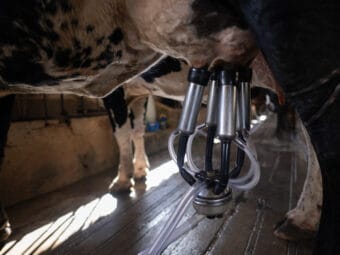
For weeks, the leading theory has been that the primary route of spread is through the milk. This is where high concentrations of the virus are being found.

This general idea was affirmed again this week by Mike Watson with the United States Department of Agriculture’s Animal and Plant Health Inspection Service, who said the evidence still points to some form of “mechanical transmission.”

Virus could be spread on “milking equipment,” by “individuals moving from facility to facility,” and via rodents that come in contact with milk and then move around, he said.

Federal health officials and scientists believe the virus has moved with lactating cattle from one herd to another. But how it’s getting from one cow to another on a given farm “is a key missing piece of knowledge,” says Webby.

Genetic sequencing indicates that there was likely a single introduction from birds into cattle, which then resulted in further spread among cattle, says Moncla, who has been analyzing the genomic data.

“A lot of these cattle sequences are quite similar to each other, suggesting that there’s almost certainly some degree of cattle-to-cattle transmission going on,” she says.

Moncla says it’s hard to say exactly how long the virus has been spreading through dairy cattle, although some scientists have suggested it may have been circulating for many months, even earlier than February.

The USDA has also noted another concerning development — that there have been some instances of the virus moving from domesticated poultry to cattle.

“The degree of transmission, combined with the fact that we’re likely missing cases in cattle, leads to a bit of concern,” says Moncla.

What is the risk to humans as the virus keeps spreading?

First the reassuring news: Even with all these cows being infected, there has only been one documented human infection during the current outbreak in dairy cattle.

That person, a dairy worker in Texas, had conjunctivitis.

This week, federal health officials reiterated that the overall risk to the general public remains low, in part because “we have not observed changes to the virus’s genetic makeup that would suggest an enhanced ability to spread to humans or among humans,” said Dr. Nirav Shah, principal deputy director at the CDC.

So far, states have tested 23 people for avian flu and have monitored 44 people who were considered exposed and at risk for infection, he said.

Generally, cases of bird flu are rare in humans and it takes a big dose of virus — for example through direct contact while slaughtering poultry — to get infected. Since 2022, there have been 26 human cases of H5N1 virus infection reported worldwide.

Webby says it is possible that cows don’t put that much “pressure on the virus to change,” which could be one reason scientists haven’t seen alarming mutations in the samples collected.

“I don’t think the needle has moved at all” in terms of human risk, he says.

Of course, the perennial fear is that the virus could mutate while in cows, or an intermediary animal, and then find its way into humans.

Scientists have documented some mutations in bird flu when it has spread in other mammals. But previous research has shown there needs to be a host of changes — most of all, the virus would have to evolve a way to bind to receptors in the upper airway of humans — to become a pandemic threat.

When it comes to cattle, the CDC’s Sonja Olsen says they still aren’t sure if it’s the exposure to raw milk on the farms that’s the primary risk to humans. “We don’t know if it’s [surface] transmission. We don’t know if there’s aerosolization of the milk.”

Dr. Bright says the CDC should be conducting antibody studies on dairy workers to see if human cases have escaped detection, rather than waiting for cases to show up in the emergency room.

“I am going to keep my radar up,” he says. “If this were to get out of hand, we have to be prepared to respond really quickly. And I’m not quite sure we’re fully ready to respond if we needed to.”

Copyright 2024 NPR. To see more, visit https://www.npr.org.

Downtown Juneau’s outdoor food court is expanding, with more restaurants and longer seasons

Workers construct a retaining wall at the outdoor food court location on Franklin Street on Monday, April 15, 2024. (Clarise Larson/KTOO)

An empty lot that once housed the now-demolished Elks Hall building in downtown Juneau will be getting a new life this summer. 

Last week, the Juneau planning commission unanimously agreed to allow David McCasland of Deckhand Dave’s, a fish taco stand, to use the site to expand his seasonal outdoor food court on Franklin Street. 

McCasland said he hopes to open the expanded food court by May. All of the staple restaurants from last year will be there, along with new food trucks like Pucker Wilson’s and Southeast Gold Mine Gourmet Popcorn. 

I’m basically doing exactly what I’ve been doing before for not quite a decade — it’s my ninth year in business — but it’s now just a little bit bigger,” he said.

McCasland bought the historic Elks Hall building last fall with hopes of restoring it to build housing. The hall was built in 1908 and hosted the first Alaska Territorial Legislature in 1913. But McCasland said that after buying it, he soon found it wasn’t financially feasible to salvage it. The hall was demolished last fall

At the meeting, McCasland told commissioners he still wants to turn some of the land into housing later down the line. 

“Right now, I’m like as broke as could be. So right now I’m just trying to make it,” he said. “But the long-term plan is to build housing.”

Planning Commission chair Mandy Cole said she’s excited about the food court project.

“I am grateful that there’s a business owner in this community who is willing to work on that site and make this area usable and lovely for the people of Juneau and for those who visit it,” she said. “And I think it’s high time and I’m pretty excited to eat a taco there.”

McCasland said he also hopes to keep the food court open for more of the year. In the past, it only operated in the summertime. He said he wants to keep it open during the spring, summer and fall seasons this year, and eventually maybe year-round.

Alaska lawmaker says systemic changes to food stamps program will reduce backlog, save money

Alaska Quest cards can be used to buy local produce with SNAP benefits. Thousands of Alaskans effectively lost their food benefits for months at a time last year because of paperwork processing problems at a state agency. (Courtesy of Alaska Department of Health)

The Alaska Beacon reports that state lawmakers have proposed a pair of bills to make systemic changes to the way the state’s food stamp program processes applications and could expand access.

The federal government funds the benefits, also known as SNAP, or the Supplemental Nutrition Assistance Program. But the state’s Division of Public Assistance is responsible for administering it. Since late 2022, paperwork processing failures at the agency left thousands of vulnerable Alaskans without food aid for months at a time.

Alaska Public Media’s Jeremy Hsieh talked with Beacon reporter Claire Stremple,  who started breaking stories back in December of 2022 about the problems, on Tuesday for more about the issue.

Listen:

This interview has been edited for length and clarity.

Jeremy Hsieh: First off, what’s the latest on the backlog itself?

Claire Stremple: The backlog was under 1,000 applications last week. So that’s really good news. It’s down from more than 12,000 last fall. So the state had worked down last winter’s backlog of about 15,000, but then began racking up another one as it worked through its latest applications.

Jeremy Hsieh: What actually defines the backlog? Is it, like, past a certain amount of time in processing? 

Claire Stremple: The state has a month to process an application. And anything over that is an overdue or a not-timely application. At the height of the backlog, some Alaskans were waiting 10 months.

Jeremy Hsieh: So what steps have state officials proposed to fix this lately?

Claire Stremple: Well, the latest, the governor’s budget includes $8.8 million for 30 new full-time staff in the Division of Public Assistance. And another $5 million to support food security and food banks. Food bank staff will tell you that they’re no substitute for SNAP. But they are really trying to keep up with demand as so many people have gone without food aid in the last year.

Jeremy Hsieh: I see. So if someone isn’t getting their food benefits timely, then a lot of them are going to end up going to a food bank as like, another sort of last resort.

Claire Stremple: Exactly. If they, after they pay rent and pay for heat, don’t have enough money for all the food they need, they may end up at a food bank.

There’s also a pair of bills from Rep. Genevieve Mina, a Democrat from Anchorage, and Sen. Cathy Giessel, an Anchorage Republican, that would expand eligibility for the SNAP program. So Alaska is one of only nine states that doesn’t use a thing called “broad-based categorical eligibility,” which means that it would just allow people who qualify for certain other benefits to automatically qualify for SNAP. The intent is that it would cut down on paperwork that’s been moving so slowly on the state side. And it would also increase the amount of money Alaskans could make and save and still qualify.

And the intent there is to increase who qualifies and it’s important after so many people have gone into debt, as they waited months for food stamps and they’re really trying to recover. Also, inflation is high right now, so the amount of money people were making a year ago is not going as far as it was any longer.

Jeremy Hsieh: And the savings piece – meaning, you’ve got some eligibility requirements, and if you end up, I don’t know, just being very conservative with your money, you might cross some threshold and no longer be eligible for benefits?

Claire Stremple: Yes. Off the top of my head, I think it’s about $2,700 that you’re allowed to have in savings. But if you exceed that amount, if you have $3,000 in savings? You no longer qualify for SNAP benefits. And so by getting rid of that barrier, they’re saying well, this will allow Alaskans to have savings and kind of work themselves out of the situation where they need food stamps.

So the intent is to really allow people to save, and still be getting benefits, instead of kind of dropping off what’s called a “benefits cliff.”

Jeremy Hsieh: Sen. Cathy Giessel, the Republican you mentioned from Anchorage, is sponsoring the Senate version of the bill. And she had brought up at a committee meeting recentlythis about up the cost of the implementing this bill:

Cathy Giessel: “It’s less than $300,000 a year. But, it will serve a huge population of our state. And as I said before, the state is already appropriating millions … $4.5 million in the next two fiscal years, to make up for the SNAP problems that we’ve had. So we actually save money.”

Jeremy Hsieh: It sounds, really like a straightforward, good government thing. Has there been any pushback on these bills?

Claire Stremple: The House bill was introduced last year. It’s facing headwinds because Rep. Mina is not part of the House Majority. So her bill hasn’t been scheduled to be taken up by committee, again, without which it can’t proceed.

On the Senate side, there were some good questions when it was heard in Health and Social Services last week. I haven’t heard any strong criticisms yet.

Jeremy Hsieh: And then, I know there was a lawsuit by a nonprofit called the Northern Justice Project that was moving along related to these long processing times. Any update on what’s going with that lawsuit?

Claire Stremple: Alaskans are suing Commissioner Heidi Hedberg as the leader of the Department of Health for the department’s failings. And the state has asked for what’s called a stay on that lawsuit. They get to delay the proceedings. And the proceedings have been delayed for a year. The plaintiffs agreed that they’d do that. The state had pledged to cut down on the backlog and reopen some public assistance offices and hire contractors, among other things. But now, those days are over. And the proceedings are going to continue.

The plaintiffs are just suing to get their SNAP benefits. So, they’re not looking for cash awards or damages or anything like that – this is a way the justice system can be used to get the government to deliver on its responsibilities. So now that that second flare of crisis-level backlog has happened, the courts have said that things really need to move forward.

For more of Claire Stremple’s reporting, go to AlaskaBeacon.com.

Site notifications
Update notification options
Subscribe to notifications