Food

As Food Crisis Worsens, Venezuelans Loot Almost-Empty Stores

An angry man outside a grocery store argues with a policeman in Caracus, Venezuela, on June 8 amid the country's ongoing food shortages. After waiting for hours, customers began protesting, an increasingly common occurence in Venezuela, which is suffering a severe economic crisis. Fernando Llano/AP
An angry man outside a grocery store argues with a policeman in Caracus, Venezuela, on June 8 amid the country’s ongoing food shortages. After waiting for hours, customers began protesting, an increasingly common occurence in Venezuela, which is suffering a severe economic crisis.
Fernando Llano/AP

Although home to the world’s largest oil reserves, Venezuela seems to be running out of almost everything these days: food, medicine, electricity, even beer.

Economic conditions have become so bad that Venezuelans are ransacking grocery stores — even though many are largely empty. A Venezuelan monitoring group, Observatory for Violence, says there are about 10 lootings per day around the country, with food riots sometimes turning deadly.

Four people were killed during separate incidents last week as looters clashed with security forces. More than 400 people were arrested in the coastal city of Cumaná, which was briefly placed under a de facto curfew after 20 stores were cleaned out.

One of the hardest-hit places is the western city of Maracaibo.

Due to nationwide electricity rationing, some Maracaibo neighborhoods go without power for up to 12 hours a day. An intersection is utter chaos because there’s a power outage and the traffic lights don’t work.

The power outages knock out fans and air conditioners in a city where the temperature often tops 100 degrees.

At a ramshackle house, an overnight blackout forced all 14 adults in the Ruiz household, plus a scrum of kids, out of their bedrooms and into the street to seek relief from the heat.

When the power came back on, they rushed inside to wash clothes.

Family patriarch Rodolfo Ruiz, a 79-year-old retired school clerk, is groggy from lack of sleep. His kidneys are failing and when the lights go out, so does his dialysis machine.

“Dialysis is the only thing keeping me alive,” he says.

Many Venezuelans are now eating fewer than three meals per day and have taken to foraging for mangoes and other fruits to satiate their hunger. Others set up roadblocks to rob food delivery trucks.

Calls For President’s Ouster

The calls for President Nicolás Maduro to resign are growing louder. Critics blame his socialist policies that include the expropriation of farms and food processing plants, plus subsidies that make food artificially cheap and discourage production. But Maduro blames the opposition, claiming it is trying to sabotage the economy, as well as the low price of oil, which accounts for nearly all of the country’s export income.

Maracaibo used to be a showcase for progress. It sits next to Lake Maracaibo, where Venezuela first struck oil a century ago. Maracaibo built the country’s first bank, movie theater and public lighting system.

None of that is apparent now.

The country can’t produce enough food to feed its 31 million people and is too broke to import. Government-subsidized groceries are cheap, but in Maracaibo they are often smuggled into nearby Colombia — just 80 miles away — where they can then be sold for big profits.

Food lines, like one outside a state-run supermarket, spill into Maracaibo’s streets.

As she waits in the blistering heat, Maria Luisa Barrios shields herself from the sun with a piece of cardboard. But soon she finds out there’s no food left in the store, only cleaning supplies.

“All they have is detergent,” she says. “How am I going to eat detergent?”

The Government Scales Back

At Maracaibo’s City Hall, the building was closed on a recent Friday morning. To save electricity, Maduro in April ordered public employees to work just two days per week. That didn’t help matters, and the decree was lifted this month — though government workers are still on reduced hours.

Mayor Eveling Rosales is at the Transportation Department, one of the few functioning city offices. She claims the Maduro government is sabotaging her city.

Oil royalties and other federal monies make up 80 percent of her budget. But Rosales claims Maduro is withholding these funds because she belongs to an opposition party that’s trying to oust him through a recall election.

The Maduro government did not respond to NPR’s requests for comment. But the president often blames the country’s crisis on the opposition, which he claims is hoarding food and bombing power plants. Asked about this, Rosales just rolls her eyes.

Venezuela “is upside-down,” she says. “It’s like Alice in Wonderland.”

Copyright 2016 NPR. To see more, visit http://www.npr.org/.

As More Cities Eye Soda Tax, Industry Vows To Fight New Tax in Philadelphia

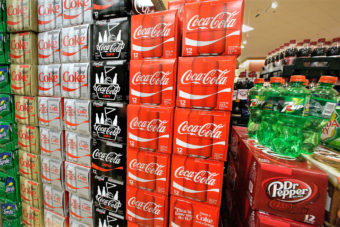
Sodas and energy drinks are stacked and line the shelves of a grocery store. Seth Perlman/AP
Sodas and energy drinks are stacked and line the shelves of a grocery store.
Seth Perlman/AP

The soda industry says it will fight to repeal the tax on sweetened beverages voted in by the Philadelphia City Council this week.

“The tax passed [in Philadelphia] is a regressive tax that unfairly singles out beverages — including low- and no-calorie choices. But most importantly, it is against the law,” reads a statement from the American Beverage Association.

The group says it will take legal action to stop the tax. “Similar tax proposals have been rejected 43 times across the country in the past eight years,” the ABA says. And the industry points to polling data that suggest the majority of Philadelphia residents don’t support it.

But supporters of the tax on sweetened drinks say the victory in Philadelphia could set the stage for similar actions in cities across the country.

“Philadelphia will almost certainly not be the last city to adopt a sugary drinks tax. In fact, the question now is not whether any city will follow suit, but rather how many — and how quickly?” wrote Michael Bloomberg in a statement released Friday.

As we’ve reported, Bloomberg — who took on sodas as mayor of New York City — contributed significantly to a media campaign in Philadelphia aimed at passing the soda-tax measure.

“Obesity and poverty are both intractable national problems. No policy takes more direct aim at both than Philadelphia’s tax on sugary drinks,” Bloomberg wrote in the statement.

Bloomberg says he will continue to support cities and nations pursuing
these anti-obesity strategies, and help them “get the support they need to level the playing field with the soda industry.” As we’ve reported, the American Beverage Association spent more than $4.2 million to fight the tax in Philadelphia.

In November, the California cities of Oakland and San Francisco are expected to take up the issue. And voters in Boulder, Colo., may see a ballot initiative, too. As The Denver Post has reported, a group called Healthy Boulder Kids is trying to rally support for a tax on sugary drinks to fund programs aimed at increasing access to healthy food and physical activity.

A tax on sugar-sweetened beverages in Mexico led to a dip in sales. Public health experts predict the same thing will happen in Philadelphia.

“The evidence is clear that when prices go up, people buy less of things,” Michael Long of George Washington University told us. He and colleagues at the Harvard School of Public Health published a 10-year estimate of the health impacts of a 1-cent-per-ounce tax on sugary drinks in Philadelphia.

“We’d expect over 12,000 cases of obesity prevented by the end of the 10-year period, as well as $65 million in health care cost savings over the 10-year period,” Long told us in an interview.

Copyright 2016 NPR. To see more, visit http://www.npr.org/.

Hydroponics business brings local produce to Kotzebue

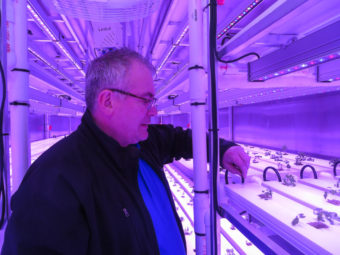
Jeff Hicks of the Kikiktagruk Inupiat Corporation inspects the hoses that provide plants with oxygenated water. (Photo by Laura Kraegel/KNOM)
Jeff Hicks of the Kikiktagruk Inupiat Corp. inspects the hoses that provide plants with oxygenated water. (Photo by Laura Kraegel/KNOM)

In the middle of a gravel lot, surrounded by rusty equipment and old storage containers, one brand-new container is making history. Inside, it’s filled with hydroponically grown, leafy green vegetables — the inaugural crop from Arctic Greens.

The company is the first organization above the Arctic Circle to get certified as Alaska Grown, and soon its produce will be available at Kotzebue’s local grocery store.

Past the control room and through the nursery, Jeff Hicks stands in the growing room of the standard 40-foot connex. While spinning exhaust fans and glowing purple lights regulate the temperature of the container, he takes inventory of its 600 seedlings.

“Mizuna, mustard, and watercress,” said Hicks, the Chief Operating Officer of Kikiktagruk Inupiat Corporation (KIC), which owns Arctic Greens. “We have spinach, kale, red lettuce, green lettuce, and butterhead lettuce. We have basil, cilantro, and several other different kinds of herbs.”

If the pilot phase goes well, Arctic Greens plans to purchase three more hydroponic connexes for the Kotzebue operation. (Photo by Laura Kraegel/KNOM)

Right now, Arctic Greens can grow 45 different plant varieties from hydroponic seeds. Once the operation is fully up and running, the connex will deliver 450 heads of local produce each week — even in the middle of winter.

KIC started the subsidiary last fall after discussions with Vertical Harvest, an Anchorage company that designs and builds hydroponic containers. Hicks said the deal was sealed when they sent him back to Kotzebue with a special souvenir.

“I actually brought four heads of lettuce from one of their hydroponic units, and I talked to the manager over at the AC store. I said, ‘Hey if we brought you this, would you buy it?’”

Rob Boudreau is the manager of Kotzebue’s AC, owned by the Alaska Commercial Company and one of the few grocery options in town.

“I said, ‘Yeah. If you could grow them in town, it’d be a great thing for Kotzebue,’” he said.

Boudreau says the store will have a special section for Arctic Greens produce, which will come from just a few blocks away as opposed to hundreds or thousands of miles.

“It’s a good deal for the citizens of Kotzebue,” he said. “Better produce, no travel time, no sit-and-wait in different locations. It’ll just be fresher by the time it gets to the store.”

Hicks said the corporation is still talking with AC about how to price the vegetables, and he declined to share the cost of the custom-built connex, which was specially outfitted for the Arctic and flown into town on a C-130.

But he said growing the produce locally will save on shipping and therefore save customers money. Not to mention the other big advantage of Arctic produce.

“No pesticides,” he said. “They’re not genetically modified. It’s not organic, but it’s really as close as you can get.”

If the pilot phase goes well this summer, Hicks said KIC plans to purchase three more connexes and expand the operation in Kotzebue. After that, he said the corporation hopes to start hydroponic projects in other communities, including Nome. KIC has already signed a memorandum of understanding with the Alaska Commercial Company, which would sell the locally grown produce at stores statewide.

In Kotzebue, Arctic Greens will harvest its first crop on June 21. The produce will go on sale at AC soon after.

Juneau cooking prodigy sails to White House on a crêpe

Denali Schijvens, serving a recent dinner for 12. Nancy Hemenway, right, says he planned and executed the meal while she served as sous chef. (Photo courtesy of Sander Schijvens)

An amateur chef from Juneau has won a White House-sponsored recipe competition, and he’s just 9 years old. Denali Schijvens will attend a Kids’ State Dinner in July, hosted by First Lady Michelle Obama.

His winning entry is a whole-grain crêpe filled with sour cream, red lettuce, and pan-cooked halibut topped with a tart blueberry sauce. He calls it “wrapped Alaska, Denali-style.”

What? You were expecting grilled cheese? Not from Denali Schijvens.

“My dream job is to be a chef at a successful restaurant,” he says.

His original vision for this recipe called for salmon, but the store had fresh halibut, and Denali went with it.

“I was aiming it to be kind of nice, like homey,” the soon-to-be fourth-grader explained.

“Because it’s supposed to be a school lunch challenge, and at school you’re always missing home. So kind of homey, so you wouldn’t be homesick.”

Now, I know what you’re thinking: Surely he had a parent’s help.

“You know, I tried to help with the recipe,” says his mom, Meilani Schijvens. “I gave lots of input and he wouldn’t listen to anything I had to say.”

She and her husband, Sander, don’t know where this interest in cooking originated, but it’s been with their son since at least age 2.

Denali says ideas just come to him, so he tries them out.

“I have a friend named Nancy, and she helps me,” he says. “Nancy is a bit older than me. She’s a grown up.”

That’s Nancy Hemenway, a retired state worker who likes to cook and bake. For a present, Denali’s aunt gave the boy cooking lessons with her. They started when he was 8, making Napoleons, tiramisu and, later, pork loin and zucchini-wrapped salmon. Hemenway says Denali brings focus, curiosity and style to his work.

“I’ve never seen anything like it,” she says.

Once, at the end of their regular Saturday lesson, Denali found ingredients in her fridge and made what he called “a pie within a pie.” Another time, he came late, saying the birds were singing so much he had to walk slowly to listen.

“I initially thought it was going to be a lot of work, which it was, to give lessons,” Hemenway says. “But it was the most fun thing I’ve ever done in my life.”

After she taught him all she could, she took him to Chef Lionel Uddipa, of Juneau’s upscale Salt restaurant, for a lesson.

Denali and his mom will fly to Washington for the Kid’s State Dinner, where he and winners from other states and territories will dine with at least some members of the First Family. Denali is psyched to go to the White House.

“I definitely want to shake hands with the president. And I don’t even know what’s going to happen there, so it’s really just up to destiny now.”

Destiny, it would seem, is clearing a path to a kitchen for Denali Schijvens.

Hot springs in Western Alaska to become community garden

The mission at Pilgrim Hot Springs. (Photo by Madison Winchester/KNOM)Starting this summer, an abandoned hot springs in the heart of Western Alaska will go from a deteriorating historical site to an operational community garden. At least that’s the vision of Unaatuq, LLC, a consortium of seven regional organizations that owns the Pilgrim Hot Springs property.

Pilgrim Hot Springs isn’t easy to access. You have to drive 53 miles on a gravel road, and then turn down a seven-mile side road that’s sometimes impassable due to flooding or snow. The hot springs once housed a roadhouse and an orphanage, and starting this summer, Pilgrim will be home to a new community garden.

The Alaska Center for Energy and Power works closely with Unaatuq. It helped secure a “Conservation Innovation” grant through the National Resource Conservation Service to help fund the Pilgrim Project. Research Engineer Chris Pike sees a connection between the grant’s energy focus and growing food.

“One of the things that we really want to do is use that geothermal energy that’s at Pilgrim Hot Springs to grow vegetables,” said Pike. “And then food is a way to export energy. We always think of electricity and heat, but food is just as much of a need.”

Pike said Unaatuq will spend the summer building basic infrastructure, like water tanks and housing for workers. They also have to plant a soil-enriching cover crop and test field at the hot springs.

“So that’s going to be dug up in a couple different phases,” he said. “There’s going to be a cover crop that’s going to be planted in a certain area and then there’s going to be some vegetables that are planted. And then we’re coming up with a business plan and a market study.”

The original vision was to use Pilgrim for community supported agriculture. But Robert Bensin said those goals have changed. Bensin is Construction Manager for the Bering Straits Development Company. Instead, he said they’ll be providing food to local groups in Nome and the surrounding communities.

“We’re not targeting AC or Hanson’s, we’re going to be targeting the XYZ center, the hospital, the school district, the regional ANICA stores and the native corporation stores,” Bensin said.

But food isn’t the only focus of this project. Matt Ganley is with the Bering Straits Native Corporation, the managing member of Unaatuq. With the help of ground-penetrating radar, Ganley said the company also hopes to locate a mass grave.

“There were 89 people buried at Pilgrim,” Ganley said.

According to Ganley, the grave holds the bodies of victims of the 1918 influenza, which he said killed about half of the Alaska Native population between Unalakleet and Shishmaref.

Unaatuq is also hoping to preserve the history of Pilgrim Hot Springs. The company is working to secure funding to one day stabilize the historic buildings. For now, they’re planning to build a gate to separate the old hot springs site from the new summer construction.

Unaatuq is looking for volunteers to help with summer projects and plans to start moving out construction equipment later this week.

Evaporated Cane Juice? Puh-leeze. Just Call It Sugar, FDA Says

Is it sugar, or "evaporated cane juice"? The FDA says they're the same thing, folks. Chris Ratcliffe/Bloomberg via Getty Images
Is it sugar, or “evaporated cane juice”? The FDA says they’re the same thing, folks.
Chris Ratcliffe/Bloomberg via Getty Images

The Food and Drug Administration seems intent on bringing sugar out of the shadows.

Not only will food companies have to reveal, right on the package, how much sugar they’ve added to food; they also will have to call it by its real name.

The FDA is taking aim at one of sugar’s cover identities: evaporated cane juice. This ingredient made its appearance about 25 years ago and has been especially popular among companies that have cultivated a healthful image, including Amy’s Kitchen, Kind and Chobani.

Just like sugar, this ingredient is created by crushing sugar cane to extract the juice, then purifying that juice, getting rid of the water and turning it into fine crystals. However, it still contains a bit of molasses, which is completely removed from the cane sugar you find in the store.

Food companies that use this ingredient maintain that it’s different from sugar and that “evaporated cane juice” is its proper name. Others disagree.

“Evaporated cane juice is the food industry’s latest attempt to convince you that crystallizing sugar by this particular method will make you think it is natural and healthy,” wrote Marion Nestle, author of Food Politics, in her blog in 2014.

The FDA didn’t make up its mind on the matter until this week. Back in 2009, the agency released a proposed “guidance” document that advised companies not to use the term “evaporated cane juice.” The FDA proposed instead that companies call it “dried cane syrup.”

Now, after years of listening to critical comments on that proposal, the FDA has changed its mind. Its new and final “Guidance for Industry,” just released, instructs food companies to call this ingredient “sugar.” Companies can add modifying adjectives, perhaps calling it “organic cane sugar,” but the word “sugar” should be included.

Such “guidance” from the FDA is not legally binding but can be powerful nonetheless. Several companies, most prominently Chobani, have been sued by consumers who consider the use of “evaporated cane juice” misleading. Some of the judges presiding over these cases have been waiting for the FDA to weigh in.

Florida Crystals Corp., a producer and defender of the product, said in a statement it is reviewing the FDA’s guidance but is “not yet in a position to fully comment on it.”

Nestle, in an email to The Salt, wrote: “At last. A sensible decision. Sugar is sugar, no matter what it is called. Now the FDA needs to do this with all the other euphemisms.”

Other ingredients that are nearly equivalent to sugar include rice syrup, sorghum syrup, malt and corn sweetener.

Copyright 2016 NPR. To see more, visit http://www.npr.org/.
Site notifications
Update notification options
Subscribe to notifications