Food

5,000-Year-Old Chinese Beer Recipe Revealed

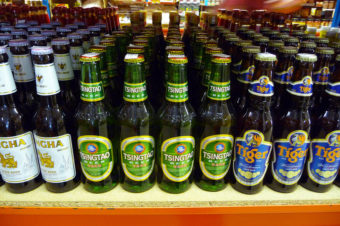
Chinese beer brands on display at a supermarket. An ancient brewery discovered in China's Central Plain shows the Chinese were making barley beer with fairly advanced techniques some 5,000 years ago. Chris/Flickr
Chinese beer brands on display at a supermarket. An ancient brewery discovered in China’s Central Plain shows the Chinese were making barley beer with fairly advanced techniques some 5,000 years ago. (Creative Commons photo by Chris

A 5,000-year-old brewery has been unearthed in China.

Archaeologists uncovered ancient “beer-making tool kits” in underground rooms built between 3400 and 2900 B.C. Discovered at a dig site in the Central Plain of China, the kits included funnels, pots and specialized jugs. The shapes of the objects suggest they could be used for brewing, filtration and storage.

It’s the oldest beer-making facility ever discovered in China — and the evidence indicates that these early brewers were already using specialized tools and advanced beer-making techniques.

For instance, the scientists found a pottery stove, which the ancient brewers would have heated to break down carbohydrates to sugar. And the brewery’s underground location was important for both storing beer and controlling temperature — too much heat can destroy the enzymes responsible for that carb-to-sugar conversion, explains Patrick McGovern, a biomolecular archaeologist at the University of Pennsylvania Museum in Philadelphia, who was not involved in the current research.

“All indications are that ancient peoples, [including those at this Chinese dig site], applied the same principles and techniques as brewers do today,” says McGovern, who is known as the “Indiana Jones” of ancient fermented beverages.

The research group inspected the pots and jugs and found ancient grains that had lingered inside. The grains showed evidence that they had been damaged by malting and mashing, two key steps in beer-making. Residue from inside the uncovered pots and funnels was tested with ion chromatography to find out what the ancient beer was made of. The 5,000-year-old beer “recipe” was published on Monday in the journal Proceedings of the National Academy of Sciences.

The recipe included a mix of fermented grains: broomcorn millet, barley and Job’s tears, a chewy Asian grain also known as Chinese pearl barley. The recipe also called for tubers, the starchy and sugary parts of plants, which were added to sweeten and flavor the beer, the researchers write.

So what did this ancient beer taste like? The researcher leading the study, Jiajing Wang, an archaeologist from Stanford University, guessed “it would taste a bit sour and a bit sweet.”

Finding evidence of barley in the beer was surprising to the scientists. Scientists had never seen barley in China this early before. Although barley is now common throughout China, no one completely understands when and why it first made its way there.

Maybe it was about beer. As Wang tells The Salt in an email: “Barley was one of the main ingredient[s] for beer brewing in other parts of the world, such as ancient Egypt. It is possible that when barley was introduced from Western Eurasia into the Central Plain of China, it came with the knowledge that the crop was a good ingredient for beer brewing. So it was not only the introduction of a new crop, but also the movement of knowledge associated with the crop.”

McGovern says the new findings show that the Chinese became brewmasters early on: They were making barley beer in the same period as “the earliest chemically attested barley beer from Iran” and the “earliest beer-mashing facilities in Egypt,” as well as “the earliest wine-making facility in Armenia,” he writes in an email.

You don’t need a scientist to tell you that beer can be an important part of fostering social relationships. (Think happy hour.) Wang and her co-authors propose that beer production and consumption may have helped shaped the hierarchical societies in the Central Plain of China thousands of years ago. As McGovern notes, it would have been “an exotic ingredient” that elites could have used to impress their friends and stay in power — “much like when we serve up that $70,000 bottle of 1982 Pétrus from Bordeaux” today.

Copyright 2016 NPR. To see more, visit http://www.npr.org/.

An ‘Added Sugar’ Label Is On The Way For Packaged Food

Coming soon: The redesigned nutrition facts label will highlight added sugars in food. The label also will display calories per serving, and serving size, more prominently. U.S. Food and Drug Administration
Coming soon: The redesigned nutrition facts label will highlight added sugars in food. The label also will display calories per serving, and serving size, more prominently.
U.S. Food and Drug Administration

The new, redesigned “Nutrition Facts” label is coming. The Food and Drug Administration has announced that the new label will be required on most packaged food by July 2018.

The big change: The label will have a separate line showing how much sugar has been added to each food. The amount of “added sugar” will be expressed in grams and as a percentage of a “Daily Value” — an amount of sugar consumption that nutritionists think would be reasonable as part of a daily 2,000-calorie diet. The label also will display calories per serving, and serving size, more prominently.

As one example, a 20-ounce bottle of Coke could show 65 grams of added sugar, representing 130 percent of a recommended daily intake.

The change reflects increasing concern about the amount of sugar that Americans consume, and the amount of sugar that’s added to common foods.

Several advocacy groups cheered the FDA’s move. Michael Jacobson, founder of the Center for Science in the Public Interest, released a statement saying that the new labels will allow consumers to make more informed choices and “should also spur food manufacturers to add less sugar to their products.”

The FDA proposed including “added sugar” on the label last summer, and many food companies, such as General Mills, opposed it. The companies argued that from a health point of view, it doesn’t matter whether sugar is added or is already present naturally in ingredients such as fruit. The existing labels already show the amount of total sugars in packaged food, and food manufacturers argued that this already tells consumers what they need to know.

Now that the FDA has made its decision, however, the Grocery Manufacturers Association does not seem interested in continuing the fight. The GMA released a statement welcoming the FDA’s revised food label and calling for a “robust consumer education effort” to help explain it.

The Sugar Association, on the other hand, was outraged, calling the FDA’s decision a “dangerous precedent that is not grounded in science.”

Copyright 2016 NPR. To see more, visit http://www.npr.org/.

Skagway restaurant owners rally after spoiled food arrives on barge

Broadway in Skagway
Skagway’s main drag, Broadway, Sept. 5, 2007. (Creative Commons photo by Pat Groves)

A weekly supply of produce and meat arrived in Skagway on Tuesday morning spoiled, or mostly unfit for consumption. The food was set to be distributed among the community’s bustling eateries. But a few restaurant owners in town say the foodie community rallied, and managed to feed the crowds of visitors during the town’s busiest tourist week so far this season.

When Lacey Stoutt, the owner of Glacial Smoothies and Espresso in Skagway, heard Tuesday her food shipment was ruined, her first thought was panic.

But, she says, the reality of what happened sank in and everyone – restaurant owners, employees and patrons – pulled together — Skagway style. Stoutt says eateries were trading food to make sure each had what they needed to keep serving wraps, burgers and salads to the masses.

The large shipment of produce and meat started its voyage in Seattle. It was there that someone made the mistake of putting the chilled goods in a freezer compartment, and the frozen goods in the chilled compartment.

The result was a weekly, Tuesday morning supply of restaurant-bound foods that were no good. Fruits and veggies were frozen and meat was thawed or partially thawed.

“The perfect storm has hit Skagway, Alaska. It couldn’t have happened on a worse week.”

That’s Randy Fiero, the regional supervisor for Food Services of America, the company that supplies Skagway’s restaurants with weekly shipments. He says a human error was made when the shipment was loaded and it wasn’t discovered until it reached Skagway.

“So when it arrived in Skagway and realizing it had shipped in the wrong zones,” he explains. “The chill product that was shipped frozen was a total loss, and the frozen product that was shipped chilled, some of it would have been salvageable. But food safety is our No. 1 concern, so we chose to not let any customer have any of that product.”

Fiero was raised in Skagway, so he says he understands the potential urgency when something happens to the food shipment. He says there were three factors that made this incident the “perfect storm.”

First off, this week is Skagway’s busiest cruise-ship week of the season so far. Also, Monday is a Canadian holiday so the number of visitors from the Yukon will jump, and, finally, the summer schedule of two restaurant- food shipments per week from FSA hasn’t started yet.

“All the restaurants probably went over and cleaned out the grocery store, so you can’t get a head of lettuce,” Fiero says. “So what we have done to take care of our customers – we know the concern, Skagway has three-and-a-half-months of tourism and they’ve gotta get through – we replaced 100 percent of the groceries.”

Fiero says within 20 hours, FSA had a load of food on an Alaska Airlines 737 bound for Juneau, and a tractor trailer loaded with meat and produce on the road to replace all the food that had to be thrown out.

“Hopefully, we’re going to be able to replace all the restaurants’ goods by this Friday.”

Jan Wrentmore owns the Red Onion Saloon. She says they were able to utilize food they had stockpiled.

“We were lucky because we had enough product in our freezer to get us through,” she says. “I think if we in another month into the season, it would have been horrible.”

The grocery stores still got their shipments, but restaurants that didn’t, had to get some supplies from the local markets.

Shannon Ames works at the Fairway Market. She says they did help supply local cafés, but their shelves aren’t bare. She says it wasn’t disastrous at all.

Fiero wouldn’t say exactly how many pounds of food were lost, but he says, it was a” large amount of northbound freight.” A tough loss, he says.

Back at Glacial Smoothies, Stoutt says they’ve already received part of their replacement shipment. And, she says, without the cooperation of fellow business owners, what could have been a nightmare was just a minor inconvenience.

PSP warning issued for Douglas Island beach

Outer Point
Grey Pendleton scans the shoreline along the Outer Point Trail during the Juneau Audubon Society’s 2013 Christmas Bird Count. (File photo by Casey Kelly/KTOO)

Juneau and Douglas residents are being warned to refrain from harvesting butter clams because of possible paralytic shellfish poisoning.

According to a community advisory issued by the Southeast Alaska Tribal Toxins or SEATT network and the University of Alaska Fairbanks School of Fisheries and Ocean Sciences, butter clam samples collected earlier this week from Outer Point on Douglas Island showed levels of biotoxin that were above the Food and Drug Administration’s regulatory limit.

Those results are from the new Sitka Tribe of Alaska Environmental Research Lab or STAERL that was created to test subsistence shellfish.

Elizabeth Tobin is post-doctoral researcher at UAF who is collaborating with STAERL to train tribes to monitor and also share information about any Juneau area observations through SEATT.

“At the moment, we don’t have a rigid monitoring program for the shellfish themselves,” Tobin said. “We’re doing weekly monitoring throughout Juneau for the algae that cause the toxins. So, if there’s any blooms of this toxic algae, we’re constantly monitoring for that. In terms of looking at the toxins within the shellfish, we’ll likely go out during the next low tide cycle when we can, access those shellfish and we’ll do another round of testing.”

Tobin said cockles and pinkneck or surf clams collected from Outer Point did not show elevated levels of biotoxin. But she still warns harvesters to be careful.

“Whether they are positive for the biotoxin or negative for the biotoxin at one beach, that isn’t exactly clear what the meaning is for even an adjacent beach next to it,” Tobin said. “So, really it is go at your own risk in terms of harvesting anywhere.”

You can find more information about shellfish monitoring throughout Southeast by going to Southeast Alaska Tribal Ocean Research website.

Why The FDA Is Re-Evaluating The Nutty Definition Of ‘Healthy’ Food

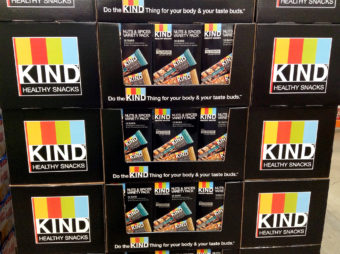
The maker of Kind bars — which contain almonds and other nuts — pushed back against an FDA complaint about its use of the phrase "healthy and tasty." The FDA is now reviewing its definition of "healthy" as used on food labels. Mike Mozart/Flickr
The maker of Kind bars — which contain almonds and other nuts — pushed back against an FDA complaint about its use of the phrase “healthy and tasty.” The FDA is now reviewing its definition of “healthy” as used on food labels.
Mike Mozart/Flickr

The Food and Drug Administration is re-evaluating its definition of what counts as a “healthy” food.

The change comes as healthful fats — including fats found in nuts — are increasingly recognized as part of a good diet.

Currently, if a food company wants to put a “healthy” claim on its label, regulations stipulate that it must be very low in fat. The specific rules are complex, but, for instance, a snack food can contain no more than 3 grams of fat for a regular-size serving.

This means that many snacks that include nuts don’t qualify as healthy.

The FDA says that in light of evolving nutrition research, it is now planning to solicit public and expert comment to come up with a new definition that will help consumers make informed choices.

The move comes after the maker of Kind brand bars — which contain almonds and other nuts — pushed back against an FDA complaint about its use of the phrase “healthy and tasty.” After making its complaint, the FDA now says that after reviewing the situation, it is comfortable with the company using the phrase.

“We are pleased that the FDA is looking into” revising its definition, says Daniel Lubetzky, the CEO of Kind bars. The company helped launch a citizens’ petition requesting that the FDA take action.

The FDA definition of healthy is a holdover from the era when dietary fat was vilified.

“Low in fat used to mean healthy,” says Thomas Sherman, an associate professor at Georgetown University who teaches medical students about nutrition. “And high in fat had a pejorative context to it.”

As we’ve reported, millions of Americans clung to the advice that low fat was best. During the 1990s, an era of fat-free mania, Americans were making a habit of munching on sugar-rich, refined-grain products such as Snackwells.

But Sherman says there’s been an evolution in understanding — and awareness. We now know that consuming too much sugar can have negative health consequences. And there’s a growing awareness that foods “higher” in fat can be healthful.

As we’ve reported, many new studies affirm the healthfulness of eating more plant-based fats, such as avocados and nuts.

“Nuts have healthy fats … that we know are good for cardiovascular health and mental health and are good sources of protein,” says Sherman. He points out that nuts are calorie-dense, so people should limit portion sizes. But he says that overall, “nuts are a wonderful component of our diet.”

And the dietary guidelines, which were updated earlier this year, recommend eating foods rich in healthful fats.

Copyright 2016 NPR. To see more, visit http://www.npr.org/.

Chef teaches Alaska kids to love healthful foods

Raise your hand if you like kale. That was Robert Dell’Amore’s request to the group of about 30 kids at the Boys and Girls Club of Fairbanks.

Despite kale’s recent spate of success among the adult crowd, it has enjoyed precious little love from the younger age groups, and yet, when Dell’Amore posed the decision to the kids at the Boys and Girls Club he received a surge of hands from his audience.

By the time Dell’Amore posed the question April 29, the group of kids was as malleable to his will as the mushed-up ball of kale in his hand.

“They enter this room with one perception,” Dell’Amore said. “We want them to leave with another.”

Robert Dell’Amore is a chef and healthful foods advocate who spends much of his time traveling the country spreading the gospel of good food. He spent time in late April touring schools in the eastern Interior.

He was brought to Alaska through a grant-funded residency with the Alaska Gateway School District, which brought him to Tok, Northway and Mentasta.

At each school, Dell’Amore spent several hours wowing kids with his knife skills, teaching them about the health benefits of various vegetables and showing them how to incorporate those veggies into delicious and nutritious meals.

In addition to his presentations at each school, Dell’Amore offered a version of his demonstration for the school district’s food services staff. He wrapped up his tour of the Tok area with a dinner and workshop for parents Thursday evening before driving up the Richardson Highway to Fairbanks to visit the Boys and Girls Club.

Dell’Amore’s exhibition would look familiar to anyone who’s been to a cooking presentation — a long table set up in front of his audience, covered in brightly-colored fruits and vegetables. He stands there, towering above the fidgeting masses of little bodies and attempts the difficult task of taming the attentions of three dozen elementary- and middle-school students.

Dell’Amore had to battle through the fog of kids’ Friday afternoon attention spans to complete the difficult task of interesting them in the nutritional value of lycopene, but, within several minutes of starting, he appeared to have won over the majority of the group. When, for instance, he asserted sun-dried tomatoes have 30-times the nutritional value of fresh tomatoes, he received an enthusiastic “wow!”

With his recent trip to Alaska, Dell’Amore has taken his message to 20 states. He said he was initially inspired to begin this project more than a decade ago while working as a chiropractor. He said he was disappointed by the frequency of childhood obesity and nutritional deficiencies.

“We want to share the knowledge we have — over 10 years experience working with 100,000 kids — how to make this attractive,” Dell’Amore said. “We want them to go home with the recipes … and fall in love with the recipes so they know how to make them.”(backslash)

The recipes that Dell’Amore shares with kids lack many of the traditional — but not necessarily healthful — flavor additives. His recipes include no butter, no salt, no sugar, and they’re all vegetarian. He hopes he can convince kids that healthful food can also be delicious food.

All of the senses are important to Dell’Amore’s presentation. He and sous chef Elaine Medin connect kids to his recipes through the vibrant colors of the vegetables and by inviting them to the table to help. The smell of his meals, too, are of great importance, Dell’Amore said. By connecting the lessons in his presentation to the smell of his food, he hopes to create a permanent memory for kids. So, when they smell food cooking in the future, they might recall the lessons of healthful eating taught to them as kids.

“That’s really how we connect with the kids,” he said. “That link between memory and smell and taste is powerful … so we try to provide them with those memories now.”

Dell’Amore said his goal is that, by the end of the hour-long presentation, each of the kids goes home with not only a fun memory and a tasty sample but also desire to cook and eat their own healthful meals.

Site notifications
Update notification options
Subscribe to notifications