
Mental Health

A grieving mother wanted her son’s possessions returned for his memorial. Mt. Edgecumbe High School couldn’t find them.

Pace Carson Chikigak passed away on April 22, 2024. Since then, his mother Jolene has been trying to recover his belongings from Mt. Edgecumbe High School. (Photo courtesy of Chikigak family)

Pace Chikigak would have been a senior at Mt. Edgecumbe High School this year, the third generation in his family to attend the state-run boarding school in Sitka. His mom Jolene, who graduated in 2003, says he was a straight-A student with a huge heart.

“If you needed a friend, he was there. He never turned anybody away,” she said. “He was an amazing kid. I was so proud to be his mom.”

When Pace died in April at home, Chikigak says she called the school to let them know, and asked if a staff member could pack up her son’s belongings from his dorm room and mail them to her. The person she spoke with on the phone said they would.

“Every day I was wondering if I would come home from work to see a box of his stuff, but it never came. And so, you know, I would email and be like, ‘Hey, I still haven’t received his items. You know, were they mailed?’ And they were like, ‘Oh, we do have a tracking number. It was mailed.’”

But when a package finally showed up, it was a memorial plaque and letters from students from Pace’s service at the school, not the items from his room.

“I always made him come back [home] because I wanted him here for his birthday. So he only brought home the clothes he was clothed [in], sweaters and other items he wasn’t going to be bringing back,”Chikigak said. “I know left his towels, bedding, probably extra clothes that he didn’t bring. I think maybe shoes, toiletries and whatnot he did leave behind that we did not receive.”

It was important for Chikigak to get these items for Pace’s traditional funeral rites in her home village of Alakanuk.

“In our culture, we were supposed to burn his items 40 days after his death and hold a feast, she said. “But the items I never received, we never got to burn, and it’s just our culture.”

After 40 days, they held the feast without all of Pace’s belongings. But she continued to reach out to staff at Mt. Edgecumbe, holding out hope that the items were still on their way. Via email, staff said they would look for them, but then she says they didn’t follow up about whether the items were lost or found.

40 days after Pace passed away, his family held a feast and traditional burning of his belongings in Alakanuk. (Photo courtesy of Chikigak family)

“You never know if the item, the thing, might not be valuable, but they might be sentimental and have huge meaning for the student,” Chikigak said. “That’s what really upsets me. I just feel like I’m being gaslighted.”

Eventually one of Chikigak’s co-workers connected her with KCAW, and we reached out to see if we could learn what had happened to Pace’s missing belongings. In a statement, Superintendent Suzzuk Huntington wrote, “Mount Edgecumbe High School remains deeply saddened by the loss of one of our students. Our administrators, staff, students, and community have come together to pay our respects and show our support for the family -and continue to keep them in our thoughts. Out of respect, courtesy, and privacy to the student’s family, we will not be giving further comment.”

KCAW also reached out to the Chair of the Alaska Board of Education and Early Development, which oversees Mt. Edgecumbe High School.  We were referred to a public affairs staff member, but have received no statement.

A week after KCAW reached out to the high school, Chikigak received an email from staff. They’d finally found something – a notebook. She was informed that it was the only remaining item of Pace’s at the school.

Chikigak’s grief is compounded by the fact that Pace died by suicide. Getting his belongings back won’t necessarily ease her pain, but it could offer her some closure. She says she wishes the school would take accountability for losing the dorm room items. She says she’s connected with two other parents who have had trouble recovering their children’s property from the school.  She hopes the school will review their practices around recovering and returning student’s items to families, so no parent has to go through this again.

Mostly, she just wants folks to remember Pace, who loved hiking and biking, his two dogs, going for a random car ride, and so much more.

“I would like to keep his memory alive. I want him to be remembered for the lovable, amazing person he was, [rather] than how he had passed away,” she said. “I just want him to be remembered for the amazing, straight-A kid he was.”

If you are a loved one is struggling with thoughts of suicide, call the National Suicide and Crisis Lifeline at 988 or Alaska Careline at 877-266-HELP. 

This story has been updated to correct that Pace’s funeral rights took place in Alakanuk. 

Juneau rolls out a new mobile crisis team

Bartlett Regional Hospital on Tuesday, June 25, 2024. (Clarise Larson/KTOO).

Juneau has a new mobile crisis team dedicated to assisting people with mental health emergencies. 

Bartlett Regional Hospital Chief Nursing Officer Kim McDowell said the city looked at similar models across the country when it developed this program.

“It’s kind of the first window of opportunity to provide de-escalation for somebody in crisis in the field that doesn’t involve EMS or the police department,” she said.

Juneau police dispatch can choose to call the crisis team when an emergency call comes through, based on a list of what situations are appropriate. The team may also be deployed based on calls to the national 988 Suicide and Crisis Lifeline.

McDowell said the team responds in cases when the individual is not in imminent danger of hurting themselves or someone else.

The team is made up of a Capital City Fire Rescue paramedic and a Bartlett Regional Hospital clinician. Crisis care consists of immediate response to a situation or crisis, further assessment of the person undergoing the emergency, stabilization, and follow-up involving other services. That could be case management or checking in with services the person regularly uses.
McDowell said this program allows people to receive care where they are, instead of having to come to the emergency room. 

“There’s nothing like providing them resources where they live, and that gives you the opportunity to wrap in family, if there’s family there,” she said. “And to give them all the resources that they might need to be able to go day by day and without having to come to the hospital unless it’s needed.”

The rollout of this new mobile crisis team began last month. Now, the team is officially responding to calls from 9 a.m. to 6 p.m. daily. McDowell says the city hopes to expand those hours in the future. 


Tongass Voices: NAMI Juneau’s Aaron Surma on how to combat the winter blues

NAMI Juneau’s Aaron Surma. September 5, 2024. (Photo by Yvonne Krumrey/KTOO)

This is Tongass Voices, a series from KTOO sharing weekly perspectives from the homelands of the Áak’w Kwáan and beyond.

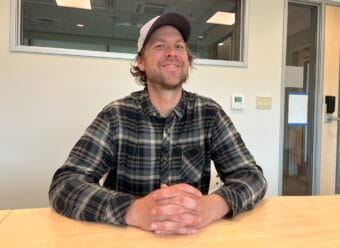
Aaron Surma leads the Juneau chapter of the National Alliance on Mental Illness, or NAMI. He said winters in Juneau can be tough, and it takes creativity — and small steps — to keep your mental health strong when it’s dark and cold.

This transcript has been lightly edited for clarity.

Aaron Surma: I just see it as people turning into molasses. It’s just — you slow down, you hunker down. And like, there’s pieces of the hunkering down that can be charming or pleasant. But I think it also speaks to people losing their routine, losing what was working for them, the other six, seven, eight months of the year, where the weather was less difficult, where there was more sunshine. 

My name is Aaron Surma. I’m the Executive Director of NAMI Juneau.

I’ve been addressing my own mental health, like, actively doing it for 25 years, and like, just like feeling the effects of my crummy mental health for multiple years before that. And I have probably done most of the things that exist. I’ve been in inpatient treatment. I’ve seen therapists. I’ve taken medications. I’ve gone to support groups. I’ve done a lot of the stuff that you can and I’ve just done like things in my life to also improve my mental health. 

And it’s been a ton of trial and error, and I think it’s some trial and error that came out of me not having any help or guidance along the way. So I think my main motivation is I wasted a lot of time trying to figure out what worked for me, and I hope that I can be helpful to other people so they don’t spend as much time, kind of like spinning their wheels, so to speak, trying to figure out how they can feel better than they feel. 

I would think about what works for you in summer, and how can you replicate some of that stuff? Like, for me, being around other people is really important, and it’s easy in summer to be spontaneous and like, “Hey, it’s a nice day out. Let’s all go have a bonfire at this  place at 7pm today.” And that seems achievable. There’s a lot more spontaneous social interaction that I have with my friends in the summer that doesn’t happen in the winter. And so having things that are scheduled helps me to still get my social needs met.  

So I turned into a much bigger jock than I’ve ever been in my life, once I moved to Juneau. I started playing a ton of sports. I played basketball sometimes before moving here, but I really crave that teamwork, connection and social engagement, and that’s one great way to do it — especially in the winter. 

What is something that you know will feel good if you do it that seems achievable? And there’s like a classic example of just making your bed in the morning, so you give yourself one gold star for the day, or check off one thing on your to-do list. 

Just what does feel realistic? Is it just going outside and looking around for 10 minutes and coming back in, just so you don’t feel stuck in your house? Maybe that’s the thing. And I think that that stuff does snowball.

But when I feel stuck — just walking outside, it’s like, “Oh yeah, there’s a whole world out here. I am not just inside the four walls of whatever room I’m in.” And so I think just going outside for one minute is meaningful for me. 

A lot of people are feeling stuck in the winter, and those invites to do something — and just explicitly saying, like, “hey, let’s just get out of the house and let’s do this thing,” even if it’s small. Even if it’s let’s have a cup of coffee together. Let’s have a cigarette together. Whatever it is, making those choices feels good. Those are small, achievable things. It’s nice to feel like you’re in it with other people. 

Many people who choose to live here choose to live here because of the summer stuff, and you aren’t doing that stuff anymore, it feels like there’s less options. When it’s raining sideways and 35 degrees, the world doesn’t feel as accessible. And so I think those lifestyle things are meaningful and real as well. 

Alaska youth need expanded access to mental health support, advocates tell lawmakers

Children’s coats hang in a hallway at Hillcrest Childcare Center in Anchorage on April 18, 2024. (Photo by Claire Stremple/Alaska Beacon)

Expanded access to mental health care was a primary concern for the state legislators and nonprofits serving children and families who responded to a survey for the Alaska Children’s Caucus.

The bipartisan group of lawmakers whose focus is policy that improves early childhood outcomes met on Friday afternoon. The caucus formed last winter.

Sen. Löki Tobin, D-Anchorage, who led the meeting in Anchorage, said that throughout the last legislative session, the testimony from Alaskans about their need for support of mental and behavioral health services was overwhelming.

“We know that Alaska is No. 1 in all of the bad things, and one of those bad things is suicide, death by suicide, and we know that Alaska Native youth are disproportionately impacted by that,” she said. “And so I think we have a real opportunity to figure out some ways that we can intervene, that we can disrupt that and hopefully we can give services and supports to families.”

The recommendation came from a survey that Alaska Children’s Trust helped conduct, which asked respondents for policy and funding recommendations.

Sen. Elvi-Gray Jackson, who last session sponsored a bill that would have made mental health education a core part of curriculum in Alaska public schools, said she would renew her effort in the upcoming legislative session. The Senate approved SB 24, but it got stuck in the House Finance Committee and did not make it to the House floor for a vote before the end of the session.

“I look forward to bringing that bill forward again during the next legislative session that begins on Jan. 21,” she said.

While increased access to mental health care outside of school hours was the top policy recommendation, it was closely followed by a recommendation to expand pre-kindergarten opportunities to include child care and Head Start providers. Other recommendations included providing paid family leave and insurance benefits for all state employees and creating an online resource that lists the benefits available to parents of young children.

Respondents suggested lawmakers fund those efforts and others by increasing funding for the state’s child care grant program and child advocacy centers, establishing an early educator wage stipend, and increasing funding for the Parents as Teachers program, among other ideas.

The Alaska Children’s Caucus, which was revived this year, has bipartisan co-chairs from both chambers, including Tobin, Sen. Cathy Giessel, R-Anchorage, Rep. Mike Cronk, R-Tok, and Rep. Maxine Dibert, D-Fairbanks. The next caucus meeting has not yet been scheduled.

Anchorage partners police officers with social workers to assist city’s homeless

Lt. Brian Fuchs with the Anchorage Police Department oversees the city’s Homeless Outreach Prevention and Engagement team. (Wesley Early/Alaska Public Media)

Anchorage city leaders are hopeful that a new team in the Anchorage Police Department will help keep homeless residents safe while connecting them with the resources they need.

Mayor Suzanne LaFrance touted the new pilot program, which is called the Homeless Outreach Prevention and Engagement team, at a press conference Wednesday.

“People experiencing homelessness are far more likely to become victims of crime,” LaFrance said. “The HOPE team consists of a sworn crisis intervention-trained officer and a social work navigator who work together to connect people experiencing homelessness to services and housing while improving community safety for all.”

Typically, the Anchorage Health Department has conducted homeless services and outreach. However, Police Chief Sean Case said his department operates around the clock, outside of usual health department hours. That puts the HOPE team in a good position to help support the work in addressing homelessness, he said.

“If we can deal with victimization and crime that’s happening within this population, while also connecting to resources, because we are the agency that frequently comes into contact with this population, we’re now just adding to the overall plan the Municipality has,” Case said.

The HOPE team has been running since the start of July and is headed by Lt. Brian Fuchs, who said a major goal is to have the team engaging with residents living in the city’s homeless camps.

“We want positive police contacts,” Fuchs said. “We want people to understand that the police are there to assist, the police are there to help. And in some cases, that’s connecting people to resources. In other cases, it may be taking a victim in and getting a better understanding of what they’re a victim of.”

The team is similar in concept to the Mobile Intervention Team, a program where officers are partnered with mental health clinicians to respond to mental health crises, Fuchs said. While that team responds to a variety of calls, Fuchs said the HOPE team is specifically aimed at helping residents in homeless camps.

“It’s a new concept as far as a mission, but the construct of the co-response model has been something that we’ve been doing for quite some time,” Fuchs said.

Farina Brown, special assistant to the mayor on homelessness and health, said having an officer with the social work navigator helps keep both providers and the people they’re servicing safe and helps build relationships.

“Sometimes it takes multiple contacts with someone before they even tell you their name,” Brown said. “And the HOPE team allows for that bandwidth to go in and create relationships and start to link people to services when they’re ready.”

If the pilot program goes well, city leaders said a second HOPE team could be out working on the streets next year.

Coast Guardsman’s death prompts mental health conversations at Base Kodiak

A U.S. Coast Guard rescue helicopter lands on a runway before it parks near an Air Station Kodiak hangar. (Brian Venua/KMXT)

The death of a Kodiak-based U.S. Coast Guardsman this summer has sparked a new wave of conversations about mental health on the base.

U.S. Coast Guard Air Station Kodiak held a ceremony on July 26 to honor the life and service of a rescue swimmer who died on June 25.

The Coast Guard said the investigation into the service member’s death is ongoing, but no foul play is suspected. It did however renew a push for addressing mental health in the military.

Coast Guard officials declined to say whether the death was a suicide. But a social-media group for Coast Guardsmen described it as one, urging comrades to “find something that keeps you going.”

Cameron Snell, a public affairs specialist for the Coast Guard, said Air Station Kodiak officials have been open about encouraging members to use mental health services.

“The air station had a stand-down to inform everybody working there about what had happened, and they immediately offered grief (and) loss counseling for those service members, also for the service members in the barracks,” he said.

A stand-down means operations were paused for air station staff to meet.

Suicide rates are higher within the military, and in response, mental health programs for service members have been on the rise in recent years. Now that includes pushes from the Coast Guard’s Air Station and Base Kodiak, as well as ships that are homeported on the island too.

Snell said officials have been encouraging people to use CISM, or the Coast Guard’s Critical Incident Stress Management program.

The goal is to serve members who have faced potentially traumatic experiences, like when a peer dies or after stressful search and rescue missions. He said it’s not a perfect system, but those kinds of resources are important.

“Suicide is a troubling statistic in the military,” Snell said. “And we can never completely eliminate that statistic, but we can offer as many resources as we can to prevent that at every step of the way.”

The base also provides other resources to burn stress, like borrowing boats or other outdoor equipment from its Morale, Wellness, and Recreation Department. Snell said the Work/Life Office also provides members services like financial guidance or help finding child care.

Members of the Coast Guard have mandatory mental health screenings as part of their annual health assessments and are encouraged to report their peers if they have any concerns. Snell said commanding officers can also refer members they’re concerned about to counseling.

“(This) incident was a tragedy – one being one too many here – and we hope to be able to make the resources that we have available known,” Snell said.

Mental health emergencies on or off base should be reported by calling 911.

Providence Kodiak Island Medical Center and the Kodiak Area Native Association both offer mental health counseling in town, but waitlists can take months. Providence psychiatrists can be seen much sooner though, and emergency services are always available.

The national suicide and crisis lifeline is available by calling or texting 988. The Veterans Crisis Line is available by dialing 1 during a 988 call or by sending a text message to 838255. Online chats are also available at 988lifeline.org.

The Coast Guard also has plans to promote mental health services in September for National Suicide Prevention Month.

Alaska Public Media’s Chris Klint contributed information to this story.

Site notifications
Update notification options
Subscribe to notifications