Sexual Abuse & Domestic Violence

Franciscan Leaders Charged With Protecting Friar They Knew Had Molested Children

Giles A. Schinelli, Robert J. D'Aversa and Anthony M. Criscitelli were charged with conspiracy and child endangerment for allowing a friar who was a known sexual predator to continue working with children. Office Of The Pennsylvania Attorney General
Giles A. Schinelli, Robert J. D’Aversa and Anthony M. Criscitelli were charged with conspiracy and child endangerment for allowing a friar who was a known sexual predator to continue working with children.
Office Of The Pennsylvania Attorney General

Prosecutors in Pennsylvania have charged three former leaders of the Franciscan religious order with conspiracy and child endangerment for allowing a friar who was a known sexual predator to work in a high school. The prosecutors say the friar had molested more than 80 children.

Giles Schinelli, 73, Robert D’Aversa, 69, and Anthony M. Criscitelli, 61, were successively in charge of the Franciscan Friars, Third Order Regulars, Province of the Immaculate Conception in western Pennsylvania from 1986 to 2010.

The three friars allegedly hid allegations of abuse against a member of their order, Brother Stephen Baker, who eventually pleaded guilty to molesting three boys in 2007 and served part of a 10-year sentence before killing himself at a monastery in 2013.

After his suicide, more than 100 abuse claims were filed by former students of Bishop McCort High School in Johnstown, Pa., where Baker worked from 1992 to 2000, the Associated Press reports. Millions of dollars in damages have been paid out.

“These men knew there was a child predator in their organization. Yet they continued to put him in positions where he had countless opportunities to prey upon children,” Kane said when she addressed the media Tuesday to announce the charges. “Their silence resulted in immeasurable pain and suffering for so many victims. These men turned a blind eye to the innocent children they were trusted to protect.”

A Pennsylvania ground jury grand jury issued the following findings regarding the three church leaders’ roles in the abuse:

  • Schinelli, the minister provincial from 1986 to 1994, sent Baker for a psychological evaluation and was told Baker was not to have one-on-one contact with children, but nonetheless later assigned him to Bishop McCort, where he had regular contact with children.
  • D’Aversa, the minister provincial from 1994 to 2002, allegedly failed to notify school officials and law enforcement of the reason that Baker was removed from the school in 2000. That removal followed what D’Aversa believed was a new, credible allegation of child sexual abuse, according to the grand jury. D’Aversa later appointed Baker as vocations director of the T.O.R.
  • Criscitelli, the minister provincial from 2002 to 2010, further allowed Baker access to children by allowing him to work at a shopping mall. He also knew Baker required “safety plans” advising no contact with minors, yet Criscitelli signed such plans while residing in Minnesota. Meanwhile, Baker lived unsupervised in Pennsylvania. He also lived at one time with another accused child predator.

The three former Franciscan officials live out of state and are expected to be arraigned in the coming days.

The charges come from the same statewide grand jury that released a 147-page report two weeks ago alleging the Diocese of Altoona-Johnstown engaged in a widespread cover-up of sexual abuse by more than 50 priests and other church leaders. The Pittsburgh Post-Gazette says that the report resulted in no criminal charges of sexual assault “due to what prosecutors said were the time constraints of the statute of limitations,” but that there was enough evidence to charge the three priests in connection with the cover-up.

Copyright 2016 NPR. To see more, visit http://www.npr.org/.

Victims’ rights advocates push for changes to criminal justice bill

Blind Lady Justice with scales
(Creative Commons photo by Marc Treble)

Victim’s rights advocates and some legislators have raised concerns about a bill that would overhaul Alaska’s criminal justice system.

The measure would reduce arrests and prison time for nonviolent offenses. It also would help prisoners re-enter society.

The bill has a lot of bipartisan support. It draws on recommendations from the 13-member Alaska Criminal Justice Commission. It spent more than a year considering ways to reduce recidivism and take pressure off of the need to build more prisons.

North Pole Republican Sen. John Coghill sponsored the bill. He said the legislation would reduce the state’s prison population by 21 percent over the next 10 years, saving the state more than $400 million.

Coghill also has worked to include input from victim’s rights advocates, who are worried the the reforms benefit offenders at victims’ expense.

Emily Haynes testified in Juneau that a man who sexually assaulted her could be released soon due to the bill. That’s because he accepted a plea bargain that reduced the severity of his conviction.

“I oppose this bill. It’s going to have a direct impact on my life,” Haynes said. “Five years ago I was a victim of a violent sexual assault and the offender will be eligible for release immediately under your proposal. For the past five years, I’ve been fighting this case.”

And Butch Moore of Anchorage asked that the bill require those convicted of murder to have minimum sentences at least as long as those convicted of rapes. His daughter was killed in 2014.

The bill prevents those convicted of sex crimes and domestic violence offenses from being released early.

Sen. Bill Stoltze
Sen. Bill Stoltze, R-Chugiak, chairs the Senate State Affairs Committee. (Photo by Kyle Schmitz/360 North)

Chugiak Republican Sen. Bill Stoltze supported more changes to the bill at a recent hearing.

While the commission included a police officer and heard testimony from victims’ rights advocates and corrections officers, Stoltze said law enforcement and victims didn’t have enough input on the legislation. He chairs the Senate State Affairs Committee.

“Well, I think the rights of victims have been improved,” Stoltze said. “I don’t think they were really that well considered through the commission process. I think they were invited but not that welcomed there. And the Office of Victim Rights, which has very in-depth expertise, really didn’t get meaningful input until the bill got to this committee.”

The Senate State Affairs Committee amended the bill to require the Department of Corrections notify victims of offenders who are eligible for release under the bill. The committee made a series of amendments and voted to advance the bill.

Supporters of the legislation have credited the Pew Charitable Trusts with providing much of the research and national expertise that supported the commission’s work.

But Stoltze said the nonprofit foundation has had too much influence over the bill.

“I haven’t fallen under the talismanic influences of the Pew Charitable Trusts,” he said. “I am interested in the fiscal savings. But I think the public has not been well enough informed of the details about that crime bill.”

But supporters of reform are concerned that some of the changes are weakening the bill.

Grace Singh, assistant to the president at the Central Council Tlingit and Haida Indian Tribes of Alaska, criticizes a provision that requires that those who’ve had their convictions suspended still have their charges listed on the CourtView website.

“This significantly discourages self-sufficiency, and it puts them in a more desperate position, which will not discourage crime or recidivism,” Singh said.

The Senate Judiciary Committee will hear the bill next.

UAF makes effort to combat failures in sexual assault cases

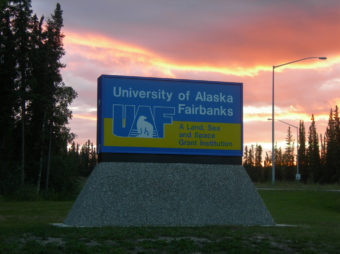
UAF is one of a few Land, Sea and Space Grant universities in the U.S. (Photo by Jimmy Emerson)
UAF is one of a few Land, Sea and Space Grant universities in the U.S. (Creative Commons photo by Jimmy Emerson)

It’s been more than four months since the University of Alaska Fairbanks announced it failed to follow its own procedures in disciplining students accused of sexual assault. At the time, an independent review of the UA system was ordered.

UAF said it now has transparent procedures and software in place to prevent similar lapses, but the review is delayed.

Last week UAF student and sexual assault survivor Amy Cross testified before University Board of Regents. She applauded UAF’s efforts to be more responsive to assault victims and raise awareness about campus sexual assaults. But she said more could be done, even in times of financial hardships.

“As you consider the budget, I ask that you remember that Title IX is not just a trending topic,” Cross said. “Sexual harassment, assault and stalking are serious problems that will not be resolved unless we can change our rape-supportive culture.”

UAF Vice Chancellor Mike Sfraga said the school has new tracking software installed that flags any reports of Title IX violations. And all procedures have been reviewed and toughened.

“The bottom line is we have this triangle of checks and balances,” said Sfraga. “It ensures that practices and policies and procedures are being followed the way the Board of Regents mandates us to, the way the law mandates us to. It’s just completely tracked.”

Sfraga says based on the review, administrators decided to reverse an earlier decision to hire a temporary outside professional for the critical Dean of Students position and have hired internally.

Laura McCollough, former Director of Residence Life has been tapped for the post.

Meanwhile, an independent review of UAF’s lapses has seen delays. Roberta Graham, a representative for the University Statewide System said she hopes an executive summary will now be available at the end of March.

Aleknagik man charged with attempted murder after stabbing wife 27 times

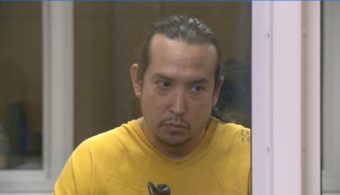
Chythlook, 52, allegedly stabbed his wife 27 times with two knives. She was hospitalized but reported to be in stable condition. (Photo courtesy of Dillingham Public Safety Department)

An Aleknagik man was taken into custody Tuesday night on attempted murder and assault charges.

According to state troopers, Robin K. Chythlook, 52, stabbed his wife multiple times and pointed a hunting rifle at the unarmed Village Public Safety Officer Tuesday evening.

A sobered Chythlook was in court Wednesday morning for arraignment on two felony charges, the most serious of which carries a maximum penalty of 99 years behind bars.

State troopers said he stabbed his wife 27 times with two different knives Tuesday evening at their home in the ATSAT subdivision on Aleknagik’s South Shore. His wife said the attack began following an argument, adding that both had been drinking. She was hospitalized at Kanakanak but was reported to be in stable condition Wednesday morning.

“It is a very serious case, and it’s charged attempted murder one. When he was assaulting her with the knife he was saying he was going to kill her,” said assistant district attorney Pamela Dale.

VPSO Jason Creasey was the first responder to the Chythlook home Tuesday evening. In the trooper report, Creasey described seeing “a lot of blood in the snow outside.” Creasey could see Robin Chythlook through the porch door’s window.

“I lost sight of him for a little while and when he walked back into view I could see him holding a scoped hunting rifle,” Creasey wrote. He said Chythlook warned him that he had four seconds to leave. “I thought he was going to kill me,” Creasey said.

For that, the state charged Chythlook with third-degree “fear” assault against an officer.

Trooper Ethan Norwood and VPSO Creasey set up a hasty perimeter and arrested Chythlook “after a brief struggle on the porch” just before 7 p.m.

The victim, A.C., was interviewed at the hospital and described a brutal attack. She said they had been drinking and got into an argument, then Robin punched her a few times. He held her on the ground and began stabbing her with a large, white-handled knife, then with a smaller knife after she managed to knock away the first. She ran to a neighbor’s home but didn’t remember how she got away.

Magistrate Judge Tina Reigh ordered Robin Chythlook held on $100,000 bail at his Wednesday arraignment.

In November, he was arrested by Dillingham Police after he threatened people with a knife at his own birthday party, reportedly intoxicated at that time too. That felony case was dismissed by prosecutors in December.

Teasing A Girl At A Pakistani Park Could Get You Whacked With A Stick

These guards patrol a park in the Pakistani city of Gujranwala to make sure there's no sexual harassment of women. If they have to, they'll deliver a sharp tap to an offender with that stick. From left: Mohammed Sayed, Mohammed Faisal and Amir Hussein. Philip Reeves/NPR
These guards patrol a park in the Pakistani city of Gujranwala to make sure there’s no sexual harassment of women. If they have to, they’ll deliver a sharp tap to an offender with that stick. From left: Mohammed Sayed, Mohammed Faisal and Amir Hussein.
Philip Reeves/NPR

Mohammed Sayed is not one of those people who particularly relish the prospect of hitting young men on the butt with a big stick.

But he is certainly prepared to do so to defend the girls and women who frequent the neatly groomed, palm-dotted municipal park in the Pakistani city of Gujranwala where he works as a guard.

The park was designed as a place for relaxation and family recreation (it even includes some ramshackle carnival rides). But it had turned into a prowling ground for young men.

So city authorities have asked a team of guards — including Sayed, 25 — to patrol the park and stamp out “Eve-teasing” — a South Asian euphemism for the sexual harassment of women by men.

“Eve-teasing happens a lot here, especially in the evening,” says Kashif Nawaz, another patrol member. He says many men come out “to shout, to pass comments … to tease and hoot.” They sometimes toss wads of paper, inscribed with their mobile phone numbers, at passing females.

I visited the park on “Family Day” the one day each week — a Tuesday — when single males are banned from entry altogether. This was not going down well with a knot of teenage boys and young men standing outside the iron gates, gazing indignantly through the bars.

It’s far from certain that these new park policies will succeed.

“Eve-teasing” pales when compared with the cases of abuse in Pakistan that occasionally make international headlines, from gang rape to the trafficking of girls for sex, and more. The World Economic Forum’s Global Gender Gap 2015 report ranked Pakistan second from last when it came to gender equality.

It also doesn’t help that most young men in Pakistan lack any sex education, says Lahore-based psychologist Ayesha Hidayat. “That inadequate sex education is one of the primary reasons why there is a lot of depression, suicidal attempts, aggression, violence, the child abuse and all those things in our society,” Hidayat says.

When I talked with a group of six young men in Lahore, they all agreed: They lacked mentors with whom they could discuss sensitive personal issues.

“There is no one except your friends,” says 21-year-old Mudabir Ali. He says he would never broach the topic of sex with his dad. “The concept of religion and the teachings of religion [we’ve] been getting for such a long time stops you going to your father to discuss such things.”

Older brothers in the family are particularly isolated. They tend not to confide in their young brothers about intimate matters, because they believe this would undermine their authority in the male pecking order. As for younger brothers who worry about these momentous issues, they might be shy about approaching the older siblings.

Chatting with the mullah is out of question as well, adds Gohan Khan, 21. “The clerics here, they do discuss these things. But they are not quite OK with questions that are not in line with religion,” he says. “They feel offended.” The same goes for teachers, the young men say. They believe a teacher would be offended by a question about sex. In biology class, they say, the teacher will tiptoe around the human sexual organs, saying as little as possible.

The clash between global consumer culture — which uses sex as a selling point — and Islamic tradition profoundly impacts these youngsters, who have all moved to the big city from generally more conservative parts of Pakistan to study.

“That’s the main problem,” says Zayid Ali, 22. “On the one side, you have this whole advertisement industry, you have Western movies, advertisements, fashion shows, when you come to metropolitan cities. And when you go back where you belong, there is no such thing.”

Ali is from a village in Pakistan’s Punjab province. In Lahore, it is not that difficult to date a girl, he says — though he does not. But in his hometown, that is close to impossible. There, your family chooses your wife — and it’s often a cousin. Any boy or girl who bucks tradition by forging a secret relationship is at serious, possibly mortal, risk.

Hard yards lie ahead for Ali. He has decided he won’t allow his parents to arrange his marriage. He hasn’t told them yet. A big battle looms, he predicts.

And then there’s porn.

Pakistan’s government blocks hundreds of thousands of websites, but many of the country’s talented young — who form roughly half the 190 million population — remain ahead of the cyberspace game and are big consumers.

I learn that here, as everywhere else, pornography adds to confusion, anxiety and — particularly in this conservative Islamic society — guilt. Shaista Khan, 21, sums it up: “It’s just very difficult here, when you see the pictures and [yet] you don’t forge a relationship with a woman.”

Young Pakistanis negotiating a path through this rapidly changing maze face many obstacles. The scale of their struggle is confirmed by psychologist Hidayat, who works with young people.

Because they can’t easily discuss what they’re going through with anyone, she says, young Pakistanis often feel guilty: “They feel that something very bad is happening inside them. They start judging and labeling themselves.”

She believes Pakistan is changing — sex education and counseling is coming into some schools, she says. But it is a very long road.

Copyright 2016 NPR. To see more, visit http://www.npr.org/.
Read original article – February 23, 2016 12:26 PM ET

Underreporting Makes Sexual Violence At Work Difficult To Address

Elizabeth Cadle of the Equal Employment Opportunity Commission answers questions on Feb. 16 about the $1 million settlement of a lawsuit against Vail Run Resort. John Leyba/Denver Post via Getty Images
Elizabeth Cadle of the Equal Employment Opportunity Commission answers questions on Feb. 16 about the $1 million settlement of a lawsuit against Vail Run Resort.
John Leyba/Denver Post via Getty Images

In a relatively rare victory for abused workers, Vail Run Resort in Colorado recently agreed to pay more than $1 million to settle a sexual harassment case. The case was brought by the Equal Employment Opportunity Commission on behalf of members of the hotel’s housekeeping employees.

The company failed to address attempted rapes of its housekeeping staff. As part of the settlement, the company will have a monitor for five years and will be required to do extensive sexual-harassment training of its managers.

There are no recent, reliable statistics about sexual violence at work. The most recent data from the Bureau of Justice Statistics estimated there were more than 43,000 workplace rapes and sexual assaults a year. But anti-rape advocates say that vastly underreports the crimes, because many victims are afraid to or discouraged from coming forward.

Take, for example, Marie Billiel. She had just started college and a job as an overnight waitress when propositions from one of the cooks became more than that. “One night it escalated to him grabbing my wrist and pulling me out back into the larger prep area towards the walk-in cooler,” Billiel says.

The kitchen was empty, but she managed to get away and report the incident to her manager. The reaction was not what she expected.

” ‘I’ve got 20 applications under the register,’ ” she says she was told. “You know, they made it very clear that we were expendable labor.”

It was during the Great Recession, and Billiel says she worried about finding another job in her western Massachusetts town.

“Even though I was upset about it, it seemed like it was less of a big deal to everybody else, so then I didn’t know if it was my overreaction,” she says.

This is a familiar story for Linda Seabrook, general counsel at Futures Without Violence, an advocacy group.

“Sexual assaults in general are vastly underreported, and even more so at work,” she says.

Seabrook herself didn’t report an incident that happened years ago, when she managed a restaurant part-time. A fellow manager pinned her in a corner late one night, pressuring her for sex. She escaped, but never reported it, a fact that seems harder to explain now because she’d been a law student and knew her rights.

“I should have, but I didn’t report it to upper management because I didn’t want to lose my job,” she says.

She was young, uncertain about workplace norms, and, like so many other women facing similar situations, she says, she needed the income.

“People who have fewer economic options are more dependent upon that job,” Seabrook says.

One plaintiff in the EEOC’s Vail Run Resort case is Maria Luisa Baltazar Benitez, whose supervisor repeatedly tried to rape her.

“I was doing my work, and I saw him and he already had his pants down, and then he grabbed me and he pulled down my pants, because we wore ones that were made of elastic,” she says.

Benitez says as he tried to tear her underwear, she grabbed her phone. Her attacker fled as she threatened to call the police. His supervisors, she says, ignored her complaints.

Vail Run Resort did not return calls seeking comment. In a separate criminal proceeding, a jury convicted the attacker, Omar Quezada, of extortion and unlawful sexual contact.

Mary O’Neill, one of the EEOC’s prosecuting attorneys, says employment law does provide protections for undocumented workers, though many are not aware of it. She says outreach efforts are leading to more sexual abuse filings.

“There are many of these cases. There’s probably more than we could litigate,” O’Neill says.

She says it’s not just women who face workplace sexual violence. About 17 percent of cases filed with her agency involve men, who often face other hurdles.

“There’s a different dynamic there, which is, people will say, ‘Well, why didn’t you just beat him up?’ ” O’Neill says.

Perpetrators, she says, almost always target multiple victims.

“One of the reasons these are not so hard to win is because you have many victims who come and tell the same story and they don’t even know each other,” O’Neill says.

That was the case at the Colorado resort, O’Neill says, and the employer who turned a blind eye was held responsible.

Copyright 2016 NPR. To see more, visit http://www.npr.org/.
Read original article –  February 23, 2016 6:04 PM ET


Site notifications
Update notification options
Subscribe to notifications