Sexual Abuse & Domestic Violence

South Korea And Japan Reach Landmark Deal Over Comfort Women

Relatives of Korean women forced into Japanese-run brothels during World War II demonstrate outside the foreign ministry in Seoul, South Korea, on Monday. The two countries announced a deal that included an apology from the Japanese prime minister and a fund to support the 46 surviving Korean women. Ahn Young-joon/AP
Relatives of Korean women forced into Japanese-run brothels during World War II demonstrate outside the foreign ministry in Seoul, South Korea, on Monday. The two countries announced a deal that included an apology from the Japanese prime minister and a fund to support the 46 surviving Korean women.
Ahn Young-joon/AP

The issue of so-called comfort women — tens of thousands of Korean women and girls forced by the Japanese into sexual slavery before and during World War II — has long strained relations between South Korea and Japan. On Monday, the two countries announced a deal that South Korean Foreign Minister Yun Byung-se characterized as “final and irreversible,” according to the AP. It could mark the beginning of improved relations between the two countries, both strong allies of the United States.

The deal included an apology from Japanese Prime Minister Shinzo Abe and a billion yen (roughly $8.3 million) fund to support the 46 surviving Korean women.

The fact that monetary compensation is coming from government coffers is potentially significant. In 1995, Japan established the Asian Women’s Fund, funded through private donations, which gave monetary assistance to former sex slaves. The fact that Tokyo had resisted direct compensation to the victims prompted former comfort women and activists to criticize Japan for what they saw as an avoidance of official responsibility.

Some of the surviving women spoke out against the agreement. “The agreement does not reflect the views of former comfort women,” said Lee Yong-soo, 88, during a news conference, according to The New York Times. “I will ignore it completely.”

Improved ties between South Korea and Japan has been a U.S. priority. More than 75,000 U.S. troops are stationed in the two countries, and the Obama administration is looking to its two Asian allies to counter a rising China and a nuclear-armed North Korea.

Copyright 2015 NPR. To see more, visit http://www.npr.org/.
Read Original Article – December 28, 2015 12:35 PM ET

Pedro Bay man pleads guilty to longtime sexual abuse of a minor

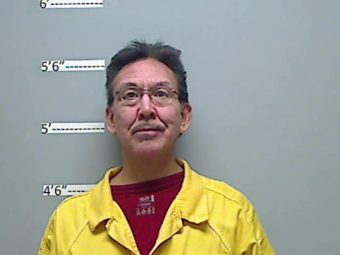
In 2011, a young Pedro Bay woman came forward with reports of rape and abuse over roughly a decade, beginning when she six years old. (Photo courtesy of Lake and Peninsula Borough)

State prosecutors reached a deal with Michael Lee Jacko, 50, who recently pleaded guilty in a case involving the sexual abuse of a minor in Pedro Bay. Jacko was the third of three men the young female victim accused of a disturbing pattern of abuse and assault lasting years.

The change of plea hearing was held Friday, Oct. 30, after weeks of delays in a case that was filed in 2012. All parties joined the hearing by phone from different locations, with Judge Pat Douglass presiding.

“As to count three, sexual abuse of a minor in the second degree, how do you plea?” asked Judge Douglass.

“Guilty,” said Jacko, leaving his lawyer to speak on his behalf for the rest of the hearing.

Second degree sexual abuse of a minor is a class B felony. The state dismissed four other charges, including two unclassified felonies carry up to 99 year sentences each. Based on the pre-2006 guidelines, when the pleaded to crime occurred, the state said Jacko will serve no more than 10 years in jail.

“Our expectation is a sentence somewhere more than a couple of years, something in the range of four years or thereabouts,” said Clint Campion, district attorney for Third Judicial District.

The allegations surfaced publicly in 2011, after the victim reported being raped and molested on a number of occasions over many years by three men.

In 2012, after a yearlong investigation by state troopers, an Anchorage grand jury handed down indictments against Jacko, Benjamin Foss and Kiska Shugak.

Foss, 53 at the time, reached a deal and pleaded guilty to a reduced charge of attempted third degree sexual assault. He was not sentenced to any time in jail, but was put on probation for three years. State troopers say he violated probation in 2014 when he was found with marijuana, alcohol, and drug paraphernalia in his luggage in Port Alsworth. Shugak, 23 at the time, pleaded guilty to attempted second degree sexual assault and sentenced to two years in jail. Following his release, he was arrested for failing to register as a sex offender.

The allegations against Jacko were the most severe. While most of the investigation is still sealed, a protective order request the victim filed in 2011 described occurrences of sexual abuse for roughly a decade, beginning when she was six. The problem, said Campion, is narrowing down specifically when those incidents occurred, and then proving them to a jury.

“Often in child sex abuse cases, understandably especially when there’s a delayed report, a child is not going to be able to recall specific dates,” he said. “In this case, we’ve got a report that came in several years after the alleged crimes, and we didn’t feel like we were going to be able to prove each of the individual allegations beyond a reasonable doubt because of those concerns about specificities.”

This case passed through the hands of some five different assistant district attorneys before it was settled. Javier Diaz in Anchorage was the final prosecutor assigned the case, but approval for the plea deal went through Campion, and even through his boss John Skidmore, the director of the law department’s criminal division.

Campion noted that while plea deals can often look like the offender is getting off easy, there are upsides the state considers, including sparing the victim the potential trauma of a trial.

“The plea agreement is an attempt to hold the offender accountable, which in some measure it does,” he said. “It also avoids the difficulty of a trial. There is certainly value from the perspective that she (the victim) doesn’t have to testify and be subject to cross-examination. And there’s some recognition that she was right — that she was telling the truth, and guilty pleas do reflect that.

To what extent Michael Jacko believes the accusations against him are true will likely be discussed at sentencing. Judge Douglass will listen to arguments from the prosecution and defense, and from the offender and the victim if they choose, before she sentences Jacko at hearing scheduled for Feb. 22.

Bethel cop on the run after attempted sexual assault accusation

A former Bethel Police officer has been charged with attempted sexual assault, according to press release from the Attorney General’s office Thursday.

The Office of Special Prosecutions is charging former Police Officer Aaron Fedolfi, 23, with one count of third degree attempted sexual assault by a police officer and one count of third degree official misconduct.

Fedolfi is currently at-large and a warrant has been issued for his arrest.

Fedolfi attempted to sexually assault a person while the individual was in his custody, according to the press release.

In early September, Fedolfi stopped a woman walking down Ridgecrest Drive, according to charging documents. He took her to an area near the Bethel dog pound and attempted to force her to perform oral sex on him.

The woman “told Fedolfi to stop, and asked if he had ‘done this before’ at which point Fedolfi took his hands off her head,” according to charging documents.

The woman was able to run away and eventually reported the crime to the Alaska State Troopers. Fedolfi was one of two officers on duty that night.

After the incident was reported, Fedolfi was placed on administrative leave, according to a BPD press release Thursday evening. While on leave, Fedolfi notified the city of his resignation.

“Since that time the City has had no contact with Mr. Fedolfi other than to process his final paycheck,” according to the release.

A subsequent investigation revealed footage from Fili’s Pizza, a local pizzeria in town. The footage shows that in the early morning of Sept. 12, a BPD vehicle pulled over and stopped near a pedestrian. The pedestrian got in the vehicle and then the car headed in the general direction of the dog pound.

In an initial interview with investigators, Fedolfi said the victim was lying. But when pressed in a second interview, his story changed.

“Fedolfi claimed he had forgotten to tell troopers that he had picked up an intoxicated male,” according to the documents. However, when the interviewer told Fedolfi he had video footage, his story changed again. The video clearly showed the woman getting into his police vehicle.

Fedolfi claimed the woman had been sexual provocative toward him. Fedolfi said he’d lied to investigators about being in contact with her. He denied any sexual assault or attempted sexual assault, saying he sped away from the area so people wouldn’t see her in his car.

He says he later forcibly removed the woman from his vehicle, after she refused to get out. Fedolfi couldn’t explain to the investigator why he hadn’t followed BPD protocol–he didn’t record his interaction with the woman on his personal body camera or over the radio with police dispatch.

“Fedolfi is presumed innocent of these charges unless and until proven guilty beyond a reasonable doubt,” according to the press release.

Police say anyone with information about Fedolfi’s whereabouts should contact the Alaska Bureau of Investigation at (907) 269-5611.


Defense secretary talks to Fairbanks servicemen on drawdown, suicide

U.S. Defense Secretary Ash Carter at Fort Wainwright
U.S. Secretary of Defense Ash Carter speaks with soldiers and airmen during a visit to Fort Wainwright, Alaska Oct. 30, 2015 as part of his Asia-Pacific theater trip. (Creative Commons photo by Senior Master Sgt. Adrian Cadiz)

The U.S. Secretary of Defense Ash Carter said Alaska is geographically important to meet growing threats in the Pacific theater.

The secretary stopped in Fairbanks on Friday on his way to Korea for security meetings. In Fairbanks, he met with personnel from Eielson Air Force Base and Fort Wainwright. Carter said funding cuts would likely reduce the level of armed forces stationed in Alaska.

In his brief address and meeting with select service members, Carter thanked them for their service, told them their work was important to the country and emphasized the strategic importance Alaska plays in global peacekeeping.

He took questions from the audience. One service member wanted to know if Alaska was strategically critical, why Army units were being cut. Carter partly blamed funding gridlock in Washington but also acknowledged priorities were shifting away from counterinsurgency wars, called COIN.

“Those of you in the Army know that the Army is reducing its size. A lot of that reduction has to do with the end of the COIN wars. The Army has decided it’s better, strategically, to use its funding elsewhere,” Carter said.

What Carter didn’t seem as prepared to address were questions from service members about sexual assault and suicide. He said sexual assault was fundamentally against the military’s code of honor and would not be tolerated. While acknowledging the rising number of suicides in the armed forces was disturbing, Carter broadened the context.

“I would be proud if we figured out suicide in a way that was not only helpful to our own members who are having that problem, but to society as a whole,” he said.

Carter said he admired the military’s ability to take on problems once they were identified.

The secretary was on to meetings in South Korea where he would take up China’s growing military presence in the South China Sea, among other topics.

After Sexual Assault, Woman Says University Lawyers Accessed Her Counseling Records

"I don't blame the University of Oregon for a rape," Laura Hanson said. "It's not their fault. I blame them for how they responded to it." (Photo by Leah Nash/ProPublica)
“I don’t blame the University of Oregon for a rape,” Laura Hanson said. “It’s not their fault. I blame them for how they responded to it.” (Photo by Leah Nash/ProPublica)

When University of Oregon senior Laura Hanson was sexually assaulted by a fellow student a couple of days after New Year’s 2013, she said she felt violated and later shunned by her friends and sorority sisters.

The university’s drawn-out investigation of the incident—which substantiated her allegation — only added to her trauma.

University students have less privacy for their campus health records than they would have if they sought care off campus. Schools say they are trying to seek the right balance between privacy and safety.

Hanson’s ordeal wasn’t over. Last year, as she pressed forward with a claim against the university, Hanson learned that the school’s attorneys had obtained her confidential counseling records — her most intimate thoughts about what happened — without her permission.

“They were faster to mount their opposition to me than they were to support me,” she said in an interview. “That’s the part that I still can’t grasp.”

Hanson said she was nearing graduation from the Honors College of the University of Oregon when she was raped on the night of Jan. 3, 2013. At first, she said, she didn’t know what to do and didn’t report what happened. Within two weeks, she went to the University Health Center, where she was tested for sexually transmitted diseases and pregnancy, and a nurse discussed counseling with her.

Over the next four months, she told others, including professors and sorority sisters, about what happened. She officially reported the assault to the Office of the Dean of Students in May 2013, prompting the university to begin contacting other students to ask about the matter.

Months passed with no outcome — until the university informed her in January 2014 that it had concluded that the student who she accused of the assault was responsible for sexual misconduct. It placed him on probation, instructed him to have no contact with her, and required him to complete a “Sexual Misconduct Journal,” a five-part process that “encourages education and reflection.”

Hanson’s lawyer, Jennifer Middleton, requested her medical records in March 2014 and received what “we thought was everything.”

“Then we were talking more to the university lawyers and they said, ‘We have some information that you don’t have,'” she said, alluding to the counseling records.

The university settled Hanson’s claim for $30,000.

Doug Park, the university’s deputy general counsel, said that he could not discuss Hanson’s case. He said the university may review a student’s counseling records to defend itself against an allegation of wrongdoing or if a student alleges a violation of Title IX, the federal regulation that outlines how universities should respond to accusations of sexual assault.

“I am unaware of any records that were ever reviewed by any lawyer [for the University] prior to that record being sent to an outside lawyer,” Park said in an interview. “I’m unaware of that ever happening, not just in this case but in any case.”

The University of Oregon has since issued a new, interim policy that restricts its lawyers’ ability to review students’ counseling records. Specifically, the university said it will use a subpoena “whenever possible” to access records in the event of a legal action against it. Otherwise, the university said it will notify students of its intent to review the records and give them an opportunity to object.

Hanson said the experience left her feeling that “nothing I do is private anymore.”

“I don’t blame the University of Oregon for a rape,” she said. “It’s not their fault. I blame them for how they responded to it. I found out months later that every single meeting I had with a therapist, she took detailed notes on, and the University of Oregon had read these notes before I had even seen them.”

ProPublica is a Pulitzer Prize-winning investigative newsroom. Sign up for their newsletter.
Read original article – Published  Oct. 23, 2015, 5 a.m.
After Sexual Assault, Woman Says University Lawyers Accessed Her Counseling Records

UAF comes clean about disciplinary failures in sex abuse, rape cases

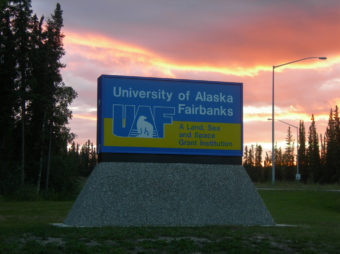
UAF is one of a few Land, Sea and Space Grant universities in the U.S. (Photo by Jimmy Emerson)
(Creative Commons photo by Jimmy Emerson)

The University of Alaska Fairbanks violated its own policy regarding sexual misconduct cases between 2011 and 2014. University students responsible for rape and other sex crimes were not expelled or suspended during that time.

It’s unclear how far back the improper punishment goes, but UAF said it is committed to turning that culture around.

The University of Alaska Fairbanks has found five instances of sexual misconduct when proper student disciplinary actions did not take place. Three of those cases involved rape.

Mae Marsh is Title IX coordinator at UAF. Her office handles sexual misconduct complaints. She said not properly punishing sexual assault offenders in the past sent the wrong message to students.

“Our silence was acceptance in some ways, but now we’re going back and we’re correcting that and that’s why we’re going public with it because we’re breaking the silence. You’re not alone anymore. This is it. We’ve got a new standard on how things are going to be on our campus,” Marsh said.

Marsh joined UAF in 2012. UAF hired two investigators to look into sexual assault complaints in 2014. Prior to that, complaints were investigated by Residence Life staff, since most complaints took place in the dormitories. Formal sanctioning was the responsibility of the dean of students.

“It’s not just that one person failed to do something. It was an entire system,” Marsh said.

UAF took other measures against the students found responsible of sexual misconduct between 2011 and 2014, like not allowing them in dorms or on campus. All five cases also went through the criminal process with Fairbanks police and the district attorney.

For the victims, Marsh said UAF provided counseling, medical assistance and academic help.

In 2011, the U.S. Department of Education put all colleges and universities on alert that sex discrimination, including sexual violence and sexual harassment, is prohibited by Title IX laws. The University of Alaska system is in the middle of an audit by Department of Education for possible Title IX violations.

It’s taken a few years, but Marsh said UAF has set up a structure to handle and track sexual assault complaints.

“We have updated our policies, we’ve appointed coordinators, we’ve trained our professionals. We are in the process of installing a centralized tracking system. We had a huge awareness campaign that came out. We’ve trained all our employees. We’re implementing the climate surveys,” Marsh said.

Marsh hopes these things have helped students feel more comfortable reporting sexual misconduct.

In 2012, UAF had four reports of sexual misconduct. Last school year, there were 44. Those numbers are still low compared to national averages which show one in five females experience sexual assault while in college.

Of those 44 reports last school year, four involved rape. One case has been investigated and the perpetrator is awaiting school sanctioning. The other three cases involve one alleged perpetrator and are still being investigated. The two men in these cases have been arrested.

Marsh says UAF is in the process of rectifying the old cases. She says UAF will be retroactively sanctioning the students found responsible for sexual misconduct with suspension or expulsions. They won’t be able to re-enroll at UAF.

At 7 p.m. Tuesday, UAF is showing a documentary on college sexual assault, “The Hunting Ground.” At 6 p.m. Wednesday the university is holding a town hall on how to move forward.
Site notifications
Update notification options
Subscribe to notifications