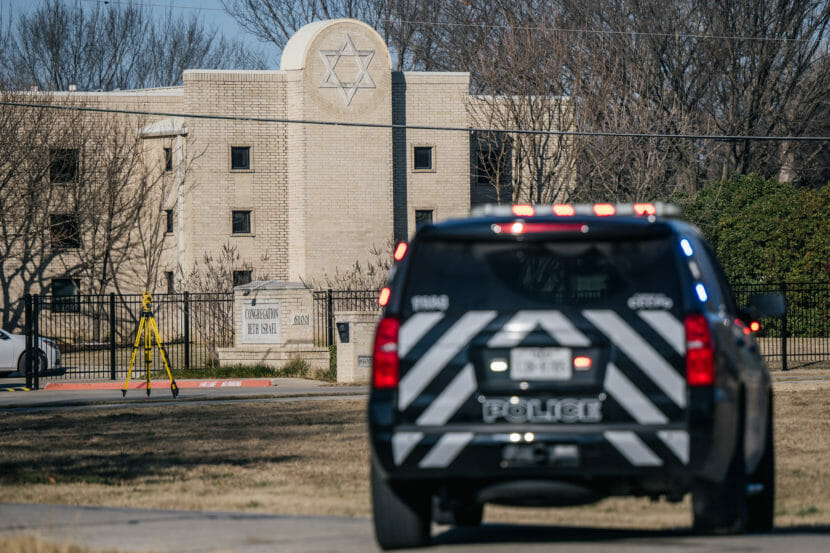
A police vehicle sits near the Congregation Beth Israel synagogue in Colleyville, Texas, on Jan. 16, 2022. Four people were held hostage at the synagogue for more than 10 hours by a gunman before being freed, one of a spate of antisemitic acts that took place last year. (Brandon Bell/Getty Images)
The percentage of Americans who believe in a number of antisemitic tropes has spiked in the past three years, according to the results of an Anti-Defamation League survey released Thursday.
ADL leaders say years of antisemitic rhetoric from former President Donald Trump, along with emboldened violent extremism and lax social media policies are to blame.
The survey, which asked respondents to rate the truthfulness of 14 different traditional negative stereotypes about Jews, found that about one in five American adults say they agree with at least six such sentiments. That’s compared to about one in nine in 2019, the last time this survey was conducted.
The 2022 survey, conducted last fall among 4,000 respondents, found roughly 70% agree with the statement “Jews stick together more than other Americans” and more than half agree with “Jews in business go out of their way to hire other Jews.” One in three respondents agreed that “Jews do not share my values” and about 26% agreed with “Jews have too much power in the business world.”
“What these findings represent, what they tell us, and what creates such urgency is the fact that large, huge numbers of Americans hold dangerous, false ideas about the Jewish people,” ADL CEO Jonathan Greenblatt said in a news conference. “While it is very encouraging that the vast majority of our country doesn’t hold these ideas, 50 plus million people is worrisome and it means we’ve got work to do.”
The organization has measured agreement with these anti-Jewish tropes since 1964. Findings from that initial survey represented the peak of antisemitic beliefs, showing nearly a third of American adults then agreed with six or more of the statements. The numbers in 2022 are the highest since 1992. The decades in between show relatively lower levels of belief in antisemitic tropes. The ADL expressed alarm over the sudden jump from roughly one in nine Americans’ belief in several antisemitic tropes in 2019 to one in five in 2022.
Separate data collection by the ADL has found the volume of documented reports of antisemitic harassment, vandalism and violence rising consistently since about 2015, in contrast to the more recent spike in anti-Jewish attitudes.
Matt Williams, vice president of the ADL’s Center for Antisemitism Research, said that researchers have found that people are being more honest about their biases compared to decades ago.
“So one of the things we could be seeing is people agreeing with these [tropes] more. Another thing that we could be saying is people willing to admit that they agree with these [tropes] more. Both of which are cause for different kinds of concern,” Williams said.
Copyright 2023 NPR. To see more, visit https://www.npr.org.
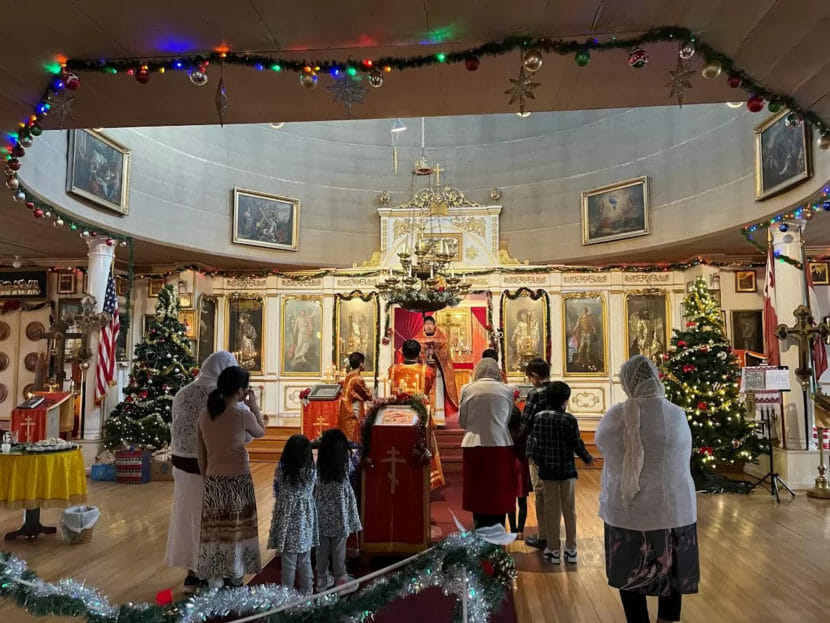
The annual Nativity service at St. Michael’s Cathedral in Sitka on Jan.7, 2023. (Meredith Redick/KCAW)
In much of the world, the Christmas season continued into the new year, with Eastern Orthodox Christians overseas and in the United States celebrating on Jan. 7. In Sitka, St. Michael’s Cathedral hosted its annual Nativity service on Saturday, featuring a divine liturgy and choral music — with lyrics in Lingít, Aleut and Yup’ik as well as Latin.
KCAW’s Meredith Redick brings us this audio postcard, featuring the voices of Father Ishmael Andrew and choral director KathyHope Erickson.
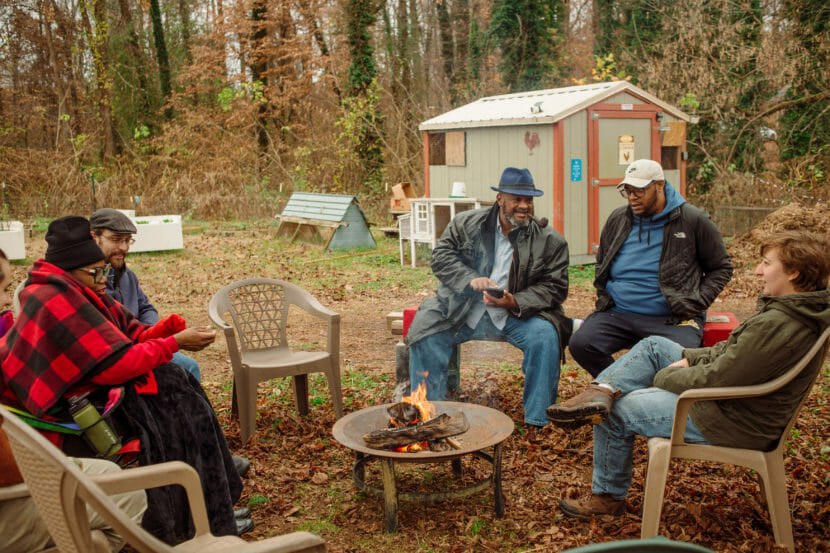
The “congregation” gathers on a Sunday morning in early November at the Battlefield Farm & Gardens in Knoxville, Tenn. Pastor Chris Battle, center, left the Baptist church and started the community garden and a free food delivery as a way to build community and “do church differently.” (Mike Belleme for NPR)
KNOXVILLE, Tenn. — It’s Sunday morning and a small group sits around a fire pit in a community garden under the limbs of an expansive box elder tree. Church is about to start. And it’s cold.
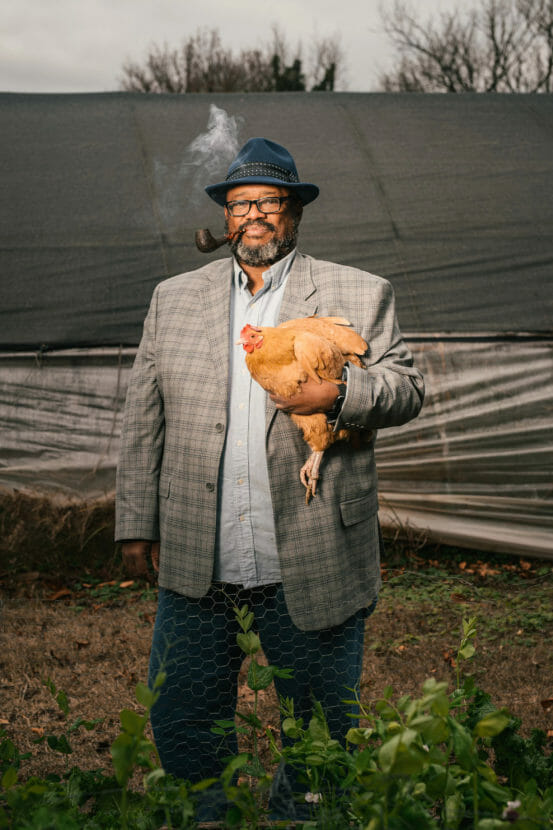
“God our Father, we are just so thankful for this time that we have to share this morning,” says Pastor Chris Battle, a big man with a pipe clenched in his generous smile. “And we really thank you for fire that keeps us warm even as we sit up under this tree. We just pray that you would bless our time together.”
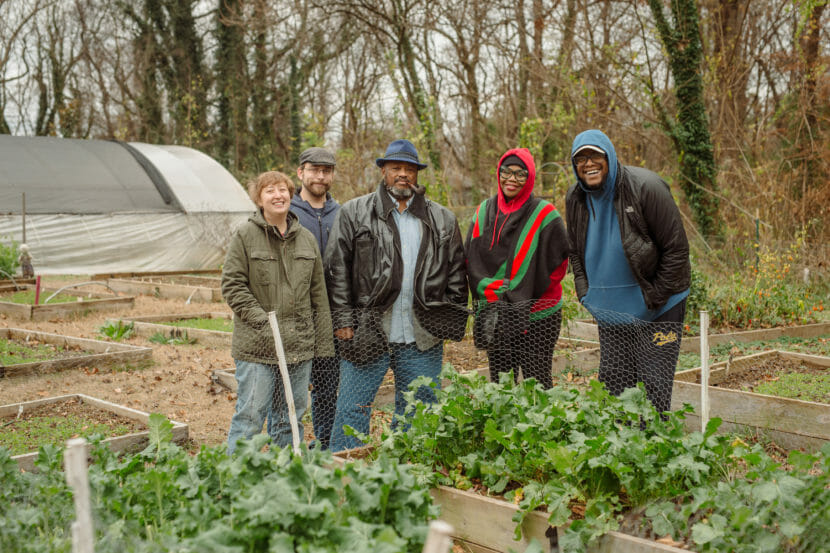
Three years ago, Battle walked away from more than three decades leading Black Baptist churches and turned his attention to Battlefield Farm & Gardens in Knoxville. They grow vegetables and sell them at a farmer’s market. They also collect unsold produce from around the city and deliver it to people in public housing once a week.
Battle says he left because traditional church was not connecting with people. He felt they were turned off by the sermons, the pitches for money, the Sunday-morning formality of it all.
“So I said to myself, maybe we need to begin to do church differently. But what does that look like? And I didn’t know until I got to the garden.”
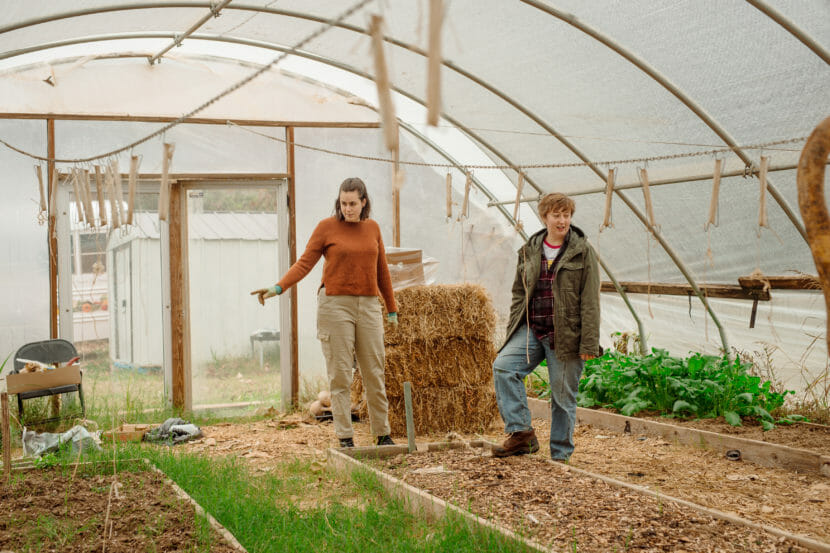
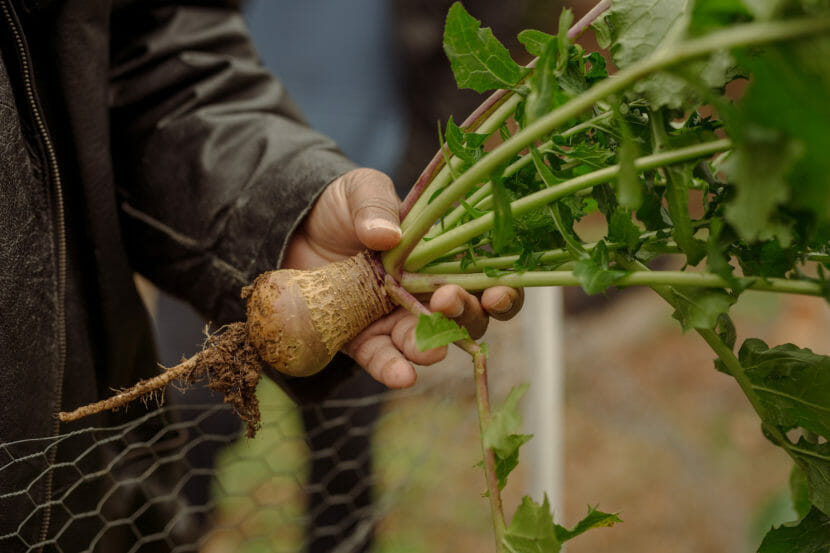
Audrey Barbour, left, and Kelly Sauskojus, right, check out the greenhouse at Battlefield Farm in Knoxville, Tenn., a community garden and alternative congregation started by Pastor Chris Battle. (Mike Belleme for NPR)Chris Battle holds a ripe turnip after a Sunday morning service at his Battlefield Farm & Gardens in Knoxville, Tenn. (Mike Belleme for NPR)
American Christianity is in the midst of an identity crisis. Attendance is in steep decline, especially among millennials and Gen Z who say traditional church doesn’t speak to their realities.
In response, religious leaders are scrambling to experiment with new ways to offer meaning in peoples’ lives. Most of the folks who show up at Battlefield Gardens on Sunday mornings say they’re looking for a faith community, but they’re burned out on traditional religion.
“Generally, I’m here because I want two things out of church,” says Kelly Sauskojus, a 27-year-old PhD candidate in English who says she’s a refugee from fundamentalist churches.
“I want time to sit down, like we do on Sundays sometimes or around the fire, and, like, pray and re-center and figure out what we’re about in the world. Because the world is very noisy. And then I want a church to get s*** done with your community and for your community.”
Typically, Battle delivers a brief sermon on the teachings of Jesus. They talk about it. Then, instead of altar calls or holy communion, his congregation — such as it is — tends to the 50 raised beds of kale and eggplant, string beans and squash, tomatoes and greens, the chicken coop and the compost pile.
“People, when they come to the garden, they’ll have conversations with you,” Battle says. “But you tell ’em you’re a pastor, the conversation changes. They hide their liquor. They quit cussin’. I mean, everything changes.”
Pastor Chris Battle raises greens, tomatoes, kale, okra, beans and chickens at his Battlefield Farm & Gardens in Knoxville, Tenn. He also preaches. (Mike Belleme for NPR)
He guffaws. “But you tell ’em you’re a farmer and they start tellin’ you what color their thumb is. And I’m like, wow. Developing relationships with people in the garden. And it’s not happenin’ in the church. People are running away from the church.”
Indeed they are.
Last year, Americans’ membership in houses of worship fell below 50 percent for the first time since Gallup started its authoritative religion survey. In 1937 — the year the Gallup poll began — seven out of 10 Americans attended church. In 2020 — before the pandemic — only 47 percent of Americans belonged to a church, synagogue or mosque, according to the survey. It’s been trending downward since 2000. Young people are rejecting organized religion and some churches are facing an existential crisis.
Battlefield Farm offers a different kind of spiritual community: people can show up for Bible lessons, or they can simply dig in the dirt.
“We’re trying to create this community that people can learn to love each other, and ultimately love the world and transform it. Through collard greens and okra!” he says with another hearty laugh.
This impulse — this urgency — to try something new is being felt throughout the Christian church. Once-booming evangelical churches are worried about declining numbers. But liberal mainline protestants like the Lutherans, Methodists, Presbyterians, and Episcopalians are hemorrhaging members.
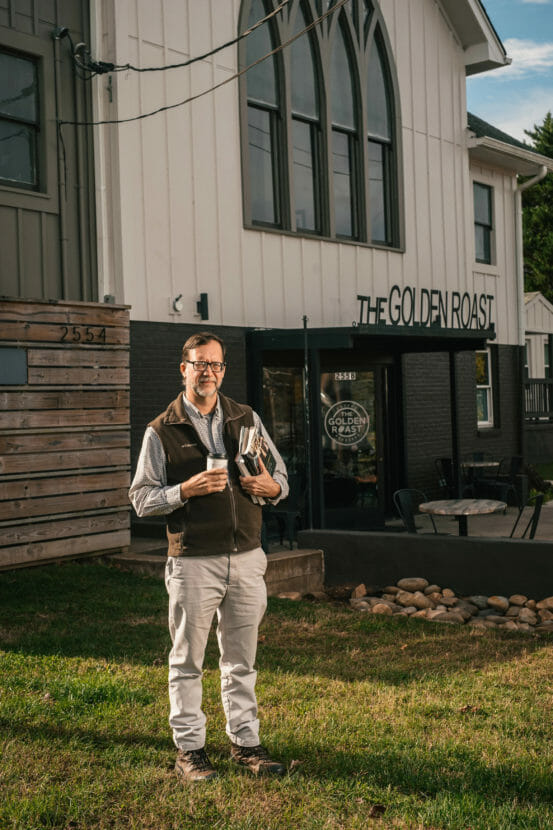
Consider Knoxville’s Marble City United Methodist Church. The stained-glass windows are still there, but today the structure houses an architectural firm and a Golden Roast coffee shop.
The house of worship closed a couple years ago because people stopped coming and tithing. Now they’ve returned, this time to the altar of caffeine.
“Every year we close anywhere between two and five churches. Every single year,” says Methodist pastor Bradley Hyde, sitting at a table sipping java while the milk steamer hisses behind the counter. “I think people were already wanting to leave church, and Covid gave them a great opportunity to say, ‘Good bye.’ I’m not the only pastor who has noticed that, but a lot of people have just not come back.”
The Rev. Bradley Hyde, a Methodist minister, stands in front of Golden Roast, a coffee shop that moved into a defunct Methodist church in Knoxville, Tenn., that closed because of a dwindling congregation. (Mike Belleme for NPR)
Hyde is in his 25th year in the ministry and sits on the Methodists’ regional Holston Conference in East Tennessee.
Hyde says he did focus groups among his parishioners and heard the same thing over and over: the church needs to do a better job of connecting with the community. So now the church he pastors, Bearden United Methodist, in addition to regular services, does its version of Battlefield’s okra and collards ministry. They collect unsold produce from local vendors and then, once a month, bring it back to the church parking lot.
“And our community is finally getting the word that we offer high-quality produce that they can come and get for no cost,” Hyde says. “And it has been a game-changer for connecting with our community.”
Yet while religious leaders watch their congregations dwindle, people still yearn for spirituality.
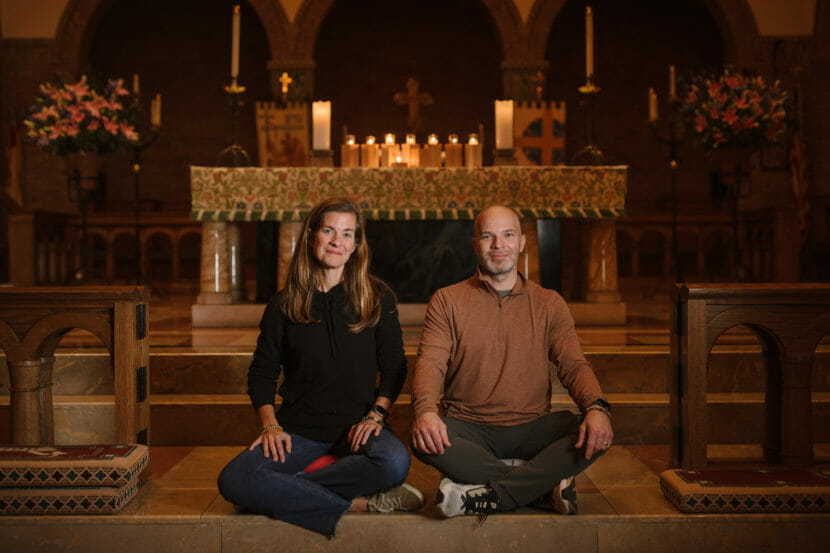
The Rev. Caroline Vogel, left, and Rector Billy Daniel lead breath-work exercises Sunday evenings at the Episcopal Church of the Ascension in Knoxville, Tenn. Breathing Under Stained Glass, as it’s called, is an attempt to respond to people who want spirituality in their lives but won’t attend Sunday morning services. (Mike Belleme for NPR)
“Just because you leave organized religion doesn’t mean the hunger to connect with the divine is going to cease,” says the Rev. Caroline Vogel. She’s associate rector and director of Spiritus Knox, a center for spiritual learning and practice, at the Episcopal Church of the Ascension in Knoxville.
“It’s how we were created. We need food, we need shelter, we need clothing, and we also have to feed our souls in some way,” she continues. “And so I think there’s this challenge of, OK, we’ve been doing it like this for so long, and it’s just not working for people in a way that meets them in a holistic way.”
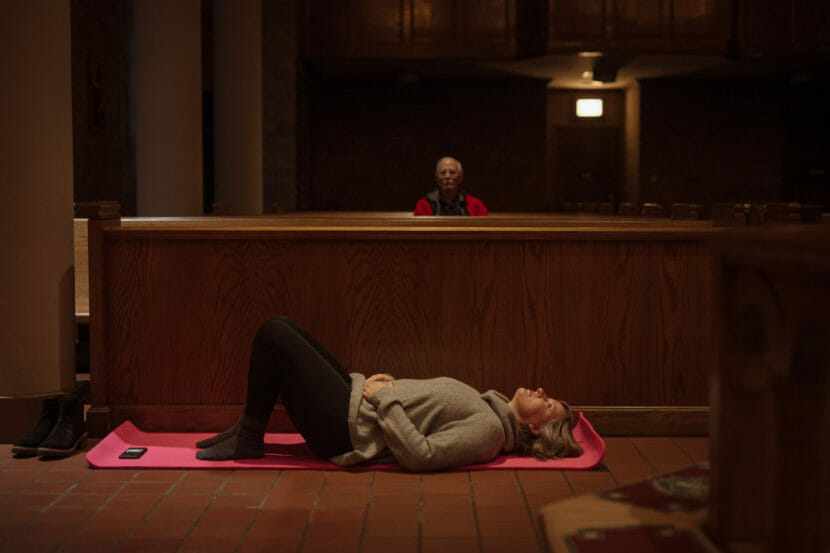
Ascension’s answer to this conundrum is to set aside Sunday evenings for non-churchy programs, such as Breathing Under Stained Glass. About 30 people sit on yoga mats on the terra cotta floor in the stately, hushed sanctuary that is softly illuminated by candles under the stained-glass saints.
Participants lay on yoga mats on the floor of the soaring sanctuary of the Episcopal Church of the Ascension in Knoxville, Tenn, for breath-work practice. The once-monthly evening event is called Breathing Under Stained Glass. (Mike Belleme for NPR)
“Hah! … Hah! … Hah!” they bellow in one of the breathing practices. Vogel and the rector, the Rev. Billy Daniel, lead the exercises sitting on pillows at the front of the church.
“Your human breath is infinitely connecting to the divine breath,” Vogel says in soothing tones, “so that as you breathe you are being breathed by the Holy.”
On other Sunday nights, the church offers a Celtic service, a book group and something called Tools of Aliveness. Most of the folks who show up don’t attend regular church.
“I was raised independent Baptist, where you can’t even wear pants in church, so laying on a yoga mat on the floor was a little weird. But wonderful,” says Jamie Hampton, a 44-year-old Tennessee state employee.
She says she and her husband stopped going to traditional church about six years ago because it wasn’t doing anything for them.
“The breathing linked with feeling the spirit is really important to me. And it stays with me more than just a sermon and some hymns.”
The garden congregation, from left, Kelly Sauskojus, Isaac Goodson, Chris Battle, Tiara-Lady Wilson and J.C. Carmichael pose for a portrait on Sunday, Nov. 12, 2022 at the Battlefield Farm in Knoxville, Tenn. (Mike Belleme for NPR)
Back at the firepit at Battlefield Garden, Baptist Pastor Chris Battle says he used to measure the success of a church by what he calls “the BPs.”
“Butts in pews, bucks in the plate, baptisms in the pool, and building programs. The BPs. That’s how you grow a church, right?” he says, chuckling.
When he was senior pastor, the question used to be how can the church change the culture? Today, he says, it’s how do we change the culture of the church?
Copyright 2022 NPR. To see more, visit https://www.npr.org.
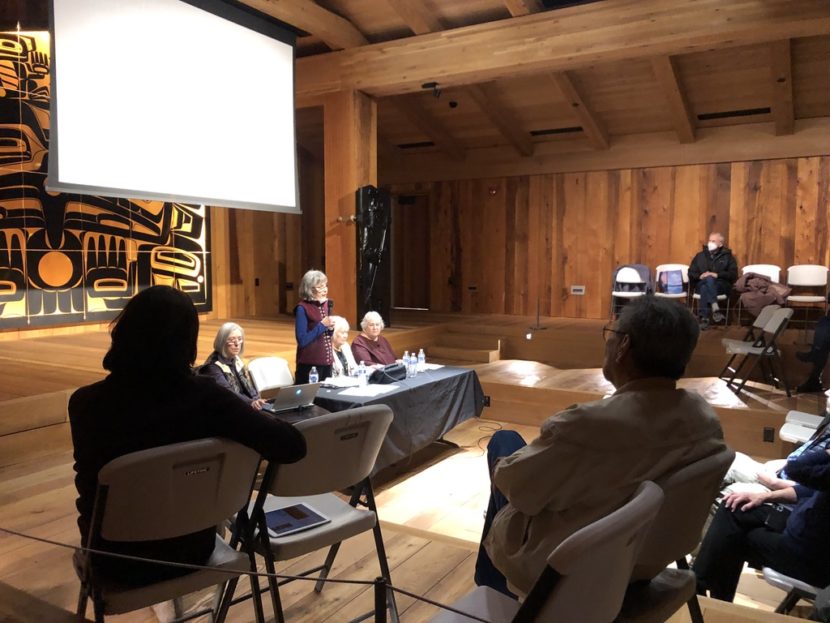
Lillian Petershoare speaks on panel about the closure of Memorial Presbyterian Church at Sealaska Heritage Institute in Juneau on Nov. 14, 2022. (Photo by Yvonne Krumrey/KTOO)
Monday was Walter Soboleff Day in Alaska. Soboleff, who lived to be 102, was a longtime advocate for Lingít people through his religious ministries and work to support Juneau’s youth.
The national Presbyterian Church now recognizes its decision to close the church as a racist “act of spiritual abuse.” When the organization closed the church in 1963, it also gave the separate, white-led Northern Light church a loan of $200,000 for a new building.
Some of Soboleff’s children were at Monday’s panel discussion, along with former members of Memorial Presbyterian Church. Roy DeAsis attended the church with his mother when he was a teenager.
“Various members of the church now in Juneau have expressed to me what’s been going on with this effort,” DeAsis said. “And sitting here, right now, this is pretty emotional for me.”
DeAsis joined the Navy and left Juneau the year the church closed. He said he has good memories about the church and Soboleff, and he was grateful now to learn more about what happened.
“One of the things I remember about Walter, when he spoke to me years ago — but it was the last time since I’ve been away so long — is he said, ‘Roy, you remind me of a tree.’ And I’m so sorry that I didn’t ask him what he meant,” DeAsis said.
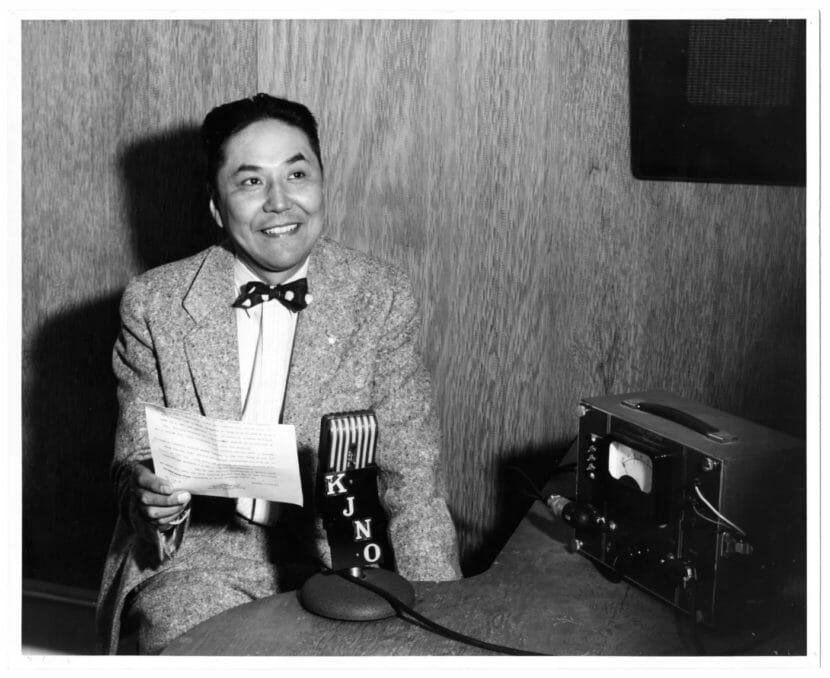
Rev. Walter Soboleff preparing to go on the radio. (Photo courtesy of the Presbyterian Historical Society)
During the panel discussion, members of Ḵunéix̱ Hídi Northern Light United Church committee — which was formed to research this closure and ask for an apology — told the story of Memorial’s closure and what they’ve done to repair that harm today. Myra Munson said the closure was an example of racism and its consequences, but telling the story could have a different kind of power.
“It can and has emboldened others to tell their story and shine a light on history that lives in the shadows of denial and pretends that the past is the past,” she said. “It can help those who suffered harm to recognize it for what it is and to begin to heal.”
Together, the Presbyterian Church USA, Northwest Coast Presbytery, and Ḵunéix̱ Hídi Northern Light United Church committed to pay nearly a million dollars in reparations for the harm and pain the closure caused. About a third of that amount comes from each.
National church leadership says the reparation payments will be used to develop ministries in Native languages and Alaska Native leadership in the church.
Rev. Walter Soboleff preparing to go on the radio. (Photo courtesy of the Presbyterian Historical Society)
This summer, the national branch of the Presbyterian Church issued a formal apology and committed to pay $1 million in reparations for closing a church in Juneau in the 1960s.
Longtime journalist Joaqlin Estus, Lingít, is a national correspondent for Indian Country Today. (Courtesy of Joaqlin Estus)
The Memorial Presbyterian Church had a Native congregation led by Pastor Walter Soboleff. Presbyterian church leaders have determined that closing the church was an act of racism.
Joaqlin Estus has a story about the apology in Indian Country Today. She spoke with KTOO’s Yvonne Krumrey.
Listen:
The following transcript has been lightly edited for clarity.
Yvonne Krumrey: Can you tell me the story of Memorial Presbyterian Church?
Joaqlin Estus: So, Memorial Presbyterian Church was heir to an earlier church that actually started in 1887. In Juneau, the town had two churches. They were segregated. There was a white church, and then the Native church and Walter Soboleff took over the Native church in 1940, I think it was. And by 1962, it was just the heart of the Juneau Indian Village. People thought of it as part of their extended family. And he had all kinds of events going on there all the time. And it was packed during holidays and very active all the time.
So then, the white church went to the National Presbytery and the Board of Missions, and said they wanted to build a new church and asked for a loan of $200,000. And, in part to accommodate them, no doubt, the National Presbyterian, the Board of Missions, shut down the Native church — and they did it without any explanation.
And very late in his life, people would ask Walter Soboleff what happened. He said, “I don’t know why they did it.” And I think he was just being polite because the reason they did it was because they were racist.
So a group at Northern Light Presbyterian Northern Light United Church formed a Native ministries committee, and they went to the National Presbytery, which is now called Presbyterian Church USA, and the Northwest Coast Presbytery and the Northern Light Church. And they asked for reparations. And the document that they used is called an overture. And basically they said that it was a racist decision, and it was very unfair, it was unjust, and it was very hurtful and painful to the people who belong to the Presbyterian Church, the Native Presbyterian Church.
So the Ḵunéix̱ Hídi Northern Light United Church — it’s been renamed. Ḵunéix̱ Hídi, it means “house of healing.” And that was kind of the first step in the reparations that the Presbyterian church made towards the Native ministries committee and the Native members of the Northern Light Church.
And then they voted in July to allocate about a million dollars for a huge range of programs and services, all aimed at language and cultural preservation, and support for Alaska Natives who want to go into the seminary to become ministers, and that kind of thing.
So they’re also going to contribute some money to establish a memorial at the site of the former church, which was situated across from the federal building, where the fire station is now.
So that’s what happened.
Yvonne Krumrey: You mentioned that the closure of Memorial was devastating for the community here in Juneau. Can you tell me more about that and what impact that had on the Lingít community here?
Joaqlin Estus: There was something going on there seven days a week, all hours of the day and night. And not all of it was church related. They also opened the doors to civic groups, and you know, for health clinics, they opened a children’s daycare. And this was back when the Juneau Indian Village was based all in the flats basically. And so it was a cohesive and kind of fairly extended neighborhood. And the church was right at the heart of it.
And so right after the church was closed, there were two devastating events. One was developers in Douglas burned down the Douglas Indian village there. They condemned the land, saying it was needed for development, and then burned the village.
And then the Juneau Indian village — most of it was knocked down for urban renewal. And so you had these two, you know, they were segregated communities, but within themselves, within the communities, there was a lot of cohesion and community. And those two acts of development and renewal were really hard.
I mean, they dispersed the Native community, basically, and the people I interviewed said it was shocking, and some never went back to church. They didn’t want to join Northern Light. They didn’t feel welcome there. And they either switched to another denomination or they quit going to church completely. So it was a huge spiritual loss for many people.
Yvonne Krumrey: You mentioned that the national branch of the church is issuing an apology as a part of this process. What does the apology say?
Joaqlin Estus: Well, let’s see, I can actually read the first couple of lines:
“The forced closure of this thriving multi-ethnic intercultural church was an egregious act of spiritual abuse, committed in alignment with the prevailing white racist treatment of Alaska Natives, statewide, and of Native Americans nationwide.”
And then the church goes on to say, to acknowledge that, that the closure, the justification for the closure “merely substituted assimilationist racism for the previous practice of segregationist racism.”
And then what they’re going to do is acknowledge, confess and apologize to the late Walter Soboleff and his surviving family members for the act of spiritual abuse committed by the Presbyterian Church’s decision to close the Native church.
The overture also calls for some soul searching on the part of the Presbyterian Church.
This is significant, because this is something that people wanted the Pope to do, when he visited Canada recently. The Presbyterian Church urges everyone to walk away from the Doctrine of Discovery, which is the idea that when a European nation discovers land uninhabited by Christians, it acquires rights to that land.
Native Americans and other people would like to see a more thorough repudiation of the of the idea behind the doctrine of discovery, which was basically the idea that was prevailing at the time was that Western Europeans were superior to the people who lived in these places, and therefore had the right to take over land and resources.
Yvonne Krumrey: I think that’s one thing that’s kind of interesting about this story is that it’s a church closure, that was the harm. While so many of it is focused on the church coming in and doing harm.
And I’m wondering if you have thoughts on that, or anything to say about the fact that the church came in, was a force of assimilation, but then was run by Walter Soboleff and became a community center and then was taken away, and how that impacted people?
Joaqlin Estus: I think the difference between what Walter Soboleff was doing and what mainstream Presbyterian boarding schools and churches were doing is that he spoke in both Lingít and English. He did give the message of God’s love and God’s mercy, and encouraged people to share his faith in the church and in God.
But my sense of things is that he was far from a negative force. I mean, people wanted to learn about this, and they wanted to belong to a church. Their earlier modes of spirituality had been destroyed. And people need that in their lives on some level. He provided it in a way that was more palatable and more accepting and more loving than in other churches. So I think there’s a big difference between what he did and what other churches did.
Yvonne Krumrey: When you look at Juneau after the closure of Memorial Church, and even up to today, what would you say the effects and the legacy of the closure are? And are we still living with those impacts today?
Joaqlin Estus: Well, I think combined with the destruction of the Douglas Indian village, and the Juneau Indian village, I think that the sense of cohesion and community that Alaska Natives felt in Juneau is not as strong as it used to be.
And I mean, it’s, it’s growing, and there is a community and there is cohesion. But it’s not to the extent that there was when the church was there, and when those two villages existed.
Yvonne Krumrey: Why did the overture and this whole process happen now, after nearly 60 years?
Joaqlin Estus: You know, I think it’s just part of the language and cultural revitalization that’s been going on for several years now. Some evidence of that is the land acknowledgments and more place names in the Lingít or Haida or Tsimshian language. There’s been a movement to reclaim what is ours. And this is part of that.
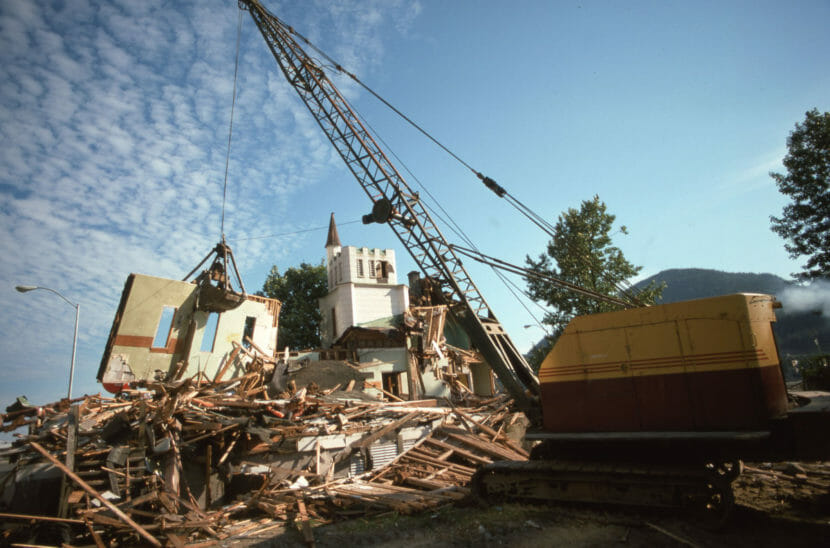
Memorial Presbyterian church demolition. (Photo by Skip Gray)
In the 1950s and ‘60s, the “Native church” in Juneau was packed for holiday services. Seven days a week it housed civic and church-related gatherings.
The Memorial Presbyterian Church served a predominantly Lingít congregation, true to its 1887 roots in a town that practiced segregation in restaurants and movie theaters into the mid-1940s.
Then, to “end segregation,” the Alaska Presbytery and the Presbyterian Board of National Missions closed the thriving Native church in 1962.
Maxine Reichert, Lingít and Athabascan, recently told the Northern Light United Church congregation the closure meant the loss of the Juneau Indian Village’s support system, “the heart of the community,” just as it was undergoing even greater trauma. The Juneau Indian Village, and just across the bridge, the Douglas Indian Village were destroyed for 1960s-era urban renewal and development.
Now the Presbyterian Church USA, Northwest Coast Presbytery, and Ḵunéix̱ Hídi Northern Light United Church have committed to pay nearly a million dollars in reparations for the harm and pain the closure caused.
The amount is significant but what it will be used for is even more so. Most of it is to go to programs to promote healing, cultural preservation, and education.
We’ll get into that some more but first, let’s go back to 1940, when pastor Walter Soboleff, Lingít, held his first service in Memorial Presbyterian Church.
Only he, his wife, and one friend attended.
But he was brilliant at growing a congregation. Soboleff advertised in the newspaper and broadcast his sermons on the radio. He reached out with hundreds of letters of support and encouragement to acquaintances, parishioners, and prison inmates.
Rev. Walter Soboleff preparing to go on the radio (Photo courtesy of the Presbyterian Historical Society)
The church offered Bible study, choir practice, prayer groups, and teenage fireside chats. It was open for day care, Girl Scout meetings, and health checkups. It housed visiting basketball teams from surrounding predominantly Lingít, Haida, and Tsimpshian villages.
The church “was an extension of our family, our extended family,” Judy Franklet, Lingít, said in a 2019 interview.
Franklet remembered, “playing with friends down in the, we called it the basement, but that’s where they held the potlucks and other activities. And then we had coffee probably right after the worship service. And I remember Dr. Soboleff very clearly giving part of the service in English and in Lingít. That was very special to us… you love to hear your own language.”
Franklet also recalled the day when Soboleff told the congregation the church was closing.
“I just remember I was in a state of shock and when I look back, I’m sure he was hurting. His explanations were just very short,” Franklet said. “It was just like you were hit in the stomach. It was such a surprise.”
Last year, as the Native Ministries Committee of the church began discussing reparations, “I remember one moment in particular,” said Lillian Petershoare, Lingít. “We were talking about the closure of the Memorial church and I said to everyone, ‘You know, what really disturbs me here is that in our research, we have seen that the Presbytery and the national church leaders came to Memorial many times over the years. The women of the church sponsored tea for the regional and the national leader. They were not strangers. They knew this church. They knew the people in this church.’”
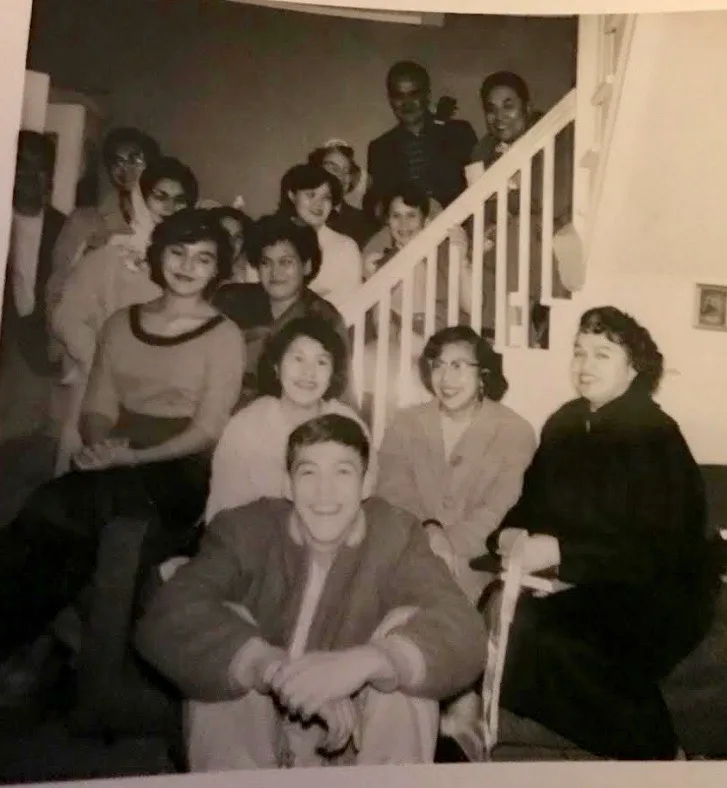
Memorial Presbyterian Church choir members at home of Tom and Connie Paddock after Christmas caroling in Juneau. The choir was treated to cookies, punch, smoked salmon, and crackers. December 24, 1962 (Photo courtesy of Maxine Richert)
She said it was inhumane of church leaders to abandon Soboleff to announce the closure alone.
“Why didn’t they come and have a beautiful ceremony to celebrate the wonderful work of the Memorial church and the Presbyterian church in the Juneau Indian Village? Its predecessor? Why wasn’t there all that circumstance? Why wasn’t there all that acknowledgement? Why wasn’t there that shared grieving?” Petershoare asked.
“If this had been a traditional Lingít setting, there would’ve been all of that protocol. And so there should have been.”
Petershoare said the national officials should have expressed the church’s deep roots in the community and its role in the life of the community. “We felt that profoundly.”
A former minister of Northern Light United Church, Phil Campbell, told filmmaker Laurence A. Goldin in a 2022 interview that as he met Native people, he learned time had not healed the wound of the church’s closure “even though it had been almost 50 years.”
“I did have one occasion to ask Dr. Soboleff about it. I was visiting with him a couple of months before his death as it turned out … as I began asking about this, I saw the pained look on his face. He was saddened and troubled by the question, and said in effect, ‘I don’t know why they closed it,’” Campbell said.
At the same time the Presbytery said it couldn’t afford to continue to subsidize the Native church, it loaned $200,000 to a White congregation to build a new church just a few blocks away from Memorial.
The Presbytery and Board of Missions advised the Native church members to join the new Northern Light Presbyterian Church. Less than half did. Most joined other denominations or drifted away from church altogether.
In the 1990s, a group of Indigenous members of Northern Light church formed a Native Ministries Committee. With Campbell’s help, in 2021 they wrote an “Overture,” (similar to a resolution) entitled “On Directing the Office of the General Assembly to Issue Apologies and Reparations for the Racist Closure of the Memorial Presbyterian Church, Juneau, Alaska.”
The Overture stated: “The forced closure of this thriving, multiethnic, intercultural church was an egregious act of spiritual abuse committed in alignment with the prevailing White racist treatment of Alaska Natives, statewide, and of Native Americans, nationwide.” It was distributed nationally to Presbyterian churches and discussed in regional and national gatherings of church leaders.
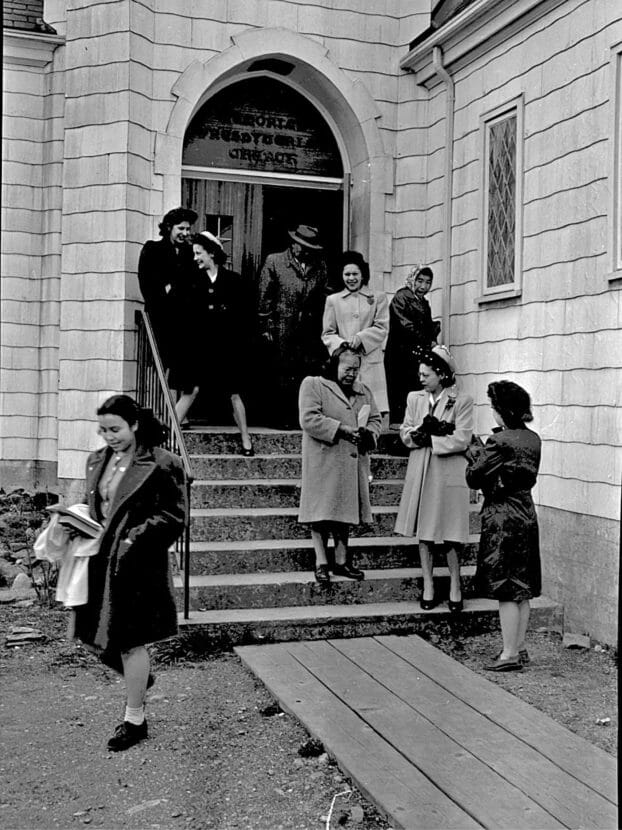
In Juneau, Memorial Presbyterian Church congregants leaving the church. n.d. (William Paul Jr. Collection via Ben Paul)
The Presbyterian Church USA adopted the Overture unanimously without amendment at its July General Assembly. In adopting it, the church acknowledges its justification for the closure ”merely substituted assimilationist racism for the previous practice of segregationist racism.”
The Overture includes a list of actions for reparations.
The church, with regional and national leaders present, will acknowledge, confess, and apologize to the late Walter Soboleff and his surviving family members “for the act of spiritual abuse committed by the Presbyterian Church’s decision of closure, which was sadly aligned with nationwide racism toward Alaska Natives, Native Americans, and other people of color.”
By adopting the Overture, the church committed to become engaged and accountable for “interactions with churches of primarily people of color congregations so that difficult decisions about support and funding are made in a spirit that recognizes the importance and contributions of these congregations to the Presbyterian Church (USA), which outweigh superficial considerations of their membership numbers or perceived lack of financial resources.”
The Overture also encourages Presbyterians nationwide to donate funds and to renew commitments to dismantle systemic racism and amplify the voices of people of color.
It urges all to continue to walk away from the doctrine of discovery, the idea that when a European nation “discovers” land uninhabited by Christians, it acquires rights to that land.
As one of the first steps in reparations, the church was renamed Ḵunéix̱ Hídi (people’s house of healing) Northern Light United Church.
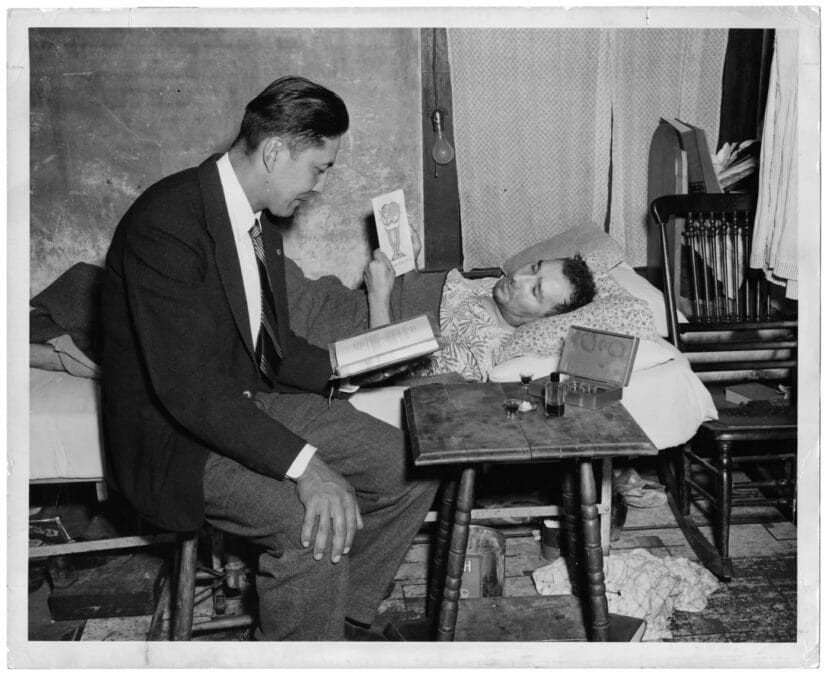
Rev. Walter Soboleff ministering to a sick man, n.d. (Photo courtesy of the Presbyterian Historical Society).
As the successor and beneficiary of the Memorial Church’s closure, Ḵunéix̱ Hídi committed $350,000 for reparations, which will include the creation of art and remodeling of the Ḵunéix̱ Hídi church to be more welcoming to people of color and to reflect southeast Native cultures.
Money will go to scholarships and programs for revitalization of southeast Alaska Indigenous languages. Ḵunéix̱ Hídi will also gather oral histories and develop curriculum to teach the history of the Memorial Church.
Ḵunéix̱ Hídi will also pay for a “highly visible recognition” of the Memorial Church at its former location.
Reichert said additional money will go to “Tlingit, Haida, and Tsimpshian languages, (and) scholarships for students who want to go into the seminary to become ministers.” For these and other efforts, the church has committed nearly a million dollars.
The reparations were accepted by the local congregation, then at the regional and national levels. The commitments call for some soul searching, with the understanding that healing from racism is an ongoing process.
Ministries committee member Myra Munson said the history of racism, of slavery, of what happened to Indigenous people, and actions against LGBTQ people, “all of these things create a burden that maintains an “us and other” approach to the world and to each other in the community and at large nationally, and internationally. Every step we take that overcomes that or reduces it helps us all live in a healthier way and healthier place.”
Reichert said she was relieved when the General Assembly voted to accept the Overture. “It felt like Walter Soboleff and what he had been doing with Memorial Presbyterian church, he had been vindicated and, and I felt just really good about that.”
The Presbyterian church has a history of racism, perhaps most strongly exemplified in the boarding schools it ran to assimilate Indigenous children. The boarding school experience traumatized generations of Native children and led to the near loss of Indigenous cultures and languages.
However, Reichert said Indigenous people, “they have churches still existing, like in the Dakotas where they have a number of churches that are run by Native ministers. And a lot of them have not graduated from seminary and they have very little funding for those churches, but the Native people are still going to them and they still want that religion. But they want it in their own culture.” The reparations will help make that happen for Southeast Alaska Indigenous peoples.

9(MDEwMjQ0ODM1MDEzNDk4MTEzNjU3NTRhYg004))
9(MDEwMjQ0ODM1MDEzNDk4MTEzNjU3NTRhYg004))