Archives for:

"Roadless Rule"

Dunleavy wants quick action by Trump to revoke Biden’s Alaska environmental policies

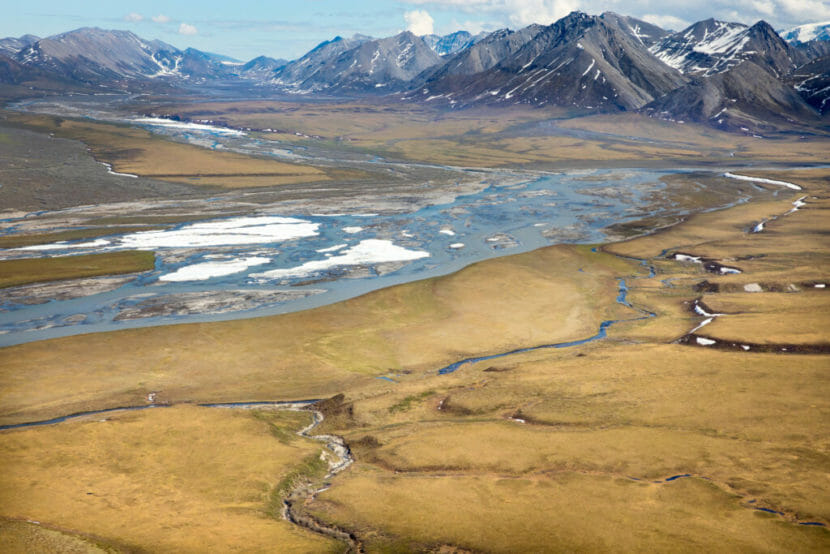
An aerial view of ANWR's coastal plane and the Canning River
The Canning River, seen here in 2018, flows from the Brooks Range into the Beaufort Sea along the western edge of the Arctic National Wildlife Refuge. The sole tract that Regenerate Alaska acquired in the 2021 lease sale — and has now relinquished, lies along the Canning River. (Photo by Lisa Hupp/U.S. Fish and Wildlife Service)

Gov. Mike Dunleavy is asking President-elect Donald Trump to immediately reverse the Biden administration’s Alaska environmental and tribal lands policies, claiming those policies hurt the state’s economy.

“Your election will hail in a new era of optimism and opportunity, and Alaska stands ready to and is eager to work with you to repair this damage wrought by the previous administration, and to set both Alaska and America on a course to prosperity,” Dunleavy said in a cover letter sent on Nov. 15, along with a 27-page document detailing his desired Alaska policy changes, which was publicly released on Monday.

Dunleavy’s policy document said that Trump, as soon as he returns to the White House, should issue an Alaska-focused executive order that removes restrictions on oil development in the Arctic National Wildlife Refuge and the National Petroleum Reserve. In addition, the document urged Trump to reinstate federal support for a controversial road stretching more than 200 miles through the Brook Range foothills to the isolated Ambler mining district and reverse the ban on new roads in Southeast Alaska’s Tongass National Forest, among other policy changes.

“It is essential that the Alaska specific Executive Order be issued as soon as President Trump takes office. The Biden Administration’s assault on Alaska was carried out through a multitude of official agency actions; reversal of these actions must comply with time-consuming administrative procedures,” said Dunleavy’s policy document, titled “Alaska priorities for federal transition.”

Additionally, Dunleavy wants Trump to create a cabinet-level task force and six new oversight positions to make sure that various federal agencies adhere to the pro-resource-extraction policy mandates. The newly hired officials would oversee the Department of the Interior, Department of the Army, Department of Commerce, Environmental Protection Agency and the Office of Management and Budget.

In his cover letter, Dunleavy accuses the Biden administration of “destroying economic opportunity” in Alaska.

However, Alaska’s economy grew during Biden’s term and shrank during the first Trump term, as measured by gross domestic product. It grew at an annual rate of 3.3%, adjusted for the federal inflation rate, in the first three and a half years of Biden’s presidency. It shrank by an inflation-adjusted annual rate of 1.8% in the four years of Trump’s first term, according to statistics from the Federal Reserve Bank of St. Louis.

Jeff Turner, Dunleavy’s communications director, said Biden’s presidency harmed Alaska, nonetheless. “The dozens of sanctions it has placed on Alaska are strangling future economic growth and denying the state the ability to support itself with revenue and jobs created by developing our natural resources,” Turner said by email.

Dunleavy’s transition plan was sent to the Trump team a month ago, along with the cover letter, Turner said.

A representative of one environmental group vowed to fight against Dunleavy’s priorities for the new Trump administration.

“We’re definitely going to be providing pushback to the wish list,” said Matt Jackson, Alaska state senior manager for The Wilderness Society.

The actions that Dunleavy wants Trump to take may not be legal, Jackson said.

“Legality is not necessarily a top priority for either of these leaders. We may be seeing more and more illegal rollbacks, law be damned,” Jackson said. “We’re prepared.”

In at least two cases, the Biden administration has taken action on items that Dunleavy lists as Alaska priorities.


Dunleavy asked the Trump team to schedule a second Arctic National Wildlife Refuge lease sale, to follow the 2021 sale that failed to result in any exploration. The Biden administration has scheduled that lease sale for Jan. 9, though with restrictions that Dunleavy and other Alaska politicians oppose.

Dunleavy also asked the incoming administration to resurrect a controversial land trade proposal that would allow a road to be built in the Izembek National Wildlife Refuge; the Biden administration has already done that, recommending a trade in a supplemental environmental impact statement released a month ago. Public comments are now being solicited on that land trade plan.

Land into trust

Beyond removing limits on resource extraction in federal lands, Dunleavy wants the new Trump administration to abandon the current Interior policy in favor of putting some lands into trust for the benefit of Native tribes.

The issue has been a subject of dispute for several years. Advocates for putting land into trust say it is important to tribal sovereignty, but the idea has drawn opposition from the state. Tribes argue that they are entitled to control of some land, while the state has argued that the 1971 Alaska Native Land Claims Settlement Act put an end to such land transfers by giving lands and subsurface mineral rights to for-profit Native corporations rather than to tribes.

The Biden administration and the Obama administration before it supported the tribes’ trust lands aspiration, while the Republican administration, both under Trump’s previous term and under that of George W. Bush, opposed them.

The latest dispute over land-in-trust concerns a parcel in downtown Juneau that the Central Council of Tlingit and Haida Indian Tribes is seeking to be put into trust status. U.S. District Court Judge Sharon Gleason ruled in June that Interior does have the right to grant trust status for land parcels, though she said the process used by Tlingit and Haida had flaws and that the application should be resubmitted. The state appealed that ruling.

The Biden administration’s position favoring land-in-trust designations is dangerous to the state’s interest, Dunleavy said in his transition report. Because of that, “there is a risk that for the first time Alaska will have casino gambling thrust upon it by the federal government,” it said.

An attorney representing the tribes criticized Dunleavy’s proposal for an end to federal support for Alaska lands-in-trust transactions.

“We were disappointed to see Governor Dunleavy’s requests to the incoming Administration. Alaska Tribes should be treated the same as all other federally recognized Tribes, full stop,” attorney Erin Dougherty Lynch, managing attorney at the Native American Rights Fund’s Alaska office, said by email.

“This issue has been the subject of decades of litigation, including pending litigation that the Governor initiated. Alaskans would be better served if the Governor chose to work cooperatively with Tribal governments to protect our collective health, safety, and welfare. Other states have successfully navigated these issues and have built strong relationships with Tribal governments. Alaska should do the same,” Dougherty Lynch said.

Dunleavy, though an ardent Trump supporter, has not been selected for any position in the new administration. North Dakota Gov. Doug Burgum was Trump’s pick to head the Department of the Interior.
In new challenges to Tongass ‘Roadless Rule,’ pro-logging arguments have disappeared

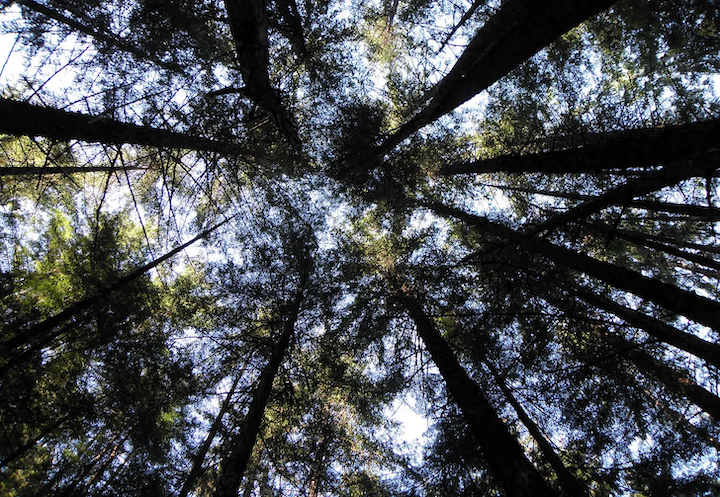
Sun shines through the canopy in the Tongass National Forest. (Photo by Brian Logan/U.S. Forest Service)

The state of Alaska, a coalition of business groups and a pair of electric-power organizations have opened a new round in the generation-long fight over environmental protections in Southeast Alaska’s Tongass National Forest.

On Sept. 8, the state and two other groups of plaintiffs filed three separate federal lawsuits to challenge a Biden administration rule restricting new roads in parts of the forest, which is home to some of America’s last stands of old-growth trees.

Each lawsuit asks U.S. District Court Judge Sharon Gleason to overturn the new rule and prior versions.

The Roadless Rule, as it is known, was enacted (and sued over) as early as 2001 by logging proponents, but the latest lawsuits bring a new wrinkle: In more than 100 pages of court documents, the word “logging” appears only once.

Instead, plaintiffs are arguing that the federal government’s rules make clean-energy projects and other economic development unaffordable.

The legal complaints cite prospective geothermal and hydroelectric power plants, as well as hypothetical metal mines whose products could be used for green technologies.

“You’ve got true roadblocks for very desirable projects. These are projects that are going to provide cost savings and environmental benefit,” said Luke Wake, an attorney with the Pacific Legal Foundation, which is representing the Inside Passage Electric Cooperative and the Alaska Power Association in one of the lawsuits.

The state of Alaska, which is leading a second lawsuit, has opposed the Tongass Roadless Rule through Democratic, Republican and independent administrations alike.

In a written statement, Gov. Mike Dunleavy said that “Alaskans deserve access to the resources that the Tongass provides — jobs, renewable energy resources, and tourism, not a government plan that treats human beings within a working forest like an invasive species.”

The third lawsuit, which includes the Alaska Chamber of Commerce and Resource Development Council of Alaska among its plaintiffs, is being led by former Gov. and former U.S. Sen. Frank Murkowski, the father of current U.S. Sen. Lisa Murkowski, R-Alaska.

Jim Clark, Frank Murkowski’s former chief of staff and an attorney working on the case, said he remembers when he represented the Alaska Forest Association in a prior lawsuit on the issue.

“This case is old enough to drink in any bar in Alaska,” he said.

In the years since he first worked on the issue, Southeast Alaska’s logging industry has almost entirely vanished. A pulp mill in Ketchikan is now a cruise ship terminal; another in Sitka is a sanctuary for bears.

Overturning the Roadless Rule isn’t about clear-cutting anymore, he said. Instead, it’s about improving access for projects that now need special approval.

“It’s not like we don’t have access under the Biden law, notwithstanding the Roadless Rule, but it is a barrier,” he said.

In legal filings, the Inside Passage Electric Cooperative offered an example: It hopes to build a power line between Kake and Petersburg, allowing those communities to share low-cost power.

The project was expected to cost $17.5 million, but because of the Roadless Rule, it would have to be maintained by helicopter, causing the projected cost to balloon to $65 million.

“As a result of these heightened costs, the Kake-Petersburg Intertie Project remains stalled. But IPEC would resume efforts to further this project if it could obtain road access,” said Jodi Mitchell, IPEC’s CEO, in legal testimony.

Clark said that logging companies aren’t part of these new lawsuits because logging is restricted under a new forest plan, something separate from the Roadless Rule, and the prospects of changing the forest plan are limited.

“There’s no way we’ll be able to change the forest plan to make a difference here,” Clark said.

Kate Glover is an attorney with the environmental law firm Earthjustice, which has participated in prior Roadless Rule lawsuits.

Glover said the attempt to switch to another focus in the Roadless Rule “is certainly noteworthy,” but that the issue “really is about logging,” which was the primary focus of the original rule.

The three lawsuits — which are expected to be combined into one by U.S. District Court Judge Sharon Gleason — will continue a 22-year-old dispute over the extent to which the U.S. Forest Service has the authority under existing law to restrict road building in the forest.

In 2001, the federal government wrote a nationwide rule restricting road building in designated areas. Roads are needed for intensive logging.

The state of Alaska challenged the rule in court, and the federal government agreed to exempt much of Alaska from it.

That changed in 2011, after a federal judge ruled in favor of environmental groups who had filed a lawsuit arguing that the Alaska exemption was unlawful.

The state appealed the verdict and saw it overturned by a three-judge panel of the Ninth Circuit Court of Appeals, but a subsequent appeal to the full Circuit Court saw the Alaska exemption again overturned.

The state challenged the legality of the 2001 rule overall in a separate lawsuit filed in Washington, D.C., but lost that case.

After the election of President Donald Trump, the state supported a new roadless rule that allows Tongass development. The Trump administration passed the new rule, but lawsuits stymied its implementation, and the Biden administration’s new rule, enacted in January, overwrites the Trump rule.

Though the state and allied plaintiffs have repeatedly lost in court on the issue, attorneys say the legal groundwork has changed over the past few years.

The U.S. Supreme Court’s 2022 ruling in West Virginia v. EPA has the potential to significantly reduce the power of federal agencies to write regulations that aren’t specifically authorized by Congress, and in summer 2024, the Supreme Court is expected to reinterpret a standard known as the “Chevron doctrine” and again restrict the authority of federal agencies.

“All of which makes you think the Supreme Court is more favorable,” Clark said.

This story originally appeared in the Alaska Beacon and is republished here with permission.

Biden administration restores Roadless Rule protections to Tongass National Forest

""
The Stikine River Flats area in the Tongass National Forest, viewed from a helicopter on July 19, 2021. (Photo by Alicia Stearns/U.S. Forest Service)

The largest national forest in the United States is once again protected from development under the Roadless Rule. The United States Department of Agriculture announced Wednesday it had restored roadless protections to 9.37 million acres of the Tongass National Forest, which spans most of Southeast Alaska. 

In a press release, Agriculture Secretary Tom Vilsack said the Tongass is key to conserving biodiversity and addressing the climate crisis, adding that the decision listened to the requests of Alaska Native tribes and people of Southeast while also recognizing the importance of fishing and tourism to the region’s economy. 

The agency said in a press release it got around 112,000 public comments in the two-month period after it began the process to get the Roadless Rule back in place. The majority were in favor. 

The Roadless Rule was put in place at the end of the Clinton administration in 2001. It prevented road construction, reconstruction and timber harvest in most areas of the Tongass and many other national forests. 

But under the Trump administration, more than half of the national forest had been removed from Roadless Rule protections. Tribes and environmental groups in Southeast Alaska quickly sued, saying the decision disregarded overwhelming opposition.

Throughout the last two decades, multiple Alaska governors and members of the state’s congressional delegation have pushed back against the rule, saying it hampers resource development and economic growth in the state

Correction: An earlier version of this story understated the number of acres that regained Roadless Rule protections.

Agreement with Japanese company boosts fortunes of planned hydropower project near Alaska’s capital, developers say

An aerial photo of a lake surrounded by snowy mountains
Sweetheart Lake south of Juneau, seen from the air in 2017, will be the site of a new hydroelectric project supplying the Kensington mine and other Juneau-area customers, under a plan that is the subject of a development agreement with a major Japanese hydroelectric company. (Photo by Robert Johnson/Provided by Juneau Hydropower)

A new agreement with Japan’s leading hydroelectric operator will give the long-planned Sweetheart Lake project south of Juneau a boost toward development, developers promoting the project said on Thursday.

The agreement is between Juneau Hydropower, the corporation planning the Sweetheart Lake hydro project, and J-Power, a major Japanese hydroelectric company.

The Sweetheart Lake project is planned and permitted for a site about 30 miles south of Juneau in the Tongass National Forest; J-Power, which signed the project development agreement in July, built and owns and operates 61 hydroelectric facilities, and it operates 1,500 miles of transmission lines in Japan, representatives of the companies said at an Anchorage news conference held Thursday.

“What it does is it allows us to partner with a team player who’s got an extremely deep bench,” Duff Mitchell, managing director of Juneau Hydropower, said in an interview on Friday.

The Sweetheart Lake project would have a capacity of 19.8 megawatts and promises to boost Juneau’s energy generation by a fifth, according to Mitchell’s estimates. The cost is estimated at over $200 million.

Under the joint development agreement, J-Power will have some ownership share in the project, but that share is yet to be determined, Mitchell said.

The cornerstone user will be Coeur Alaska’s Kensington mine, a gold producer north of Juneau.

At the Anchorage news conference held Thursday, Stephen Ball, Coeur Alaska’s general manager, called the prospect “exciting.”

“From our perspective, the opportunity to bring clean hydropower to Kensington is a root driving force for us. It gives us the opportunity to get off of diesel power and onto clean energy,” Ball said.

Beyond Kensington, Mitchell said, there is an opportunity for Juneau’s electric utility, Alaska Electric Light and Power.

Additionally, it will help bring Juneau closer to the goals of its 2011 climate action plan, which calls for a 25% reduction in greenhouse gas emissions by 2032, Mitchell said.

Construction is expected to start next year, with operations starting two or three years after then, Mitchell said.

The Sweetheart Lake project has been in the works for more than a decade.

The initial application for a license from the Federal Energy Regulatory Commission was filed in 2009. From then until 2016, the process went through numerous permitting steps, including an environmental impact statement. All required permits were completed by 2016, Mitchell said.

To comply with the Roadless Rule in the Tongass, the project was designed with a tunnel to be used as the transportation route for vehicles and equipment moving from the near-tidewater power station to the water-supply lake. After construction, equipment that is needed for operations will be left at the upper end of the tunnel, while construction equipment no longer needed will be driven down to the power station site, Mitchell said. After that, the tunnel will be converted to a line for water transport, he said.

“We had to be a little bit creative,” Mitchell said

Though the project is located south of Juneau, it requires transmission north. The plan is for an 8.6-mile transmission line from the power plant to the existing Juneau grid, and then a 31-mile transmission line north from there to the Kensington mine.

Final projects selected in $25M program for sustainable development in Southeast Alaska

""
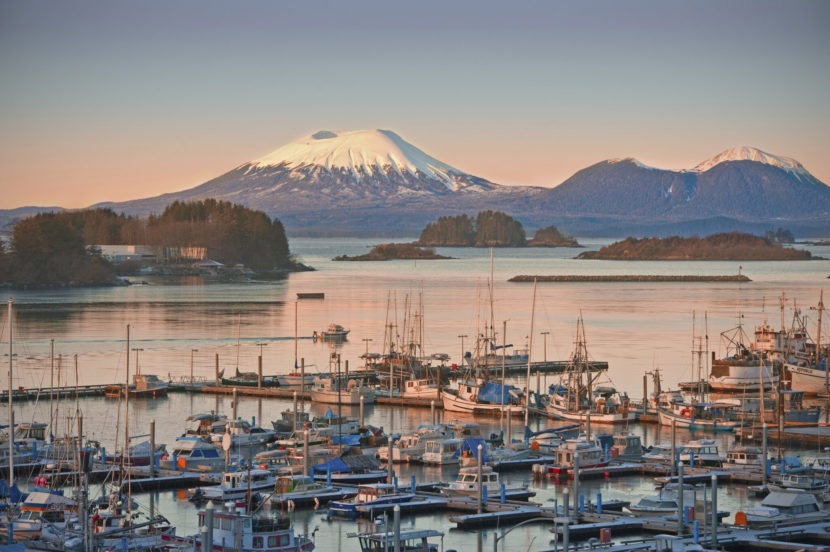
Sunrise over Thomsen Harbor in Alaska. Mt. Edgecumbe, Sitka Ranger District, Tongass National Forest, Alaska. (Forest Service photo by Jeffrey Wickett)

The U.S. Department of Agriculture has made its final funding decisions in a $25 million program to support local organizations in Southeast Alaska, officials said on Tuesday

The Southeast Alaska Sustainability Strategy, announced last year, has now made commitments to over 30 local and regional partners for 70 locally driven projects, Agriculture Secretary Tom Vilsack said in an online announcement event.

“These projects and investments, I think, reflect our common commitment to acknowledging, respecting and honoring Indigenous ownership and stewardship, the knowledge, the values, the priorities,” Vilsack said. “I think it also reflects our commitment to a community-driven investment strategy that reflects the input from local folks. It reflects the local knowledge and priorities and certainly puts a premium on collaborative relationships.”

The strategy is being undertaken by two agencies of the Department of Agriculture — the U.S. Forest Service’s Rural Development division and Natural Resources Conservation Services. It is intended to help the region transition from past reliance on large-scale timber harvests in the 16.7 million-acre Tongass National Forest, which encompasses most of Southeast Alaska.

Of the $25 million in project funding, about half will be managed by tribal and Indigenous organizations, for purposes that include arts and cultural support, enhancement of food security and support for cultural use of forest products.

The emphasis on Indigenous values and priorities was lauded by Richard Peterson, president of the Central Council of Tlingit and Haida Indian Tribes of Alaska.

“This is the first time in my 27 years as an elected person that I’ve actually seen this level of local decision-making,” Peterson said in the online event. “So often, we see decisions made at a national level that really don’t fit. We’ve got to shoehorn them in. And this is happening at the local level. It’s really refreshing.”

The other half of the funding is for projects aimed at boosting infrastructure, community economic development and natural resource management.

That includes workforce development projects to help young commercial fishermen and to enhance mariculture operations, said Robert Venables, executive director of the Southeast Conference, a regional economic development organization. Many of the opportunities “will help the next generation not just find a job but be the job-makers,” Venables said.

The Southeast Alaska strategy is a new way of doing federal government business that can be replicated in other regions of the nation, Vilsack said.

“It’s a model that creates a real powerful partnership where the resources of the federal government are directed in a way that local folks understand and can help to direct,” Vilsack said. “I’m excited about the potential for this model to be expanded, to continue to be expanded in other mission areas of the USDA.”

Related to the sustainability projects is the Forest Service’s decision, announced last year, to restore the federal protections to the Tongass under what is known as the Roadless Rule. The 2001 Roadless Rule largely bans timber harvesting in areas currently without roads, thus preserving old-growth stands. Under the Trump administration, Alaska was exempted from the Roadless Rule.

The decision to reinstate the protections in Alaska has attracted over 110,000 public comments, which must be fully reviewed before the Biden administration completes its final rulemaking, Vilsack said at the news conference.

The final rule is expected by the end of the year, he said.

“I recognize that this may not have happened as quickly as some would like. But I am committed to getting this done to conserve this important resource,” he said. “I hope folks understand that we do have to follow through the process. We have to be respectful of the people who took time and energy to provide comments so that the record is as complete and as strong as it possibly could be in order to defend the decision that we’ve made to restore the protections of the 2001 Roadless Rule.”

USDA announces $8.7M in grants for sustainability projects in Southeast Alaska

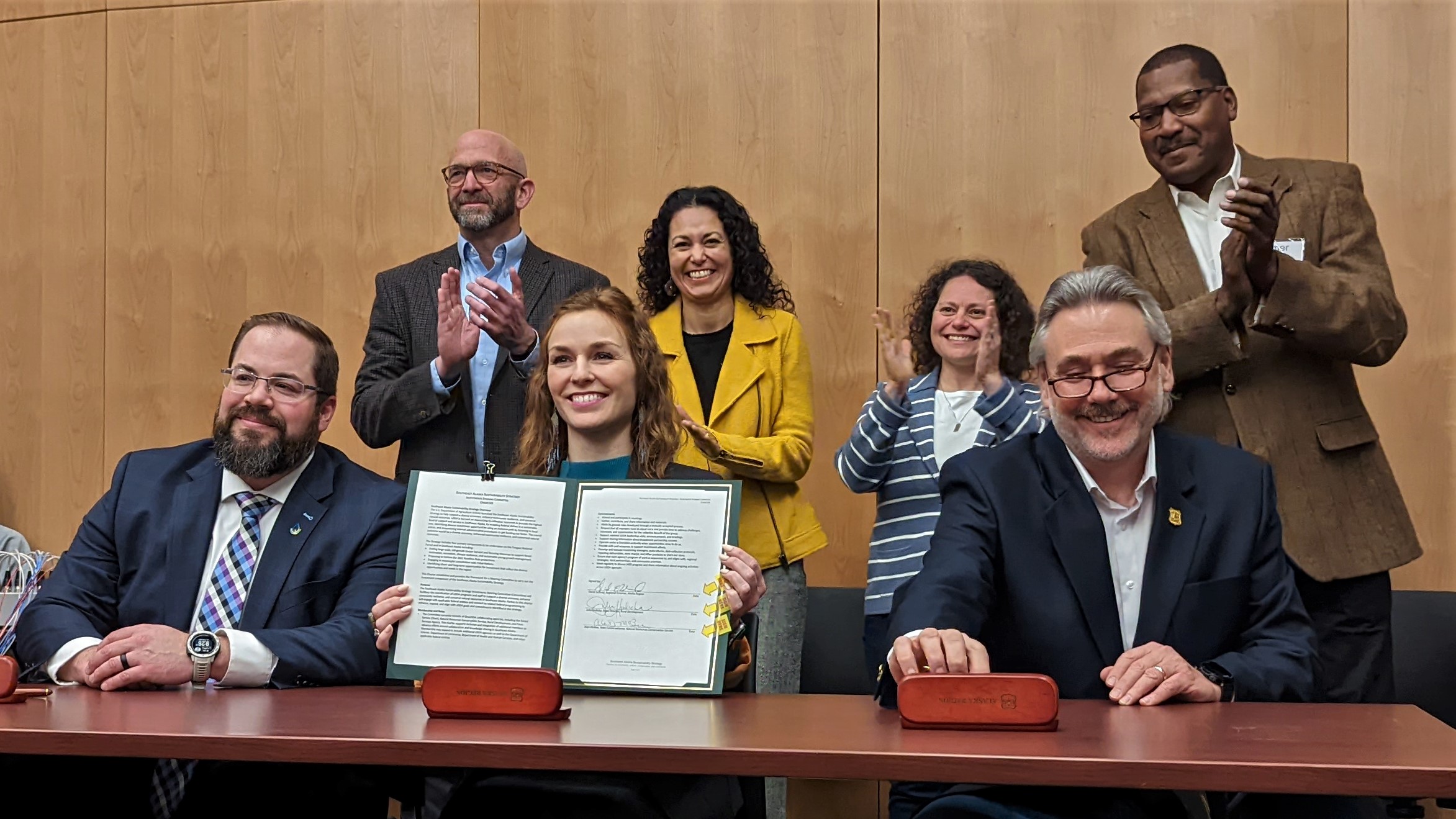
The Alaska heads of three different U.S. Department of Agriculture agencies pose for pictures with an interagency charter they had just signed that empowers a team to work on the Southeast Alaska Sustainability Strategy at the Andrew P. Kashevaroff Building in Juneau on March 31, 2022. Front row: Alan McBee with the Natural Resource Conservation Service, Julia Hnilicka with Rural Development, and David Schmid with the U.S. Forest Service. Back row: Deputy Under Secretary for Rural Development Justin Maxson, Under Secretary for Rural Development Xochitl Torres Small, Deputy Under Secretary for Natural Resources and Environment Meryl Harrell, and Under Secretary of Natural Resources and Environment Homer Wilkes. (Photo by Jeremy Hsieh/KTOO)

Officials with the U.S. Department of Agriculture announced $8.7 million in grants on Thursday for 25 different projects across Southeast Alaska.

The grants are intended to be an early step in a long-term commitment to foster lots of sustainable economic activities driven by locals. There’s support for Indigenous cultural programs, seaweed and shellfish farming, timber management and more.

The Alaska heads of three different USDA agencies also signed an agreement that establishes a permanent team that will work on sustainability goals in Southeast Alaska.

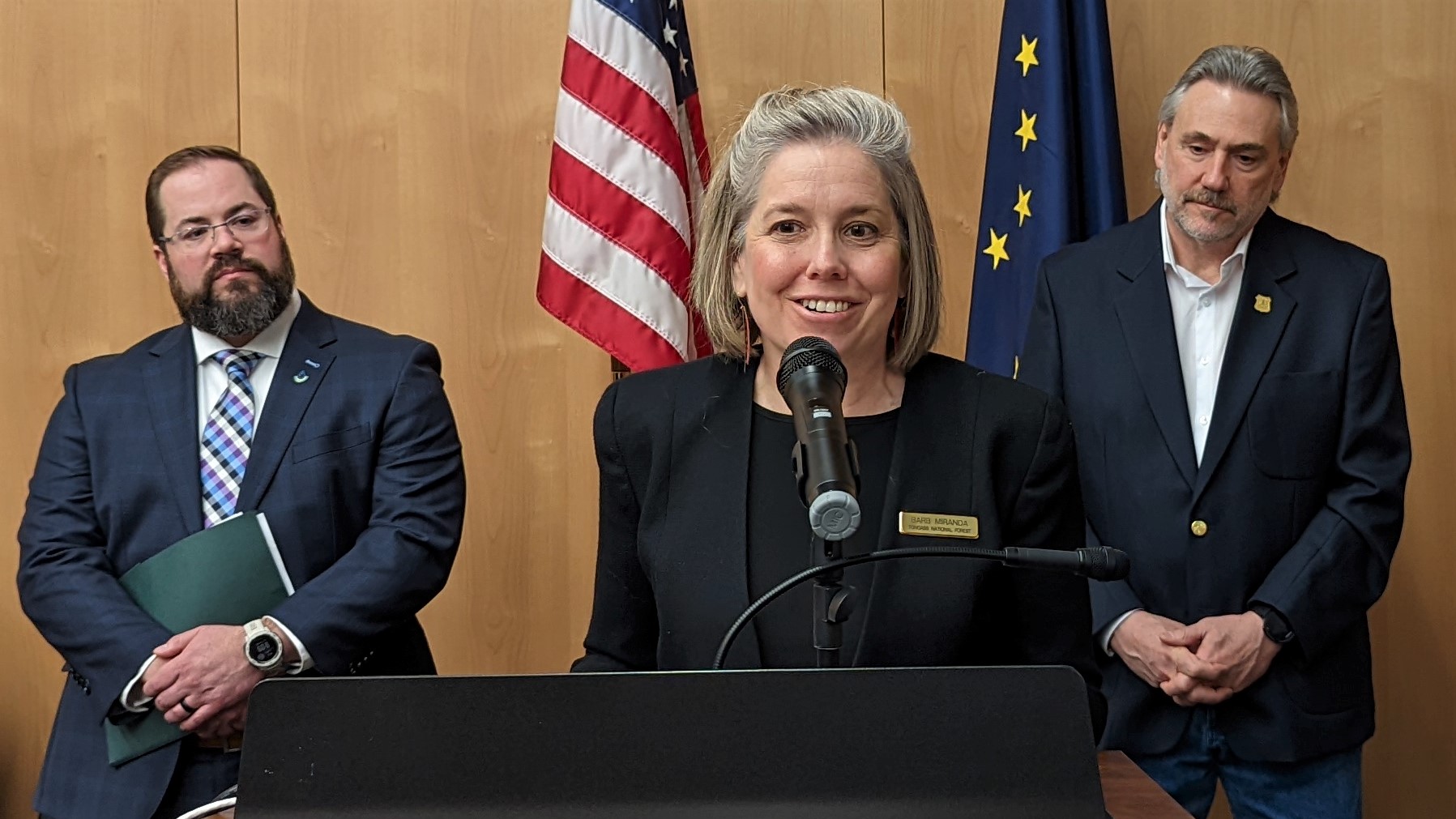
There’s also a new, permanent position tied to the team: Barbara Miranda, coordinator of the Southeast Alaska Sustainability Strategy.

Barbara Miranda, the U.S. Department of Agriculture’s new Southeast Alaska Sustainability Strategy coordinator speaks during an event at the Andrew P. Kashevaroff Building in Juneau on March 31, 2022. (Photo by Jeremy Hsieh/KTOO)

For now, SASS is a unique thing. The USDA doesn’t have other sustainability strategies for other parts of the country.

Miranda said in the past, tribes, local governments or other organizations in Southeast had to shoehorn their needs into existing federal programming. This new strategy has meant getting several different USDA agencies working together and listening to local needs.

“This is different,” she said. “We asked for input from our local organizations and received it. And now, federal agencies … we’re doing the work to struggle to fit those into our agency authorities. The shoe’s on the other foot with this.”

Miranda is based in Juneau. Until about a week and a half ago, she was the director of the Mendenhall Glacier Visitor Center, which the Forest Service runs. She’s also a former mayor of Gustavus, so she’s been on both sides of the table.

The USDA announced it was working on the strategy last July, along with a commitment to invest $25 million in Southeast Alaska. It complements the Biden administration’s efforts to end large-scale, old-growth timber harvesting in the Tongass National Forest and a renewed effort to limit new roads in the Tongass.

Alaska’s Congressional delegation opposes the Roadless Rule in the Tongass because they say it squelches economic activity and gets in the way of local stewardship.

Sen. Dan Sullivan said in a statement at the time that “$25 million doesn’t even come close to covering the economic damage that this administration’s policies will inflict on Southeast Alaska.”

On Friday, Sen. Lisa Murkowski’s said through a spokesperson that she is monitoring the strategy’s impact on Alaskans but still opposes a renewal of the Roadless Rule in the Tongass.

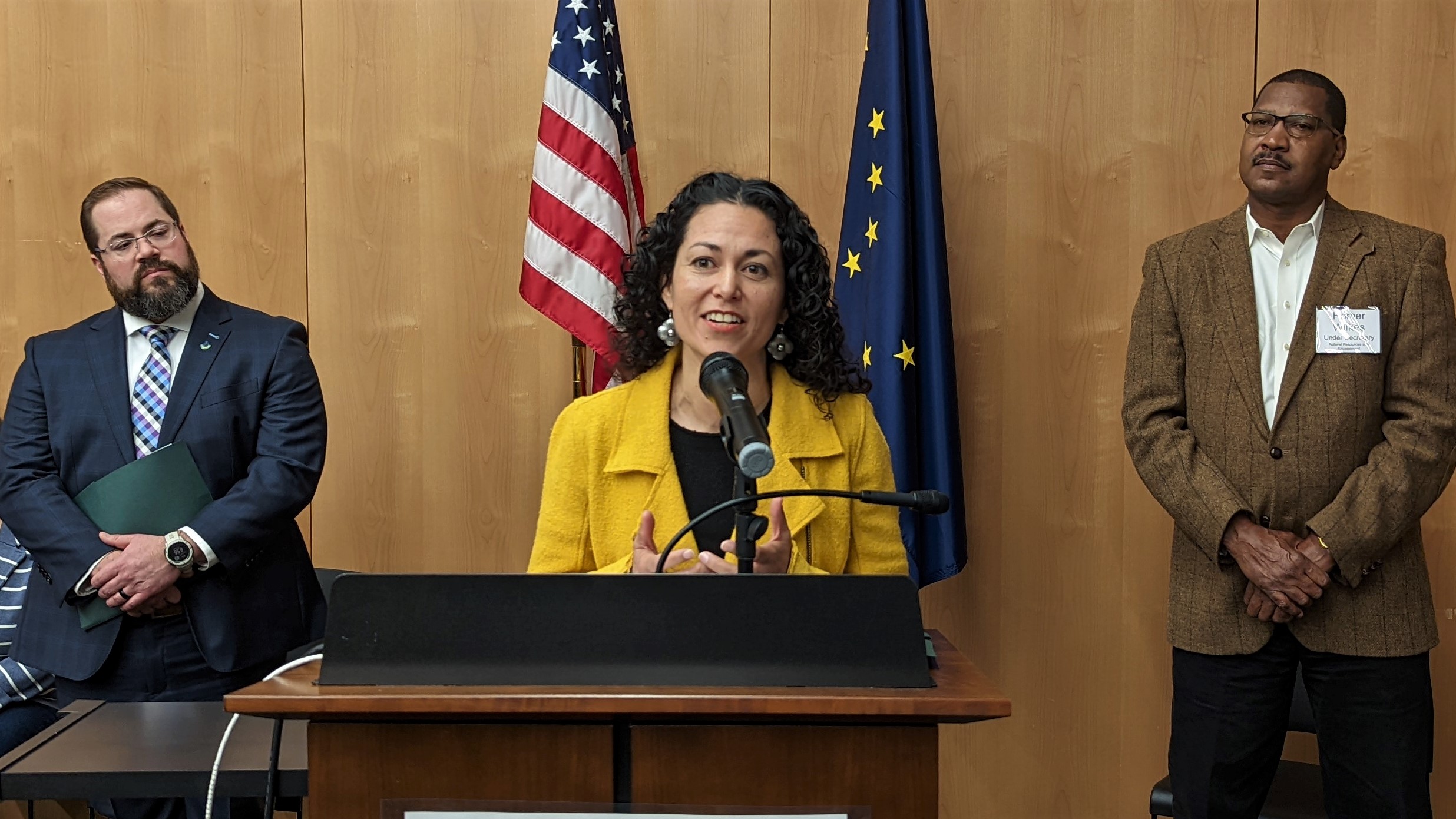
Xochitl Torres Small is the USDA’s undersecretary for Rural Development. She said the timber industry and the Roadless Rule are part of why Southeast Alaska is getting special attention.

U.S. Department of Agriculture Under Secretary Xochitl Torres Small speaks during an event at the Andrew P. Kashevaroff Building in Juneau on March 31, 2022. Also pictured: USDA’s Alaska conservationist Alan McBee with the Natural Resource Conservation Service, left, and Under Secretary of Natural Resources and Environment Homer Wilkes. (Photo by Jeremy Hsieh/KTOO)

“And so as you look at the changes in the timber industry — not strictly the Roadless Rule, but you look at court decisions, and you look at impact in terms of the challenges the timber industry faces now — combined with people who are responding to that by working more collaboratively together by coming up with new ideas for how to invest in the home that they love – that’s something that you want to invest in. That’s something that Rural Development, that’s something that USDA wants to be a part of,” Torres Small said.

Torres Small said the lessons the agencies learn in Southeast Alaska could be applied in other parts of the country.

“At this time, this is really a pilot. We’re forging new ground here,” she said.

USDA officials said they’re working on getting another $16 million in sustainability grants to Southeast Alaska in the next 6 months or so.

This story has been updated with comment from Sen. Lisa Murkowski’s office.

Correction: In an earlier version of this story, the names of USDA officials Julia Hnilicka and Justin Maxson were misspelled.

Site notifications
Update notification options
Subscribe to notifications