Anna Canny

Local News Reporter

Juneau expects to see more cruise passengers than ever this year

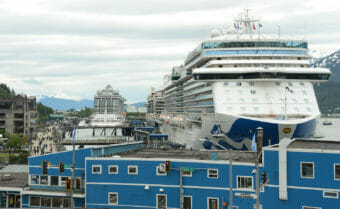
Two cruise ships towering over buildings along Juneau's waterfront
Cruise ships line the Juneau waterfront on Wednesday, June 8, 2022. (Photo by James Brooks/Alaska Beacon)


Juneau’s 2023 cruise season will kick off next week when the Norwegian Bliss arrives on Monday. 

Tourism nearly halted during the first two years of the COVID-19 pandemic, and most of the ships that visited town last year were operating at limited capacity. That makes this year Juneau’s first full-scale cruise season since the pandemic began.

Alexandra Pierce, the city’s tourism manager, says it’s expected to be bigger than ever, with 30% more visitors than in 2019.

“We’ve never seen an increase like this before,” she said. “And I don’t think any of us who are close to the industry really know whether it’s going to just be completely crazy or whether it’ll be okay.” 

Pierce says the city expects 1.67 million passengers. The increase mostly reflects growth of the cruise industry as a whole, she says — ships are getting larger and cruise schedules are getting more packed. 

Elizabeth Arnett of Travel Juneau leads Tourism Best Management Practices, a city program that works to address tourism concerns for both residents and the local tour industry. She said the expected record season could bring welcome economic opportunities along with new concerns and complaints from residents. 

“It’s so exciting to have a thriving tourism community again,” Arnett said. “But that’s not necessarily the case with people who aren’t involved in it.” 

The challenge, for both city officials and tourism advocates, will be finding a volume of tourists that’s sustainable — for both residents and visitors. But Arnett says nobody knows where that number falls, and limiting tourism growth can be challenging. 

“Where’s the stopping point? And how do you even make a stopping point?” Arnett said. “If we start trying to put our foot down with the cruise industry, you know, when do we, you know, step too hard and they just back away?”

The city Assembly has come up with at least one way to manage the ever-expanding industry — a five-ship daily limit, which passed earlier this winter. 

That limit won’t take effect until 2024. In the meantime, tour managers, downtown businesses and city officials will have to figure out new ways to manage crowds and entertain visitors. 

But Pierce says many of the most popular tourist attractions are already overwhelmed. 

“We’re feeling like we’re kind of busting at the seams on whale watching right now. And it feels that way on helicopters,” Pierce said.

And the Mendenhall Glacier, Juneau’s most popular tourist attraction, has been struggling to manage growing crowds for years. The U.S. Forest Service has been working on a plan to upgrade visitor facilities at the glacier since 2019, but it will be several seasons before construction begins. 

Arnett believes more visitors could present opportunities for businesses to expand or explore new kinds of tourism, but they may not be able to take on new visitors right away.

“We’ll be tested this summer for sure. We all pray that it comes down on the plus side,” Arnett said. “Because if visitors stop having a good experience here, the ships will take notice.”

Meanwhile, Pierce says the city hopes to use 2023 as a test run, to understand where crowds have become too much to handle and where new opportunities for high-volume tourist excursions exist.

“To look at the community and where we’re already seeing pain points,” she said. “And to kind of give our local businesses or local tour operators a sense of where and how they can grow.”

Pierce says part of her proposal for the use of marine passenger fees collected from cruise ship passengers will include more money for collecting data on those topics.

And as tourism ramps up for the summer, residents can submit complaints and concerns to the city’s tourism hotline.

It’s spring and Juneau’s bears are waking up hungry

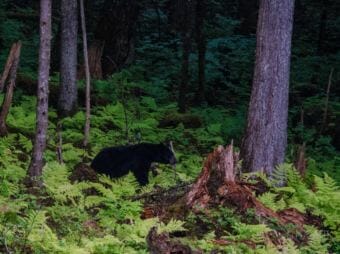
A black bear walks through the woods bordering the Jensen-Olson Arboretum in August. (Photo courtesy of Merrill Jensen/City and Borough of Juneau)

Juneau’s black bears are starting to wake up for the spring. And Roy Churchwell, a local biologist with the state department of fish and game, says they’ll be hungry. 

“The whole time that they’re out from the den, their most important thing is to find food,” he said. “So as soon as they come out in the next few weeks, that’s kind of the first thing on their mind.”

Bears usually start to emerge from hibernation in April. And right on time, reports of bear sightings around Juneau started showing up on social media last week. 
Churchwell says the hungry bears should be looking for spring greens like sedges and skunk cabbage, but the smell of trash could distract them. 

“And they can become dependent because it’s just easier for a bear to bulk up on pizza and things like that,” Churchwell said. 

Bears are often protective of their food. So a bear that gets in the habit of snacking on neighborhood trash can become more dangerous. Often that’s what leads to Fish and Game killing problem bears.

Juneau does have waste management ordinances to minimize confrontation between bears and people. Public service officer Alicia Sell, with the Juneau police department, says enforcing those rules is an important way to keep people safe in bear country. 

“The more secure our trash is, the less bear action we have,” Sell said. “So therefore, we’re not going to have them in the neighborhoods in the residential areas, you know, walking down the street when our kids are going to school.”

Under city rules, trash can only be put out on the curb after 4 a.m. on pick-up days, and that trash must be secured in a bear-resistant container. 

That could be a garage, a locked shed or garbage cans that can only be opened with tools, not with force.

Sell says that people get in the habit of neglecting the rules while bears are hibernating, especially by leaving trash cans out overnight. 

“The problem is, now that the bears are starting to wake up, people are still forgetting,” she said. “And that’s when they’re going and hitting all the trash cans.”

Residents who fail to meet the city’s trash rules can be fined $50 for their first offense. 

Churchwell says the popular rolling cart trash cans that many Juneau residents have are considered bear-resistant by city standards. But the cleverest bears can still find creative ways to tip them over and squeeze them open.

“Bears definitely learn behavior. And so once they find something that works, they’ll try it again and again,” Churchwell said. 

Residents should also try to minimize the odor of the trash they put out by double-bagging it, deodorizing cans with bleach or by separating wet garbage — things like food scraps — in more air-tight containers. 

While garbage is the biggest issue, Churchwell says there are other bear attractants that can cause problems this time of year — things like bird feeders, pet food, compost or grills that haven’t been thoroughly cleaned. 

Juneau’s Basin Road trestle will close, even for pedestrians, in May for repairs

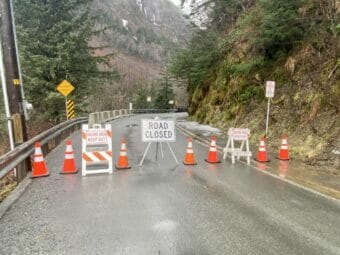
The Basin Road Trestle has been closed to vehicles since a rockslide damaged it in January 2023 (Photo by Anna canny/KTOO)

The trestle on Basin Road has been closed to vehicle traffic since January, when a mid-winter rockslide caused cosmetic and structural damage. When the city begins repairs next month, the trestle will close to foot traffic, too.

Katie Koester, Juneau’s director of engineering and public works, says the closure — which should last from early May through around mid-June — will disrupt some recreation and tour activities for the start of Juneau’s visitor season.

“It’s a huge inconvenience. Not just for those of us who walk up there on a daily basis, but I know there’s also at least one company that works in that area,” she said.

The trestle is a key access point for the popular Perseverance Trail system. It’s been open to pedestrians since the slide, but that will change when construction begins.
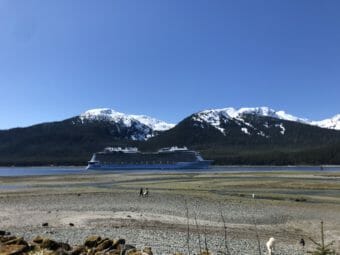
It’s also the only access point for the Last Chance Mining Museum, which typically opens in late May.

The closure will also affect at least one tour company, Alaska Travel Adventures. They run a gold mining and panning excursion in the area. The city’s Department of Parks and Recreation is working with the company to find alternatives during the trestle’s closure.

The trestle, a relic of the AJ Mine, is located in an area that’s prone to both avalanches and landslides. Both have caused temporary closures in recent years.

The state Department of Transportation found that January’s slide caused significant structural damage to the trestle. Stabilizing it to support vehicle traffic is the priority for next month’s repairs, which are expected to cost around $100,000.

“We’re really returning it to the state that it was in before the rock fell,” Koester said. “We’re not doing anything in this repair to further beef up the trestle.”

Hikers who hope to access the Perseverance Trail can still do so via the Flume Trail.

Seattle journalist describes impacts of Alaska’s ‘cruise ship invasion’

The first cruise ship of the season arrives in Juneau on April 23, 2022. (Photo by Paige Sparks/KTOO)

April brings the start of Alaska’s cruise ship season. Juneau will welcome hundreds of cruise ships in the coming months. In a recent interactive feature for Hakai magazine called ‘Cruise Ship Invasion’, freelance investigative journalist Andrew Engelson looked at the impact the cruise industry has on the environment and quality of life in Southeast Alaska.

Engelson talked with KTOO’s Anna Canny about his findings.
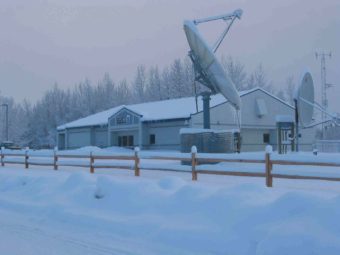
This interview has been edited for length and clarity.

Anna Canny: You’re based in Seattle. And that’s sort of the hub where a lot of these Alaskan cruise ships set sail. So I’m sure you’re used to just seeing the presence of the industry, but as a reporter, what motivated you to take a deep dive into their environmental impacts?

Andrew Engelson: You can’t help but see those ships here. And I was aware that, you know, there were a lot of impacts, and I’ve seen reporting on it — you know, the carbon impacts, the emissions. And then, you know, these are floating hotels that have up to 4,000 people on them. And so those people are, you know, brushing their teeth and using showers. And so there’s going to be treated sewage, gray water, all the trash that’s generated, and, you know, thousands of tourists basically doubling or tripling the size of the population of small towns when the ships arrive. But I wanted to dig in deeper. And so I spoke to the magazine that published it, Hakai, about how we could approach that. 

Anna Canny:  As you mentioned, there’s been a lot of reporting on this over the years, but something that’s really unique about your piece, I think, is the formatting of it. So we follow this one fictional ship — you call it the Oceanic Topaz — and we follow through its stops on its journey through Alaska. I wonder what led you to that approach?

Andrew Engelson:  Yeah, I mean, the findings I had found in this, were really overwhelming. You know, putting it in a traditional article was gonna make it difficult to really kind of cumulatively see those impacts. But if you kind of look at one ship and, seeing the impact of just one ship on its seven day journey, I think was was pretty powerful.

Anna Canny: I just want to highlight some of the numbers that you bring up in your reporting: 2,800 metric tons of carbon dioxide emissions. And then, of course, you use hot tubs to visualize the wastewater, which I thought was helpful: 400 hot tubs of sewage and 3,000 hot tubs of gray water. And of course, there’s the trash. I think it was eight tons of trash. Those are huge numbers. And that’s all for one ship. And then you start to understand here in Juneau, we’re seeing up to five ships a day.

Andrew Engelson: It’s amazing to think about that there are nearly 300 of them, making that journey. You know, 13 ships, 300 sailings, it’s a lot.

Anna Canny: Here in Juneau, something that really struck me is that the majority of our marine emissions, I think upwards of 80%, can be linked to the diesel fuel that burns with cruise ships. But I’m wondering if you could contextualize that piece a little bit more for me.

Andrew Engelson: Yes, it was really surprising, because I think a lot of us, we’re always thinking about climate impacts about, you know, whether we drive our car on a trip, or if we take a flight, and you know, where cruises fit into that as well. And, cruises seem to be really high on that level. And that was fairly surprising to see that one seven-day cruise putting out 2,800 metric tons of carbon dioxide, which is equivalent to driving 600 cars for a year.

Anna Canny: Those diesel fuels are really heavy on emissions, but they’re also heavy on another kind of pollution, which I wasn’t super familiar with. It’s the impact of scrubber discharge.

Andrew Engelson: A lot of these ships, for years, used what’s called high sulfur fuel, and it puts out these particulates. It’s really bad pollution. And so the International Maritime Organization recommended that ships either switch to a low sulfur fuel, or put in what’s called a scrubber, which basically sprays water through the exhaust, and basically taking that and putting those pollutants into the water, instead of into the air. The problem is, is then it takes those pollutants and puts it out into the sea. That discharge is very acidic, it contributes to ocean acidification. It has, you know, metals and other pollutants in it. And it’s really very unregulated, because it’s relatively new. I mean, most people know about, you know, sewage, and that it should be treated. But this is dumped in both Washington State, British Columbia and Alaska.

Anna Canny: It’s clear from a lot of the sources that you interview that there’s definitely concern, like Alaskans are concerned and are noticing these impacts. But there’s a trade off for a lot of these communities, right? You hear about the economic benefit that the cruise industry brings.

Andrew Engelson: Yeah, it’s a complicated issue. I mean, you know, Seattle actually definitely benefits there’s no question. And certainly the economic benefits to places like Juneau and Ketchikan are high. And maybe the economic benefits are, you know, worth it. But when you kind of total up all of those impacts and the impacts the quality of life, you know, there’s no question. And it was surprising to me that there was a poll of Juneau residents that said, a majority of them were like, yes, we should limit the number of cruise ships.

Anna Canny: Well, yeah, I’m sure it will be really interesting for our listeners, because our first cruise ships arrived just over two weeks from now. And you’ve given me lots to think about as I watched them start to come in. So thanks for chatting with me, Andrew.

Andrew Engelson: I really appreciate it.

Alaska’s annual tsunami warning test failed for some communities

Winter view of the National Tsunami Warning Center in Palmer. (Photo courtesy of NOAA)

Wednesday was the annual test of Alaska’s tsunami warning system. Radio and TV stations along the coast of the Gulf of Alaska were expected to broadcast a test of an emergency alert – similar to what you’d hear during a real tsunami. 

But some communities didn’t hear it at all, including Homer, Kodiak, Unalaska, Sitka, Ketchikan and Kenai.

Dave Snider, with the U.S. Tsunami Warning Center in Palmer, says a combination of technical glitches, along with some confusion, prevented the test from reaching those places. Forecasters in Anchorage failed to pass the message along. 

“I think it was just that they were confused about what kind of tests were running,” Snider said.

An abundance of caution

Wednesday’s tsunami warning test was an annual test. It runs every year in March, with the goal of refining the way tsunami warning alerts are delivered to the public. 

But when forecasters at the NWS Office in Anchorage received the test signal, they failed to enable the regional Emergency Alert System. So the message never reached radio stations like KBBI in Homer, KMXT in Kodiak or KUCB in Unalaska. 

Tsunami warnings in the state follow a complex chain of communication. When forecasters at the Tsunami Warning Center trigger a warning, it goes to NOAA offices like the National Weather Service stations in Anchorage and Juneau. That’s stage one. 

When they’re conducting regular monthly tests, that’s where the chain stops. 

“But this test was designed to go further than the normal monthly communications tests,” Snider said. “And in this case, the problem is we just need to be more clear about what kind of tests we’re running.”

Wednesday’s warning was a rare kind of test, one where the Tsunami Warning Center tries to simulate a real tsunami threat by jumping into stage two: the Emergency Alert System, which notifies the public through radio and TV broadcasts. And that’s the part that didn’t happen for stations that rely on the NWS office in Anchorage. 

When it comes to testing tsunami warnings in Alaska, the team is a bit out of practice, which may have contributed to the breakdown in communication. The annual test has been canceled in recent years when real tsunami threats happened, like the volcanic eruption near Tonga last year and an earthquake in the Gulf of Alaska in January 2018.

Snider also said he believes that past mistakes have caused some hesitation when it comes to sending out test warnings. For instance, in a 2018 incident a routine test activated the Emergency Alert System by accident.

“I think there’s some well placed hesitation during tests,” Snider said. “Out of abundance of caution, and truthfully, you know, previous years of false alarms.” 

Difficulties in decoding

Wednesday’s test also revealed technical failures. Some radio stations received the test message, but their systems were unable to read it.

The Emergency Alert System relies on “live codes,” a form of automated communication where coded messages are deciphered by radio and TV broadcast systems. Some radio stations, including KDLL in Kenai, KCAW in Sitka and KRBD in Ketchikan, received the live codes from NWS in Juneau. But their systems were unable to decode the message, so it wasn’t broadcasted. 

Snider says the root of the problem was the fact that the alert was just a test.

“In a normal situation, zero hesitation, everything would have flown out the door,” he said. “I have no doubt that would have worked.”

The challenge is balancing the need for tests with the need to preserve a sense of urgency when it comes to real alerts. If botched tests and false alarms happen too often, there’s concern that the public will stop taking tsunami alerts seriously. 

But Snider says the errors from Wednesday will be valuable feedback to fortify the warning system. 

“The good thing is that with tests, they’re designed to fix problems before an actual event,” Snider said. 

Communities that had problems with Wednesday’s test are encouraged to submit their feedback at www.ready.alaska.gov.

Annual test of Alaska’s tsunami warning system scheduled for Wednesday

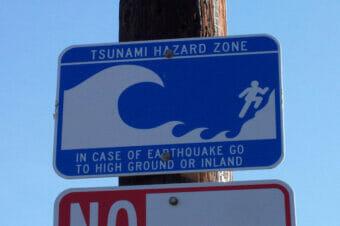
A Tsunami hazard zone warning sign.
A Tsunami hazard zone warning sign. (Photo by Derin/Flickr Creative Commons)

Many Alaskans will get a tsunami warning on Wednesday at 10:15 a.m. It’s a test, but the people sending it out are worried that not everyone will know that.

Dave Snider of the National Tsunami Warning Center says that’s because the system used to send out tsunami alerts is outdated and overly complicated.

“We’re operating on a system that is probably closer to where meteorology and weather science was 20, 30 years ago,” he said.

Real tsunami warnings get broadcast on local radio and TV stations and relayed through warning sirens, in places that have them. They also go out through wireless emergency alerts — the kind that can show up on your cell phone’s lock screen, sometimes with an irritating siren noise. 

For Wednesday’s test, the cell phone alerts won’t be activated. But Snider says it’s possible that some mobile apps might spread the warning anyway. And due to incompatible software, those third party apps could misread the code that communicates the warning and leave out the part that says it’s a test. 

Tsunami push notification sent out through the wireless emergency alert system on Jan. 23 via IPAWS. (Screenshot by Aaron Bolton, KBBI)
Tsunami warnings sent out through the wireless emergency alert system look like this. Those alerts shouldn’t go out on Wednesday, but similar third-party messages could appear on your lock screen (Screenshot by Aaron Bolton, KBBI)

“We do rely on our third party, private industry and enterprise to make sure that they’re keeping up with the changes that we’re making, and making sure that they understand the code that we’re using,” Snider said.

It’s also possible that the warning will reach people outside of the testing zone. That’s because tsunami warnings are issued using weather forecasting boundary zones —  the same ones used to issue alerts for weather hazards like winter storm warnings.

Most of the zones cover large areas, and they’re not designed for tsunami warnings. Snider says feedback from tests — like hearing from people outside tsunami zones — is vital to designing a better warning system. 

“One of the results of this will be to see, are there places that are getting this alert that shouldn’t get the alert? And we may find a couple of those places,” Snider said. “Because we know in the past, there have been some areas that have been over-warned or over-alerted.”

The warning center runs the annual test each March as part of Tsunami Preparedness Week. It falls around the anniversary of the devastating tsunamis of the Great Alaska Earthquake of 1964. 

Those tsunamis are why the center exists in the first place. Decades later, the technology for sending out precise warnings is very much a work in progress. In a report last year, the NOAA science advisory board called for “urgent action” to update the tsunami warning system. 

Snider says perfecting that technology could take decades longer — and in the meantime, he expects some errors.

“​​Twenty years from now, when we’ve redesigned the alert system, it won’t happen,” he said.  “It’s a technology thing, and we’re constantly working to refine that and keep people safe.”

Feedback from this week’s test will help to improve things along the way. People in the southern Alaska tsunami zones are encouraged to submit their comments at www.ready.alaska.gov.

Site notifications
Update notification options
Subscribe to notifications