Elizabeth Jenkins, Alaska's Energy Desk - Juneau
It’s been years in the making. Now, students can enroll in a Northwest Coast arts program.

A detail of Lily Hope’s first full size Chilkat Robe. Hope is teaching an online class about career development as an artist. (Photo by Annie Bartholomew/KTOO)

This fall, students headed to the University of Alaska Southeast can enroll in a new associate degree program in art.

It’s part of a larger vision — in works for several years now — to establish a Northwest Coast arts hub. 

The new degree program is a partnership between the University of Alaska Southeast, Sealaska Heritage Institute and the Institute of American Indian Arts in Santa Fe, N.M. The agreements were signed a few years ago, but it’s taken some time to line everything up. 

Kari Groven, the Art Director at Sealaska Heritage Institute, says there’s a lot of room for growth. 

“We’re at a really great milestone that it exists in the first place,” she said.

The program is a two-year art degree with a focus on Northwest Coast Indigenous art. As part of the new program, students are required to take an intro course in relevant Native languages. Then, there’s hands-on arts classes to choose from, such as Northwest Coast basketry and carving. The university has offered some of those courses before, but others are brand new. For instance, acclaimed weaver Lily Hope is teaching an online class about career development as an artist. 

Students enrolled in the program will have the option to transfer credits to the Institute of American Indian Arts if they want to pursue a bachelor’s degree, or they can pursue a degree at UAS.

Groven thinks this kind of comprehensive academic offering is long overdue. She says many people are familiar with the region’s formline design, but the associates program is a way to gain a deeper understanding.

“In a way, the associates degree provides a starting point for that journey,” Groven said.

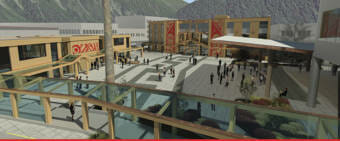
A rendering of the future Sealaska Heritage Arts Campus. (Courtesy of Sealaska Heritage Institute)

Some of this fall’s courses will be offered online, and some will happen in-person — in accordance with the university’s pandemic plan.

In the future, students will take some of these classes on a brand new campus. Sealaska Heritage has already started breaking ground on a 6,000 square foot facility in downtown Juneau. It’s designed to house big projects, like canoes and totem poles. The campus is slated for completion sometime next year.

For Tongass projects, critics say environmental rollback could cut the public out of the process

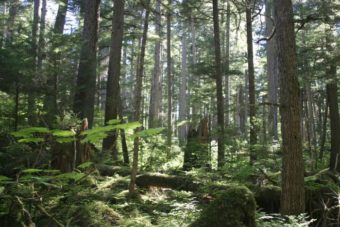
This clear-cut in the Tongass National Forest on Kupreanof Island north of Petersburg is visible from the air in 2014.
A clear-cut in the Tongass National Forest on Kupreanof Island in 2014. (Photo by Ed Schoenfeld/CoastAlaska)

Gov. Mike Dunleavy recently praised President Donald Trump’s decision to make changes to bedrock environmental policy. Proponents say the changes streamline a burdensome regulatory process that hampers development on federal lands. In the Tongass National Forest, they come at a time when sweeping management changes were already underway. 

Natalie Dawson, the executive director at Audubon Alaska, compares the changes to the National Environmental Policy Act to a late-night text.

“It used to be like the morning text message where it was thoughtful and you had a night to sleep on it. And you thought about your actions and what you may or may not want to say. And now, we can kind of go with heat of the moment decision making.”

Changes include removing the requirement to analyze cumulative impacts, like climate change, for new projects to take place on federal lands.

Dawson thinks another impact of the late-night text version of NEPA will be less public engagement. She says public input was a founding principle of the NEPA framework. Now, that’s being degraded.

This is all happening when the Tongass — the nation’s largest national forest — was already going through some controversial management changes. It’s slated to be totally exempted from the federal Roadless Rule, which could open up more access to logging. Under old NEPA, that public process was already fraught, with critics claiming the U.S. Forest Service didn’t listen to the public or tribal governments’ feedback to keep those protections in place. 

Under new NEPA, Dawson says getting a word in on future projects will be a lot harder. One change is that only substantive comments will be accepted. This means that expressing general concerns about logging near deer or salmon habitat isn’t going to cut it. 

“There was this phrase called, ‘to the fullest extent possible encourage and facilitate public involvement,’” Dawson said. “So ‘to the fullest extent possible.’ That language is now gone.”

“You may not have the time to sit down with all the maps and documents and provide a site-specific analysis of the federal agency action, and yet you are an incredibly important stakeholder in this process,” she said.

In the last few years, public meetings held throughout Southeast Alaska to discuss changes to the Roadless Rule were well attended. Dawson says that in the future, it’s not clear if public meetings with federal agencies will even take place. Before, meetings were held when there was substantial interest or controversy. Now, public meetings will only occur “when appropriate.” She says it’s also unclear who among the various federal agencies will make that determination. The same goes for decisions about whether a project is significant enough to trigger a full environmental review. 

Dawson thinks the region recently saw a preview of what these changes could mean. The largest proposed timber sale in the Tongass in decades wasn’t allowed to move forward because it violated NEPA. Dawson says that project might not have the same barriers in another go-round. 

Tessa Axelson, executive director of the Alaska Forest Association, says the ruling on that sale was a setback for the timber industry, and she thinks streamlining NEPA will be a good thing.

“I don’t see anything necessarily that is going to result in the loss of public input into the process,” Axelson said.

The timber industry group has long pushed for changes to NEPA. Axelson says under the old version, projects could be held up for many years — making it difficult for struggling operators to bid on federal timber sales and plan for a predictable supply.

“What we want is a process that is responsive to the law and also ensures that the professionals, that agencies are held to a standard for producing things timely and in such a way that is not so burdensome to small business operators,” Axelson said.

Still, Axelson doesn’t think an exemption to the Roadless Rule in the Tongass and revisions to NEPA will do enough to ensure a better outlook for Alaska’s timber industry. It’ll be up to federal agencies to plan enough timber sales that actually come together. 

In the meantime, all of this could change in November. President Trump’s NEPA revisions can be undone by a new presidential administration. 

With a Roadless Rule decision pending, tribal governments petition for new process

Tongass National Forest
Part of the Tongass National Forest on Douglas Island pictured in 2004. (Creative Commons photo by Henry Hartley)

Nine tribal governments in Southeast Alaska submitted a petition to the United States Department of Agriculture on Tuesday, asking for another rule making process for the Tongass National Forest. 

The federal agency is close to announcing what’s likely to be a full exemption of the Roadless Rule in the Tongass, which the state has long requested. 

But there’s been discord between the Department of Agriculture and tribal governments, who’ve repeatedly stated Roadless Rule protections should stay in place. In an unreleased federal report, 96% of the public said they disagreed with changes to the Roadless Rule, too. An exemption would make it easier for new roads to be built in the forest — opening up access to logging. 

Joel Jackson, the President of the Organized Village of Kake, was one of the leaders who signed the petition. He’s concerned about damage to fishing and hunting areas, and he said Kake’s concerns have felt ignored by the federal agency. 

“They seem to minimize our way of life,” Jackson said.

The petition outlines the creation of a Traditional Homelands Conservation Rule to protect important areas for Tlingit, Haida and Tsimshian peoples. 

In 2018, the State of Alaska petitioned the U.S. government for the Roadless Rule exemption in the Tongass. Tribal governments were supposed to be playing an integral role in that process, but have been critical of how the federal agency has handled things — saying that deadlines were rushed and that a meeting was scheduled during the chaos of the coronavirus pandemic, making it difficult to attend. 

The petition asks the Department of Agriculture to create a new, more robust consultation process. Marina Anderson, the Tribal Vice President of Kasaan, says that would bring in more science to help guide the process. 

“That best available science includes Traditional Ecological Knowledge,” Anderson said.

It’s unclear how long the Department of Agriculture has to respond to the tribal governments’ petition. The agency accepted former Gov. Bill Walker’s petition to reexamine the Roadless Rule after four months

With no cruise ships in port, a longtime entertainer hits the grocery store

Bobby Reynolds is a mostly self-taught musician who’s been playing the entertainment circuit for 60 years. To visit Juneau this summer, he self-quarantined upon arrival and had a COVID-19 test. (Photo by Elizabeth Jenkins/KTOO)

Southeast Alaska is having an unprecedented summer with no cruise ships in port due to COVID-19. Many businesses that cater to tourists aren’t able to resume normal operations. And performers who entertain people on and off the ship are feeling that squeeze, too. But at least one musician is performing in a very different space in Juneau — bringing playful vacation vibes to an everyday task. 

When you’re pushing a cart at the grocery store, it’s normally to the tune of some generic pop song. But lately at Foodland IGA in Juneau, the music has been coming from an actual keyboard player: 81-year-old Bobby Reynolds.

Reynolds wears a low-slung face mask as he glides his fingers across a keyboard set up near the entrance of the grocery store. A tip jar is positioned close by. He plays a wide variety of music, everything from Fats Domino and Frank Sinatra to the theme from the Flintstones.  

Reynolds normally spends the off season at his home in Florida, but he’s been coming up to Juneau every summer since around 1997 to perform for cruise ship tourists. Despite the global pandemic, this summer was no exception. 

“I thought, I got to get the heck out of Fort Lauderdale,” Reynolds said. “I called the general manager at the IGA store and he said, ‘Bobby listen, you’ve been in the business a long time. Why don’t you bring your piano and set it up over here. Maybe we’ll try something.'”

Reynolds says he’s played in some of the best rooms in the world and in front of large audiences. One time he performed at the Playboy Club.

“But I like playing tunes in the grocery store because I can talk to people as they go by,” Reynolds said. “Everybody talks to me.”

Reynolds normally takes up residence at the Red Dog Saloon in the summer. He speaks with a deep affection for the iconic Juneau restaurant and bar. It’s usually packed with tourists this time of year. 

When Reynolds started playing at the Red Dog Saloon more than a decade ago, he was greeted by a longtime performer, “Tag” Eckles, who went by the stage name, Phineas Poon. That longtime performer helped bring him into the fold and even gave Reynolds a new stage name: The Great Baldini. 

But The Great Baldini’s act at the Red Dog Saloon is a little more rowdy than his current grocery store gig. In a Youtube video of him playing at the Red Dog in 2014, he sings a silly parody of She’ll be Coming ‘Round the Mountain that sounds like it’s about a flatulent grandma. Reynolds says he likes to make his audience laugh. And as a performer, he commands attention. You do not want to be caught on a cell phone in the middle of his show. 

“I say things like, ‘you know what, I’ve been doing this for 60 years so I’d like you to put those [expletive] down for a little bit.” Reynolds said. “I swear a little bit. I don’t get dirty, vulgar because you should never have to do comedy like that. And I just yell at ’em and tell ’em, ‘Just pay attention. I might have something you like.'”

There are a number of people who like what The Great Baldini has to offer. Tourists regularly mention his act as a standout in reviews on Tripadvisor.

Of course, the energy in Juneau is very different this summer. Even so, Reynolds says he’s grateful to entertain locals at the grocery store, even if they’re just grabbing a carton of milk. 

Reynolds was planning on going back home sometime in August but those plans are on hold at the moment. He might stay a little longer, as case numbers in Florida continue to surge. In the meantime, he’ll keep doing what he does best — playing music and entertaining.

“I’m just going to keep doing what I love to do,” he said. “Playing right in the middle of a song, I just might go South. Fine with me. The last guy that worked here 33 years is right up there in that jar, and that’s his ashes in that jar … in the Red Dog. My buddy Tag Eckles. He got me the job here. I just might have mine up in there someday, right next to his.”

Alaska Pioneer Homes are trying out in-person visits again

The Sitka Pioneer Home was the first such facility. Five others operate in Ketchikan, Juneau, Anchorage, Wasilla and Fairbanks. (Photo by Emily Kwong/KCAW)
The Sitka Pioneer Home. (Photo by Emily Kwong/KCAW)

Assisted living facilities and nursing homes in Alaska closed to the public in March over concerns residents could easily contract and spread the coronavirus. Now, some Alaska Pioneer Homes are resuming indoor family visits. 

Gina Del Rosario, the administrator at the Pioneer Home in Juneau, says the facility started welcoming visitors inside on a limited basis three weeks ago. Socially distanced face-to-face visits are not to exceed 20 minutes. Overall, she says residents who might have felt isolated before seem happy about the change. 

“The visiting area is close to my office. I could hear part of the conversations. The majority of it is wonderful,” she said. “Air hugs, air kisses have become a normal language for them.”

In all six Pioneer Homes across the state, staff members and residents have already cleared COVID-19 tests and staff will continue to be tested every two weeks. Right now, visitors to assisted living facilities, like the Pioneer Homes, don’t have to be tested, but new state guidelines for nursing homes suggest that visitors provide a negative test within 72 hours of visiting a facility. That’s when inside visits resume. Nursing homes have not opened yet to the public.

Not all Pioneer Homes are set to reopen. There are other factors to consider, such as staffing availability and how many coronavirus cases are being reported in the community. Recently, Alaska has seen its coronavirus case numbers swell. The Pioneer Home in Anchorage isn’t reopening yet due to the high rate of infection in the city. And Fairbanks began visitations last week but stopped after infection rates jumped in the community.

Next Monday, the Pioneer Home in Juneau plans to expand its visitations from one family member to two family members per household.
Juneau food businesses look to new markets to ride out pandemic

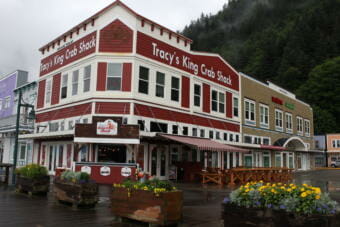
Tracy’s King Crab Shack normally employees more than 100 people in the summer. Now, its staffed with six employees. (Photo by Elizabeth Jenkins/KTOO)

Restaurants and local food producers in Juneau were gearing up for what was supposed to be a record breaking tourism season this summer. Of course, those prospects are dashed now as coronavirus cases across the country continue to swell. But businesses are finding ways to sell their inventory.  

There’s no one around on the boardwalk that’s normally bustling with cruise ship passengers this time of year. Still, it’s not exactly quiet. An 80s pop song pulses through the outdoor speakers at Tracy’s King Crab Shack. The restaurant is surrounded by darkened storefronts, but it is open. A giant metal pot in the kitchen billows steam. 

Tracy LaBarge, the owner, says she didn’t consider keeping the business closed through the summer. 

“No, that wasn’t an option,” LaBarge said. “There’s bills to pay so we’ll do what we can do.”

LaBarge has added items to the menu that are more cost effective for local diners than her signature dish — king crab legs. 

Even so, she estimates sales are down by about 95%. And with revenue to make up, LaBarge is looking for other ways to diversify the business. 

“So we have definitely gone to more online sales,” she said.

In the corner of the restaurant is something new: a shipping station stacked with boxes and tape. LaBarge says they’ve sold crab online before, but it was never a focus. Now, it’s something they’re going to do more of because of business necessity and customer demand. She says recently limited online orders featuring a frozen crab leg bisque kit did especially well. It sold to customers from across the country. People who’ve visited Juneau on a cruise regularly stay in touch via Facebook or through her newsletter. 

“Surprisingly, we do get a lot of orders [from] Arizona … Unfortunately, it’s so hot [there] we have a lot of issues. We have to put extra ice packs in there,” LaBarge said.

It’s not just restaurants that are having to rapidly adjust their business model. Local food producers who normally sell to seasonal restaurants are having to pivot, too. 

xx
Basil growing hydroponically at Juneau Greens. (Photo courtesy of John Krapek)

“It was almost like perfectly horrible timing,” said John Krapek, one of the owners of Juneau Greens.

He runs a hydroponic farm inside a garage big enough to fit a large boat. Before COVID-19 stuck, Krapek had planted plenty of butter lettuce and arugula, anticipating summer sales to restaurants and possibly a small cruise ship. 

“When the restaurants first closed, we had like kind of a week of panic, thinking about what we were going to do,” he said. “because I’d say about 30% of our business was selling to restaurants.”

But that panic didn’t last long. Krapek had amassed a waitlist for a popular Community Supported Agriculture program, or CSA, where customers pay in advance for a weekly greens box. He says he was able to fill most of that gap selling directly to customers through the CSA in addition to increasing sales to Panhandle Produce’s brick and mortar shop in Juneau and Salt & Soil Marketplace, an online farmer’s market, which has reported tripling  its sales during the pandemic. 

This experience could be seen as a setback. But Krapek thinks, so far, it’s been a positive story. 

“I think we’re cultivating an even larger customer base now by going direct to consumer,” Krapek said.

Back at the crab shack, Tracy LaBarge says there’s also some benefits to having a slower year. She actually had a difficult time amassing large quantities of king crab from Kodiak in the fall when she normally buys her crab. 

“I’m actually glad it’s a little bit slower because I need to hold on to it,” she said.

In the meantime, LaBarge will sell some of that product locally and in online orders for people nostalgic for their Alaska cruise. For now, a box of crab legs will have to do — invoking the taste of the ocean and the past summer energy of downtown Juneau, even in the heat of Arizona. 

“I think being here is just special in itself. You’re in Alaska. You’re having crab in Alaska,” LaBarge said. “It’s hard to beat that. But the feedback we’re getting is people are really happy that we sent it there, but they miss being here.”

Site notifications
Update notification options
Subscribe to notifications