Elizabeth Jenkins, Alaska's Energy Desk - Juneau

As lands uplift, a wetland refuge in Juneau is losing ground

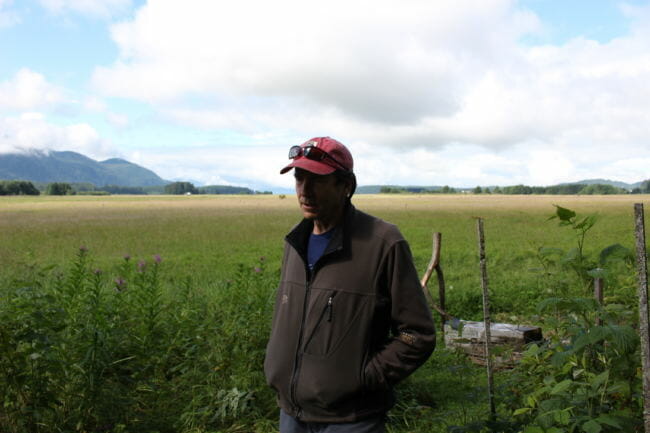
Frank Rue stands in his backyard. The Mendenhall Wetlands State Game Refuge was established in 1976. (Photo by Elizabeth Jenkins/Alaska’s Energy Desk)

You’d think with all those glaciers melting around Southeast Alaska, sea levels would be rising. But that’s not the case.

Some parts of the region are actually gaining ground at a pretty astounding pace. But as the tideline moves, a protected wetland in Juneau is shrinking.

The view from Frank Rue’s house overlooking the Mendenhall Wetlands State Game Refuge in Juneau didn’t always look like this. He lives in a neighborhood called Sunny Point. But he says his kids used to come in from playing outside covered in mud.

“The story was, and I don’t know if it was true, that it was originally called Mud Point,” Rue said. “Because there was a lot more mud out here and even a gravel beach and then it was renamed Sunny Point.”

Sunny Point sounds like a safer real estate investment. Today, this neighborhood mostly lives up to that namesake.

From Rue’s back porch, you can see a field of long grass that stretches across to the Gastineau Channel. The tide only makes it up to this spot below Rue’s house a couple times a year. So, technically this is still a wetland.

“You know, I see ducks using these little ponds here. Eagles are using this edge to hunt,” Rue said.

But the land right outside Rue’s house is fairly new. And there’s a geologic explanation for why the view has changed so much since his kids were small.

Juneau is rising by about a half an inch a year. That rate differs from place to place. But overall, across the region the uplift is fast. 

“As far as we know, these are the fastest rates in the world,” said Roman Motyka, a retired glaciologist at the University of Alaska Fairbanks Geophysical Institute. 

Motyka says what’s causing the land to rise up is a phenomenon known as isostatic rebound. As glaciers retreat, the absence of pressure from the ice causes the land to spring up.

“All you have to do is walk out to Mendenhall Glacier and see what’s going on,” Motyka said. “As a glaciologist, I hate to see my poor glaciers wasting away but that seems to be the future.”

Motyka says when researchers first started looking at this back in the 1960s, they thought that isostatic rebound was likely due to the glacial melt which occurred hundreds of years ago. But today, the scientific models suggest it’s also happening now.

“Isostatic rebound, in this case, is directly related to climate change,” Motyka said.

As the tide moves farther back from places like Sunny Point, property owners like Frank Rue can go through a legal process with the state to essentially claim ownership over these new lands.

Normally, the state owns everything up to the ordinary tideline. But with rebound, those tidelines shift.
Isostatic rebound in Southeast Alaska is occurring between Yakutat and Sitka, and it’s especially apparent in relatively flat wetlands. (Photo by Elizabeth Jenkins/Alaska’s Energy Desk)

Rue points to two stakes with orange flagging that indicate his new property boundary. Together, with his neighbor, he was able to claim roughly nine acres of the new land.

But he’s not keeping it. He’s selling it to the Southeast Alaska Land Trust, a conservation group that plans to make this new land part of the Mendenhall wetlands.

Rue is also a Southeast Alaska Land Trust board member. When he sold his property back to the trust he recused himself from the board. 

Allison Gillum is the group’s director.

“Our long term plan is to re-incorporate them into the refuge and basically preserve the refuge boundary,” Gillum said. “So future landowners can’t continue to take land out of the refuge and make the refuge smaller.”

In fact, Gillum says the Mendenhall refuge could become bigger than its original acreage. 

The land trust has entered into a purchase and sale agreement for 32 acres with Bicknill Inc., whose lands were not originally part of the refuge. Although, that agreement doesn’t include all the company’s property in the area.

Separate from that deal, the land trust has also been able to procure over 50 acres that were originally part of the Mendenhall refuge.

In a couple of years, pending the approval of the Alaska Legislature, all of this wetland could be protected — in some some cases, once again.

Frank Rue’s kids might not come back with muddy boots anymore, but he thinks this refuge is still ecologically important for birds and people alike. Even after he’s gone, no one will be able to build here.

“That’s was my concern,” Rue said. “I don’t plan to do anything. But I don’t know what the next owner or the next owner after that would do.”

But now, all of the homes along Sunny Point will continue to enjoy their view and have protected wetlands as their backyard.
How bold? Governor’s climate action team talks emissions reduction goals and education

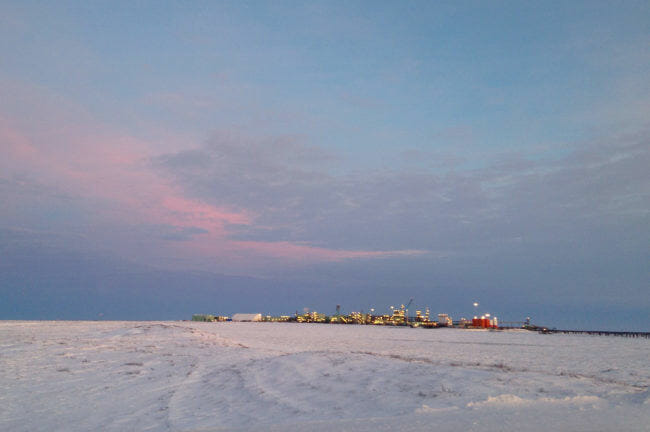
ConocoPhillips’ Alpine facility on the North Slope. Conoco’s Scott Jepsen said a new processing facility in NPR-A would be about the same size. (Photo by Elizabeth Harball/AED)
ConocoPhillips’ Alpine facility on the North Slope. The governor’s Climate Action Task Force is considering the prospect of upgrading North Slope’s energy infrastructure (Photo by Elizabeth Harball/Alaska’s Energy Desk)

Governor Bill Walker’s Climate Action Task Force met Wednesday to discuss a draft document that could influence the state’s climate change policy in the future.

The Climate Action Task Force had something new to work with this week: A report from the Oil and Gas Technical Committee, which is a group made up of task force members and a mix of volunteers and includes representatives from industry.

Overall, that report suggests that hard numbers for reducing carbon emissions won’t come easy — especially since industry emissions have already decreased between 2005 to 2015. Though, economists aren’t entirely sure why.

But the governor’s task force is still trying to set some clear goals. The current draft plan includes language to reduce oil and gas emissions by 30 percent over 2005 levels by 2030.

To help achieve that, the document includes the prospect of upgrading North Slope’s energy infrastructure. On the conference call, Alaska Energy Authority Executive Director, Janet Reiser, says that project seems like a heavy lift.

“I see big concerns about the ability of this project to be economic or even beneficial to any real degree” Reiser said.

There was another sticking point in the nearly two-hour long meeting: Should the task force include the words “climate change” in its policy statement on science education and encourage more curriculum related to that? It was included in an earlier draft.  

Larry Hinzman, a Vice Chancellor at the University of Alaska Fairbanks, suggested treading lightly.

“If people think we are trying to indoctrinate their children, you know, that could kill the whole program,” Hinzman said.

But Mark Masteller — the task force member who helped craft the policy statement — disagreed.

“We’re using ‘climate change’ in many parts of the document,” Masteller said. “What our charge is, is to lead on the issues related to climate change.”

In the end, the task force seemed to come to a broad conclusion to act boldly and potentially include the language.

Their next in-person meeting is August 2 in Anchorage. The task force hopes to have the draft policy completed by September.

Editor’s Note: An earlier version of this story contained an error. The draft plan includes language to reduce oil and gas emissions by 30 percent over 2005 levels by 2030 — not 3030. 

Are great white sharks sinking their teeth into Bering Sea seals?

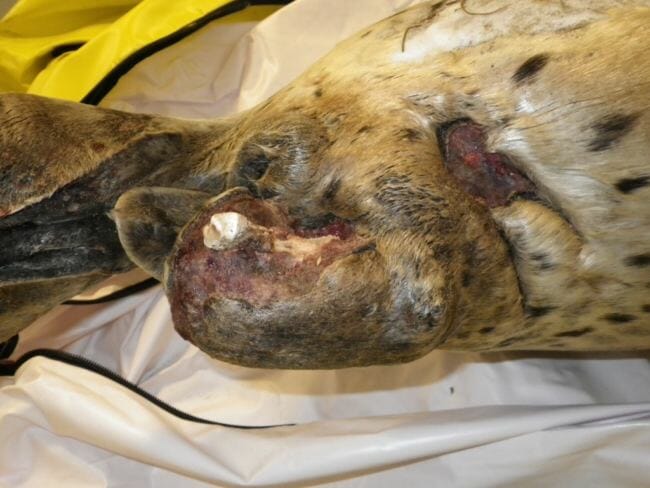
A adult male spotted seal discovered with an amputated flipper in Shishmaref in 2012. (Photo courtesy of Alaska Sea Grant)

There’s only one historical record of a great white shark in the Bering Sea: fishermen caught one nearly forty years ago. But scientists have reason to believe that in recent years there might be more of the predators around.

In the past three years or so something strange has been opening its jaws to marine mammals in the Bering Sea. Seals have turned up with chewed off flippers and large bite marks. Some were beheaded.

Brandon Ahmasuk is the subsistence coordinator at Kawerak, the nonprofit arm of the Bering Straits regional Native corporation. He says killer whales have been known to maim their prey, but the bite marks that have been showing up recently look clean. Killer whales tend to tear apart their food, which got Ahmasuk thinking about great white sharks.

“When we first started getting pictures of these, we started asking local fish and game and the fisheries department, ‘could this be a shark attack?'” Ahmasuk said. “Right off the bat, we kind of got laughed at.”

Eventually, with help from Alaska Sea Grant, the pictures were sent off to a shark expert in Hawaii.

“Within five minutes we got a response back: this is a classic shark bite,” Ahmasuk said.

About seven years ago, a couple of hunters spotted a large predator in the water on the south side of St. Lawrence Island in December. It had been a warm year, and sea ice hadn’t developed on that side of the island yet.

Ahmasuk says the hunters were looking for seal, when they saw a Steller sea lion leap out of the water.

It was “trying to get his butt to the island as fast as he can,” Ahmasuk said. “Before it got to the island, it came out of the water, and all a sudden it got hit from underneath, and [the hunters saw] a shark hitting [the steller sea lion] and going down …  Nothing else came up after that, but the water was just red.”

The hunters saw what appeared to be a 16-foot long shark, which is consistent with the size of a great white.

Ahmasuk estimates there’s been about 20 reports of seal maimings, and scientists are still trying to gather more information from coastal communities before they can definitively say what’s going on.

But as the Bering Sea continues to warm, it’s not impossible to fathom: more great white sharks could be hanging around.

Governor’s climate change task force adds science education to draft plan

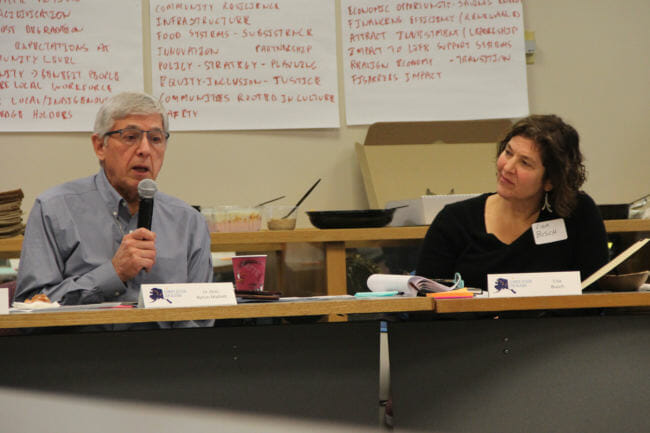
Lt. Gov. Byron Mallott chaired the inaugural meeting of Gov. Bill Walker's climate change task force on Monday, Dec. 18, 2017. Lisa Busch of the Sitka Sound Science Center is one of 20 people chosen for the commission. (Photo by Rachel Waldholz/Alaska's Energy Desk)
Lt. Gov. Byron Mallott chaired the inaugural meeting of Gov. Bill Walker’s climate change task force on Monday, Dec. 18, 2017. (Photo by Rachel Waldholz/Alaska’s Energy Desk)

Draft recommendations are coming together that could shape Alaska’s climate change policy in the future. Governor Bill Walker’s climate change task force has been working this summer to nail down some clear objectives.

The draft climate plan already includes statements on reducing carbon emissions and diversifying the economy. But task force member, Mark Masteller, encouraged the group to add another one: a policy statement on science education — addressing climate change.

“This affects everybody right?” Masteller said. “So that’s why I felt like it needed to be its own policy statement.”

Masteller says the task force is still working out the details of what this additional policy statement might mean.

So far, they’ve come up with some broad suggestions, like strengthening research at the university system and adopting a statewide plan to increase science education in K-12 schools.

Masteller compares this approach to anti-smoking campaigns.

“Without an education about the impacts of smoking, we wouldn’t be able to take action as quick,” Masteller said. “So the general education and awareness of the problem or the issue is kind of fundamental to all the other things in the plan.”

The task force will be holding their next in-person meeting in Anchorage in August, and they’re hoping to present the plan to the governor by September.

Tour guides, bear hunters seek solutions after tourists witness a hunt in the Tongass

https://www.flickr.com/photos/alaska_region/14460238782/in/photolist-o2NvcL-8J8euR-o4GHkz-fCtah2-2Labph-2K7J1k-2L6dop-2Kc1em-q6hjnJ-2L6o7Z-o3mHuh-nKrynM-8VDWjG-nKZiE7-xiXmgY-JVTPZz-bmxJut-o2Cmxv-bXjV12-nKrVpM-diZ1Yf-6T9Xmn-9HSv9K-8xeEBc-2LaARN-2LafPj-cem9s3-m9wUxk-2LahZC-2L636t-2L5PPD-2Kc25S-2L6ckp-2LadjG-2L5ZK4-2Lacem-kxgVeG-dpswMg-fCKJph-diYUrn-2L61H6-diZ241-o4GReR-diZ1Vd-9St4x5-kxeCoR-kxeFjx-6RFfHF-2L6puK-51MSUa
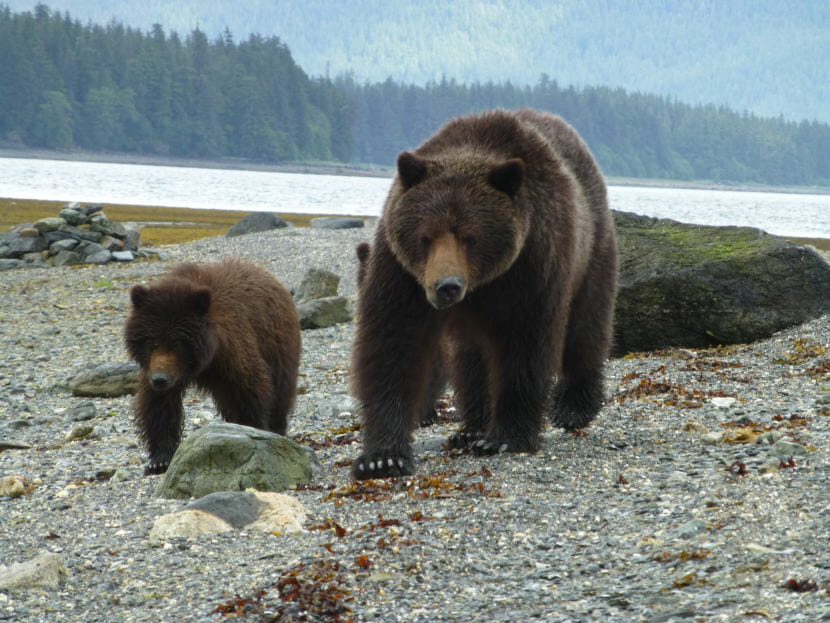
Two brown bears on July 10, 2012 in the Kootznoowoo Wilderness on Admiralty Island in the Tongass National Forest. Photo courtesy Don MacDougall/U.S. Forest Service

Small luxury cruises in Southeast Alaska offer guests a chance to explore remote spots in the Tongass National Forest. Passengers get a front row seat to look for wildlife. But there’s another kind of tourism happening at the same time: big game hunting. That can be a problem when the two interests overlap.

Now, two seemingly different groups are trying to find a solution.

The Safari Endeavour was designed to give guests the experience of adventure with the comfort of sleeping in high-end sheets. On this ship, you can wake up to locally sourced food, and spend the afternoon paddling to a distant cove.

Those perks are available to a small passenger list of up to 70 people.

CEO and owner of UnCruise Adventures, Captain Dan Blanchard, shows off favorite place on the boat to take in the scenery roll out a yoga mat, or even spot a bear from the deck.

That’s a big part of what Blanchard said UnCruise is all about: being able to view wildlife in this pristine environment.

“Southeast Alaska is a bastion for wilderness — not just for Alaska but for our world,” he said.

 The trips have become so popular the company has even made a push for an earlier start season. Of course, this Safari Endeavour is a hunt for the eyes. But last year, on a different UnCruise boat, the hunt became real.

Dan Blanchard aboard an UnCruise ship. (Photo by Elizabeth Jenkins/Alaska's Energy Desk)
Dan Blanchard aboard the Safari Endeavour. (Photo by Elizabeth Jenkins/Alaska’s Energy Desk)

As guests peered through binoculars at a bear, they saw a hunter shoot it.

“My reaction was it’s bound to happen,” said hunting guide Thor Stacey. He’s been guiding in Alaska for decades.  To be clear, it was a local hunter — not a guide — who shot the bear as a boat of surprised tourists watched. But Stacey said generally nobody, including hunters, wants to see that happen.

Still, he thinks as more small cruises expand into the spring and fall, the conflict seems inevitable. That’s traditionally the bear hunting season. A time when as many as 20 guides lead clients around the region.

Stacey said that’s led to frustrations for both small cruise ships and hunting guides alike.

He’s heard the complaint: ‘There’s all this country out there? Why can’t we just go where we want in the spring,’ and we’re sitting there saying we’re already here … and our use has been here since the 1930s.”

The Tongass is huge. But small cruises and big game guides can’t just go anywhere. They have to obtain special use permits from the U.S. Forest Service. That becomes a problem when the two ventures overlap. For bear hunters, the scent of an entire boat of people can throw off the animal’s behavior.

Stacey said hunting guides attracted some of the original adventure tourists to the region. As the small cruise industry expands, he said the game guides are the ones who feel “threatened.”

“In America, the bigger you are the better things generally work out for you … So when you see a large economic interest like that show up and you’re a group of small business. The fear of being pushed out or being pushed aside is very intense.”

Add to that, Stacey said, the misconceptions people have about big game hunting. He stresses this is a regulated industry. He’s concerned about the sustainability of the bear population and keeping the Tongass wild just as much as anyone else.

So, after word got around about the bear shooting by the local hunter, Stacey said it was time for a conversation with the small ships.

“We figured if we helped them out, the outcome would be much better,” he said.

Blanchard said he began to understand what it means to harvest a bear and how the hunts are controlled.

“That quite frankly, even though I’m not a bear hunter, it put me at more comfort,” he said.

In January, the two groups got together — in meetings moderated by the forest service — to hatch a plan. Hunting guides shared their knowledge and made suggestions on alternative spots for the small cruise ships to explore. There’s now a voluntary schedule where the businesses can keep tabs on each other to avoid being in the same place at the same time.

Blanchard acknowledges this new agreement, so far, has been a challenge.

“It’s not a lot of places and probably when we go back we’ll need to try to charter new spots for the small ships next spring,” he said.

 But Blanchard thinks there’s still room for different types of tourism to coexist in the Tongass.

Including seal oil in this food competition is about more than taste

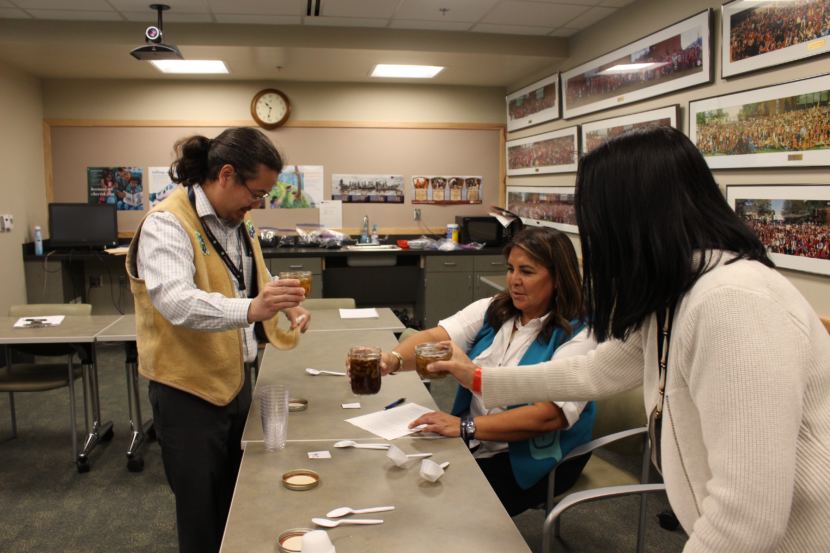
The judges get done scoring the seal oil with crackling. (Photo by Elizabeth Jenkins/Alaska's Energy Desk)
Behind the scenes: The judges score the seal oil with crackling. (Photo by Elizabeth Jenkins/Alaska’s Energy Desk)

There was something different about the food contest at this year’s biennial event in Juneau, Celebration. Along with the usual samples of seaweed, judges also tasted seal oil, which was rendered in communities throughout Southeast.

But the competition wasn’t just about awarding the traditional food. The event organizer says it’s also about a history of cultural resilience that still resonates today.

The judges call this tasting “the breakfast of champions,” and they aren’t kidding. They’re snacking on nutritious jars of seal oil at 10 in the morning.

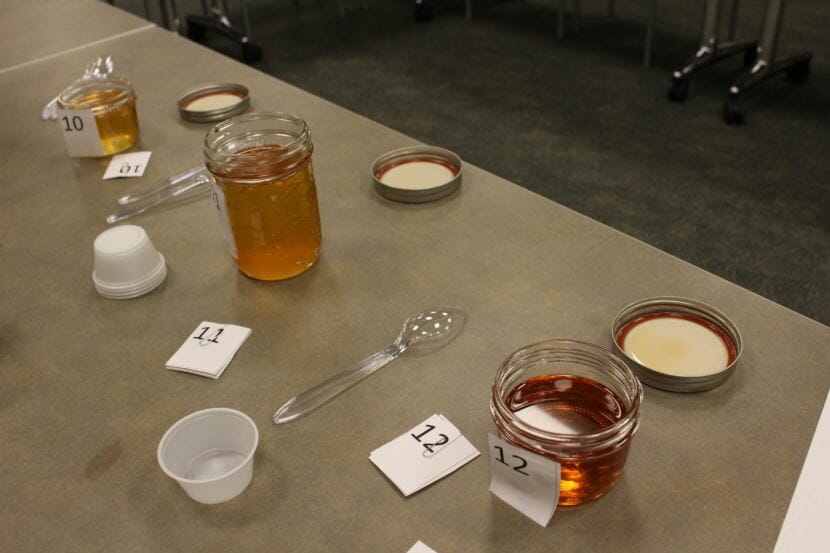
Jodi Mitchell dips her spoon into a jar the color of amber.

Floating on top of the oil is crackling or crispy seal fat. She says it melts in her mouth.

“You know, my mom used to love these the best,” Mitchell said. “I remember her picking them out of the jar and eating them. She would put seal oil on everything.”

Mitchell is keeping track of the tastings with points and notes, which she’ll share with the other judges later. Some seal oil is heavy. Others are light.

It’s created by simmering the fat over a low to medium heat, a delicate process that can impact the flavor.

For Mitchell, a winning entry tastes like being transported home.

“Just taking a bite of this reminds me of my grandparents,” she said. “Sitting around the table and eating Native food with all of them. Foods is always best when you share it.”

There were two categories for the seal oil: with and without crackling. (Photo by Elizabeth Jenkins/Alaska's Energy Desk)
Pictured is seal oil without crackling. It’s one of two new categories in the competition. (Photo by Elizabeth Jenkins/Alaska’s Energy Desk)

Sealaska Heritage Institute (SHI) President Rosita Worl says that’s the reason seal oil was added to the competition this year — she’d like to see more people proudly enjoying their traditional foods.

Unfortunately, she says it hasn’t always felt welcome, especially at a time when Native people were forced to assimilate.

“I will tell you, when we were growing up, people would make fun of us because of our food.”

But Worl says seal oil is something to be celebrated.

She likes to eat it with dry fish or potatoes. But as a girl, when she was just six years old, she was taken to a federal boarding school in Haines, where seal oil was nowhere to be found.

She says all the kids were homesick for the flavor. So, they gravitated towards something the boarding school had plenty of that tasted similar.

“They would serve cod liver oil. It was like a vitamin, and we would love it,” Worl said. “We would circle back in the line so we could have more of it.”

Although boarding schools are a thing of the past, Worl thinks the policies that discourage Native people from harvesting traditional foods are not.

To hunt seal, a person has to have a certain percent of Native blood, under the Marine Mammal Protection Act, and its becoming harder for the younger generations to meet that threshold.

According to the Bureau of Indian Affairs, in the last decade, nearly 20,000 Alaska Native people had less than the federal requirement.

“I went to a meeting and I heard a grandfather say, ‘I can’t even take my grandson out to go hunting seal for me,'” Worl said.

Rosita Worl on stage at Centennial Hall during the food competition. (Photo by Elizabeth Jenkins/Alaska's Energy Desk)
Rosita Worl on stage at Centennial Hall during the food competition. (Photo by Elizabeth Jenkins/Alaska’s Energy Desk)

Worl says that means less seal and seal oil is making it into people’s homes for elders and future generations to enjoy. She’d like to see that change.

In the meantime, she says including it in this year’s food contest, serves as a reminder — the taste for seal oil isn’t going away.

Back at the judges’ table, after discussing the nuances of all the different jars, they decide on the winner.

One judge says it’s the seal oil she’d want to crack open and share with family and friends.

Here is a list of all the winners:

  • Racean Fredrickson of Angoon took First Place for Best Seal Oil
  • Don Bolton of Metlakatla took First Place for Best Seal Oil with Crackling and First Place for Best Seaweed.
  • Second and Third Place awards for seal oil went to Roberta Revey of Kake and Bolton
  • Second and Third Place for Seal Oil with Crackling went to Fredrickson and Wanita Bunny James of Kake
  • Second and Third Place place for seaweed went to Linda Rae Shearer of Metlakatla and Johnny Jack, Jr., of Angoon.

Editor’s note: 360 North is under contract with Sealaska Heritage Institute to produce television and online video coverage of Celebration.

Site notifications
Update notification options
Subscribe to notifications