Elizabeth Jenkins, Alaska's Energy Desk - Juneau

In rural Alaska, looking inside the home to reduce energy costs

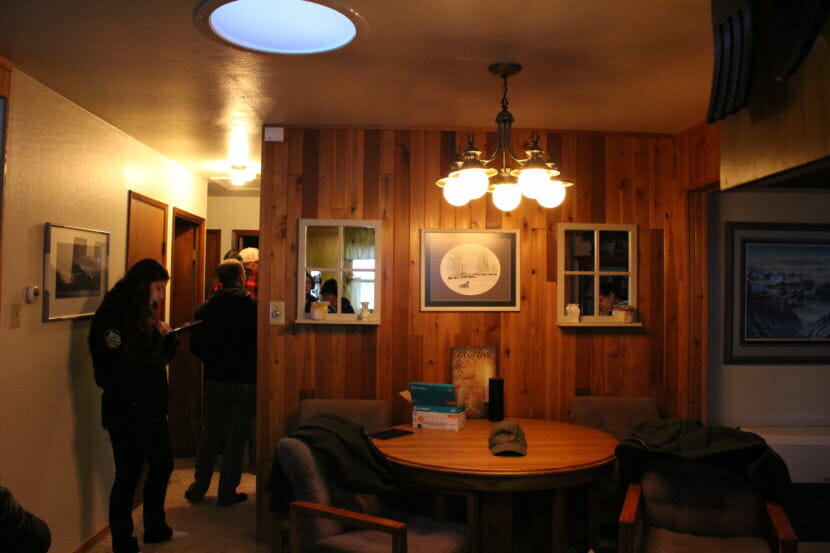
The energy assessors inventory a Juneau house. (Photo by Elizabeth Jenkins/Alaska's Energy Desk)
The energy assessors inventory a Juneau house for practice. The group was lead by REAP and Energy Audits of Alaska. (Photo by Elizabeth Jenkins/Alaska’s Energy Desk)

In diesel-powered villages, electric bills can climb to several hundred dollars a month, especially in the winter.

So a batch of new energy assessors — who live in those communities — are being trained to spot areas of improvement around the home.

Alexis Wagner is looking down at a shiny black Samsung tablet. On it, there’s a list she’ll spend the next two hours filling out.

“When we go through the house, there will be appliance inventory, other plugins, windows,” Wagner explains.

Before we take off our shoes to enter this Juneau home, Wagner fills out the occupancy: there’s a woman who lives here with two small dogs. Even body heat is taken into consideration when evaluating energy efficiency.

She says just scrolling through this list, she’s getting her own ideas.

“I have to make a lot of changes to my own house,” she says with a laugh.

Wagner works at the Metlakatla Indian Community as a grant writer. But after today, she’ll be able to do another task, and she’s not alone. Five people are in the group with her — learning this new skill.

“We call them energy leaders but privately I think of them as energy champions,” said Shaina Kilcoyne, an education and outreach director at REAP — the Renewable Energy Alaska Project.

The nonprofit invited residents from Kake, Angoon, Hoonah, Yakutat and Metlakatla to participate in the new program. It’s part of a joint-effort with Southeast tribes to make household energy assessments more accessible and affordable.

An energy audit from a private company can cost thousands of dollars. So while these energy assessments aren’t quite as detailed, Kilcoyne says for $25 it’s a great value.

“Some of the upgrades can be expensive,” Kilcoyne said. “We’re starting with the low hanging fruit.”

In the home’s kitchen, Austin Pajak, who lives in Yakutat, is eyeballing the lights.

A gold retro-looking fixture hangs above the kitchen table.

Pajak inputs the wattage of each bulb into the spreadsheet on his tablet, and Kilcoyne walks him through it.

Replacing these light bulbs with LEDs could save the homeowner around $45 a year.

But Kilcoyne says not every energy vampire is so obvious. Take your coffee maker, for example. Some models have a burner plate which keeps the pot of coffee warm all day and uses electricity. So Kilcoyne suggests swapping out a glass coffee pot for an insulated one.

Jennifer Hanlon, an environmental director at Yakutat Tlingit Tribe, says those small household fixes are the best option for now.

Addressing the little things doesn’t solve the bigger problem, though: that these communities are powered by diesel.

But she says Yakutat is still a ways from tapping into alternative forms of energy, like tidal.

“You know, we’re not going to get that up and running anytime soon,” Hanlon said.

So having a few trained people in Yakutat who can offer energy assessments could at least ease some of the financial burden.

And, Hanlon says, make it easier for people to stay in Yakutat.

After a few hours of scanning the Juneau house from top to bottom, the energy assessors are ready to make their final recommendations and explain to the homeowner how much they could save.

With a few simple adjustments, the household electric bill could be reduced by close to 10 percent.

One of the newly minted energy assessors said they were excited to go back to the village and share with they learned. They already had a list of homes lined up.

The Home Energy Leader Program runs through July 31.
Who released the bulk of greenhouse gases into Alaska’s air?

BPrig
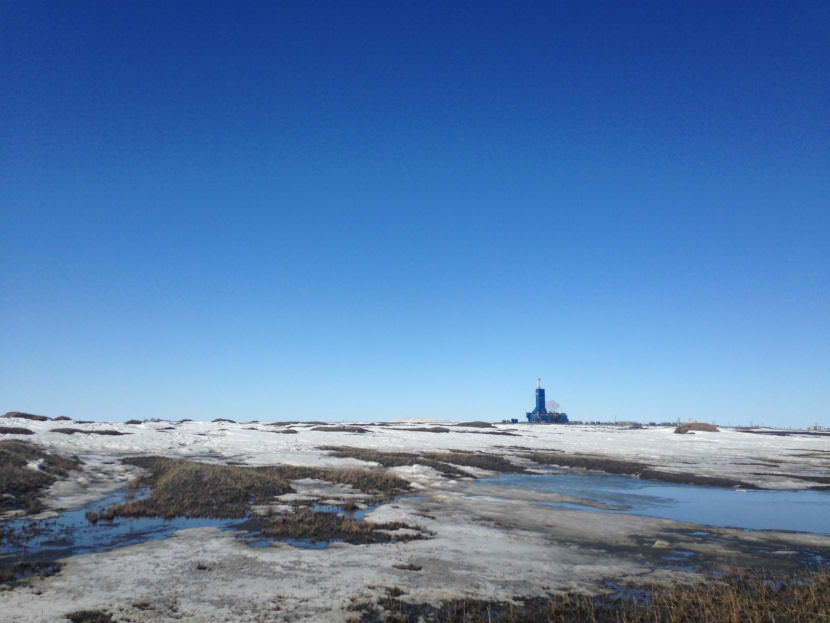
An oil rig contracting for BP looms on the horizon at Prudhoe Bay. (Photo by Elizabeth Harball, Alaska’s Energy Desk)

According to the state’s Department of Environmental Conservation, between 1990 and 2015, the industrial sector contributed most of it. That includes the oil and gas industry.

DEC commissioner Larry Hartig said in a press release Tuesday that the findings weren’t “unexpected.” Oil and gas development on the North Slope represents “the largest industrial complex” in the state.

In October, Gov. Bill Walker signed an administrative order to jump start a strategic climate change plan for Alaska.

So, even though the agency has released carbon emissions reports before, this latest one has the potential to shape climate policy.

State leads new efforts to restore Roadless Rule exemption

There have been numerous attempts recently to sidestep U.S. Forest Service management of the Tongass National Forest. Sen. Lisa Murkowski has a few plans in the works.

And now the State of Alaska is petitioning for more attention to be given to a very old debate. The Roadless Rule was created to protect wilder areas on federal lands.

But critics say it limits access to timber and mining in Southeast — putting jobs at risk.

If you listened to Gov. Bill Walker’s State of the State speech last week, you might have caught it.

Peppered among tidbits about a natural gas pipeline and budget concerns, there was this:

“Today, my administration filed a petition with the U.S. Department of Agriculture to undertake a rule making process to restore the Roadless Rule exemption to the region,” the Governor said.

Which could give Alaska a pass to build new roads in the Tongass. And that’s only the latest effort to increase access to logging.

Even by a state forester’s standards, there’s been a lot to follow.

“It’s very complicated,” said Chris Maisch, a director at the Alaska Division of Forestry. “You could do a half hour interview just on the history of this.”

He says the state is asking the the U.S. Department of Agriculture to open up the issue for more public discussion on the Roadless Rule. If approved, Maisch estimates it’s a process that could two years or longer.

And while this tactic might be different than what it’s tried before, he says the ask isn’t anything new.

Maisch says there’s a legal and economic argument to be made: Alaska should be exempt from the Roadless Rule.

“Well, the state has always had the position and has never wavered from that,” Maisch said.

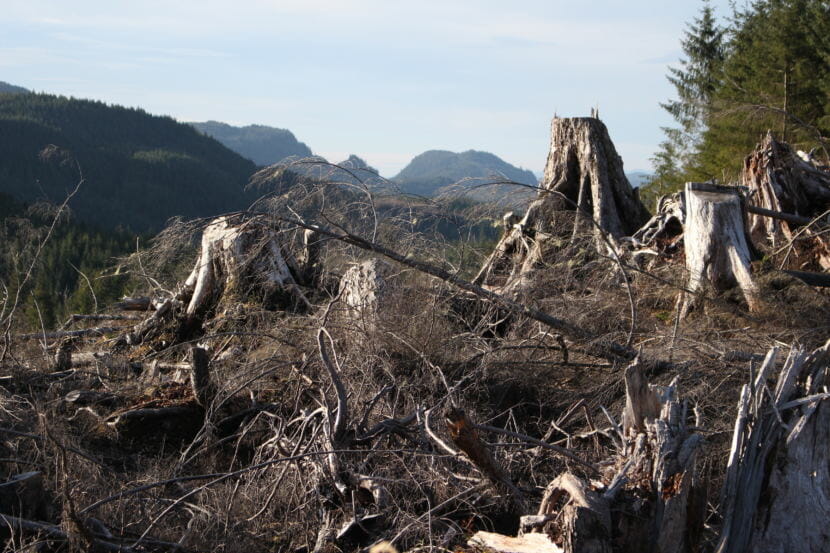
Logging from the Big Thorne Timber Sale. (Photo by Elizabeth Jenkin/Alaska's Energy Desk) 12/18/17
The U.S. Forest Service has focused its efforts to areas not subject to Roadless Rule, such as the Big Thorne Timber Sale on Prince of Wales Island. (Photo by Elizabeth Jenkins/Alaska’s Energy Desk)

But Austin Williams, a director of law and policy at Trout Unlimited, thinks the state’s petition could “turn back the clock.”  

“And really undo a lot of the good work that has been done over the last several years,” Williams said.

Sticking with the current forest service plan for the Tongass, Williams said, makes the most sense. It was created with years of community input, and finalized in 2016 — outlining a transition away from cutting old growth trees.

Williams said the economy in the region has shifted to industries like tourism and fishing. He asserts that rehashing the Roadless Rule debate isn’t a step moving forward. 

But he says more public discussion is better than some of Sen. Lisa Murkowski’s latest efforts on the Tongass.

“That is much preferable, I think, to a budget appropriations rider that doesn’t have that same type of public involvement,” Williams said.

Last November, Sen. Murkowski attached a rider to the Senate Interior Appropriations bill that could exempt Alaska from the Roadless Rule.

Congress has until Feb. 8 to agree on a budget.

In the meantime, the State Division of Forestry is keeping its fingers crossed that one of those efforts sticks.

Supreme Court says bearded seal still threatened, despite legal battle

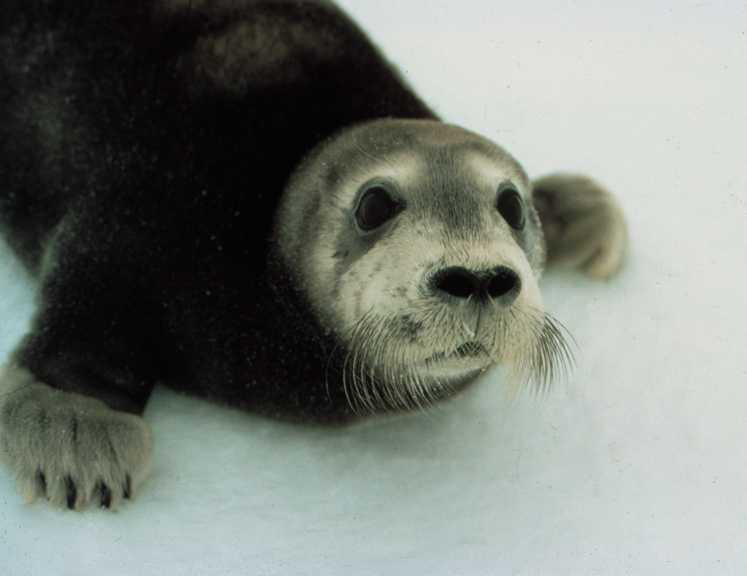
A bearded seal pup. (Photo courtesy of NOAA)

While the federal government was shut down on Monday, the federal courts were still making decisions.

The U.S Supreme Court decided to keep the bearded seal as threatened under the Endangered Species Act — rejecting an oil and gas industry challenge to the animal’s protection status.

The marine mammal was listed in 2012, due to melting sea ice. But the Alaska Oil and Gas Association or AOGA and the American Petroleum Institute thought the listing was premature.

Joshua Kindred, an environmental counselor at AOGA, said he was “disappointed” in the supreme court’s decision.

He said the National Marine Fisheries Service didn’t provide enough evidence to warrant a listing.

“They didn’t ever really show from a scientific point of view why the seasonal sea ice was so critical to their long-term health of the species,” he said.

Kindred said there also wasn’t sufficient guidance for a plan moving forward. He said excessive critical habitat designations can slow oil and gas development.

The Center for Biological Diversity has fought to keep the bearded seal’s protection status.

Kristen Monsell, a senior attorney at the organization, says the Supreme Court’s decision is a step in the right direction. But wildlife in the Arctic is still at stake.

Just two weeks ago, the Trump administration opened up the possibility for offshore drilling.

“I think this decision not only reinforces the reasons why that proposed plan is just an absolutely terrible idea. But also why it shouldn’t move forward from a legal perspective,” she said.

Bearded seals use Arctic sea ice as a platform for feeding and pupping, and scientists say that habitat is diminishing at an “unprecedented” rate.

What caused the Blob? Scientists conclude: We did.

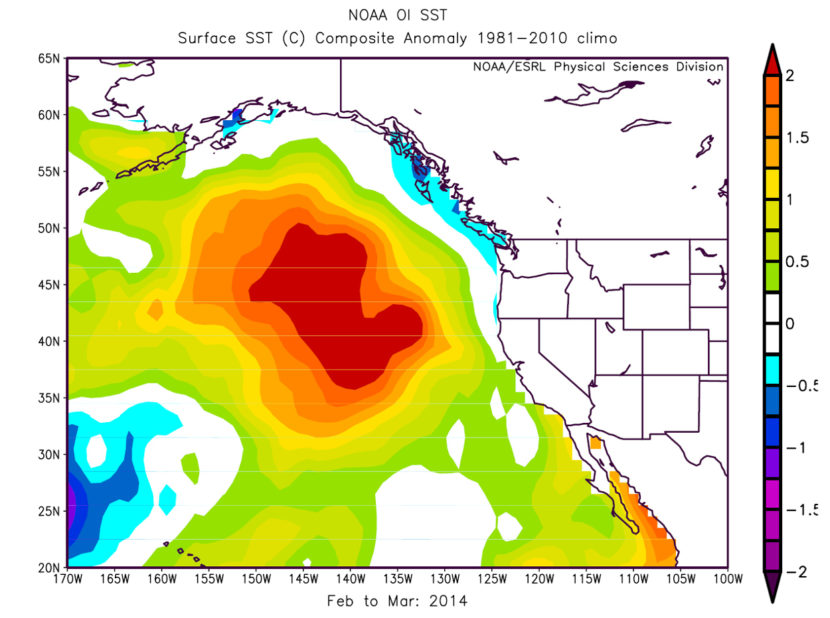
Map showing position of sea surface temperature (SST) anomaly, aka the Blob, in the northeast Pacific Ocean in March 2014. (Image provided by the NOAA/ESRL Physical Sciences Division</a > at Boulder, Colorado)

In 2014, a warm water system — known as the Blob — wreaked havoc in the waters of the Gulf of Alaska.

The relationship between extreme weather events and climate change is complicated. But scientists are getting closer to figuring out how the two are linked.

Brian Brettschneider, an Anchorage-based climatologist, doesn’t want to utter the phrase, “believe in climate change” anymore. It was even one of his New Year’s resolutions.

Belief, he says, can be murky: it implies having faith in something you can’t see.

“I think accepting climate change is a much better term to use,” he said.

As in, do you accept the consensus of the scientific community that climate change is real?

Still, Brettschneider says linking human-caused warming to extreme weather events, like rising ocean temps, hurricanes or floods, has been a work in progress. There’s been a movement in the scientific community to do more attribution studies — they’re called that because they attribute the cause of these events to climate change.

But the tools weren’t always there.

“You know, we’ve been asked this for many, many years. Is this something that’s climate change?” Brettschneider said. “We’ve generally demurred. But now we have enough data, we have enough computing power to say, aha!”

Recently, three different papers published in the Bulletin of American Meteorology had that “aha” moment. They were all about extreme weather events across the globe. Brettschneider co-authored one of them. The study was led by the University of Alaska Fairbanks and contributing agencies. It looked at the warm water anomaly known as the Blob.

Named after the classic B-horror movie, the Blob showed up in the Gulf of Alaska around 2014, lasting close to two years. During that time, there were massive seabird die offs and increased reports of paralytic shellfish poisoning.

Brettschneider says scientists knew the Blob was caused by unusual atmospheric conditions. But there was more to the story.

With climate modeling, the study suggests that the Blob would not have occurred without human-induced warming.

So right now, it’s an outlier in an already warmed world,” he said. “In a more warmed world, it will be a typical condition.”

Which he says means, on the current trajectory, in 20 years or so, events like the blob could start to become the new norm.

“You know we may end up with an ecological setting more similar to, say, California than what we’re accustomed to along the coast of Alaska,” Brettschneider said.

But that doesn’t mean there isn’t anything we can do about it. Brettschneider says the “business as usual” model is just one scenario. It doesn’t include reducing carbon emissions.

And as more scientists focus their work on climate change attribution, he says it could be beneficial for crafting environmental policy in the future.

He acknowledges the relationship between scientists and some lawmakers hasn’t always been smooth.

“The response has often been you guys are crooked. It’s all made up and you’re trying to get it where I can’t drive my truck,” he said.

But he’s optimistic that the people in charge will come around. He says the science community is getting better at discerning the root of extreme weather events and climate change, and the facts are hard to deny.

Clock approaches midnight for Congress to renew this oil industry tax

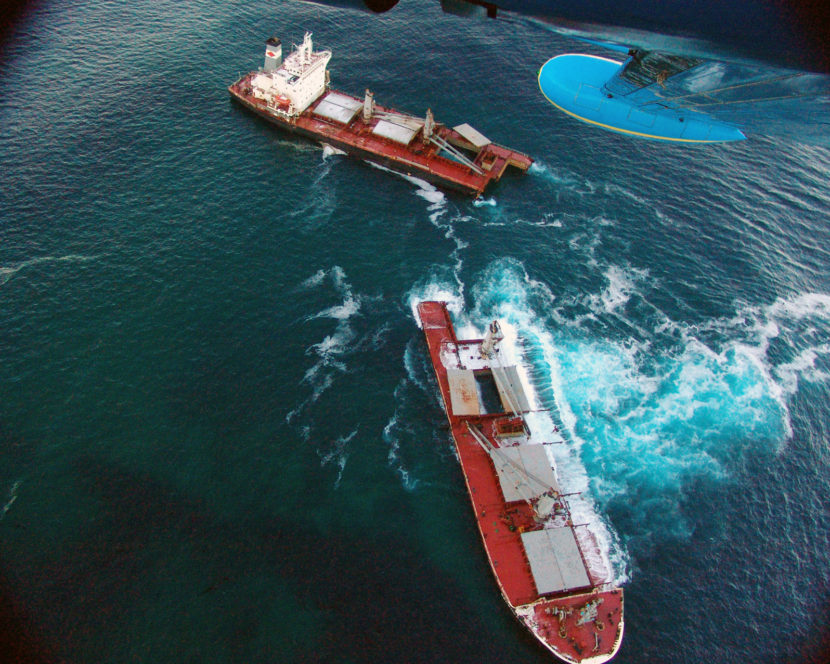
The Selendang Ayu broke apart a decade ago just off Unalaska Island. (Courtesy: USCG)
The Selendang Ayu broke apart over a decade ago just off Unalaska Island. The Oil Spill Liability Trust Fund was utilized for the cleanup. (Courtesy: USCG)

As the New Year approaches, time is ticking down for Congress to renew an excise tax collected on domestic barrels of oil. The money goes into a government trust used for oil spill cleanup and prevention.

The Gulf of Mexico and the Bering Sea share something in common. Through the years, oil spills of different magnitudes have leached contaminants into the water.

On both of those occasions, the U.S. Coast Guard was able to tap into cash quickly to launch a response. The parties responsible for the damage are supposed to pay that back. But the Oil Spill Liability Trust Fund can also act like a safety net when no one steps forward or companies refuse. It was funded after the Exxon Valdez spill.

Oil and gas companies pay a tax which is the principal source of revenue for the trust.

But after the New Year, the authority to collect that tax is going away.

“Personally, for us, we are funded on the interest on a very small portion of the Oil Spill Liability Trust Fund,” said Scott Pegau, a program manager at the Oil Spill Recovery Institute in Cordova. “So it could reduce oil spill-related research.”

The trust currently has more than $5 billion dollars in it. Still, Pegau says without the tax that fund could be in jeopardy.

“I think a couple of real bad accidents without someone being responsible could drain it fairly quickly unfortunately these days,” he said.

If that happens federal agencies could be on the hook to pay for the cleanup.

Pegau says there have been a few “mystery spills” in the waters connecting Alaska and Russia. Fishing vessels in the state also account for a large number of oil spills, he says. It’s not always obvious who should be held accountable.

But he thinks Congress could renew the excise tax eventually. They’ve let it lapse once before.

Site notifications
Update notification options
Subscribe to notifications