Elizabeth Jenkins, Alaska's Energy Desk - Juneau

Former climate official says details surrounding his reassignment look “damning” for Trump admin

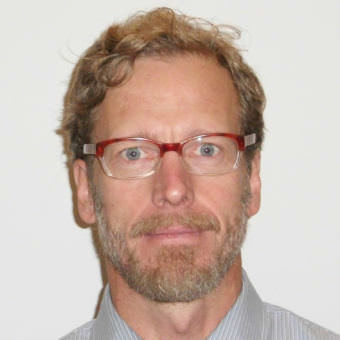
Joel Clement thinks his job reassignment was retaliation. (Photo courtesy of Joel Clement)

A new federal report sheds some light on how job reassignments in the Department of the Interior were handled last year.

Joel Clement resigned from the agency in October after being ousted from his position working on issues like coastal resilience and village relocation in Alaska.

He felt targeted by the Trump Administration for his views on climate change, and he thinks this report helps back that up.

There wasn’t much of a paper trail to show Interior Secretary Ryan Zinke’s motivation for reassigning dozens of career officials last summer.

An internal investigation found that the board responsible for those reassignments didn’t maintain meeting minutes, notes, voting or decision records. There wasn’t a person responsible for documenting it.

“It’s a very damning report, ” Clement said.  “It demonstrates the kind of chaos and incompetence at play.”

Clement was reassigned to accounting duties at the office of oil and gas royalties, which he says was much different than the job he had before: Coordinating federal efforts to help move eroding villages in Alaska.

He believes the Trump Administration is trying to erase positions that have anything to do with climate change.

The report from the Office of Inspector General, he says, points to that lack of transparency.

“But what it doesn’t do is look back and say, ‘how do they make this right with these executives who were either discriminated against or retaliated against?'”

The Deputy Director of Interior responded to the report, saying “delays in confirming key presidential appointments” could be responsible for guidelines not being followed. The report outlines recommendations, like keeping records on plans for reassigning senior executives.

Clement’s old position still hasn’t been filled. He acknowledges village relocation efforts are still underway. The Denali Commission is set to receive $15 million dollars to help move the village of Newtok.

“I think the fact that my position wasn’t filled and other programs were not being enacted made it clear that the administration was dropping the ball, ” Clement said. “And Congress had to pick this up.”

Next, he hopes Congress holds the Department of the Interior accountable. He would like to see a congressional hearing on the job reassignments.
Sealaska Corporation announces multimillion dollar deal to keep trees in the ground

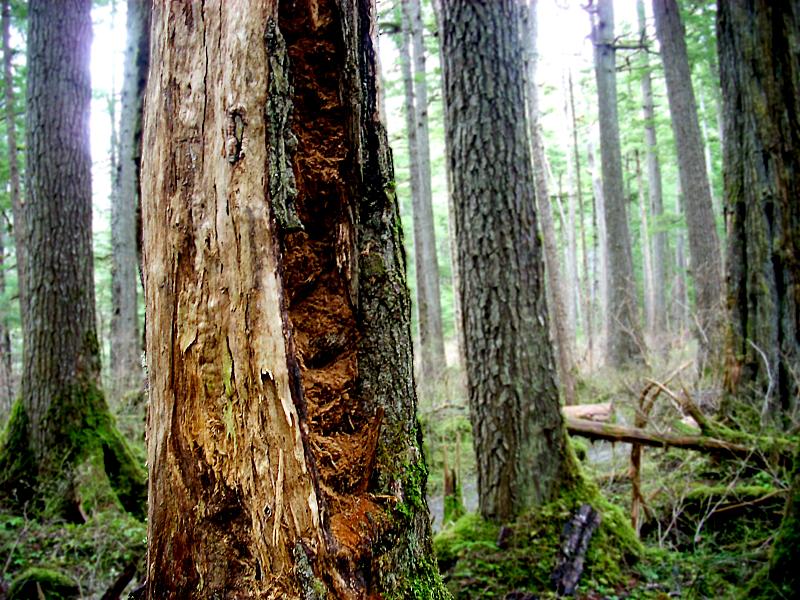
A fire left its mark on this Tongass National Forest tree trunk, as seen in 2008.
Alaska was invited to participate in the California cap-and-trade market in 2015 after lobbying from the Chugach Alaska Corporation. Chugach is also working on developing its own carbon offset credits. (Creative Commons photo by Xa’at)

Big greenhouse gas emitters in California are now able to buy carbon offset credits based in Alaska. The Southeast regional Native corporation Sealaska is using some of its lands for carbon sequestration. Thousands of acres of old growth trees will stay intact for over 100 years. It’s the first carbon bank in the state to be approved for the market.

Sealaska says its another way of securing a future for shareholders.

On the fourth floor of Sealaska Plaza, there’s a board room with an amazing view. A long glass window overlooks the Gastineau Channel. Beyond that, you can see a canopy of evergreens.

Anthony Mallott gestures to the landscape.

“We think we live in a very protected, amazing sacred place on this Earth,” Mallott said. “But there’s room for economic activity.”

Mallott is Sealaska Corporation’s President and CEO. At 42 years old, he’s one of the younger leaders. This morning he went skiing. But he jokes he doesn’t always feel so youthful with a bad knee.

Mallott began working at Sealaska over a decade ago.

“I started in a time period where we could see effectively the end of our timber harvests without getting additional news lands,” he said.

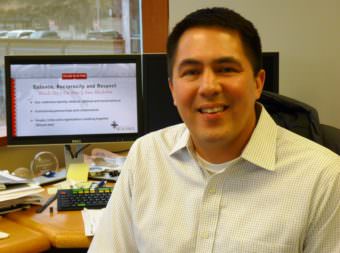
Sealaska President Anthony Mallott poses for a photo in his office. The Juneau-based regional Native corporation is distributing $10.6 million to its 22,000 members this month. (Photo by Ed Schoenfeld, CoastAlaska News)
Anthony Mallott in his Juneau office. (Photo by Ed Schoenfeld, CoastAlaska News)

The corporation manages around 360,000 acres in Southeast Alaska, and Mallott says developing the natural resources, like timber, was an important part of creating the first dividends for its shareholders.

But he says the original land allocation Sealaska received only represents a small part of the region.

“It wasn’t the be all and end all,” Mallott said. “It was something that allowed us to move forward. But it hasn’t fulfilled all the expectations.”

The corporation is expected to make money for its shareholders. But it’s already cut close to a third of its trees, and not all of the sites left are ideal for logging, like old growth stands next to salmon streams.

So, Mallott says the corporation faced a challenge. How do you protect those sensitive areas and still make money for shareholders?

“It was really the need to stretch our harvest and diminish our harvest from a higher level that put us in this framework thinking, ‘OK, what really is sustainability for Sealaska?” Mallott said.

Enter the California cap-and-trade program. 

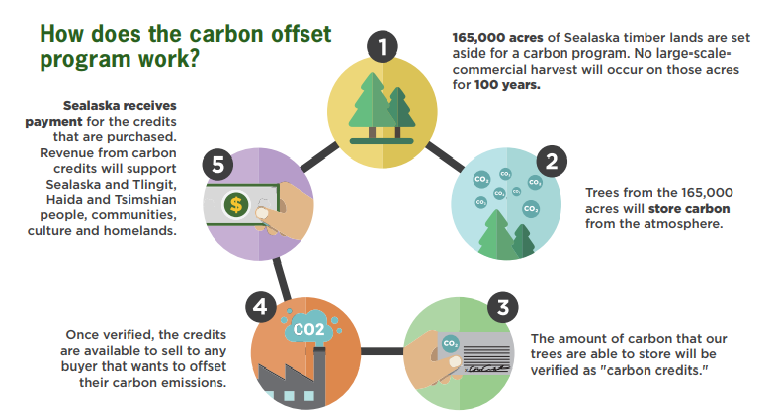
Basically, big polluters in the Golden State receive an allowance to release a planned amount of carbon each year. To account for each metric ton of carbon, companies can use that allowance or buy carbon offset credits. Those credits represent an actual, tangible thing: carbon stored in trees — in this case, trees belonging to Sealaska.

Image courtesy of Sealaska Corporation
Image courtesy of Sealaska Corporation.

Mallott says carbon sequestration looked like the right opportunity. The money generated would help shareholders and nearly half of the trees on Sealaska land could stay in the ground.

He’s quick to point out this land isn’t locked up. The corporation can can still develop parcels for tourism or mineral exploration.

He says the project has already attracted a buyer. It’s too early to put a dollar figure on the deal. But he thinks the amount could be huge.

“Multiple millions,” Mallott said. “The financial benefit of this is very significant for Sealaska.”

In the past, conservation groups have been critical of the rate Sealaska has clear cut its forests.

Buck Lindekugel is a grass roots attorney for the Southeast Alaska Conservation Council, and he says that old model of logging doesn’t make sense for the region’s economy today. He welcomes the corporation’s new venture.  

“We’re excited that Sealaska is seizing this opportunity to explore those options,” Lindekugel said. “We think it’s good for their shareholders, and it’s certainly good for all of us who care about the forest.”

But Mallott says Sealaska has always cared about sustainability and the bottom line.

“The carbon project. Is it a shift? It’s a recognition in the way we’ve always thought,” Mallott said.

He says the corporation isn’t going to stop logging on its remaining land. But it’s also planning to allocate more acreage to carbon sequestration in the near future.

As for what happens to the trees after the 110 years is up, Mallott says that’s up to a younger generation to decide.

Editor’s Note: The explanation about the California cap-and-trade has been updated. A spokesperson from the California Air Resource Board said companies aren’t allowed to go over the set cap, even with  allowances and carbon offset credits. 

As Sitkans wait for roe, news of sickness from herring eggs in Canada

Zoe Trafton piles her plate with herring eggs at Sitka Tribe of Alaska's annual potluck, celebrating the cultural and ecological importance of the forage fish. STA is calling for the Board of Fish to reduce cap the guideline harvest level for Sitka's herring at 10%. (Photo by Emily Kwong/KCAW)
Zoe Trafton piles her plate with herring eggs at Sitka Tribe of Alaska’s annual potluck, celebrating the cultural and ecological importance of the forage fish. (Photo by Emily Kwong/KCAW)

Typically, cholera is associated with tropical destinations. But recently, the bacteria that can cause the disease was found in subsistence herring eggs in British Columbia, and the Canadian department of fisheries issued an emergency closure.

There are no easy answers about what caused the outbreak. But as Southeast Alaska tribes get ready to gather herring eggs, it’s left some people wondering about the future.

Jeff Feldpausch thinks it’s only a matter of days until the herring will spawn in the bay. He’s taken measures to make sure the Sitka Tribe of Alaska, where he works, doesn’t miss out.

A few hemlock branches are already in the water, ready for the herring to deposit their eggs.

Feldpausch thinks it’s a food best eaten fresh, and he’s not the only one.

“I have to remind my staff, as we’re pulling the branches out of the water, that they need to leave some, because they’re sitting there eating them,” Feldpausch said with a chuckle. “They need to leave some for distributions.”

The Sitka Tribe gives out the distributions to elders and the community through its traditional food program.

Spring is an important time for First Nations people in Canada, too. Herring eggs are a beloved subsistence food. But as of March 23, there were at least three confirmed cases of people feeling ill after eating them near Vancouver Island.

The lab results that came back were unusual. Disease-causing Vibrio cholera doesn’t typically originate in developed countries, like Canada.

Feldpausch says the news about the herring eggs came as a surprise.

“It’s something I haven’t heard of before,” he said. “It initially got me thinking, ‘is this something we’re going to see region wide?'”

According to the First Nations Health Authority, the bacteria was “likely limited to the area.” Still, seeing the words “cholera” and “herring eggs” together is pretty alarming.

Kate Helfrich — with the Alaska Department of Epidemiology — says in this case, there’s still a lot we don’t know.

“If you google search ‘definition of cholera,’ what you’re going to come up with is ‘it’s a gastrointestinal illness that creates crazy epidemics.'” Helfrich said. “But really, we don’t know yet if we’re talking about cholera.”

So, to backup a little, Vibrio is basically this big category of bacteria. It’s naturally occurring in the waters of Alaska and Canada. But some species of Vibrio can cause human infections, and warmer water temperatures can cause it cause it grow.

In Alaska, people have gotten sick from consuming it in uncooked shellfish, like oysters.

What was discovered in the herring eggs in British Columbia was Vibrio cholera, a sub category, which can seem scary.

“But within that species of Vibrio cholerae, there are more that 200 sero groups.” she said.

Helfrich says only two of those groups are commonly associated with what you might think of when you think of cholera. So far, health agencies in Canada haven’t been able to pin that down.

It’s usually linked to fecal matter contaminating the water.

“We don’t know yet if it’s the cholera scourge illness that we think of in epidemic settings,” Helfrich said.

She says it’s impossible to speculate what conditions caused this rare type of bacteria to pop up. Warmer ocean temperatures can play a role.

Whether that was a factor with the herring eggs in Canada, she says it’s “tough to say.”

“I know when I think of climate change, researchers predict climate change is going to cause a variety of changes in our ecosystem,” Helfrich said. “And increasing temperatures can affect the incidents and it can impact the spread.”

In Sitka, Jeff Feldpausch says he feels safe harvesting herring eggs this year.

“I don’t see any reason we shouldn’t be unless the results come out in Canada that it’s something a little farther reaching other just a localized incident,” he said.

In an emailed statement, Vancouver Island Health Authority said an investigation was underway.

The Cost of Cold: Staying warm in Juneau

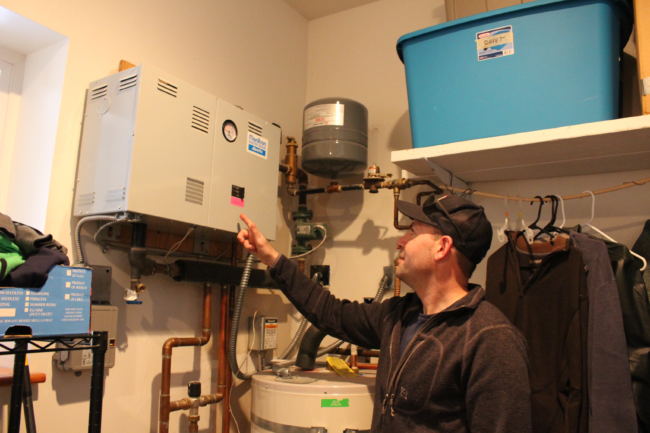
Philip Richards points to his electric boiler. (Photo by Elizabeth Jenkins/Alaska's Energy Desk)
Philip Richards points to his electric boiler. (Photo by Elizabeth Jenkins/Alaska’s Energy Desk)

Alaska’s capital city doesn’t have a natural gas distributor. Most people in Juneau burn heating oil. But a growing number of residents are looking for alternative ways to stay warm.

Philip Richards chose an electric boiler out of necessity. He says it keeps costs low in his energy efficient home.

The Cost of Cold is a series from Alaska’s Energy Desk about how Alaskans around the state heat their homes. Reporter Elizabeth Jenkins produced this story in Juneau.

The Cost of Cold: Staying warm in Nome

Richard Beneville rents his house in Nome. He shares the space with his cat, Ollie. (Photo by Elizabeth Jenkins/Alaska's Energy Desk)
Richard Beneville rents his house in Nome. He shares the space with his cat, Ollie. (Photo by Elizabeth Jenkins/Alaska’s Energy Desk)

In Nome, people stay warm in a variety of ways. They collect driftwood along the beach in the summer months, shipping pallets are burned in stoves and heating fuel arrives by barge in the summer and fall.

In 2012, an early storm prevented an oil tanker from making that delivery. But as the Bering Strait becomes more accessible, the mayor of Nome says there’s an upside to less sea ice. 

Richard Beneville spends $250 dollars heating his house every month of the year with diesel.

The Cost of Cold is a series from Alaska’s Energy Desk about how Alaskans around the state heat their homes. Reporter Elizabeth Jenkins produced this story in Nome.

Juneau schools leave room for debate in climate change curriculum

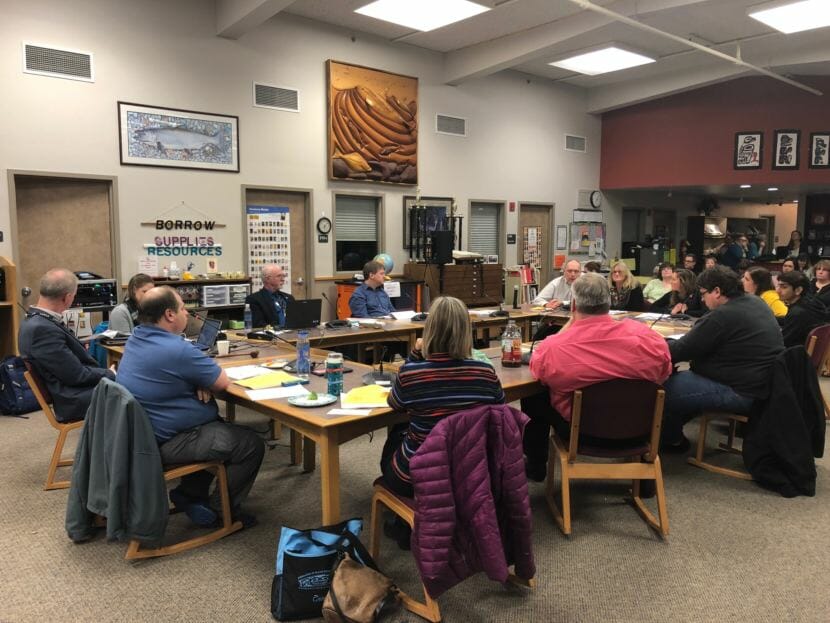
Juneau School Board (Photo by Elizabeth Jenkins/Alaska's Energy Desk
The Juneau School Board meeting on March 13, 2018. (Photo by Elizabeth Jenkins/Alaska’s Energy Desk)

The Juneau School Board is considering adopting new curriculum for middle and high schools — based on growing national science standards. The model has been adopted entirely in 19 states, and one of the core ideas is teaching students about climate change.

The standards don’t shy away from attributing it to an increase of human activity. But how that’s taught in the classroom could be up to interpretation.

In the past five years, the way that science is taught in the classroom — across the nation — has shifted. Pop quizzes are still a thing, but the Next Generation Science Standards challenge students to think systematically.

“You still have the content there, but the focus has changed,” said Ted Wilson. He helped oversee the new curriculum for the Juneau School District, which includes activities that encourage place-based learning.

Another key part of the science standards is that students graduate with an understanding of earth and human activity, and that includes learning about climate change. The standards don’t mince words: What caused climate change to accelerate? It’s us.

The Juneau School District is borrowing some core ideas from the new standards.

But Wilson says how those ideas are taught in the classroom is up to the teachers. There’s no school district policy on climate change. Wilson’s advice is to stick to “it’s happening.”

“The aspect of how much of it is human-caused — because there is still a lot of controversy about that — is to teach it as this is one stream of thought,” Wilson said.

One stream of thought, Wilson says, that humans contributed to our most recent climate change.

“To present it like that,” Wilson said. “And for students to come away with their own opinions whether they think humans have made that impact or not.”

But Glenn Branch, a deputy director at the National Center for Science Education, says there are clear facts about who’s causing climate change to ramp up.

His nonprofit advocates for evidence-based science in the classroom.

Branch says there’s a social controversy over climate change. But there isn’t a scientific one.

Scientists all over the world have studied this. And the overwhelming majority have reached the same conclusion: humans are largely to blame. It’s not an opinion, Branch says. It involves climate models and math.

He says that doesn’t leave room for avoiding the facts or debating them.

“It’s inappropriate,” Branch said. “Both because it reinforces a false conception that there’s a legitimate scientific debate about climate change, and also because it misrepresents the nature of science.”

Still, Branch says states are trying to navigate this all across the country. With topics that can be perceived as controversial, like climate change, he says it’s understandable school districts don’t want to make waves.

He says there are social issues that can be debated, like carbon taxes. However:

“You certainly don’t have it about issues such as human impact on climate change or the shape of the earth,” Branch said.

But Ted Wilson doesn’t take issue with climate change being presented in the classroom like a debate. Has human activity accelerated it or not? He says that regularly happens in history class or language arts.

I ask him, where do you draw the line? Would flat earth theory be something he’d consent to someone teaching in a science classroom?

“As far as something that they’re asking students to debate, they could,” Wilson said.

Bottom line, Wilson says, is students should be able to think critically. And then decide on their own how to interpret the world, whether it’s flat earth theory or climate change. Regardless of what’s accelerating warming, how can we adapt? That’s the takeaway, he says.

“I think in our political climate, we don’t want teachers to be seen as people that are trying to push an agenda,” Wilson said.

Teaching students about climate change is part of the state’s science standards. But a spokesperson from the Alaska Department of Education says it’s largely up to the school districts to decide how that’s done.

Next year, the department will be able offer some new guidance. The state is currently updating its science standards. After being reviewed by teachers, parents and industry, it will be posted for public comment in 2019.

Site notifications
Update notification options
Subscribe to notifications