Elizabeth Jenkins, Alaska's Energy Desk - Juneau

How oyster milkshakes and teamwork are getting Alaska’s shellfish safely to market

The food safety lab at the department of environmental conservation. (Photo by Henry Leasia/Alaska Public)
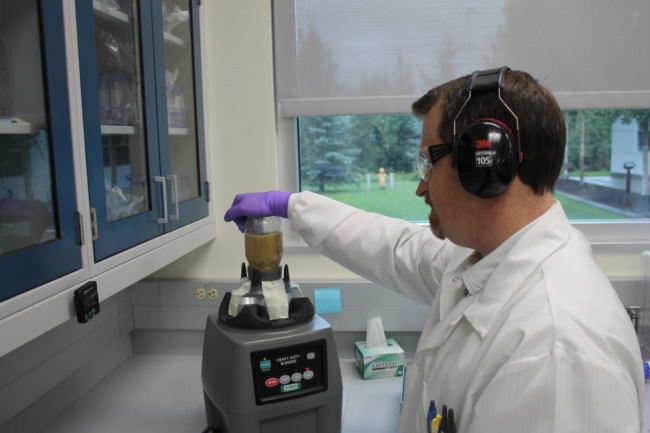
A lab technician blends up oysters for testing at the Alaska Department of Environmental Conservation lab in Anchorage. (Photo by Henry Leasia/Alaska Public Media)

Places like Washington state have a long history of commercial oyster farming, and that means a long record of testing for deadly shellfish toxins. Alaska’s industry, by comparison, is relatively new. But that hasn’t stopped a growing number of people from becoming interested in cultivating oysters.

Alaskans are working together to try to make the industry safe and profitable. By tracking where paralytic shellfish poisoning occurs, more of the state’s seafood could make it to market.

Alaska’s shellfish producers have to go through rigorous testing routinely to make sure their product is safe to eat. When the weather is warm, they submit a sample to the state’s lab every week — sometimes more. That’s where Matthew Forester comes in.

Lots of people start their morning with a blended drink, but the mixture Forester is whipping up won’t become breakfast.

“We often describe it as making an oyster milkshake,” he said.

Forester tests commercial food for the Department of Environmental Conservation. Today he’s examining shellfish from three different farms.

After pulverizing the oysters to a beige mush, he boils the mixture with acid, which simulates digestion. When the mixture cools it  gets spun around to separate the remaining oyster parts. What’s left goes into a tiny syringe.

“The testing consists of injecting three mice,” Forester said. “And then observing for death and time of death.”

Not all of the lab mice will die from paralytic shellfish poisoning. But on occasion, some do.

That’s when Forester has to send an email to the farmer — to let them know their mussels or oysters aren’t safe to eat.

“It feels bad. That’s the best way to put it. No one wants to deliver bad news,” Forester said. “But I also know many of the farmers don’t want to get bad news either. They would rather know and ensure the safety of their customers than not know.”
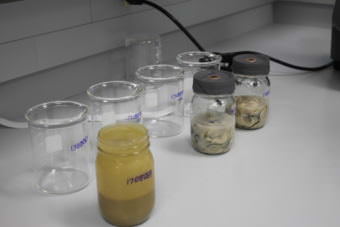
Alaska has been testing commercial oysters since the 1980s. (Photo by Henry Leasia/Alaska Public Media)

This summer, Forester had to deliver the bad news to five commercial oyster farms. That’s an uptick from last year. And some of those producers lost out on business for longer this summer than in previous years. It wound up costing one farmer over $30,000.

The toxin that causes paralytic shellfish poisoning is produced by harmful algal blooms. The algae can flourish in warm water. But Ginny Eckert, a fisheries professor at the University of Alaska Fairbanks, says right now, that doesn’t appear to be the problem.

“The ocean this year, from what I’ve been hearing, was fairly close to normal,” Eckert said.

Still, she says the harmful algae from previous warming could be taking a nap at the bottom of the ocean.

“So it can sort of get a build up of this resting phase in the sediments during these warm years that then persists in other years,” Eckert said.

But, she stresses, it’s not just one thing that causes the problem. It’s a combination of factors — a perfect storm. More freshwater from glacial melt is also thought to be changing the ocean.

Michael Jamros has a PhD in biochemistry and works with tribes to regularly monitor areas in Southeast Alaska for toxic shellfish. He says some years are just volatile.

“That’s what we’ve seen so far,” Jamros said.

He says this summer, the lab has documented high levels of paralytic shellfish poisoning, but it’s unclear what’s causing it. Alaska’s record of tracking this is still relatively young.

“It’s only been in the past decade or two where we’ve really been looking at it closely enough to really even be able to model this,” Jamros said.

That’s compared to nearly 80 years of testing in places like Washington state. But there are more coordinated efforts happening in Alaska. A new map will show where the toxin is cropping up all around the state.

Jamros thinks that’s the future of tracking paralytic shellfish poisoning.

“While we can’t predict it here, we’ve noticed certain beaches and certain areas seem to be very low in toxicity compared to other ones,” Jamros said. “So there are spots that are less prone to toxic blooms.”

By identifying those spots overtime, oyster farmers might have a better chance of routinely selling their product.

Wild Alaska salmon not on menus in China…yet

salmon-displayed-in-a-seafood-restaurant-in-china (Photo C/O Sea Grant)_
Salmon displayed in China. Qiujie “Angie” Zheng says a recent consumer study found that Chinese shoppers are interested in buying wild Alaska salmon bones and skin for fish broth and stocks. (Photo courtesy of Alaska Sea Grant)

About a third of the salmon caught in Alaska gets shipped to China for processing. But a recent consumer study suggests that at least some of that wild salmon should stay in the Chinese markets.

Qiujie “Angie” Zheng didn’t grow up eating much salmon in her hometown near Beijing, China. When she did, she ate farmed salmon, prepared raw — sashimi style.

“After I moved up to Alaska, I realized wild salmon…is different than farm-raised salmon dominating China market,” Zheng said.

Zheng is now an associate professor of economics at the University of Alaska Anchorage. She says most Chinese consumers are familiar with Alaskan salmon. It’s been popularized by fish oil pills for decades, but few have dined on it.

What you can find in Chinese markets is farmed salmon, from places like Norway and Chile. Zheng came across wild Alaska salmon only once — in a market in Hong Kong. That salmon was over fifty dollars a pound.

“That’s very expensive,” Zheng said. “So actually, that triggered me to think if we can export more Alaska wild salmon to China market. Especially, large mainland market, definitely there is potential.”

Most of the wild salmon that’s sent to China is processed and shipped back to the U.S. or on to Europe. Zheng says very little of it actually stays in China.

So she wanted to know if Chinese consumers would be interested in eating it — rather than just exporting. For her recent study, she had graduate students interview shoppers at 30 different stores in three large Chinese cities. And they found that  the majority would buy wild Alaska salmon, just not at such a steep price. Zheng says if more fish were to hit the stores, that could ultimately lower the cost.

Still, She thinks part of what’s driving new interest is China’s changing demographics. More Chinese are joining the middle class, and they want to know where their food comes from.

“Due to the environmental pollution and the number of food safety scandals in China in recent years, the consumers also have growing concerns about food safety and possible contamination of their food supply,” Zheng said.

Zheng says when people in China imagine Alaska, they think pristine waters. But there’s still a ways to go before its salmon actually shows up in the stores. Zheng thinks small seafood producers across the state should form a coalition to explore the option.

And in a few years, wild Alaska salmon sashimi could start cropping up on the menu in China.

In Angoon, a rural water system gets help from beavers

Auk'Tah Lake became Angoon's water source in the early 90s. Before that, the village relied on a muskeg for its public water. (Photo by Elizabeth Jenkins/Alaska's Energy Desk)
Auk’Tah Lake became Angoon’s water source in the early 1990s. Before that, the village relied on a muskeg for its drinking water. (Photo by Elizabeth Jenkins/Alaska’s Energy Desk)

The village of Angoon’s drinking water comes from a lake held up by a beaver dam. That might sound sketchy, but the beavers are one of reasons the city has public water. Not all Alaska towns do.

For about the past seven years, the federal dollars for Alaska’s water and sewer projects has remained flat. That’s a big problem in rural parts of the state, where the existing infrastructure is getting old, and the cost to replace or upgrade those systems is growing.

Paul Thomas works at Angoon’s water treatment facility: a small rectangular building at the end of a dirt road. Metal pipes snake along the walls.

“This here’s where the water comes up from the lake, and it goes up this way to the green pipe,” he said.

His favorite part of his job is removing the crud from the filters.

“Getting these cleaned out so I’m not getting my town sick,” he said.

Before he got this job a few years ago, Thomas says he didn’t pay much attention to where Angoon’s water came from. He used to keep one of those water filtration pitchers in his fridge just in case. But not anymore.

“A lot of people I see go to the store, they’re buying water bottles still,” Thomas said. “I just tell ’em I drink it right out of the faucet. It’s good. I make the best water in town.”

But the best water in town comes at a price. A price that Albert Kookesh III, who works for the city, says is growing.

A short walk from the treatment facility is Auk’Tah Lake, Angoon’s water source. It’s a deep green color and flanked by trees. The thing that’s not visible is the natural dam holding it all in — a beaver dam.

Kookesh says the “million dollar question” is what happens if the dam breaks.

“You know the water level would drop drastically. I don’t know if it would all go,” he said. “But I know that it would drop.”

Kookesh says there are some upgrades that could make Angoon’s water system more reliable and affordable, like building actual levies — not just the ones created by tiny paws. There’s also interest in getting solar panels for the treatment facility. Right now, the water is pumped up to it using electricity, which can be expensive since the city runs on diesel.

To pay for water treatment, Angoon uses a combination of city taxes and a yearly appropriation from the legislature. But it’s still difficult for the city to break even. Part of the reason Kookesh says is unemployment in Angoon is high, and there’s a number of people who can’t afford to pay their monthly water bill.

“We at the city know that because we’re in the same boat as them.” Kookesh said.

The piping system that brings the water into town wasn’t constructed with shut off valves. So when someone doesn’t pay their bill, the city can’t shut their water off. Instead, it winds up paying for the cost.

Kookesh says he’s not sure how much longer that can continue. If nothing changes in two or three years, Angoon might have to limit around-the-clock running water for everyone.

“It’s not something we want to do in Angoon. But it’s something we might have to do,” Kookesh said. “It’s not something fun to think about, especially for someone who grew up with water and flushing toilets. We want to make sure that the option’s always there.”

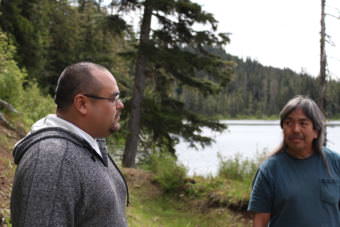
Albert Kookesh III (right) and Paul Thomas on the edge of Auk'Tah Lake. (Photo by Elizabeth Jenkins/Alaska's Energy Desk)
Albert Kookesh III (left) and Paul Thomas (right) on the edge of Auk’Tah Lake. (Photo by Elizabeth Jenkins/Alaska’s Energy Desk)

Bill Griffith, the facilities manager at the state’s Department of Environmental Conservation, says there’s a lot of need all around state. He oversees the Village Safe Water Program.

About 190 small communities can’t afford to fix their systems without some kind of help.

Griffith says his agency has identified $1.7 billion dollars of water and sewer projects in Alaska that need to be addressed. But every year, they only get about $60 million dollars in state and federal funding. A drop in the bucket.

“It’s really just kind of a Band-Aid at this point,” Griffith said.

Griffith says a lot of the infrastructure in rural Alaska was built back in the 1970s and ’80s, constructed with federal grants and a state match. But since 2009, the congressional allocation for those projects has remained flat.

President Donald Trump’s budget for next fiscal year proposes zeroing out some the grant funding for repairing Alaska’s outdated systems.

Griffith says there’s always the option the state legislature could put more money in — on top of the federal match.

“I don’t think that’s very likely. Given the current, budget situation in Alaska,” Griffith said. “I don’t think it’s likely they’re going to make funds available in excess.”

For now, Griffith says Angoon’s best bet is to try to upkeep its existing water system. Unfortunately, it’s not on the top of the list to receive additional funds. Unlike some other places in Alaska, Angoon actually has running water. That’s not the case for about 30 Alaska communities.

Albert Kookesh III says at least in the meantime nature is providing.

“You know the beavers are still there doing their thing,” Kookesh said. “But it’s something the beavers have created and we’re definitely taking advantage of.”

For how much longer, Kookesh says, he isn’t sure. He jokes that beaver hunters aren’t welcome in Angoon.

Less mercury found in Beaufort Sea polar bears — that’s not necessarily a good thing

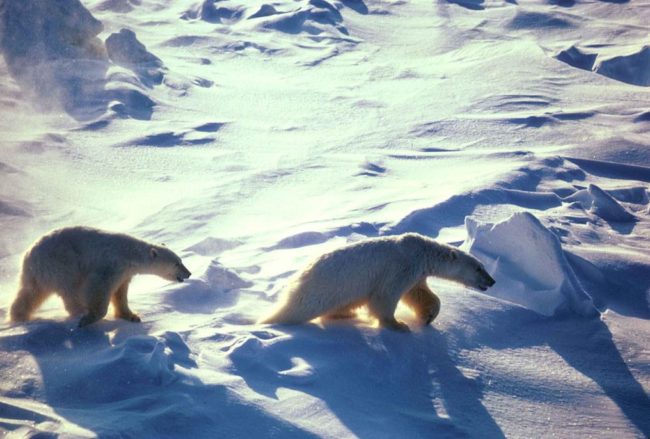
Polar Bears (Photo by Atwell Gerry, U.S. Fish and Wildlife Service)

Warming in the southern Beaufort Sea is leading to some surprising biological changes for the region’s polar bears. But recent findings related to the bears’ health warns of other challenges coming down the line.

When scientists go into the field to study the Beaufort Sea polar bears, they collect samples from the sedated bears. A little tuft of fur is flown all the way from the Arctic to a lab on the east coast.

Melissa McKinney hasn’t seen the bears first hand, but since 2004 she’s come in contact with their hair inside a lab at the University of Connecticut. She’s using the hair to look for mercury.

“Most of the mercury that is present in the environment right now is due to human emissions,” McKinney said.

And that mercury makes its way up the food web: first in fish and later in the ringed seals that eat the fish. By the time it gets to the polar bears, the mercury is super concentrated, and McKinney says it can have toxic effects. The Beaufort bears in particular are thought to have some of highest levels of mercury in the Arctic.

McKinney expected to see some fluctuation in mercury levels over time.

“That would be what we would anticipate,” she said.

But over a seven year stretch, she found the numbers have dropped by more than half.

“Well, I was surprised,” she said. “I thought that we might see some variation, but I was surprised at the extent of the decline that occurred over a relatively short period of time.”

That sounds like a good thing, but that information tells scientists something else.

“The decline in mercury in the Southern Beaufort Sea can largely be explained by their diet and condition,” McKinney said.

Instead of dining on ringed seal out on the ice, more polar bears in the Beaufort Sea are coming on shore, where they’re consuming bowhead whale scraps leftover from subsistence hunts.

McKinney says there’s only so much of that food that can go around.

“In the short term, ‘yes.’ We see declines in terms of mercury,” McKinney said. “But what will it mean in the long term when we have more bears on shore and more bears using that resource?”

She says while this study is about polar bears in the Beaufort Sea, it also reveals something about us: The implications of warming are a lot more varied than we thought.

Reassigned climate official worries “nobody home” on village relocation

In June, the Washington Post reported that dozens of senior officials in the Department of the Interior would be reassigned to new jobs. Now one of those officials is speaking out. Joel Clement was part of a working group, focused on village relocation and coastal resilience in Alaska. He thinks he was targeted for his views on climate change.

Joel Clement was a director at the Office of Policy Analysis. For over a year, he’d been meeting with different agencies about how to protect Alaska villages from the effects of climate change.

There are concerns about major erosion in Shishmaref, Kivalina and Shaktoolik. Parts of Newtok are sloughing into the water. And while relocation efforts have a ways to go, Clement says the conversation at the federal level had at least started.

“The political will and the coordination were finally in place,” Clement said.

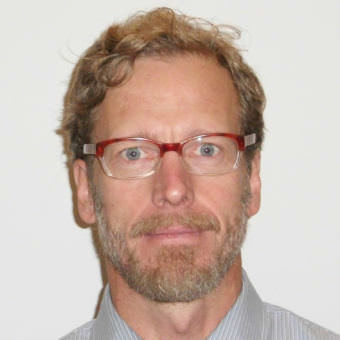
Joel Clement thinks his job reassignment was retaliation. (Photo courtesy of Joel Clement)

Then last month, Clement got an email that said he was being reassigned. He believes it was retaliation from the new administration.

“It said we’re going to reassign you to the place that has the least to do with what you do and understand,” Clement said.

Instead of working on climate change resiliency, Interior Secretary Ryan Zinke assigned Clement to an accounting job, collecting oil and gas royalties.

Clement doesn’t think the Trump administration understood the urgency of his work. That he was trying to help Alaska communities adapt to an imminent threat.

He thinks they just saw “climate change.”

“Just because this is caused by… climate change and warming doesn’t mean you can’t focus on it,” Clement said.

So far, no one has taken Clement’s old position. He hopes an investigation can shed some light on why he was reassigned.

And Clement says he doesn’t know who in D.C. will be the point person for Alaska villages trying to relocate or adapt.

“There’s really nobody home on this issue right now. So I’m really worried it will fade from priority,” Clement said.

There is one federal official still working on this issue in Alaska. Joel Neimeyer chairs the Denali Commission. In 2015, President Barack Obama asked the Denali Commission to spearhead federal efforts on village relocation.

“This will have to be something the country’s going to address sometime in the future,” Neimeyer said.

Niemeyer hopes the Trump administration won’t drop the issue completely.

“Every new administration wants to do things in their style. We don’t know what that is yet,” Neimeyer said. “If they pick up the issue, we’ll continue. If they choose not to, then I suppose the state will take up full leadership on this issue.”

Niemeyer says the effects of climate change are perhaps most clear in Alaska. But relocation isn’t just an Alaska problem, and it’s one the federal government will have to grapple with, one way or another.

On Monday, eight Democrats from the Senate Committee on Energy and Natural Resources sent a letter to the Department of the Interior asking for a close examination into the reassignments.

Avista sold to Canadian electric company

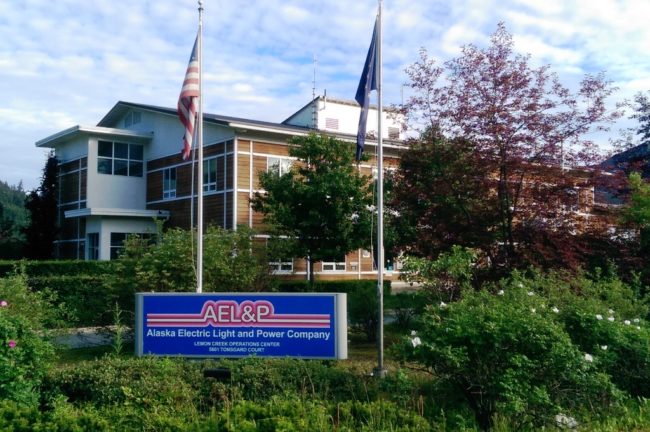
Alaska Electric Light and Power Company headquarters on Tonsgard Court in Juneau. (Photo by Rosemarie Alexander/KTOO)

The parent company of Juneau’s electric utility will be based in Canada. Avista has owned Alaska Electric Light & Power for the past four years. The company has headquarters in Spokane, Washington. But on Thursday, Hydro One — an Ontario company — announced it plans to buy Avista for $5.3 billion dollars.

According to the press release, Hydro One will keep the Spokane offices and staff on board. Energy costs are not expected to go up.

Avista sells electricity in Alaska, Washington, Oregon, Idaho, and Montana.

Site notifications
Update notification options
Subscribe to notifications