Elizabeth Jenkins, Alaska's Energy Desk - Juneau

Ask the Energy Desk: What happens when our hydropower sources are frozen?

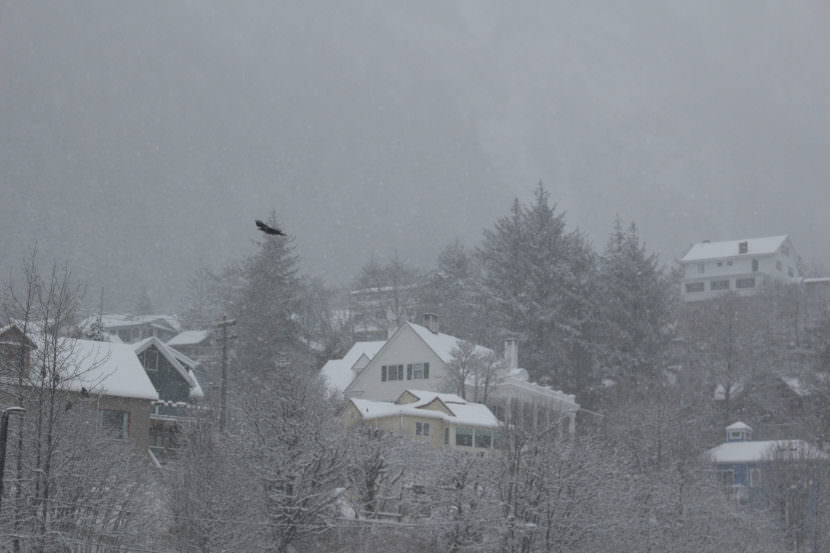
Snow day (Photo by Elizabeth Jenkins/Alaska's Energy Desk)
Snow falls on the Governor’s mansion in Juneau. The capital city is under a winter storm warming, as of Monday, March 13. (Photo by Elizabeth Jenkins/Alaska’s Energy Desk)

Parts of interior Alaska, like Fairbanks, have been seeing record cold temperatures this winter. But in Southeast Alaska, the frigid conditions have had a direct impact on the way people power their homes.

I haven’t seen any icicle beards around town, but Juneau has been noticeably cold. We’ve had below freezing temperatures for the past week, which is unusual for this time of year.

Nancy Waterman says the frigid conditions got her thinking. She’s seen water trickling into nearby streams.

“So I wonder what the condition of our hydroelectric reservoirs. Is it all frozen? Is it available to us?” Waterman asked. “Should Juneau-ites be conserving now since the weather forecast is for another week?”

Alec Mesdag with Juneau’s electric utility, Alaska Electric Light & Power,  says when it’s cold outside, nothing changes with the hydroelectric dam itself.

“What changes is all the water that in the summertime would fall and flow into a reservoir is now frozen up on the side of a mountain,” Mesdag said.

Juneau’s energy is supplied by four different lakes. Alpine water flows into each lake and when that water is released through turbines, you get electricity.

“That only works if we have water in those lakes stored up in order to do that,” Mesdag said.

So, Mesdag says the cold snap presents a two-fold problem: the water in the lakes is low and you’re likely cranking the thermostat at home.

At this point, Juneau doesn’t have to use its backup power. But that’s not the case in other parts of Southeast.
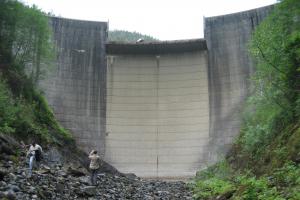
Swan Lake dam supplies energy to Ketchikan. (Photo courtesy of SEAPA Hydro)

“As of this morning, we’ve burned 6,400 gallons of diesel,” said Mark Adams, the Ketchikan Public Utilities Operations Manager.

The city of about 8,000 has been running on diesel instead of hydropower since March 6. And it’s not the only one. Haines and Skagway have also been supplementing with diesel during the daytime.

Adams says it’s the second time this year the city has been forced to make the switch, due to the chilly weather.

“It’s pretty significant. Colder weather, folks are heating their houses and the wind also draws a lot of heat out so that’s a big factor,”

Adams says powering with diesel can be expensive. It’s caused a noticeable jump in the community’s electric bills.

Petersburg and Wrangell share the same electric utility. But Ketchikan draws most of its electricity from a different lake.

“Wrangell and Petersburg are colder than Ketchikan but we are significantly larger on our electric load,” Adams said.

Meanwhile, back in Juneau, Alec Mesdag and I are basking in glow of lights still powered by renewable energy. He can’t say with certainty that we won’t have to go on diesel this year. We’re at the mercy of the weather.

“And that’s true of any year,” Mesdag said.

He says Juneau looks like it’s going to be alright. But should we be waiting for the other shoe to drop? Or in this case, the level of the lake? Should we be conserving energy when it’s really chilly outside?

Mesdag we should always be thinking about conservation, regardless of the season.

“A lot of it actually comes down to what is your priority with how you use energy,” Mesdag said. “Some people prioritize how much their energy cost. Some people prioritize what the environmental impact of their energy consumption is and some people are just trying to get by.”

In Southeast, we may be able to get by with heating our homes less. The forecast shows warmer, rainy weather in the weeks to come.
Alaska Sea Grant program “hopeful but not confident” funding won’t be cut

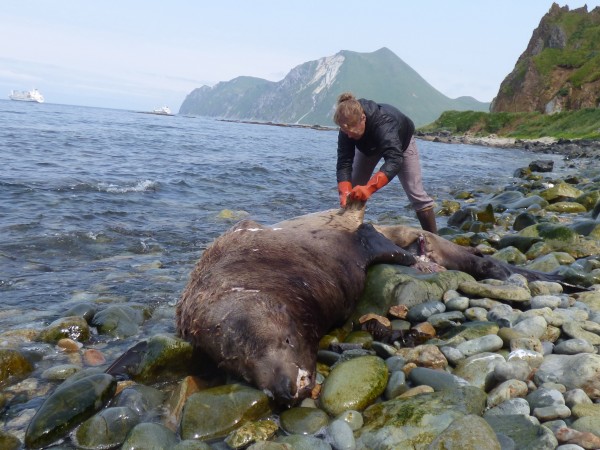
Melissa Good with UAF Alaska Sea Grant collects a sample from a Steller’s sea lion carcass by Unalaska’s Summer Bay. (Photo by John Ryan/KUCB)

The National Oceanic and Atmospheric Administration, or NOAA, received a surprise on Friday: The Trump administration is proposing deep cuts to the organization, which focuses on fisheries and climate science.

As reported in the Washington Post, NOAA could lose 26 percent of its overall budget. The Sea Grant program, with more than a dozen projects in Alaska, could be hit particularly hard.

Carol Kaynor is a communication specialist at Sea Grant. She’s worked there for about 25 years.

“This is the wildest ride I ever remember,” Kaynor said.

Last week, she found out the organization could lose all of its federal funding by scrolling through Facebook.

“Part of the reason I’ve worked here so long is that I believe in this program,” Kaynor said. “I think it’s an excellent program and I felt like it made a difference, and that’s a big thing.”

Sea Grant helps train villages to monitor coastal erosion, tracks the economic vitality of the seafood industry and studies the impact of climate change, among many, many other things. The organization supports research at 33 universities nationwide, including the University of Alaska Fairbanks.

Kaynor says Sea Grant plays a vital role nationally and in the state. So the news that the Trump Administration wanted to eliminate program was hard to swallow.

“I was thinking this is crazy. Sea Grant has such a huge return on investment,” Kaynor said. “Why would you cut a program that has a major return on investment when you’re trying to grow the economy? It doesn’t make sense.”

NOAA is administered by the U.S. Department of  Commerce. The Washington Post obtained a memo that said the new administration wants to “prioritize rebuilding the military.” It mentions the “trade offs and choices inherent in pursuing the goals.”

Paula Cullenberg, the Alaska director of Sea Grant, says she’s not sure why the program didn’t make the cut.

“I have no idea … Maybe this was an easy mark and it was something on a spreadsheet that looked available,” Cullenberg said. “As far as I know there wasn’t any in-depth analysis around that.”

Sea Grant has been in Alaska for about 47 years and Cullenberg says the program has been threatened before. She says the Reagan administration tried to nix the funding but Congress chose to reinstate it. This time around, she hopes it goes the same way.

“You know, it feels like a bit of a blow,” Cullenberg said. “A lack of confidence for sure or a lack of support by the administration. I can’t say I’m confident but I’m certainly hopeful.”

The next fiscal year starts in October. The White House and lawmakers will have the upcoming months to decide. Cullenberg is meeting with NOAA this week in Washington, D.C., to discuss a game plan.

Is the Antiquities Act antiquated? Murkowski wants Alaskans approval for future national monuments

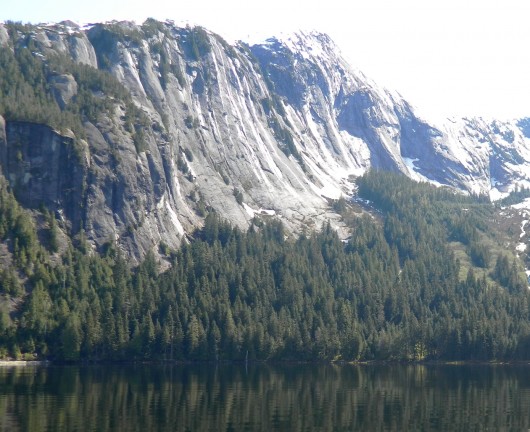
Misty Fiords National Monument is known for its dramatic granite cliffs. Pictured is a view from Rudyerd Bay. (File photo by Leila Kheiry/KRBD)

Alaska has five national monuments — public lands that are given special protections, and Republican U.S. Sen. Lisa Murkowski doesn’t want anymore of the state added to that list.

She re-introduced a congressional bill in January to limit the Antiquities Act, which gives the president the sweeping authority to make those designations.

In Barack Obama’s last year in office, some wondered whether the president would use the Antiquities Act to lock up offshore drilling leases in the Arctic Ocean. He did it a different way, but those types of land or water designations still have some Alaska legislators worried.

“It’s clear to some degree the federal authorities are, in my opinion, overreaching,” said Rep. Dan Saddler, a House Republican from Eagle River.

In a meeting Thursday at the capitol, legislators discussed a joint House resolution to back Murkowski’s congressional bill: essentially, a letter of support to overhaul the Antiquities Act. The bill outlines that the president would need approval from Congress and the state before creating a national monument.

The Alaska Department of Natural Resources (DNR) thinks it’s a good idea. Ed Fogels, a deputy commissioner with DNR, said the Antiquities Act was created more than 100 years ago to protect sacred and cultural sites from things like grave robbing.

“You know, we’re seeing an expansion of that to where vast areas are put aside and it may not be necessarily in the spirit of that intent of the (Act),” Fogels said.

In a controversial decision, President Jimmy Carter created at least 11 National Monuments in Alaska in 1978. Congress later acted on a significant conservation bill that rolled some of those monuments into national parks. The Antiquities Act gave Carter the authority to make that decision quickly.

Erik Grafe, an attorney with Earthjustice, thinks it’s an important tool for a president to have.

“Presidents from Teddy Roosevelt to George W. Bush to Obama have used that to protect things from large swaths of the ocean to the Statue of Liberty,” Grafe said.

Grafe said the Antiquities Act can still be used the way it was intended because important sacred and cultural sites have a new threat.

“It’s as relevant in Alaska as anywhere else and maybe even more so because of climate change,” Grafe said.

But Ed Fogels, with DNR, said Alaska’s current fiscal crisis is a reason to be concerned.

“Our economy is based on responsible natural resource development,” Fogels said. “So, the less of that lands there is, the less of a land base we have to work with.”

If Murkowski’s bill makes it through Congress, it won’t undo Alaska’s existing national monuments, but it will create an extra step in the process and make it more difficult for the president to make sweeping designations.

States like Utah are going a step further, urging President Donald Trump to overturn national monument designations made under President Obama.

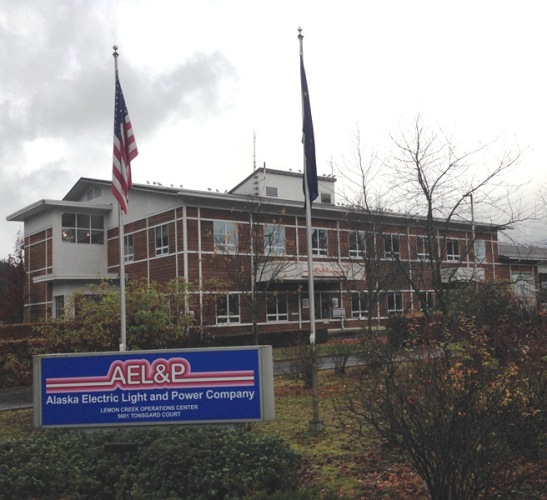
Juneau’s electric utility says natural gas not in the plans anymore

AEL&P headquarters in Lemon Creek. (Photo by Casey Kelly/KTOO)

Juneau’s privately-owned electric utility won’t be bringing natural gas to the capital city anytime soon. Alaska Electric Light & Power is owned by the Washington-based company Avista, which had shown interest in shipping liquefied natural gas from British Columbia to Juneau.

Tim McLeod, AEL&P’s president, said the company thought heating with natural gas could save customers money. A few years ago, natural gas cost half as much as oil but circumstances have changed.

“A barrel of oil has dropped significantly, and so the price of heating fuel in Juneau has reduced the margin between natural gas and heating oil,” he said.

McLeod said the project was expected to cost $170 million. That price included the $6,000 cost for switching homes from heating fuel to natural gas.

He said Avista couldn’t justify the expense at a time when Alaska’s economy is shrinking. The capital city has many state employees.

“They’re not really so worried about finding a way to reduce the cost of heating their homes,” McLeod said. “They’re concerned about having a job in a few years.”

McLeod said if the price of oil rebounds and state’s economy gets back on track, natural gas could be an option again for Juneau.

Ask the Energy Desk: Are plastic bag bans better for the environment?

via GIPHY

Bans on plastic grocery bags have been cropping up across Alaska’s remote communities. Cordova’s ban went into effect last year.

But so far, the larger cities in the state have yet to adopt one.

Penny Gage, a resident of Anchorage, has a different kind of skeleton in her closet.

“I have a large collection of plastic bags at home, and I feel very bad,” Gage said. “I have gotten out of the habit of bringing my fabric bags to the store. And we use them for trash bags or other uses. I find myself using them for everything.”

Gage used to live in Washington, D.C. So, she’s no stranger to a ban on single-use plastic bags.

She said Anchorage has some recycling options for plastic bags.

Still, she wonders if nixing it from the checkout line altogether could be better for the environment?

“Yeah, I’m curious. Does it really help if we get rid of plastic bags?”

Around the state, the opinion on plastic bag bans — and its effectiveness — seems to differ just as much. 

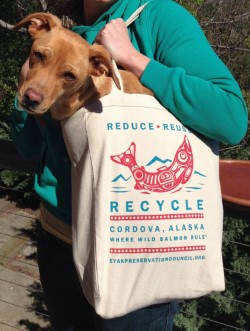
Cordova's plastic bag ordinance is helping displace over a million plastic bags a year. (Photo courtosy of the Eyak Preservation Council)
Cordova’s plastic bag ordinance went into effect in October 2016. (Photo courtesy of the Eyak Preservation Council)

Homer’s City Council passed a plastic bag ban ordinance, only to have it overturned months later by a popular vote.

Fairbanks considered a tax on plastic bags, but there was community opposition.

“You have to decide in your community in your culture what’s the most important thing for you. In Cordova, it’s that we live and die by the ocean,” said Emily Stolarcyk, the program manager of the Eyak Preservation Council, an environmental advocacy nonprofit.

Cordova has a population of about 2,500.

Stolarcyk said in the past, the community was using over a million plastic bags a year. That’s particularly troubling when you consider the town’s main economic driver: commercial fishing, she said. She points to studies on microplastics winding up in seafood as a reason to be concerned.

So, Stolarcyk set out to change that.

Her organization gifted reusable bags to every household in Cordova.

Within a few years they had enough support to rally around a ban.

“It’s better when it takes a long time because it doesn’t shock people either when it happens,” Stolarcyk said. “People need time to get used to the idea of change.”

One thing that didn’t change, though, is that grocery stores in Cordova still give out bags. But now, it’s biodegradable one’s.

Cordova’s plastic bag ban is similar to one passed in Bethel about seven years ago.

But according to Bethel’s landfill manager, David Stovner, bags are still flying around.

“Well, at the landfill, we got a lot of wind here. We’ve got fences but that doesn’t stop ’em all,” Stovner said. “We’ve got brush piles that catch a lot of the debris. But still, there’s a lot of it that winds up on the tundra.”

Jennie Romer, a lawyer who’s worked on plastic bag laws in California and New York, said plastic bag bans work best when there’s a fee involved.

In other words, if you forgot your reusable bag, you pay 5 to 10 cents for a paper one.

A similar ordinance in New York City recently failed to receive enough support.

Still, Romer thinks those types of laws are better for the environment.

“An example of it not being better for the environment is the allowance of biodegradable plastic bags,” Romer said.

Biodegradable bags are typically made from plant-based material or cornstarch, rather than petroleum. But the rate at which the breakdown happens depends on the temperature and moisture in the air.

A grocery store manager in Bethel I spoke with said paper bags are too heavy to be affordably shipped to the city, which is off the road system.

Romer thought the fee component could help that pencil out.

But what about the bigger Alaska cities with plastic bag recycling? Romer said unless that bag is squeaky clean: 

“There aren’t really any successful curbside recycling programs for plastic bags. And so, there isn’t a way to get them to be made into other bags,” Romer said. “The majority of plastic bags end up in the landfill.”

But, getting back to the original question, I asked Mary Fisher, the director of Alaskans for Litter Prevention and Recycling, are plastic bag bans better for the environment?

“Probably … I guess plastic bags are not good for the environment, and neither is plastic anything or paper or aluminum cans or abandoned boats,” Fisher said. “You could ban everything, I guess, and it would be good for the environment. But us as humans, we’re not going to do that.”

I catch Penny Gage, our question-asker, up to speed.

“Yeah, this is not a black-and-white issue. That’s for sure,” Gage said.

Gage said now that she’s more aware of the issue, she plans to use her fabric bags more.

“I actually want to put a sticky note in my car to remind me,” Gage said.

For now, what Alaskans carry their groceries in is still a personal choice.

With the exception of a few small communities, most cities in the state don’t want to tell people how to bring their groceries home.

Can home wood pellet boilers go from fringe to mainstream?

Higdon estimates they go through a little more than a $6 bag a day. (Photo by Elizabeth Jenkins/Alaska's Energy Desk)
Christal Higdon estimates her family goes through a little more than a $6 bag of pellets a day in her wood pellet boiler. (Photo by Elizabeth Jenkins/Alaska’s Energy Desk)

The Ketchikan airport has one. So does the Walter Sobeloff Building in downtown Juneau. Now, a fringe group of homeowners are installing wood pellet boilers to heat their homes. Not to be confused with wood burning stoves, these boilers have been marketed as a cheaper alternative to heating oil, at least, in the long run. But is the framework there to make the technology go mainstream?

Christal Higdon takes me downstairs to her garage where her family recently had a reason to celebrate: They completed the installation of a new wood pellet boiler. When the moment came to hit the switch, after a year of anticipation, Higdon says they didn’t pop open champagne, but they did make brownies.

“[We] invited the electrician and the plumber and everyone over,” Higdon said with a laugh. She made a crock pot of chili to share with everyone as they were firing up the boiler for the first time.

Higdon is one about four homeowners in Juneau who have made the transition from electric resistance heat or oil to a wood pellet boiler.

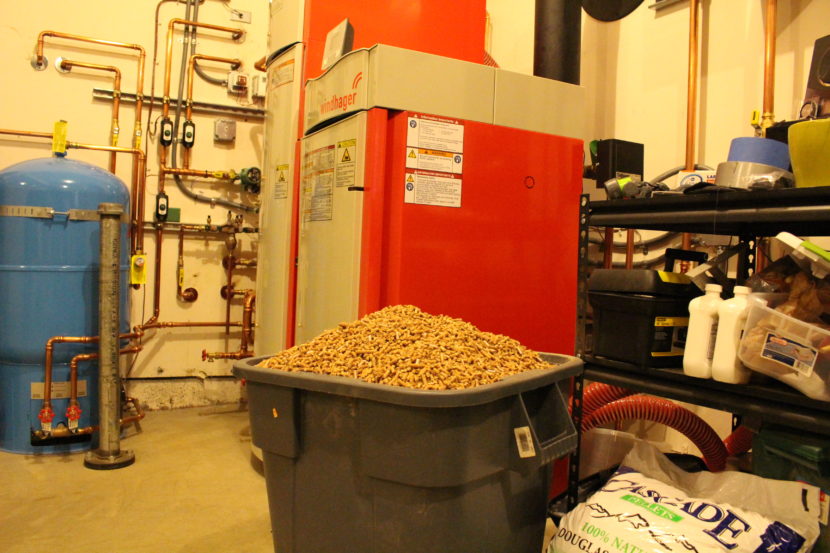
It works like this: the pellets ignite and that heat is transferred through pipes of water around the home. The boilers can run about $12,000 — just for the equipment itself. Not included in that price are the installation and upgrades needed to the home.

But Higdon says, for her family, it seemed worth the initial investment.

“It just felt right for us to move away from the dependence on oil wherever we could,” she said. “And the time was right to replace our boiler, so we were looking at some kind of renewable energy we could use.”

Whether or not wood pellet boilers are a “renewable” form of energy is debated, especially when the pellets have to be shipped from someplace else. Still, Higdon says her reasons for wanting it were practical, as well as environmental. She learned about the system through word-of-mouth. And with any emerging technology, she says they’ve run into a few surprises with putting one in their house.

“Well, we had to find someone who could install it without maybe knowing how,” Higdon said.

And now there’s another hoop to jump through: Building a wood pellet shed. It’s not a necessity, but it would make it easier for Higdon’s family. They would only have to fill it up about once a year. The shed has special dimensions and a sloped floor which feeds the boiler.

“So the folks in town, several contractors had never built anything like that,” Higdon said.

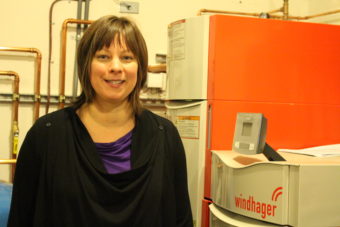
Christal Higdon with wood pellet boiler (Photo by Elizabeth Jenkins/Alaska's Energy Desk)
Christal Higdon says she’s looking forward to being less dependent on oil. (Photo by Elizabeth Jenkins/Alaska’s Energy Desk)

“We were listening. She came at the right time,” said Justin Fantasia. He’s a faculty member at the University of Alaska Southeast and teaches construction technology.

“We were trying to figure out what kind of project we wanted to do,” Fantasia said.

He says — although it’s a unique arrangement — his class sometimes partners with people. Higdon is paying for the materials but Fastasia’s spring semester will be building the pellet shed. He says the main focus is to swing a hammer and to see a project through from start to finish. In a previous semester, university students built a tiny house.

“We don’t want to be trendy, but we want to pay attention to what people are excited about,” Fantasia said.

And for the time being, that seems like it could be wood pellet boilers. Fantasia says the university would consider teaching a class on the the installation — if there was interest.

“Construction technology changes super fast,” Fantasia said. “Seeing new products come on the market, new techniques, new concerns with changing cost of oil. Hopefully, going up for at least the state’s reason.”

Oil prices are going up but the overall price of heating fuel is cheaper than it’s been in the past. Higdon thinks her wood pellet boiler will eventually pencil out in the next four years.

In the meantime, as she waits for the shed, she’s keeping the golden pellets of Douglas Fir in a grey plastic bucket. Her family buys them in bulk at Home Depot — shipped from Oregon. There’s a business in Ketchikan that makes wood pellets but there’s not a bulk delivery system yet.

Higdon says, living in the Tongass, she would prefer to buy local.

“So if that’s available in the future, we’re hoping there’s enough demand that is created by people installing them, something like that could happen for Juneau,” Higdon said.

Sealaska, the regional Native corporation, outfitted its headquarters with a wood pellet boiler. About two years ago, it added another when it opened the Walter Sobeloff Building. In the past, the corporation has shown interest in developing the wood pellet market in Southeast by creating demand.

But as of now, the pellets they’re using come from Washington state and British Columbia.

Site notifications
Update notification options
Subscribe to notifications