Jacob Resneck is CoastAlaska's regional news director based in Juneau. CoastAlaska is our partner in Southeast Alaska. KTOO collaborates with partners across the state to cover important news and to share stories with our audiences.

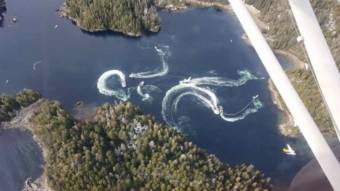
The Sitka sac roe herring fishery in 2018. In Southeast, the state screens herring, pink salmon and halibut for gamma radiation looking for the signatures most commonly associated with Fukushima radioactivity. (Heather Bauscher/KCAW)
State environmental regulators announced Monday they’re expanding radiation testing of commercially harvested Alaska seafood, including crab, using a gamma radiation detector at a state laboratory in Anchorage. That’s thanks to continued federal funding from the Food and Drug Administration.
A devastating earthquake and tsunami off the coast of Japan in 2011 killed tens of thousands and crippled the Fukushima Dai-ichi nuclear plant, which released radioactive material into the air and ocean.
That led to global concern about the safety of Pacific seafood. Alaska began screening fish samples in 2014. It now routinely tests prime export products, including Bristol Bay salmon and Bering Sea pollock, to reassure consumers that Alaska seafood is safe.
State Department of Environmental Conservation chief veterinarian Bob Gerlach told CoastAlaska that the screening has “not detected any elevated levels that are deemed harmful for consumption or for the health of the animal.”
“What we’re hoping to do now with the other species is look at not just maybe these top predatory feeders, but actually some lower levels of fish in the bottom of the food chain,” Gerlach said.
He says the goal is to make sure the state is “evaluating the entire ecosystem of the North Pacific and Bering Sea.”
Alaska seafood is a multibillion dollar industry. The Alaska Seafood Marketing Institute says two-thirds of the nation’s seafood is landed in Alaska ports.
The department that includes the DMV sent a letter April 14 confirming it would keep state-run offices open in Haines, Homer, Valdez, Delta Junction, Eagle River and Tok for at least another year.
The Department of Administration’s acting commissioner’s one-page letter was addressed to Rep. Zack Fields (D-Anchorage). He had introduced a bill designed to block the plan.
“It’s great news to see the administration cancel its proposal to close down DMVs in rural Alaska,” Fields told CoastAlaska.
He was among a bipartisan group of lawmakers who had objected to the privatization plan, arguing that it would increase the cost for routine DMV services in those communities. That’s because private vendors charge their own fee, in addition to what the state charges.
The Department of Administration offered this price comparison between state-run DMV offices and a private vendor UMV during a March 11, 2021 presentation to a House Finance subcommittee. It shows the cost differences between using a public office and going through a private service.
Fields says he reached out to the governor’s office Wednesday urging them to abandon the idea given that Department of Administration Commissioner Kelly Tshibaka — who had been pursuing the idea — was no longer in state service.
“I thought it was a good time for the administration to formally announce the cancellation of the DMV closure proposal,” he said.
Reps. Adam Wool (D-Fairbanks) and Jonathan Kreiss-Tomkins (D-Sitka) “played a key role” in keeping money in the budget to keep rural DMVs open, Fields added. “And I think they deserve credit for that.”
Industry groups and the federal agency argued that the project was key to keeping Southeast’s last mills running over the next decade.
But a federal judge agreed with the plaintiffs who argued that the federal agency didn’t follow the law when it approved the timber sales. That’s because it hadn’t provided site-specific information on areas that could be logged.
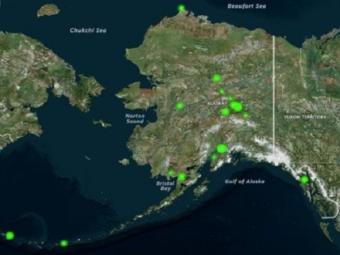
DEC”s map of known PFAS-contaminated sites in Alaska. Per- and polyfluoroalkyl substances chemicals are found in some firefighting foams and a wide range of consumer products. Exposure has been linked to adverse health effects. (Image courtesy of Department of Environmental Conservation)
The 38-page legal complaint filed on behalf of Alaska Attorney General Treg Taylor notes that for decades, the companies knowingly produced the toxic chemicals, which do not break down in the environment and are highly soluble, allowing them to easily spread in groundwater.
“Defendants, by their actions and/or inactions, bear ultimate responsibility for the release of vast amounts of PFOS and PFOA into Alaska’s environment, contaminating the state’s water resources, soils, sediments, biota and wildlife, threatening the health, safety, and well-being of the state’s residents,” the lawsuit says.
Environmentalists called the state’s lawsuit long overdue. Alaska lawmakers have been urging the governor to do more to regulate PFAS compounds, says Pamela Miller of Alaska Community Action on Toxins in Anchorage.
“It was more than a year ago that 16 legislators, both Democrat and Republican, signed a letter to the governor, asking him to file a lawsuit on behalf of Alaskans and people contaminated by PFAS,” Miller told CoastAlaska.
The lawsuit focuses on two compounds — PFOS and PFOA — that are contained in firefighting foams commonly used at airports that are designed to suppress fuel fires. The PFAS chemicals do not break down and, if ingested over time, can lead to a range of health problems.
She says the lawsuit focuses on these two specific chemicals, even though the firefighting foams named in the lawsuit contain a complex mixture of PFAS compounds.
“Just by focusing on these legacy chemicals — PFOA and PFOS — I think there’s really a possibility of missing a number of important PFAS chemicals that are also causing harm to communities and drinking water sources around the state,” she said.
Sen. Jesse Kiehl listens in the Senate Judiciary Committee in 2019. (Photo by Skip Gray/KTOO)
The lawsuit’s filing comes the same day as a PFAS-related Senate Bill 121 was filed by state Senator Jesse Kiehl (D-Juneau).
“It sets a much more protective standard based on good science than what the state has in place right now,” Kiehl told CoastAlaska.
It would expand the number of PFAS compounds currently regulated by the state. It would also require PFAS polluters to pay for clean drinking water and blood tests for affected Alaskans.
“We have substances that are poisonous and contaminate the drinking water when used as directed,” Kiehl said.
The Southeast lawmaker applauded the attorney general’s decision to take action to help recoup some of the millions the state has already spent on PFAS-related costs.
“States all across the country, red states, blue states doesn’t matter have been getting some of the cost of cleanup covered by the manufacturers,” he said. “And I think it’s a very responsible and appropriate move for Alaska to do that.”
The Department of Law didn’t immediately make anyone available for an interview. The case is being handled by contract lawyers from the Anchorage firm Birch, Horton, Bittner and Cherot.
State financial records show the law department most recently paid the Anchorage law firm around $92,000 for legal work last summer. The lawsuit seeks unspecified damages to be determined at trial.
House Bill 104 — supported by Rep. Jonathan Kreiss-Tomkins (D-Sitka) and Rep. Grier Hopkins (D-Fairbanks) — cleared the House Transportation Committee on Tuesday. It now heads to the finance committee.
“The bill fundamentally doubles what is a very small tax set in 1970,” co-sponsor Rep. Andy Josephson (D-Anchorage) said.
Most of the revenue would go toward highway maintenance. And it enjoys wide support from business and industry groups that say it would help reinvest in Alaska’s road infrastructure.
“I think it’s a reasonable fee to pay given the effect of inflation,” Josephson added.
Rep. Jonathan Kreiss-Tomkins, D – Sitka, speaks during a House floor session in the Capitol in Juneau on March 16, 2020. (Photo by Skip Gray/KTOO)
But it would also boost a separate surcharge on refined fuel. That’s projected to raise about $3.5 million a year for a state fund used to prevent and respond to oil spills.
The state’s Spill Prevention and Response Division has lost 17 positions since 2015. And Gov. Mike Dunleavy has proposed cutting an additional five positions in the next budget cycle, while the division’s director position is currently vacant.
An environmental watchdog group called the Prince William Sound Regional Citizens Advisory Council which was formed in the aftermath of the 1989 Exxon Valdez spill, says that division is crucial for the state’s ability to respond to environmental calamities.
“This revenue shortfall diminishes the ability of the state to prevent oil spills and hazardous substance releases, maintain an adequate level of readiness and the ability to respond rapidly should a spill occur,” Executive Director Donna Schantz told the committee.
But there was also push-back from commuters who say raising the cost of driving would be unfair. Bert Houghtaling of Big Lake said he’s among tens of thousands who commute between the Mat-Su and Anchorage. He says Alaskans are already hurting due to the COVID-19 pandemic without the price of gas rising further.
“It’s just disproportional and wrong timing for a discussion like this to be happening,” he said.
Mike Coons, president of the Mat-Su chapter of a conservative advocacy group called the Association of Mature American Citizens, says he’s mobilizing opposition to any increase in fuel taxes.
“Sadly, the leftist House will pass this out with full no-votes by our conservative caucus,” Coons said. “I and others will do all we can to kill this in the Senate.”
His prediction was prescient: House Bill 104 advanced out of the transportation committee 4-3 along party lines with a trio of House Republicans objecting: Reps. Tom McKay, Kevin McCabe and Mike Cronk.
Lawmakers have discussed raising Alaska’s fuel tax for years, and the Senate passed a similar bill last session. But the COVID-19 pandemic meant its companion died in the House leaving sponsors to resume their push this year.
The bill would also raise registration fees by $100 for electric vehicles and $50 for hybrids to help pay for their wear and tear on state highways, since they don’t consume as much fuel. It would also rebate the tax hike on marine fuel for licensed commercial fishing vessels.
Gov. Dunleavy hasn’t indicated where he stands on the fuel tax hike.
“The Governor will consider the bill in its final version if and when it reaches his desk for a signature,” a Dunleavy spokesperson told CoastAlaska on Tuesday.
“This sale is a significant milestone in our long-term vision to reshape the Alaska Marine Highway System,” Transportation Commissioner John MacKinnon said in a statement. “Selling the fast ferries is a move to right-size the fleet and lets AMHS redirect funds used for their storage to operations. This moves us toward our goal of a more sustainable and affordable level of service for Alaskans.”
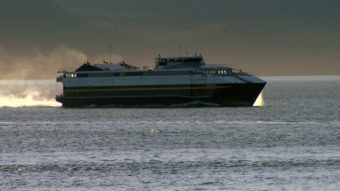
The Fairweather and Chenega have been tied up in Ketchikan since 2019 and 2015, respectively. They were relatively new additions to the Alaska Marine Highway System’s fleet, purchased about 15 years ago for $68 million.
They were popular with passengers as they traveled about twice as fast as the rest of the fleet. But they struggled to perform in rough seas and burned more fuel.
The buyer is Trasmapi, which runs a fleet of catamarans between the Spanish mainland and the Mediterranean island Ibiza, known as a top destination for European vacationers.
The Spanish ferry operator was the sole bidder in January for both ships but offered less than half the $10 million sought by the state. State officials say they’ve since negotiated a higher selling price of more than a half-million dollars.
The $5,174,444 will be transferred into the state’s vessel construction fund, an account used for future ferry maintenance and construction. A deal over two brand-new diesel engines is being negotiated separately, DOT’s regional spokesman Sam Dapcevich said.
The heavy lift vessel Red Zed I — currently off the coast of Vancouver Island — is expected to take the 235-foot ships and transport them to Spain via the Panama Canal in coming weeks, he added.
Close
Update notification options
Subscribe to notifications
Subscribe
Get notifications about news related to the topics you care about. You can unsubscribe anytime.