Jacob Resneck, CoastAlaska

Jacob Resneck is CoastAlaska's regional news director based in Juneau. CoastAlaska is our partner in Southeast Alaska. KTOO collaborates with partners across the state to cover important news and to share stories with our audiences.
No 2021 rebound projected for Taku and Stikine kings

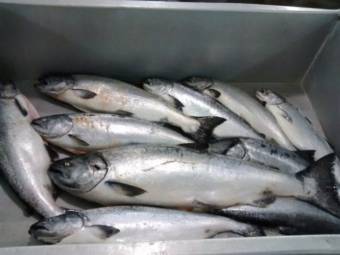
King salmon are by far the most lucrative salmon species for trollers. (Photo courtesy of Matt Lichtenstein)

State biologists have again predicted underperforming king salmon runs in the Taku and Stikine river systems. That means Southeast Alaska’s troll and gillnet fleets can expect restrictions for sockeye and king salmon harvests in areas around Juneau and Wrangell.

“We’ll be going along in this same conservation mode that we’ve had,” state Area Management Biologist Dave Harris told CoastAlaska. “We’ll probably do very, very similar fisheries management regimes that we have in the last several years.”

Both rivers have been historically below the lower limits of the state’s escapement targets that biologists say are needed to keep the king runs healthy.

Harris says there are a number of theories to explain low king returns. They’re not fully understood, though a blob of warm water offshore is one of the most well-documented causes. For whatever reason, there have been poor survival rates of king salmon in the open ocean.

“Our freshwater production has been dropping off now because the returns have been so small,” Harris said. “But we don’t believe there’s a fundamental ecological problem in freshwater at this point.”

The 2021 preseason forecast released Monday by the Alaska Department of Fish and Game predicts 9,900 fish on the Stikine River. The Stikine River’s escapement goal is between 14,000 and 28,000 king salmon. Some 10,300 king salmon are projected to return to the Taku River. The escapement goal on the Taku is between 19,000 and 36,000 kings.

In other words, both forecasts are well below the minimum number fish biologists say should return to freshwater to spawn in each river.

That means fisheries managers will close areas to trollers targeting lucrative king salmon. And Harris says there may be less opportunity for the gillnet fleet to fish sockeye salmon when the kings are returning.

The Taku and Stikine river forecasts for 2021 are lower than the previous year’s. Harvest restrictions banning night fishing and large mesh gear that target kings have been in place for several years. Trollers have also seen more areas placed off-limits as an effort to conserve kings.

Alaska Trollers Association Executive Director Amy Daugherty says the poor forecast is not unexpected.

“These river systems have been coming in low for a series of years,” Daugherty said Monday. “It’s not ideal but we’re going to follow our managers and try and help these rivers recover.”

The Stikine and the Taku are Southeast Alaska’s most productive salmon fishing systems.

The largest king salmon run on record for the Stikine River was in 2006, which saw 90,000 kings. The Taku’s record year was 1997, at nearly 115,000 fish.

Both runs are on transboundary rivers that flow downstream from British Columbia. The U.S. and Canada are treaty-bound to limit their catches to keep the cross-border salmon runs sustainable.

Federal judge overrules Dunleavy administration’s objections to Kake’s COVID-19 hunt

Kake Youth Conservation Corps (YCC) help butcher one of five deer obtained under the emergency season
Kake Youth Conservation Corps (YCC) help butcher one of five deer obtained under the emergency season. (Photo courtesy of the Organized Village of Kake)

A judge ruled the feds were within their rights to allow a Southeast Alaska tribe to organize a hunt out-of-season because of the COVID-19 pandemic. The Dunleavy administration has sued to block future hunts, arguing that Kake’s special moose and deer harvest this summer was federal overreach.

During the early days of the COVID-19 pandemic, a federally recognized tribe on Kupreanof Island was alarmed by the low supply and high price of fresh meat.

The Organized Village of Kake petitioned the Federal Subsistence Board for a hunting party to harvest five deer and two moose out of season and distribute the meat within the community. It was green-lit in June. The State of Alaska filed suit, alleging the feds had illegally pre-empted the state’s rights to manage wildlife.

Assistant Attorney General Cheryl Brooking says there are only narrow reasons for federal jurisdiction to trump state management.

“When Alaska became a state, one of the main drivers of statehood was to get control over fish and game management because the feds were making a mess of it,” Brooking told CoastAlaska on Friday. “But since statehood, the state has been the manager of fish and game.”

There are notable exceptions, such as when a species is listed under the Endangered Species Act and Marine Mammal Protection Act. But she argued in court filings that the food security issue was never proven, and the federal government exceeded its authority in allowing the hunt.

“So that’s what the state’s primary concern is,” she added.

District Court Judge Sharon L. Gleason denied a preliminary injunction that would have prevented special hunts in the future.

In a 46-page order issued on Wednesday, Gleason wrote that federal officials had taken both conservation and public safety concerns into account when it reached its decision. She also noted that when federal officials reached out to state wildlife managers, they didn’t respond.
Judge Gleason says state attorneys had warned that absent the court’s intervention, more special COVID-19 hunts could be authorized by federal authorities behind closed doors and without transparency.

“Yet the court is only aware of a single emergency hunt authorized by the [Federal Subsistence Board] — the Kake hunt — and that was authorized at a public meeting,” Gleason wrote.

It’s not the end of the case. The lawsuit will continue to move forward with both sides filing arguments before a final ruling. But the upshot is that federal officials aren’t blocked from authorizing out-of-season hunts in special circumstances.

Tribal leaders in Kake don’t see that likely in the near future.

“We just got done with our moose season and our deer season — so I think we’re good for now,” Kake’s Tribal President Joel Jackson said in an interview.

He notes that the village’s groceries are mainly shipped on the occasional state ferry or barge.

“Anything happens to those cranes down there, where they load all the stuff coming to Alaska — we’d be in a world of hurt,” he said.

He says Alaska Natives never voluntarily ceded their hunting and fishing rights on their traditional homeland. And he sees it an issue of tribal sovereignty.

“Of course, if we’re in a real bad situation, I wouldn’t hesitate to get a hunting party together, go out and get what we need,” he added. “But I want to stay within the law.”

It’s the state’s second legal setback in the case. The judge earlier blocked the state’s motion to open a federal subsistence hunt for big game hunting near the Glenn Highway to all state licensed hunters.

The Native American Rights Fund has joined the lawsuit on behalf of Kake’s tribe and the federal government.

Anchorage-based staff attorney Erin Dougherty Lynch welcomed the court’s ruling.

“The Federal Subsistence Board was well within its authority to approve the Organized Village of Kake’s emergency hunt, and we are pleased the court recognized that the state’s claims otherwise are unlikely to succeed,” she wrote on Friday. “Alaska Native communities are experiencing myriad hardships caused by the COVID-19 pandemic, and we encourage the State of Alaska to treat Tribes as partners, not adversaries.”

It’s unclear if any future special hunts are being considered. Federal wildlife officials declined to comment, citing the state’s litigation.

The case State of Alaska, Department of Fish and Game v. Federal Subsistence Board continues.

Alaska consumer prices expected to rise as barge rates increase

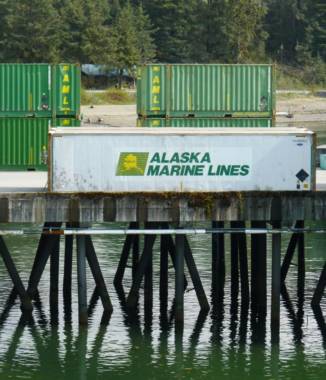
Alaska Marine Lines containers wait for loading on Yakutat’s dock in 2013. AML is part of Lynden Inc. (Ed Schoenfeld/CoastAlaska)

Alaska’s largest barge operator is raising prices at the end of January. Economists say it could lead to higher prices for groceries and other local consumer goods next year.

Alaska Marine Lines, a subsidiary of global shipping giant Lynden, posted a notice to customers Tuesday saying prices would rise 5% on all its routes including Southeast Alaska, the Aleutian Islands and Prince William Sound.
“This increase will become effective on January 31, 2021,” wrote AML’s Director of Pricing Margretta Grace in a notice to customers.

The McDowell Group studied the economic impact of freight costs to Juneau in 2017. A portion of increased shipping costs is absorbed by wholesalers, but they often translate into higher retail prices especially in coastal communities.

“More than 95% of all the freight that moves into Southeast Alaska communities is on a barge,” said Jim Calvin, senior vice president of McKinley Research Group, the McDowell Group’s successor. “So the cost of moving that material is certainly important to the prices that businesses pay and ultimately the prices that consumers pay for the products that they purchase.”

Samson Tug & Barge in Sitka also serves Southeast Alaska, and its published rates expire in late January, too.

Vice President Cory Baggen said Samson is in the process of reviewing its general rates.

“We should be making an announcement soon,” she wrote in an email.

In Alaska, freight prices are overseen by the federal Surface Transportation Board. But the board doesn’t directly regulate how much shippers charge. It only reviews the reasonableness of rates if a consumer files a formal complaint.

Representatives from AML’s parent company Lynden in Seattle didn’t return calls or messages.

No obvious cause of fatal 2019 air ambulance crash in Southeast Alaska, federal investigators say

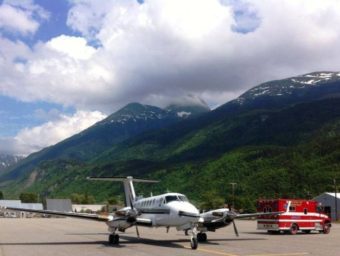
A Guardian Flight turboprop prepares to take off from Skagway’s airport last summer. The company is taking over all medevacs for the SouthEast Alaska Regional Health Consortium. (Image courtesy Guardian Flight on Facebook)

Federal investigators say they’re baffled over what caused an air ambulance over Southeast Alaska to rapidly plunge into the water in January of last year — killing all three aboard. The recovery of the Guardian Flight’s voice recorder failed to capture the flight’s final moments that might have explained what caused the fatal crash about 22 miles west of Kake.
Audio recorded nearly two years ago by air traffic control the evening the flight disappeared sheds no new information on what caused the fatal crash. It was released by the National Transportation Safety Board on Wednesday as part of its factual report.

Pilot Patrick Coyle is heard preparing to land the King Air 200 in Kake to pick up a patient.

NTSB’s chief investigator Clint Johnson says everything in those final moments is routine, as the pilot moved to make his approach on Jan. 29, 2019.

There’s no indications of any problems before he switched over to, basically, a local frequency that announces his intentions,” he told CoastAlaska on Thursday.

Then something went terribly wrong. Flight data logged by radar shows the twin-engine Beechcraft suddenly veered to the right at about 6:10 p.m.

Has medevac N13LY checked with you at all? Looks like was a little bit low,” an air traffic controller is heard saying.

And then, unfortunately, at the end of the recording is when they started looking for him,” Johnson said.

The NTSB released Guardian Flight’s N13LY final tracks as it crashed over Frederick Sound. (Image courtesy of National Transportation Safety Board)

Investigators later determined that the plane dropped about 2,575 feet in 14 seconds.

An intense search for wreckage followed around Frederick Sound. Initially, the Coast Guard sent a cutter after its Sitka-based helicopters were grounded with a maintenance problem — and later, a helicopter from Air Station Kodiak arrived. But it’s unlikely that the delay in the air search made any difference.

The Guardian plane was heavily damaged and had sunk in deep water.

“The only reason we were able to find the wreckage in the 500 to 600 feet [of water] that it was, it was because of the acoustical pinger that was attached to the cockpit voice recorder. So that was at least one win,” Johnson said. “However, once we recovered that cockpit voice recorder, we sent it to our vehicle recorder lab in Washington, D.C. They noted that, unfortunately, the cockpit voice recorder must have stopped working sometime back in 2015.”

A cockpit voice recorder captures pilot interactions that are not radioed to air traffic control — in a 30-minute loop. But not in this case.

After drying and cleaning the unit, all investigators discovered was a recording of a May 15, 2015 flight into Fort Yukon. Investigators were able to pinpoint that date because the crew was listening to Game 6 of the NBA playoffs. An announcer gave the score of Golden State Warriors leading the Memphis Grizzlies 58-49 at halftime.

There was no useful information on the recorder beyond that day.

After recovering pieces of the aircraft, investigators didn’t find any mechanical faults. The only thing out of the ordinary was that the three crew seats recovered were unbuckled.

Wreckage from the air ambulance was recovered in several hundred feet of water. (Photo courtesy of National Transportation Safety Board)

Investigators aren’t speculating over what significance that could have. The NTSB found there appears to have been a sudden and unexplained loss of control that, Johnson says, led the Guardian Flight air ambulance to crash into the water at high speed.

Beyond that, we really don’t know,” Johnson said. “Unfortunately, every road that we took every lead that we got ran pretty much to a dead end.”

The bodies of 63-year-old pilot Patrick Coyle, 43-year-old paramedic Margaret Langston and 30-year-old nurse Stacie Rae Morse were never found. Morse was more than six months pregnant when the plane crashed.

The loss of the three-member air ambulance crew was a tragedy felt in Alaska’s medical community, especially Juneau where they lived.

A company spokesman wrote in a statement that Guardian Flight went to great lengths to try and recover the missing crew members’ bodies.

We await the Final Report from the NTSB with the results of its analysis, findings, and probable cause of this accident, which is expected in a number of months,” wrote Guardian spokesman Jim Gregory on Thursday.

NTSB’s Clint Johnson says the mystery of the cause of the crash has been frustrating for the air ambulance company, the crew member’s family and friends and for federal investigators seeking answers or lessons learned.

Niblack’s exploration for copper, gold resumes on Prince of Wales

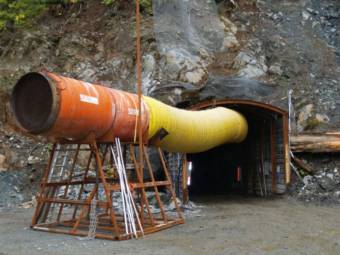
The Niblack Project’s main portal — seen in 2010 — has a ventilation fan for underground drilling crews. (Photo courtesy of Heatherdale Resources)

Drilling crews are returning to the Niblack project,  a mineral exploration effort seeking copper, gold, silver and zinc near Prince of Wales Island’s Moira Sound.

The project ramped up in 2009. In the following years, Heatherdale Resources says it plowed tens of million of dollars into exploration efforts. But investor money dried up, and by 2012 full-time exploration had ceased. Work completely stopped by 2016.

Now, after a corporate reshuffling of debt and rising copper and gold prices, the company plans to bring back a two-dozen-strong crew by the end of this month.

Heatherdale’s CEO Rob McLeod says the drilling will likely go no deeper than 1,000 feet.

“Most will be shallower than that,” he said. “And then we’ll be able to take the drill underground, and be able to drill in in multiple directions 360 degrees, essentially.”

The Vancouver, B.C.-based exploration company has a surface drilling application pending with the state Department of Natural Resources.

Most of the project area is on private land. Supplies are flown in or shipped by barge or landing craft.

Potential as a major private sector employer

Niblack has touted itself as a potential working mine that, if developed, could one day be a major regional employer about 30 miles southwest of Ketchikan.

But there are environmental challenges. There’s potentially acidic runoff from a rockpile near its Lookout Mountain deposit. The company has permits from state regulators to discharge mine waste through a sprinkler system and an inactive water treatment plant.

Both permits expired this summer but were extended by state regulators while the company files for renewals.

Niblack project manager Graham Neale says its mine waste collects in a settling pond before the liquid runoff is discharged on land.

“It’s a passive treatment system designed to filter out any contaminants,” Neale explained. He says that effluent ends up in settling ponds before being pumped down a pipe into the woods, “which is essentially a sprinkler system into the forest environment.”

But all drainage from the mine portal has been and still is monitored, sampled and reported to the state Department of Environmental Conservation, Neale added.

Environmentalists raise concerns

Critics say that’s not an effective way to keep heavy metals and acidic waste out of the environment. The mining company has a chemical wastewater plant that could treat discharge. But it’s not running it. In filings back in 2015, it successfully argued that the $4.39 million it’d cost to run the plant over five years would be too expensive.

“The state of Alaska is not requiring them to chemically treat the water because they say it will be a financial burden to the mining company,” said Guy Archibald, staff scientist with Southeast Alaska Conservation Council, an environmental group based in Juneau.

“Offloading their costs from treating pollution onto the public … should not be allowed,” he added.

Neale confirmed Niblack doesn’t plan to run its water treatment plant in the near future. He says as long as water quality remains below a certain threshold, it’s not necessary. If runoff exceeds certain levels, then regulators would require chemical treatment, he added.

DEC defended its oversight of the project.

“DEC’s mission of conserving, improving, and protecting Alaska’s natural resources and environment is accomplished through these permits by ensuring that the discharge(s) from this project is protective of the water quality so that all Alaskans may share in the economic and social well-being provided by those waters,” the agency said in a statement.

Drilling crews are expected to continue working well into 2021, the company said.

Controversial wolf season extended for Prince of Wales Island

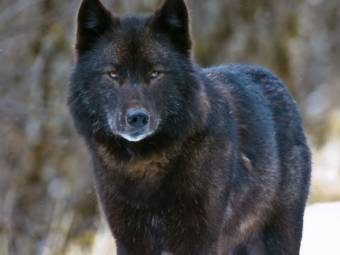
An Alexander Archipelago wolf in Southeast Alaska. (Robin Silver/Center for Biological Diversity)

Update — Nov. 9, 5:02 p.m.

Juneau Superior Court Judge Daniel Schally rejected filings for an injunction that would block the three-week trapping season that opens on Nov. 15.

Original story — Nov. 9, 10:31 a.m.

Federal and state wildlife managers announced on Friday they would extend the wolf harvest on Prince of Wales Island. That’s following a contentious hearing where island resident hunters said too many wolves were preying on deer.

This comes as conservationists have filed a lawsuit to stop the controversial harvest following an unprecedented number of wolves legally killed last season.

Tongass National Forest Supervisor Earl Stewart opened an Oct. 29 telephone hearing with about 100 people on the line.

“It’s really important that we hear from rural users on the importance of wolf to game management unit 2 and to those users that rely on that resource,” Stewart said.

He got an earful. One by one, resident hunters and trappers told wildlife managers they were under-counting wolves: state and federal officials recently released their fall 2019 estimate of 316 wolves in and around Prince of Wales.

“These wolves definitely are far from endangered on this island — far from it,” Joshua Peavey testified. “It’s the worst I’ve ever seen. It’s worse anybody’s ever seen. I just want to know how you guys come up with the numbers. Because it’s all B.S.”

Other wolf trappers were more tactful.

“I don’t want you guys to think that we all want them all to die because we don’t you know, they’re really cool animals,” said Samuel Sawyer, who identified himself as lifelong island resident. But he says hunters like him are finding venison scarce — and it’s not for sport.

“I can’t go to the grocery store and pay $8.99 for a pound of hamburger — it’s just unrealistic,” Sawyer said. “And then we have to worry about the wolf killing all the deer then what are we supposed to do?”

Federal and state officials apparently listened. On Nov. 6, they announced they’d extend the trapping season by five days for a full three-week opportunity.

Alaska Department of Fish & Game’s regional wildlife supervisor Tom Schumacher said on Friday that managers took another look at their data. And they feel trapping could be safely allowed from Nov. 15 to Dec. 5.

“It’ll allow a little bit more opportunity,” Schumacher told CoastAlaska. “But we think that that will also result in a sustainable harvest. And we’ll be able to keep our wolf population within our harvest or a management objective of 150 to 200 wolves in the fall population.”

The state is also agreeing to open up a five-day hunting period with a five-wolf bag limit.

Trapping is more controversial because the season has no bag limits, and it’s more efficient. That’s a key piece of context in the wolf debate. Last year, wildlife managers dropped the season quotas. And after eliminating the hard limits, residents took a record 165 wolves in the area — mostly by trapping.

Alaska Department of Fish and Game Commissioner Doug Vincent-Lang told residents on the Oct. 29 call that level of killing is unsustainable, but there was no cause for alarm.

“We remain convinced that the Southeast Alaska wolf population remains healthy,” the commissioner said, “and that the population is not threatened with extinction now or in the foreseeable future on our management approach.”

Conservationists have already filed a lawsuit accusing the state of violating its constitutional mandate to keep wildlife sustainable. A judge denied a temporary restraining order but has set a hearing just six days before the trapping season is set to open.

“Adding season length to the intended two weeks makes matters worse in our view,” said former Board of Game member Joel Bennett of Juneau, a and a plaintiff in the lawsuit. “They are playing Russian roulette with Prince of Wales wolves. How can they control the harvest to prevent what happened last season.”

Separately, the Center for Biological Diversity has filed a petition — the third since the 1990s — seeking federal protections for Southeast’s subspecies of grey wolves.

The center’s Oakland, California-based biologist Shaye Wolfe testified that commercial logging’s destruction of habitat, not wolves, are to blame for the scarcity of deer.

“The key reason why deer are declining in Prince of Wales is because of the past legacy and ongoing legacy of clearcut logging of old growth forest,” she said.

The U.S. Fish and Wildlife Service has already blown past a 90-day deadline to respond to the petition. But state officials say they expect it to formally respond early next year.

If the feds add protections for wolves, it’ll greatly change how they’re managed. Hunting and trapping would be greatly restricted. And almost all development on federal lands would have to take into account potential impacts to the wolves’ critical habitat.

Site notifications
Update notification options
Subscribe to notifications