Jacob Resneck, CoastAlaska

Jacob Resneck is CoastAlaska's regional news director based in Juneau. CoastAlaska is our partner in Southeast Alaska. KTOO collaborates with partners across the state to cover important news and to share stories with our audiences.
Alaska Supreme Court rules in favor of critical Native corp. shareholder

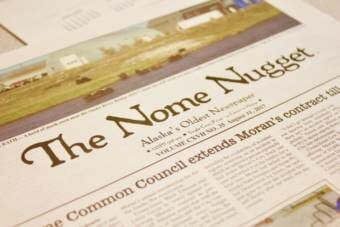
Austin Ahmasuk was fined $1,500 for a letter to the editor that the Nome Nugget published in 2017. (Photos courtesy of KNOM)

The state’s financial regulator fined Austin Ahmasuk $1,500 for a letter to the editor that the Nome Nugget published in 2017. They said he should have filed paperwork under regulations that require Alaska Native corporation shareholders to disclose their connections before soliciting votes called proxies.

Austin Ahmasuk argued that his letter wasn’t supporting or criticizing any individuals running to lead the Sitnasuak Native Corporation, of which he’s a shareholder. And that the regulations didn’t apply to his letter’s broad call to action.

The Alaska Supreme Court agreed.

“The (state financial regulator’s) interpretation and application of its proxy solicitation regulation are unreasonable on the facts of this case,” the justices ruled in a decision published on Friday.

Susan Orlansky argued the case on Ahmasuk’s behalf for the American Civil Liberties Union of Alaska. She told CoastAlaska on Friday when he wrote the letter nobody had even put their name forward to run and that troubled the Supreme Court.

“He really isn’t talking about votes for him or her,” she said.

Rather, he’d encouraged fellow shareholders with voting powers not to file discretionary proxies. Those are basically blank ballots that can later be used by a slate of candidates usually endorsed by the sitting board of directors.

Critics say blank ballots handed to the board slate give incumbents an advantage over independent challengers.

Some justices were skeptical when, under questioning last year during oral arguments, the state’s attorney conceded that even an open letter urging shareholders to attend a meeting technically falls under regulated speech.

Acting on complaints, state financial regulators routinely investigate and sanction shareholders for comments made in print and online that are perceived to sway a corporate board election — like an opinion piece in a newspaper. But more often it’s an online post in a Facebook shareholder forum.

Sitnasuak Native Corporation wasn’t party to the lawsuit. But some of the state’s regional Native corporations filed briefs supporting the state’s power to regulate shareholder speech. Doyon, Calista and the Bristol Bay Native Corporation were among them.

Orlansky says it’s good to have this decision to guide future actions.

“I would say that lawyers for other shareholders as well as lawyers for (financial regulators), or for Native corporations ought to read this decision very carefully, because I think the decision holds some suggestions,” she said.

ACLU senior counsel Susan Orlansky argued the case on January 23, 2020. (Screenshot courtesy of Gavel Alaska)

That’s because the ACLU argues the state is stifling free speech. It’s suggested the state could look to the federal guidelines established by the federal Securities and Exchange Commission. Since 1992, the feds have opted to regulate shareholder speech less broadly out of constitutional concerns.

Orlansky says the Alaska Supreme Court ruling is a win for her client. And she says the justices’ decision outlines how the state’s regulations potentially fall afoul of the U.S. Constitution on free speech and due process grounds.

“But the Supreme Court very clearly didn’t decide those questions. It did what courts often do, and decided the issue in front of it and very specifically nothing further,” she added.

State attorneys say they’re reviewing the court’s decision.

“The court emphasized that its decision is limited to the particular facts and circumstances of this case and less about the medium used to communicate,” wrote Assistant Attorney General Charlotte Rand in a Friday email. “Communications might be proxy solicitations even if those communications are in mass media or social media.”

The Division of Banking and Securities welcomes questions about compliance with its regulations, she added.

In lawsuit, groups ask that ‘Roadless Rule’ protections be put back in place for the Tongass

Tongass National Forest
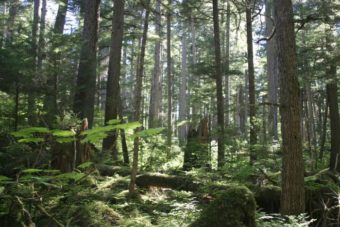
Part of the Tongass National Forest on Douglas Island pictured in 2004. (Creative Commons photo by Henry Hartley)

A coalition including environmental groups, tribes and fishermen filed a lawsuit on Wednesday to restore Roadless Rule protections to 9 million acres of Tongass National Forest.
Alaska’s governor and Congressional delegation applauded the Trump administration’s decision to exempt the Tongass from the Clinton-era Roadless Rule, which restricts development on federal forestlands. Supporters say the rollback will boost Southeast Alaska’s ability to log trees, extract minerals and boost hydroelectric energy production on federal forestland.

But a coalition of Southeast Alaska tribes, fishermen and environmentalists argue the decision disregarded overwhelming opposition from Alaskans for the sake of a few hundred timber jobs.

Kate Glover, a Juneau environmental attorney with Earthjustice, says the U.S. Forest Service’s environmental review is fatally flawed. She says the rollback of the Roadless Rule was in part justified by helping Southeast Alaska’s logging industry.

“But their analysis shows that removing the Roadless Rule will not provide any additional jobs or income through the timber industry over the next 100 years,” she said. “And because they’ve made that assumption that there isn’t going to be any more logging, despite opening up all these acres to clear cutting, they’ve failed to disclose the effects of the action through their environmental impact statement.”

The five Southeast Alaska tribes that have joined the lawsuit all withdrew from consultations with the federal government in September, complaining that their input was being ignored.

Tribal president Joel Jackson of the Organized Village of Kake says the Tongass is his people’s traditional homeland. And the rainforest is tied to food security through subsistence hunting and fishing.

“We’ve lived here for 10,000 years or more,” he said. “And we’ve practiced our way of life, in these ports on these waters, all around our communities, and, you know, if we lose that, we’re going to lose part of our identity.”

The lawsuit also includes support from the visitor industry and commercial fishermen.

Linda Behnken of the Alaska Longline Fishermen’s Association in Sitka says Southeast Alaska’s commercial fishing sector depends on healthy forest habitat. A point reinforced in last year’s report by the Alaska Sustainable Fisheries Trust.

“And there’s a lot of information there that really we drew on in in saying, ‘Boy, the best value for the coastal communities in the Southeast economy is to keep this forest intact’ — particularly in the face of climate change,” she said.

For critics of the Roadless Rule, a court challenge was inevitable.

Jim Clark is a Juneau attorney and longtime political operative. He’s been working to overturn the Roadless Rule in Alaska since at least Gov. Frank Murkowski’s administration.

“I don’t think there’s really any reason for people to be frightened by the exemption we’ve had in the past and these problems haven’t occurred and that there’s no reason that will occur now,” he said.

That’s because he says the 2016 Tongass management plan and federal environmental laws remain in place to conserve the region’s natural resources. And he says that includes the projected 185,000 acres of old growth forest that lifting the Roadless Rule could now be logged.

“And there will be litigation to double check what the Forest Service does,” Clark added, “every time a some kind of action is approved by the Forest Service.”

The federal lawsuit names U.S. Secretary of Agriculture Sonny Perdue or his successor. That’s in recognition of the incoming administration of President-elect Joe Biden.

Kate Glover  says a Biden administration could start the formal process of reinstating the Roadless Rule.

“We think they’ll recognize the importance of the timeliness for climate change for the whole world,” she said, “As well as the wrongs that happened to Tribes throughout this process and the importance of keeping the forest intact.”

But in the meantime, the lawsuit asks the courts to reinstate the Roadless Rule restrictions across Southeast Alaska.

Tongass National Forest spokesman Paul Robbins Jr. said Wednesday that as a policy, his agency doesn’t comment on pending litigation.

Researchers: No cruise ships in 2020 gave Glacier Bay’s whales ‘room to roam’

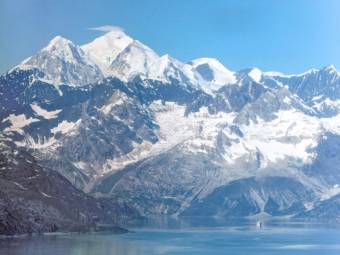
A cruise ship dwarfed by the mountains of Glacier Bay in this undated photo. (Photo courtesy of National Park Service)

Southeast Alaska’s Glacier Bay National Park and Preserve gets more than 150 visits by cruise ships each year.

National Park Service wildlife biologist Chris Gabriele said the national park normally gets more than 600,000 visitors each year.

Most of those on cruise ships,” she said.

But then the coronavirus pandemic erased Alaska’s entire 2020 cruise season. That made the waters a lot quieter, and the region’s humpback whales took notice.

We saw them out in the middle of the channels, taking naps, socializing, feeding with others,” Gabriele told a panel at a Dec. 9 meeting of the American Geophysical Union. “I heard a lot of long exchanges between the whales including what I think may have been a mother and calf.”

Cruise ship passengers on the deck of the Holland America Noordam vie for the best look at glaciers and whales on July 16, 2019 during the ship’s traverse through Glacier Bay National Park. (Photo by Jacob Resneck/CoastAlaska)

Gabriele studies underwater acoustics and its effects on marine mammals. It’s been part of her whale research in Southeast Alaska that’s spanned some 30 years.

In 2020, she and a team redoubled their efforts to make underwater recordings at the mouth and middle of Glacier Bay to observe the effects of relative quiet on marine mammals.

She said as the coronavirus has forced people to socially distance, it’s been the opposite for marine mammals.

It’s like this horrible pandemic confined us humans into really small spaces but gave the whales back a lot of room to roam both physically and acoustically,” she said.

The audio recordings are on the national park’s website. They also include pods of orcas, harbor seals and other marine life.

Coastal lawmakers pan Dunleavy’s ferry budget proposal

The Alaska Marine Highway System ferry Columbia passes through Wrangell Narrows headed south from Petersburg in Southeast Alaska, June 15. 2012. (Photo by Skip Gray/KTOO)

Gov. Mike Dunleavy proposes about $51 million to run state ferries. It’s actually slightly more than he initially proposed last year. But it’s much less than historically appropriated to the fleet.

Lawmakers weren’t comfortable with Dunleavy’s budget last year. They added in about 25% more to their budget to reduce service gaps. But the governor erased most of the extra funds with a stroke of his veto pen.

Now, he’s proposing to run the ferries with $2.4 million less than he ultimately signed off on last year. He told reporters that he’s looking for guidance from a task force he appointed that spent most of the year studying the Marine Highway and delivered its final report this fall.

We really believe that there needs to be a discussion with the (Alaska) Marine Highway Reshaping Committee,” the governor told reporters last Friday, “which I hope also takes place and we’ll be talking to legislature about that, because that committee worked on looking at ways to again, make the ferry system sustainable for coastal Alaska.”

Kodiak Republican Rep. Louise Stutes sat on the nine-member work group.

“He’s had that report since October, and to my knowledge, there’s been no outreach to that reshaping group,” she said. “And there was no suggestions whatsoever in that report that that budget should be cut.”

She’s a staunch defender of public investment on the Alaska Marine Highway and critical of the governor.

“He says he’s listening to Alaska as well, he apparently didn’t hear the outcry of people in support of the marine highway system,” she added.

Funding for the Marine Highway will likely be contentious in Juneau this year.

Railbelt interests have long criticized the expense of running the fleet, while coastal residents argue it’s critical infrastructure for communities with little or no road access.

Ketchikan independent Rep. Dan Ortiz co-chaired the House Finance Committee for the past two years. He says long service gaps are already a problem at current levels. And he calls the governor’s ferry budget “disappointing.”

“It was an indication to me that the marine highway continues not to be a priority for this particular governor,” Ortiz said, “even though it’s certainly an integral part of our transportation system infrastructure for all coastal Alaskans.”

This year the Department of Transportation reported a steep drop in fare revenue as fewer people traveled during the COVID-19 pandemic. DOT has been scheduling one mainliner at a time, leaving little-to-no slack in the system if a ship breaks down. That’s led to months-long service gaps — planned and unplanned — as the fleet struggles to keep communities connected.

After punishing rains, National Weather Service ‘not seeing anything that’s too far out of the normal’ this week

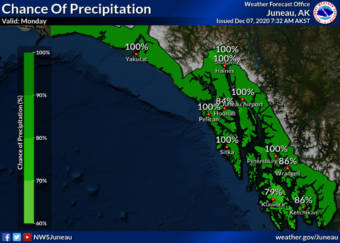
The National Weather Service’s Juneau office forecasts steady rainfall to persist across the region. (Screenshot by Jacob Resneck/CoastAlaska)

More wet weather is in the cards across Southeast Alaska this week as the region struggles with record rainfall that brought destructive landslides and some flooding.

The National Weather Service said on Monday that the warm air is trailing off, leading to cooler temperatures later this week.

That means the next weather system isn’t likely to bring the kinds of heavy rainfall and high winds that brought down power lines and strained dams in the region.

“Right now we’re not seeing anything in the forecast that would suggest that we’re going to have anything nearly as strong as what we were seeing last week,” Juneau-based meteorologist Jonathan Suk told CoastAlaska on Monday. “We’re really not seeing anything that’s too far out of the normal for this time of year.”

But he says the computer models used by forecasters are not in alignment with how the next week will play out. He says there are as many as 100 different models used to predict the weather.

And when we see a large spread between what the models are saying could happen, that decreases our confidence that any one particular model has it right,” Suk said.

He says it’s important that people continue to watch for weather updates and prepare accordingly.

Especially as we go into these these wet, stormy months,” he said. “I know that it’s been going on for a while there, especially with what summer was, but you know, the best thing people can do is stay informed and current with the weather.”

Temperatures are forecast to drop below freezing mid-week. That means there could be snow mixing with rain, leading to hazardous driving conditions.

Feds reach agreement with Colorado company to seal off Tongass uranium mine

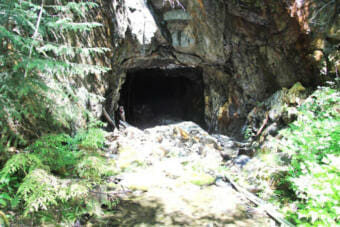
A portal into the former Ross-Adams Mine on Prince of Wales Island
This portal to the former Ross-Adams Mine is one of three openings to be sealed to prevent radioactive waste from leaching into the environment. (Photo from U.S. Forest Service)

The federal government has finalized its agreement with a Colorado mining company to permanently seal a former uranium mine in Southeast Alaska’s Tongass National Forest.

The Cold War-era Ross-Adams Mine hasn’t produced uranium for nearly 50 years. But state regulators have been working to have the radioactive site on Prince of Wales Island cleaned up since the 1990s.

This fall the U.S. Forest Service finalized a plan for the Colorado-based Newmont Corporation to seal the former mine with concrete and haul away abandoned buildings.

That’s after state agencies and conservationists weighed in over the summer on the Forest Service’s proposed agreement. The federal agency says it appreciated the input, then marked the draft plan final.

“There were no changes necessary to the agreement,” said Linda Riddle, the federal agency’s coordinator for the project. She says the Forest Service isn’t legally bound to coordinate with other agencies because the mine is completely within national forest lands.

“But I am giving them the opportunity to follow the project along and provide a comment if they have any,” she told CoastAlaska. “But it’s more of an informal approach.”

The Alaska Department of Environmental Conservation wrote in comments it’s been working to address the contamination near Kendrick Bay since 1999. In comments to the Forest Service, it urged the agency to adopt the EPA’s five-year monitoring standard.

But under the agreement signed between the former operators and federal government, the site will be monitored by the company for only three years. After that all responsibility will shift to the Forest Service.

In a statement, DEC says it’s too early to tell how long the radioactive site will need to be monitored. That’ll be clearer after the work has concluded.

“The duration of post-remediation monitoring is a conversation that will play out over many years between the USFS, Newmont, DEC and stakeholders,” DEC spokeswoman Laura Achee wrote in a statement on Thursday.

Still, conservationists have criticized the Forest Service’s go-it-alone approach to cleaning up the site.

Sally Schlichting of the Southeast Alaska Conservation Council wrote in a seven-page comment letter that state and federal environmental regulators are better equipped than the Forest Service to address the complexities of reclaiming a former uranium mine developed in the 1950s.

“Certainly, the state should have oversight on contaminated site cleanup work that happens here in the state of Alaska,” Schlichting, a former DEC official specializing in contaminated sites, told CoastAlaska. “And EPA has expertise in this area. And we would just feel more comfortable if those environmental agencies were having active oversight on this project.”

An aerial view of the former Ross-Adams Mine, an open pit uranium mine on Prince of Wales Island that was active between 1957 and 1971. (Photo: U.S. Forest Service)

The EPA indicated as recently as 2018 it should be more involved. But more recently, it’s deferred to the Forest Service’s authority but indicated it can still intervene if necessary. Riddle says the EPA doesn’t normally get involved with remediation projects like these.

“Now, if something comes to their attention that some concerns that we are not addressing, then they might get involved,” she said. “But barring that, they are not following this project step-by-step.”

The cleanup plan will likely require a permit from Alaska’s Department of Natural Resources to access state-owned tidelands. To date, no permits have been applied for.

The timeline of the project isn’t rushed. The cleanup plan is still in the pre-design phase. Actual work isn’t expected until 2023 — at the earliest.

Impetus for this project comes from a separate mineral exploration effort about a mile away from the Prince of Wales site.

Canada’s Ucore has been investing in rare earths exploration on Bokan Mountain. Cleaning up the radioactive waste will be key for the mining company to access Kendrick Bay where material and equipment is hauled in and out by barge.

The rare earths project is designed to mine for minerals used in high tech products like smartphones and flat-screen televisions. The Trump administration has made domestic production of these resources a national security priority.

But first, the toxic legacy of the former uranium mine — a national security priority from a different era — will need to be addressed.

Site notifications
Update notification options
Subscribe to notifications