Jacob Resneck, CoastAlaska

Jacob Resneck is CoastAlaska's regional news director based in Juneau. CoastAlaska is our partner in Southeast Alaska. KTOO collaborates with partners across the state to cover important news and to share stories with our audiences.
Yakutat village corporation delays board elections after criticism of its logging operations

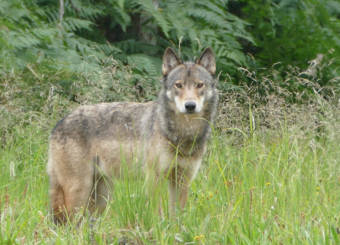
Yakutat’s Harbor in August 2017. (Emily Kwong/KCAW)

Yakutat ’s village corporation has postponed its annual board election while it confers with its attorneys over what it says are “false accusations” over its logging operations.

Yak-Tat Kwaan, Inc. has been criticized by some tribal and city leaders who believe that the corporation’s clear cuts threaten salmon streams and cultural sites. Yak-Tat Kwaan denies this.

The village corporation was created in the 1970s by the landmark Alaska Native Claims Settlement Act and granted more than 20,000 acres to benefit shareholders with ties to the traditional Yakutat village. Its annual meeting was planned for this Saturday.

But in an unsigned November 12 letter to the corporation’s shareholders, management says the election could be tainted by what it called “unfair attacks being leveled against” the corporation.

“The false accusations being leveled against the corporation have reached beyond the shareholders of the corporation, the community, and even the State of Alaska by way of social media,” the letter reads. “All shareholders deserve to have a free and fair election, which is not tainted by patently false claims about the decisions of the Board of Directors and the financial health of the company.”

Critical posts on social media were being reviewed by the village corporation’s attorneys, the letter added. In Alaska, ANCSA shareholder speech is regulated by state financial examiners, which critics say can effectively chill free speech.

The CEO of Yak Timber, the logging subsidiary of the corporation, declined to comment.

The shareholder meeting has been pushed back until Jan. 8, 2022. Its last annual meeting was January 30, 2021.

State law requires an ANCSA corporation to hold a shareholder meeting and re-elect its board of directors at least once a year.

Wildlife officials propose wolf harvest on Prince of Wales Island

An Alaska Department of Fish and Game wildlife biologist came upon this Alexander Archipelago wolf on Prince of Wales Island in the summer of 2018. It had been sleeping. It woke up and moved away. (Photo by Kris Larson/ ADF&G)

State and federal wildlife authorities are proposing a 31-day wolf harvest on and around Prince of Wales Island.

Conservationists have signaled they could file a lawsuit, saying the Alexander Archipelago wolf population is threatened. That conflicts with resident hunters, who say the population is rising and preying on island deer, an important subsistence food source.

Alaska Department of Fish & Game’s most recent fall population estimate is 386 wolves — much higher than previous counts.
The Alaska Board of Game had set a population target of 150-200 wolves years ago, when the agency thought wolf numbers were much lower. ADF&G regional wildlife supervisor Tom Schumacher says a month-long trapping harvest likely won’t reduce the population that far.

But given the uncertainty about whether that’s an appropriate population objective, we feel that’s a conservative and responsible way to go,” he told CoastAlaska.

Potential ESA lawsuit hangs over wildlife managers

Environmental groups have warned they could sue the federal government to force Alexander Archipelago wolves to be listed under the Endangered Species Act following last year’s petition. They’ve long argued that decades of clear-cut logging, not predators, are to blame for the island’s dwindling deer herds.

Shaye Wolf, an Oakland, California-based conservation scientist with the Center for Biological Diversity, says her organization doubts the reliability of the population estimates, which are largely based on DNA sampling of wolf hair gathered in the field or turned over from previous harvests.

“The agencies shouldn’t open the trapping and hunting season on these vulnerable wolves,” she said Monday. “They’re not generating reliable population estimates and ensuring that they’re doing sustainable management.”

But Schumacher, the state game official, says says the shorter season should ensure there aren’t too many taken this season. Two years ago, he says there was a two-month season that resulted in a record 165 wolves reported taken.

“There was a lot of effort that year,” Schumacher said. “We think that a one-month season will leave us with a lower level of harvest. And given the high population estimate the last two years, we’re pretty convinced that that’ll result in a sustainable harvest.”

Game managers are holding a public meeting and taking public testimony from 6 p.m. Tuesday, Nov. 9 to hear from members of the public over the proposed trapping season. An announcement on the trapping season is expected later this week with trapping on and around Prince of Wales to run from Nov. 15 through Dec. 15.

Federal wildlife officials working on Alaska wolf study

In a related development, the U.S. Fish and Wildlife Service penned a letter this month to conservationists that recently threatened a lawsuit saying a status review on Southeast Alaska’s wolf population is in the works.

“We will begin working on the status review soon and plan to incorporate information from studies that are planned or currently underway that will help inform the review and subsequent 12-month finding,” wrote Gina Schultz, a deputy assistant director for the U.S. Fish and Wildlife Service based in Falls Church, Virginia.

The federal agency is exploring new population estimate methods, including cameras and an updated genetic study to get a better understanding of wolf numbers in the region, she wrote in the two-page letter.

Staff attorney Camila Cossio with the Center for Biological Diversity says her advocacy group is weighing its next move.

“Litigation is still an option because the agency has already blown the deadline for acting to protect these rare wolves,” she wrote in an email.

A similar petition to list Alexander Archipelago wolves as a distinct subspecies of grey wolves was rejected in 2016. But Fish and Wildlife have written that the threats identified in that petition from climate change to deforestation have only worsened since the last time it reviewed the species.

Alaska officials have pushed back on a possible listing, saying federal protections which would affect permitting for development and resource extraction across Southeast Alaska.

The public meeting to discuss the proposed 31-day harvest will be held telephonically from 6 to 7 p.m. Tuesday, November 9 with a one-hour public hearing at 7 p.m. The number is 888-809-8973 Passcode: 2074362

Alaska State Troopers arrest 1 following reports of shots fired in Kake

Kake’s waterfront in May 2021 (Joe Viechnicki/KFSK)

The community of Kake was on lockdown Tuesday morning following reports of an active shooter who began firing a weapon in the early hours of the morning. Now authorities confirm that a suspect, 48-year-old Keith Nelson of Kake, has been arrested and flown off the island.

“The troopers landed. He was taken into custody up there, so he’s out of here,” Organized Village of Kake’s tribal president Joel Jackson said. “It started with a break-in at our grade school, and then there was some gunfire up in our housing project.”

Alaska State Troopers confirmed earlier this morning that authorities were en route to the village of 500 people on Kupreanof Island to reports of shots fired, and that Nelson was taken into custody without incident.

“At this time we are not aware of any injuries and based on initial information we do not believe the individual was threatening any individual person,” Department of Public Safety spokesperson Austin McDaniel said earlier this morning.

Katie Rogers is a teacher’s aide at the Kake school. She says she lives too far away to have heard gunfire but she understands most of the town had closed its doors with people sheltering in place most of the morning.

“The grocery store’s shut down, the school is shut down and the clinic is shut down and everybody’s been told to stay home and lock their doors,” she said earlier.

But Jackson says the all-clear has been issued and people are venturing outdoors again.
“Nobody was hurt, everybody stayed indoors while this thing played out,” he said.

Kake has no permanent police presence in the community.

“It’d be nice if we had law enforcement in our small village,” Jackson said. He says village public safety officers are on a rotation that leaves the village with no law enforcement for two weeks at a time.

“We’ve got nothing. Basically we answer calls because people don’t know who to call,” he added.

This story has been updated with details from Alaska State Troopers.

Rifts widen over Yakutat village corporation’s expanded logging

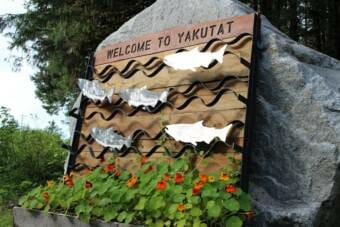
A wooden sign with metal fish on it that says Welcome to Yakutat
Yakutat is a community of about 600 people on the Gulf of Alaska coast in uppper the crook of the Southeast Alaska panhandle. Emily Kwong/KCAW)

Yakutat is a remote Gulf of Alaska village about halfway between Juneau and Cordova. Its economy has long been tied to fishing, tourism and for the first time since the 1980s, commercial logging. That’s thanks to its Indigenous-owned Native corporation getting back into the timber game, cutting and exporting to foreign shores.

But recently that’s concerned elected officials in both the city and tribal governments, who have called for a halt to cuts in areas they say are ecologically sensitive and culturally sacred to Yakutat’s inhabitants.

Yakutat Mayor Cindy Bremner used to be president and CEO of Yak-Tat Kwaan, Inc. and serve on its board of directors of the village corporation. Since 2015, she’s only been active as a shareholder.

But a couple years back she said she had a hunch and decided to look up local timber plans on a state website. It was there that she first learned of the village corporation’s ambitious logging plans in Yakutat.

“And then the very next day, they had their barge of equipment coming in,” she said. “I just had a bad gut feeling one day, and I was pretty sad to see that they had applied for that.”

Yak Timber, Inc.

Yak-Tat Kwaan’s last public filings with state financial regulators date from 2017. Back then it said it had no plans to log any of its 23,040 acres, or 36 square miles, granted in the 1970s under the Alaska Native Claims Settlement Act.

But the following year the corporation created a new subsidiary: Yak Timber, which got to work quickly. A note to shareholders last summer said that in two years it made $1.8 million in logging and selling cabins and tiny homes.

“It is understandable that some do not like logging,” Yak-Tat Kwaan CEO Shari Jensen wrote in a June 25 letter to shareholders that was partly in response to timber critics.

“Instead of using energy to sabotage Yak Timber, it would be nice to see it being used to help make Yak-Tat Kwaan a viable and a long-term sustainable company for years to come,” she wrote.

Earlier that month, the corporation released an unaudited report that says the corporation earned some $3.8 million from timber in 2019, with a net profit across the board just shy of $800,000 that year.

But that economic boost has been contentious, Bremner said.

“The shareholders, I feel, are kind of torn about the logging going on here,” she said.

Yak Timber needed financing to get heavy equipment for its crews. Since 2019, it’s borrowed at least $7 million, according to documents and statements to shareholders who were told the debt’s necessary to carry the corporation until more timber is sold. The village corporation’s fish plant and timber rights on some of its land have been used as collateral.

The mayor says she’s concerned that Yakutat’s forestland is being sold too quickly to finance the corporation’s ventures.

“They’ve leveraged the resources on our land to be able to do this,” Bremner said. “And I don’t think that is something that they should be able to do.”

ANCSA directs Indigenous enterprises to drive profits for shareholders

Talk to another Bremner and there’s a very different view.

“You’ve got to hear the rest of the story,” said village corporation executive Don Bremner, who is related to the mayor.

“Yes, we’re related — everyone in Yakutat’s related,” he says.

The community has fewer than 600 people and has lost people in the last census.

Don Bremner is president of both the village corporation and its timber subsidiary. The long-term health of the company is good and the debt isn’t a concern, he said.

“We’re a valid business, making real serious business decisions, not based on perception, opinion, without research,” he said. He declined to get into specifics, saying that’s an internal matter for Yak-Tat Kwaan’s shareholders. And because the village corporation has less than 500 of them, it’s not required to file its annual reports with state financial regulators.

But Bremner still dismisses concerns about logging Yakutat’s lands too quickly.

“It’s not a large volume, but the people that have concerns are the folks that will always have those concerns,” he said.

His other message is that Congress created for-profit corporations to enrich Native shareholders. And that’s exactly what Yak-Tat Kwaan is doing, he said.

“We’re a profit-making business and ANCSA directed that we keep making money off of our assets, become self determined,” he said. “If they want to go try change ANCSA, have at it. It’s just not going to happen. Because you’ve got 12 very rich regional corporations making a lot of money off ANCSA. So that’s what we’re doing, is running corporations, profitably.”

Tribes, state historic office raises concerns over Humpback Bay clear cuts

An anonymous “Defend Yakutat” website has emerged criticizing Yak-Tat Kwaan’s timber practices in the community. (Screenshot by Jacob Resneck/CoastAlaska)

Yakutat’s city government opposed this year’s logging around Ophir Creek, which includes pink salmon habitat.

But that hasn’t caused the board of directors to shift course. A state fisheries biologist reported that some of the logging was too close to streams, and follow-up visits are planned for November.

But the real fight brewing is over logging planned on a 426-acre tract around Humpback Creek, about 10 miles to the northeast of the village.

As the name suggests, it’s also known for its pink salmon. And its Indigenous name comes from both the Eyak and Lingít languages, which residents say speaks to Yakutat’s history as a crossroads of Native cultures.

“Humpy Creek itself you know, has a lot of significance in our oral history,” said Judith Dax̱ootsú Ramos, who is originally from Yakutat and now teaches immersive languages at University of Alaska Southeast in Juneau. “People were kind of taken aback when they saw the plans for the harvesting in that area and nobody knew that they were going to be harvesting in that area.”

Ramos said the corporation is making its commercial timber plans without consulting elders or anyone with traditional knowledge.

The debate over logging for cash versus conserving cultural resources is a common friction that arises from ANCSA’s legacy over the past half-century.

Tribal governments urge village corporation to rethink logging plans

A resolution passed September 28 by Southeast Alaska’s regional tribal government in solidarity with the Yakutat Tlingit Tribe.

State agencies work with for-profit Native corporations to realize the commercial value of natural resources. That’s despite sustained opposition from tribal governments.

Both Yakutat’s tribal council and the regional Central Central Council of Tlingit & Haida Indian Tribes of Alaska have passed resolutions in opposition to the Humpback Creek timber harvests around Humpback Creek.

The state’s Office of History & Archaeology also recently wrote a letter to the village corporation warning that its clear cuts could threaten historic sites. It said there are irreplaceable heritage resources in and near the project area.

But good-paying jobs in Yakutat are scarce in the community, which is losing population. So the promise of timber jobs and cash dividends does resonate, said Cindy Bremner, the mayor.

“Has it been good for the local economy and putting people to work and contributing to payroll taxes?” she asked. “Yes. Do I like that? Yes, I do. I don’t like the way they’re doing it.”

She added: “They could have come up with a 20-year sustainable plan that wouldn’t have required clear cutting. And more people could have gotten on board with something like that.”

Yak-Tat Kwaan to face shareholders in November meeting

There appears to be a reckoning coming in Yaktuat. Successive shareholder meetings have been canceled this year. The corporation said that’s due to COVID-19 precautions and other scheduling problems.

“It’s not some kind of world secret that there’s a pandemic going on,” Don Bremner said.

But others suspect the corporation is delaying because of rising anger over the clear cuts near town, and an anti-logging website has sprung up calling itself “Defend Yakutat.”

Cindy Bremner said shareholders plan to try and hold the village corporation accountable when board directors are up for reelection. She said there’s a clear disconnect between Yakutat residents, village corporation shareholders and those calling the shots.

“Most of those board of directors don’t even live here anymore, and don’t have to see the devastation of clear cut logging every day like we do,” she said.

The Nov. 20 meeting could be a referendum on Yakutat’s satisfaction with the last few years of commercial logging. But it will only be open to its few hundred shareholders, many of whom make their homes elsewhere.

Alaska Seaplanes flight crashes on takeoff in Juneau

An Alaska Seaplanes Cessna 208 on the way to Skagway and Haines crashed at the Juneau International Airport on October 22, 2021. (Lyndsey Brollini/KTOO)

Flights across Southeast Alaska have been diverted or delayed after a small commercial plane crashed shortly after takeoff on Friday morning at Juneau’s airport.

The National Transportation Safety Board’s Alaska chief Clint Johnson says the craft involved was a single-engine prop plane operated by Alaska Seaplanes.

“It’s an Alaska Seaplanes Cessna 208,” Johnson said shortly after the accident. “Six souls on board. They’re reporting minor injuries at this point right now, but things are very, very fluid, and it’s unfolding as we speak right now.”

Alaska Seaplanes representative Andy Kline said Friday afternoon no one was injured aboard flight 501, which took off shortly after 8:15 a.m. It was bound for Skagway and then Haines.

“We talked to all five passengers and the pilot, and they’ve all been checked out by Capital City Fire and Rescue by the medical professionals there. So no injuries reported and everyone’s in good spirits,” he said.

Kline says it’s too early to say what caused the trouble in the air.

“We know that there was an incident, and the plane ended up back on the runway kind of on its belly and turned around in the opposite direction, so there was a definite bit of, you know, got a little bit in the air and then got spun around. We don’t really know much more than that,” he said.

He says all Alaska Seaplanes flights will be grounded Friday.

“We’ll be working with the National Transportation Safety Board to put together an investigation of it and figure out exactly what happened,” Kline said. “We go through protocols of investigating and looking at the mechanics of the plane, talking to our pilot, talking to our mechanics and looking at what might have happened or what possibly failed or what could have possibly gone wrong on the flight.”

Kline says the airline expects flights to resume by Saturday and is making arrangements to get passengers home safely. Meanwhile, the Alaska Airlines website shows scheduled flights have been diverted or delayed while Juneau’s runway is cleared to reopen.

Correction: The original post said the flight was bound for Haines. It was bound for Skagway first, then Haines.

This story has been updated.

Upper Lynn Canal brown bear hunt ends early

A sow brown bear walks with two cubs through the forest at Pack Creek on Admiralty Island in Southeast Alaska on Wednesday, May 26, 2021. (Nat Herz/Alaska Public Media)

Efforts to conserve Upper Lynn Canal’s brown bears have caused state wildlife managers to close the hunting season more than two months early. That’s after 49 brown bears were reported killed last year in a management unit that spans the upper crook of Southeast’s panhandle.

Around half of the dead brown bears were killed by agency officials or residents in defense of life and property: hungry bears shot while breaking into homes and vehicles looking for food, mostly around Haines.

Alaska Department of Fish & Game wildlife biologist Carl Koch says the brown bear population needs a chance to recover in Unit 1D which includes areas around Haines, Skagway and Klukwan to the Canadian border.

We estimated that the population was reduced by 16% to 20% which is unsustainable,” he told CoastAlaska. “And so this is an effort to preserve future hunting opportunity and recover a little bit of that pretty significant loss in 2020.”

Unit 1D is managed by Alaska Department of Fish & Game and includes the Upper Lynn Canal communities of Haines, Skagway and Klukwan. (ADF&G image)

To address this, wildlife managers slashed the harvest cap in February from 16 brown bears to five. That limit was reached on Monday, with hunters this year reporting five brown bears taken. That’s on top of a brown bear killed lawfully in May in defense of life and property.

An emergency order issued Tuesday ended the fall brown bear hunt at midnight on Wednesday after opening on Sept. 15.

Koch says stronger salmon runs and more berries have meant fewer hungry bruins wandering into towns this year. And he says area residents are being more mindful with their household garbage.

Things went about as well as they could have,” he said. “Like we said, only one ‘defense of life and property’ (kill) so far this year, which is fantastic.”

But with the onset of autumn, he says the salmon runs are tapering off and berries are scarce yet bears have not entered their dens to hibernate.

“So it’s not time to let your guard down,” Koch added. “Everyone should still be very vigilant about securing trash and other attractants.”

The conservative harvest guidelines are expected to remain in place for the five years, the agency says. Fish & Game is also asking hunters to target male bears to help the population recover quicker.

Site notifications
Update notification options
Subscribe to notifications