KDLG - Dillingham

KDLG is our partner station in Dillingham. KTOO collaborates with partners across the state to cover important news and to share stories with our audiences.

Students in New Stuyahok practice subsistence skills in the classroom

Senior Audrey Panamarioff is one of the students learning and practicing subsistence skills at Chief Ivan Blunka School. (Photo courtesy of Robin Jones)

When New Stuyahok shifted to a mix of in-person and distance learning as a safety precaution, the school took the opportunity to incorporate subsistence into the classroom.

In Bristol Bay communities, subsistence is one feature of daily life that has stayed consistent during the pandemic. Now, it’s part of the school’s curriculum.

Communities around Bristol Bay have endeavored to protect their residents from COVID-19 for almost a year. The Chief Ivan Blunka School in New Stuyahok was among the many schools that shifted to a mix of in-person and distance learning as a safety precaution. The school decided to use that change as an opportunity to incorporate subsistence into the classroom.

Senior Audrey Panamarioff is one of the students in the subsistence class, and she said it’s a great way to learn about and practice subsistence skills.
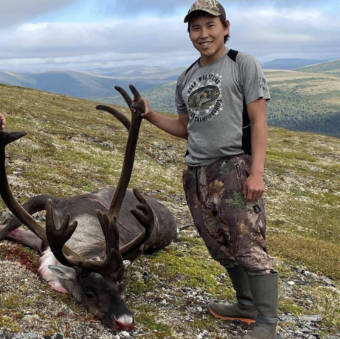
Gusty Blunka Jr. (Photo courtesy Robin Jones)

“I feel very grateful to have our way of living as an option in our school,” Panamarioff said. “I learn something new every time that I’m in this class, and I think that this class gives opportunities to students who can’t or aren’t able to go out at home.”

Another student, junior Gusty Blunka Jr., said he appreciates the opportunity to share stories and learn more about his culture.

 “I’m hoping to learn more about what our people do and maybe even live the stories that we were told,” Blunka said. “Then one day, tell my stories, teach, and help others by passing on what was passed on to me.”

Fourteen high school students meet twice a week. They have longer class periods due to block scheduling because of the pandemic. The class is an elective, and it counts towards the students’ Yup’ik studies. Josh Gates, one of the teachers, said the class was a silver lining in a difficult year.
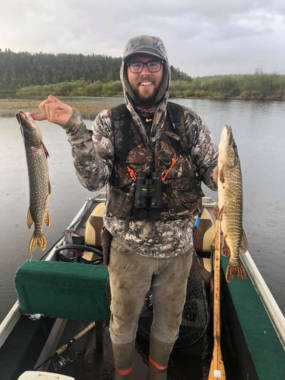
Josh Gates is one of the subsistence class teachers. (Photo courtesy of Robin Jones)

“Well COVID has been a real inconvenience with an exception of making the schedule work out great for a subsistence class,” Gates said. “An hour and 45 minutes is enough time to go outside and go ice fishing or today, we’re going to go haul wood.”

Gates said the class is another way for students to learn and practice a wide range of skills related to subsistence.

“The obvious ones are knowing how to properly use a chainsaw or knowing how to make an ice fishing pole, knowing how to tie a fishing hook,” he said. “But the less obvious ones are how to maintain your tools and machines that are necessary for those subsistence activities.”

Sophomore Maximus Gust said the timing of the class lines up well with the activities he’s interested in.

“The timing fits perfectly with what we do in subsistence,” he said. “Whether it’s from going out on the regular days or making something in the shop on the shorter days.”
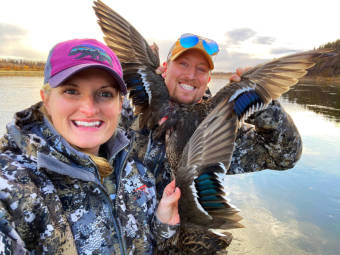
Principal Robin Jones and her husband, Ben Griese. (Photo courtesy of Robin Jones)

Principal Robin Jones said the school has gotten positive feedback from the families.

“I think that the community has been overwhelmingly supportive of any of the classes we teach that help the students grow closer to the Yup’ik culture,” she said. “And we’ve even had the opportunity to involve a lot of our Elders, parents, and community members in the classes.”

Jones said the class is a way to better align the school’s curriculum with the community’s traditional lifestyle, and she’s elated by the students’ participation.

“Nothing makes me prouder as a principal than to see how eager students are to share stories and pictures of their hunts with me, because they know I will be so incredibly proud of them,” she said.
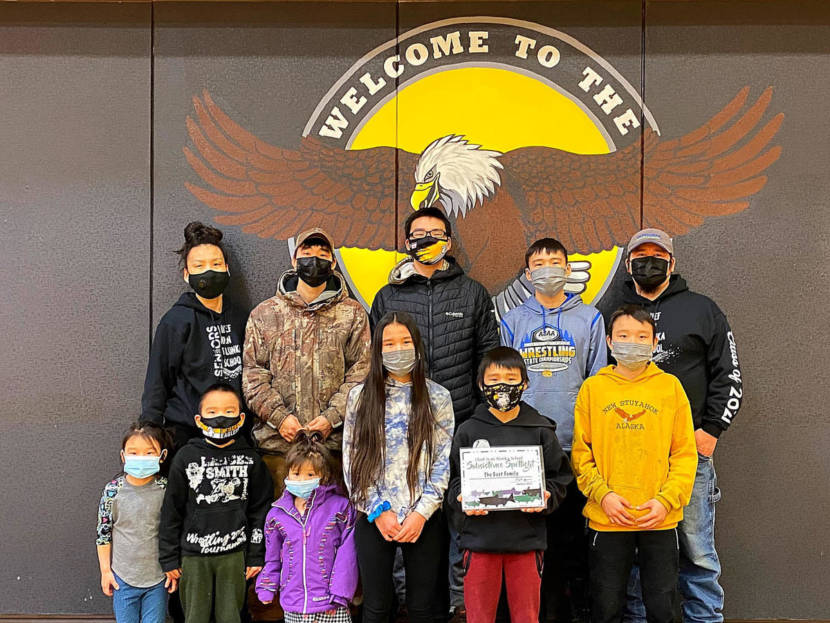

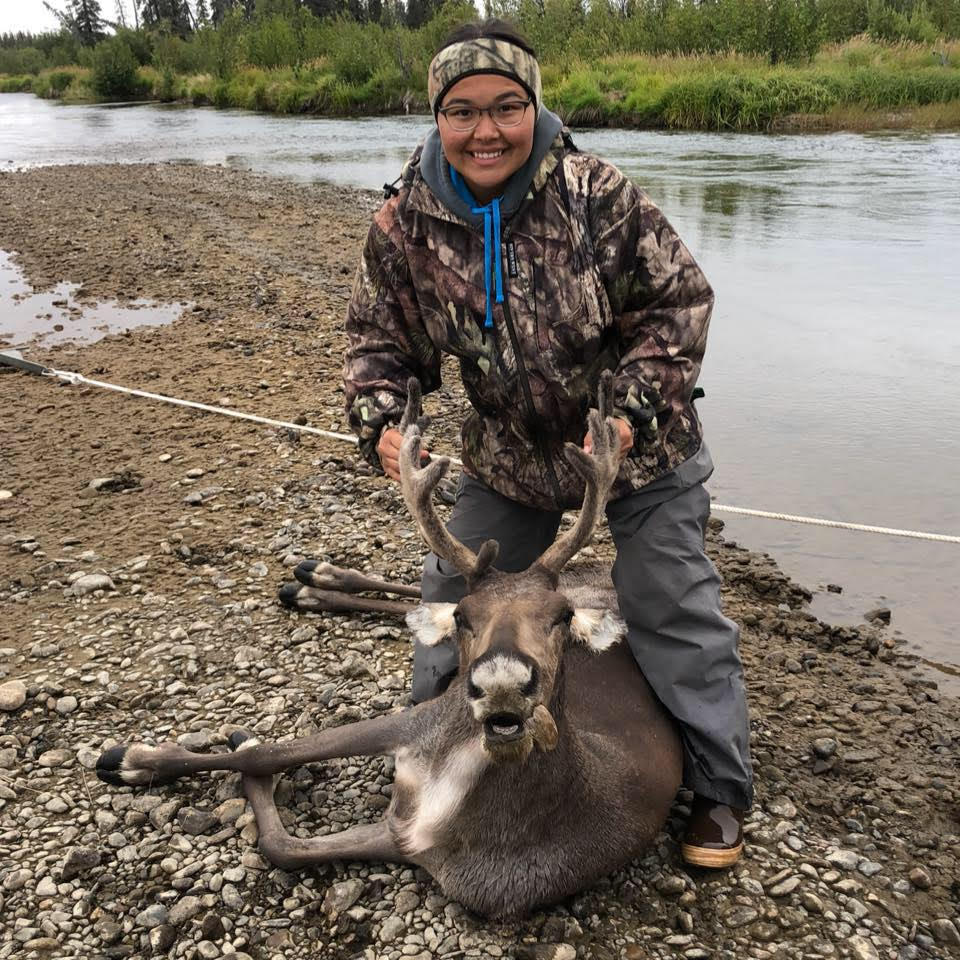
Maximus Gust and family, Chief Ivan Blunka School Subsistence Spotlight for January 2021. (Photo courtesy of Robin Jones)

Biologists find first cases of infectious bacteria in Southwest Alaska caribou herd

A bull caribou from the Mulchatna caribou herd (Photo from USFWS/Togiak Wildlife Refuge)

State biologists have found an unusual disease among caribou in Southwest Alaska. The disease is called brucellosis and is caused by the bacteria brucella. It can be lethal to caribou and can also lead to miscarriages.

The Department of Fish and Game recently detected cases in the Mulchatna Caribou herd. The biologists found a potential case a year ago.

Dr. Kimberlee Beckmen is a wildlife veterinarian for Fish and Game.

“This was the first time that we were having actual cases in the Mulchatna herd,” Beckman said. “It’s such a low level in caribou throughout Alaska that we don’t pick it up very often. Right now we know there’s an increase, ‘cause more caribou in the herd have brucella or are showing antibodies. ”

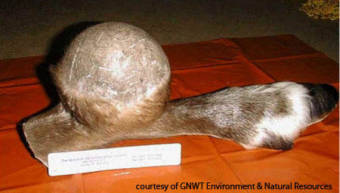
A common symptom of brucella in caribou is swelling in the knee, where most of the bacteria is stored. brucellosis can cause a high fever similar to the flu in people. (Photo from Alaska Department of Fish and Game)

Biologists have detected those antibodies during routine sampling. They also found the bacteria in two dead caribou and have observed swollen knees and enlarged scrotums in others.

A common symptom of brucella in caribou is swelling in the knee, where most of the bacteria is stored. Brucellosis can cause a high fever, similar to the flu. Beckman says people can stay safe by handling raw meat carefully and cooking it properly.

“Freezing doesn’t kill the bacteria,” she said. “Smoking and drying is not extremely effective cause there can be some pathogens and parasites that survive those. So it’s really important to cook the meat to 160 degrees.”

After handling game meat, wash your hands thoroughly and clean utensils with hot soapy water.

Biologists typically find brucella in caribou herds to the northwestern Arctic, Teshekpuk and central Arctic. There are few samples of brucellosis in Mulchatna herds to determine if the disease is present. Beckman advises those who harvest Mulchatna caribou to report any signs of the disease to the state.

Struggling seafood processor hopes to come back stronger under new ownership as ‘New Peter Pan’

The Peter Pan Seafoods plant in Dillingham. (courtesy Peter Pan Seafoods)

Peter Pan, the seafood processing company with an array of plants in Southwest Alaska, had been struggling to keep up with competitors.

So when its owner, Japanese seafood giant Maruha Nichiro, initially announced its sale of Peter Pan to three private equity groups, it said it expected a loss of almost $28 million.

The deal means the company is now vertically integrated, so all stages of production and marketing — usually operated separately — are now under one owner. It also places Peter Pan under American ownership.

One of the three buyers is Northwest Fish. Its owner, Rodger May, is the president of “New Peter Pan.” The Na’-nuk Investment Fund, managed by McKinley Capital, is another. The RRG Global Partners Fund is the third buyer.

McKinley Chairman Rob Gillam said the buyers see the deal as an investment in sustainably harvested Alaska seafood. But they agree that Peter Pan needs to up its marketing game.

“The best fish in the world isn’t any good if you can’t get it to people who want to buy it. So, that was really critical,” he said.

That’s where Northwest Fish comes in. It’s a fish seller based in Seattle, and Gillam said combining sales and production will help them reach more customers.

Gillam is the son of the late Robert Gillam, a key figure in the fight against Pebble Mine who died in 2018. He says New Peter Pan is committed to environmental stewardship and local involvement.

Peter Pan is one of the oldest seafood companies in the state. It has changed hands several times, including when the Bristol Bay Native Corporation owned it in the 1970s. The company has struggled in recent years, however, in part due to competition from other processors, and lower production and harvests outside of Bristol Bay.

Gillam said the new owners want to harness the unpredictability of the fishing industry.

“You will see our focus on being a vertically integrated seafood company. So that means that we will have processing capabilities that will go upscale, value added. We have distribution and sales capabilities,” he said.

Gillam said the pandemic was “extremely difficult” for the seafood industry, but he added that demand for sustainably harvested seafood has risen and that the company plans to meet that demand.

“You’ve got to put more pounds through the plants — put more fish through the plants. When you do, you get more efficient, the costs come down, that benefits everybody,” he said. “It means you pay fishermen a little bit more. It means you can provide more benefits to the people who work there, it means you can lower the cost against which you can sell your product into the market.”

The private equity investors want to strengthen Peter Pan’s diminished reputation with its fleet, Gillam said, and they expect to announce other changes as the summer fishing season approaches.

“Change always scares people, so I just want to be really clear. Absolutely, you can expect change,” he said. “But when you’re part of a team that hasn’t won very many games, winning more games is change. And that’s a good thing, not a bad thing.”

The company says it will continue to operate plants in Dillingham, King Cove, Port Moller and Valdez, along with support facilities in Naknek and Sand Point. Its headquarters are in Bellevue, Wash.

A new fish processor is buoying King Cove’s fishermen. But now the town’s finances are sinking

Gary Hennigh, the city administrator for King Cove, said he’s happy about new ownership of a company that has long been part of the community, after its presence there was threatened by new plants elsewhere in the region.

“The last few years we knew that there were issues going on, that Peter Pan was struggling, in part, just because of the fishing seasons that we’ve been having, in part because of the big investments over in False Pass with two other competitors that started moving product away,” he said.

Hennigh was referring to Trident and Silver Bay Seafoods.

King Cove has seen its tax revenue fall as Peter Pan struggled, and that problem has been compounded by the pandemic. Now, he said, the Peter Pan sale is a chance for the community to start again.

“We’re optimistic that new owners will have a new attitude, new market potential, and that we can get King Cove back to the type of community that we had with a pretty thriving economic base up until a couple years ago,” he said.

The sale was finalized on Dec. 31, 2020. The price was not disclosed.

A previous version of this story said that Northwest Fish was a private equity group. It is a company. The story has been corrected.

LISTEN: Bristol Bay communities sing for Orthodox Christmas

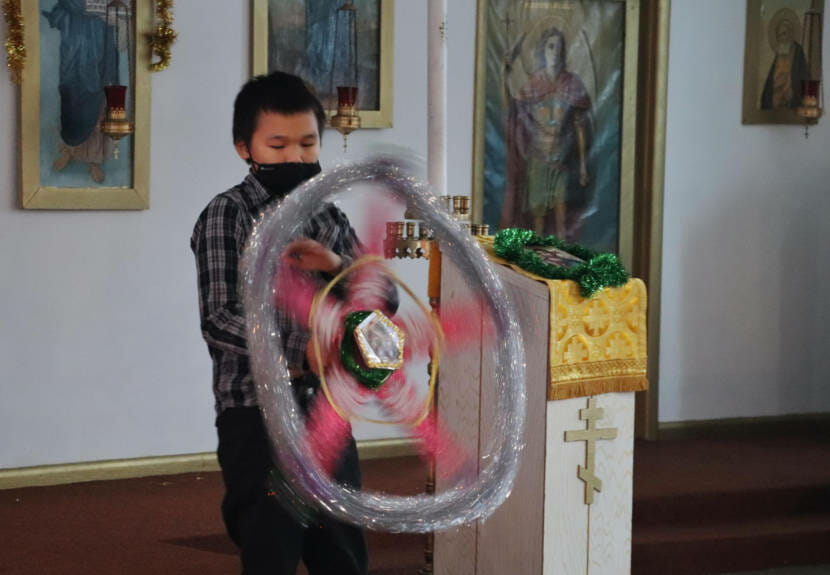
The only person to star in St. Seraphim of Sarov’s Orthodox Church. Friday, Jan. 8, 2021. (Photo by Izzy Ross/KDLG)

A small group of people sings through cloth masks. It’s slavii at St. Seraphim of Sarov’s Orthodox Church in Dillingham. At the front of the church, a boy is spinning a star decorated with tinsel. Normally, he’d be surrounded by others doing the same.

Father Jason Isaac is the rector in Dillingham. Despite restrictions, he said, the spirit of the celebration hasn’t changed.

“I’m very surprised to see the joy. The message of Christ being born will always be celebrated joyously,” he said. “With this year being different because of COVID-19, the people are still trying to bring joy to each other by singing here the carols.”

Carolers twirl bright tinsel stars in households around their communities. Some travel to other villages as well. “Starring” symbolizes the birth of Christ and ushers in the new year.

Slavii is a Russian Orthodox tradition in what’s now Ukraine. But it has a long history in Alaska and Bristol Bay specifically. Carols here are sung in Slavonic, an archaic Russian dialect used by the Orthodox Church, but also Yup’ik and English. People usually go from house to house to sing, visit, eat and rest.

“Throughout the days up to (Jan.) 13, they’ll be going outside people’s homes, singing carols as they did once a long long time ago,” he said.

Dora Andrew-Ihrke is a parishioner at the Holy Resurrection Church in Aleknagik. She’s celebrated slavii for seven decades.

“We elaborately decorate a star that we twirl in memory of the star that the wise men followed,” she said. “We go from house to house in remembrance of that, celebrating Christ’s birth.”

Andrew-Ihrke has strong memories of slavii when she was young.

“We went by dog team in Aleknagik,” she said. “We didn’t necessarily travel to villages ’till later years when we had my dad’s car and could go on the road from Aleknagik to Dillingham. Which enabled us to then fly to where our relatives were, where the strongest church was, and that was at New Stuyahok.”

They also traveled to Ekwok, Koliganek, Clark’s Point and Ekuk. In later years, they went east to visit Igiugig and Iliamna.

This year, Andrew-Ihrke said they are turning to technology to bring music into their homes.

“I told my family that they can celebrate by having the songs sung at our house tonight. We can use our phones and sing to various important people,” she said.

Instead of going to homes, Andrew-Ihrke shared a message from Matrona Gallear, an Elder who’s in her 80s.

“She also wanted me to voice that the church is praying for all people in Bristol Bay, and to say Plassniku, Praznikum, happy Russian Christmas Day,” Andrew-Ihrke said.

Worshippers in Dillingham will star at cemeteries and outside of homes throughout the holiday.

Everybody liked Mike: Manokotak remembers Yup’ik Elder Mike Minista

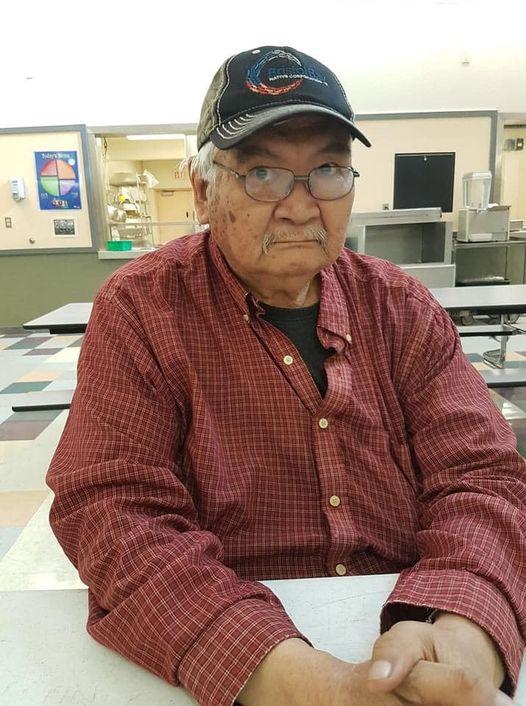
Mike Minista (Credit Melvin Andrew)

Mike Minista lived in Manokotak all his life. He was an avid hunter and fisherman who also fished commercially for decades.

One of his long-time friends, Jerry Liboff, met Minista 50 years ago at the Ekuk Cannery. Minista was commercial fishing at the time, and a storm kept him at the cannery for several days.

“I tried to stumble around with a few Yup’ik words,” Liboff said. “Once I started mis-saying Yup’ik words, that sort of broke the ice and we became actually very good friends at the beginning.”

Liboff said that during their many visits over the years, Minista would teach him Yup’ik.

“Mike would, with his patience, over and over again, ‘Say it again Jerry, say it again.’ And I would say it,” said Liboff. “He would crack up and laugh and he would do it enough times until I finally picked up and I said, ‘You should be the Yup’ik teacher for all the dumb people like me that are trying to learn it,’ and he would just laugh.”

Minista was an active member of the community, serving on the Manokotak City Council and the Village Tribal Council for several years. He volunteered for his church, and he often supported the school.

Louie Alkiak, one of Minista’s childhood friends, said that Minista stayed positive despite issues with his health.

“It didn’t affect his personality,” Alkiak said. “He was the same old guy. He was a good man, humble and jokes and would always laugh with people.”

Judy Itumulria, Minista’s sister, said that while Minista didn’t have children of his own, he loved spending time with her grandchildren.

“He was with them and he’d always give them something,” she said. “He would share with food and all that kind of stuff.”

Liboff, his friend, said Minista’s death is a loss for the community, and that his happy spirit will be missed.

“Everybody in the village of Manokotak liked Mike. He was one of those guys you couldn’t help but like – he did not have an enemy,” Liboff said. “I think everybody is going to miss him because he was always laughing and always enjoying himself so he was always a fun-loving and happy-go-lucky person.”

Minista moved to an assisted-living facility in Anchorage earlier this year due to health concerns unrelated to COVID-19. He died earlier this month. He was 66 years old. Minista is survived by his two sisters, and his nieces and nephews.

Divers recover body of Chignik Lake man after boating accident

Chignik Lake. July 2019. (Alex Hager/KDLG)

The body of one of the two Chignik Lake men killed in a tragic boating accident the day after Christmas has been recovered by divers.

Alaska State Troopers report that the body of Nick Garner, 39, was found last Wednesday, four days after a skiff laden with a snowmachine in its bow hit a large wave and overturned with three men aboard.

A four-person volunteer search team with Alaska Dive, Search and Rescue and Recovery flew in from Anchorage.

Troopers spokesman Austin McDaniel said Monday that divers deployed side-scan sonar to comb the depths of the lake. The sonar device sends bursts of sound into the water, which then bounce off of the ground and other objects. That then reflects back to the sonar unit on the boat, which produces an image.

“They were able to locate his body using this sonar technology, and recover it and get it turned over to his family members there in Chignik Lake,” he explained.

Fred Shangin, 42, also perished from exposure after more than a half-hour lying on top of the capsized boat. Only 24-year-old Taylor Lind managed to get off the stricken boat and survive. A Coast Guard helicopter rescued four other people on the scene on the north side of Chignik Lake.

Chignik Lake is a community of less than 90 people located south of Dillingham on the Alaska Peninsula.

Site notifications
Update notification options
Subscribe to notifications