KDLL - Kenai

KDLL is our partner station in Kenai. KTOO collaborates with partners across the state to cover important news and to share stories with our audiences.
Alaska Senate president Peter Micciche will not run for reelection

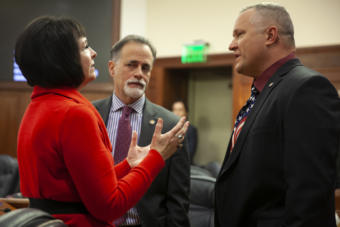
Sens. Shelley Hughes, R-Palmer, Peter Micciche, R-Soldotna, and Mike Shower, R-Wasilla, talk before a floor session on Tuesday, January 21, 2020 in Juneau, Alaska. (Photo by Rashah McChesney/KTOO)

Soldotna Republican Sen. Peter Micciche will not run for reelection to the Alaska Legislature this November.

The three-term senator and current Senate president made the announcement on May 25, one week after the Legislature adjourned for the session.

Micciche said his reasoning is simple — he wants to spend more time with his family.
“For eight of the 10 years, my family was able to travel with me,” he said. “However, two years ago, one of the oldest became a high-schooler. And that has changed life fairly dramatically. They simply can’t travel back and forth anymore.”

That means he’s spent more time away from his wife and daughters than he’d like.

“And I think it’s a good time,” he said. “I think we got some important things done over the past decade. And sometimes some new faces provide different catalysts to kind of shake loose some of the things where people have dug into their positions.”

Micciche is the senator for what’s now Seat D and was formerly Seat O, before the new legislative maps were set in November. The seat includes an area that stretches from Kenai and Soldotna, north to Hope and east to Bear Creek.

He said he’s proud to have made it a goal to stay in touch with constituents who he said felt voiceless — including seniors, veterans and disabled Alaskans.

And his tenure ends on a sweet spot. After a decade of pushing his alcohol regulation rewrite bill through the Legislature, the bill passed this session.

The other major bill he worked on, which would’ve established a permit buyback program for Cook Inlet set-netters, did not make it through despite support at home.

Micciche, himself a drift fisherman, said he’s not yet sure if another lawmaker will take up the torch on that bill.

“I don’t know who the right person would be to try to move that forward. But obviously, we’re having problems getting that bill supported in the Legislature,” he said.

Micciche said he’ll be busy with work around the house and what he calls a traditional Alaska summer, including a summer of fishing. He said he’s not ready to go back to a day job yet. Micicche was previously superintendent of the liquified natural gas plant in Nikiski, at the time owned by ConocoPhillips.

But he said he will stay involved in state and local matters from Soldotna.

“I’m very optimistic that a new set of players will be able to continue the important work that’s happening in the Legislature,” he said. “And in some ways with a new catalyst, they might be more successful in some areas where we haven’t been able to move forward.”

He said he hopes the Legislature can inch closer to creating a comprehensive fiscal plan for the state before his time is officially up in January.

Micciche’s successor will serve a two-year term, due to redistricting.

Soldotna’s Tuckerman Babcock is running for the seat this November. Babcock was previously Gov. Mike Dunleavy’s chief of staff and chair of the Alaska Republican party.

Nikiski’s Jesse Bjorkman is also running for the seat. Bjorkman is a member of the Kenai Peninsula Borough Assembly, as well as a teacher and fisherman.

Andrew Cizek of Soldotna is also listed as a registered candidate for the Senate race.

Correction: Micciche’s most recent term is a four-year term. His successor will serve a two-year term.

Soldotna Planned Parenthood to close at the end of May

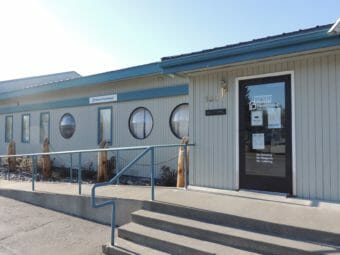
The Soldotna location doesn’t offer procedure abortions, and at this time, Alaska would keep its right to abortion if Roe v. Wade is overturned. But a Planned Parenthood spokesperson said the organization is looking to free up budgets to make way for changes that could come up in states that do have trigger laws. (Photo by Sabine Poux/KDLL)

The Kenai Peninsula’s only Planned Parenthood is one of several locations closing at the end of the month.

The Soldotna center has been around for about 30 years, administering birth control, STD testing and other services from its building on East Redoubt Avenue.

But, as first reported by the Alaska Beacon, the sexual and reproductive health nonprofit has spent months rethinking how it operates and how it can consolidate locations.

Katie Rodihan is spokesperson for the Planned Parenthood affiliates in six states, including Alaska. She said the closure — along with five others in the affiliate group — comes at the end of a review from the organization.

“We started it as we knew we were entering what would likely be the end of the constitutional right to abortion,” she said. “Because we had heard the Supreme Court’s oral arguments in December and could tell, unfortunately, which direction the court was leaning.”

The Soldotna location doesn’t offer procedure abortions, though Rodihan said it does offer medication abortions and abortion referrals. And at this time, Alaska would keep its right to abortion if Roe v. Wade is overturned.

But Rodihan said the organization is looking to free up budgets to make way for changes that could come up in states with so-called trigger laws, which would ban abortion upon a Roe reversal. Some of those states, including Kentucky and Idaho, are in Alaska’s affiliate group.

The closest Planned Parenthood location to Soldotna will be in Anchorage, a three-hour drive away.
That center does provide procedural abortions, as do the centers in Juneau and Fairbanks. Rodihan said some services, including prescriptions of birth control and emergency morning-after pills, can be done via telemedicine. She said the nonprofit has been investing more money on its telemedicine capacities, especially in rural communities.

“And between the Anchorage health center’s capacity and what we’re able to provide on telemedicine, because we’ve really been investing in telemed, we felt comfortable that our patients can continue to access Planned Parenthood services,” she said.

Peggy Mullen, of Soldotna, helped start the Planned Parenthood center three decades ago. She thinks it started as a response to protests of a doctor who provided abortions in Kenai.

Organizers thought about which of two groups they could align themselves with.

One was the National Abortion Rights Action League.

“And the other was Planned Parenthood,” Mullen said. “And we knew that there was a Planned Parenthood in Anchorage.”

The director from that Anchorage location came down to speak about getting a branch started.

Mullen said there was a fondness among the founders for Planned Parenthood, in particular, since teens felt comfortable there. Plus, they saw it as somewhat of a middle ground — the center could prescribe birth control to women so they would be less likely to need abortions in the first place.

They set up a Sunday fundraiser at a local restaurant. Turns out it was Super Bowl Sunday.

“We were not paying attention to that at all,” Mullen said. “Fortunately, a lot of wonderful men showed up with their partners.”

Over the years, she said the organization kept growing. That was despite protests and pushback from some members of the community.

At one point, they had a clinic director who would go into schools to talk about sexual health.

“At that time we were kind of on a roll,” Mullen said. “But I can understand now the need for maybe consolidating.”

Today, the center employs three people full time and has one provider that comes down from Anchorage some days.

In addition to reproductive health care, the branch offers gender-affirming medical care, including hormone therapy, and provides HIV testing and education.

The Soldotna location is open until May 31. After that, Rodihan said the Anchorage location will continue to operate under business as usual.

“This is a scary time for reproductive rights,” she said. “But abortion rights are strong in Alaska and we are fully committed to continuing to support Alaska through patient care, education and advocacy campaigns.”

For a full list of services that the center has available at the Anchorage location and those it can do remotely, click here.

Reality TV star accused of illegally hunting bears in Alaska

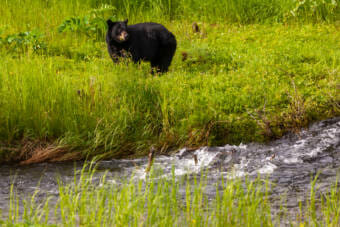
A female black bear eats as her two cubs play nearby on June 19, 2021, at the Mendenhall Wetlands State Game Refuge in Juneau, Alaska. (Photo by Rashah McChesney/KTOO)

A reality TV star is facing charges of illegally killing a black bear in Kenai Fjords National Park.

Harvey Neil Anthony — known professionally as Blaine Anthony — is the star and producer of “Bear Whisperer,” a weekly documentary-style show started in 2011 that focuses on bear hunting and conservation. According to charges filed May 6, originally obtained and reported by The Daily Beast, Anthony shot a black bear in Pilot Harbor in 2017, lied about where he shot it and then sent the bear to Maine to be stuffed. The hunt was later featured on his show.

Hunting is not allowed in the national park. And federal prosecutors said Anthony and his production company Nature Productions, Inc. violated the Lacey Act, which bans the trafficking of wildlife and plants that are taken illegally.

The charges said Anthony, a resident of Maine, took at least eight black bear hunting trips to the Kenai Peninsula between 2011 and 2019. They said he featured two illegal black bear kills from within Kenai Fjords on his show.
Anthony also violated the Lacey Act when he lied about the May 2017 bear kill on paperwork filed with the state, according to the charges. Feds said the hunter wrote that he shot the bear in Berger Bay — a legal hunting site outside the park, about 20 miles away from Pilot Harbor. But in reality, they said he took the bear in Pilot Bay with an Alaska-based guide and transported it back to Homer, then to Maine.

Anthony could not be reached for comment before airtime.

A photo dated May 15, 2017 on Anthony’s personal Instagram shows him sitting over what he said is a 400-pound black bear, tagged in Homer.

Anthony will face a court hearing on the charges on June 10.

Geothermal company looks to Augustine Volcano as a source of renewable energy

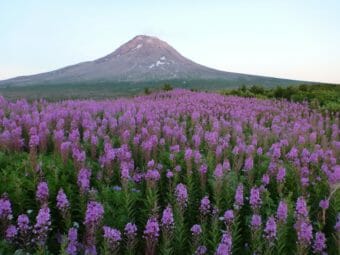
A field of fireweed with a volcano in the background
Augustine Island during geology field work in July, 2013. (Photo by M.L. Coombs/Alaska Volcano Observatory & U.S. Geological Survey)

An Alaska company could start prospecting for energy on the active volcano on Augustine Island in Cook Inlet. The state of Alaska is considering leasing land to GeoAlaska LLC so it can see if Augustine is a good fit for a potential geothermal project.

The company is already prospecting for energy at Mount Spurr, 40 miles west of Tyonek.

GeoAlaska CEO Erik Anderson, of Anchorage, said the two-year-old company is looking at those two Cook Inlet volcanoes because they’re closer to Alaska’s population center and the Railbelt.

“The resources have to be not too far away from the market so that you can actually tie them to it,” he said. “Because we can’t beam electricity. It has to come by transmission line.”

Geothermal energy can be harnessed from the heat below the earth’s surface in the form of steam or water. It’s a renewable resource because there’s no shortage of heat there. And like other renewables, it can be used to heat homes or generate electricity.

But companies first need more information and data so they’ll know where to drill.

GeoAlaska wants to lease state-owned land from the Alaska Division of Oil and Gas through its geothermal program to look into the resource.

The Division of Oil and Gas has held lease sales for Spurr in the 1980s and 2008 and for Augustine in 2013.

But as is the case with oil and gas, bidding and exploration doesn’t always equal production. And no company has taken the leap to connect geothermal power from either volcano with an electrical grid.
GeoAlaska is looking into gathering data on a stretch of land that covers 3,047 acres on the south side of Augustine Island.

Anderson said that part of the island shows promise.

“The bottom line is it has non-volcanic formations that allow a very nice cap for a geothermal reservoir, and also potentially good reservoir rock formations,” he said.

A geothermal reservoir is a well of hot water that companies potentially could tap into.

There are myriad other geothermal projects in early stages in Alaska. But the technology still has its challenges. Sean Clifton with the Alaska Division of Oil and Gas said that’s partly because the state is so spread out.

“An additional challenge is that it’s still a very under-explored state,” Clifton said. “And so we just don’t have a lot of great data about what geothermal resources might be available that are closer to populated centers.”

The fact that Augustine is an island is also an obstacle. Still, Anderson said it’s still closer than most to Alaska’s most populated region.

“We didn’t pick these volcanoes because they’re particularly nice to work with, or that they have great resources,” Anderson said. “It’s all about the market.”

He said his company started with the Mount Spurr project. They’re starting to bring in experts to look at data there.

Anderson and his team see geothermal as a way to move the state toward a more sustainable energy future.

The state sees that potential, too. Gov. MikeDunleavy has proposed legislation, working through the legislature now, that he said would make geothermal exploration in Alaska easier by broadening the area companies are allowed to explore and extending the exploration period so companies have more time to look on a given permit.

In the meantime, the state released a preliminary approval for the Augustine permit Thursday. It’s just a draft. Clifton said his department will take into account feedback submitted by the public.

“Sometimes the comments can actually be really helpful in exposing areas where we may not have looked carefully enough over the course of our research,” he said. “It can sometimes take many months to evaluate the comments and respond to them appropriately.

After that, they’ll issue a final finding on whether GeoAlaska can start prospecting

You can submit public comment on the proposed project on the division’s website.

State forecasts record sockeye run in Bristol Bay

""
Fish and Game predicts about 2.05 million sockeye will be available for commercial harvest in Upper Cook Inlet in 2022. (Photo by Sabine Poux/KDLL)

Alaska fishermen could see a record sockeye salmon harvest of 74 million fish this year, most of which will come from Bristol Bay. That’s according to the commercial fishing forecast summary released by the Alaska Department of Fish and Game ahead of the 2022 season.

The department is expecting a return of nearly 75.3 million sockeye to Bristol Bay, of which about 59.5 million would be available for harvest. The predictions have industry insiders wondering if harvesters and processors there will be able to keep up.

The forecast for Cook Inlet, on the other hand, is considered “weak” by the department. The same Fish and Game forecast predicts a total run of 4.97 million sockeye to Upper Cook Inlet, of which about 2.05 million should be available for commercial harvest.

While the numbers are below average, they’re not surprising. Cook Inlet has seen a string of below-average commercial seasons.

Still, Pacific Star Seafoods Plant Manager Nate Berga, of Kenai, said he’s hopeful.

The 2020 season was really bad, as markets were unsettled by the pandemic. Fishermen caught less salmon, and they didn’t earn as much per pound as they did in years prior.

Last year was an improvement, both for catches and price per pound. Berga thinks that’s heartening for fishermen and is expecting a decent turnout in the fishery.

“I think after last season, they’re encouraged,” he said. “There’s a little wind in their sails. So we’re anticipating a fair amount coming up.”

He said regardless of the forecast, what matters are the restrictions Fish and Game puts on fishermen during the season.

Even though the run wasn’t great last year, Berga said Fish and Game gave the drift fleet time to get out on the water and fish.

“Regardless of the run and how healthy it might look, if you’re not in the water fishing you’re not making a living,” Berga said.

A large subset of permit holders won’t be able to fish this year, since the feds closed a swath of Cook Inlet to commercial salmon fishing in 2020. Fishermen from the gear group that represents Cook Inlet gillnetters, the United Cook Inlet Drift Association, argued their case in court Friday in an attempt to get that order stopped before the season starts.

The Fish and Game forecast also predicts a slightly below-average run for the Kenai River — an estimated 2.9 million fish on the Kenai, compared with a 20-year average of 3.7 million.

Fish and Game’s escapement goal for the Kenai River for 2022 is 1.1 to 1.4 million sockeye. Last year, the run was over-escaped as more late-run sockeye passed through the Kenai River sonar than the department had aimed for.

Trailer fire destroys mail bound for Kenai Peninsula

Firemen stand near a burned-out tractor trailer that is still on fire
The trailer and the mail inside were a total loss, according to volunteer crews who arrived on scene to suppress the flames early Tuesday morning. (Photo courtesy of Cooper Landing Emergency Services)

A trailer carrying Kenai Peninsula-bound mail was destroyed in a fire early Tuesday morning.

The driver of the truck carrying the trailer escaped without injuries, according to the United States Postal Service.

But the truck and the mail inside were a total loss. The truck was delivering mail to communities throughout the Kenai Peninsula.

James Boxrud with the USPS said the driver was coming from Anchorage and was around milepost 38 of the Seward Highway, not far from the Tern Lake Pullout, when he noticed in his side view mirror his trailer was engulfed in flames.

“If they’re able to disconnect their vehicle from the trailer, they’re supposed to,” Boxrud said. “And that’s what he did.”

Volunteers from Cooper Landing Emergency Services and the Moose Pass Volunteer Fire Company got the call around 12:40 a.m.

Cooper Landing Fire Chief Riley Shurtleff said his department was on the scene about 20 minutes later. He said the fire had already decimated half of the truck.

“In a contained environment like that, it was an incredibly difficult suppression and extinguishment effort,” Shurtleff said.

One thing that made it hard to put the fire out, he said, is that the area has limited access to water.

“We ended up sending a water tanker shuttle with Moose Pass Tanker One to the closest available fill site, which was at the Kenai River in Cooper Landing — about 16 miles one way,” Shurtleff said.

The USPS said the cause of the fire is unknown and under investigation.

The agency has seen its vehicles go up in smoke before, most recently in Ketchikan earlier this year.

But that was a mail delivery truck, while this one was a trailer. Boxrud said the only connection between the two is that they’re both USPS vehicles.

The postal service said it will send letters to affected customers and asks those who are expecting mail and packages to call the Postal Service Call Center at 1-800-275-8777. Claims for packages can be filed on the USPS website.

One type of mail that was not impacted by the fire was the incoming slate of ballots for the upcoming by-mail special election. Tiffany Montemayor with the state Division of Elections said those ballots are being mailed out Wednesday and will take a few days to come in, since they’re shipping from a printer out of state.

Site notifications
Update notification options
Subscribe to notifications